Episode #644 - The Focus Of Entrepreneurship with Tanya Dalton, Founder & CEO at Inkwell Press
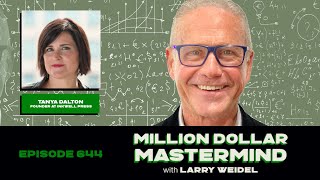
This is a podcast interview (Million Dollar Mastermind, Episode #644) with entrepreneur and author Tanya Dalton. Key themes: the real-world impact of her productivity products and trainings; her path to writing books (had two chapters and an agent when shopping a proposal; her book went to auction and received seven offers; now translated into eight languages); leveraging high-level mastermind/network groups (member of seven-/eight-figure women groups; uses network for introductions); structured time-management habits and writing routines (wrote first book by writing 4:30–6:00 AM; second book written during the pandemic while homeschooling); intentionally limits social platforms for business (not on Facebook, Instagram, or Twitter); practical advice: take a 10-minute action to build momentum. The episode closes with show details and Tanya's contact pointers (website, podcast name).
Questions this video answers
Seven offers (the book went to auction).
Eight languages.
Two chapters.
About 4:30 AM to 6:00 AM each morning.
About three hours per week (roughly 15–30 minutes daily minimum).
Chapters
Welcome to this edition of the million Dollar Mastermind podcast. This is where we pick the brains of high achievers from all walks of life and get their hard earned real world insights on winning. I'm your host, Larry Wydell.
Let me ask you, what's your biggest point of pride in your business side of your life that you look back now on all of these things for you, you know, evaluating, you're reflecting now and you're saying, this is my mountain top so far and you know, we'll reassess here down the road.
Yeah, well, I would say, gosh, that's a hard, that's a, that's a hard question because I've been in business a long time, so I think a lot of my point of pride is that the products that we offer have changed lives in ways I didn't even anticipate. We've had, we've had people who have emailed us and told us that through the tools and the trainings that we offer, they've been able to leave abusive relationships or that they've been able to start their own businesses or that they have been able to get themselves off of drugs. I don't teach people how to get off drugs. I don't teach people to leave abusive relationships. I teach them how to have that self autonomy, how to have agency. I teach them how they can use their time better and then they take it to the next step. So for me, it's that the work we do isn't just the work we do. It's so much bigger than the products we offer.
Yeah. And the thing need to be aware of when you're writing books and doing podcasts and all of that, the, it can be dangerous to read the, the reviews and the feedback because sometimes it just breaks your, you know, it's just so, so deep. It's just like, I can't read another one, you know, it's just like out there and this, that and the other, it's like, oh, you know, it's like, well, first of all, you get too much credit, you know, because they, they give you all the credit. But, you know, it's all, there's, they don't know that there's zillions of other people have read or listened to the same thing that didn't do a darn thing or went out there worse, you.
Know, but so don't believe the hype or the criticism.
Right. And so, but no, I'm talking about a business, a measurable business achievement where, you know, you went out there in the business world and boom, put your stake down and accomplished something that even the people in Forbes have to pay attention to.
Oh gosh, that again is a big. Because if we want to talk about my books, the fact that my books.
That could be. If that's your big one.
Yeah, I think that's probably my biggest one is that, you know, you write a book and you're in a room alone, you're hoping that people are going to read it. And then to have people. We get emails from people all around the world who read my books, who. It shifts and it changes. Having eight languages of your book is a really big deal because that's not something you could. That just happens. Or if you were to self publish, landing a major deal with a publishing house. And when I, when I put out my proposal, I had seven offers. My book went to auction, which was a really big deal for a first time author. I think talk about that now.
First of all, talk about the writing. You decided not to bring in a ghostwriter, but did you have an editor before you send out this, these proposals? And did you have an editor?
How far along was it for the proposal? I had written two chapters and I had my agent. I had him.
How did you get an agent? How did you get an agent?
That's a good question. Because first of all, I didn't even know I was going to write a book until I was first. At first I had publishers reaching out to me asking me to write a book.
Oh, you never know you're going to do anything until you wind up doing it.
So true. It's so true.
But anyway, wait a minute. Now you had publishers reaching out? How did they even know you existed until you wrote your. Wrote your book?
Well, because I had the podcast and the podcast came really well. Right. So I had the podcast first. And writing a book has always been one of those things that's. I like to say it was on my shelf where it was like, I want to write a book. One day. Since I was in sixth grade, I knew I wanted to write a book.
Oh, did you?
I did. I love writing. I just really find it. It's one of those things that I'm good at and I really enjoy. So I made the decision I wasn't going to write a book for the coming year. And you know how the universe works. Two weeks later, I had a publisher reach out to me. We want you to write a book. Like what? I just decided I wasn't going to write a book because we had a lot of initiatives happening with the business coming year, so it was really easy to say, not going to do that right now. So I thought, I don't know, I don't know. Two weeks later, maybe 3 second publishing house reaches out to me. We want you to write a book.
What is this? Someone pours it in the water in the. And they drink the same thing and they all get the same idea. Where does this.
I don't know. It was one of those things where I was like, okay, this is crazy. Clearly I need to write the book. So you know what I did? I told both those publishing houses, no. I said, no, I'm not going to write the book. You know why I want to write the book that I want to write. I don't want to write the book.
That you want me to write.
I want to write the book on my own terms. This is why I'm an entrepreneur, because I like to do things my own way. So I took a step back. I asked around in my network of people. Hey, does anyone know agents? I need to find an agent. People started giving me references.
What is your network? What is your network on your podcast or what is your.
No, I like to my network of friends who are, you know, I'm in several groups for, you know, women in business and doing talk about those.
Talk about what kind of business, what kind of groups, because that's, that's something that people might be missing.
So one of the groups I'm a part of is for seven figure and eight figure women business owners. And we get together, we actually have a meeting in the next couple of weeks and it's an opportunity to talk business.
Are you going to get excluded when you go to nine and ten figures?
No, I don't think you get excluded. I think you get to sit closer up at the front of the room maybe.
All right.
But it's great because you're able to have these high level conversations. And when you achieve seven figures, you get to that new level, new devil. And so there's new things that you're dealing with. So it's nice to have a group that you can talk to and have these conversations. What's the great side bonus of that is not just that you're no longer on your own island by yourself, but you also have this network of people that you can tap for all kinds of things. Like, hey, I want to find a book agent. Does anyone out there know a book agent? And several people were like, oh, I know a person. Let me do an introduction. This is why relationships are so important. They really are, because you never know who's going to be the person who's going to connect you to the person that you really need.
Yeah. How many of those, how many of those women's groups are you in right now?
I'm in two groups that I spend a lot of time in. I'm parts of these other kind of smaller groups.
How much time, how much time does it take?
I. I try to dedicate.
Your time is, you know, your time is precious, your time is valuable. You. And it's got to be worth it. And so that's why I'm asking.
Yeah, well, I like that question because I think it's really important. I'm very intentional with it. So I try to spend at least three hours a week going in, checking in, seeing how I can support people. And then when people need support in these groups, sometimes I'll hop on a call with them or I'll do this.
How do you go, how do you go in? What do you mean go in? What does that mean?
Because a lot of times these groups are on a platform or an app. You know, one of them is on.
You know, patron or Facebook groups or where.
Yeah, well, I'm not on Facebook, so I don't do Facebook groups, but I left Facebook last year as kind of a stance. But a lot of these groups are on apps or on listserv. So one of them I'm on has a listserv through Google and you get an email every time somebody emails the group.
Right.
And so that group is high achieving women who are in all different areas of, you know, a lot of them have done TED talks or they're doing, you know, they're journalists for big companies and magazines and things like that. So I'm in that group and then in the business owner group.
So about three hours a week on one or both.
It kind of depends on what's going on. But I try, I try to go into each of them for at least 15 to 30 minutes a day minimum to check in, see what's going on. Yeah. And some days more, some days less. It just kind of depends.
I don't know if you've noticed, but I have sneezed twice. I never sneeze. I never sneeze. But you brought up the COVID thing and that you might be coughing on here. You haven't coughed at all. And I've sneezed twice.
Well, now that I've gotten past my Covid, I think I'll just send my immunity to you through the zoom.
Thank you. It's funny how the subconscious works.
It is. That's why it's so important to smell. I'm over here sneezing.
I never sneeze. You wrote you wanted to write your own book, but. And you want it unlike me, you know, I always felt I could do anything. You know, I wasn't enough of an athlete to say, well, I'll be a professional athlete, but I could play the sports. I just couldn't, you know, do it at the high level. But the one thing that I just knew I was no good at was writing. And sure enough, you know, eventually got around to writing a book. But I brought in, what I did was I did your thing. I got out and I wrote a book. Okay? Boom, boom, boom, boom, boom, boom, boom. And I sent it out to several of my friends. What do you think? You know what they all said? That's pretty good start. Why don't you get a real writer to help you?
Well, I will say those are good friends that will really tell you what they think.
Yeah. I said I thought I, you know, this, you know, like this could actually be a book. I said I thought it was. So I, I probably was. I probably was right. I'm not a writer, you know. But did you write it all yourself?
I did write it all myself, yes.
Good for you.
I got up early in the morning. I wrote my first book. I wrote at 4, 4 o' clock in the morning, like 4:30 in the morning until 6 o'.
Clock.
That was, that was my writing time. And then at 6:00, I'd go wake up my kids and get, get the day started. So again, that was a choice. I chose to get up early even though I didn't think of myself as a morning person because I liked the quiet of the house and I was able to focus on my real job, my business during the day. During the second book, I wrote that during the pandemic. So that was a vastly different experience because I had kids at home that I was homeschooling. And all kinds of craziness happening, of course, with the pandemic. So it's not going to necessarily be the same every time you do something, you have to shift. You have to look at where you are and how is it you want it to work for you.
Well, I've got, you know, I got all kind of questions to ask if we got to wrap it up. But I'll ask you this. How disruptive was it to move to, you know, pick up everything and move? Because it seems like you were Pretty well had a lot of things going on. It's. It's always big just to move across town to a different house. But to pick up and move like that with kids, you know, kids add.
A whole new element to all of all things, Right? Yeah. But, you know, growing up, growing up, I moved 11 times before I turned 18. So for me, the act of getting up and moving is really cathartic, and I really enjoy that. And to be honest with you, one of the things I do in my house is every two or three years, even if I'm not gonna move, I pretend like I'm moving. I go through my house, I look around and I do that assessment. Like, do I like what's in here? Do I not like what's in here? Okay. If somebody was looking at my house, would this closet look okay? Okay, I got to clean up this closet. And I spend, you know, six months pretending like I'm going to move, even though I'm not. Yeah. So I think it's like anything else. It's moving out all the stuff. Because it's funny when you do that exercise, you go in and you find things that are 2, 3 years old that you haven't looked at, that you don't want sitting around, that if you're not intentional or mindful with it, are just going to sit in that closet for the next 20, 30 years.
Yeah.
And so your business, clearing things out is really important. Sound like you're moving in your business.
Yeah. Because clearing out clutter creates space to do more positive things.
Absolutely.
That can add value. And so thanks so much. This has been great. And do you have a parting word that you would like to pass on to the up and coming entrepreneurs of the world who will go out and do things 100 times bigger than you and I because they've got all the advantage of Chad, GPT and all the social media and all the, you know, the cell phone. Just cell phones alone. I didn't have a cell phone. And, you know, I, you know, I had hundreds of people that I had to contact from a hard line with a, you know, piece of paper, with their phone numbers I carried around in my back pocket and got retyped periodically by my staff. But I ran that for, you know, recruited hundreds of thousands of people. And so how, I have no idea. But, you know, this upcoming generation should go out there and do what we've done at least 10 times bigger. And that's what I'm expecting. No excuses. But with, with yourself, you have something to pass on to These world beaters that are coming up.
Yeah. Well, I think the thing is, I think a lot of times we get caught up in the big steps, the big giant leaps in life. And the truth is, it's the small steps that count even more. So if you heard something today that resonated with you, if you were like, ooh, that Pareto principle or the RCQs or, or anything we talked about today, there thing that you were like, oh, I like that. I would encourage you to gift yourself, and I use that word gift very intentionally here. Gift yourself. 10 minutes to take action on it. 10 minutes is all you need. That one small, tiny action will build momentum and it makes it easier to take the second step, which makes it easier to make the third step. And what you'll find is that just creates the momentum you want. So if you heard something today, go and act on it. Maybe it was, oh, I want to read the book. Go grab a copy of my book. Maybe it's listening to my podcast. Any of those things we talked about. Go and get started today. 10 minutes is all you need.
Yeah. Fantastic. And your books are called the Joy of Missing out and On Purpose by Tanya Dalton. And your podcast is called Intentional the Intentional Advantage.
Yeah. So anywhere that you're listening to this podcast right now, you can do a search for the Intentional Advantage or my name and you'll find my podcast. We've got almost 300 episodes at this point, so lots of fun.
I see you're on LinkedIn, Twitter and Instagram. So you're on.
Oh, nope, not on Instagram.
Oh, oh, you made a statement.
Not on Instagram or Twitter. I'm not on Facebook, Instagram or Twitter. For my business now.
Oh, for your business. Instagram or whatever. Anyway, sounds great. And your website is Tanya Dalton.com, is that correct? People want to check in with you there. And so thanks so much. This has been a lot of fun and look forward to seeing you in when I come up to the Carolinas.
Yeah, I'd love that. Absolutely.
All right, thank you.
Thanks for listening to the Million Dollar Mastermind. If you felt there were any valuable takeaways from this episode, please take a minute. Leave us a five star review. Your feedback is important and really helps us get the word out to a wider audience. Remember, we have a valuable webinar that is absolutely free. Register for it right now@whiteallnwinning.com thanks for listening.
More from Larry









Rick Jordan on Self-Engineered Proximity, Cyber Security Moats, and Truth-Based Leadership

Fire Fast or Fail Slow: Kevin Brittingham Reveals the One Rule That Built a $100M Empire
