Episode #651 -The Power Of Association with Sharon Lechter, Co-Founder and CEO at Pay Your Family...
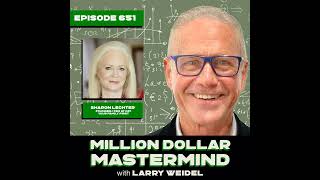
This is a Million Dollar Mastermind podcast episode (Episode #651) in which host Larry Weidel interviews Sharon Lechter about the "power of association." Lechter explains how mentorship, CEO-to-CEO partnerships, and leveraging established partners (e.g., Disney, global publishers) accelerate speed to market, broaden distribution, and allow founders to scale by using others' systems and people. She also shares lessons from entering unfamiliar domains (ranching) — the importance of recruiting local experts, studying mistakes, and combining passion, association, action, and faith (her "personal success equation").
Chapters
Welcome to this edition of the million Dollar Mastermind podcast. This is where we pick the brains of high achievers from all walks of life and get their hard earned real world insights on winning. I'm your host, Larry Wydell. Yeah, I love those phrases, elevate your speed to market best in class. And I've always been interested in about a thousand different things and had very little time but because of success in business, had the resources. So when I put my time in, I was able to be able to maximize the results. But best equipment, best person you know, I could find in the world doing that, that I could get my, you know, a conversation with and that I found that you make the, the fastest possible growth. In fact, you know, when I was learning how to play the banjo, I had a Grammy award winning banjo player teach me. And you know, just like that, you know, I won't go go into all of the things, but from skiing.
Having the right mentor is so important. And so many people that are in business, they have, they may even have a mentor, but the mentor's gotten them to where they are today, but may not be the right mentor to get them to where they deserve to be. Everybody deserves to play a bigger game. So.
So that's another phrase right there. So how do you advise people talk about that system, that phrase you used earlier, CEO to CEO or you'd like systems, go and find someone who's already in that world and partner up with them or get them involved, talk about that process.
Well, the vast majority of business owners sell to consumers. So it's B2C. So I make a sale, then I have to find the next person to make a sale. Should I have to find somebody else? And the power of association allows you to elevate your brand, elevate your standing, just like we did with the talking children's book. By connecting with Disney, all of a sudden, we opened ourselves up to the millions of Disney lovers, which allowed us to impact more children more quickly. And so when we were publishing these books, I was able to establish relationships with publishers all over the world using their systems, their people, their technology, their distribution system to be able to translate the book into over 50 languages and get it into over 100 countries. I didn't do that work, they did. And so instead of just being B2C, which you want to be, you want to have customers directly. But if you can go B2B CEO to CEO at one time, right before I left, I probably had 5,000 people working for the Rich dad organization, but only 17 were on my payroll. The rest of them were on somebody else's payroll. And so I managed them through CEO to CEO relationships and their CEO was managing the individual people, which is a much easier way to go. Plus, as I said, speed to market is everything even more important today than back then. And so you find somebody who already got the systems, already got the technology, already have the opportunity for you to hit the ground running. It's going to get you to elevate your business much more quickly.
Well, that's always been the ideal way to do it. That's why big businesses always partner and you know, that's why you see even, you know, the Googles, the Amazons and they're buying these companies, you know, they need, they need to go in this world, let's just go buy that company. Buy all the people running to buy their brains, their experience. And it saves them experimenting, in other words, trying to figure out, develop their own people, get some ideas, go through all the stumble and fumble then, then maybe have it go belly flop and then it's all for another. Rather you get something proven these people know. Finding people to know how to make things go. That's really the idea behind this podcast. It's like you want to hear things from people who know how to make things go. And because you got to, you got some thinking to out there, you guys a massive amount of work to do but figuring out things that nobody's figured out before, especially you've never figured out and getting the information you need, going through that process, the best way to figure that out is to hear from someone who's been down that road. I bet now you really stumbled into. Are you partnered up with a guy on the electricity electronic children's book and he was a well known writer, whatever, he had contacts at Disney. I bet you have not had things fall in your lap where you always knew the top guy. Like, you know, you always knew the best of the best. And it's just a matter of making a phone call and say, John, Mary, you know, Jane, whatever you know, saw you last, remember we met last week, got an idea for you. I'm sure you had to hunt and work your way somewhere along the way.
Oh absolutely. I've always had, you know, the power of association is not an easy thing to do. You often you have to figure out who's the right person in the right seat in the right chair. There's going to be interest in what you have to offer and you have to do your homework. You know, business is not easy. It's definitely a team sport, but you have to do your homework and you have to make sure you're speaking to the right person. And that's, you know, it's really. It's been the. I have the personal success equation, which is in my first book with the Napoleon Hill Foundation. And after I left Rich dad, I had that opportunity to work with them, and it was called Three Feet from Gold. And the personal success equation talks about your passion and your talent. That's all about us. And that's what we're taught in school. It's all about us do everything by ourselves. But true success is times a power of association. All right, who's on your team? Do you have a mentor? Do you have people on your team who are strong, where you are weak, making sure that business is a team sport, and then times a taking action? How many times do we know what we're supposed to do? We just don't do it. And then plus faith. Faith in yourself, faith in what you're doing, faith that is needed and necessary, and faith that you will succeed. A successful business does one of two things. Solves a problem, serves a need. And if you keep your eye focused on what problem you're solving, what needs you're serving, that takes it outside of you personally. And surround yourself with people who share that passion, that have the strengths that you don't have, have the mentorship that have been where you want to go, you're going to have the ability to have your success much quicker. And that personal success equation, you can get a free way to work out your own. If you go to personal success equation.com, it's free as a guide that I've developed. But when I start working with somebody, Larry, I share this on every interview, every talk, but I also use it with my clients because usually it's the power of association and that confidence that need the most work. Because somebody's been successful. And then they plateau. And they usually plateau because they've stopped meeting new people, they've stopped networking, they start growing their power of influence. And so when you have the right people around you, the right people on your team, and that confidence isn't there. You have a bad day, they won't let you stay there, they bring you back up. And so usually I have people walk through that formula and they can realize, I need to get out. I need to expand my sphere. I need to stand in my own power, I need to be my own hero. And amazing things happen when they start following the formula.
Yeah, it's Kind of like the Ecclesiastes thing. There's nothing new under the sun. You know, there's. There's somebody that's gone through whatever it is you're facing, and they've got a lot to tell you if you can find them. The power of association not only works with people, but I used it When I expanded as my young buck pioneering expansion out of our company went from Atlanta, and we were primarily in Atlanta and expand. I was like one of the second people to expand. And of course, I was broke. Had to have a yard sale to pay for my rental truck and to move the family up to North Carolina. But when I went to North Carolina, I had $300 a month to put into an office. And so I went to. I said, I want to have the image of the newest financial company in town that's going to probably expand all over the state. You know, I want to be like the next Merrill lynch, the next whatever. And so I went. I found the biggest. I got a tiny little office inside the biggest business complex. It was right next. And so when I described to people how to come to my office, it was the high rise Howard Johnson, which was where 40 and 85 connected. They had the Kouri Business center, our convention center, right across the street. So I I Four Seasons Mall, which was right next to that, the biggest mall at the time between Atlanta and D.C. so I would rattle off the association. They said, yeah, let's meet at my office. You know, it's over by four season, small next to the high rise Howard Johnson. Blah, blah, blah, blah, blah, blah, blah. And all of a sudden I just drafted off of all of their credibility. And I think that had to, you know, you create an expectation by how you put these things together. Comedian doesn't just blurt out a joke, you know, they kind of set it up, put the ingredients together. And so when you go, how did you start the power of association? When you're in going into something where you're totally clueless and you know that there's got to be somebody out there now, like when you enter the cattle business, you probably. All of these things probably were already in place on the ranch. Maybe not. But like, you go into something not in your comfort zone. Let's say I'm going to go into ranching. There's somebody knows how to make the ranching go. And I've got a cousin who did this exactly wrong. His name was H. Edward Roberts. He invented the personal computer. Bill Gates and Paul Allen went to work for him at 19 years old. And that's where Microsoft came from. And so he had the world by the tail. But he got overwhelmed with people problems and he sold out early. And he really didn't want to. You know, he liked creating things. He didn't like running the company. So he got up about 200 employees. He was pulling his hair out. He was not a patient man. He moved to Georgia where my. Down in South Georgia, where my family, where we all would go down to granddaddy's and the uncles and everything. And he was going to be a farmer. So he buys about five farms, buys every piece. He reads everything he can on farming. And then he goes out there, totally ignores the grandparents and the uncles and buys every piece of equipment John Deere had. And he went into farming and did a total belly flop. And that's what he said to me. He said, larry, I've learned a lesson. Just because you're smart at one thing doesn't mean you're smart at anything else. And he said it took me millions of dollars to learn that lesson. And so as you've gone out there, like when you started the ranch, how'd you learn about the ranching and the cattle and all that?
We brought in the right people. We brought in people who were very connected within the industry here. You can know a lot about cattle, but if you're not, I mean, it's, it's a good, it's a good old boys club, quite frankly. And you know, people know each other. And we were, we were the, they were considered us the rich people Coming into this little town. We got well liked because they felt we were invading them. And so, you know, it was like supporting the initiatives in the town, doing a fishing retreat for the kids, you know, all that stuff. Trying to ele our goodwill within the community. But as we started with the cattle ranching, we had to bring in people who understood cattles and not just understood how to raise them, but understood our territory. Our grazing rice is very rocky. It's not, you know, it's not your nice, long big pastures.
Needs a lot of water.
People that are experienced in that understand it. We had to bring somebody in that had a good relationship with the Forest Service to communicate and do so. Yeah, there's a lot of technical side of it. And we brought in somebody who knew how to do that to work alongside us so that we, we weren't like. Because we were. We consider us city slickers, right? So we needed to bring somebody in that knew what they were doing and have them help support what our goals were.
Yeah. And it's not that these people, you know, it's not what they cost. It's what it's going to cost you if you don't have them involved. If you have to learn their lessons for yourself. You know, life is short, life is too short to learn all the lessons yourself. You know, trial and error is the best teacher. But you know, the, that's why I.
Say about having a mentor. Having a mentor is they, they've been where you want to go, they're going to steer you around those pitfalls and they're going to open doors of opportunity. They're going to create powers of association that have, accelerate your success. Yeah.
And just like you said there, it's not just necessarily business or technical skill. It's like someone who knows the community, knows how they think, knows how you can come in and get through those hurdles to get to know people and make those, those fears go away. You know, that's priceless. Allows you to, to get settled and get integrated community in record breaking time. And you know, they probably didn't have to have a college degree in that. They just had to live it in the town and know everybody, you know. And so how did you go about finding the people to associate with in this arena? That was not your, you know, forte, not something you had a lot of experience with. And the point I'm bringing up here, that I want to let people know is how transferable these skills are. Sharon. It's not just you apply it to business, to finance or to whatever, it's being successful in any area of life. The same skills like power of association, things like that, you know.
Well, you know, your strategy may change. Our strategy when we first went in was we wanted to use all local materials, we wanted to use all local people, we wanted to invest in the community. We wanted people to see, you know, that we were bringing in good commerce to the community. We quickly found out the local materials were not the right kind of materials. They were, you know, inferior. And it's like, okay, I guess that's out. And then we found out, you know, one of the days we went up there and half the people at the bar were on our payroll. Instead of working, they were at the bar. So, you know, you get to the point where you have to understand you got to find, yes, you want to support the community. You don't want to be the big bad wolf coming into the community, but you also want to make sure that you do it and do it properly and do it correctly. And so it takes management, it takes trial and error. And we built a beautiful lodge. It took us three different construction companies to get it done. You know, you and. But that doesn't change who we are. We're continuing to support whatever we can do to support the community, but with our eyes wide open as opposed to with our finger. We're, we're no longer doing things with our fingers crossed, so. But it's really important, no matter what you do, any new business you go into, you need to study it. You need to find the people that are in it. You need to see what they're doing. That's correct. You need to see what they're doing and the mistakes they've made. And don't go blind, because that's just crazy. With as much information as there is available today, particularly with the Internet, when you want to do something new, somebody's already done it. So learn from them, do the research, get studied as to what the mistakes are, what those pitfalls are. Find a mentor to help you make sure it works.
Thanks for listening to the Million Dollar Mastermind. If you felt there were any valuable takeaways from this episode, please take a minute and leave us a five star review. Your feedback is important and really helps us get the word out to a wider audience. Remember, we have a valuable webinar that is absolutely free. Register for it right now@whiteallonwinning.com thanks for listening.
More from Larry









Rick Jordan on Self-Engineered Proximity, Cyber Security Moats, and Truth-Based Leadership

Fire Fast or Fail Slow: Kevin Brittingham Reveals the One Rule That Built a $100M Empire
