Episode #652 - Building A Strong Brand with Sharon Lechter, Co-Founder and CEO at Pay Your Family...
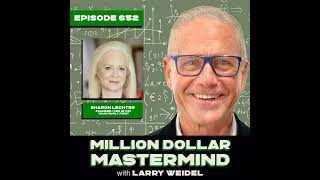
Sharon Lechter, co-founder of Pay Your Family First, discusses building a brand that lasts, vetting coaching partners, and negotiating contracts. She shares how she moved from Rich Dad to Napoleon Hill collaborations and Exit Rich, and why speaking and one-on-one mentoring matter more than most activities.
Welcome to this edition of the million Dollar Mastermind podcast. This is where we pick the brains of high achievers from all walks of life and get their hard earned real world insights on winning. I'm your host, Larry Wydell. Well, the thing is that you had to do this. I mean, you did it and I did it without the Internet and all of this stuff at our fingertips. You know, I asked one of the guys who had won some kind of, they made some kind of blanket or shawl or scarf or something, and they won the most successful out of the shark tank, you know, for one of the years, one of the seasons. And so they had come up with this thing he wrapped around snuggle something of where you're on the couch while you're watching TV or something. I said, his two brothers, who knew nothing about sewing or anything like that. And I said they were, hey, they're out of Phoenix, I think. Anyway, so our Scottsdale. And I said, where did you guys, where did you guys find out how to get these made? He said, Google. He said, I typed it in within five minutes. There's a plant an hour south of town and boom, boom, boom. We went. One phone call, one trip, one prototype, and we're in business, you know, but it wasn't like that in the beginning, in the early days. So when you sort through the, and find people, I always start as far up close to the top there is and work, you know, you know, work off of that. How do you go about finding the people to, to model and to.
You.
Know, to follow them, you know, because a lot of the people will write book like you, where you are at this point. You know, you've written a lot of books, you've got the information out there, you're on podcasts, you're probably on YouTube and things like that, so you can narrow down your search. And a lot of times you find people talking on exactly the subject that you're interested in, if you'll go digging for it. How do you go about it narrowing down someone if you just don't know who is the person to get?
Well, you do your research, you have those conversations. And one of the biggest things, Larry, is I teach a negotiation class because if you're the little guy and you're with a big company, you have to figure out what the chain of command is. So it's not. Sometimes it's not the person in the room that you're with. You need to know who's not in the room that's the decision maker. And it's important to understand that. And part of that is just getting to know the people, asking the right questions, listening, finding out what their goals are, both personally, professionally, and corporately, so that you have the opportunity to create a plan that's going to answer their goals. So many times we're so enamored with our goals that. And we don't. We don't research and find out how we fit into what they want to do. Yeah, and it's really important to do that. And as you're negotiating, the other thing is to know that when you're in contract with somebody, when you get a deal, you have to be very careful about the contracts that you sign. Everything that you want needs to be in that contract, because that person on the other side of the table may not be there next year.
Right.
But you still will. And so, I mean, we had this experience with a publishing contract. We had a publishing contract, and we don't do a traditional. Mike and I actually kind of ended the publishing industry into the first joint venture type of deal with Rich Dad. And so we. I negotiate that I have the opportunity to speak to every. Every different department so that we can move forward on marketing plans. And nobody gets that except me. And so I put that into the agreement. And I put into the agreement that every year there's certain amount of money that they agree to put into merchandising into advertising. Again, the company had never agreed to that. And so we're three years into our contract and that person's gone, and all of a sudden the new guard is going to. Well, and I said, I need to talk to. So, no, you can't do that. I said, yes, I. And I said, and I believe you guys are in default because you have not spent the money we agreed to for marketing. Well, we would never agree to do that. And I said, read the contract. Right. So they had to go back and look at the contract. So it's very important when you're the little guy to make sure you're very clear on what your expectations are, very clear on how you're going to communicate with them, very clear on what their. Their roles and responsibilities are. So. Because again, that person is more than likely not going to be in that chair. It's going to be somebody new, and they're not going to have a clue unless it's in writing. So.
Yeah, well, how did you, for example, something seems like it's out of the purview of what you were doing, all of a sudden decide we're going to have the best coaching company in the world come represent us. How do you go about finding. And by the way, is the best coaching company then, then the same one today, or is it, is there a turnover in that?
Well, I haven't been with rich dad since 2007, Larry, so I don't know who they're using for coaching right now. But when we decided we wanted to go into coaching, I started a research project of my team looking at all the various coaching companies out there. And we made site visits and we went to see what they were doing, we went to see what their, their, their software program was, how we could monitor it, how we could make sure that we could listen into the coaching calls, how we could train their people. So we had things that we needed and so we, we talk. I, I think, gosh, hard for me to remember how many companies I talked to, but probably four or five. Yeah. And, and so then we worked through that process to the point where we were down to one or two. And it was just negotiating what the deal was and, and understanding that we get. They got what they wanted and we got what we wanted, and it was a great relationship. So they had the software developed for the call floor, call center. They had the actual software programs for people to do the coaching on a regular basis and the ability for me to call in and listen in to our coaches to make sure they were doing what they wanted to sort of. We, that. That program worked very well. And there are other clients that use them for coaching. I interviewed them. So it's just a matter of doing just like buying a piece of real estate, it's all due diligence, figuring out whether you have a compatible brand that can support each other.
One thing is conversation. The other thing is there's no getting around. Seen it with your own eyes, is there? I mean, it's one thing to have a conversation or zoom or this, that the other, but when you go in and you're there in person, that's a whole different dynamic.
I developed the coaching program and then we went up and we did the teaching to the coaches and getting them prepared. And then I had. One of our employees was in, he was the lead guy in the coaching and he would go up there regularly to make sure they were doing what they needed to.
What do you find is the best use of your time right now? That keeps you, you know, of all the things you've done, all the things you could do, what do you find is the best use of your time? Gives you the best bang for the Buck in terms of personal satisfaction, make the impact you want, enjoy, meet new people, still stay engaged and inspired. What's the best use of your time right now? Of all the things you do, would.
You say, well, Larry, that's a, it's an interesting question because there are several different things that I enjoy doing. And right now, at this point in my life, if I don't enjoy it, I'm probably not going to do it. So I love speaking. I'm, you know, I'm speaking four or five times a month, live events because I can impact more people that way. My number one priority are my one on one mentoring clients that I work with and help them elevate their businesses. I absolutely love that. And for me, that's my time. It's not what I teach. I teach, you know, assets, but I do that because it makes me feel good. I limit myself to the number of clients I have just because of the amount of effort and energy that I want to put in for each of them. And then I'm continuing to write. I have another book coming out this year and so I enjoy that. So at each level, I may not be impacting when I'm doing one on one mentoring, that's I'm impacting one person, but that one person has lots of other people. So I'm helping impact them. And for me, the, you know, the, at the end of the day, my goal, my team has kind of taglined me legacy of creating legacies. I love helping other people establish their legacy.
That is beautiful. Now give me your take on this. You'll hear that, you know, everybody's got one good book in them. You know, if they're in business, you know, business leader, they've got one good book in them. But when I found, you know, when I got in that mode, all of a sudden I came up with about, I was working on 40, 50, 60 different titles. And so this would be a great, this would be a great book. But then, you know, I, I went along, I've got the one book serial winner and I made my claim. It's out there. It's got 630 or 40 reviews, you know, five star reviews on Amazon. And you know, that's, that's my statement. But you're the rich dad, poor dad would not be the foundation and the movement and this, that, the other if you hadn't continued to expand it. You know, I feel like I got bad advice on the idea of stopping with this because right off the bat I had a trilogy. You know, the trilogy was like, this is the fundamentals. This is how you get yourself personally fundamentally organized to be successful. From that. Now you're going to create opportunity to do bigger and better things. So now you're going to need to expand. You need to get a staff, you need to get a team. So, like, how do you create a winning staff? You know, and then the third book was going to be after you got some success, you got a good team, you start to feel cocky, you start to say, how competitive can we be? How good can we be? And you start saying, what would it be? You know, what can we do to give ourselves a chance to be number one? You know, to really go, continue to grow all the way up to the top and all. And so becoming elite was going to be the third of the trilogy. And they never got. And I think I've lost all the notes and everything.
There's still time for you to write number two and number three, Larry, make that trilogy a reality, because that's how, you know, the books allow you to impact more people more quickly. Based on 24 7, you don't need to be there. So books are a fantastic way to get your message out. And absolutely, if you feel that you have a trilogy, go for it. Make it happen.
But your thing would not have. I mean, the Rich Dad, Poor dad would not have the worldwide statute, 110 countries and this or the other if you'd stop with one book. Is that right? You know, so let's just say, you.
Soldiers, we sold our first million rich dad, Poor dad books in the first two years, and right at the end of the second year, we came out with cash flow quadrant. So the book really had a life of its own. You know, I don't know that I can say we would have sold as many if we didn't have the other books behind it. But. But we built a brand. The brand was what we built globally. Rich dad, Poor dad was the icon of the brand, but it was the games, it was the education, it was the coaching, regional seminars, it was, you know, all the books. So the brand was built, but it was on the back of a very popular book.
Now, what do you mean you're. You're out of the Rich Dad, Poor dad organization since 2007?
Yeah, I left 10 years into the relationship. I brought it to the top of the game. We were at the height of our success, and I was miserable because Robert wanted to go into franchising. It was a great model for us financially, but it wasn't a good model for the franchisees. And so I made the decision to leave. And it was amicable for about 60 days till the value of the wood company came in. And then we were in litigation for a year. And so I left. And I tell people, sometimes you have to close the door for other doors to open. Had I not made the decision to leave Rich dad, I wouldn't have been on the president's advisory council. Had I not made the decision to leave Rich Dad, I wouldn't have had the opportunity to step into the world's largest personal development brand, the Napoleon Hill brand, and help revitalize it after the financial crisis of 2008. And so I thought Rich dad was my legacy. And somebody upstairs said no, there was much more for me to do. So. Yeah.
And so is that primarily what you've done since 2007, as far as how long did you stay with the Napoleon Hill Group?
Well, I was never employed by them. I worked alongside them. I authored four books in cooperation with the Napoleon Hill Foundation. I was on the presence of advisory council for both President Bush and President Obama. And then my most recent book is with Inc Magazine. It's called Exit Rich. And it is helping people understand the basic components of building not just a successful business, but a successful business that can be sustainable, scalable and saleable.
Yeah.
And my book this year is about how money works for women. So specifically we're looking at women in every age bracket from 19 to 84 and the different financial issues they face.
Pretty cool. But that exit and the exit strategy book, that's a point that I think is going to do a lot of good for entrepreneurs because it's the old, you know, it comes up from time to time on these interviews. The fact that when you. You're building your business, a lot of times you're forgetting build that thing so it can exit. There's an exit strategy in there.
So get so excited about their product and selling it. They don't build the structure to make sure that it's sound, to make sure they don't have the right contracts.
Yeah.
They don't ensure that they own their own intellectual property. All those things I go through in the book Exit Rich. Yeah.
Fantastic. Well, I think that book's needed, by the way, so I think you made a great choice for a topic and I will look forward to seeing that come out. And anything you want to say to as a going away word for a final word here for the people listening?
Absolutely. Thank you, Larry. Yeah. Exo Rich has been out for about a year and a half. So you can get that on Amazon or my website. Sharon. Like, it's already out.
Okay.
Yeah. Exa Rich. If you could order through my website, I'll sign it for you. Just let us know the names and, you know, a couple of years when the, when the pandemic hit, I was just frustrated with all the negativity. And as I said early on, when I get mad about something, I start a new company. So I started something as a daily motivational tip. It's called atm. Kind of a play on bank deposits, but it's abundance tips and mentorship. And it's a couple minutes every morning where you can just hear from me and get you excited about the day and start your framework for the day in a positive outset so that you can find out more@ATM.sharon lecter.com but most importantly, atm.sharon lecter.com. yeah. Atm.sharon lecter.Com or you can just go to Sharon Lecter.com the website, and you'll find it. But, you know, we're. You are the CEO of your own life. You are in charge. And so we have three things we can control. Our thoughts, our words, our actions. Yeah. And so. And we're all where we are today because the choices we made before today, you want something different, you want something better, you want something more, Just start making different choices.
Yeah.
And think and be very guarded about your thoughts, your words and your actions.
Yeah. And the follow up on that is to admit that the circumstances you're in, there may be some circumstances you're in that you're not happy about. And you've got to trace that back to say, what did I do? What decision did I make that got me into this situation? What can I learn from it? Because that's how we all improve. So, Sharon, this has been absolutely fantastic. You've been very kind, generous with your time, and hopefully we'll get a chance to talk more in the future. And I'm looking forward to your new book.
Well, thank you, Larry. I appreciate that. Appreciate the opportunity. And thank you so much.
All right, I will want to get out to that ranch sometime.
Cherrycreeklodge.com all right, goodbye.
Have a great afternoon. Thanks for listening to the Million Dollar Mastermind. If you felt there were any valuable takeaways from this episode, please take a minute. Leave us a five star review. Your feedback is important and really helps us get the word out to a wider audience. Remember, we have a valuable webinar that is absolutely free. Register for it right now@whiteallonwinning.com thanks for listening.
More from Larry









Rick Jordan on Self-Engineered Proximity, Cyber Security Moats, and Truth-Based Leadership

Fire Fast or Fail Slow: Kevin Brittingham Reveals the One Rule That Built a $100M Empire
