Episode #665 - Navigating The Realty Realm with Gary Wilson, Founder of Global Investor Agent
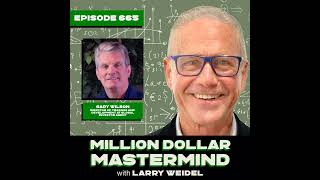
Gary Wilson, founder of Global Investor Agent, shares how he built a real estate portfolio through house hacking, home equity lines, and reinvesting cash flow. He left corporate work to focus full-time on scaling rental properties, emphasizing hard work and delayed gratification.
Chapters
Welcome to this edition of the million Dollar Mastermind podcast. This is where we pick the brains of high achievers from all walks of life and get their hard earned real world insights on ready. I'm your host, Larry Wydell.
Good afternoon everybody. What a fun time we're getting ready to have with one of the most dynamic people in the real estate industry. Bringing a lot of energy to the industry and putting a lot of information out. That's helping a lot of people and he's done it for a long time. Help me welcome Gary Wilson. Hello, Gary.
Hi, Larry. How are you?
Excellent. Appreciate you taking the time and congratulations on your success in real estate. It's a tough thing. I'm in Palm beach and Aspen. I split my time and there's I think three realtors for every other one employee doing anything, every standard labor in town. And so it's a competitive business and to rise up inside of that, you've got to be, you got to say 24 hours a day. Everybody else has had and you somehow have been able to not just do well but super elevate yourself and for a long period of time. And so I want to get into that. How did you do? It's always fun to talk about beginnings, you know, where these things start because things get in your head about life and about the future and yourself and early on and somehow those get discarded and sometimes they pretty much keep you on track throughout your life. And so where did you start thinking about your future and about what you were other people were doing in life and what you might want to be doing?
Sure. Well, I knew from the time I was probably 8 years old I was going to be involved in real estate somewhere. I thought I was going to be an architect. I was actually designing house plans. I mean full scale. My grandfather taught me how to do it. He was a professor and taught. One of the things he taught was architecture. My mother got me the board with the T square and all the really implements and I was literally doing house plans that you and I would see today doing them as far as eight years old. Then fast forward. Where I went to high school was the middle of the country. It was farmland, hardly anybody, even little whether going to college was a real rarity. The half of them didn't even finish high school. So my high school counselor, he said, you're going to go to college. I said, you better believe I am. And he said, great. You got to go to apply to Virginia Tech because they got a great architecture school. What we should have done was apply to general studies. Because what I found out later on was Virginia Tech called me down for an interview and said, look, we just want to be respectful. Your SAT scores are not where they need to be. To be in a school of architecture. You have to be at a level of 1200 at the time was like the top, right around a thousand. And he said, why didn't you apply for general studies? I said, I didn't know. My counselor apparently didn't know. And yeah, I shipped the gears, went to Old Dominion and studied computer science for four years. But here's a fortuitous seed that was planted my freshman year in orientation. I met my what soon to be freshman year roommate named Socrates. His dad and mom were both Greek. His father was a Greek immigrant. And when we graduated four years later, of course we were just like, we're glad to have a job. We were making money. We were going to go rent a house on the beach. His dad said, no, you're not. Don't be an idiot. You're going to buy a house and you're going to make money from it.
Yeah.
I said, so where do I sign? So he showed us this. January 1986. He showed us how to structure this deal creatively. So we got our first house, a four bedroom, two bathroom ranch in Virginia Beach, Virginia. We rented out the other two bedrooms and nowadays they call this house hacking. These two guys rent. Pretty much paid stocks in my monthly outlay. And that was, that was the beginning. That was how it all started. And that's how I really got a real estate, was that that architecture was the interest in housing. But the investing is where I really was meant to be, thanks to stocks dad. Yeah.
And so he was in the right place at the right time. But you guys were receptive.
Oh, yeah.
So you had a taste of six. It's one of the things about getting new people into business is the faster you can race them to where they're tasting money from a sale they made and they're getting. It's kind of like a young kid. Like we're both probably working at 8 years old where we got that first paycheck that we had something to do with baking.
It's different.
It changes you and gets you thinking different. And so it's easy to get visions of sugar plums. And this is always going to work out great just like this. And so how did, how long was it before you got into house number two and three and four and things like that?
Well, yeah, well, by the way, you mentioned making money late. I Did. I had a paper route at 8 years old and I remember thinking, I got my own money. I mean, it's one thing to get a quarter for. Back then, allowance was a quarter, man. That's what we got for allowance was a quarter. So any case, I really learned how to appreciate and value the dollar because I had to work for it. You know, you guys, fast forward after Soc and I bought that house. Two years later, I got married and Soc bought me out. And I basically more than doubled my money in that two year period. So my wife Susan, I bought our next house in Virginia beach. And then three years later, we moved to Pittsburgh. Let me tell you, there ain't no ocean in Pittsburgh. It's cold and gray and wonderful people, wonderful sports, great food and. But Gary used to be by the water and their son. But any case, so in Pittsburgh, we're having children, building a family, and five years later, we bought the third. The next house, which was our. Was our permanent home time. And that's when I realized I need to do what Socks dad taught me. So 10 years had gone by. I was 35 years old, and I was thinking back to the point in time when we closed on that first house, we went down to celebrate at one of his beach houses in Mags Head, North Carolina, on the deck and Socks out in his chest saying, if you boys do what I tell you to do, you won't have to work for anybody else when you're 35 years old. And I was 35 and I was working for the man and I hated every many of them. So I started investing and I bought 10 properties that year. My 30 35th birthday, it was a total of 30 units. You know, duplexes, four plexus, triplexes, you name it. And at the end of the year, I'm thinking, you know what, I make enough money on my rentals that I can leave my day job. But I didn't do that because I was too chicken into a 401k and medical, dental, and vacation. All the, all the, all the trappings of the quote unquote job. Well, that lasted five years and I was 40 years old at that point. I had probably 48, maybe 52 units.
Then I did leave.
I resigned. Actually, August 13, 2003 was my last day in the corporate world. And I tell you, one of the greatest days of my life. I had literally bought my own freedom. And from that point on, we started getting bigger and bigger properties. But in the meantime, what I want people to remember is I wasn't born With a pile of money. I had to work for that first down payment. And my grandmom gave me what's called an E bond for part of it, too. She saved for all the grandkids, right? That's how I got that first one. Everyone else, all the other properties I use home equity, line of credit, personal line of credit, and I would never take one dime out, Larry. I would constantly take all my earnings from all my rents, roll them back in and pay off that secondary debt. So by the end of the second year, I was down the primary first mortgages, no secondary debt. So now I had more equity and more cash flow. And that was really the beginning of the journey that I knew I was going to be financially free. And the. That's exactly what I did. I mean, there's a lot more detail, but in those years, that critical 35th year of my life when I just put my nose to the grindstone off those duplexes, triplexes and four plexes and never came up for air, I just kept pushing, pushing, pushing, working like a dog, and became the master of delayed gratification. And, boy, did that pay off.
It's always a breakthrough when you can start approaching the work you've got to do like it's a game. It's great to be in business for yourself where you can put in that extra effort. You can make changes, you can adjust your system, your cycle, your rhythm, you can call shots and not be held back by a corporation and all the rules and regulations they have in. And they have all those rules and regulations because things have gone wrong in the past. And so they've got their reason for it. But that doesn't mean that you have to get caught up in it. It's great to be able to do this like a game and see how. Get a hunch, follow through on it. And then all of a sudden you find out, this works for me. I'm going to keep doing this. I don't care what other people say. And how did you get. How did you go from 0 to 10 in a year? Because you'd have to finance these things. You have to. I mean, there's paperwork involved, there's wages. I. My hand started to fatigue just thinking about signing all of the signatures you'd have to do to buy 10 houses in a year when you said that. So how did you drive. You have to drive yourself through it. But how did you get the financing and all that?
So what I did is. I did. I was pretty good in the stock market when I Was one of my first real professional job out of college. I worked for NASA, worked in the space shuttle program, and I worked as a contractor for the US Navy, tracking Soviet subs of all things. But then I got into banking, got into regular commercial banking, worked up the ranks, saved up enough money. I would go to the curb. I would go to the company library every day at lunch. Instead of going out, I would go to the company library up on the top floor, take my brown bag lunch and study everything I could study, right? And really was doing making 20% a year in the stock market. But I use that money. So fast forward, I'm in Pittsburgh, had about 50,000 minutes and available cash I could use. Not my 401k that was all locked away. I use that. I also get a home equity line of credit, right? And I got what's called a personal line of credit. Now, this was all in succession, not all at the same time. But what I first did is I used my home equity line of credit to make the down payment on the first two properties, okay? And finance the other 80%. Then I used a personal line of credit, which means it's basically not secured by real estate, to make the down payments on the next two properties, right? Then I decided to tap into my cash and use my cash to buy probably I'd say four, maybe four more properties. So now I'm up to six properties. But what was cool about this point, Larry, is the cash flow coming out. I kept saving, so I was building up reserves, I was building up capital in a separate account. Then I started using that to acquire the new properties. The other four properties in the remainder of that year were bought by using cash from the returns on the first six properties. And each time I added a property, I had more equity and I had more cash flow. So it actually became easier. I was able to shorten the window. The timeframe it took to go identify, analyze, negotiate and close on the next deal. I was able to shorten that window not just because it became smarter with each new transaction, but because the machine was producing revenue at a faster and faster rate with each property I bought.
Thanks for listening to the Million Dollar Mastermind. If you felt there were any valuable takeaways from this episode, please take a minute. Leave us a five star review. Your feedback is important and really helps us get the word out to a wider audience. Remember, we have a valuable webinar that is absolutely free. Register for it right now@whiteallnwinning.com thanks for listening.
More from Larry









Rick Jordan on Self-Engineered Proximity, Cyber Security Moats, and Truth-Based Leadership

Fire Fast or Fail Slow: Kevin Brittingham Reveals the One Rule That Built a $100M Empire
