Episode #669 - Mastering Category Design with Kevin Maney, Partner at Category Design Advisors
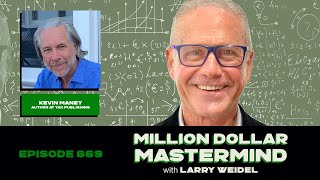
Kevin Maney, a tech journalist who wrote for USA Today for over 20 years, created the concept of category design with his bestselling book Play Bigger. He explains how companies can shape entire markets rather than compete in existing ones, and now shares lessons from past interviews on his Substack.
Questions this video answers
About 250,000 copies (he says "probably about 250,000 copies sold around the world").
About 400 members (he says "It has like 400 members").
Binghamton, New York.
About 20-plus years (he says "columns that I wrote for USA Today for a long time, 20 plus years").
Chapters
Welcome to this edition of the million Dollar Mastermind podcast. This is where we pick the brains of high achievers from all walks of life and get their hard earned real world insights on winning. I'm your host, Larry Wydell.
I am here with Kevin Maney. I'm saying that right. Am I on the mane.
Absolutely.
And Kevin, I'm excited to see some. I know you've written a lot of great books, we're going to get into all that. But why do you have so many guitars in your background?
I can't.
Hang on. I'm going to show you something. Just so you'll see where Kendrick spirits.
Oh, there you go.
Yeah, this is a custom.
Very nice.
Out of the Gibson shop. Gibson custom shop. But I got a banjo, a master tone banjo hanging on the next to it. But anyway.
Excellent.
So have you been playing all your life?
Yeah, I've been. Yeah, I've been playing since I was a, you know, a kid of some instrument or other and, and later in life, actually in my 40s, I ended up really getting into songwriting and I've been in a couple of bands that both of them lasted for, you know, a decade or more that were really interested in just doing original material which is not easy to find.
We have, we have a band in.
New York that plays, you know, regularly plays clubs around here, which. Playing a lot of, A lot of songs I write. We're playing some, some covers and things like that. But that's, that's a. I mean, I noticed you've got a lot of art. Art stuff there, you know, needing that sort of form of expression. The other way of expression is, is. Is wonderful to have. And that's my, that's my other way of expressing myself is through songs.
Well, once we get some foundational things down, let's. I'd love to talk about that because I think it adds a lot. Especially we. Rather than just plunk around the house, you put a band together and you go out and get in front of people and you, you know, you, you're taking it to another level and is part of having some fun. But also you learn stuff that relates and informs everything else you found to be true in your life. So how did you start off, Kevin? I mean you've written many bestsellers. We're going to get into that. Describe yourself. What are you most proud of as far as your accomplishments that you would like? You know, when you, you look back on at the things that you felt the greatest about.
Wow, okay. Well, in a very broad way, what, what I've done throughout my career is told stories about the technology industry and about what technology is, is doing to society and, and how we're is changing our lives and, and whether it was columns that I wrote for USA Today for a long time, 20 plus years, or magazine stories, or the books that I've written, or for that matter, some of the songs that I've written have actually gone down that path. And then now in the later part of my career is working with startup companies. Help them understand how to tell their stories and actually help them understand what their stories even are, because a lot of them don't know that. And seeing how much it helps them and helps the public understand what technology is all about, the players in it, how things work, that's been sort of the high line of my whole career is that's what it's all been about. And the fact that I've had an impact of some sort doing that has been really satisfying.
Yeah. And you've got, I mean, just one of your books, over 150,000 copies that we know of the Play Bigger How Pirate Streamers and Innovators Create and Dominate Markets. Is that the most recent one or.
No, I published three books since. Yeah, but let's talk about that one for a second because let's do it. Because Play Bigger, Play Bigger changed my life more than a lot of things that have happened in my career. And so first of all, just, you know, on the outcome side, is that by far the bestselling book. In fact, now we've put together probably about 250,000 copies sold around the world. By far the bestselling book I've ever been a part of. But then Playback proposed this concept that we call Category design. And now that has turned into a strategic advisory Business startups, venture capitalists, whatever, read the book, they call us up and say, please help us to what you wrote about, because it really works. I mean, I'm a writer, but I put this stuff down in family. I've been as surprised as anybody that this stuff actually works and changes the way companies think about themselves. And now this whole thing has become, it's become a movement. There are like hundreds of people who describe their jobs as Category designers based on what we wrote about. And in fact, just in the last couple of weeks, this, this new community launched called Category Thinkers. It has like 400 members of people who just all, you know, believe in this stuff. So it's, it's the, the impact of this thing has been phenomenal beyond anything that I've Ever, ever been a part of.
Now when you. Did you create that term category design?
We did, yeah. Yeah. So a little, a little, a little background story of the book was I had, by that point I'd written, I don't know, four or five books probably and been a technology writer for ages. What does that mean?
What does that mean, a technology writer?
Yeah, sure. Let's go way back for a second. As I started so much, I grew up in.
Where are you from? Where were you?
I grew up, I grew up in Binghamton, New York.
Okay.
A small town, Binghamton, New York. So Binghamton, New York happens to be essentially the place where IBM started. There's a little town called Endicott right next door. And that's where the heart and soul of IBM was up until like the 90s. And so I grew up in a town where IBM was the dominant force. And when I got out of. I wanted to write, be a writer, I wanted to be a journalist. So I got out of college, I got offered a job at the local newspaper and one of the openings they had was the business reporter. And I wasn't particularly trained in technology or business, it was an all in journal. But I thought that was interesting. And as a business reporter you start writing about technology. And I got very lucky because this was like the mid to late 80s, right about the time that personal computers took off, people started becoming very interested in technology. And so I just stuck with it and rode that wave. Ended up at USA Today writing a regular weekly column about technology and the industry and the players in it.
What would a typical week at USA Today writing about technology? Would it be whatever came up with the editor suggested to you, were you, you know, and all these things, you know, we talked early on songwriting, painting, whatever. You always have a thousand ideas that you haven't got to yet. Were you coming up and just going through, you know, reading the news, talking to people, getting ideas for articles and kind of back, you know, keeping track and just getting to them as you could knock them out or was the editor throwing them at you or a.
No, no, it was, it was, it was generated by me most mostly. And, and I, I spend a lot of time, you know, you're talking about having solid advice and one of those pieces of advice is, you know, I networked like crazy. Like I wanted to meet everybody, talk to people, I talked to everybody. And it wasn't necessarily like I'm talking to you for a purpose because I didn't have an interview. I just wanted to hear what people were working on their ideas, what they were thinking, and I would. So was that an extension of why.
You wanted to write?
Yeah, absolutely.
You know, one of the big things that I heard early on from my cousin that kind of has kept me moving is follow your natural curiosity. And it sounds like you have followed a trail that has been motivated by your curiosity about maybe was triggered to the technology side. Growing up in a town where you had IBM, you know, kind of dominating everybody's thinking and the air you breathe and you know, probably at least one or two stories on the news every night and so maybe cause you to lean over to that subject, but your natural curiosity about the people and the stories behind the scenes rather than getting caught up in the nuts and bolts and sounds like that's where your interest always was, really kind of started and pursued.
No, absolutely. And in fact, I mean, one of the great things about journalism is it's a free pass to ask anybody anything you want to ask them, right?
Yeah.
And so, you know, and when you work for a high profile organization like USA Today, everybody wants to talk to you anyway because they know it's going to reach billions of people. And so that led to me, you know, I mean, everybody you can name that's been a big player in technology for the last 30 years. I've, you know, I've interviewed, talked to, had relationships with.
Yeah.
And, and so that's, you know, that's actually been a very exciting part of what I've been doing actually just to, to a quick point is that, you know, I had, I had so many stories about like, you know, just to tell and you know, but I have two, I have two grown kids and my daughter, my oldest also got into journalism. She works for a magazine in the uk and so at one point about a year ago or so, she said, you should write some of these down. So even just for me, I want to have them. So I ended up pulling some of my old files. I've saved every clip of every story I ever wrote.
Really.
I started pulling out some of my old files from the 80s and 90s and early 2000, whatever, and, and started a substack newsletter where, where each week I write like I pull some old story out about an interview with Bill Gates or you know, or something like that.
Yeah.
And, and you know, write about my, what was going on at that time and try to draw some lessons out about that from that people could learn today. And that's been, that's been actually great fun. It's like both getting a chance to reminisce but also like put it in the context of what's going on now. Right.
Because the principles don't change. You know, the fundamentals, the principles, the strategy. If you're a chess grandmaster now, you're probably following a lot of time tested strategies that have always been in there. I'm talking out of school because I don't anything about.
So you could be saying anything but.
You know, like songwriting or, you know, all of these things, the fundamentals seem to stay the same no matter how you can combine them and put them out there in the public. And so having that, that's probably like buried treasure for you to get back in there. I'll tell you one thing you probably found. You probably found you were smarter back then than you realized you were at the time because of the things you wrote down. You didn't even really understood what you were writing at the time. If you had that experience.
I had the other.
Some of that.
Yeah, I was like, oh, wow, how did I. How did I go? How did I do that?
Right? And so revisiting that, a great, you know, what a great thing to do. But the thing that is so helpful is to, you know, I don't know if you have experienced this, but people will. You'll make a point, you'll tell a story and there'll be a big point in there and it'll go right over most people's heads because you're familiar with it, you know what's behind it. And all you'll think, man, this is going to be bullseye. But it'll. Most of the time it goes right over their head. And so it really is helpful. I found it's really helpful to help go through that stuff again. Like you said, pull out the truths or pull out the fundamentals from some of these old articles telling the stories, but help people understand. Here's how you. Because it's one thing to know fundamentalists, another thing, how to apply it. And people get lots. That's the great thing about stories. You can hear all of the unlimited ways people have used these fundamentals to accomplish things that maybe they ever thought about before. And so that's what's so good about writing these things. Publicizing, explaining and backing it up with a interesting story kind of keeps people engaged so they can stay with you long enough to get the point. So how do you unravel these? You know, what's in your mind when you. Because obviously you hit a nerve with the way you wrote the book. You know, let's just stay with the bigger book. I've got other questions about that USA Today experience, but how did you, you know, what was your intent? How did you picture it in your mind that you were going to be communicating these concepts? They're really revolutionary type concepts when people read it and then they want to change their company, change themselves, and then it turned into them calling you up and say, help us do it, you know. But what was in your mind? Because you obviously had a good idea about how to communicate that stuff.
Well, here's what happened. So, so I wrote it. As you can see, the book cover is with three other guys. All three of them had been technology company founders or CEOs or investors in some ways. And then they had later in their careers started advising startups and basically they had a few concepts and one of the basic ones. And I'd known a couple of these guys for a long time and we were talking about this over dinner one night. And by this point in time too, I had been writing about tech for ages and I knew, I knew the trends, I knew how things were working. They had this one observation that was that in most markets today, it's always been true to some extent, but it's particularly now in Digital markets like SaaS software, for instance, or apps and they can on the web that, that almost always it's a winner take all market category, right? You get, you get, you know, you get an Uber that takes like the, you know, 75% of the share of the, you know, rides, ride sharing on demand transportation category, Lyft taking 20% and a bunch of hangers on with a little bit else. And that plays itself out over and over. In fact, there's been research by economists that have showed that this is the case. And so then if you, if you actually think about that for a second, logically, you think, well, if you're running a company or starting a company, why wouldn't you want to do everything in your power to be the one that wins a market category? If you're, if the one who wins the market category is going to take 75% of the economics of the category.
Correct.
So then if that's the case, can we study companies that have done this and look at other research that others have done and try to reverse engineer how to do that? How do you see a new market category in the first place? Once you see it, how do you set its rules and claim it so that people think that you're the one that's going to own it? And how do you roll that out to the market so that people start to believe you're going to be the winner of this category and really kind of carry that momentum and throughout the years. So the process of writing the book was actually a process of, of really thinking all that through and doing this reverse engineering of all this. And there was no phrase called category design at that time, but there was actually one day that the four of us were. We always, you know, we always got together at one of the author's houses in Santa Cruz and spent a few days like, you know, just hammering out ideas once a month. And we were just talking this through. About halfway through the book, we were like, what is this thing called that we're writing about? And Al Ramadan, who's one of the co authors, had a long stint at the top of Macromedia and Macromedia had created this idea called Experience Design, which since has become a thing. Like there's thousands of experienced designers out there in the technology world. And he was talking about, Al was sitting there going like, this sounds like it feels a lot like a, like a discipline, like Experience Design was when we created it back then. And I don't know, I can't even remember they credit me with piping up and saying, but it's about categories. It's category design. And everybody's like, yes, that's it. So we gave it a name, Category Design.
And it really is.
It's about how to identify and then define and hopefully win a market category over time. And, and that's what the book is about. It's kind of a playbook for doing that. So the whole process of talking all this through is how we kind of came to all these concepts. And then I'm the writer of the group. So I was the one who was going home after these big discussions.
Yeah.
Putting it down on, you know, you know, you had to go to work.
After the great fashion. Yeah.
And you know, and then, you know, whatever it was, 12, 14 months later, you know, we've. And we had a book.
Thanks for listening to the Million Dollar Mastermind. If you felt there were any valuable takeaways from this episode, please take a minute and leave us a five star review. Your feedback is important and really helps us get the word out to a wider audience. Remember, we have a valuable webinar that is absolutely free. Register for it right now@whiteallonwinning.com thanks for listening.
More from Larry









Rick Jordan on Self-Engineered Proximity, Cyber Security Moats, and Truth-Based Leadership

Fire Fast or Fail Slow: Kevin Brittingham Reveals the One Rule That Built a $100M Empire
