Episode #670 - From Serendipity to Strategy with Kevin Maney, Partner at Category Design Advisors
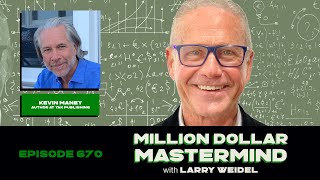
Kevin Maney, a former USA Today tech reporter turned category design strategist, explains how writing a clear point of view helps founders align their teams and culture. He traces his own path from covering the digital media shift in 1995 to building a deliberate career, and argues that specificity and naming matter more than most founders realize.
Chapters
Welcome to this edition of the Million Dollar Mastermind podcast. This is where we pick the brains of high achievers from all walks of life and get their hard earned real world insights on winning. I'm your host, Larry Wydell. Well, you know, I like to point.
Out to people and I, I just kind of bore the hell out of people with this thing about something that's informed my thinking in my life is phrase. And I don't know where it came from. You got to be specific to be dynamic and it just shows like where that applies in paintings. I find that when I'm working on a painting, most of the time you don't know what it's going to be. And then somewhere in there it'll start to tell you who it is, what it's going to be. But the quicker you can get to the point where you know what you're going to call it, the quicker you can really turn it into something special, you know, And I, you, I don't know if that applies in writing songs, but, you know, it's like when you have a name, there's an identity to it. And when you have, you're communicating concepts you've got, what's winning for you in this particular situation is you were, you were able to come up, even though it was a struggle with naming something that everybody struggles with and just giving that name, that category out there, that definition allowed people to do what you did, crystallize a whole lot of other thoughts. That's what I love about it. And once you crystallize, it's like all the rays of the sun, you know, it's like used to say all the rays of the sun are available for everyone. But if you take a 4 inch magnifying glass and you take that anywhere in the earth where you can get sunpower and you can put it on a spot, you can start a fire. That's the whole thing about being specific. But a lot of times, like, we're like, what is it? What are we going to call it? What is. But that is worth the struggle to get it because that sets you off on a whole new adventure. And when you got that, how did you proceed after that idea, that phrase, that concept jumped in your mind? What did that trigger?
Well, I actually, it was, it was the process that triggered the phrase, if not the other way around.
And then you had to write and communicate it, you know, Right? Oh, yeah, right.
But, you know, yeah, it was, it was, it kind of, it kind of was a natural outgrowth of what we were Doing? It wasn't, it wasn't.
What were you doing? Let's just say to people like, because too many people out there, Kevin, are trying to do it themselves. And if you can get a group of people where you're bouncing ideas off, you know, you're able, you're probably going to get where you want to go a lot quicker. They don't have to be in business with you. But if you have, that's one of the things that's kind of a amateur mentor type thing is you got some friends that are like minded, they care about what you're talking, you know, what you care about and you can bounce things off, you can start a process of kind of narrowing in on it like you guys did. How long did that process go? What would you have described that process before you came up with that name? What would you have described to me the process you were going through?
Well, I would describe it as writing a book. So let me not be a traitor and, and say something about writing. So it's one thing to talk, one thing to get a group of people around, right. White with a conference room, with a whiteboard, whatever, throw ideas around, talk about things, you know, come up with some ahas. That's, that's great. But let me say something about that I've learned about writing. So writing is discipline of thought.
Yep.
And, and so you know, you can have all of this, all these great ideas and all these, you know, these things, these words and terms and I thought things floating around, but if you're forced to write them down in a way that others can consume them, you have to have discipline about the way you're thinking about it because the ideas have to add up to something and they have to connect to each other. So I've always told like I have, I have, look, I've had this whole career of collaborating with CEOs and thought leaders on books. And even though I don't write every book that comes to I have, I always have CEOs coming to me and talking, asking me about writing a book. And one of the things I always tell them is you will be a better person and a better thinker just by having written a book. Because it will make you take all of your theories and your, your disconnected ideas and put them together into something that's holistic because that's the way a book has to be. And by the way, about this whole thing about writing, when we write in play vigor about category design and how to do this, what we're telling companies and the way we practice this is that the most important single outcome, after having all the discussions about what your company is really doing, what problem you're really solving, what should this category be called, having all those discussions? The product. The main product is something we call the POV. It's not long. It's maybe 800 or 1,000 words. It's a narrative story that tells the world why this problem exists, how it should be solved, and why this particular company is the one to solve it. Basically, that kind of format, and if you are forced to write that down in really clear language so that you can hand it to anybody in your company and they will understand exactly what this company is all about, you can hand it to any partner and they would understand exactly what this company is all about. And you could tell the public and understand exactly what you're doing, that that is the most important single thing you can do. Because if you do that, then you have a common way of talking about everything else that you do, whether it's the sales that you put together, whether it's the instructions you give to the product team, whether it's the way the marketing department goes out there. But if you have this common way that you've all decided this is the way we talk about ourselves and the way we talk about what we're trying to build here, that's the best starting place you can possibly have. And it's got to be written down well.
And without that, it's hard to have anything closely resembling the same kind of unity on your team and where they understand what. What they're doing and how that. Why that's important to the. What the company's doing, you know, how they fit in and why there's value behind what they do. But when you can explain to people what your company is all about, not only other people can understand, but the people who work there, it helps keep them on track and keep them focused and makes that a lot easier for management.
You know, you're not absolutely. It's a person.
Remind them, remember, now, this is what we do. You know, it's like.
So one of the things we found as we've done this in practice, is that it creates exactly what we're talking about. We use a word alignment. It creates alignment inside of a company. And not only that, but it becomes the foundational document of a culture. And so the other thing that happens is once you have that, you talk about employees, employees who are not on board with that are going to leave. And you want that to happen. And in Fact, other people who are out there, other talented people who understand what now, understand what you're about, who do believe in that, are going to be the ones that come to you and say, I want to work there. It's going to help you. It's going to help any company essentially sift its culture to the point where now it's got a bunch of believers on board. Yeah, they're really helping carry out what the mission that it wants to do.
I want to back up, as you're. I couldn't agree more. And I'd like to back up and point out something you did really cleverly early in your career that maybe you weren't aware how smart a move it was, but some way, somehow you got yourself into a position, a job, an occupation where you're working with a, you know, USA Today in a position where you could follow your natural curiosity, you could write and you could really be at your best. But it would open your education, it would put, you know, when you think of having an unlimited education leading to unlimited opportunities, that's really kind of opened that door. But it never would have happened in the same way had you not been able to get on with USA Today riding on technology. So how did you get that job? Because, see, the reason I point that out, there's a lot of people that are just starting out and are going through a transition and they're wondering, how can I, you know, how can I position myself as a next step? That would really help give me advantages for propelling myself on where I want to go after that. And how did you, how did you get that job? What, what put that in your mind?
Well, you know, a lot, a lot of what happens in life is at first serendipity and, but then what you have to do with that serendipity is become intentional about what you do with it.
Yeah.
So let me explain. Was I, I ended up, we went from the beginning of the newspaper to a newspaper in Westchester county, which is, and both were owned by Gannett. And I was working as a technology writer in Westchester county, which was also where it was a big IBM contingent and other technology companies. USA Today had just started. I don't know how old it was at the time. It was still pretty much startup stages and they needed to pull in reporters from some of the other Gannett newspapers. One day the business editor came over to me and said, hey, USA Today is interested in, and, and having you come join them. You want to, you want to do that? It turns out that they were asking Me, because about a bunch of other people turned it down and didn't want to Joe. Join it because USA Today was a, it was a risk. Right? It was a new, it was kind.
Of a new thing.
And. But I was, I was 25 years old and I was like, hell, yeah, I'll go for any. Whatever. And as far as I know, it could have closed in another year.
Right.
You know, it's. But like, what was it. It wasn't going to cost me anything. I was single, I was, you know, mobile. And so that's how I got in the door at USA Today. But I always had something I. I tell my kids, who they probably get sick of me hearing is, is have big goals and small plans. And I always had big goals of like, I wanted. I, I wanted to be. And literally this was a thought I want. From the time I was in college. I wanted to have a national newspaper column and I wanted to write a book. Those were two, two big goals that I had in my head.
Right.
I didn't know how I was going to get there, but I was going to try to do whatever I could to get there. And, and so this, you know, serendipity of landing at USA Today and, and I just, you know, I started as a reporter and as a writer, and I, you know, I knew you had to sort of win your way to being a columnist in newspapers because that was kind of a special position and I worked at it. I mean, I was. Once I was there and I. Opportunity became very intentional about trying to get to that point where I, where they, they asked me to, you know, be a weekly columnist. And that gave me a whole platform that was then my own. I could decide what I, what I wanted to write about, which meant I could decide who I wanted to talk to, what interesting things were out there. And that, that in turn led to that. Your, your point about my curiosity is I could follow my curiosity where everyone wanted to take me.
Yeah.
And so, you know, I turned this, the serendipity into, you know, some intentionality going after the goals I wanted to achieve.
That thing of following what was you were interested in or what you thought would be interesting. You know, that that is the answer for leaders, people running things. Like, they, they're saying like, well, what should I do with the company? You know, what, you know, or we're going to have a contest, you know, what kind of contest and what kind of product. It's like, what direction should we go? It's like, well, what do you want to do? What can you get excited about. Because I would like. You plan a meeting. We planned it enough. I don't know. Are you excited about it enough? Can you think of something? Are you excited about it? Are you getting ready, thinking about doing it? Well, then you probably got enough planning in it. It's like if you're excited about. In doing these interviews, what I find out is, you know, I'm usually furious of myself when it's over there of things that were obvious. Lay down perfect questions that I forgot to follow up on because you can't get everything in an hour. So. Oh, well, next time I talk to Kevin, I'll ask him that. But the thing is that I usually follow my what am I curious about? And I usually see that that keeps things interesting. There are people. If you follow the things you're interested in, it'll probably turn out pretty good. You'll probably be able to turn that into something fun for other people too. And you've been able to do that time and time again. And when did you get the idea that you could propel beyond working with USA Today and become a writer full time and go beyond just having a nation of.
Well, and again, I'm going to go right back to serendipity, to intentionality. Yeah, I had, I had the big goal of someday I wanted to write a book. I didn't know how I was. I was working at USA Today in the. It was the early 90s and all of this stuff was starting to happen about, if you remember, like things that. What was called then the information superhighway and content was starting to become digital. As you know, music was being put on CDs and we're starting to get things on, you know, interactive TV was a conversation people were having. So all this. But you. I, I could see, because I'd been in the business for a while at that point, I could see that this was all leading to something really interesting where media was going to like, become digital and everything was going to change. And so I, I started writing a lot about that for USA Today. And, and then I had the idea, well, this stuff is really adding up to something. Why don't. I'm going to write. I'm going to write a book proposal. So I wrote a book proposal and I had no idea. I didn't know anything about the publishing industry. I didn't have an agent or anything like that. And so I started trying to chop this thing around. It went nowhere. I literally had a big printout that I stuck in a drawer. Classic thing, right? And somewhere, maybe, I don't know, three or four months after I gave up on that, an editor from a big publishing house called me, had read some of my stuff in USA Today and said, hey, have you ever thought about writing a book about this stuff? And I said I could send you one tomorrow. And so that turned into my first book, which was called Mega Media Shakeout. And then talk about a bunch of serendipity things piling up on each other is the book landed in April 1995 and it was the first book that landed that was basically about media going digital and what that was going to mean to all these different industries. And it was that summer that Netscape went public that basically the consumer Internet, Yahoo suddenly appeared on the scene, Amazon appeared on the scene, the consumer Internet blew up and all of these companies across all these different industries were panicking about what does this mean? What's it going to do? And my book landed right in the middle of that sold really well and also got me pulled into like, I got requests to go speak to company boards, to speak to conferences of like 5,000.
What was that like? Let's talk the first, first time going to speak to a company board. What's going through your head? What was that experience like?
It was frightening as hell. So I, I had no experience. So looking back on it, if there's anything in my career, I wish I could go back because I did not know what I was doing. I had no experience doing this. I suddenly got pulled into all of these situations and when I look back on it, I was so bad. And in fact, eventually I ended up hiring a speaking coach to help me figure this out and get a little bit better at it. And now actually all these years later and I've spoken so many times to so many groups and I get up in front of companies all the time. It's like, it's a, it's a no brainer and I kind of know how to do it and I can be pretty dynamic about it. Oh my God, I was so bad at it back then and I'm sure I completely screwed up. Opportunities I could have had.
Thanks for listening to the Million Dollar Mastermind. If you felt if there were any valuable takeaways from this episode, please take a minute and leave us a five star review. Your feedback is important and really helps us get the word out to a wider audience. Remember, we have a valuable webinar that is absolutely free. Register for it right now@whiteallonwinning.com thanks for listening.
More from Larry









Rick Jordan on Self-Engineered Proximity, Cyber Security Moats, and Truth-Based Leadership

Fire Fast or Fail Slow: Kevin Brittingham Reveals the One Rule That Built a $100M Empire
