Episode #672 - AI And The Future of Society with Kevin Maney, Partner at Category Design Advisors
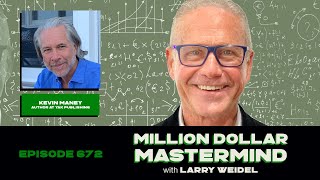
Kevin Maney explains how generative AI shifts what's possible in markets. He points to Hippocratic AI using conversational models for chronic care, where 200,000 nursing jobs sit open and 130 million Americans have chronic conditions. His advice: get hands-on with AI, find problems only it can solve, and write clearly to sharpen your thinking.
Questions this video answers
About 12–13 years.
Total Blam Blam.
Upper West Side.
More than 200,000 positions.
About 130 million people (roughly half the U.S. population).
Chapters
Welcome to this edition of the Million Dollar Mastermind podcast. This is where we pick the brains of high achievers from all walks of life and get their hard earned real world insights on ready. I'm your host, Larry Wydell.
Now where do you base out of though?
And in New York.
So you're in New York and that makes it easy to get to these media outlets and also direct flights everywhere you need to go.
That's true.
How long have you, how long have you lived in New York? And tell us, tell us what it's like living in New York now and compared to the past and are you going to stay, you feel like you're going to be stay there?
Well, at the very moment that we're talking the, the, the smoke from the wildfires is now like bl back into New York again. So I'm looking out, I have, I have a view of the skyline out my window and it's now like all smoke covered.
Canadian fires here.
Yeah, yeah, the Canadian wildfires. No, but yeah, it's been, I've been here for about 12, 13 years. It's, it's a, you know, it's, it's a fabulous place to live. There's so much to do. I now have, you know, I've been with a partner now for a number of years. She's here. So, you know, we're probably sticking staying for the foreseeable future. But yeah, it's a, you know, you know, everybody, everybody comes to New York at some point. So that's one advantage of, of being here is that, you know, people I know from all over the world, CEOs or leaders or friends or whatever, at some point they all come here and for some reason or other and I get to see everybody.
Part of my formative years was as a military dependent with my father's station out at Governor's island back when.
Oh really?
Yeah.
Now it's now Governor's island is basically a big playground.
So yeah, yeah, it's a great location. Yeah, there's nothing you can't go wrong there. So talk about now. When you look at the most fun things for you to do and the most fun that kind of people, obviously music is a big thing for you. What are the most fun things for you to do and what are you getting ready to do more of?
Loaded question. No, you know, I, I mean, what's the reward?
You know, what can people look forward because you put yourself in a position to do what you want to do with whoever you want to stay intrigued, travel, take off launch unlimited new projects. And it's like, what is it like? And how would you say, Kevin, is a smart way to handle. Because I'm assuming that that's how you're going to do it. Handle the results of the success you've had and opportunities, experiences and relationships to be able to go in and have the most fun and productive, exciting life going forward.
Well, here's what this buys you. The, you know, the successes and all that. What it buys you is more chances to do what you really want to do now, what other people want you to do. And so that's what I've been trying to do more and more of, is if I'm going to write a book, I want it to be a book that I'm really excited about doing for some reason or other. If I'm going to work with a company, I want it to be because I think there's something special about this company and that I could really help them. You know, I'm able to turn down things that I don't want to do. And. And that's a luxury. You don't.
That's a great luxury.
That's right. Right. And, you know, we talk about, you know, talking about big goals and, you know, in life and all that, and I've been lucky enough that the big goals that I set for myself when I was young about national column writing books and actually I had this thing in my head of someday I want people to essentially pay me for what I know, which is what's happened now with the consulting business. The big things that were in my head that I thought maybe I'd never accomplish have been, you know, been accomplished. And that's very satisfying. And, and so one of the. Bringing kind of full circle back to where we started this conversation. One of the last things out of my checklist is because I. I do love writing original songs. I think I'm actually very good at it. We have, we have, you know, a number of songs that have been, you know, recognized. Has been quite good.
What's the name of your band?
Total Blam Blam.
Okay.
Total Blam Blam, which is stolen from a David Bowie lyric and the song Suffer Get City.
Okay.
But yeah, maybe my last remaining goal is that I want a song that I've written to be recorded by some major recording audience. That's my last remaining work goal in life.
I thought it was going to be something in line that you're going to be. Have a number one hit with the band with a song you wrote and you're going to be the musical guest on like, Jimmy Fallon or Saturday Night Live, you know, that, that would be.
Pretty amazing, but I'm probably too old for that. And, and, and you know, I'm not sure.
Well, plus, you did say small goals. You said big, big plans. Big goals and small plans. It goes a small plan.
So, but no, honestly, like, I, I, I put more, I've, I've always thought of myself more as a, you know, as a writer than a performer, whether it's about, even about, you know, do you enjoy literature and kinds of things? I enjoy performing. Yeah, but perform, yeah.
Yeah, but what, but what, what, but.
What really matters to me is being able. I, like, I would, I would have some fun being in a cover band, but that's not, that's not really what turns me on. What turns me on is being able to create something new.
Yeah.
And so that's why I say, like, I would, I would be very pleased just to have something, a song that I've written be recognized like that.
Well, I imagine one of the great joys in your life is seeing, you know, where you've put this, you know, discipline, thought. You know, you've got your book out there and you've seen people grab onto that and you've seen some amazing transformations to any of those stories. I mean, that's really heartwarming. You know, that's one of the great joys of life, passing on information. And people do use it. They were looking for it, you happen to be the one to provide it to them. And then, boom, you know, lives were changed. Any of those stories that come to your mind right now? Well, yeah, sure.
I mean, many of the companies that we worked with had outcomes where they, you know, like there's, I mean, I could think of. And these are not particularly familiar companies because we work with a lot of companies that are very early stage. Right.
Yeah.
So, like, you know, there was this one founded by a woman in Silicon Valley called Guide Wheel that was, that's, that's trying to make this system of sensors and software that are very inexpensive so that smaller factories, which are really like the lifeblood of countries, like in place places in like Africa is more that, you know, they tend to have a lot of, they, oh, they, they use too much energy. They're very wasteful, all these things, and yet they can't afford the big software systems that would run a factory that like, you know, General Motors might buy. So they wanted to put together a system of very simple sensors and software that could help some any small factory run far more efficiently and you know, and less energy and better for the climate and better for the environment, all this stuff. So you know they came to us early on and we helped them. We realized that they were trying to do something new and we helped them formulate what this category looked like, how the rules would be for the category write that pov. And they went from a few people with some ideas to a company that was raising serious money for venture capitalists. And now they got people to believe in what they're doing and believe in why it's important. And we've seen that play out with company after company. We've helped them expand their vision of what they could do and, and be able to talk about it in a very effective way which ends up leading to better deals with venture capitalists or at later stage companies going public at a higher valuation, just basically doing better overall.
For those of you who are sick and tired of fooling around and are dead serious about wanting to move up fast, I've got something especially for you. I've combined the best insights from over 40 years in business and making $70 million in income and compressed them into a free webinar. That's right. It's a free resource. If you want to find out exactly what the concepts are that I use in coaching million dollar earners Register now@widelonwinning.com youm'll discover the five part framework used by so many to reach their financial, personal and professional goals. You can find that link in this episode's show Notes.
How fast have you seen companies turn around like that?
One of the things that one of our tenants is that these, these companies at this stage don't have a lot of time to waste. Right. They're not engaged. Some consultant working with them for a year to try to is not going to work. So we, you know we have this program that really trying to get some to a whole category strategy in about a month and, and and then once they have that in hand, I mean we've seen there was one company out of Seattle called Prescriptive that was started by a bunch of ex Microsoft people who with the week after we worked with them had, were going to a conference where they lined the CEO had lined up meetings with dozens of venture capitalists and he had already before us met with VCs a lot and always had always had a hard time explaining what they were doing right. VCs didn't get it. They were often saying like listening for 20 minutes and then saying I don't and he said the difference between then and one week after working with us and having that way to talk about his company was like night and day and he could get to the point much quicker. And he got so many more interested VCs and that led them to, led them to a big round of funding for them. And now they're, they're, you know, very much up and going organization that's really trying to change the way prescription drugs work in the U.S. you know, again, another thing that I, you know, that I can get behind and believe in and, and so, yeah, I mean it does really actually change the way companies are perceived out there and it makes a big difference.
Yeah. And the thing is that it reminds me of when I started in sales. I went a whole summer and people would say, sounds good, not sure exactly why I need to think about it some more. And it was like, I'm confusing these people, you know, and as I got more specific, like you said, you get more clear, like, here's why you need to do it. Get rid of the other clutter, you make it real easy for them to see, have clarity about why this is important for them to do. And then the dominoes start to fall your way. But when you're vague about it, you're just going out and you know, throwing general stuff. You tell the story, but not with a purpose and not how it's going to help them and how it's going to benefit them and why it's important to do it. Now, you know, that type thing, that urgency about if you can't get them disturbed about what they've got and show how you're the answer. And so it's interesting to see that play out with companies getting their message together and how that impacts going out and getting capital. And so let's wrap this up with a real brief tutorial recommendation from you to people like me who have dabbled with AI, have aware of the importance, but like my experience, I've got to use things for me to understand them. And how would you. And my idea is that. Or what I usually do is like I do my normal stuff and I say, okay, let me see if I can get it done through that, like writing an article or coming up with something like that, or sorting through options and are coming up with a list of options, you know, and so what, what would you do? Advise people who want to get going on AI themselves personally to get familiar with it. You know, which app, which, you know, go to the chat, GPT, you know, sign up Log in, get yourself an account or are there apps out there? What would you recommend?
Well, yeah, I mean. Well, first of all, I mean, I just don't want to pass myself off as a technologist because I'm not. Yeah, but, but I mean, yes, getting your hands on, on this and starting to find out like, you know, what, how does it actually use can actually start to, to give you ideas. Right. But I want to go back to what I was saying before, is that that changes in context open up new opportunities for new categories.
Would you say that again?
Changes in context opened up new opportunities for new categories to be created. And so what's happening, well, what's happening right now is with the way, what's going on with the generative AI is an enormous change in context in technology. So suddenly we have a new tool that didn't exist just a couple of years ago that and solve problems in new ways that nobody ever expected before. And so the goal is to actually understand what that technology can do and think about the problems that it could possibly solve. Here's an example. I talked the other day with a company called Hippocratic AI. The founder, who is actually somebody who's been in AI companies for years and knows AI, looked at what was going on in generative AI and its ability to understand things and talk to people in very human ways and got thinking about the fact that there's this tremendous nursing shortage in the US there's more than 200,000 basically positions open in nursing.
But even more than that, there are.
Half the population in the US 130 million people or so have some kind of chronic condition, chronic disease or condition they're trying to manage. And so ideally, actually, in an ideal world, every one of those person, people would have a personalized nurse that would help them manage their condition and constantly check on them or give them advice or whatever. Of course, you can't make 139 million nurses and it would cost a phenomenal amount of money, but suddenly realized with this ChatGPT thing that you could actually train it to know a lot about what nurses know about certain chronic conditions. And actually as each individual user uses it, that can also get to know that particular person. So you could create for, you know, pennies on the dollar, you know, basically as many millions of nurses as you wanted. I mean, they're not going to be a professional nurse who can actually, you know, help you hands on and change your bandages or give you an IV or something like that. But in terms of sort of like a layer before nursing that could actually be with you every minute or every day and be there to answer any question you wanted and know you and know your condition and know how to talk to you in a very human way. You can start to create this essentially a new kind of solution to an age old problem. So over and over again we're going to see over the next five to 10 years, we're going to see that happening over and over and over again that people are going to see how this new generative AI and other technologies that we're developing now solve these intractable problems in ways that was never possible before. So to your listeners, I would say first understand how this stuff works and what it can possibly do and then look at the problems to be solved that you think it could apply to and try to solve a new problem. And that's, that's where you find a new category.
Yeah, Very, very interesting. Thanks so much. I'm excited to hear more about the play bigger and the category design concept and really excited to see you have such a broad audience to where you can impact people to play bigger, you know, because we need more people doing things bigger right now and solving, thinking bigger, solving problems in a new, innovative, bigger way. And so the fact that you're out giving, you know, you're, you're kind of a Johnny Appleseed out there of doing it bigger, planning that the possibilities of it. You know, the first, first thing is you got to get the possibility firmly in your mind that you know, that could happen to you. And so I think a lot of that has happened today and really enjoyed the interview. I always let people have the final last word to wrap it up that for the people who have stayed with us the whole time. True. And what kind of last word or last comment would you like to, you think would be useful for people listening?
I just, I can't emphasize enough how important the discipline of writing is. And so, you know, it's, it's not only benefited me, but it benefits everybody. And it, and it's a, it's not, it's not really about writing, it's about thinking. Yeah. And so I always say whatever you're, whatever you're trying to do, whatever you're thinking, sit down and write it down as clearly as possible.
Yeah. And because once you do that, it's kind of like sketching and art. You don't worry about how nobody's. Is this enough for publication? This is for you, you know, because you can remember your thoughts on a subject and then the next time you go through it will be more refined, you know, and it's a way of getting going, kind of opening up the door in your mind and telling your mind you're serious about this subject and getting, you know, getting it organized and good things could come, but it's not going to come until you, you start writing. So, great, great insight, great, great comments, and I'm gonna look forward to us talking again down the road. I'm gonna come looking for you when I cut. Which side of New York? What part of. What's the best part of New York to live in?
Well, I'm, I'm on the Upper west side, which I like because it's a little bit away from the madness, but it's also close to everything, and I'm right close to Central park. So it's, it's a nice place to live. That's.
I, I know some people with apartments over there. That is a great place. So thank you very much and look forward to talking in the road. Look forward to your next books.
All right, thanks, Larry. Appreciate it.
All right, thank you, Kevin. Bye.
Thanks for listening to the Million Dollar Mastermind. If you felt there were any valuable takeaways from this episode, please take a minute. Leave us a comment. 5 star review. Your feedback is important and really helps us get the word out to a wider audience. Remember, we have a valuable webinar that is absolutely free. Register for it right now@whiteallonwinning.com thanks for listening.
More from Larry









Rick Jordan on Self-Engineered Proximity, Cyber Security Moats, and Truth-Based Leadership

Fire Fast or Fail Slow: Kevin Brittingham Reveals the One Rule That Built a $100M Empire
