Episode #693 - #696 Highlights: From Bike Races to Biomedical Engineering: Uli Schoberer's Journey
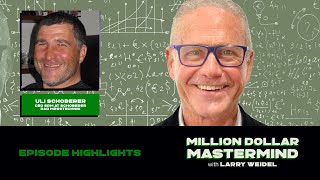
Podcast interview (Million Dollar Mastermind) with Ulrich “Uli” Schoberer describing his background in Bavaria, training as a biomedical engineer, and pioneering development of cycling power meters. He recounts early technical challenges (strain gauges, transmitting data from rotating cranks), collaborations with national teams and pro riders (USA Cycling, Chris Carmichael, Lance Armstrong), the cultural shift toward data-driven training, and reflections on future directions (smart training devices, physiological sensors) and information overload.
Welcome to this edition of the million Dollar Mastermind podcast. This is where we pick the brains of high achievers from all walks of life and get their hard earned real world insights on winning. I'm your host, Larry Wydell.
I grew up in Munich, so this is south of Germany in Bavaria. And at that time you had a lot of bike races there on the weekends, almost in every village. You need not to go far by car to do a criterium, to do a race. And you know, at that time still the Tour de France was popular, very popular. And at that time, where I grew up, there was Ben. I know. And even when I was very little, there was still Eddie Merx racing and my father liked to ride the bike was not a racer and did not competition. But I started when I was young to do football and others. Then I did bike races and I for myself want to optimize everything to the perfection. And I said, okay. At one point I came to the conclusion to describe the quality and quantity of the training. You have to measure your power and the power is a value that really describes your strengths, how strong you are. Because if you watch now the Tour, everyone, the TV is an expert now telling about power numbers of all these guys, watts per kg and all of this. But when I started this, no one.
Knows anything into an expert.
Yeah, now everyone is an expert and people are an expert. I know when I grew up and I went to the team and tried to explain them, you need to measure your power. They were the ones who said, I don't need this, I don't need this. But now they are the manager measure the power. So anyway, so I was lucky that I finished school and I started at university to get an engineer in biomedical engineering and still did on the weekend my bike racing. And I said, okay, I want to measure my power to see the quality of my training. And then I had the idea because I'm a medical, I'm a medical engineer. But as a medical engineer, you know, you have to develop hip implants, you have to develop heart paces, you have to mellow operation chairs, whatever. So you, you learn a lot. You learn how the, the body is functioning and you learn also the technique how to measure values. Like you can put strain gauges, strain gauges, what I use now in the power meter. But at that time you put strain gauges on bones, on the hips to see the stress. What is the stress in the bone? What is the stress in the teeth? But also in medical engineer and machine engineering, you put strainages in the car. So I said, okay, I think I should use this type of equipment, put somewhere on the bike and measure at least the force the cyclist puts on the cranks. And a strainage is, maybe I should explain, it's a grid of metal, very fine grid you glue on the surface. And this measures the deflection of the first of the surface and puts it into electrical value, because you put some current on. And then you can measure the change of the resistance of this grid. And then to measure power, you need two values. So one is how hard the guy puts the force into the pedal, and then the other one how fast. But to measure fast is the cadence. It's easy to measure. You count, it's simply counting. So whatever. So if you, let's say, provide 100 watts, it's the product of pushing the pedals, let's say with 50 Newton, and then have a cadence of whatever, 60, whatever, it's not as important, but you have to measure two values. But the challenge on a bike is the crank is turning, so you cannot put a cable. So you have a turning device. And from this turning device you have to transmit the data to the frame. Because on the frame, maybe you have a cable or whatever that's linked to a computer and shows the data. So this was one of the biggest challenges right now it's not a challenge anymore because everyone knows, okay, you have amt, you have Bluetooth, you have all these things. But in 1986, nothing of this was existent.
Nothing.
So you have to make some ways to get this done. And in 86, even no one had a computer. And then now to put a computer on the bike, and me, myself, I built my first bike computer. I went to a bike race and they were laughing at me. They said, ah, now he has a Gameboy who needs a bike computer. All the other guys said, no one needs a bike computer. You have to push the pedals hard. You don't need a computer. And now tell the guys at the Tour de France, everyone has a bike computer. But 30 years ago, no one had a bike computer. And no one could not do any race without a bike computer. Take away of the top guys, the bike computer. Now we have to race without. They are probably not able to do this.
It would be like racing blind. Now it'd be like racing blind without the computer.
Still have feeling, the feeling and the motivation how it is. And maybe I remember maybe six years ago or five years ago, I was at a meeting with the UCI that said, okay, maybe would be good if no one Would have a bicompler. Then I started to make a power meter that only can record the data for after race analyzes. So the power meter records and after the race you can analyze the data and have a look at this. Because if they really want to forbid the bike computer, but then also maybe they have to forbid the. The connection to the sports director in the car. And all this maybe would be because then more everyone gets more self responsible. The simple thing is, if you have a power meter and you do a climb and the power meter tells you you are doing 400 watts, the best ever you have done in your life and you still get dropped, then you know, okay, the other do more. So this tells you you are not bad, but the other are better. And then you make the question why?
Right?
Why have they better training, have the better nutrition, do they sleep better, whatever, have the better clothing, better bikes? This is, this is the, this is also where at the end maybe Craig Lemon a little suffered and then he complained about Armstrong and all the doping and whatever. But important is having using a power meter to track yourself and be confident in yourself. So you measure your performance and your strengths. And then you know, I did everything right and don't care what the other did. And then you say, okay, I did this. This is my data. The data are correct and I am that strong. Okay, the other, I don't know why they are better now. You don't know, maybe they train better or whatever. You do not know.
But you have the data. If you had their data, they were, you're at 400 watts going up this climb and they were at 4:40. You would know exactly how much the difference you need to make. And when you went to your training, you could be dialing your training in to see if you were lowering, you know, that gap to where maybe you could get ahead. And that's what you do in every business. The thing is, in every business, you know, this comes and you've got to know your numbers and otherwise you can't measure yourself with your peak performance and especially with your competition.
And you cannot doubt about yourself because you know, I did everything correct. I'm the super strongest, whatever, okay. The other are stronger. Okay, we have now to rethink all the training process. Whatever can be made better. But you know, you made nothing wrong, right? But anyway, the modern cycling is now it's different as it was maybe 20 years ago.
And so how quick did it you get up to the point where you had to have your own company making. You were selling so Many of these power meters that you had to have your own company because right now you're in three locations. One in Colorado Springs, one in Italy and where in Ulich.
Yeah, we have also one dependence in Sydney and Australia. Yeah, But I started with USA Cycling working with Chris Carmeiter when he was head coach for the Olympics in Atlanta.
Okay.
Olympics in Atlanta were in 96 and I started working with them on the track to make aerodynamic tests on the track, but also for the mountain bike team with Susan Di Mateo and Matt Overnd. So this was 85, that was the pre Olympic race. So I work closely with Chris Carmichael with USA Cycling. At the Olympics themselves they were maybe not the most successful, but the year before at the World Championship in Italy, they were very, very successful. So at the end Chris Carmichael lost the job at USA Cycling and he started his own company called CTS Training and he got the coach of Lance Armstrong. So this got me the connection to Lens that he used my product. So he used all his carrier my product and he said ole, you can use my image and everything, all for free because your power meter helped me to get where I am. So I was always free to use all his images, whatever on bike shows and didn't pay anything to him because he was happy to use my product.
Let me ask you this, you've as you got into the process of, you know, getting your degree, getting out, putting, putting your product together, you met a lot of high powered engineers and high achievers in the world of science and research. And I'm going to ask you about athletes in a minute. But what did you notice about these people that in the world of science, engineering and development, the people at the top of their game, who, how they thought, how they reasoned, how they went about things, what was your. Did you have any impressions about them? Did you learn anything from them about the way they went about solving problems and approaching difficult problems? Subjects unraveling these mysteries.
So when I worked with the German Federation, there was the East German Fesun Institute in Viktung Sportgerita. I worked with them for the German Federation, then for the Olympic Games in Atlanta. There was gt, the bike sponsor and they made the superbike. And as far as I know they made first a bike in aluminium, where I think USA Cycling had one of the best performance on the team pursuit at the world Championship in Sicily in Palermo. Then a year later they made a nice carbon bike. So this was gt. Then later when I worked with Bian de Riis, it was Fausto Pinarello. He was really Interested to make a really good bike for Team Telecom, because before he made the Swart bike for Miguel in the Rhine, maybe you remember the bike, the shape it was called Swart Miguel Inderind used for the Tour de France.
Right, right.
And then later Telecom changed from Pinarello to Giant. And with Giant was the first scientific work to make a bike frame really better. So they put strainages on the frame. We had a power meter on. And then you had Eric Zabel to do a sprint, then you had Jan Ulrich doing a long endurance climb and all this to measure the stress on the frame. So this was Giant. It really followed up with a really strong development on the scientific way to make the bike frame better. So, so there were companies, they were really high developed in a high, high scientific development. But also they were, let's say, maybe you know, Peter Keane, he was the coach of Chris Fortnight when he did the hour record. He was a professor at the university in Eastbourne. And later he transferred, let's say, the British cycling to Manchester. And he gave up all this job to brace for, because he later was responsible for the Olympics in London. Maybe you have to make a research brace for this. Now the boss, or was the boss after Peter Keane of British cycling. But Peter Keane was the initiator of the British lottery to start the cycling, let's say in Manchester. And the strength of British cycling, like with Cavendish, with all the to the frost winners of British cycling, this was.
Well, let's talk about how did this impact you? Because behind all of these products and improvements and companies making that are people. And I'm sure you've met a lot of them and dealt with them and talked with them going through the Olympic experience. How did that impact you?
Was first they preferred all my products. So they said, okay, our meters, we buy your power meter later. Let's say an example was the Team Ineos, or it was called before Team sky, they were all on sm, but at the end they needed money.
Yeah.
And they said, okay, Stages pays more. We go to Stages and I don't pay. I give them product and I cannot pay. And they said, okay, Stages pays and you pay not. So we go to Stages, okay, use a Stages power meter. The same was with other teams. So they needed money at the end, the team need money and they search money. And they, at one point they, they did not look for the quality anymore of the power meter as it was before, because they want money because the cyclist cost much more now than 20 years ago.
Right.
If you, if you look what they get now and what they got 20 years ago. There's a huge difference. A huge difference. A cyclist cannot really attract, I would say the big business. Why is Apple or let's say Microsoft or let's say Google do not put any money in cycling. These are multi billion companies. Why they don't say, okay, let's do a cycling team. It costs not much, maybe 50 million a year and we make them for 10 years. They don't do this. Why? Why do not all the big in the US you have the biggest companies of the world. Why does not anyone put any cent into cycling? This is the question. Because the image of cycling is not super good by the doping now being.
Out there, getting that feedback from the riders had to be an incredible advantage.
They're two different kind of cyclists. There's the guys of called Contador. They want very simple. I want to see my power, my heart rate, my speed, my cadence at the time, nothing more. Even Lance Armstrong too, he said, oli, I do not record. I have my numbers, I see my numbers and then it's history. I need this now. As precise as possible. Buster and the other guys, they want 10 times more information. They're always pushing the buttons on the bike computer and sometimes I feel they lost the concentration. What is cycling about? And then I had a talk with maybe you know, Andre Griper, he told me at one point only they should forbid bike computers because this is also a reason for so more crashes because they get distracted. They look on the bike computer of the navigation. They should look on the road and see what is a hundred meter coming. And they don't computer. This is the same like on your car. You look always on the navigation, not on the road. And then you end up in a river. Well, but anyway. So anyways we have the bike computer now and this should be the problem is you have to turn your head to look on the bike computer and then you cannot look on the road. And then even if it's a pre selected course and then in the race maybe there's some barriers, some other is different and then you cannot follow what is the course, what you have in.
Your bike computer, what's been the most enjoyable personal reward for you from living this demanding life? You know, because there's, there's no off season in what you do. And so it's pretty, pretty been pretty much relentless during your life. And so what are the rewards and what you know, has this been worth it to you personally? And, and what are those things? Do you think about that much?
Yeah, because I know sometimes a cyclist give me the bike. I got, for example, one of the superbikes for user cycling, what they had for Olympics. It was presented by me, by Steve Job. Lance Armstrong gave me the bike he wanted. Tour de France with a yellow jersey. Thank you. I have a bike of maybe 10 other pro cycles. I have a bike of Griper, I have a bike of Alex Sable, I have a bike of. And they gave me the bike and said only this was all your head. And then maybe with five, six signed churches and I hang them all on the wall. This is icing from a cyclist. The biggest thank you to get the bike with a signed jersey you can hang up in the office for you. Because if you make a product and the athlet gives you back a thank you with the bike he was racing and winning something. I think this means the most.
Yeah. And plus, this is something that you grew up loving from as a child and along with your father. How did your father. Did he live long enough to see you? Is he still alive to see you do this to the industry? That's got to be a great source of pride for him.
He was happy he died early and he had not seen the end. But he had always a picture of a power meter. And on his work office, he was responsible. He worked in Munich for the subway. So he was responsible to get this. Parts of the subway, the underground running in Munich. So he was also an engineer, underground engineer. So he understood what I was doing and he appreciated it a lot.
What would you do you have. Do you feel like. I know big thing right now is you want to get this new meter out. Is there any one big achievement out there that you haven't done? Because you pretty much have dominated your industry and now you're doing it just for the fun of coming up with. It's like improving the iPhone, basically, with your. Improving your. Your power meters. And because one reason for you to do it is because you know nobody can do it like you. And it's going to be interesting to see. I think everybody's interested to see what you're going to come up with. But for you, what is the big thing that would give you the biggest charge in terms of happening over the next year or two or three?
Okay. So power is still power. And this is for me the most important thing because this explains your strengths. But I think in the future it will go to have a bike computer that tells you how to make your training more smart and more intelligent and to make your training more Intelligent. It's maybe nice to measure your power, your heart rate, your speed, but probably it would be good also to see the lactate in your body, the sugar level and some other things for training to make your training better. But at one point, also I think at one point it gets too many data and you get an overload of information as a consumer and I think sometimes less would be better. And you reduce it really to the important things, really to the important things. And I have really to think deep, what are really important things? Maybe, maybe comes out it's your body temperature, your body temperature and power or some other things, but not too much because an overload of information in the training actually reduces the focus on yourself because you are looking too much on the numbers. And at the point, at one point you have also, I would not say listen to your body, but because sometimes I remember when Lance Armstrong, when Craig Lemont got world champion jamboree, he told me, uli, every lap I want to quit the race because I felt horrible, it was a shitty day, I didn't want to finish. But at the end he got world champion, he beat Konishev in the final spread. And he said, uli, sometimes you cannot trust your body feeling. You have to think that the other are maybe the same struggling as you and you cannot see this and they feel the same shit. And at the end you can still win. So sometimes it's hard to say listen too much to your body. Sometimes you have to go through this and see, okay, the other have to do the same and then still you can be the winner. So I would say find a balance. Listen, listen to yourself, listen to the data, listen what the coach tells you and what the family tells you and find your own way. But what, what do you think at the end? You have to listen to yourself, but also put in consideration what the other tell you where you.
Thanks for listening to the Million Dollar Mastermind. If you felt there were any valuable takeaways from this episode, please take a minute and leave us a five star review. Your feedback is important and really helps us get the word out to a wider audience. Remember, we have a valuable webinar that is absolutely free. Register for it right now@whiteallonwinning.com thanks for listening.
More from Larry









Rick Jordan on Self-Engineered Proximity, Cyber Security Moats, and Truth-Based Leadership

Fire Fast or Fail Slow: Kevin Brittingham Reveals the One Rule That Built a $100M Empire
