Episode #715 - Make Sure Your Product Is Compelling with Dr. Harry Leider, CEO of Organicell
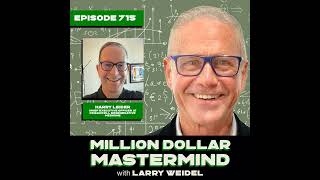
Dr. Harry Leider, CEO of Organicell, discusses why a compelling product matters most and shares four criteria for choosing where to work: passion for the mission, learning opportunities, ability to contribute, and liking your team. He emphasizes leadership as teaching, not heroics.
Welcome to this edition of the Million Dollar Mastermind podcast. This is where we pick the brains of high achievers from all walks of life and get their hard earned real world insights on winning. I'm your host, Larry Wydell.
But when you get in those situations, Harry, let's think back. How quick before your gut started to send you a signal, something's wrong here?
Well, with that particular situation was pretty quick. When I got the phone and the dermatologist was on the line, it just didn't make sense.
But now for people who don't know, the thing was why this was such a key thing. Walgreens all over the country and you had these centers where, you know, they had this con game going with the.
Drop 41 of our pharmacies. As a pilot. Yes.
Yeah, as a pilot. So you had, you were the front lines of this big lie that they had.
Yeah. And again, I don't blame Walgreens or the leadership because if you're presented with fraudulent information. Right, right.
They make up, you're trying to do a good job for your survey. You know, this cutting edge, you know, this is going to be a great.
Elizabeth was very charismatic. There's no doubt about it. People, you know, she was a very charismatic individual.
George Schultz, Henry Kissinger.
Betsy Devois, the secretary of education. Yeah, it was quite a board.
She can talk anybody into anything, you know. And so the thing to be aware out there is use that, use your, you've got your gut for a purpose. And if things don't make sense to you, you gotta pursue them, pursue those things. But when you have been in, you know, moved into other companies before, what were the things that you did that was successful for you to get your hands on the situation, not in that situation, but before.
Yeah, yeah.
And turn things around quickly.
What I've learned, what I've learned repetitively in each job, each company or each organization, it doesn't have to be a company, it can be a non profit, whatever, but there are a small number of processes or products or whatever that drive success or not success. So you have to be very good at focusing on the 20% of things that really make a difference and not get distracted by the 80% of stuff that could consume your energy.
Right.
So defining those 20% of things is really, really important. And then putting all the effort on bolting those down and making those work and getting everybody to focus on those core things quickly. And then the other second thing is making sure you have a compelling product or service, whether it's a drug Whether it's a disease program, whether it's a digital tool, it's got to be something that really excites people and is powerful. You got to have something that's of value, you can't make it up. So those are two.
And it's got to be something that probably excites you as a first step, right?
100%. Yeah. If I don't have passion for it, I don't really enjoy doing it. So not this company, but the company before I was a biotech company in the weight loss area.
Yeah.
70% of Americans are overweight or obese. 70 0. It's one of the biggest health problems in the Western world. So the idea to come up with a new approach to that was very powerful. So I've always tried to work for companies where I think I can make a difference.
Yeah. And so the thing is you, if you're in sales, it's kind of automatic. You're not going to sell a product you don't believe in. You're not going to sell Range Rovers if you don't like the Land Rover brand and all of that. But if you prefer American made cars, you know, or whatever, you know, you're going to gravitate towards cars that excite you, products that excite you. We understand that in sales. But it's really something for people to think about, even in executive positions when they're going to work with a new company is not just take the job because the salary's nice, the benefits look good, it's where the place in the country you want to be. But you really need to start with what does this company do?
Don't you think? Well, yeah. The three things I say to people when they think about jobs are you have to be excited about what the company does, the product or the service. You have to have an opportunity to learn. So four things actually, it has to be a role where you can actually contribute something. If you can't make a difference, it's not going to be a gratifying experience. And then you have to like who you work for or with. If those four things are there, it's a great milieu, it's a great environment, but you can have a great product and service. You could have an opportunity to learn. You could work for someone that's really a knock, a toxic person and the whole experience stinks. And unfortunately in business, toxic bosses are common.
Well, those things are so important. Would you mind repeating those again?
Yeah, four things. So have passion for what the company does, the product or Service, have an opportunity to learn and grow is number two. Feel like you can contribute something of value while you're learning and growing and really like who you work for or with. Usually the person you work for. Those are the four magic pearls or stones I like people to touch before they take a job.
What's the biggest company, the biggest organization that you've had to run and you had direct control over?
Well, on different levels. Back in Boston, when I ran that big medical center in downtown Boston, I had 200 employees. So in terms of sheer number of employees, it was probably that. But in terms of the size of the organization, it was certainly Walgreens Boots alliance, which is a global retail pharmacy company that spans both the US And Great Britain, some of Asia. So my department was smaller. It was only maybe 50 people, but the company touched 6 million people a day.
I'm curious, how do you evaluate the experience? And did you learn things? Regard beyond the Taranos experience, Did you learn things, insights that you had not had before, just by being inside a company that.
Yeah. Well, I mean, the beauty of being in a large organization is you have a lot of resources, there's a lot of people on your team, you got budgets, all that. The downside is the bureaucracy can be really hard. And I'm not just talking Walgreens, but any Fortune 50 company, I mean, you might have to have 10 meetings to make a decision because there's so many stakeholders, these big organizations. So I think when you're looking at your career, if it's about resources and perks and stock and all that kind of stuff, bigger organizations are oftentimes very attractive because they have benefits and a lot of bells and whistles. But if you're a person that has passion for rapid change and moving the needle quickly, the world of startups and small companies are exciting because you can literally get three people in a room and make a decision and make it happen today.
Yeah, I can remember having a frustrated conversation with our CEO after we went independent and New York Stock Exchange stand on the. The balcony up there and ring the bell. But we get going on that and, you know, you have ideas. And so I was talking about that with the CEO, and he said, it's not that I don't like your ideas, but he said, when I come up with an idea that I like, it takes 18 months to get it implemented.
Right, Right. Well, my current company, for example, we redesigned a product, and I gave the team a challenge that it had to be redesigned in 45 to 60 days and ready to relaunch they were not happy campers. But I purposely said, I want to have a really big, outrageous goal. Some people call them bhags, big, hairy, outrageous goals. I want to get everybody focused on moving the needle. And we were a week late, but we did get it done and we just launched a new product. And everybody gets excited and energized by that. So it is hard to do things quickly, but when you do, everybody goes, wow, wasn't that great?
Yeah. And what have you learned about the difference that leadership can make? Because we started this thing going at Penn State and in the fraternities and you're seeing leadership and putting teams together can make things happen. What have you really learned about you're an old 25 year old?
I'm still learning every day, though. I make mistakes every day. I still say I'm sorry to people, sorry, I had a bad day or I didn't think through. But I think the thing that I've gotten better and better at, which I really enjoy is leading through teaching people. So rather than saying to somebody on my team, no, that's not a good idea. Remember I said, you never say no, or I think you could do it a different way. I try to really teach people things so that they can get better at doing what they're doing and better about it, rather than me just telling them to do something differently. But you need a lot of experience before you feel like you can teach.
Right? Now, talk about teaching, did I read your bio right, that you actually have taught at Harvard and some of these other schools?
Yeah, yeah. When I was in Boston, I had a faculty appointment at Harvard Medical School. I taught business in the MBA program at Johns Hopkins. I did teach at Penn when I was young, but I also was in a professional organization, Larry, called the American association of Physician Executives, which has about 11,000 doctors in it all who are leaders, a lot of them in hospital department chairs. And for 25 years, I taught courses on leadership and how to improve the quality of healthcare. Ah. So teaching a long time, when you.
Get into a course like that, especially, you know, it's college students and you know, their experience to the life experience is limited. And what are the core principles about leadership that you try and impress upon them? You know, because if you can get them to walk away with one major impression, you've done well, you know, so.
Yeah, it's what we've talked about today. I think this, if I had to, if there's one thing I really try to get people to think about is that idea of the two models of leadership. The one, it's in a book called Managing for Excellence. Not in search of excellence, but it's called Managing for Excellence. And the idea of there's the heroic leader, that it's the boss that knows everything, that works the hardest, and there's the person that tries to build teams and develop people. Yeah. Like if I want to communicate, one fundamental idea is to get people to understand that second model is so much more powerful than being. And a lot of doctors, by the way, gravitate to be an autocratic leader. And I'll tell you why this is interesting. I use this in my teaching. When I was a resident in the hospital overnight, if somebody's heart stopped, you know, you call it a code. We've all seen TV when heart stops. And this was before we had cell phones, we wore beepers. And your beeper would go off. Okay.
Right.
And you'd run to the bed, down the hall, up the elevator, whatever, and the team would coalesce. And if you were the third year resident, you would run the code. You've probably seen this on er, Right? So anyway, the doc in charge, maybe me, third year resident says, starts giving orders, drop the head of the bed, put the IV in, start the ekg, fire up the paddles. We all can see it on tv. Right? Right. He or she doesn't say, let's have a meeting and discuss what to do next. So when you're in medicine, Larry, you're trained to make decisions autonomously to save lives.
Yeah.
So unless you have the opportunity to be reprogrammed, if you will.
Right.
Take that same mental model into business and you think your job is to tell people what to do and give orders. We even call them orders of medicine. I wrote my order. So doctors sometimes need a lot of work reprogramming how they think about leadership. Because it's different than being in the surgery suite or in the ER at the bedside.
I bet you've thought a lot about this. The difference in what you want to go in and make a presentation to a group of doctors on the way up. And versus in a business environment, what are the different type of things you pound with the business guys that you don't so much with the doctors?
Yeah, I think the doctors need less work on values. I mean, if you go through med school, you've got in your values helping people. Right. Doing the right thing and do no harm. Of course, Hippocrates and all that. I think on the business side, this idea of value driven leadership isn't Just about making a buck. It's about trying to add some value to this world and doing the right thing. I think that takes more work on the business side sometimes.
And so what would the difference be that you'd want to make in a business situation teaching? Because there's a lot of people can't even imagine being asked to speak at a Ivy League business school or a medical school or something like that. And I would imagine you're just talking about basics as much.
Well, in many cases what you do is you do case studies because the way people learn is not to listen to somebody talk.
Right.
Know that if you listen to most people, your listeners will know this. But if you listen to someone talk, there's only about a 20% retention rate in general.
Right?
Yeah. So the way to really teach people is more give them case studies, examples, let them work as a team on something, report out. So I do a lot of that. And because I've been teaching for so many years, I had a set of studies and cases people could work on.
How are you a better teacher now?
I have more stories. I mean, since I teach through cases and stories, I have more like pearls. Like now I can tell a bit about the Theranos story or I can talk about Walgreens and the challenges we had or, you know, the company around opioid addiction. And it's a richer fabric I can draw from, pull threads out of to tell stories. And when I do, speaking now to investors or stakeholders or customers in healthcare, I'm really teaching.
Yeah.
The way I sell things is not to say this is the best thing since Swiss cheese.
Yeah.
But is to really teach about why this is important, whatever I'm working on.
Yeah.
Thanks for listening to the Million Dollar Mastermind. If you felt there were any valuable takeaways from this episode, please take a minute. Leave us a five star review. Your feedback is important and really helps us get the word out to a wider audience. Remember, we have a valuable webinar that is absolutely free. Register for it right now@whiteallonwinning.com thanks for listening.
More from Larry









Rick Jordan on Self-Engineered Proximity, Cyber Security Moats, and Truth-Based Leadership

Fire Fast or Fail Slow: Kevin Brittingham Reveals the One Rule That Built a $100M Empire
