Episode #735 - AI Can Take Jobs, But It Can’t Converse with Orrin Klopper, CEO of Netsurit
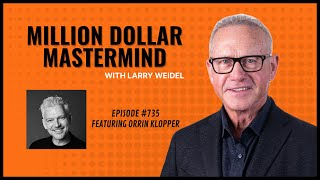
Orrin Klopper, CEO of Netsurit, argues that AI will handle technical work but human conversation and connection are irreplaceable. He built a "Dreams" program where employees visualize goals in books and meet monthly in groups, tying recognition and growth to company performance.
Questions this video answers
2008
2005
2004
About 350 employees across five locations
450% growth over a three-year period
Foreign.
Welcome to this edition of the million Dollar Mastermind podcast. This is where we pick the brains of high achievers from all walks of life and get their hard earned real world insights on winning. I'm your host, Larry Wydell.
You said, like, people don't need to be worried about being overwhelmed with the tech. Technology here. And because the I learned when I went to Georgia Tech, the engineering I learned from, you know, my friends who graduated and got degrees. And, you know, you're always talking about, how did it go? And, you know, a lot of these people had, they were, they were much, much more diligent than me. Yeah, they actually had good grades and everything. And they said, you know, I got out, I had the unbelievable grades. I went in there and they put me in a position where for the first six months, I think a monkey could have done the job. Actually. It was just like, pull this lever or something like that. They put you through this long thing where they don't care what your grades.
Are.
They'Re going to teach you. But the people who reach went into those situations and, and move to the top were not the people with the straight A's. There were people with the people skills and the ability to think on their feet. And that's the great thing about average students is they have to figure out how to get by. So they're going and they're strategizing their way and they're great on common sense. And it's the C student that is the biggest alumni donor at every university in the world. And it's because they wind up making them easier. Yes. Yeah. Wow. Right?
And this exact sentiment you're expressing right now is, I believe, even more relevant than it's ever been. Like, take, for instance, I can take all the jobs you like. It cannot. It cannot do this. It cannot have a deeply meaningful conversation. It cannot deal with an irate, difficult customer. It cannot create trust in a sale. So I couldn't agree with you more. And I feel very passionate about that. And like, I mean, I look at the waitering I did. You know, as a waiter, you learn how to deal with difficult situations. Customers, great customers. The kitchen lost an order. You know, it's like, so I couldn't agree with you more.
Yeah. And so. And you got me thinking about that when we were getting started. You're saying the technical side is not what gotten me where I am. It's the ability to think, deal with people, have a vision. And you talk about, where in your development did you decide to implement the dream program? Based on Matthew Kelly's book the Dream Manager. How far along were you when you decided to bring that in?
Yeah, so in 2004 one of our key, he got burnt out. He's actually in our New York team today. And I realized at that point that a lot of people going into the tech industry, Larry, it's their passion, it's their love and it can, if not we're not careful, they can get burnt out. So that's where the seed was planted that we need, if we, we need a, we need to find a way to have a culture that people can be, be balanced and still do truly great work. So I didn't have the solution. There was a, a friend of my dad's, his daughter gave me a journaling tool by a guy called Glenn mcquer who's a pastor and an engineer and that's a wicked combination. So he, he had this journaling tool called Map for Life which basically is like goal setting on steroids and how to execute and deliver it. I saw this, but if you held it up, it looked like a bar, it was so thick. And so I think anybod that wanted to potentially consider the saw that and then they just ran for the door. So I tried to launch it in the business in 2005 and nothing really took. And then at, I did a program at MIT where one of those lecturers mentioned the guy called Cameron Herold mentioned the book called the Dream Manager by Matthew Kelly. And I just thought, wow, here's a real life example of a janitorial services business in the US called Jancoa and how they implemented this and they sort transform their culture. And so yeah, I launched, we launched the program in 2008 and the thing that we did different to what I tried in 2005 Larry, was that we focused on the visualization of the goals. So the process takes you through a way of doing a current audit of your life where you at brainstorming goals and dreams and then it brings you down to your top 10. So a dream book is your top 10 goals and dreams visualized. And for us that's in a PowerPoint A deck and it's 10 slides with your goals and dreams visualized. And there's something that happens Larry, when someone goes to a person, they get to the point of visualizing it if they do it properly. Like they put a picture of their mom or their daughter or their grandkids or whatever in there. It just carries so much meaning and emotion that it lights a fire to drive a momentum and Sometimes what we found is that some of these younger graduates that are coming into the industry, they're working so hard, they don't even have time in their day to think about what they actually want in their lives. And we've ingrained it into the culture, into the line management relationship so that once a week you have to capture something Sundays, these are three to five things I'm going to do this week to progress me towards my goals and dreams. So it was in 2008 that we launched it for the first time.
Now, as you say, you got a strategy meeting going on, getting ready to start in New Orleans right now. Is that related to that?
Yeah. So the, the, the strategy session starts tomorrow. We have about 20 of our team that are flying in. We don't have an office in New Orleans. And we, we, we kick off with a elements related to the dreams program. Once a month we do a draft dashboard which says are you balanced and are you coping red, green or yellow? And if too much of the team is red, we do it. We do an inventory and an audit of where we at. What do we need to put on hold, what do we need to stop doing so that people can recalibrate and capture their balance again? And sometimes it's personal stuff outside of work. Could be a health issue, could be a relationship issue, anything. Could be a family member that not well. So we literally check in with that every, every month as a leadership team.
Now you have five locations, you have 350 employees. How does that work? You can't keep up with 350 people directly yourself. So how does that, how is that worked out? How many work directly you do the people work directly with you, turn those sheets into you? How does that work?
Yeah, so that's one thing I've had to learn that has enabled our growth and has enabled me to be sane and balanced is letting go. I've had to let go of you got, you know, so we've got our, our power platform team sits in, in Poland, we've got a lady in our marketing team in Peru, we've got some people in the Philippines. We've got offices, three offices in South Africa, we've got offices in the US in Albuquerque, Brunswick, Maine, New Jersey, Manhattan and ipsy. You know, so we've had to let go. So the structure that we've taken is we, when we acquire a business, we want the key leaders to stay because we believe a whole lot of the magic is connected to that key leader and the key relationships. But the way that we've Driven the Dreams program into the business is each person does a dream book once a year. You get put into a dream group, Larry, which is like a group of anywhere between six to ten of you and you meet once a month and you get to know each other at a deeper level. And then we do the, the one thing that we do that helps us connect across all of These geographies, across 350 people where sometimes people don't work at all with each other. We do a thing called a dream connect where you meet for an hour, you chat like this, get to know each other better, share your dream book. And there's something that happens, Larry, when we share authentically what we really want in our lives and who we really are, it creates connection, creates deep, meaningful connection. And when someone shares in that way, you want to see them achieve that, right? All that happens there. So, yeah, this Dreams program really has been a gift, a part of why I love doing what I do. And I think it's part, it's, it's formed an invisible glue with the really fast growth that we're going through.
For those of you who are sick and tired of fooling around and are dead serious about wanting to move up fast, I've got something especially for you.
You.
I've combined the best insights from over 40 years in business and making $70 million in income and compressed them into a free webinar. That's right, it's a free resource. If you want to find out exactly what the concepts are that I use in coaching million dollar earners, Register now@widelonwinning.com youm'll discover the five part framework used by so many to reach their financial, personal and professional goals. You can find that link in this episode's show notes.
Well, I think the fact that you make it an issue and then you track it on a regular basis, it's a way of you feel like I'm making progress, it's happening, you know, in spite of everything that's going wrong. You know, you're getting small successes and in areas that matter to you. And so it's the way I've always looked at goals. So much of goal setting, people don't really know anything, you know, they. You got to have a goal. That's the stupidest advice I've ever heard. No, you need to have a goal for every area of your life that's important to you. If you have, you know, you have three children, you need to have goals for each one of those three children, you know, and your spouse you know, and then, you know, in, in the recreation side, the academic side, the, you know, the neighborhood, know you have a church, you know, you're what you need to have. I look at goals is like you identify goals. These are the areas important to you. And it's like not a goal, it's a bouquet of, of goals and they come together and you're working on. You might be trimming this side of, of the bouquet right now, but then, you know, the. It's to make the whole thing look better. You know, you might be trimming more over in this side next week, but you're working on the whole combination all along. But the idea of visualizing it, I haven't heard that. I haven't really heard of a program where you can challenge people to have specify those things in the different areas of their life and then also you can visualize it. And so I get the idea without having seen it, how it can be effective. And how did you get. What in the world were you doing at MIT to where you could get exposed to that?
I'm a member of Entrepreneurs Organization and they hosted a program with mit. It was over three years and it was four days every year or five days. And one of the lecturers that came in mentioned that and it was. No, it was just. I learned so much from that program. It was really, really valuable because we were. Not only were the lecturers saying fun these interesting insights and sharing just great perspectives, but the person I was sitting next to was another entrepreneur. So there was this learning, vicarious learning, sitting discussing it in groups. And then the lecturers were just these inspirational academics and they also brought in actual entrepreneurs to come and talk to us. So that's how I are to do that program at mit, through something called Entrepreneurs Organization.
And how much of your. How important is it for you to be exposed to those kind of programs and for your development?
Oh, it's huge. Huge. I mean, it's, you know, that being said, I need to definitely apply my mind and sign up for another, another program like that. It's. It was like, if I look at that program and what I took from it, and it had a huge impact and in my experience, I would, I would recommend that every entrepreneur look and explore communities or programs like that that they can join and engage in because it's just, it had a huge, huge, huge impact on me. I think it's unbelievably important.
And you, you. I think, yeah, I think that's why a lot of people are realizing that we've Got an elaborate program like that in our company, have always had it. But for people that are out there running their own business, there's not an easy, there's not always a natural network to plug into. And so, you know, but they're out there and so, you know, mastermind groups, coaching groups. Yes, because you can learn from other people's experience and you can learn whoever is running it, but also like you say, the other people in the group 100%.
I mean so there's Vistage is one, entrepreneurs organization is another, YPO is another. And all of them create this peer group type learning dynamic which is just so powerful. So, so, so, so powerful. So I couldn't encourage that enough for any entrepreneur at any phase in your career, whether you in your early 20s or whether you're in your late 70s. Find a peer group, join a peer group. I, I've learned so, so much from it.
I'm noticing that you've grown over 450% over a three year period. That puts you in the, the top 1200 of the Inc. Fastest growing companies. But probably if they did it on, if they had a factor that did it on scale of size and put smaller companies out within a smaller company, you know, your big company is hard to have the percentage growth that a smaller company would have. And in spite of that you're, you're doing incredibly well. How important are those, is it for you to measure yourself like that also in the MSP again that's, that's the business you're in the managed service provider. Globally, you're in the top 100 for nine years running. You know, that's impressive. And what does that give for you in terms of your company and your prestige and your employees?
So the MSP mentor list, that's kind of the one for our industry. We, we were the top 100. We're not anymore, but we're in the top. I think we came 300 and something or 200 and something in the last year. I can't remember it offhand, but we're in the top 500 which is kind of the broader list. So I feel unbelievably proud of that. Look, it doesn't define the business, but it's great to get that recognition. It feels really, really good. And then the Inc 5000 is quite an emotional one for me, Larry, because I remember in my early 20s reading that list and studying that list and like even late 20s, early 30s, going to their websites and checking those companies for, you know, I was obviously based in South Africa at that time. And so to make that list just for me personally, it just felt very emotional because I've always revered that. So it's, you know, it's the second year that we were able to make it onto this. So you know, like, I mean, you know, I mean you're, you're a seasoned legend yourself. You have those days where you get, get punched in the face as an entrepreneur where you hear you're going to lose a customer or you lose a great deal or something like that. So when you have those days where you get recognized like that, it's just like, it's like a little bit of wind at your back. It just is like, you know, celebrate them. It's not going to pay the bills. It's not going to, you know, it's not going to get you through a cash flow crunch. But man, it does feel good. And we just, we try not to put too much emphasis on it, but damn, we got out of our way to celebrate it.
Well in line with that, have you been able to find ways. It's hard to do it in employees, but where you can put incentives and recognition and competition inside your organization, is that a big part of what you do or does it not yield itself to those kind of awards and competitions internally for our people?
Yeah, oh yeah, no, we do a whole lot of stuff like that. So we have an annual awards program that, that we put a lot of energy and the effort into. It's aligned with our values and it's aligned with our purpose of supporting the dreams of the doers and then various sort of performance metrics and so forth. And then we, we, we implement the, implemented the balanced scorecard as a performance measurement system about, must be about 20 years ago. So we've been using that Norton and Kaplan methodology around performance measurement, which is financial, internal business process, customer learning and growth. We've been using it for the longest time. So that list of the top performers is. So you're kind of objectively measured across all the key metrics. So everybody sees that. And so we have a very merit to create a culture. So if you don't like everybody knowing how you're doing, you might not intend, you might not necessarily enjoy our culture. But yeah, we got, we got out of our way to recognize our people. The other thing we have as a superpower in our business is gratitude, which I think is one of the most powerful tools not only in life, but in a culture. So we have something we call our wow moments, which is really where you can, in our all Company meeting, you can recognize someone else. So I could do a wow moment and say, larry, I was, you know, I really needed your coaching and guidance on something, and you gave me this guidance. I just want to thank you. And then that could be a public. A public thing, generally a photo of you put up, and then I would thank you publicly. And then we evolved that into something called. Well, actually, you know what happened? Someone said to me, we've got a change billboard where you can ask a question that someone in the leadership team has to. Has to answer. And the question was, have our. Has our. Have our wow moments lost their gravity? Is it too fickle? And so forth. So I, I did a. I did a survey of the company, and the company agreed that we'd lost not all of it, but, like, there was room for improvement. So one of the guys in our team did a rejuvenation or rebirth of it, and he came up with a thing called Soul Born, which is Zulu for I see you. And.
And.
And basically now we've got wow moments and our soul Born, a moment where you recognize people. And it's just, you know, it's funny that if you kind of. I've read about gratitude, because it's definitely. I got it from my mom. My mom would always go out of her way to say thank you whenever I would have lunch with her. And we would do these one on ones outside of her writing a letter to tell me something tough. She would wear all the jewelry I ever bought her, just so she knew. Just so that I knew she loved. And it didn't go, you know, obviously the ears, she couldn't. But if there was a bracelet or a necklace, she wore all of it, you know, so this Sal Borno piece is just. It's, it's. It. The, The. The science is that it feels you actually get more by saying thank you than the person that you've thanked.
Right.
There's this beautiful chemistry going on when. When you leverage gratitude within a culture.
And what format do you do that with your scattered all over kingdom come, you know? Yeah. How do you. You can't pull everybody together because all the servers would shut down.
So that's it. No, that's it. So we. So we leverage technology like you and I are talking on right now. We use the Microsoft version of it called teams, and we, we get together. It's trickier now because we've had. We've got an office in Albuquerque now, so that's pushed the time zone, and we have another, Another potential office that we will have, which is in Tacoma. So that's like, that's. I think that's your time zone, Larry, you know, so it's trickier. It's trickier to get everybody together, even virtually.
Yeah.
Thanks for listening to the Million Dollar Mastermind. If you felt there were any valuable takeaways from this episode, please take a minute. Leave us a five star review. Your feedback is important and really helps us get the word out to a wider audience. Remember, we have a valuable webinar that is absolutely free. Register for it right now@whitealumwinning.com thanks for listening.
More from Larry









Rick Jordan on Self-Engineered Proximity, Cyber Security Moats, and Truth-Based Leadership

Fire Fast or Fail Slow: Kevin Brittingham Reveals the One Rule That Built a $100M Empire
