Episode #753 - A New Approach To Dentistry with Andrew Turchin
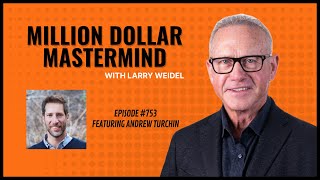
Andrew Turchin shifted from exercise physiology to dentistry, trained in Manhattan, and developed a clinical philosophy called the Ageless Smile. He credits mentors, books like Seven Habits, and his father's work ethic for shaping his approach to balancing clinical excellence with building a business.
Foreign.
Welcome to this edition of the Million Dollar Mastermind podcast. This is where we pick the brains of high achievers from all walks of life and get their hard earned real world insights on winning. I'm your host, Larry Wydell. Hello, Andrew.
Hi, Larry.
Thank you so much for having me on. It's really an honor.
Thanks. Well, it's an honor for me too. And you know, let me tell you why, Andrew. I really was excited about having you on. You know, we have high achievers on. But, you know, what I really loved about your story was how you started with a profession. You know, you're a professional and there's, you know, everybody, you know, everybody's a doctor, dentist or an accountant or something like that. But you took, you did several things. You took a profession and you expanded into something dynamic, big, you know, explored the options, invented new things and to the point where people want to come in and learn from you. Other professionals come in, go way out of their way to come in from all over the country into Aspen, Colorado to learn what things you figured out. But also, you know, you started in New York City and right where the, you know, the hotbed of the top tier of professionalism and everything. And, you know, but you said, that's not good enough. I have a dream. I want to have a dream life with my family. And you picked up, left the practice of the prestige and credibility behind and started over in a new area. In a new area, they don't even know who you are. You can say, hey, I was this, I was that the other. But they're like, yeah, sure, great. So you gotta, you know, so you put yourself to the ordeal, even though it was a dream place of the nightmare of having to start over. And I've got a friend in town, Dr. Gershon, that when he came in with his prestige of working at peak performance and this, that and the other, he basically had to go door to door to get some customers hand in hand to try and drum up some business just to get started. So I'm sure you didn't have to go through that stage, but it's a traumatic thing, so I want to dive into that. And so thanks for getting on. And Andrew, how, how early did you decide I want to get into dentistry?
Oh, that's interest. It was, it was almost 2/3 of the way through undergrad is. I was actually an exercise physiology undergrad. I knew I liked people, I knew I liked health, and I was leaning towards physical therapy until I, I don't know, I think I got A little nervous when doing some research. I had a, a class assignment to, to really dig into the business of physical therapy and realized that it, it was, you know, it was a difficult, it would be a difficult way to make a, a really nice living. And not that everything should be out of living. But then I did a little more research and someone suggested I come do my internship at a, you know, in exercise physiology at a dental office of her father, a classmate of mine. And I went and I said, oh, this is really great. I love working with my hands, I love helping people. And I did think it would be a bit more lucrative and maybe even a little more flexible in that I think I, you know, I'm on here I am on your entrepreneurial podcast because I, as much as I love people in healthcare, I am a bit of an entrepreneur. I think I'm really, it's ironic because I'm most known in dentistry for being, you know, a clinician, a clinical geek. People come from all over the world really to take my courses on, you know, the clinical protocols that I've developed. But in the end I have a bit of an entrepreneurial spirit. I like to certainly control my own destiny. And my father, who worked very, very hard to make other people very, very wealthy, always said, work for yourself. And physical therapy was going down the road of, you know, corporate, you know, private equity buyouts and things like that, and many much less independent physical therapists out there now, looking back now over two decades of practice, I could look back and say some physical therapists are doing just fine on their own. But anyway, I chose dentistry. I thought it was more detail oriented, which I thought I'd enjoy and I certainly do. So yeah, I went into dentistry.
And so your father was entrepreneur or had a business of his own?
Well, he was a cfo, you know, a CPA by trading controller, cfo that route working for a mid sized company, you know, we're talking 30 years ago. So I think they were doing around, you know, 100, 150 million in profits a year, which is not a small number but a small family owned, I would say small, relatively small family owned business, import, export. And my father worked like a dog, you know, 80 hours a week and did never reap the financial benefits and was really, it was really unfortunate because, you know, here we, here we had a family making over $100 million a year and they were paying him like nothing to replace him. They paid three times his, his, his salary just to replace him with someone who told them straight out, I'm not working more than 40 hours a week. So my father worked harder for less than anybody. But you know, he's a hardworking guy and he, and he was great at what he did. He just maybe didn't know his self worth quite enough.
You know, the thing, Andrew, is what's so great about that idea is that you and I, you know, you know, I kind of relate more to your dad coming up in terms of not being exposed to the idea of, you know, have a business of your own or don't work, you know, work, work for yourself and all. And I, I kind of figured that out along the road. You know, I got into it through the sales thing where you're on commission so you're every, Everybody should business for themselves when you're on commission. Sure. The fact that your father, you know, it's a shame your father was not exposed to some of these ideas after he learned that business because he could have done this, I can't imagine he could not have done in his life what you did with yours, which is after you learn from a really reputable group like you were in Manhattan.
Yes.
And eventually you got out on your own. And so I have to feel like he could have done the same thing had that thought been in his head.
Yeah, absolutely. And I, I think there's different. People have risk tolerances and my father was a risk adverse kind of person for whatever reason.
Yeah.
And, but he instilled upon me that, you know, do it yourself, make your own way and, and you'll do just fine. And this I love, I love that being able to decide every day how, how hard we want to work and because do we have to work ourselves to the bone? Do we have to or do we create systems and processes that, you know, are a little bit more self sustaining and easier to, you know, not, not work 80 hours a week, that's for sure.
So you came up through the, you came up through the training in dentistry and I get the idea that was probably a pretty prestigious position you got right out of school to go right into that practice right in Manhattan with the biggest, brightest, you know, where all the lights are on.
Yeah.
Was that, was that a tough get for you?
It was luck. You know, many things in life are luck, I think, but it was always what I envisioned on doing is I always wanted to do the best dentistry in the world. I just had no idea what that meant at a young age. I thought I knew, but you learn. Whoa. I know more. That means I've just, There's so much further to go every time. So, yeah, I was lucky in that I, I think I was reading and studying the right things and I was in the right place at the right time. And I, I, I spoke up at a lecture and somebody, you know, pretty renowned in cosmetic reconstructive dentistry said, who's the guy quoting Dawson? And they, because they could tell what I was referring to when I asked the question. Well, some would say, but it was very something that a very well known dentist that wrote a very well known textbook. You know, his strong opinion, I don't even think it was based on much fact, but I asked the question and I think in life that's what we should do. We should ask tough questions. And he thought it was pretty impressive that I knew what questions to be asking and that my knowledge base was pretty great. So he invited me out to lunch and then he said, you know, why don't you come by the office? And I thought he was just letting me hang out and learn a few things from him, but by this. And then he said, come back tomorrow. And then he said, you know, I have a, I have a spot for you here. I didn't know I was interviewing. I really just thought I was being given the opportunity to learn a few things. Stentus do that. Come, come hang out in my office and let me show you some cool tricks, you know?
Yeah.
And that's all I thought it was. And I was.
Now, where did you get the idea of excellence? You know, the idea of what, what in your background would lead you to think like, it's, you know, because what happens is you establish patterns early in life, you know, the way we look at things, you know, and it's like, you know, if you're in an, you're in a opportunity or where you've got this much potential and then it's your drive to expand to the limits of that opportunity, right? You're going to max out, you know, if you're going to go as far as you can go in that little world. But then if you, if that is now you get in an unlimited world and your drive is to expand, you're going to go unlimited. And so where did that, that, that drive, that, that thought that I'm in this situation now, I've learned how it goes, I've got the basics now. How can I be the best? And the, you know, where did that come from?
You know, it's interesting. I, I'm, I'm, I think I was a slow bloomer in that regard. I, I could think of People that were star athletes that learned practice and excellence. Yeah, you know, Larry, I know you want a good answer like that. I could tell you that I was one of those people that just was remotely intelligent and talented enough that I didn't. I never studied throughout middle school and high school, and yet I was a good enough student. I did very well in sats. I always tested very well. It's relatively intelligent. And so I would say it's just luck of the draw that, you know, I was relatively intelligent. Not super intelligent. Intelligent enough to. To flow through with very little effort in life, to be honest, until a certain day. And actually when I went to college, it was a big wake up call for me because I did so well in. Throughout, you know, grade school without any effort. I never learned to study, to be honest. And, and then I. It was a wake up call. And I did very, very poorly in a very tough curriculum. My first semester I was taking chemistry and biology, you know, pre med program.
Yeah.
And it's, it's. I probably nearly flunked out my first semester. You're not flunked out, but very badly. And then I had a wake up call and I learned how to study a bit and, and, and I switched my major to exercise physiology. That really. I found it interesting, although I didn't go into. I didn't further it with physical therapy or anything like that. I found it really interesting. I found the right study partner. You know, in, in life, isn't it about the who sometimes?
Right.
And I found the right study partner and her and I were just. And it's not what you think when I say her and I. Yeah, we were just Dear Budd. Loved. And it was a subject that I love. So the lesson that I would take out of that is, you know, follow your interests. It's so much easier. You don't need to be. You don't need to study nearly as hard. It becomes easy. You're studying, but it's fun. So that, that's what I learned early on is just follow the passion. And there's no work and there's no, there's no hard planning needed. Sometimes for a while, yeah, there's an adventure to it.
You know, when you're following your natural curiosity, you know, it's like going on a vacation. Many times we'll work much harder than we would ever put ourselves through if it was a project at work. But it's a vacation, you know.
Absolutely. Yeah.
You know, I can imagine. Well, part of that. I learned that lesson when we were taking the kids skiing in the North Carolina mountains, and you have to get the skis and, you know, you're parking on the far end of the parking lot and you're schlepping all this stuff, the boots and everything. You're like, why was this fun.
Larry? Did you say skiing in the Carolinas? That exists?
Yeah, that exists. But once you learn about Colorado, you never want to go to North Carolina again?
Yes, I was the east coast boy, but at least the Northeast. I didn't know that. I thought West Virginia was as far as it went.
Oh, yes. Oh, yes. They, they have it. But, you know, the thing is that when you got, you also said I was, I was reading the right things or I was exposed to the right things, you know, before that lecture and everything. What does that mean?
Well, you know, mentors in life, the, and, and, and be willing to. Listening to those mentors. So during my fellowship at Columbia, I had met a dentist and I did a little moonlighting for him on the weekend, and he handed me that textbook and he said, andrew, this, this textbook will be very important in your career. And I read it from COVID to cover five times in a row before I had the, you know, opportunity and the financial ability to go take these courses. I read this textbook forward and back. And, you know, I was, at my age for sure, I was more knowledgeable on the subject than most people. And most dentists were just trying to learn how to do a filling. And I was learning about the entire system, the bite, you know, the muscles, the joint and how they all work together. And, and then, and then years later, I learned about cosmetics, and I put it all together into kind of our current philosophy that we. We've named the Ageless Smile, which I think is a very unique look in dentistry. And it's, it's where I've innovated the most, I'd say, for our profession. And I'm very, really proud of it.
And did you get, you started learning about that? I guess, way back then?
Way back then, yeah. And I, I could tell you that there are things in my philosophy and really I have a mathematical formula, an algorithm of a precise position of teeth in the face. It's, it's very well informed by that first textbook. Not completely, but a lot of it was there. And I think about all the early things I read that blew my mind, whether it was Seven Habits of Highly Effective People for. From Stephen Covey and, and you think about everything you learn afterwards. And really they're just different angles that they come out with. Like great books have it all in it. And I to me, seven habits, highly effective people. Like beginning with the End in Mind is the first, is one of the seven habits. But it's the first thing I talk about in my lectures to dentists. We say, you know, we talk about the philosophy and then we go about what the end should look like. I train them on where teeth belong and in the face to support the lips and, and slow down the aging process and. But Begin with the End in Mind is one of my core leading philosophies in one of the first business self help type of books I ever read. And I still think it's so powerful.
Well did and I agree. And he actually turned that into a billion dollar business before he died.
That one book, the Franklin Covey Planners and everything.
Yeah, stuff. Yeah, that's great.
And his son's book, his son's follow up, I mean the Eighth Habit. His Eighth habit was really great. But his son wrote a book called the Four Disciplines of Execution that I think is excellent too. So it's great that his son went into it and really wrote one of, I think one of the other quintessential business books. I mean there's so many, but I don't know, there's some quintessential ones.
Thanks for listening to the Million Dollar Mastermind. If you felt there were any valuable takeaways from this episode, please take a minute.
Leave us a five star review.
Your feedback is important and really helps us get the word out to a wider audience. Remember, we have a valuable webinar that is absolutely free. Register for it right now@whiteallonwinning.com. thanks for listening.
More from Larry









Rick Jordan on Self-Engineered Proximity, Cyber Security Moats, and Truth-Based Leadership

Fire Fast or Fail Slow: Kevin Brittingham Reveals the One Rule That Built a $100M Empire
