Episode #763 - Excelling In Your Role For Career Advancement with Lisa Brooking
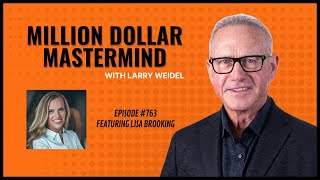
Lisa Brooking went from bedside nursing to founding a personalized medical service in Vancouver that draws international clients. She talks about fixing healthcare systems from the inside, her boots-on leadership approach, and how conference learning shaped her path to executive roles.
Foreign.
Welcome to this edition of the million Dollar Mastermind podcast. This is where we pick the brains of high achievers from all walks of life and get their hard earned real world insights on winning. I'm your host, Larry Wydell. Let me insert something right here. The thing is, it's the cliche, but to move up is the phrase blue where you're planted. But it's just like maximize. You're not going to equip yourself or make yourself stand out to the people who can promote you up or to advance you in your career if you do a mediocre, average job where you are. And so your extra attention and extra drive to be special and to do things the right way and to give that degree of care put you in a position to not only move up, but it put thoughts in your mind. It made it very clear to you what I need next. I don't have to do it, but if I'm going to move up and have even more exciting things in my life, I need to get done. And so starting out, maybe if someone had said to you, now, this is great, do your nursing, but just keep this in your mind. You're going to have to go get this training and that training, whatever is like, no, you know, you were probably going into rebellion over, you know.
Yes, I don't do anything half ass. So if I need to do something, I do it. I'm excellent at it and I will work. You know, school doesn't come easy for me, so. And either does running, really. I just happen to have this passion for it, but I'm still grinding it out just like everyone else. And so I think it's having that tenacity and having that focus. And so, you know, my family is still like, you're a CEO. I just thought I would be a bedside nurse at my local hospital. Not saying I didn't aspire to be more. I just, I didn't have that exposure. So it wasn't until I was on the front lines learning, seeing the short staffing, seeing what was happening. Why are people coming back after you've done the bypass surgery? Now they're coming back for stents. We already fixed it. But then I realized we didn't fix the underlying plumbing, we just fixed the problem. So that's where it's. It dawned on me to think, well, there must be, because somebody's not educating somebody upstream to know that you got your triple bypass. And when you wake up from that sedation, I'm the gal you're going to see Guess what? You got that bypass surgery. Hug that pillow, you're getting out of bed, and we're going to do this together. And you bring so much energy and passion to the bedside. People's been given a second chance at life and. And they are so grateful, but then somehow the change doesn't continue after they leave or after they've done rehab, it seems to. They go back to their old ways and they end up back. And so there is a gap there. And so where is that gap that individuals are seeing it to be okay to keep smoking after having a lung transplant or go back to these old ways of operating, that is going to bring you back. So we want to arm people with actually fixing the underlying issue, not just bandaging it. And so in order to do that, it's giving people the tools and resources and the support and education.
And so you got your education and then where did you go from that? Because there's a period of time, from that stage where you're getting this award for outstanding business leader, and they're renaming the award in your honor. What did you do during that time? You know, you got the training and then you moved into another role.
I did, yeah. So from bedside nursing and then supporting the unit and then going into management in acute care. So into the hospital. So very much. I worked in that front line. It's like working at a factory and then running the factory. So I knew all levels of it. So to run that department. And there was an opportunity to go over to cancer Care. And extraordinarily enough, the previous executive director of critical care moved over to cancer care to be a vp. And she had reached out and said, you finished your master's degree. We need some support here with professional practice, accreditation, efficiencies, improving patient flow and outcomes. But I didn't come from the oncology world, but I thought, well, in critical care, we look take care of all body systems and sometimes people have cancer when they do come to icu. So I approached it with a very boots on the ground approach, wore scrubs, walked around the hospital, learned about radiation therapy, learned about IV therapy, saw what is the challenges that you're seeing. And that then helped me to be able to lead and help them achieve their strategic priorities for that cancer hospital. Because it's very much not applying what I assume it's actually going down to see and to learn and to listen.
Yeah. And so how did that evolve? What kind of changes did you make? And was that what you were doing when you got the award?
It was a bit Of a combination of all things. There it was. My running was very much excelling my master's degree and then getting into advancing. When I look back, a lot happened in a very small period of time. And you know, when you're kind of in it, you don't think about it, but when you look back, you thought, wow, like how did I do all this? And you just end up having a lot of gratitude. So, yes, some of the positive changes I did at the cancer hospital and included helping them with their adhering to their standards of care and giving more professional practice opportunities, optimizing flow into the or individuals are getting cancer later in life and so maybe they have a pacemaker or they have underlying conditions. Sometimes cancer hospitals are focused on just delivering the cancer, but they also need training to know, oh, can you radiation therapy with your pacemaker. So we needed protocols and algorithms on decision making tools for individuals that did have underlying conditions when they're receiving the treatments. And so that was a big part of what I did.
Well, it's a leadership role and leadership award. And the leadership involved moving from. Because of your experience with individual patients at all those levels, you were able now be in a position where you could take that and change things that would make that care be elevated across the board to where you could change how the procedures go and put new systems in. All of those things you were missing that you are mentioning. And that's where we in a unique position to see how these things work well and how they don't work well inside, for example, a hospital. We usually talk about businesses, but in all of these institutions, it appears to me that there's a. What I'm seeing here is a huge need for bright, motivated leadership to make positive changes. The boots on the ground, because otherwise these systems are never going to change.
Well, how do you recognize good care? You can do all the surveys you want and someone comes out with like, you've lowered postoperative infections, that's great and that looks good, great on the slide deck. But are the staff one foot out of the door? Are they coming to work, dragging their feet? Because if they feel valued, inspired and purposeful, they're going to do that extra mile. And I don't believe in pushing things onto people. I want to work with them. And so for me, it's observing care coming at them and a very humbling and saying what is working? What barriers can I remove? If I saw a patient in a wheelchair with the chart on his lap, okay, and I circled around, came back and like, why is this patient here, I don't need to do that in my leadership role. And he, they, oh, he's waiting to go through the tunnels to the larger hospital for another for a scan. Okay, well where's the porter? So the hospital, oh, most people don't really realize and probably the same in the states is very complex. A lot of outside services plus third parties. And so that porter system, why are they delayed? Why this happening? Because that's impacting the scan of mine. Right. And so I pushed him through the tunnel to get there and then I realized, oh wow, like one elevator in this huge lineup. So you really start to see like why are our patients arriving late for their scans? And you're seeing the pinch points without needing a consulting firm to come in or another example was food services delivered to a cancer hospital and a children's hospital when they went to the children's hospital first, then us. So something changed with their workflow and because our food trays and love later that bumped patients ability to go to the OR because they ate with more than four hours notice. So and they had to take their pills with food. So these types of things that people may think, well that's not big and shiny but honestly that compounds and that impacts the whole system. So these small things may seem inconspicuous, but I'm so proud to be a nurse and the vantage point that you have as a nurse, you can see get a pulse on the staff, you hear from patients and families and the anxieties of what's going on. And that to me really helps meet my ability to orchestrate great care and be able to deliver on the mission. I then went into primary care, so that was more physician office, that's more like primary urgent care. And that was in the private sector before then entering into the space I am in now. But each of these vantage points from the healthcare ecosystem has given me so much knowledge and experience and lived experience that I think is what's helping me lead this company successfully today.
How has it impacted you, the people outside the hospital world and maybe the athletic world, being able to, you know, go to conferences, go to meetings. I read that you're doing some public speaking. How did you get going on that and what was that turned out?
Yeah, well, I always say yes to opportunities. So it's kids can run program or it's something at a university. One of the last ones I did was at a university and they, they were pulling together physiotherapists, technologists, nursing into this talk and a talk really saying we're all one, we're all one within this healthcare system. And so what you're doing here impacts there. And so it's all a team. And so I certainly try to, when I deliver a talk, inspire individuals to just think beyond themselves and you're in the service of others, how can you take great care of them and how do you see your actions having a trickle down effect? Now in terms of conferences, while I do attend our healthcare conferences, I love going to conferences that give me exposure to other industries. And so where are their thought leaders? What is happening in the tech space? What are the futurists saying about it? Is all I do enjoy being health related, but how are people's mindsets shifting and how is that going to then impact care delivery? So very much enjoy types of conferences that do involve different types of TED talk style, but thought leaders. And so is it somebody coming from a scientific base, business lens, thought leader, somebody with more of a philanthropist that's looking to invest because they have a personal drive and they're just looking to attract attention.
And how has that impacted you in terms of you bringing back fresh ideas and fresh energy back into your arena?
It's energizing. I come back and while the conferences are especially these small ones are, you know, the TED talk style is back to back in several days and I want to attend all of them. It's very much come back so energized and just seeing beyond the day to day. When you're in, we're kind of in a swim lane of our own here at Health Code. You kind of feel like, are we on the right track? You know, the public sector and the system's doing their thing and we're really doing something different. And then you go to these types of conferences where people are looking ahead and looking at that future. You have people in government. And so last year I was in New York and there was a great opportunity to attend. It was, you know, an invite only. But to have that connection to somebody who said, you know what, Lisa, I think you would really value from hearing these individuals talk and hear what they're trying to achieve. And so I appreciate any opportunity to hear anybody in any walk of life and if they've been successful, how have they been successful? Why? And what challenges did they overcome? You know, business is the same, it's just a different industry.
Yeah. And it's important that the leader is developing like that and can kind of stay ahead of the curve with the organization they're involved in. Like you said, I think all of us have the tendency to be live in a bubble. And it's one of the great things about this podcast is I get a chance to lift my head up and hear from so many different industries. In fact, I do the same thing and have traditional decades inside our company, which is nationwide, all over Canada and every Monday morning. I've always picked the brains of the best and brightest inside the company, mainly because I wanted to find out if they, they figured something out that I didn't know and then I could use their ideas and beat them with it.
Well, you surround yourself by people smarter than yourself and I've been so blessed to have met some extraordinary individuals and going at it through a vulnerable lens. So, you know, I come from the health space. I'm a relatively small, multi day conference with individuals that I don't that aren't in the spot they're in the government. And I had no idea this was a governor of a state. And so chatting with him, I said, I have no idea what side of the political aisle you're on, but the way that you think and approach caring for your people, it seems like you have a good mindset and a really thoughtful leadership. And so while I don't, you know, get into the weeds with what individuals do, there's so many common themes. It's the curiosity, the ability to evolve and learn and listen. Yeah.
Because you can go to these things, but if you don't go with the right attitude, the ideas that pop up are not going to stick to you. And so when I'm curious, did that winning that business award and then the whole process of the changing the name and the notoriety from that, did that open any doors to the outside world that maybe you weren't aware of?
I would say it's a combination of so many things, you know, are certainly winning that award and having it renamed certainly gave me a lot of confidence and encouragement. But also individuals are trying to help give you more exposure, giving you more opportunities. Certainly the clients that come here to Health Code Medical, we service clients across Canada and the U.S. and you know, they are extraordinary entrepreneurs, business people. And so what's great is they are saying, well, you know what I think you could really value, why did I let you be my plus one to come here or I'll give you an in to get there. And so I think it comes down to just an old school way of operating, building relationships, being vulnerable and saying we're a small boutique offering, we're doing private medicine in Canada. That's a very rare who would do that because it's not popular.
Because, you know, for people who don't know, you do have the health care.
We do. And we support the public sector, but I think there's room in the space for private. And we're not competing. We are just trying to keep people healthy so that they don't need to engage in those systems. And we're getting a lot of American. Actually 70% of our clientele is you come to the States and I think, oh yeah. And they fly to see us a lot from the East.
How do they find out about you? Word of mouth.
It's all word of mouth.
Why would they fly up to you now? Where in Canada? I didn't ask you.
Yes. So we're in Vancouver. Vancouver, B.C. so we're west coast individuals fly to Mayo Clinic and Cleveland Clinic for their annual medical. And so for us, we are an annual medical. We have a level of standardization and then we overlay personalization, depending on what your health goals are. And then each year we're tracking it. Year after year, we bring in global testing. And so the uniqueness to what we do is that level of personalization that you just don't see in a lot of these offerings. It's all standard. When does the same 10 stations that level of personalization? This year my focus is cancer screening or diabetes or weight gain or I want to run that next race faster. So whatever the level of personalization is, we overlay that testing. We bring in testing. We consider healthcare as a global market. So we bring in testing from around the world and that's where we are alongside progress. We're not trailing behind. And so if there's a new test that says, do you carry the Alzheimer's gene? Or there's a new test that out does the existing cancer screening test. Well, we're bringing that because we're not creating strategic partnerships with testing. I do not want to do that. I want to be a platform that brings in everybody and we can make recommendations. But in order for us to be able to be fluid and really move with advancements, we need the freedom. And so there is testing for cardiac testing that's been around for a long time. People know it. People want to come and get those heart panel labs. Great. But did you also know that there's this great test in circulating cancer cells out of Germany? There's incredible testing coming out of Europe. The whole world's trying to solve these chronic conditions. Answers, why not open to that. So that's what we do.
Thanks for listening to the Million Dollar Mastermind. If you felt there were any valuable takeaways from this episode, please take a minute and leave us a five star review. Your feedback is important and really helps us get the word out to a wider audience. Remember, we have a valuable webinar that is absolute free. Register for it right now@whiteallonwinning.com thanks for listening.
More from Larry









Rick Jordan on Self-Engineered Proximity, Cyber Security Moats, and Truth-Based Leadership

Fire Fast or Fail Slow: Kevin Brittingham Reveals the One Rule That Built a $100M Empire
