Episode #769 - From Humble Beginning To 18,000 Cosmetic Surgeries with Dr. Chad Deal
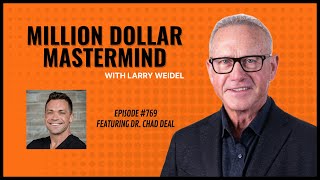
Dr. Chad Deal went from a rough childhood to performing 18,000 cosmetic surgeries. He decided on surgery at 17, trained at UAB and in Las Vegas, then built a cash-based practice that scales through hiring, med spas, and device partnerships.
Foreign.
Welcome to this edition of the Million Dollar Mastermind podcast. This is where we pick the brains of high achievers from all walks of life and get their hard earned real world insights on winning. I'm your host, Larry Wydell.
Good afternoon, everybody. We are talking with Dr. Robert Chad Deal of Chattanooga, is that right? Chattanooga, Tennessee?
That is correct. Southern Surgical Arts. I got that name early. It's a nice broad name. Very good.
We really excited to have you here. You're right out of surgery and that's a place you are either in or just coming out. Quite a bit of your life you've done it says. And I got, I probably, I've got the feelings probably usually an under figure, but 18,000 cosmetic surgical procedures is that.
That was the last count, I don't know, a year or so ago. I've been doing this now for 13 years. As far as actually being out in practice on my own, that doesn't include, of course, the five years of general surgery and the one year of cosmetics.
That you have to do.
But yeah, that's, that's close. We'll just say that, man, you got.
To work like a dog to make it in cosmetic surgery, don't you?
It is a completely different world. Most people would be shocked to find out. 45 years and I've never taken one bit of insurance, not one. It's a whole different world this, this side of medicine. There's so much that could be learned, but nobody asked, nobody really ask about how to run medicine effectively and get, give great care because you have to. It's very capitalistic. You've got to compete. You've got to look at your numbers, you've got to provide great service, low complications, all that.
Yeah.
But yeah, it is really much. You only get your patients by just like you open up that coffee shop, you better be good, you better have a good product. You don't just get referrals from, from companies or from hospitals or from, from peers. It's, it's from competing.
Yeah, it's friend to friend to friend. And of course that's the best, you know, the best endorsement. But as you got started in this thing, how did you, did you ever imagine you would be in this kind of position as you were starting out in life? How quickly did this picture form in your mind?
So this is going to sound outrageous and this is 100% true. Okay. I was in the restroom at 17 years old when I decided 100, this is what I was going to do and tell you how I got to that Point. So my. Mostly, I. I had some wonderful stepfathers in my life, some great mentors, but it was many times in my life. Single mom, and she was in the medical field and through nursing, while also being in the army, moved her way up. Got a master's in nursing later on, got a master's in business later on, got a doctorate in nursing, master's in business. Even switched to the Navy at some point and retired as a captain, Navy Reserves. So very successful. So I grew up a little bit in the hospital system, and I got to see the kind of fights between what administration, looking at the bottom line, between all the doctors really looking for patient care and better compensations.
Right.
And I got to see a little bit of that balance. And I said, you know, I. I really love this as a field. I really wanted to do this. I wanted to be finite. My main driving goal, if I'm gonna be perfectly honest, you'll. You'll rarely hear a doctor say this. My main goal was to be financially successful. It was not to help people. Now, many doctors are that way, but they feel ashamed to say that. Now. If you help someone along the way, that's a blessing, and that's wonderful. But most of them don't want to admit they wanted to be financially successful. You almost feel this burden in the. In the healthcare system that you should be ashamed of yourself. Yeah, you're doing this to be successful. So. But I did. I grew up so poor. I mean, there was probably maybe only two times. I remember as a kid actually being. Going to bed hungry. It wasn't like every night, maybe just a couple of times. But because I. I grew up poor, I didn't have this guilt feeling about wanting to be successful. So I knew that's what I wanted. I knew if I was a surgeon, I could do it. But I knew I wanted to do it without the normal health care system. I wanted to run my own business. And I kept thinking about, what fields could I do this in and what would I enjoy? And ultimately I landed on, okay, if I go specifically into aesthetics, ultimately build a business, even hire other doctors, and then start making these medical spas, etc. That's what I want to do. And I decided that at 17, looking at ski magazine and I saw a home that I was unbelievable. $13.1 billion on Lake Tahoe. So beautiful. Log home, modern glass. Just so beautiful. And I said I could never dream to aspire to something like that unless I really had big goals. And I decided, okay, I'm going to do this.
And why, why were you looking at a ski magazine? Where did you live at that time?
I actually lived at the time in Fort Payne, Alabama, which is just an old retired, like, civil war for it, I believe. And I was finishing out my high school years. We moved so much because of the military before that, but now she was retired or in the reserves, so. And I just love to ski as a kid. Right. Because we would. That's what we do is when we travel. And so I'm looking at this magazine and I just, in that moment, and you gotta understand, I had like maybe a 3.2 GPA. I was more of a class clown in high school. I did football for a. Wrestled for a couple years, cross country for three or four, tennis for four. I had fun. And, you know, the thought was I was more the class clown. No one would have ever imagined, right, that, that I, that I had this in me. Because just high school is just. It's kind of easy like it is for a lot of people. And so I said, okay, when I get to college, it's on. And I, I never looked back. I just all of a sudden went, boom, 4.0. Double majored. I didn't have a drink of alcohol until I was 26. I didn't, I think I went to one ever college football game. I went to zero college parties. I was just so dedicated.
Where did you go to school?
UAB University, Alabama. Birmingham. Great school. And I, to me, I had this strong affiliation with. It was reasonably close and they had such a wonderful medical school that I felt like, and I could just easily matriculate on is, which is what I did. So I did my four years of college, four years of med school, five years of general surgery. That was all in the Birmingham area. And then I moved out to, to Las Vegas for a year to get my aesthetic training done.
Why do you think that it might be a little bit of a unique thing to make up the decision yourself? When I get to college, it's full on. Because I think every kid going to college is told by their parents, you better be full on. You better take this seriously. Cost a fortune. Boom, boom, boom. But what do you think caused you to come to that conclusion on your own, to turn on your own internal motivation? What did you expect to get out of that?
Well, I, you know, it's so much easier making inspirational Instagram posts by saying positive things. Yeah, I don't want to have an interview ever where I'm just not brutally honest. Like, I've already been honest and said I Was driven by wanting to be financially successful. Which, by the way, doesn't that sound better than saying I wanted to be rich? I've noticed that people will never say, I want to be rich, because that's negative. But if you say I want to be financially successful or independent, well, that's nice. What. What a joke. It's just semantics. It's just words. Right?
Right.
So for me, even though it sounds bad, I was more driven by fear, fear of failure, rather than focused on the positivity. In my mind, this was the goal, and it was either this or nothing. And I was so driven. This is it. This is my life. There is no redos. Now is the time. Every one of these grades counts. It is on. It's time to go. And it's that fear of, if I don't make it, I want to be that person that got out of the poverty I wanted to be in. My mom was a great mentor there, and I had some wonderful, you know, stepdads. One in particular is obviously, was my concerned. My real father. I took his last name, you know, Wonderful man, very smart, also, very driven. But I. I had that in me to just do it, to succeed. And I. If someone ever said to me, what is, you know, I. Real Instagram posts, you rewrite inspiration and go get it and show you, like a lion or something and that. Or like a wolverine heart. It's just so silly. When I see all the stuff and I'm like, I can tell people, though. In my opinion, the one real key to success is I think people are more driven. They're successful by fear. And that doesn't sound nice, but I think it's true. And I think the number one factor when I look at people that have made it and have not made it, it's people that have the ability to plan. That's it. Plan planning. I think that's it. If you plan and you plan early, people make it. People that don't plan, they never make it. They just talk about, though. Here's a word I laugh at more than manifesting. Oh, yeah, man. You want that Ferrari? You just got to. The universe will provide. They're going to just manifest. Give me a break. If I ever hear someone talk about manifesting, they've lost me.
Right? Yeah, yeah. That thing of hold the universe, and the universe will, you know, you'll draw in. There's a story behind that. The guy who made that up, that was like, let's just see if we can make something up and people will fall for it. That's where that all came off. Then it took off. It's like they couldn't believe it. But. And people go down today, you'll still hear that crap.
Oh my God. And they, they move their hands, man. The universe, right? It's just gonna provide for you, you know, you just, you gotta think on it and you can focus on. It's just gonna. I'm just like, oh my gosh, I'm glad there's so many people out there that think that way because it makes it easier to be successful if you just sit down and make a plan.
Well, I'm gonna be honest to you and tell you that I grew up, you know, in the church being a good little boy and doing the, you know, all of those kind of things. And I had it in my mind, really in the back of my mind, if I work hard and I do a lot, you know, there are a lot of the right things. Even when I was in commission sales, I, you know, I understood his law of numbers and this and the other. But I did have it in the back of my mind that if I was really putting people first and this had the other, goodness and mercy will follow me and eventually money will rain out of the heaven. Know I really up to about 27 years old and we had a retreat with the president of the company and he said, w, you are not money motivated. And I thought he's giving me a big compliment, you know, I was like, thank you very much. He said, no, you. Basically he didn't say this, but here's what I took away from it. No, you idiot, you're supposed to be money motivated. It's too easy to be lazy and lie to yourself when you're not money motivated. And no, you can't recruit and train anyone. If you're not making any money, you're not going to be able to teach anybody else how to make money, you know, so you're basically useless out there. And once I got that, it's just amazing how crystallizing that can be because I didn't know what was inside me until I got that message. I went back and I made like three changes in how I approached my business and my income. Double, double, double. It was, it went up to 20 grand within three months and never went under, you know, went up from there. I had that in me but it wasn't going to come out when I was not money motivated.
How about that?
So I'm on your side.
Yeah, it's, it's, it's so interesting here. 27 was a pivotal year for me as well. And some things I thought but mine had more to do with personal but I things I learned but I. The word money has a bad connotation. However if we were farmers and we decided to work harder one year and Instead of plant 100 acres we're going to plant 300 acres so we have way more crops. Yeah, that would never sound bad, would it?
Right.
Have more crops. Right. But oh, I'm going to make three times the amount of money this year. But for some reason you get hit filled with some kind of guilt feeling. Particularly in medicine. I will tell you like really, they will really hit you with guilt. In fact, when you apply to medical school, don't you dare tell them that you want to be a cosmetic surgeon. You better tell them you want to be family medicine, er, medicine that you want to cure the blind and some, some poverty stricken country like that's what you're supposed to tell them. You're supposed to just lie through your teeth and I'm legit when I tell you I refused. I went in and I said I wanted to do plastic, which at the time I thought plastics meant completely cosmetics. It actually doesn't. Plastics encompasses a lot of other but I was focused just on the cosmetics. But I did it with fear saying that I'm going to tell the truth. And I did. Despite that, they still let me in.
For those of you who are sick and tired of fooling around and are dead serious about wanting to move up fast, I've got something especially for you. I've combined the best insights from over 40 years in business and making $70 million in income and compress them into a free webinar. That's right, it's a free resource. If you want to find out exactly what the concepts are that I use in coaching million dollar earners, Register now@widelonwinning.com you'll discover the five part framework used by so many to reach their financial, financial, personal and professional goals. You can find that link in this episode's show notes.
The story of your growth. Where did you. How did that, how did that inform you know the thing about fear? I'm interested in fear. You had to, you had to have really come face to face with fear for that to be such a motivating thing for you. Fear of failure. Was there a specific incident or anything like that? You can look back or is it just the life that you lived and it dawned on you I got to change things.
I think it is such a blessing to be the Underdog, right? When, when people look back and they tell stories, they're like sob stories like, oh, you know how hard I had it. I'm like, if I had not had it hard, I wonder whether or not I would have even done anything even remotely this big. I was the shortest kid in my class, but I don't go around whining about that. I didn't see my real father since I was what, four or five. I didn't go around whining about that. I actually grew up as a minority in many of the schools because it was mostly either Latino or African American. So when I was going through some of the, the military based schools, right? So here I'm kind of like the white guy but the minority and the shortest in my class and didn't have that dad figure around. A lot of those times I was a thief because I wanted to get garbage, pal. Kids, I don't know if you remember those things. And I would steal some candy and I mostly steal from gas stations and from Walmart because yeah, I just, I wanted the Nintendo games, right? When the first one came out, I think it was age 7 or 8, the original NES. Yeah, I was, you know, I was jealous of not having the money and having the things. And I did that for a year or two and then stopped. I started developing guilt about it because it was too easy. I never got caught. And I genuinely started developing guilt about it. But I guess kind of always being the underdog, being one of the last people to be picked in the pickup game of basketball because of my height, it just drove me. Now I, I, there's parts of me that have this kind of conservative nature. There's parts of me that have this liberal nature. In other words, I really always lean. If you really want something, man, you go get it. You go get it. But there is the part of me that as I got older, man, maybe I was gifted with something special, that I took those negative things and it just gave me fuel. So whereas I'm just wanting to go around and tell everyone, pick your britches up and tie those bootstraps. And maybe instead that attitude I have was a blessing and I shouldn't just expect everyone to be able to have that, right? So I kind of have this dichotomy of how I feel when I look at wanting to help other people. Maybe all that was a blessing. But I will tell you, for me, anytime I got hit with a blow, it just, it added a log to the fire. I mean, and I mentioned Personally, you said 2727. I find out for the first time my wife has an affair. Oh, and I was a good guy. I waited, I thought, I'm going to be very biblical, very straightforward. I'm not going to have sex until I get married and then God's going to grant me the, the best life. This, I wouldn't even say a cuss word.
Yeah.
Drink, nothing. And I get hit with a lot of blows. You know, I got a hit, I hit with a lot of this stuff, then went through, found out, multiple affairs, etc. Etc. Not to belabor on that, but every time I got hit with a one of these things, I said, okay, it's on. I would bring it in and say, okay, let's go. And actually that's when I end up growing the most.
Yeah. Those challenges, you never know when those challenges are coming. And you're, you know, you're a patient guy in the sense of choosing medicine because in terms of wanting to make money, you don't just go out there and put in four years or, you know, get a master's. Then all of a sudden you start making a bunch of money. You were, you had a very patient long term strategy for making this happen, didn't you?
I did. In fact, I laugh, I tell my, I have two boys, I tell my boys that I graduated the 27th grade to kind of give them a little bit of perspective because you got your 12 years of high school, right? Then you've got years of college, then you've got four years of medical school, and then you add five years of what I did, general surgery residency, and you have to get board certified in that. Then you had a one year aesthetic fellowship and even then your first year out, that's 26 to get to 27. Your first year out, you're studying the whole year to pass your boards. So you're not really kind of going and enjoying life. You're studying constantly, just independently to pass all the board certifications. So I knew that's what it is. A lot of surgeons in particular, you're, you're at least 30, 31, etc. And that's not even taking research years. Some doctors even do research years, pad their resumes to get where they want to be. So it's even further. So not only do you have all the debt of college, medical school, etc. Etc. But remember for that time now you're, let's say, 31. For all those years you weren't making money either.
Right.
Think of what you could have made already with your Good college science degree that every single year of a salary that you could have made. Like, I've got, I've got two degrees in microbiology and in biochemistry. That was my background with college to get into medical school, what money would I have made plus all the other debt. So now you're finally out and the government looks at me like, oh, you're a rich guy. We're not going to, we're not going to let you. Your payments are full on. Let's go. Right. So now I've got this massive amount of debt and then I'm going to start a practice where there's no insurance pay. It's either sink or swim, get the patients or don't. And I just, I don't know, I stayed super motivated somewhere. About age of 30, I'm 45 now, 37, 38. I finally started to begin enjoying life, as you would say. Meaning started, you know, got a nice car rather than your standard car. Started traveling more about. Yeah, 37, 38. I was all planning. All planning, yeah.
Well, the thing, you have to do that.
And I did.
I made the big adjustments in my mid-30s too. If you're going to be in it for another 30 years, you know what I'm saying, If you're going to be in the thing for a long haul, you have to find a way to start balancing out your expenditure of energy, recharging and stuff like that. And it's interesting that you are able to maintain that type of motivation because what happens in a lot of cases, cases is people get ground. You know, they start off with a lot of inspiration and drive and this out and the other. But by the time they get through the gauntlet, they're just trashed, you know, the inspiration is all burnt up. And with. With you, did you find your anticipation building as you got closer to the finish line or how. What was your emotion when you came through that you got. Got that education behind you and started in the practice.
It never feels like there's an end and I think I do that to myself on purpose. So, okay, let's say the highest level in a game. Like for instance, what was like back in the day? What were those games? I think World of Warcraft or something never got into it. Like level 70 or something was like, yeah, well, the game becomes really boring once you hit level 70. Right. So if you don't constantly set that goal higher and higher every year, while that may seem exhausting, I love it. So my goals are always really high every year because then I get to continue to play the game. Life is this chessboard and I love playing it. I love my job. And so now I'm looking. Okay, well, great. I'm a surgeon and it's starting to be successful. I want to hire other surgeons. Well, now I guess I have four other surgeons I've hired in the practice. And now my big focus is building these med spas. And I'm actually building the eighth one right now. And I'm thinking, okay, how many of these can I build? Can I build 50 of them over the next few years? And, okay, private equity. I want to let them come in and do this and start looking at bigger deals with bigger companies, working with the companies that make the medical aesthetic devices. I already speak for them. In a couple of weeks, I'll be speaking. I probably do 12 to 15 events a year, you know, talking about how to build these really successful med spas because I combine it with these device companies that I know have great equipment. So we work together, so it's successful for all of us. And I just keep raising that bar. So I never really get to a point where I feel like I'm either exhausted or at a peak. It just feels like I've climbed another rung and I'm like, wow. But I don't spend a lot of time there to catch the view. So I do have people that, that love me, that tell me I need to stop every now and then, enjoy the view where I'm at. Because even when I go on vacation within the second day, I'm super antsy on my phone walking around making deals. And it's not because I'm. I love it. Yeah. You, you. If you put me on a beach and hand me some sort of Mai Tai and it's the, the seagulls and.
Right.
Perfect weather. I'm miserable.
Yeah.
I'm looking around like, what to do? What's going on? I just, I cannot sit there and I. Maybe that changes with time. Maybe it changes with age. Maybe, you know, we all go through different cycles in life and I've got so much more to learn and mistakes to make, but I, I stay happy.
Thanks for listening to the Million Dollar Mastermind. If you felt there were any valuable takeaways from this episode, please take a minute. Leave us a five star review. Your feedback is important and really helps us get the word out to a wider audience. Remember, we have a valuable webinar that is absolutely free. Register for it right now@white alumwinning.com. thanks for listening.
More from Larry









Rick Jordan on Self-Engineered Proximity, Cyber Security Moats, and Truth-Based Leadership

Fire Fast or Fail Slow: Kevin Brittingham Reveals the One Rule That Built a $100M Empire
