Episode #774 - From Shoe Patents To Payments Innovations with Chase Harmer
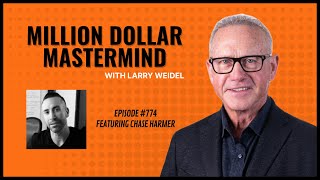
Podcast episode (Million Dollar Mastermind) featuring Chase Harmer. Harmer describes receiving his first patent (a shoe) at age 14 and now holding seven patents focused on payments—specifically card issuing and virtual card use to bridge acquiring and issuing rails. He founded Profit Pay (around 2014) —an e-commerce payments platform offering incentives like media-buy cashback—and now runs Wishes, a donations-transparency product launching in the U.S. that traces charitable funds and aims to provide donors with dollar-level visibility into where donations go.
Welcome to this edition of the million Dollar Mastermind podcast. This is where we pick the brains of high achievers from all walks of life and get their hard earned real world insights on winning. I'm your host, Larry Wydell.
In terms of getting patents, you've got like, how many patents do you have? Seven patents. Yeah. And so that's kind of a complicated process. How to, how do you go about, you know, so far, Chase, you haven't let us in the fact that you might be a brainiac or something, you know, but you do not.
I mean, you know, like, you gotta.
Be a brainiac here because you got seven. Seven patents.
Yeah. You know, I had my first patent when I was 14 and I was. I just always been super, super creative. And what was that patent?
What was that patent about?
It was. It was a shoe. It was a shoe patent. And it was like, had this, like, you know, had the ability to like, pop off and on and like, I don't know, I. I don't remember all the details of it, but I got it, granted. And then I just, I didn't, obviously, I was a kid, I didn't have enough money. I had barely enough money to build a prototype. And so I built the prototype and that cost me like everything to build the prototype. And I just didn't have any money to like, continue on with the shoe dream. So, yeah, that died. But. But yeah, these other ones are all in the card issuing space and things like this and where I thought about how I got fascinated by moving money. So it's because I'm in the payments business. There's two sides of the payments business. There's the payment processing side, which they call the acquiring side. So, like, if you're a merchant, you acquire transactions, right? But the guys that sell those services are selling, acquiring services, Right?
Right.
When you have acquiring banks and all this stuff, then you have issuing services, right? So the guys that are actually issuing the credit cards, that are issuing the lines of credit, and these are things. So there's two sides to those. Most people in the payments business are on one side or the other. Right. They're never really on both sides. But because I came from the payment processing business and I was in that business for so long, I knew that business inside and out. Once I started trying to build technology in 2014, because after I built this big business, all I was was a commodity, right? I just was selling, I was selling services at a lower rate. You know, I'd get these huge. I'd get these huge partnerships with Banks and associations and things like this. And so we'd offer this price and we'd be getting thousands of hotels and gas stations and things like this to sign up. But it was all based on price, you know, so once we, once we actually start, I, once I realized I had to actually start building some value in the ecosystem, I started building technology on the issuing side to connect to the acquiring side. And that's when I started being the whole, whole economy of the transaction. If you think about when I say the whole economy of the transaction and really where I became fascinated with this and how it goes back to my patents is every sale was a purchase before that, right? Which means if you're buying a product from Best Buy or whatever, Best Buy brought that product from some wholesale distributor or manufacturer or something like this, right? So every sale was a product before that. I wanted to be the whole entire ecosystem of that chain. Which means that when a consumer buys a product, I want to acquire that transaction, pay the supplier also, and then essentially do that all on the car rails. So essentially create a system where some, a consumer could pay with a credit card. We can take that deposit, push it into the person's account and then create a virtual credit card and pay it on the back end. Like essentially stuff that wasn't been, hadn't been, wasn't been doing, no one had been done yet inside of the, the retail system and the supply chain system. And, and so that's really where all my patents are lied. And this is all, this is all pre Apple card. So think about like now you have Apple virtual cards on your phone, right? It's pretty common. You don't even realize like that's a virtual credit card that you're actually going to spend at the store at Target or whatever. I was doing this before Apple was even doing virtual credit cards. So my first patent was what Apple's doing, which is moving money from a debit card to a corporate virtual card, which is what the Apple card system actually does. So yeah, so that was my first one and then there's many more after that. But yeah, I'm not a brainiac. I have, I'm tattooed like all over the place. Fully tattooed, both arms, all the chest. Like I'm like, I look like I came out of prison, but I, but I'm pretty smart, I guess, you know.
Now what, what is the, the fascination? I mean, did this turn into a Shopify type? Did you, you have ideas about, you know, getting your own Shopify type things where you gotta have people, everybody buys Anything all over the world, they're, you know, I'll get a piece of the action type thing.
Yeah, yeah. So my first company, the first company started building in 2014 was a company called Profit Pay. We were like a mini stripe. So essentially we built a whole entire ecosystem for e commerce merchants in our, in our gimmick at that time was to give all the e commerce advertisers that were trying to sell products online through Facebook and all these other social media platforms. We gave them 2% cash back on their media buying. And that was kind of our gimmick, which allowed us to scale that company, but it also allowed me to kind of get into the, into the card issuing side of the business. And so what we did now is we did the same, different, we're in a different model. We're in the nonprofit space, one of the charitable giving space. And we took, we essentially make charitable donations transparent. So we basically two different models. This one's more of a product in an app then the other one's more of a platform where you know, e commerce merchants can go and actually just an all in one type of solution like a stripe, you know, where they can get payments, they can get card issuing, those types of things. This one's more of a product than it's an app where anyone that wants to donate.
I was talking about, are we, are we talking about wishes right now?
Yeah, yeah, yeah, yeah, yeah, yeah, yeah.
A company that created to answer the question where did my donation go? Yes, by the way, by the way, I wanted to ask you, is there any way we could apply all of the money we're given to Ukraine and see where this money goes?
Yeah, yeah. I mean, you know, we're, we're, we're launching in the States first. We ultimately have the ability to do cardrails inside of Europe and Canada as well. But we want to make sure that we scale out here well first and so, but yeah, it's all, it's all traceable, it's all trackable and donors can always understand where their donations go at any time and that's whether it's to a charity, to a person, to a cause, to a crisis, whatever. So yeah, I mean it's to make.
Sure the money actually gets where it's supposed to go. So you don't have these things happening where you give to an ex president and they've raised, you know, $700 billion million dollars and then like never given a dollar to charity. You know, there's still inside the foundation.
It's pretty insane. Like, I mean, I would really love to be a fly inside of that bank account, you know, to see what's going on with that money. You know, actually we, before this election, we actually were going to partner with the Democratic Party party and actually do the, be the, the transparency engine for all those donations. Because what happens is, is when even it, I mean, really, we're not, I don't, I don't care about red or blue, you know, it's all green, you know, to us. But at the end of the day, what I really want to do is when, if you're a donor and you donate $10,000 to a party, whether it's to the Democrats or to the Republicans, and that person loses, wouldn't you like to know how they spent that money? You know? Yeah. So I think everyone has the same questions. But that also applies to charities too. I mean, charities is the only. It's the non charities. Yeah, I mean it's, it's the, it is, but it's not. You classified differently, but it is similar. But at the end of the day, those are the only like MCC codes, merchant category codes that are basically have like a black box. Like, and they still have a black box and it's gone on for a hundred years. They're not actually like required. Required to trace it down to the penny. Like dollars in, dollars out, impact dollars to dollar, like I call it return on impact. Like, what's the return on impact? Who knows, right? If you ask any donor what like, you know, hey, why don't you donate to this charity? Or why don't you donate to charity in general? You know, it's like, well, I don't know how much goes to, you know, I don't know how much goes to admin, how much goes to the mission, right? And that's the truth, is that everyone has the same exact question. It's like that really boils down to just lack of trust, right? And if you have that clarity, then the trust isn't a, isn't a factor anymore, you know.
And so it'd be nice to check and be able to confirm these charities and say not $1 is going to be taken by, you know, our administrative. Every dollar you spend is going to go straight to Africa or to the children or whatever. And you know, it'd be nice to follow up on that because, you know, there's nobody, you know, nobody can lie like the liars. And they'll get up and say, you know, the most blatant type crap for their pocketing for you know, it could be that the person is saying that, you know, you know, not one cent is going to go to any of our administrative people. It's all going to go out there, 100 cents out of every dollar. And then you find out no 100 cents goes to them. It'd be nice to lift the veil. Yeah.
I mean, you know, I think, I think what, what lifting the veil will do. So, you know, and I think over time, what, so what we've created, I think will really radically change the way that we all do charitable giving. And the reason why I know this is because once we start getting traction, all of the other companies are going to be like, okay, shit, like, we. What? Because what is donors. Because we're bringing on donors to the platform too. And donors are. And they're the market. Right. What do all nonprofits rely on? They rely on donations from people and companies. Right. But ultimately it's somebody that's making that decision to give to whatever that is. Right. Someone's saying, hey, we're going to give here. But if everything is created equal, and you always understood you're getting the tax incentives either way, and you always understood what happened to your money. And it wasn't, it wasn't like, you're like, hey, buddy, what are you doing with this? It's like it's, it just automatically. You automatically know, you know, and that's, it's one of those things, I mean, I think if all things being created equal, like, why wouldn't you do it any other way? That's, I just don't, don't know why you would if you had that option and there was nothing different about that experience.
Thanks for listening to the Million Dollar Mastermind. If you felt there were any valuable takeaways from this episode, please take a minute and leave us a five star review. Your feedback is important and really helps us get the word out to a wider audience. Remember, we have a valuable webinar that is absolutely free. Register for it right now@whiteallanwinning.com thanks for listening.
More from Larry









Rick Jordan on Self-Engineered Proximity, Cyber Security Moats, and Truth-Based Leadership

Fire Fast or Fail Slow: Kevin Brittingham Reveals the One Rule That Built a $100M Empire
