Episode #776 - The Teach-and-Train Approach For Winning In Business with Chase Harmer
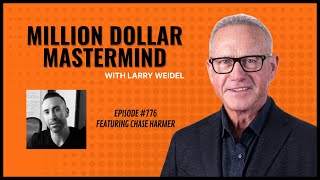
This is a transcript of Episode #776 of the Million Dollar Mastermind podcast (host Larry Weidel) featuring guest Chase Harmer. Key themes: a "teach-and-train" hiring approach where new hires become trainers to internalize processes; role clarity and delegation (founder strengths vs CEO/bookkeeper roles); operational automation for billing and cards; and the importance of personal branding. The episode closes with a CTA: Chase invites listeners to join the Wishes platform waitlist at wishes.inc and references a booking partner named Gustio.
Foreign.
Welcome to this edition of the million Dollar Mastermind podcast. This is where we pick the brains of high achievers from all walks of life and get their hard earned real world insights on winning. I'm your host, Larry Wydell.
You said something really important that I think I want to make sure people pick up on, and that is you get the person in, you train them, and then you have them train the next person. And let me tell you why that's so brilliant. In a teacher learning situation, the teacher learns. And so by having. It's one thing when you, you and I teach a new person coming in, okay. And then they get where they start to be operational. They're doing it. They're the, you know, they're flying solo now, but they really, they're doing stuff, but they don't really understand it. When they understand the process what submits people to a process, they understand, oh, this is why it's important to do it that way. But what I found, the best way for them to convince themselves that this process is a smart way to do it is have them train somebody else. And then in the process, they'll sell themselves on and they'll become true believers.
Well, that's the only way to do it is like, that's why I haven't made the same mistakes twice normally, if they're big, because I made them like I did them. And I realized what was messed up about that submission or what was messed up about that process or what I did wrong in that moment that created that issue, you know, and until you start making those mistakes and then actually going through it yourself and doing the actual work, you really just don't know until, you know, you know.
And so how much starting over have you had to do as you've gone through the process of learning how to build the people side of the business?
Yeah, I mean, I, What I realized is that. And that's why I have a CEO. I wish is that I, you know, we started with just because, like, I'm actually, I'm really good. I'm in the weeds. Get me in the weeds. Like, I'm a, I'm a worker. I'm a, I'm a carry the sword and I'm going to basically chop down trees, you know, and that's, I swear I want to. I'm. That's where I want to be. I'm a lumberjack, you know, and so I think she likes to, you know, talk to people, you know, make them feel good and, you know, build, you know, the self Esteem and all these things. I'm unfortunately a little bit more like. Like an Elon Musk, where, like, you know, I don't really have always the right touch, but I try my best. And so I. Then I try to stay out of the way. So I think I know where my skills are best. I know where I fit in the best in the organization. And that's why I have other people that fill in some of those other gaps where I might not be as great.
Right. And plus they're likely not to get pulled off of that. The importance of doing that because some new project comes up, that would be something that you'd wind up. You'd have to deal with and be pulled away, you know?
Exactly. So, I mean, I'm kind of like the fly. Like, I'll go everywhere and. And I can. I can do all the jobs and I actually like to be part of it that way. And. And I prefer to be in. Just in the weeds and helping that way. And I think I'm a lot more valuable to the team that way. And.
Yeah, yeah, you have to have dedicated, you know, the important processes in your business. You got to have people, the right people there and where they're. That's their reason for living, is to make sure that thing goes. And they're not about 14 reasons for living. Now, that is like accounting, you know, however your accounting is set up, I learned early on I've got to have somebody in there, but that's their whole reason for living with me. Nothing else in the business matters except the accounting and the bills and, you know, the taxes and that. That type stuff. And so when you can count on it, when they're. They're dedicated to that, you know, when they come and they look me in the eye and say, you know, are things going well or not? It's going to be about a county, you know, and they're not going to say, oh, I forgot about that. The last three months I've been working on something.
Yeah, you don't want that to happen. That's what it's like. They're like, you know, when you're a founder and you're building a business and they're like, where's the financials? I'm like, dude, I'm not a bookkeeper, bro. Like, you know, like, I haven't. I haven't pulled into QuickBooks. That's about it. Like, you know, like, let's go hire a bookkeeper and let's get someone that do it right. You know, it's like I mean, I, I'm, you know, I don't try to take on jobs that I certainly can't. I'm not qualified for. But, you know, what advice would you.
Have for small or medium sized businesses? From your, from the technical side and your experience, your business, Is there any advice or things that you could alert business owners to do or to be aware of or systems to implement that would help make them more efficient, more profitable?
I mean. Well, yeah, there's, there's like, there's lots of like technology out there to assist in a lot of different ways. And it's pretty general question, I think. You know, there's lots of community.
You know, it's related to the billing and things like that, you know.
Oh, billing? Yeah. I mean, I think there's lots of systems out there that you can automate a lot of the, the payouts and then you can earn revenue on the, on the back end billing and then you can also itemize and pay it. You can also like, if you're a, you can actually allocate cards out to people and you can have them spend it just like almost like a door dash. I mean there's just, there's, there's lots of things that you can do to actually, to be like more on the ground. You know, whether you guys are construction or you're. What they call it. I forget what they call. What is the. What the door dash people? Like, not the door dash people, but the. What is that economy? The gig economy. Like you have the gig economy and then you have. Yeah, I mean there's just, there's so many tools. I mean it's, it's such a general question. I mean, I, I think that I'm actually struggling with that, but because it's so general, like there's just like a million things that.
When you speak, what organization are you doing most of your speaking through? Is there one main organization that you do your speaking and podcasting through? Or, or they requests come from all over?
Yeah, no, I mean, yeah, we do. I mean it's. I have a, I have a. The guys that I work with are called Gustio, you know, and then they basically.
How do you. What is that? Gustio?
Yeah, Gustio. Yeah. And they, they, they go out there and do all the, they find the, the people that want to, that want me on the show and then we move forward that way.
Okay, so that's a booking agent and.
Yeah.
What. Why do you like to keep your face out there on. And you know, why do you. Why is it worth Your time to speak and do podcasts like this. Yeah. And, and does it help promote the business or what is it?
I do it more for your personal branding because you know, at the end of the day, like you know, when I grew my other business, it was all about the business and it was all, all the time. But you know, if you're not growing your personal brand at the same time and it, then you're doing yourself disservice because at the end of the day you have, you have you in your, your face, your brand, all your things are, are you. If you look at Conor McGregor, how did he become almost a billionaire? Or it's because his brand, it's not because of the fighter. You know, the fighter is. That's the business. Right. He became rich because. And wealthy because he of his brand. And I think there's a lot of things that you can do with your personal brand. Not just wealth accumulation, but just leverage in business and out there. When you're out there and people know you and they see you, you become a lot more credible. And I think that's the reality of being on podcasts and being on. Just being out there and getting your face all over the Internet is a good thing, it's not a bad thing. So yeah, build your brand. It's probably one of the best ways because what are people going to do if they don't know you? They're going to Google you. Right? And when they Google you, what are they going to see? If it's nothing, then you should work on that.
Well, let's talk about to wrap things up. I appreciate all your time and it's been a lot of fun talking with you. Absolut and what's the big, what's the next big horizon? Before I last ask you this last thing, what's the last, what's the next big thing that's a target for you in business, would you say?
Well, you know, I mean, I think when we started our first company, my focus was really on becoming a billion dollar company. Now my focus is on helping a billion people. So you know, wishes we want to be able to help and inspire and grow the communities like all over the country and really provide the transparency that donors have been looking for a long time. And I think you have the ability to change the world. It really just has the ability to leave a lasting legacy that will, will be around long after I'm gone.
So if some, if, if someone's out there and they've got a situation that they think that they would Love to have that transparency in and like to get it going early rather than late.
What should they do on our waitlist? So yeah, we can come on our wait list. We're, we're super, super close to launch our waitlist. You can join it at wishes.inc. i mean whether you're a, a wisher or a non profit or you're a donor, you can go on there and get on the waitlist. We have thousands of people on the waitlist and that are waiting for to go live and we're super close and we'll keep you in the loop. Once you're on the waitlist, then we'll just get back in touch with you on a consistent basis to let you know what's going on and how close we are and what's, what's next. So.
Okay, thanks so much. Well, Chase, I like to give our, our guests the last word and do you have a, a final comment or, or thought that you'd like to leave the, our listeners with before we wrap it up?
Yeah, I mean, I think what I like to say is like, you know, the world is crazy, life is crazy. You never really know what's going to happen. You can have your whole life planned, but then, you know, something instantly changes your whole future and no matter what happens, you have the ability to bounce back and you have the ability to, to be and do what you want to do. And I think that as long as you keep taking steps forward, no matter how little or a little or how big, that you always have a chance. You always have a chance to win. And so, you know, as long as you have a chance, then there's a reason to keep on going forward.
Great, great advice. Thanks so much Chase and look forward to next time and I'll by that time we'll hear how wishes has been, how the launch went and how, how it's expanded and exploding and whatever new things are coming your way. So congratulations. Appreciate you taking the time.
Awesome. Thank you, man. Look forward to it.
Okay, goodbye.
Thanks for listening to the Million Dollar Mastermind. If you felt there were any valuable takeaways from this episode, please take a minute and leave us a five star review. Your feedback is important and really helps us get the word out to a wider audience. Remember, we have a valuable webinar that is absolutely free. Register for it right now@whitealawnwinning.com thanks for listening.
More from Larry









Rick Jordan on Self-Engineered Proximity, Cyber Security Moats, and Truth-Based Leadership

Fire Fast or Fail Slow: Kevin Brittingham Reveals the One Rule That Built a $100M Empire
