Episode #777 - From A Teenage Investor To A Financial Industry Innovator with Ivan Illan
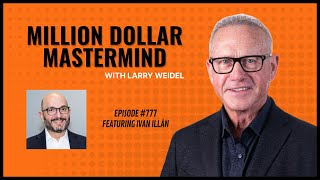
A podcast-style interview (Episode #777) where Larry Weidel interviews Ivan Illan, founder and CIO of Aligned Wealth Advisors. Illan describes his early fascination with economics (first buy order at 13), family influence (grandfather in finance), education (Boston College: BS in finance and BA in philosophy), early career entry via temp placements culminating at Nuveen in Chicago, professional credentials (CFP-related certifications, accredited investment fiduciary), authorship (Success as a Financial Advisor for Dummies; earlier book How to Hire or Fire Your Financial Advisor), and views on the lack of financial education for the public and the importance of transparent, verifiable advisor performance. The episode also includes host promotional CTAs.
Foreign.
Welcome to this edition of the Million Dollar Mastermind podcast. This is where we pick the brains of high achievers from all walks of life and get their hard earned real world insights on winning. I'm your host, Larry wyd.
Good afternoon everybody and excited to be talking to Ivan Ilan out of Century City, Los Angeles. Hello, Ivan.
Hello, Larry. Very good to be with you. Thank you for having me.
And founder, Chief Investment Officer of Aligned Wealth Advisors Investment Management and also an official member of the Forbes Financial council and since 2016, congratulations on that. I'm sure there's lineup of people across the country trying to get into that council. So I'm sure that's a high honor. And you've been in investments and finance for a long, long time. And it's interesting that you submitted your first buy order at age 13. Talk about that.
Yeah, I was really inspired at an early age about economics and the capital markets. My grandfather was the former Under Secretary of the treasury in Cuba and so he survived the revolution. And so when I was born, I was born in Washington D.C. the family was a political family. My grandfather ended up doing work at the Inter American Development bank financing a lot of Central and South American countries. So I thought it was very normal as a kid to that people talked about monetary policy at the dinner table every night, that it was just like, oh, this is of course, this is what we talk about. We don't talk about the weather, we don't talk about football games or baseball games. We talked about economic issues. And so it was a very exciting, dynamic family. And my grandfather was an absolute force of nature. And so if I was going to hang with him, and I spent pretty much every summer growing up in Miami with my grandparents, so if I was going to engage him in any way in real conversation, I had to speak his language. So I started reading the Wall Street Journal when I was 11 years old. I started ordering annual reports back pages and dialing the 800 number and requesting the annual reports sent to me. And I would read them and I'd make presentations to my grandfather. He would really treat me like an adult and he would say, that doesn't make any sense. You don't know how to read that statement. You don't know what you're talking about. And of course for me it was like, okay, this is a challenge. I've got to prove to him I know what I'm talking about. So eventually I got to a point that he said, that sounds, maybe that sounds okay. And I thought, okay, I'm on to Something here. And that really gave me the confidence to go to my dad and ask for my college fund. I said, hey dad, I heard that you've saved some money for me for college. And he said, yeah, I have. And I said, well, I think I'll do a better job at investing it than you, so just give it to me. And he looked at me and you know, he's a, you know, electrical engineer work, you know, NASA subcontractors, smart guy, bright guy. He looked at me and he said, okay, well you know, if you lose it, then you're, you know, you got to figure things out. If you make money, then good for you. And so I did very well my college fund and ultimately went to Boston College, got a couple of degrees there and got right into investment banking right out of school in Chicago at Nuveen Investments. So it's all I have ever wanted to do. It's something I have certainly a deep passion for because I'm just eternally curious about the subject matter and it's always changing, Larry, as you well know.
Yeah, well, you know, I went, I saw that you're certified financial planner, right?
You know, they're certified fund specialist, also an accredited investment fiduciary and founding member of the wealth management league for the CFA Society here in la.
Well, I started that, you know, I was in financial services, but way back in the beginning of time when they started that certification program for financial advisors, it was no offense to them, but it was as it turned out it was kind of like junior high level in terms if you came in from the industry and they had five courses and I was one of, I think there were 30 in our first, first class. There was 30 of us and two of us basically aced the thing, which to me it was like I got an A in junior high finance. Great. And I'm sure the other guys did not have working in the industry, but it dawned on me that unless I was in it on a daily basis and like I was going to be a basically fee based financial advisor, I just, I was going to be a pretend degree because things change so much and that's where the fascination comes from. The tumble of the markets and the laws and the regulations and different, you know, people's personal situation is like, I'm kidding myself. I think I'm going to get this degree and be able to put CFA after my name and actually be legitimate. So I said forget that and went on about my business and left it to smarter people like yourself to do that side of the business. And so it has evolved into quite a substantial recognition and there's a lot of stature involved in that in terms of making the industry something you can rely on and do a good job, don't you think?
Yes. I mean, I've written a best selling book on the subject of. It's actually a dummies book. It's called Success as a financial advisor for Dummies. And I really wrote the book as a sequel to my first book, which was how to hire or fire your financial advisor. And so Wiley, the publisher of the Dummies books, they approached me and they said, hey, we'd like you to write a book for us. And I said, sure, what do you have in mind? They said, international investing. I said, yeah, it's an interesting subject, but I have a better idea, or maybe it's not a better idea, but this is my idea. I said, why not write a sequel to my first book, which is how to hire an advisor, but this book will be how to be the advisor that doesn't get fired. And so it ended up being Success as a financial advisor for Dummies. And in it I try and share all the best practices that I used in my own financial advisory practice, which includes seven core competencies that every advisor really has to understand. It's really a full suite of things that have to be understood, assessed, audited, in order to make appropriate recommendations across this full spectrum. It's very complex, but it doesn't mean that it's not understandable. It just there's a lot of things that go into it. And then when it comes to the managing of the money, that's a whole other ball game. And so, you know, what I set out to do years ago was to really raise the standard of transparency and accountability that an advisor who is serving retail clients, that a retail client could actually see our real performance, our actual performance history. And so we actually go through the rigamarole, which is quite intense, of managing composites, also having those composites independently verified every year. So it's great expense and it's great resource commitment to do this. But I believe that, and also surveys have shown in the industry that this is actually what clients want. Clients actually want to hire a financial advisor that has a verified track record because otherwise you don't really know what the advisor is capable of doing. You're kind of trusting them. There's a lot of trust. I kind of wanted to level it up a little bit with something a bit more definitive and at least transparent and clear for good or for bad. Whatever those results may be.
For those of you who are sick and tired of fooling around and are dead serious about wanting to move up fast, I've got something especially for you. I've combined the best insights from over 40 years in business and making $70 million in income and compressed them into a free webinar. That's right, it's a free resource. If you want to find out exactly what the concepts are that I use in coaching million dollar earners, Register now@wydellonwinning.com you'll discover the five part framework used by so many to reach their financial, personal and professional goals. You can find that link in this episode's show.
Not the Point is that challenging people to take charge and at least understand a little bit about their finances, about what's going on, is one of the best things you can do for them. Because the surefire formula for failure is to say I'm going to turn it all over to so and so and how many hundreds of millions of dollars have been disappeared because I trusted my brother, my cousin, my good friend I went grew up with and it just let them do it. You know, you got my best interest in heart at heart and I've got I know very wealthy friends who said I only caught my cousin. I thought I solved the problem when I got my cousin as my accountant. But then I found out that I sent him down to Savannah to Gulf Stream to check out and buy a new G5 for me. And in the process I found out later he bought a twin engine for himself. And then he said I sent him down to negotiate buy a 2,600 acre place down in, down the road outside of Atlanta and then found out that he bought an 800 acre place across the street. Brazen, but right across the street for himself. And he said I only found out when he I caught him giving himself a million dollar Christmas bonus. But if you don't. But he, and he said, you know, he said I spent my entire life fighting with corporations and wondering why it's so hard to get a check out of there. There's got to go through 14 different, you know, three or four different departments. And he said now I know and now if you want to get a check out of me, you got to go through three or four different departments for the same thing. But challenging people and taking, taking the mystery out of it for people is such a good thing because it gives you a confidence even if it's just what questions to ask. And I'm sure that you covered that.
That'S so good, Larry, because actually even in the first book I have the last page of the whole book is a tear out sheet of 10 questions that anyone can ask a would be advisor to them because it is no one's trained about this stuff. You know, there's no courses in elementary or middle school or high school that goes through financial planning and household planning. I mean there used to be something called home economics many years ago. And then maybe that covered budgeting and those types of things. Well, those types of courses are way are of a bygone era. And so people are really lost in what is good financial planning. And you know, and I don't think I have to tell you, I mean, but just look at the news on what personal household debt looks like nowadays. Even credit card debt. I mean these things are at in the trillions now and only growing. And so people aren't really getting the education of how to put together a good financial plan.
Yeah, they're almost sheep being led out to financial slaughter the way they come out of the educational system. Even in college, you haven't spent five minutes in your entire education learning how money works and compound interest. You know, the difference between various insurances and how to protect yourself.
Basic things are never taught. And so that falls on our industry, that falls on the financial professionals out there. Whether it's on as insurance professionals talking about risk management and income protection, or it's investment managers talking about the power of compounded interest and staying invested and navigating economic conditions. But there's no absolute standard that anyone can reference to see whether this is good advice or bad advice. And I think that's really a challenge. It's certainly what organizations like the CFA Institute are trying to address or the CFP Board. They're trying to create these gold standards, but it's very inaccessible to the normal layperson in the marketplace.
We're decades away from that being in the educational system. So people need to realize you're going to have to look out for yourself. And the first thing to realize is it's simplistic. But we all are in the money game. You know, when you graduate and you get out on your own and you start earning money, you're in the money game. You know, life, one aspect of life is the money game and it affects everybody. And because they have any education on it, they the last thing they have is a plan, even a simple plan of accumulating or some kind of strategy. So as a result they'll go along. I used to do this little Eye opener type presentations like the Theory of the American Dream. And talk about, you know, you graduate for the first 18 years of your life or your, your parents are taking care of you, ideally, you know, someone's taking care of you, food, shelter, clothing, then you get out, you get your education. Now you're supposed to be in charge of food, shelter, clothing and making your money. But, and then hopefully look towards, you know, the American dream is that one day you won't have to work. You know, they'll be a retirement. But what happens after five, five, six, seven, eight years, people, instead of now, they've started accumulating their money towards that great day in the future when they can retire and they've gone the other way. They're way in the hole, you know, they're in debt, bring our car. They got kids, they've got dental problems, they've got. And that downward spiral in terms of debt will grow and grow and grow until you put a stop to it. And so people really need the intervention from either book, audios, YouTube videos, or hopefully a personal advisor. But most people are not going to be able to have the funds to be able to afford someone anywhere near your level of expertise. And so that's why the books are so important.
Absolutely. That's why I wrote the books, because I believe everybody should have access to this information. I mean, it's a number one bestseller on Amazon and in the financial services category. My guess is a lot of regular households buy the book because it will give them the education that they can't get from a financial advisor. Because a financial advisor may not want to work with them because like you said, maybe they don't have the assets. Well, here are still all the tools, here are all the formulas. Here's the way to really look at and evaluate these things. I would also say that, you know, our society has evolved in such a way around money, with much more consumerism at its core. And it's always been around, of course, really, I would say, you know, since the 1940s and 50s when the ad, the ad agencies and the ad guys really figured out how to supercharge the American economy. But now, you know, look at social media, look at Instagram. I mean, people are paying like these influencers, they're actually paying for a fake jet experience. Like it's like a little camera studio just so that they can be seen as if they are flying in a jet. So this level of consumerism and sort of like living a lifestyle that is absolutely out of reach, but trying to appear to be living this lifestyle, I think that is, that's very dangerous for most folks in our economy.
So let's do this. What do you think put you that you did right coming from that age 13, and you got the money from there to the education to where you started your own firm. What were things you were doing right? And possibly you're the beneficiary of your environment, your grandparents and everything. But I'll point out to you, Ivan, a lot of people have those advantages. Don't take advantage of them.
No, you're absolutely right. You know, I just always felt like, well, I certainly had a very supportive upbringing and anytime I had an idea of something, I could ask my mom and dad and they were always so supportive. And so I think that did make a big difference. I mean, my dad just as easily could have said, no, I'm not going to give you any money, you're just a kid. And instead he's like, sure, why not? What do we have to lose? It's your money anyway. If you screw it up, it's on you. That would have been a life lesson too, for me. So, no, when I got out of.
College, I would point out on that, Ivan, you were gutsy enough and confident enough and had spent enough time, energy, asking questions and educating yourself enough to where you were able to put yourself on the line at age 13, you know what I'm saying? I mean, to be able to take that risk because you were. That's taking a risk because everything hinges on that type thing. But the fact that, you know, one thing you did right was you bet on yourself early.
That is exactly right. And I was very happy to do it. Of course, I hadn't earned a dollar in actual employment working anywhere. So maybe I didn't know my navite. Very naive to know that this was something that I could be working with and the consequences weren't. I wasn't really in touch with what the consequence could have been if I lost all that money. And so I think being naive actually can't be helpful because hindsight, maybe you wouldn't do it if you knew all the stuff that you had to go through.
That's true. That's true of everybody who starts a business. That's true.
Oh, absolutely, absolutely. You don't know what you don't know. And that's universal.
It's a blessing in many ways.
Yeah, it is a blessing. It absolutely is a blessing. Yeah. So I got out of college and I knew I wanted to work in the financial services industry and mostly interested in the investment banking sector of the financial. Financial services industry. Well, because a couple of things. Number one, I was a child of the 80s, and so the yuppies. Remember. Yuppies. Yuppies were like. That was a big thing. Young urban professionals, you know, they were drinking Perrier and they were driving BMWs and they had gold American Express cards. And everybody was in a suit and everybody was hustling and, you know, looking to make a mark in the world. And it was kind of the energy. It was, you know, the Reagan era. It was a very kind of exciting time in. In our economy and in this country and those who really left a mark on me. And I want to be a part of that. I want to be a part of that energy. And it seems like there's, you know, so many. And in the movie Wall street with Michael Douglas, and of course, that doesn't have a very happy ending for Michael Douglas, but, you know, just. Just sort of this. All of the crazy dynamic in that world. I mean, of course that's a movie, so it's very entertaining. But, you know, it was. Oliver Stone wrote it based on his experience working in the industry. I was just very attracted to being part of it. And of course, that's Hollywood and that's a lot of things, but I was doing this stuff kind of personally from a young age. So I felt like, well, maybe I could, you know, add some value and find something in that. In that world that matches with me and what I'm looking to do. And for me, it was much more of an intellectual pursuit. For me, the money, yeah, it's an industry based on money. So money is. I always thought of money as a symptom. You make money because you are adding value in some way. I said, I want to be a part of that industry. So I graduated, and then I decided I didn't want to go to New York because all my friends were going to New York. And I chose Chicago. I had a friend that moved there after college, visited her one time, and I thought, oh, you know what? I like Chicago. You know, it's a very. It's a good big city, but it's not New York. So it. But it still has investment banking firms. It's a Midwestern mentality. I kind of like Chicago. So I moved to Chicago. I didn't know anybody there, and I just pounded the pavement looking for work, looking for an investment banking firm to.
So you moved there without employment?
No employment whatsoever. I had some savings that I had from working throughout college, and I was lucky enough Boston College gave me a nice scholarship to go there, academic scholarship. So I was in pretty good shape coming out of college to be able to make a choice like that. And, yeah, I had no safety net whatsoever. I just showed up.
What did you run into? What kind of brick walls did you run into?
Well, I, you know, so I. I got very strategic with it, and I said, you know, I'm going to waste a lot of time here if I'm trying to find the right place. So I went to an employment agency. And back in the day in the 90s, employment agencies were still very much a big thing. This was before the Internet really took over everything. And so there were some decent employment agencies that focused on financial services firms. And so I showed up, did the whole resume thing, and they started placing me at different places, some publishing companies, some research companies. And so I was kind of like someone would go on maternity leave. I was filling those shoes. Maybe not those shoes, but I was sitting in that seat for a period of time, maybe two, three, four weeks. And then they come back, and then I'd get another assignment. And so this was my way of just kind of finding different things and getting exposed to different work environments. And it was really fantastic because that is how I ended up with my first entree into this industry, which was at Nuveen in Chicago. And someone had left a position, and I was filling that in a temporary role.
Now, what's your degree in?
I had a BS in finance and then a BA in philosophy. And so the finance degree spoke directly to any firm that I was interested in, because that's what they were interested in.
What exactly about investment banking fascinating you the most?
Well, you know, it's origination, it's packaged products. So an investment banking firm is either taking a company public, like IPOs, or they're doing other kinds of capital financing for businesses, like debt financing, bond issuance, those types of things. And so the investment banking firm I ended up working at, they went back to the 1800s. Their history was financing municipalities, states, counties, cities. They were funding bridges, they were building roads, they were building hospitals. They were the funding originator for this. And so they would issue these bonds and package them up and sell them through all these big firms and big wirehouse firms. And I like that because to me, investment banking, sort of the core of our capitalist system of how it works. And sometimes it works really well, and sometimes it breaks, doesn't work so well. And we've seen obviously that cycle over the decades.
Thanks for listening to the Million Dollar Mastermind if you felt there were any valuable takeaways from this episode, please take a minute and leave us a five star review. Your feedback is important and really helps us get the word out to a wider audience. Remember, we have a valuable webinar that is absolutely free. Register for it right now@whitealawnwinning.com thanks for listening.
More from Larry









Rick Jordan on Self-Engineered Proximity, Cyber Security Moats, and Truth-Based Leadership

Fire Fast or Fail Slow: Kevin Brittingham Reveals the One Rule That Built a $100M Empire
