Episode #778 - Philosophy: The Unlikely Hero Of Finance with Ivan Illan
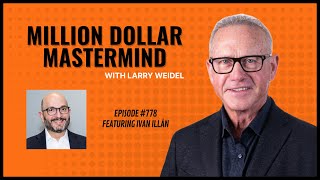
This is a March 2024 YouTube interview (Million Dollar Mastermind, Episode #778) featuring host Larry Weidel and guest Ivan Illan. Illan describes how a philosophy degree with a concentration in logic shaped his problem-solving approach in finance, recounts building a relationship-reporting system that saved his firm significant money, and tells a formative setback from his own consulting practice — a capital raise that was ~65% complete before the principal killed the deal, an episode that led him to cry for the first time in business. He reflects on obsession-driven productivity, the need to manage expectations, and how maturity changed his approach to work and risk.
Questions this video answers
"I'll be 50 this year in June." (stated in the interview)
"65% of the way there." (stated in the interview)
Foreign.
Welcome to this edition of the Million Dollar Mastermind podcast. This is where we pick the brains of high achievers from all walks of life and get their hard earned real world insights on winning. I'm your host, Larry Wyd.
So how is this different from being a cpa, would you say, in terms of being able to take the kind of jobs the personnel agency was finding for you and being able to basically be a fill in a lot of different slots? How are your degrees suiting you for that? Because I would imagine they look at the philosophy thing and say, what are we going to do with this?
Yeah, it's so funny. I actually said this many times, but the philosophy degree has served me more than my degree in finance because. And I had a specific concentration in the field of philosophy in logic. And I actually was very fortunate to study with one of the foremost logicians. That's what they're called, logicians, if you can imagine, that's actually a term in philosophy. But somebody who knows how to think extremely logically.
Euclid's theories and things like that.
Exactly. Yes, Larry, exactly. Precisely. And there's this. It's really quite an intense sort of formatting. It's like you have to format a floppy drive. I mean, look at me. You can tell how old I am, a floppy drive, but you would format a disk drive. That's exactly what I found logic to be for me. It was like formatting my brain on how to think about things, how to problem solve, how to categorize an issue and then break it into parts. And so when I showed up in this investment banking firm, you know, they're just looking at me as somebody who would just be a cog in the machine and maybe get promoted and do different things, that maybe the finance degree had some value. But what I started doing is I started looking for problems in the company. And so on my lunch break, instead of going to lunch, I would go visit department heads of these different departments. Yeah, I was 22 years old. And I go around, I say, hey, what kind of problems do you have in this department? Whether it's technology reporting problem, what do you wish was better? Of course they look at me and be like, where are you from? How'd you get in here? And I said, no, I work down on the 31st floor, and I'm working with so and so. And I just started a month ago, and this is my background. And they okay. And so people started talking. And then I started doing research, I started making phone calls, I started looking for ways to Solve problems that were being communicated to me. I didn't ask for permission to do this. I was just proactively, naturally wanting to problem solve. And I hit on a pretty big problem. And that problem dealt with relationship reporting. This is a big investment banking with a lot of clients, a lot of institutional clients, a lot of financial advisor clients all over the country, with a lot of wholesalers all over the country. And they didn't have any systematized way and any standardized way to report to those relationships, the productivity of those relationships, the aspects of those relationships. Where's the demand? Where could they develop more relationship or more flow of deals? And so I said, you know, I think I found a programmer in Palo Alto, California. I'm going to go out there and I'm going to work with this programmer. They have this training session for this program, this thing, and I think you should send me to it because I will come back and I will implement it for the firm. And you know, these guys, they had no idea what I was talking about programming like all. I mean this is the 90s, you know, so it's not like a daily, you know, Amazon wasn't even born yet. You know, this is, well, you the point.
I'm going to bring up one thing and I was reminded of this by I think a Martha Stewart mastermind thing. I think it was her. But like in the 80s or the late 70s, nobody had a computer, you know, like. And I remember that the fella I worked for, he was very into numbers. He'd had 19 different businesses at one time or not very organized. So he talked about, we, I've ordered an IBM 5111 which is like bigger than a double bread box or something like that. You know, it's like the IBM 5111, 5111, you know. And so I just had that in my mind. So like all these years later, it's still imprinted that it was such a big thing. We were going to have an IBM 5111 in the office in 78 or 79. And so we go independent as a company. We're in insurance and investments and this, that and the other. We're going through some reorganization at the home office. And they said, well, you're going to have to put up with this for a while. I guess this is probably three or four years later. They said, put on, you know, we're now going to get computerized. Now this was an insurance company and we're going to get computerized. You know, all the people the building and this and that and the other. And, you know, it might take a little while because we've got. So they started talking about their computer. Their computer, their computer. Finally, I just got tired of it. I said, what kind of computer are you getting? This incredible computer that has taken so long to get programmed? They said, well, we're getting it. IBM 5111. Yeah. You know, this thing about how things have evolved. You're talking about the 90s, and it's not that far away from the. I mean, all of this stuff, we take it for granted now. But connecting, connecting offices, coming up with systems and things like that. It's amazing how that has just mushroomed up over the last few decades.
You know what's so interesting is that even though. So anyway, I ended up doing that thing and I came back and I saved the company hundreds of thousands of dollars. They didn't need these other things. And there was much more productivity. People had better information. But what I realized was that this is really the secret. Like, if there's any secret to success in life, it's getting up and doing something. It's pursuing engagement, it's looking for interaction, looking to solve problems. Ideally, that's the ideal. Like, as a human being, you want to be useful to the world around you in some way.
In filling a void. There's needs everywhere, and it will continue to change because as things get bigger, it's just like a company. You start a company, you start opening offices, you got a certain amount of problems you got to solve, but then you solve them and everything goes along and then you are successful. And now you have to continue to expand. A whole new pile of problems show up, you know, and that's kind of the way it is in life. In every area of life, new problems are opening up because of development. And if you want to be a mover and shaker in the future, you're going to be one of the people who first of all is out looking. This comes up over and over with high achievers on these calls, they looked and they saw something and they thought, why is it like that? Why can't it be better? And they start tinkering around and they come up with something that's fairly obvious once you think about it.
I think for me, it feels very much like an obsession. Once I have an idea about something and I've got sort of a bead on how something is supposed to be, I just can't rest. I don't feel calm internally until I see the thing happen, until the thing. And of course tension inside creates energy. And so I find that I would do things that would even surprise myself. I pick up the phone and call somebody that I never normally would call them or feel the confidence to call them, but because I understood or I saw the thing so clearly, I could have the confidence to do that.
Ivan, you've said that so well, because people, people who are trying to get in the game, you know, be productive on, they say, where do you get the energy? Why do you keep working where this, that and the other. And what you said about you get something on your mind and it drives you, it creates a tension. And until you get that problem solved or dealt with, you can't sleep, you know, you're doing things right.
That's exactly right. And of course that, of course it ebbs and flows like you can't live in that mode 100% of the time, but it serves you. And I think as I've gotten older, I'll be 50 this year in June. So I've been able to do a lot what I consider in the first half of my career. And so as I look at the second half of my career, I'd like to think I've learned a lot of things. I've learned what not to do and I've learned to do more of the things that serve me in the way that is more satisfying, not only in my work, but also in my life. Because you can't be, I mean, at least I can't be 100% full tilt all the time. I have to ebb and flow with building a business. And I think that also requires some maturity and understanding of yourself.
Was there anything. So now we're talking about your first work experience out of school. Was there any traumatic thing you went through in that experience? You know, you're talking about positive and you're learning and you're looking for this and you're interviewing and was there any traumatic experience or big setback or some kind of unpleasantness that you ran headlong into? Because up to this point, you know, you've been the bright eyed guy, you know, asking questions, doing all the right things, getting the good grades, putting himself through school, you know, and, and now, you know, you get a job and you know, you're solving problems and then it can't continue that way forever. At some point you gotta run into a brick wall or you got to. Life has a way of leveling this. So when did you run headlong into that where you were all of a sudden not as bright A star, as you had been led to believe or, you know, been your experience.
Yes, I had this really great run. It was about four years I worked at the company and felt like I got to the point in my time there and also I was ready for the next thing. And so I ventured out on my own and I started my own investment banking consultancy business. And I had one client firm and then I had another client firm and I would just really, I'd show up in different roles where I had some experience in these fields and in these particular business areas. And so I had this one particular. So I started my own business at 26. And so I was, you know, I was on retainer, I was getting. I had cash flow. And then I had this client and I was doing what I thought was really great work for this client. And they were doing a product launch and we were in a capital raise and I was collecting indications of interest, putting together the syndicate and we got to some decent critical mass. I thought for deal 1 series 1 first round, it was decent. It was 65% of the way there. And that was in the real world, that's good enough. Well, for whatever reason, the principal of that firm said, no, I'm killing it. I'm killing the deal. I had just worked for 12 months. There was a big check on the deal closing. There's something that I would have gotten paid that would have been really nice. And so the rug was pulled out from under me. I was just gut punched because it was out of my control. I'm not the principal. That's their right. They can pull it if they want. And so all of that time and effort and energy and hope, all of that was just gone. And I remember it to this day, it was the first time I ever cried in business. And it's not the last time, by the way, Larry, but it was the first time. And I remember the feeling. And it was so, you know, kind of pathetic because it's so real. It's just human, you know, when you work so hard for something and it's just taken away from you, from what you may think is unfair or just, you know, it shouldn't be like that. And it was a huge lesson to me that life isn't always going to be favorable to you and people aren't going to give you what you want all the time just because you say it. So it was a very important lesson.
Or be shot or before they should, or because they should, they don't do it. You could save them 90% of what they're spending on something and they'll say.
Eh, no, no, exactly right. Of course, I'm a logic based creature.
Yes. It just scrambled your eggs, didn't it?
I had no idea what was going on.
Euclid said about this. This was not in those laws.
Yeah, right. And so a lot of life is recognizing that not everything follows logic or reasonableness.
Thank you. Yes. Yeah.
And so you have to accept that. You have to move on from it. And there's a level too, wouldn't you.
Say, of people telling you that, but realizing the difference in when you realize.
It yourself because totally different. When it's your own pain and your own suffering and your own frustration because it's all of you that's in it.
Because we have the thing where there's something about us where we have something where they say, well, if you're. You do this, that and the other, that it's probably going to turn out this way. And they go, well, not for me. You know, it's like you say, appreciate the warning, but you know, I'm aware and I'm going to steer around that. And then you go straight.
That's exactly right. There's really no way to predict it. You just have to, I think, have a discipline. A discipline of how you approach things, a discipline of how you monitor, a discipline of how you feel about things and check your own emotions along the way. So now I keep my level of expectation really in check on things, still pursue the thing. I still have the discipline, I still have the strategy, but I really don't feel anything about it. I think when you know, you're younger, you feel everything. It's all very emotive and it's all kind of happening for the first time.
Thanks for listening to the Million Dollar Mastermind. If you felt there were any valuable takeaways from this episode, please take a minute and leave us a five star review. Your feedback is important and really helps us get the word out to a wider audience. Remember, we have a valuable webinar that is absolutely free. Register for it right now and whiteallonwinning.
Com.
Thanks for listening.
More from Larry









Rick Jordan on Self-Engineered Proximity, Cyber Security Moats, and Truth-Based Leadership

Fire Fast or Fail Slow: Kevin Brittingham Reveals the One Rule That Built a $100M Empire
