Episode #799 - From Jobless To Digital Luxury Leaders with Ben Askins
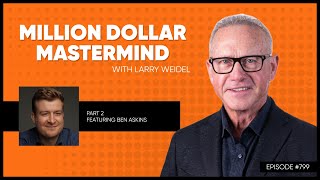
Podcast episode (Episode #799) — interview between host Larry Weidel and guest Ben Askins. Ben recounts building a luxury digital marketing agency, key breakthrough clients (an early high-traffic blogger and the car brand Bugatti) that accelerated growth, and the importance of making strong presentations and being likable in winning large accounts. He emphasizes delegation to avoid founder bottlenecks, describes selling his agency in 2021 with a two-year earn-out, and launching a new green-technology SaaS company (Gaia) formally at the end of last year. Ben also discusses his public presence (≈500,000 followers) and his advocacy for better workplace leadership, criticizing poor managerial choices and arguing that motivated teams produce better results.
Questions this video answers
2021 (followed by a two-year earn-out).
End of last year (speaker: Ben Askins).
About 500,000 followers.
An early high-traffic blogger (UK) and the car brand Bugatti.
Foreign.
Welcome to this edition of the million Dollar Mastermind podcast. This is where we pick the brains of high achievers from all walks of life and get their hard earned real world insights on winning. I'm your host, Larry Wydell. Now let's talk about how you got your. Talk about some of your first big breaks in the. It's one thing to start a business, be able to make a living and say, you know, get paid, hey, we got paid. But then when you make you get some big breakthroughs, it's like, hey, we could be big at this. You know, it's not. We could just, you go beyond. We could be successful. This, we could be big at this. You know, we're getting some really powerful recognition clients. Where do some of those great big breakthroughs occur for you in that, would you say nine years of that, that stage?
Yeah. So it's interesting. I could pick three or four clients which were moments for us. And I recognize a business on moments. I don't really look at time, I look at stages and individual clients kicked off the new stage for us. There was one, you know, one, a very early one. We did a lot of free work like these bloggers and this blog. One blogger just took off. She just became unbelievably famous. It's one of the most visited websites in the UK and that wasn't really anything to do with us. That was a huge break for us because we'd done nothing beyond build the infrastructure and done a little bit of marketing. But actually it was all her who kind of blew up. But she absolutely blew up. Everyone saw our website and we started to get huge in dates from brands saying, oh, we really admire this person. And that was our first big break because it was our transition from like small blogging, small businesses to first proper businesses who wanted to kind of work with us. The next one was a brand called Bugatti. So that's obviously a famous car brand for us. That was a really iconic moment because we beat out a lot of these big players. We kind of established. We were always like the sort of. The young agencies are sort of scrapping for it. And that's the first time we went up against the big, big agencies in the UK and we absolutely wiped the floor with them because, you know, they, I think we get to a point where if it's a huge opportunity for you, it's less of an opportunity for people who are a lot bigger than you. And that's your opportunity. Right. You can take it more seriously, you can put more hours in you can, you can make a lot bigger effort. And so for us, I think our big breaks were recognizing those moments where he's all, if we got this one, that that's a new level for us, that that's where we really sort of go into this next sort of stratosphere of what we're aiming for. So I think for us, it was two or three clients along the way that sort of symbolized a moment where from there we grew very, very quickly or had a huge growth spur off the back of that client because we're always very good at leveraging our wins into new business. And that was one of the few things that we did quite well. There are many things we did terribly, but that was one of the few things we did really well was leveraging our success to kind of build on that and to get, you know, go bigger and better the next year. And so I think for us, that was, that was one of our big moments, for sure.
It sounds like you found that the extra effort you put into the preparation showed up that the client, when you did your presentation, they could tell who was taking this more serious than the next person. And that's really an advantage an up and coming firm has that they. You don't think about. Don't. Do you?
Yeah. I think there's two things I always say to people when I go into these meetings is one is people really care. If you made an effort, that goes a hell of a long way because people can feel it, they can see it. And if you feel like they, if they feel like that you're taking them seriously, it makes a huge difference. As opposed to someone who lazily put something together, it feels very templated and things like that. The second thing is how much they like you. It really does make a difference. I always say this to people in the sense of how, how, how you make people feel carries a hell of a lot of weight when it comes to business decisions like you think it doesn't. You think every company goes, we have an amazing procure. We always make these decisions on X, Y and Z factor. But it is amazing how much it comes down to. I just get a good feeling about these people. I like these people. And it can be the most technical, scientific decision that with all the templates, and I've sat in those meetings and people fill out forms on whether this company's good and they give them a mark and a score. But it is amazing how much it comes down to how do you make people feel about you? And if you get People excited about something, if you get people feeling good about it, that carries a hell of a lot of weight in business because. Because it's a personal relationship. Even for these big tech digital companies, that's a big.
I think that's a big point, Ben, that they're big companies, but they're people at big companies and relationships matter, you know, and they, you know, so much of business in life is who's likable and who's not. You know, it's like, who gets the job, you know, who gets, you know, who gets the, you know, who's elected, you know, who are the voters going to. First sort you can do is like, who's the most likable candidate. And maybe they're both dislikable, but you say who's the least dislikable. But those people, those relationships, those likeability, it's amazing how that comes down to something as basic as that.
Yeah, it's amazing, but it also kind of makes sense because these relationships, you talk to these people a lot. If it's a big client or a big piece of work or a big project, you have to talk to people a lot. And so people are sitting, sitting there going, if I'm going to spend the next six months of my life talking to this person, you know, two, three, four times a day, why not pick the person who makes me laugh or I quite enjoy or I find quite interesting or I find quite easy to talk to or all those sort of things. So it makes complete sense when you actually break it down, even though it sounds wild when you say these massive. Because a lot of companies are quite faceless, right? They go, oh, it's, you know, BT1 this account or, you know, whatever it might be. But actually people make those decisions. People find you exactly like you say. So, yeah, I mean, it kind of makes complete sense. So I always say, like, never underestimate just how building a nice relationship with someone, because, God, that above, that gets you quite a long way.
What did you learn about business and being a success in business? As you got exposed to bigger and bigger and more and more successful companies, did you notice things about how they went about their business and find things that you can incorporate or that inspired you?
Yeah, I think the trick when you're so. It's amazing how often you see an entrepreneur starts a business. It goes very well, it gets to a certain point and the company just stalls. And you know why it stalls? It's always the entrepreneur and it's always the founder because they've not Let go. I think the delegation element for us was absolutely key because we realized very quickly on there are some things we were very good at, some things we could manage to do and some things we were just awful at. And the best thing we can do is to hire people to do those bits were all flat and to delegate so you can focus on the next level. And so for us, like getting. I remember there was a year where we stalled a little bit and it was because we were trying to do everything and we were a bit worried about investing in the future and we, you know, we've been sort of holding fire and hiring a few key positions and then we just thought, no, this is ridiculous, let's take a slight hit, let's hire to these positions, let's focus on growth. And we had our best year ever. So the delegation element for us, I just can't overemphasize how important that is. And recognizing you can't do everything, you're certainly not good at everything. And if you allow yourself to be a bottleneck, that's the quickest way to stall a business.
When did you co found the. What is it? Gaia, the green technology company.
So I co founded that. So I sold my business in 2021. I had a two year earn out where I worked for the company who bought us for two years. And so I found a guy at the end of last year. So we launched formally. Yeah, end of last year.
Now this is a, a software company, is that right?
It's a green technology company which is a completely new space for me. So my first business, luxury digital marketing. My new business, Green Tech, it's very different but for me it represented an area I find absolutely fascinating because green tech is one of the most fraught, like politicized, argumentative spaces you can be in or certainly the green side, not the technology side. And so for me I found the, I found the whole inp and I find the arguments that people have around these conversations completely flawed and I really do. I think there's way too much pressure on the consumer and I think there's ways, there's nowhere near enough pressure on governments to make these decisions because it's very easy to go, oh, businesses are evil and they're just ruining the environment and that. And I go, well, hang on, it costs a lot of money to just change things voluntarily. That's just not how anything works. The second thing I say is everyone always goes, oh, why is the CEO not just prioritize the environment? I said, well if he did that he'd be fired by the board of directors by lunchtime. So you can't just do that. It has, it has to come from government and it has to be sustainable from a financial perspective. But the argument I really dislike is I've never understood this logic of, oh, you either pick the environment or financial success. There's obviously a space in the middle where you can make something sustainable work, but also make it a financial success. So we set up Gaia to essentially fulfill the promise where governments roll out new climate and green laws and regulations and we build products that allow companies to achieve those rules and regulations. So a SaaS based business, we got a couple of different products, but yeah, it's a really interesting space. I've had a lot of arguments with a lot of different people around. It's a very heated discussion and I'm sort of circling the middle sort of set, trying to, you know, herd cats into the center to kind of recognize that everyone's kind of arguing about the same thing, but everyone's so impassioned about it that no one's really listening to each other.
How do, how do you evolve from those involvements to where you've developed such a big voice for become a champion of the younger generation in the workplace, where you have such a wide following of 500,000 people across a variety of platforms, talking about companies, managers, making money the right way. How do you go from that kind of background to that kind of influence?
Yeah, so it started off I just, I was starting to see some real. So I'm obviously, you know, my first business was digital. I'm fairly abreast of the social platforms, I understand how they work. And I was seeing this weird trend of bad business advice. And I thought, you know, obviously, hypocrisy of me saying this whilst on a podcast, but I think the sort of podcast approach to business damaged things where people realized that instead of. Basically what happened was a huge raft of people decided that instead of doing the hard graft and actually starting a business and making it a successful, you could just rent a podcast room, pretend you've done it and you start throwing out these sort of weird business advices. And, and there's a, there's a group of people in particular who was just offering this really poor advice, but they had hundreds of thousands of followers. And so it starts off quite accidentally, I would just like re watch some of these videos and just react to them and explain why they were wrong basically. And it kind of built from there. And then people starting to message me about Their like, work bosses and they complain about their work and their bosses. And for me, you know, when you, the more people you have, the more important like motivation is. And for me, I've always genuinely believed that if people like their job, if they're motivated, if they've got a vision, if they've got good leadership, if they're kind of up for it, if they're paid competitively and all that sort of thing, your business does better. It just does. But it's amazing how companies think and companies agree with me, but then still go out of their way to kind of in a really basic way, hack off their team, do some really basic mistakes. Like, and we're talking some big hitters as well. I heard this amazing one where one of the big four firms here in the UK had a big pay rise. They gave all their juniors a pay rise. And the partner announced it, said on the call, you know, I don't think you deserve it, but here's your pay rise. I mean, obviously you're just. The only reason we're doing this is because, you know, we have to because of the market, because I don't think you deserve it at all. And you think, my God, you've just unmotivated a whole team by giving them a 20% pay rise. That's the most idiotic thing I've ever heard. Like, what are you playing, ants? And so I just started to read out some of these stories and explain why I thought they were wrong, what I think a business should do. And I do try to. I don't. I think people think I just like, hate bosses. Like, I don't hate bosses, I just hate bad bosses. Because I'm a big believer in, you know, and it's amazing. I sit in front of these managers, I say, do you think people do better work if they're happy or if they're not happy? And they go, happy? I go, then talk me through these last four or five decisions you've made because it looks like you're actively trying to make them quit. So I'm always a believer of give people a good environment because I think it's the right thing to do. But I also am a big believer in that genuinely helps your business because I've run a company with a motivated team and I've also run a company which had unmotivated team in stages. And let me tell you, it was a hell of a lot easier when they were motivated and up for the fight, really.
Thanks for listening to the Million Dollar Mastermind. Future felt there were any valuable takeaways from this episode. Please take a minute and leave us a five star review. Your feedback is important and really helps us get the word out to a wider audience. Remember, we have a valuable webinar that is absolutely free. Register for it right now@whiteallonwinning.com thanks for listening.
More from Larry









Rick Jordan on Self-Engineered Proximity, Cyber Security Moats, and Truth-Based Leadership

Fire Fast or Fail Slow: Kevin Brittingham Reveals the One Rule That Built a $100M Empire
