Episode #803 - How To Fast-Track Your Business Success with Alan Pentz
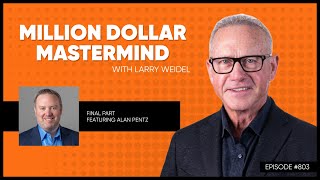
Podcast episode (Episode #803) in which host Larry Weidel interviews Alan Pentz (recorded April 2024). Pentz describes transitioning from operator to investor, launching the Small Business Mentor podcast/newsletter and an aspirational small-business MBA product, and his interest in mentoring entrepreneurs. He emphasizes the value of peer groups, mentors/coaches, and writing/speaking skills for business owners. Pentz also summarizes his book Winning the Long Competition (The Key to the Next American Century), arguing for a productive long-term partnership between U.S. government policy and private-sector innovation — illustrated by DARPA's autonomous-vehicle Grand Challenge (seed funding ~$1–2M) that helped spawn the driverless car industry. The episode closes with personal reflections on life as a business owner and pragmatic launch advice: "You're never going to get cheaper."
Foreign.
Welcome to this edition of the million dollar Mastermind podcast. This is where we pick the brains of high achievers from all walks of life and get their hard earned real world insights on winning. I'm your host, Larry Wydell.
What do you enjoy most about what you're doing now? Because you mentioned you gotten involved in a lot of things. You talk about board member of the entrepreneurly, you, the entrepreneur organization. What are the things you enjoy the most now?
Yeah, I mean my real second part of my career here in business has been, you know, I'm still building the company. I've really moved it. You know, the team that's in place now and emerging at my core company has really got most of the company under control. So it's, it's a virtual self managing organization. I would say virtually there.
Right.
And I, my real passion is to get to those business owners and entrepreneurs that were me in 2012, 2015, trying, you know, staying up at night, trying to figure out what to do and help them get the, in all the, the key lessons and knowledge and techniques and tactics and everything that I learned over quite frankly having to hunt and peck for it over these groups and educational opportunities over 10 years. You know, my goal long term is actually to develop a way to get people that knowledge within a, you know, much shorter timeframe, six to you know, 12 months or something. So I think I will. I've started a company and podcast called the Small Business Mentor where my long term goal is to build something like that so that, you know, we can take entrepreneurs through a journey to like learn how to run, you know. So it's like a small business MBA kind of concept. So that's one thing I've worked on.
But is that up and running now?
So the podcast and my newsletter are up and running now. We don't have the educational part. That's my app aspirational goal. But I need to work on how.
Do people get to that newsletter and the podcast.
Yeah, so just go into Apple or Google or wherever you get podcasts and search the Small Business Mentor and then the newsletter is at Small Business Mentor.
Co. And how long have you been doing that?
This is so both I started recording episodes in December, so.
Oh, dead, you know. Okay.
Yeah, yeah, yeah, yeah. So I just got the company to self managing. Now I'm moving out. But then you know the thing I'm doing out of that, that's, that's one of my long term goals. But I've been doing minority investments helping people buy companies. So I helped Some, some friends buy a metal fabrication facility up in, in Massachusetts. It's been amazing experience and, and gotten involved in affordable housing company and also done some solar investments. So I'm really enjoying, like, other aspects, you know, looking at other businesses. And it is true, like, at a certain point, they taste like chickens. Yeah, it's kind of cool to, to kind of go across and do that and actually mentor those guys.
I'll tell you this, Alan, it's. It's basically the same track I'm on with the concept of this podcast, which is the principles of winning from the people who wind up at the top. Pretty much comes into the same river. You know what I'm saying?
There you.
You know, you don't win Super Bowls and become champions and do that, you know, you're not going to have a Tiger woods emerge in a sport. And he said, well, I just drink beer every night and screw around and everything. And winter, that might be a Bubba Watson who wins the occasional, you know, Masters or something. Never had a lesson.
But by and large, they're going to.
Fade into the mist. If you're going to be a Michael Jordan or Tiger woods, you know, in any industry or have that kind of company, they're going to follow certain patterns. And that's why I love to interview people like yourself, because you've got a very unique background, and it's great for people to hear these kinds of concepts coming. Coming from you and hear that it's applicable to what they're going through and all.
Well, I would say to that point, Larry, like, I emphasize peer review groups a lot when you asked earlier, but, but also. Yeah. Mentors and coaches. You know, I still have a coach. I've had, you know, I probably had a dozen coaches. And yeah, actually, during the time when I didn't. When we weren't doing well, I did not. And that was probably the problem.
Yeah.
And I didn't know how to access that then. I wasn't really involved. But it was getting involved in peer groups where I realized, oh, everybody else is doing this. This is how you win. So I, I think it's fundamental. I mean, Djokovic and whoever's never. I haven't watched tennis in a while, but whoever's number one now, they have a coach, right? Everyone has a coach.
Yeah, yeah, they all have a coach. They've got a team. You know, there's, there's parallels that you just can't get away from now as you go. What's interesting with, with you, Allen, is the. Did you have an itch to be a writer. I noticed that you did some writing, speech writing, when you were back working with Senator Bacchus.
Bacchus, yeah.
Was that before you went for your mba?
Yeah, that was. Yeah, that was right before.
So how do you. How do you morph into a press from intern to your press secretary to speech writer over how many years does that transition happen?
Yeah, I mean, I was four, I think, something like that. But, yeah, I mean, writing has always been something I love doing. And so I now, you know, now writing about. It's a lot better than having to write the speeches I did for Max. He's a great guy, but there's some boring stuff I had to write about. And Max might not have been the greatest speaker on the face of the earth, but we won't talk about that publicly. So, yeah, he was a great guy. So love you, Max, if you're listening to this podcast, but I'm sure he's not, but he. And then. Yeah. So, I mean, it's been. It's always. I think one of the things that helped me as a consultant was I was a much better writer than almost anybody else.
Tell people in business school, tell people why they should consider doing some more writing, what it does for you in terms of organizing your brain and getting your thoughts down. Explain to them who haven't written a book. We'll get into your book in a minute. But explain to them the writing process. Because I never thought about, you know, I was always writing notes for speeches and organizing the training programs and things like that. But, you know, in terms of journaling or, you know, writing books, it just didn't dawn on me. Yeah, I thought that was the last thing I would do. But once I got into it, you know, the light bulbs went on about how it, you know, how it organizes you and how you can kind of argue these things out in your head to get them down on paper. Talk from your standpoint what it does for you.
Well, I really think, look, everything in life is. There's somebody wrote a book a while ago called Everything Sales, even if you don't think right, because basically you're always trying to communicate some idea and sell people on something, like whether it's a project you want to do, whether it's an idea as a professor, whether you know, any of those things. So as long as we're dealing with other humans, communicating effectively and concisely and clearly is going to be crucial. And I would say both speaking and writing are both incredibly important skills and definitely was a Huge. I mean I went farther in business once I got the shot because I could write and speak better than, you know, the business students hadn't been trained on that.
There you go.
Like I did. That's all I did right. Is write and speak. And I was a speechwriter. I wrote speeches, I wrote documents. I had to go speak for the congressman, not so much the senator, but, well, I guess I was a press secretary, so I talked to the press. So yeah, like writing and speaking was the lingua franca. I guess that's a little redundant, but was what I did.
Yeah.
And so once I got into business and got the core business skills, I was able to really excel a lot faster because of that, that ability. So I highly recommend people do that, get that experience.
Now when, when did you get the, the, the idea to write a book? You know, and the things that it seems like you're, you're close to Washington, you still have a policy mentality about how things affect how things work in business, how they work in government, and what people need to be thinking about over the long term. I really find that people who are short term thinkers, one of the big difference between people who really are successful are they're more long term thinkers. You know, they're interesting, you know, and commitment, you know, they're thinking, you know, it's not like maybe not that detailed, but they're, they've got their eye down the road and you know, they're working on a plan and that allows you to give time for your efforts to compound and multiply. You know, you're, you're thinking of where.
Compounding, that's a big theme of mine recently, Larry actually is compounding is king. It's everything.
For those of you who are sick and tired of fooling around and are dead serious about wanting to move up fast, I've got something especially for you. I've combined the best insight, insights from over 40 years in business and making $70 million in income and compress them into a free webinar. That's right. It's a free resource. If you want to find out exactly what the concepts are that I use in coaching million dollar earners, Register now@widelonwinning.com you'll discover the five part framework used by so many to reach their financial profile, personal and professional goals. You can find that link in this episode's show notes.
Yeah, because it's like, where are you going? And you know, do you want to always be starting over? Do you want to get something started and then have it, you know, keep it, keep the tire rolling down the road, you know, have a, have a road to roll hard and be able to keep it rather than always being. You're looking for a road and looking for a tire to get started, you know.
Yeah, yeah. No, I mean, I, I wrote a book called, you know, about what I see as the long competition. So it's called Winning the long Competition, the Key to the Next American Century. So it is my policy geek part coming back out. And I will. Part of what I'll do going forward will be policy related because I can't. I can't shake it. Yeah, just like I couldn't shake the Internet and that computer lab. I can't shake the policy from Capitol Hill. But, yeah, like, that came out of what is really a synthesis of all the stuff I've done, which is work in the government, work in business. And seeing how those things come together in a way that I feel like the normal policy conversation doesn't capture. It's usually one or the other people are looking for one side or the other and to realize, to point out things like the government has been involved in American business as a investor, customer since Alexander Hamilton wrote his third letter to Congress on report on manufacturers. So there had been a sort of ethos when I was on the Hill. And you look at these Google employees from five, seven years ago, talking about doing business with the Pentagon was evil and they're going to quit. And, you know, they killed a bunch of projects around that. And I was looking at that, just saying, like, what are you talking about? Like, Silicon Valley was created by the Defense Department to make semiconductors for missile guidance systems. That's why in Silicon Valley. In Silicon Valley. And they were the early customers. So I wanted to write a book about why this partnership between U.S. business and policy in the government has been basically the way we've done business since Alexander Hamilton and will probably be the reason the United States will be the preeminent power for the foreseeable future. And I don't think China can compete with that system. And so the book was really an effort to kind of capture the stories about how that partnership between government and the private sector can be really productive. One of my favorites, actually, that begins the book is about the driverless challenge, the grand challenge that darpa, the Defense Advanced Research Projects Agency, conducted in the early 2000s. And that challenge, they were trying to get autonomous trucks and tanks so they would have less casualties. The big contractors couldn't do it. So they did this grand challenge. $2 million, pot or I think the first one was a million. Then it went to 2 million. It spawned the entire driverless car industry. Everybody, every program, Tesla, Ford, all of it, Cruise, all of it came out of those people. And they would not have been put, they would not have been put together, nor would they have, nor would the industry have ever been created, I think without that government. $2 million, I mean that's it. 2 million. We're talking about a trillions of dollar industry. Now the government didn't direct it.
Right.
They helped spawn it, they helped gather the people, they helped provide some early funding, they helped be a customer, you know, but as opposed to like maybe another country where they would like try to program it and run it, you know, we have this sort of different relationship and that's what I was trying to capture. Like that. Yeah, that productive partnership.
I love the book. And I would just say, Alan, I just wish, you know, you know, maybe in Congress the senators have longer terms because you need people in there that are thinking longer terms. But you know, maybe the next.
We're not incentivizing. Two, two year terms. Do not incentivize.
Yeah, or at least people are going to be in the house forever, you know, like a Pelosi or somebody. But you know, they, you know, the people that are going to be there for a while, like running the bureaucracy, you know, there are people inside the bureaucracy that never leave, they just move around. But to get that, you know, I, I wish, you know, this book would catch on. You know, I hope you'll, you'll, you'll, you'll get the opportunity to do some speaking about that in Congress, in Washington, in D.C. because it's such a point that is like a roadmap for increasing our investment and innovation in core areas can be such a game changer.
Yeah, well, I am encouraged. This was not the result of my book, but I have seen things like Andreessen Horowitz now has an American Dynamism fund. They were a big funder of Anduril, who's a new kind of defense firm. They are really leading, huge credit to them. They are really leading a Silicon Valley effort to re engage with the Pentagon as the former Google CEO Eric Schmidt has been extremely active in that. And so I do think the book resulted from a time where we were in that transition and I clearly wasn't the only person seeing that. But I am very encouraged about the last few years and I think we're seeing the foundations of a new kind of relationship being built, which is great.
Yeah. Well, I wish you the best and you know, your energy into the small business mentorship pro space I know is going to pay dividends for you. How has your life turned out in terms of. Are you enjoying life?
Oh, man, I love it, Larry. I get to do like, I think one of the things about business ownership, this actually. What? All right, I got four things about business ownership. Okay. I'm going to add one on the podcast here. I think the fourth one is you can really architect your own life when you have a business. And if you do that transition, this is why you want to do it, right? From that operator to investor. Because really when you're that operator, the business is running you. You have a job, you just happen to pay yourself. Right. But you have the opportunity to build the team to create the self managing company to then go pursue these other interests you want. Not to mention you have some capital to do it with. Right. You know, and some credibility. So I just think like being a business owner is the hardest thing I've ever done. You know, having to do this, having to deal with the fact that people I worked with for 20 years needed to go and stuff like that. It takes a chunk out of you.
Yeah.
But on the other hand, it's this experience that allows you to create your own life. And, and I think it's fantastic. I get to do whatever. You know, if my kids want to go somewhere for the weekend or during the week, I can go and, you know, I can spend time with my family the way I want to. I can pursue all these different interests. It's an incredible.
And you can operate from a bunker that is off the grid.
Undisclosed bunker. That's right.
Nobody knows where you are.
I don't think there are any undisclosed bunkers in Chevy Chase, Maryland, but if there was, I'm in one. Yeah. No, it's fantastic.
Well, and the other thing is you're able to start these new programs, you know what I'm saying? It's like, you know, starting the podcast thing, start this other thing, which is a real key to regenerating your life, and stay, you know, they wonder, they wonder why people like us, Alan, why do you stay at it? You know, why do you keep doing it? It's because actually, you know, in spite of it being an incredible drag, it's so much fun, you know. You know, plus you get around people that are inspired when you are moving forward. I know on your, your podcast and some of these other adventures you're launching off, you're going to meet some of the most mind blowing people that otherwise you wouldn't have run in, you know, and they, they, they just, that inspiration just rubs off on you and.
Yeah, and I have, you know, I have, I'm from. Most of my friends are not business owners and you know, they're starting to like, think about retirement. I'm like, what are you talking about? I feel like like you, Larry, you're, you're a shark. If you stop swimming, you die. Right? So that's sort of how I am. And, and, but I get it if you're working eight hours a day doing something and you kind of like, right, Maybe, maybe you decided to stay there just to get the five years. Yeah, I can understand you want to bail on that and move. No, no shade on Florida. Move to South Carolina. Yeah, you're in Florida. But you know, I get it. But like for me, that's no way. Yeah, I'm going to be doing, I'm going to be doing some version of this until they put me in a coffin.
Well, thanks so much, man. This has been so much fun talking and getting a behind the scenes look at those worlds. I always like to give my guests the last word, A chance to, you know, have a party shot for the, you know, up and coming generation or the people that are ready for a new launch, a new phase of their life.
I'll give them the best advice that got me to start my business. I had a buddy, Simon, in business school and I was thinking about starting a company. I was 33 or 4 or something like that. And I was like, oh, should I do this? Should I not do it? And he said, look man, you're never going to get cheaper. And I was like, you're right. So if I'm going to do it, I better do it right now. Right? Like in 10 years I'm going to have kids in college, I'm going to have bigger houses, I'm going to have all these obligations. So whatever it is you want to do, just go do it because you're never going to get cheaper.
Fantastic. Thanks so much, Alan.
Yeah, I appreciate it, Larry.
It's been a lot of fun and look forward to checking in down the road and seeing what new adventures we'll.
Have you on our pod. Come on, we'll get you on over. Let's do it.
Be a blast. All right, thanks so much, man.
See you later.
Thanks for listening to the Million Dollar Mastermind. If you felt there were any valuable takeaways from this episode, please take a minute, leave us a five star review. Your feedback is important and really helps us get the word out to a wider audience. Remember, we have a valuable webinar that is absolutely free. Register for it right now@whiteallonwinning.com thanks for listening.
More from Larry









Rick Jordan on Self-Engineered Proximity, Cyber Security Moats, and Truth-Based Leadership

Fire Fast or Fail Slow: Kevin Brittingham Reveals the One Rule That Built a $100M Empire
