From Bike Shop to Coaching Empire: The 50-Year System That Works
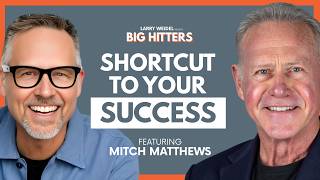
In this Big Hitters podcast episode, host Larry Weidel interviews Mitch Matthews, the founder of Matthews Training International and creator of the Dream Think Do podcast. Matthews recounts his journey from a teenage bike‑shop employee in Des Moines, Iowa, to a corporate sales professional, pharmaceutical rep, and ultimately a full‑time coach and trainer of elite coaches. He describes how early exposure to the Schwinn Selling School sparked his love for sales and teaching, leading him to design his own training programs for small retailers, which later evolved into a scalable, iterative system used to train thousands of coaches and speakers worldwide. Throughout the conversation, Matthews emphasizes core principles such as listening more than speaking, asking probing questions, humility, curiosity, and the importance of mentorship and proximate learning. He also critiques superficial “quick‑expert” coaching, shares lessons from failed ventures, and promotes the Big Hitters community as a venue for high‑performers to exchange actionable insights. The episode concludes with Matthews offering a free training for successful individuals who want to monetize their expertise and a reminder to be genuinely interested in others as the key to leadership and influence.
Chapters
One of the best ways to figure out how to do stuff is to talk to people who've done stuff.
Welcome to Big Hitters. I'm Larry Weidel, and this show is for people who are done playing small. Each week we break down what it actually takes to win at a high level— the decisions, the discipline, the adjustments that separate those who almost do it from those who do it. No theory, no fluff, just straight talk from someone who spent 50 years building winners. If you're serious about momentum, you're in the right place. Let's get into it. Everybody get ready for a wild ride. We got Mitch Matthews here. Mitch and I've been talking, man, what a life he's had. He's dedicated his life to helping 1 million people pursue and achieve their biggest dreams. He's a coach to some of the biggest people out there in the world today that are coaching other people like Brendon Burchard, Lewis Howes. He's got the Top 1%, he's becoming a Top 1% podcast host. He's trained and mentored thousands of elite coaches to 6 and 7-figure businesses. He's creator of the Dream, Think, Do podcast and inspiring millions to dream bigger, take bold action. We're getting ready to have a lot of fun, folks. So get, I I hope you're in a frame of mind where you wanna relax and enjoy, 'cause that's how, you know, when it can sneak in your head, that's when you can learn the most. He's founded Matthews Training International, training thousands of elite coaches and speakers. He's a corporate and leadership speaker. He's done impact keynotes for NASA, Disney, Nike, United Airlines. Good Lord. And just came off doing a big TED Talk. So anyway, let's get in. Let's, let's have some fun talking to Mitch Matthews.
Hello, Larry. It's great to be here. I'm excited.
From Silicon Prairie.
That's right. The Silicon Prairie, right in the middle of it.
For those who don't know, in Iowa, where Silicon Valley is spreading, It's true, Des Moines. And so congratulations on all of your stuff you've got going on. What a whirlwind of activity you've done. You really made a unique life for yourself and your family. And tell us about— tell us about that.
Yeah. So we have a training organization, as you said, that's based in Des Moines, which what I love about that is that when you find what you want to do, especially in the era that we live in, you can do that from anywhere. And so I'm wildly grateful to say that. So we have a training organization where we offer coaching and speaking as well as we have a media side. So we have a couple of podcasts. My bigger of the two podcasts is called Dream Think Do, and we get to interview people from all over the world, all different industries and backgrounds, Olympic gold medalists to Oscar winners to New York Times bestselling authors and I always say, well, I could not agree more. So, and I know you kind of, you believe this too, that I think everybody should have a podcast because it's such a great excuse to have interesting conversations with people you might not normally get to do that with. So, yeah. So we have a training group that we do coaching and speaking, and then we also train up other coaches and speakers as a part of what we do as well. So it's, it's great. And yep, I get to base it right out of the heartland.
Well, as much as you've done in your life, you've got to be at least in your 90s.
Some days it feels like that. But yeah, exactly. I'll blame it on a short attention span and a lot of prayer life, that's for sure.
Okay, well, we share a short attention span. That's good to know. I really think that's a plus. You know, you get bored quickly.
That's exactly right. I figure other people do, too. So let's do things that energize people and equip people and And it makes all the difference in the world.
Get to the point. Move on.
Yeah, right. Exactly.
How did this kaleidoscope of activities and engagements in your life begin? What was, what was pulsing you when you were coming up through high school and as a child, you know, what did your eyes glance on?
And I think, I think you and I are similar in a lot of ways. But one of the, one of the ways I was an intense kid. Um, and I got interested, deeply interested in, in a few specific things. And one of those things was, uh, I, I fell in love with bicycles. I always, uh, you know, I used to say bikes, but people assumed motorcycles, but I was never cool enough to ride a motorcycle, but bicycles. I just fell in love with bicycles. And I grew up in a small town in Iowa, and it was one of those kind of Hallmark Christmas movie towns where we had a courthouse in the middle of town and we had a, you know, a town square with little shops around it. And then. 2 blocks off of that square was the bike shop, the only bike shop in town. It was called Marty Schwinn Cyclery, and I fell in love with bicycles. I enjoyed riding them, but I also, everything about bicycles fascinated me. So the year of my 12-year-old's summer, I spent every day, every hour that I could at that bike shop. And I did all sorts of things so they wouldn't arrest me for loitering. So I swept out the alley, I dusted down bikes, I painted trash cans, did whatever. Mowed the lawn of the bike shop owner, even without his permission sometimes, uh, just to be in his good graces. And at the end of that summer, he hired me, which I'm wildly grateful for. It was a little illegal at the time, but we worked it out, uh, because I was only 13. But I loved it. And, uh, what's, what's interesting about that journey was I went in excited about bicycles, but once I started working at the bike shop, that love transferred to entrepreneurship. I didn't fully understand at the time, but, but very quickly the entrepreneurial bug bit me. And one of those things was Marty, the owner of this bike shop, took me to a sales— sailing— selling school, the Schwinn Selling School, when I was 14. So I went to my first kind of professional selling experience at 14. It was me and a bunch of middle-aged bike shop owners. And I just fell in love with this. A guy walks in, he starts telling us how to sell and showing us, and it was different than school. It was different than anything I'd ever experienced before. And I just started saying, what's this guy do? How's that work? And so at a very early age, I got a sense of what I wanted to do with my life. I just wasn't sure how to do it. And so I started to experiment with that. I actually sold some seminars while I was in college of my own. Creation. And then I realized I probably needed a little corporate experience before people would really pay me for that kind of work. So I went into business-to-business sales and then pharmaceutical sales and had a lot of success in the pharmaceutical world. As I would tell my kids, I sold drugs legally, uh, and was very good at it. Really enjoyed the experience and all of that and got promoted and went up through the ranks, uh, in the pharmaceutical industry. But then, I got promoted into a bad fit job. My last 2 years in the industry, I was in a bad fit job, which wasn't a bad job. It was just a bad fit for me and it started to kill my soul. But it also woke that dream back up of having my own company, doing some of those things that I'd learned back when I was 14, you know, of teaching adults things that they needed to know and, and helping them to do it faster and be more effective at it. And so, I started to do that on the side. I started to coach. I started to speak on the side of that executive-level pharmaceutical work. And then that blossomed into full-time work. And I've been doing that full-time since 2002.
I can tell you're incredibly well-organized at telling your story.
There's, there's definitely seasons to it. There's no doubt.
Is there, is there a TED Talk in your background somewhere?
I just gave a TED Talk last weekend.
Okay.
All right. On a different topic altogether.
Yeah, but yes. Okay. Yeah. You're mentally organized for success. You're specific. There's a lesson all the way through there. Now let's go back. Let's go back. First thing that grabs my attention, who knew Schwinn had a training program and gathered up all of their people? Who knew? Who knew?
And what's interesting is they don't exist in the same capacity. They were the number one bicycle company at that time because they were innovating. And they were doing things like that. Then when they started to have success, they started to draw back on activities like that and they lost the lead. They lost all the innovation.
It's—
there is a story there, that's for sure.
You know, it sounds a lot like Sears, right? You know, because Sears, Sears had the catalog, they had the mail order, they had it locked in, they had systems.
Oh my gosh. Yeah. Everybody waited for the Sears Christmas catalog, right? Like they had systems.
And they had this little— And then they got comfortable. They even had the little outposts, like Amazon has their outposts where they can deliver quickly, you know, from around the country. Absolutely. They had those in all the little rural areas.
Heck yeah, we had our Sears store. That's exactly, absolutely.
Whoever was in charge of, you know, if there's a hall of shame in business, whoever was over Sears at that point calling those shots, I hope he didn't write a book.
Exactly right. Exactly right. The one to avoid. There's no doubt. But it does, it does make you wonder because at their time they were Amazon, right? Like they were the unbeatable retailer. And we look at Amazon now going, oh, who could beat Amazon? It's like, well, let's look at the trajectory of those kinds of things. You know, there's somebody else waiting in the wings, right?
Yeah. And you don't know that they'll always make great decisions. In fact, Jeff Bezos says even he'll say, I can, I can see be a future where there is no Amazon. You know, that's what he's working to make sure doesn't happen, that future. So, but you've got to know that, you know, there is no too big to fail out there in life. And so let's talk about this thing now that you glossed over so glibly. You know, I believe, you know, I believe that had an impact on you that maybe, maybe you have or have not thought about in the detail of where an architecture was created in your mind, a concept of the fact of getting people together, having a structured curriculum, teaching sales, you know, having an organized thing like that. Like who at 13 years old gets exposed to something like that? You know, they—
I can tell you, and I don't know what your experience was like in school, but I did not thrive 5 in most classrooms, right? Like, 'cause I mean, I, I was actually a, a pretty excited learner, but I just, I wasn't one to just sit there and listen. Like, and this Schwinn Selling School was the first experience where somebody came in, gave me a little bit of information and then said, now take it and make it better. Now try and apply this. Now do it. You know? And, and I, I just, all of a sudden I'm like, what is this? How, what is this approach? This is amazing. And I was energized and I got good at it, all those things. And so, yeah, I thought at a very early age, I'm like, I want to be able to use this on other topics and subjects that I'm passionate about or people need.
Well, it makes the point that, you know, I've always told people, it's, you know, the fun of— you need the fundamentals, but you go to greatness using the fundamentals. And, you know, knowing the fundamentals does not— yeah, I know the fundamentals of boxing, but I'm not going to get in the, you know, the ring You know, and so the thing is that you've got to use these to where— and you use them enough to make them your own. And, you know, they were really on the money there. I mean, I'd like to know at Business Hall of Fame who set that darn thing up.
That's exactly right. And it was, it was amazing because they, they took an approach that, that I to this day try to apply, and that is they held us as capable. So even though I walked in as a 14-year-old, everybody else in the room were bike shop owners and probably in their mid-40s. They looked at all of us as capable and we were there for 3 days. It was intense training and they just kind of said, hey, the train's leaving the station. We're going to be moving fast. Hop on. You know, if you want to be a part of this, you're going to stay awake. You're going to stay engaged and you're going to need to keep trying. And they didn't wait for anybody. They said, that train's moving, get on. And I really appreciate that approach. So we always try to apply that as well. Say, hey, hold your people as capable. And it's amazing what people rise to.
You know, the small— the bikes. What? Just a comment. In these small towns, I know my father was in the Air Force. We moved around every 15 minutes, but I actually was in Enid, Oklahoma, when I was around that age and had a little, little TV Guide route that I delivered up with my bike.
Entrepreneurship at its best.
It gave you independence. You know, it's like the beginning of the, you know, the first step to the car, you know, to where you go all over town. In a small town, you can go all over town and be an independent person, especially if you have big curiosity and everything. And so the— it's no accident that, you know, bikes are still incredibly popular.
But you do see kids now on the electric bikes. And I find myself yelling, you know, usually with a closed window in my truck saying, pedal that thing. You know what I mean? Like, like there's something about having to pedal it yourself that, that does make a difference.
It does make a difference. And so somehow in there, a light bulb went on in your mind, which I wonder what triggered this. Okay, I'm going to do my own training program. Where did that idea come from?
Well, it was interesting because, well, I'm grateful for it, although it, like I said, it led to the demise, I believe, of Schwinn. Is they stopped doing trainings like that. And Marty, a few years later, Marty, you know, by that time I was— I had just started college. I was helping to manage the shop and kind of going back and forth from college. And Marty, the bike shop owner, was, was, you know, speaking out loud, kind of brainstorming, saying, hey, we've got a whole bunch of new people working for us now, you know, kind of the 13 and 14-year-olds of the next generation. And he's like, I don't have a Schwinn Selling School to take them to anymore. And he was just kind of verbalizing that frustration. And I said, I'll come up with something. And Marty knew I was passionate about that. I'd come back and started to read books about, you know, adult learning and compelling sales and SPIN Selling by Neil Rackham and all those things. And I, I said, hey, I think, let me take a crack at it. And I said, if it's crap, We'll, we'll only do it once, but if it's, if it's good, then maybe we'll do it more than once. And I, uh, I recruited some of my friends. I recruited some of my neighbors to be secret shoppers and, you know, actually taught and then, you know, built-in exercises and all these different experiences. It was pretty elaborate training and, um, it was a big success. And I, you know, from Marty's feedback, he's like, I'm not the only small retailer that can't, you know, they can't afford to take their whole team somewhere else. He's like, go sell this to other people that need a sales force in their retail outlets. And I was like, okay. And so I started to do that while I was in college and that it was really satisfying. Plus, you know, I could make $1,000 or $2,000, which for a college student, that was a game changer. You know, that's a lot of, you know, hourly wage kind of hours adding up in a short amount of time and, you know, stores and retail outlets. Really appreciated. They're like, wow, spend $1,000 on this and see immediate return, um, with more confident and competent salespeople. And, and so the math just worked. And so it was, it was great. I love the experience. And, uh, you know, it allowed me to not only learn how to, how to, you know, do all of this, but also it allowed me to see the impact.
How long was this training?
So the first version of it was 3, 3-hour sessions.
And then, and then it evolved.
Then it evolved. So then I realized with different organ— you know, it was interesting, as you well know, you know, some people— basically, I built the first round of training the way that we always do, and that is we build it based on what people need and what we know people need. And so I did it, you know, that was 9 hours of training. And that's a pretty big commitment in any era, but especially, you know, back then it was, you know, that was, that was pretty significant. And so I just did it that way and we saw huge results. But then, you know, as I started to sell it to others, some people could make the 9 hours, some people that was too big a, too big a chunk to, to bite off on. So, you know, you just learned to, you know, figure out what was most needed, what made the most sense for each, you know, different store and outlet and the those kinds of things, and you let it evolve. And that's, that's the beauty of, uh, entrepreneurship, is it's usually the science of iteration. And so that's what we kept doing.
Now, uh, would they allow you to give you like a room on their, uh, you know, on their campus or inside their store and do it during business hours, or was this after hours?
This was always after hours because I wanted, I wanted their people to be able to stretch and grow but do it in a way where they were safe. So we never tested these things immediately on real humans, but I did always try to bring in people who, like what we called secret shoppers, although it wasn't really secret, they just came in. I would give them a profile, but I would most of the time just say, hey, just shop, you know, be a human and be interested. But it was in a controlled situation and that really helped people to thrive because it allowed them to try things with a lower level of risk.
Yeah. And so as you're— what were— at this point, you know, you're at your young age of seeing what people need. How did you— what was your priorities that you wanted to teach them? What did you find out they were most ignorant about and that you could equip them to be in charge? You know, as they, they worked with customers and prospects, what did you— how did you do it?
Yeah, I love that question. It's a great question because what's interesting if you boil down what we did the most, you know, most often and kind of the, the core teaching more, it started less with providing information and it started more with listening, as you can imagine. And what's interesting is, is that core tenet I've learned since, because now I coach CEOs and founders and entrepreneurs, executives, And what's amazing is that core tenet for sales in a retail outlet is also a core tenet, should be a core tenet of leadership, entrepreneurship, relationships. It's, you know, listen more, tell less. And that's what we tried to instill right from the beginning is to engage, you know, to ask questions, to truly listen, show that you are legitimately curious, and it's amazing where that can take you.
Well, you know, the thing that's smart about that, that you were, you were so smart about early on, is like, the deal is if you don't take that approach, Mitch, you have to go in and teach them the whole pyramid of learning. You know, you start with what you learn in kindergarten and then to second grade, third grade, fourth grade, and then eventually 12 years later, they're trained to go do something. And so if you're asking the question, you can get right to what's the missing piece. You know, and I would go in a lot of times to speak and, you know, you know, I've done it the wrong way many times, too. But, you know, finally I got to the point is like, you know, I'm just up here blathering away. Why don't You know, and you can make it, you know, we can make it interesting because, you know, because when we— I'm sure you're like me. I mainly speak to entertain myself. I've done so much of it. And so if I make it fun for myself, there's a good chance other people are going to enjoy it too, right?
Yeah.
You know, to keep myself entertained. And so everybody will be entertained regardless. But I'm thinking like, how can you make the biggest impact? So I got to the point where I would start as soon as they picked me up at the airport. I like, okay, What's the issue? What, what have you been trying to beat through their thick heads and they just are not getting it? And, you know, what are the issues? What, what, what's going on here? And then you can go in and make a big impact. Everybody thinks you're clairvoyant, you know, and truly it's asking those questions, right?
It's uncovering the true unstated need. And it is, it is amazing.
Yeah. Rather than show up and imply that everybody just showed up off of the, the back of a pickup out of a turnip truck somewhere and they're just ignorant hicks and you're going to teach them everything about everything. It's like they're probably smarter than you on just about everything except maybe this one thing they need clarity on. And, you know, the guy, the guy who provides the last piece of clarity is looked at as the greatest teacher of all time. But mainly—
Exactly right. Mainly, yeah. He just puts that last puzzle piece in.
Yeah. It's— by the way, if you're still listening right now, you're different. You don't just consume content, you're actively looking for an edge. And that's who I built the Big Hitter community for. Not people chasing motivation, people chasing momentum. Not theory, proximity. Proximity to operators who are actually in the arena making real decisions and winning at a high level. Inside Big Hitter, you get conversations we don't have on the podcast, direct access to people who build what you're trying to build in a room that holds you to a higher standard every single week. This isn't a hype group. It's not networking for the sake of networking. It's where serious people go to sharpen their thinking and compress their timeline. If you're done just listening and you're ready to be in the room where it actually happens, head to joinbighitters.com or click the link in the show notes. The right room changes everything. I'll see you inside. It's the short course, folks, on how you can go and become, you know, have mega star status in a training situation. If you just listen to find out what they're— what they're stumbling on and then put some light on that. And then all of a sudden you're the guru. I learned that from a ski instructor up in Killington once, you know, and he was bitching about the fact that He'd had a client, you know, they come up for 20 years. He'd been teaching this woman, trying to get her to where she could ski, and she got pretty good. But then he wasn't there one weekend and she got a lesson with, you know, one of his buddies. And then the next time he saw her, she was raving about, you know, this guy. Oh, man. Oh, he unlocked it.
We've been working together for 20 years. Yeah, exactly.
How about all those other 5,000 things I had to teach you? Yeah, but he came out and walked away with the prize of the greatest ski instructor. But you get that by listening. And so what I'm curious, so, you know, there's a logic to this. Okay, your wife's in ministry. You probably have a strong faith yourself because she did probably—
That is important to me.
She did not want to marry a heathen.
And so—
Exactly.
Although we were both in that category when we started dating. So yeah, it's It's been an interesting journey, there's no doubt.
But the thing is that you probably would not mind me saying this, sounds like a little divine flashlight leading you down this rabbit hole that you've been on. The fact that who else at 13 goes to Schwinn and gets into, plus, it wasn't a stupid thing. Most of the training is stupid, I mean, they were right on the money and you got exposed to that. And then they, they took it away, creating a void. And then your boss comes to you and says, hey, why don't you do this? You know, it's just unbelievable. I don't think you had a choice to go in another direction, if you want to know the truth.
Well, it's true. I do feel like it was complete divine guidance and also his, you know, redeeming grace on some of the mistakes that I made. But you're exactly right. And part of that But you know what I love about this conversation is, you know, we're talking about kind of those core tenets of truly listening, right? And drawing out. Because I just remember, like, Marty didn't come to me saying, hey, I need a solution. Marty was just lamenting, here's the problem, right? And I had to be listening to say, oh, wait. I think I might have a solution. I might be part of the solution. So instead of immediately suggesting, hey, I could be your guy, I just asked some follow-up questions like, wait, what, what do you think you'd need? Right? And, and what could it look like now? And what if you didn't have to, like, we had to travel to go to this Schwinn selling school. So what would it be like if you didn't have to travel? And then it was funny because then Marty very quickly is like, wait, You're asking me a set of questions. You're leading to a pitch. And I was like, yeah, okay. Yeah. You said like, he, he's like, I know the magic. I know, I know the formula, right? Like he's like, but yeah, you're right. Keep going. And I was like, well, what if, what if we build something right here? And, and, uh, yeah, the rest is history.
Well, the thing is that also people are out there, uh, by the zillions saying, what am I going to do? You know, what, what can I do? I want to be out. It's like, You know, I just don't know what to do. It's like this, like, well, what are you interested in? You got to be interested in something. What have you spent time on? What do you have invested? And if not, if not, don't pretend. Don't fall for this crap that's on the internet. Like, I can make you an expert in 15 minutes. You know, you go out and you download Download 50 articles on blogs, read 50 articles on, you know, making pipes or something like that. And this and the other. And you read that and then you do, you know, you have a podcast where you interview pipe, you know, pipe makers, and then all of a sudden you're the expert and then you can have your own pipe school and this, that, this. Shut up. You know, it's like, go get something. Go. If you want to do pipe, go work for somebody who's got a pipe business. Spend some time, give yourself get curious, ask questions, educate yourself, get good, get your hands on it, and then get to where before you start running to other people, because everybody can kind of do, you know, what I think about it is when I look at a lot of the, you know, I've always been an enemy of the standard surface-level life coaching, you know, folk, fake expert. I've interviewed 50 experts and I know, I know how they think. Yeah. Yeah. And the guy that's fed the gorillas for 50 years at the zoo knows how the gorilla thinks too. No, he doesn't.
You know, he just knows how to not get bit.
You know how to watch him eat. You know, that's all. Yeah. What he's got going on in his mind, you have no idea. And the thing is, like me and you, like, you get to the top, you got to solve problems. You said the word earlier, iteration. You got to like listen, and then you got to try stuff, and then you got to, you know, change it back and forth. And there's just not these little— but the people who've never done it, they see everything as a little formula, you know. And you see that in the stock market too. I've got my Forex thing, I've got my thing here, this, that, the other, and I wrote a book on it, you know, and it works for me. Yeah, yeah, it works for you when the market is in a certain mode in the fourth quarter of the full moon, you know, coming off the—
prove it over time. Yeah, exactly.
Reports prices are up, you know, and, you know, and the oil prices are down, then this little formula you have works. But other than that, no.
Yep.
You got to think on your— is it no easy— and you got to think in your feet. And you and I both know people that have— that are multi-billionaires that are trying to figure out crap all the time because they're— what they have, everything's different they're dealing with today than, than they've had to deal with before.
Well, and I think you're exactly right. And it's getting curious. And then it's also figuring out how can you go to a source, right? Like it's not just getting curious in general. It's like, how can you go deeper? I'll give you a story. You'll appreciate, because I know you spent time in England, but I went and lived in England a couple of times. And one of the times I went and lived in England was in high school. Again, I told you I was a weird kid. But in high school, I got fascinated with American history. I just loved American history. And at one point, because again, I'd kind of been taught to ask questions, right? The selling school had taught me to ask questions. So I just applied that to everything in my life. And as I was learning American history, one of the questions that bubbled up for me was, I wonder how they teach this stuff in England. What's, what's an English teacher teaching their kids about the American Revolution? And that led me to, what if I went and took an American history class in England?
Yeah.
Right. And that's, that's how we say like, get curious, but also it's about proxemics. Like, where can you go to a source that's going to give you a reliable but also unique perspective? So I did, I graduated from high school, my first year of college, I went to England. And went to a, what's Abingdon, England, and a community college there. So it's within miles of Oxford. So I always say it was an Oxford community college, right? So, but I took an American history class there from an anti-American socialist, and it was very different. Her perspective was well-informed, but very different, like diametrically opposed to everything I had learned. Learned about the American Revolution and about American history. It was fascinating, right? And I, I could argue it was wrong, but it was— she was 100% right from her perspective, right? So that taught me a lot about get curious, but also choose your perspective. And, and it's about proxemics, like how can you get close to people that have a different perspective, but a useful perspective that really can inform a completely different approach.
And one of the good things about that, I was fortunate on that because my father was in the Air Force and he moved, like I said, every 15 minutes. But, you know, some of those 15 minutes were over in Europe. So I lived, you know, like, wow, by the time I was 16, I lived, you know, in Germany, France, and Italy, you know, on the economy, you know. And so that gives you a different lens. And if you have not, you know, if you've been in the same town, you've had the same friends, you know, chances are you might be a little myopic on your, your view of the world. And it is very educationally useful to realize other people look at things differently, like you're saying. And that's very useful when you're, you know, you're running a company, you're running an organization where you're pulling all these people together. And are you going out there in the marketplace and trying to you know, provide a service or a product. Now, as you're out there, you said, let's go ahead and let our hair down a little bit, because what I tell people is that we have to make people love you as much as possible. And they love you the more they know you screwed up.
Yep. 100%. People are so willing to celebrate some of your wins if they also know some of the losses. For sure.
So what you said, made some mistakes early on. What were the— and I'm sure they were well-meaning or, you know, you know, that's how you find what you don't know. But what are, what are some of the things that, let's just say, either happened to you or things you did to yourself because you misunderstood how things were supposed to go?
Or I didn't ask questions, right? I know for me, you know, you, you spoke to it earlier, but when I was into that bad fit job and realizing, kind of waking up to that dream of, wait, this is not probably where I should spend the rest of my days. I had a dream of having my own organization, being an entrepreneur, all those things. I went and got some training on, on how to coach. Now, I'd been in the corporate training world. I'd done a ton of coaching. I'd done a ton of presenting. But I was like, you know what, from a business perspective, How do I do this? And so when I went and got some of that training, it was with a large organization. I won't say which one, but you would know it if I said it. Yeah, exactly right. And I went with a large organization where I thought, well, I'm going to get credibility if I go with this large organization, which is not how it works at all. But one of the things was I forgot to ask, hey, do you guys do any business training? Training, you know, and I got in there and spent a lot of money and realized, no, they didn't do any business training at all. And I, as you can imagine, like, you, I know I have a love-hate relationship with the coaching industry, even though I'm a part of it. Like, there's a, there's a lot of it that I am trying to fix personally, to be honest. But I came out of it like a little bit more confident as a coach, but completely lost, completely lost. And, and part of it was I had to, you know, go back and like relearn some of the things I knew, but I also had to go seek wise counsel. I had to go to mentors that were, you know, great entrepreneurs, successful entrepreneurs in different industries and things like that. And I had to just admit, like, I don't know what I'm doing. Like every part of me wants to look like I have it all together and I do not. I do not have it together. I am lost. And, you know, some of those people were mentors. Some of those people I paid a lot of money. But it was truly one of those things. It was humbling, but it was also a huge eye-opener to say, all right, I need to ask some questions. It's that proxemics thing we were talking about before. It's like, what do I really want and how do I get close to people that are doing something similar to what I want so I can really learn what's actually necessary? Not just surface level or what I think might be, but it's like what really, really counts. And what's interesting is I did that at a, you know, a desperate level. Let's just say that. And I'm wildly blessed to say we had a business that was up and running in 6 months. And that large organization actually asked me to be a part of their innovation advisory council because they're like, nobody else is like It's not working for anybody else. Why is it working for you? And it's like I had to go back to them and say, listen, it's not happening because I had to go and learn all this stuff you aren't teaching. So, that was, that was a huge eye-opener. But it's also a part of why we do what we do, because it's like most organizations aren't teaching the stuff you actually need.
Yeah. And so what would you say is the best thing you did to get that information you needed to have that 6-month, comparison, you know, because the thing is, you got information somewhere. And the deal is, as far as coaching, let's, you know, to get on the record, everybody, you know, all high achievers have coaches, mentors, buddies. It may be formal, it may be informal. That's why I went to the community, because I realized eventually that's kind of what I've done my entire life. And, you know, I've been— I've done it for 50 years. I just hadn't really understood what I was doing all the time, but in terms of creating teams, you know, you know, training people and then training them to duplicate themselves. And if they're good enough, you know, not only just work at a McDonald's, but, but to get your own McDonald's and then to, you know, turn that McDonald's into a training center where, you know, you know, maybe you could get 20 or 30 or 200 McDonald's depending on how motivated you are and to, you know, get in the right industry that has that kind of potential, you know, that is You know, that's what I spent my life doing. And yep, it has worked out pretty good. Worked out pretty good. You know, you know, they, they, they, they talk about the, the, the 9-figure bros, you know, Alex Hormozi and all the 9-figure bros. You know, they're, they're buddying up together now with, you know, I find, you know, when they get to a certain level, they buddy up with each other, you know, and I've seen and they're bragging about their 9-figure incomes. I say, wait a minute. I've been paid over 9 figures doing this stuff. What am I backing up? You know, like, you know, tens of thousands of people who've gone through the thing that are making 6-figure and up and a lot of 7-figure, you know, dozens. And I won't say hundreds, but I won't, won't say it's not hundreds making 7-figure incomes. And so the thing is that it's important if you Unless you're Bubba Watson in golf, you know, you're just one that got, you know, or maybe John Daly, you know, you come along from a spaceship, they bring in Superman and drop him down, and then they also drop in John Daly and Bubba Watson in golf. You know, unless it's some kind of alien like that, everybody else needs a coach, you know, because you can't say, The main thing, what I found from this is you can't see yourself. You've got to have eyes outside of yourself. That's why we need therapists. I do this deep tissue massage, rolfing, and things like that. It's like you might know what needs to be done, but you can't get the angle. And they can go in at a certain angle and pressure and this, that, and the other and get a release. And so the, you know, forest for the trees type thing. But, you know, it's, it's not something that's debatable, folks. Okay? You need coaching. And some of us like me were fortunate enough to have some like high-level people, like either in my family or I work with or whatever. But very few people have that. But I need— but I, but I needed that. And other people, if they're going to go to the top, if you're going to reach your potential, the whole thing is this. Are you How are you going to reach your potential and also the shortest time period, you know? And be, you know, and so, you know, trial and error is the greatest teacher, but it just, the tuition is too long. Ask your local brain surgeon, you know, if he learned by trial and error.
Yeah, exactly.
Yes, exactly. Yes.
100%.
Yes. I learned by trial and error, but my first 30 years I was a butcher, you know?
That's exactly right.
But now I'm a brain surgeon.
That's what I always tell people too, is like, Like you hope somebody like your brain surgeon was naturally good in high school at science, but you also hope that they went and got a lot of advanced training, right? Like you want to build on natural talents, but that also means you need to go get some guided training and, and process and systems. So it's exactly right. Well, I liked your, your line of thinking of what was, what was that thing that I did that made the difference? And I think part of it was, and it's funny how what we've talked about all loops back on itself, but part of what I needed to do was go back and revisit some of the things that I'd learned. And then part of it was I needed to suck it up and admit I didn't know I needed everything I needed to know. So then I had to ask the question, who knows at least part of what I, what I need to know that I don't currently know? And that was a really important question, but I also wanted to tackle it a little bit differently. Now, this was back in 2001, 2002, so probably some of your audience might remember a day before Facebook and Twitter and all that stuff, right? But like, this was before even Wikipedia and wikis existed and all that stuff. People weren't even blogging yet. So I had to look around and say, okay, who's really creating businesses But for me, it was also who's creating lives that I want to learn from, you know what I mean? It wasn't, I didn't just want to inventory the successful entrepreneurs that I had access to that I was connected with, but I was like, hey, who's living the life? Who's, who's being the husband that, that I want to be? Who's being the dad that I want to be? Like, do I want to be a 7-figure, 8-figure entrepreneur? Yes, I do. But do I also want to be an amazing dad and an amazing husband and all of those things, live a life that I'll be proud of, you know, on my last day. And, and so I had to inventory who could I be learning from. And I will say that I didn't go to just one person to teach me everything. I went to different people to learn different things, but I went and I honored them saying, hey, I am seeing you do this. Like I tried to stay this side of restraining order, but I would let them know, like, I've been watching, like, I, I see what you're doing. And I would honor them by saying, I'm really impressed by this. You know, I reach out and say, I would love to not only take you out for coffee, but I'm gonna do my very best to try to pay you for an hour of your time.
Yeah.
And, and sometimes that would've been, you know, thousands of dollars to pay somebody for an hour of their time. What's interesting is when I reached out in an honoring way, and when I offered to pay them straight up, many of them said for an hour, You got it. Let's sit down. You're not paying me. I'll buy lunch. All that stuff, right? I, I, I wanted, it wasn't manipulation. I meant it. Like, and there were a couple of people that took me up on it, but I just went out and I tried to learn all that I could. And then I started to put those things together. And then I would go back to a few of those mentors who offered to continue to talk with me in that way and, and said, hey, I'm trying this, or I'm, I'm, I experimented with this sequence. What do you think? You know? And it was amazing how I had to humble myself to say, I don't, I know some things, right? Yeah. I think it's good to be confident, but it's good to be humble. I know some things, but I need to learn new things because some of those things I know is exactly what I need to know. And some of the things that I know are what exactly holding me back. So I had to go find those mentors. And then I also started to invest in coaching myself. And again, things turned around. 6 months felt like forever at the time. Now I look back on that 6 months and it was a blink. And that's now what we try to do for other coaches and speakers is help to reduce that amount of time and that kind of footwork that you have to do. But boy, you have to, you have to double down and get humble and say, let's do this. And for me, it's like, let's do this and let's do this fast.
Well, the thing is that it's come like, again, it was, you know, we're coming back, folding in on things we talked about before, but it's like It's the specific to be dynamic. You know, the thing is, that's why you ask questions so you can get to the point quickly. I've always been, even when I was coming up, you know, I, you know, we were, I, you know, we figured out, you know, I was in a thing where we, you know, we're supposed to recruit, train, develop, open offices like that. And I couldn't get anything, you know, I couldn't even get an appointment. And so what I did was, you know, it's like it was some people are doing, they were doing opportunity meetings, recruiting meetings, how do they do that? And so I got like 50 tapes and sent them out all over the country to people who are doing them and said, like, if you would have someone record— this is back when you had the little cassette tapes and had— yeah, and have someone on your team record that, send it back to me. Here's a self-addressed envelope, you know, because I just love to hear how you do it. I know you're really good at it. And the thing, you know, I got like 2 of them back. But yeah, but that was, yeah, that was something. And you got started. But what I learned was in this thing, like, well, you got to get them recruited, but then you got to figure out how you get them in the room, actually. And then you got to get paid. Then you got to figure out how you follow up. Then you got to figure out, you know, how you're going to, you know, train them and then how they're going to get them to train somebody else and how to keep them motivated after they are trained. You know, all of these type of things. Then you're going to have to do some big events. How do you do the big events? And then you got to have— make sure you stay in the right market. You got to have quality of business. So there was all of these aspects of it. And what I found was there was always somebody in the company that was outstanding with the top of each area. And I developed this attitude like, I only want to hear what the top person does. I don't want to hear how the guy who's great at meetings does You know, quality of business or whatever, you know. Yeah, yeah, yeah.
Client onboarding. No, nobody knows everything.
But if they're at the top of one area or another, they know that. And that's what I want to get from.
That's beautiful.
But you know what that does is allows us, Mitch, to kind of reverse ask questions. In other words, it's like the reverse of someone coming in and asking you and letting you talk. And then they tell you you're taking control of that situation and you're putting yourself in a situation where you can ask exactly what you want to know of them. You got them cornered. And, you know, that's why I've never got, you know, I long since— you and I have been in so many meetings. My nervous— my nervous system cannot take sitting in a meeting listening to somebody else talk, no matter how good they are, unless they're funny. Okay. If they're funny, I'll stay there forever. But if they're not—
exactly. Yeah, I'm in. Yeah.
You know, we have the company meetings and I'm there for the intros and this or the other. But as soon as they start yakking, somehow I've got to go to the bathroom and that lasts the rest of the day.
Yeah, yeah, exactly right. Peace out, people. Peace out.
But the thing is true. The thing is, if someone's got a workshop that I know they know what they're talking about and I'd love to go to the work, I'll just call their, their butt up and say, to do the same thing like you, can I get an hour? Can I get a half hour? You know, because all I need is to answer, ask these one or two questions and hear what you have to say on that, and then that's all I need. And so, uh, uh, that's good advice for people because, you know, you can't go to 40 different workshops, 3-day workshops, just like when you started. Nothing's changed. You know, people don't have that time to go to all of the different workshops that they would love to go to.
Like, there are people who have time for that. And you and I both know them, sadly. They're, you know, that consummate student that just signs up for the next thing and the next thing and next thing, and they never take action. But successful people know, hey, it's a process. Like, you and I both are— neither of us are Maseratis and mansions by Friday, you know, like, not those kinds of promises, right? But it's that thing of being able to say successful people know there's gotta be a sequence and I, I'm gonna learn the sequence. I'm gonna learn from people who have figured out the sequence, and then I'm gonna iterate, iterate, iterate, right? So it's, they are all about learning and then taking action and learning and taking action. And I know for, you know, some of those, some of those 1-hour sessions, 2-hour sessions and all that, uh, you know, it was a cup of coffee. Sometimes it was thousands of thousands of dollars every time worth it, right? Because I went, I, I learned, I asked some questions and then I went and applied it immediately.
Feel it. Yeah. Well, this has been fantastic. And, uh, uh, you know, the annoying thing about you is you're so dadgum interesting. I'd love to go on. I'd love to keep on going because I think we're two peas.
Well, we'll have to go. We'll have to keep the conversation going. I'll come back, man.
Yeah. Okay, good.
You're a great question asker, and you, you've asked me questions I'm like, I've never been asked that before. Let's go back and talk about Schwinn some more. Like, yes, that is some Great stuff.
Well, I love it. Well, I'm going to look forward to that. And thanks so much for being with us. And I'm going to— I always let our speakers give the last word, you know, kind of a final shot for the people who've hung on with us up to this point. And then we'll go into our locker room. But before we disappear into the locker room, what would you like to tell the crowd of reporters that are outside the locker room? Wanting to get in. They're telling, tell us one more thing. I love it.
Well, I'll do two more things. One is I know you've got a lot of wildly successful rock stars that listen to this podcast that probably have things the world needs to learn and they need to be teaching what they know and their wisdom. So we do have a special training. We charge $97 for it, but people want to go to MitchMathews.com/time. You can use the coupon code BIGHITTERS and you'll get it for free. And it's all about, especially for somebody that's successful, but that has been thinking about taking what they know and turning that into a side business or a full-time business. It's a great first step in that. You can check out that training and go to MitchMathews.com/time and use the coupon code specifically for your people, Larry. Big hitters, and you'll get it for free. So do that. I invite you to come and check that out. There's a ton of value to it, and I think you'll really enjoy it. But the other thing, just to build on what we've been talking about and kind of at the core of getting curious, it's also one of the things that I've learned. I'm actually an introvert. So I, you know, God's great sense of humor is my day job is extroverted things like talking to people and go into rooms of strangers and talk to 1,000 people. All those things. And so I've had to learn different strategies to navigate that. But one strategy that I also learned at the bike shop that applies to being an introvert, but it also applies to being a leader, it applies to networking, and it comes back to curious, is that as you're connecting with someone, Marty, the bike shop owner, he always corrected me. He's like, hey, I think you're working on trying to be interesting. Just be interested. The interested person is always the most interesting person in the room. If you show genuine, authentic interest, if you get curious, you become the most interesting person in the room. And you know it, Larry, because you're one of these kinds of leaders. The curious leader is the leader that inspires loyalty because their people feel known. The curious leader is the one who is willing to see perspectives and solutions nobody else does because they're willing to go past what they know to step into things that's unknown to them. But that's where the solutions often lie, right? So be that curious leader, be that curious individual, enter a room and be interested, and you become the most interesting person on the planet.
Absolutely fantastic advice. And it's just been so much fun. I'm looking forward to the next time. That's it for this episode. If this resonated with you, do me a favor, share it with someone who's ready to level up. Winners find winners, and the right conversation at the right time can change everything. Want to go deeper? Join us inside the Big Hitter community at joinbighitters.com. That's where the real work happens. And if you haven't already, subscribe so you don't miss the next one. Remember that you're either growing or dying, and there's no standing still. Keep winning, and I'll see you next week.
More from Larry









Rick Jordan on Self-Engineered Proximity, Cyber Security Moats, and Truth-Based Leadership

Fire Fast or Fail Slow: Kevin Brittingham Reveals the One Rule That Built a $100M Empire
