From Heart Attack To Health Advocate
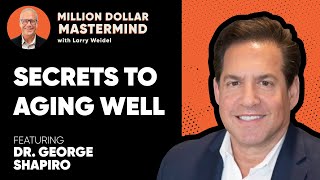
Cardiologist Dr. George C. Shapiro talks about his heart attack recovery through age-management medicine and founding Fountain Life to scale advanced diagnostics. He covers detecting vulnerable coronary plaque with imaging, using exosomes for inflammation, and why lifestyle beats genetics for most chronic disease.
Questions this video answers
New York, Orlando, Naples, and Frisco, Texas.
7% genetics and 93% lifestyle.
About 60,000 miles of blood vessels.
About 90% of the $4.1 trillion annual health expenditures.
About 4,000 patients over the first four years.
Foreign.
Welcome to this edition of the million Dollar Mastermind podcast. This is where we pick the brains of high achievers from all walks of life and get their hard earned real world insights on winning. I'm your host, Larry Wydell.
Hello everybody. We have a real treat this afternoon. We, we've got George C. Shapiro. Hello, George.
Larry, how are you? How you doing everyone?
I guess I should say Dr. Shapiro. You know, it's amazing to me, you know, I was looking at your background you have been in so to kind of accelerate people getting familiar with you and get excited about hearing from you. As we're talking today with a guy who has been an insight insider in cutting edge medicine for such a long time, knows the ins and outs and works with so many people in so many different areas of it. He's got his finger on the pulse really. So many exciting technologies and you know, in the past, the fact that you were the chief medical. Well, you've, you've done with cenegenics. Let's just talk about cenegenics. You know, I, I remember being on planes and I would see these, these ads and articles about cenegenics and I almost wanted to get on a plane and fly up and get, go through the program up there because it sounded so exciting. What you're doing up there for with health up in New York, that's just one of the things you name top doctor in New York City. How many doctors are there in New York City? Probably hundreds of thousands and 2018 as well. So just from, as a medical doctor, you're named at the top. You've got patents, you've got awards. And I'm curious, do you mind if we dial back? George, how do you start out your career? What's your mindset that puts you on a track for this kind of exciting life?
You know, Larry, I can, I can definitely start from the beginning. So my parents were a big part of it. My dad was a masters racquetball champion. So back in the day when racquetball was a pretty active sport, he kept taking me for racquetball tournaments, believe it or not, on the weekends and we'd get, we'd get in the van. And I'm a leolis of six children and we would travel and all of us played racquetball and we started getting really good at it. And this is age 13, 14. And right before that I was playing paddle ball, believe it or not, in Orchard beach in the Bronx. And that's how it really started becoming an athlete. And I took racquetball to the next level and became, you know, a state champion, a regional champion, a national champion, and then became semi pro racquetball player. At the same time. I was into martial arts and judo and also started doing judo tournaments around 13, 14, 15, and went to the Olympics as a Junior Olympian. So that started me with really getting extremely confident and in shape. And martial arts are so important when you're younger. It just, it gives you a different perspective in life. And then my mom, at the same time I was doing sports, was pushing science. And I mean, friends of mine on the weekends would go out and play. I'd be forced to my room studying. So she really wanted me to be a physician at a young age. And that was my early life, sports and science. So I eventually got into medical school and it was in New York. I was born in New York. I was born in Bronx Lebanon Hospital. And I did most of almost all my training in New York. And I was in New York Medical College. In the summers I went to work in a lab and learned about publishing papers and clinical trials. So I started really early. And I really liked cardiology because it was living on the edge. Cardiac medicine is. It's things happen rapidly and sometimes, unfortunately, people have what's called sudden cardiac death. Their life just ends. And that kind of intrigued me. Why does that happen? Why does someone life just end like that? So I trained and went into cardiology. I got into Columbia University for my cardiology fellowship, which was in the 1990s, that the place to be in New York for training. And I had the best professors you could ever imagine from all Ivy League schools, Harvard, Yale, U of P. And I learned cardiology. And I was focusing really on heart transplantation and heart failure. Some of the people you probably know, Dr. Mehmet Oz, was working with me and he was a cardiothoracic surgery fellow as I was a cardiology fellow. And I remember us being on call for like 20 hours straight. We'd go to the hospital on a Monday and come back home on a Wednesday. And after doing this for 15 years, I started to find out I was getting tired. And I didn't know whether was I was overworked, working 50 to 80 hours a week, or I was just getting tired. My body was changing. I noticed when I'd wake up in the morning, my back would hurt, my knees would hurt, sort of like when you get the flu where all your joints ache. Then I started getting belly fat. And when I exercise and I was exercising heavy when I was younger. I noticed that I wasn't getting any muscle mass, and for some reason it wasn't working. I was tired. My drive went down, motivation went down, fatigue was present. Belly fat. Something was going on. So I wanted to investigate what happens to people as they age. And this was when I was in my 40s. So I went to investigate companies, and I found a company you mentioned before, Cenegenics. It was in Vegas. And I actually liked their philosophy. It was optimizing your hormones, your metabolism, exercise, and nutrition. I was eating the wrong foods at the wrong times and the wrong amounts. I wasn't exercising right, I wasn't sleeping well. And it turns out that my hormones were way down. And this is normally what happens with aging. You. You lose hormones and you lose your metabolism. It slows down and you tend to gain weight, specifically fat, visceral fat around your organs, which is highly inflammatory. And now we know that you number one drivers of cardiac disease are inflammation and metabolic dysfunction with high sugar, insulin resistance, belly fat, et cetera. So I became a patient. Within two weeks, I felt tremendous. Energy was back. It was like a light went on. And it was hard to believe how good I felt so fast. Within six months on the program, my. My body fat was 44%. It went all the way down to like 14%. And I became really fit again. And I felt like I was 18 again when I was 45. So that started me into believing there's a better way. And there's a better way not to just age gracefully, not to just let nature take its course, to really get active and figure out why you're not feeling good and do something about it. So they decided, the company Cenegenics decided to expand out of Vegas and Florida and South Carolina to other cities. So New York was one city. And they asked me to be president of New York City. I don't know if it's down at Wall Street. And became the president of Cenegenics New York. And I took care of the who's who of celebrities and prime ministers of countries, presidents of countries, CEOs of organizations. And I met very interesting people.
Can I interrupt you right here to get you to elaborate more on that? Because I just want to make the point that there are a lot of people listening to this that are in their, you know, their 5, 10, 15 years into their careers. They're putting a lot of energy in it, and they're not feeling that great. And they're running, they're going through kind of a thing, and they need to know, you need to know that even medical professional, it doesn't really matter where you are. If you're eating wrong, you got your bad diet, you're working hard, you're asking a lot out of your body and your mind, you're taking on a lot of responsibility and stress. If you're not taking care of yourself, it doesn't matter. If you're the president of a country, you're a celebrity, you're. You're a medical professional, whatever, you're a billionaire, it doesn't matter. Your body has got to be taken care of. And so I just wanted to point that out, George, that there's something for every. Everybody needs to be locking in on this.
That's a great point. And it turns out that in men, it's a slow decline in function. Very slow. So you don't think it's. You don't think it's a problem. You start sitting on the couch, you eat, and you sit on the couch and fall asleep. You just don't have that drive and you lose it. That's called andropause. Women, menopause, that happens over a month. You start to feel like a rapid change. So women, it happens quickly. Men, it's a slow decline, and they think they're okay. And that's when. That's how the term couch potato came about. You just have no energy to do anything. And I'll go into why that happens after. So one of my patients was Tony Robbins and his wife. They came to New York. I saw them, and I was taking care of Tony with. With Peter Attia. A lot of people know Peter. Peter and I became good friends. Tony was a strong force. He was one of my famous patients at the time. And it turns out that, you know, we became close. He said, george, why don't we start a company where we can bring all these new hot innovations into a platform to make it easy for the general public to. To understand what's going on. Because everything that comes out is new. And it's just so much, so fast. Everybody gets overwhelmed. They don't know where to turn.
Yeah.
So we were talking about doing this at the same time. I was still running my parallel cardiology practice, and that was more of sick care, taking care of the patient with a heart attack. So I'm going to ask you a question. Do you want to see the doctor when you're having an acute MI chest pain, or do you want to see the doctor 10 years before and find out if that's going to happen? 10 years in the future.
Yeah.
So this was this concept that we had and the big story was, where's medicine? Where was medicine today? And this is going back about 10, 15 years ago. I mean, if you look at medicine, I trained in a great institution with great professors, and I learned medicine with my hands. I didn't have the big fancy machines like MRIs and CAT scans until later on. Initially we were diagnosing without with our hands. And I taught the physical diagnosis course for many years. The otoscope that we look in the ears, do you know when that was invented? 1838. Wow. Stethoscope. And I love heart murmurs. And I was a big, big in cardiac, physical exam. The stethoscope was invented in 1816, the reflex hammer in 1888. And I was at a conference recently in Israel at the Global Wellness Summit. This woman gave, this woman professor gave a great lecture and she was talking about women and women changes and instruments for women, examining women. The vaginal speculum was invented. Guess when. Roman empire. So think of these tools for medicine. It's something, you know, it's. We need new stuff. So that's why AI now is so big. But the problem with healthcare, it waits for you to get sick before you get involved. And if you think of today's healthcare checkup, it's once a year. The doctor's in there for 10 minutes. He may be looking at a cell phone or looking at the computer, typing notes. There's limited technology. You think about today's aircraft, okay, there's maintenance continuously, hourly, computer driven, a lot of sensors. I mean, think about the last time you're on the tarmac and you couldn't get off because the, there was something wrong with the computers. Airplanes are taken care of better than humans. We're born with one life and chronic disease is a big problem. So when I started, when I started getting involved and listening to, you know, sick care versus well care, this new model that, that Tony Robbins and Peter Diamandis, Bob Harari, Bill Cap, myself we're talking about was look at chronic disease in America and look at the cost of chronic disease. Do you know that chronic disease contributes to about 90% of the 4.1 trillion annual health expenditures today?
Wow. Mind blowing.
I mean, it's just expand and everything is really not personalized. It's one size fits all. Does everybody need a statin? Does everybody need a blood pressure pill? So we were talking about doing a company where we can do testing when you're healthy, young age before you get chronic issues. And that's where we came up with this company called Fountain Life. And that's where. So I'm the chief medical innovation officer of Fountain Life and one of the co founders and one of the things that I bring to the table is searching the world for the latest and greatest cures and treatments and new innovations. Right before I joined Fountain Life, Bill Capp is an orthopedic surgeon in Naples, Florida, and he's also a hospital owner. And him and I met at a medical conference. We became close friends, we were lecturing together, and he introduced me to the field of exosomes because he was using it for orthopedic issues. So I started researching what exosomes are. So if you think of stem cells in general, we're born with billions of stem cells. As we age, we lose about 10% of our stem cells per year. And we start to, you know, we start to see signs of aging. So when you look at someone who's 20, all the way up to 80, you'll see a transition in their skin, their hair, their body composition, muscle mass, body fat, and so on. And a lot has to do with loss of these stem cells. But what makes the stem cell work are these small particles inside the stem cell that are called exosomes. So exosomes are about 30 to 100 nanometers. And for the people who don't know what a nanometer is, it's about a thousand times smaller than the diameter of a hair follicle. It's extremely small. Wow. But what makes these particles work is what's inside. And what's inside is, is contains something called microrna. Microrna is a communicator. This microrna is in most cells, but it communicates with an old cell, an inflamed cell, and an infected cell or an aged cell. And that. So this company that I started working with, with Bill Cap, I became the chief medical officer of. It's now Z Scientific, before it was called Organocell. And the goal was to make. They were manufacturing these exosome biologic products. Yeah, a lot of controversy about exosomes. But the thing is, the FDA is very careful, so I'm very careful. And when I did all this research and published papers, I'm very. I'd like to stay on the right side of the line. So my dad always told me that, you know, don't you know there's a fire here? You put your hand in fire, you get burned. Don't get burned. Like law and order. I try to stay right in the right line. So we started doing clinical trials during COVID and if you know about COVID obviously it's an inflammatory situation where you get an acute inflammatory process. So we started doing trials in, in patients with COVID because we believe these exosomes reduce inflammation. And I'm going to get a little scientific here, but in our body we have these macrophages which are white cells, and there's two types, M1 and M2. M1 are pro inflammatory, they cause inflammation, M2 are anti inflammatory and the exosomes convert a pro inflammatory macrophage into an anti inflammatory macrophage. And that's why when you get an injection, you feel better because you're reducing a lot of that inflammation.
Operates like a switch. Is that what you're saying?
Well, it's, it takes some. So there's two phases. One phase is the first phase, it's about a week, reducing inflammation and swelling. And then the regeneration phase is the second phase, that takes six weeks, three months. But the interesting things about these biologics is, you know, when we do clinical trials, which is the way you're supposed to do it, and it's being, you know, you're being watched by organizations, you want to make sure it's done right. So we did it in a hospital. If you remember during the pandemic when people were getting really sick with COVID they started to go into the ICU and they needed to be on a ventilator because they couldn't breathe anymore because SARS causes respiratory inflammatory process. And what happened was a lot of these patients were on respirators for 21 days. They were having some neurodegenerative issues, brain fog, cardiac issues, kidney issues and so on. So we did a trial given these exosomes iv, day one, day three and day eight. And we measure a score called Sofie S O F I. And the sicker you are, the higher your score, the healthier you are, the lower your score. We reduced the sofi scores in 7 out of 10 patients and 7 people got off the ventilator after they were on it for 21 days, better mentation, the mental status came back, their kidneys recovered, the vital signs improved, and they walked out of the hospital. So I started really believing in these biologics and then we started doing it for acute Covid. Now we're finding out people have long Covid, but that was the start of it. Then we switched to inflammatory disorders like osteoarthritis. And why do people get osteoarthritis? Why do people get immune diseases? So transitioning back to fountain life. What fountain life does is it's a baseline four hour upload. We will put you through about advanced. We'll do advanced imaging of your brain using AI, we'll do advanced imaging of your heart that we can, first time in 50 years, visualize coronary plaque and tell you whether that plaque is vulnerable. In other words, is it going to rupture, is it stable like cement? Or is it a vulnerable plaque, like a volcano that can erupt at any time, and you just don't know when that's going to happen. And that's what's called, you know, sudden cardiac death or acute mi. You never want to be in that position. So. So we can look and see where you're at. And we believe if you test someone when they're healthy and they start to have the soft plaque, that's not the dangerous plaque yet, and you can prevent a heart attack. Let's do it. The same thing with the brain. If I could do a test on your brain and say, okay, you have certain biomarkers of Alzheimer's dementia, I can reduce the inflammation and stop that from happening, or I can visualize your gut function. So functional medicine, when I said we try to find out why does someone have Crohn's disease, why does someone have colitis? There has to be a reason for it. Is that a parasite? Is it the microbiome in the gut that gets inflamed? So we do testing on your gut to see if you have an imbalance of bacteria called dysbiosis. Do you have a leaky gut? Do you have too much fungus? You know, a lot of people when they drink, let's say red wine, and they drink it from a certain region, insecticides that, that are in these, in that area can seep into your system, and that's glyphosate. And it turns out that these toxins disrupt your endocrine system, disrupt your metabolism, disrupt your hormones. So Suddenly in your 40s, if you drink a ton of wine, let's say it's just one example, and you start getting bloated, your gut gets all inflamed and you have gas and bloat. And by the way, no one should have gas or bloat. It's a problem with your microbiome. We test for the microbiome and we fix it. You should have a flat abdomen and belly fat is toxic and a lot comes from toxins. So we will do an evaluation of your toxins. We'll look at your gut microbiome and we'll look at your oral microbiome. If you think about it, the mouth is the dirtiest organ in the body, believe it or not. And. And when you look at bacteria in the mouth, there's a bacteria called Porphomonas gingivalis, and this has been linked to Alzheimer's dementia. The bacteria will creep up into your brain. The brain will protect itself. It covers it, and you have these amyloid plaques. And believe it or not, you can treat some of these with an antibiotic, and it'll be fixed. So there's different things that we look at. We look at your biological age and how fast you're aging. Are you aging by the minute, by the month, by the year? And we can slow down aging and reduce your risk. We have a test that can predict mortality in the next seven years, believe it or not. So looking at the cellular function or the mitochondria is also very important. And when you have a problem, you just don't want to get a medicine for it. You want to find out why. And that's what we do. We answer the why. And most doctors don't do that. So we want to evaluate you when you're healthy. It's called well care. Proactive, not reactive. I think medicine's broken. I know hospitals aren't liking what we're doing because they're involved in sick care business, pharmaceutical companies, sick care. But if there's one death every 34 seconds from a heart attack and it's the leading cause of death currently in this country, do you think we should fix that? I don't know if you know some of these stats, but one in three people, the first sign of heart disease is a heart attack. Did you know that? I don't know if you knew that.
I had heard that the first time, that the first heart attack is usually the one that gets you, you know, you usually don't survive the first one. I don't know if that's accurate.
50% of people, the first heart attack is their last. That's it. It's fatal.
And then you don't hear about it that much because they're dead. It's not that a topic of conversation.
No. And a lot of people don't realize we're born with one body. Let's not do anything to destroy it. You have any idea how many blood vessel miles we have in our body?
No.
60,000 miles of blood vessels in our body, and the blood vessels are key. And there's a lot of new things that's Happening that we're finding out with blood vessels. Blood vessels contain something called heparin, H, P, aran sulfate. And this has been shown to bind pathogens. And there's a, there's a therapeutic now that we're looking at that is part of a dialysis program. But this filter filters out viruses, COVID virus, the spike protein, Ebola virus, Zika virus, HIV virus, retroviruses that now have been linked to neurodegenerative disease like als. Not only does it remove pathogens like viruses, removes bacteria, the flesh eating bacteria, the bacteria that, that kills people in the icu. And it also now has been shown to remove circulating tumor cells. Let's just shift to cancer for a second. Everyone thinks that you get cancer, it's over, it's cancer's changed. The cancer starts with the primary and that's easily treated if it's in a certain location. If it's in a lateral part of your lung, you can do surgery and cut it out. What makes cancer so deadly is the spread, the metastasis. Those circulating tumor cells are satellites and they all communicate with each other. And what they do is they're resistant to chemo and they're resistant to radiation. So this filter reduces the amount of these circulating tumor cells from metastatic sites by 10x. And if you keep doing that, it's called subtractive therapy. You're removing the pathogen and letting your own immune system that is strong when you're younger, it gets damaged when you have a gut issue, and then it gets really weak as you age, but now it gets powerful again and it could be deployed and kill that cancer. So blood vessels are important and we do things to damage our blood vessels. Believe it or not, if you think of an ice skating rink, how smooth that is, that should be the lining of your blood vessel. If you think of a gritty floor with epoxy paint and sand on it, that dries, that is a hypertensive patient. And plaque joins it, plaque starts on it.
And that and the plaque and the interruption in the blood vessels is what leads to so many of these, the strokes, the, so many of these devastating injuries, Right?
So if we can early detect plaque, I mean really early, where you have minor plaque, stage one and prevent you from getting stage three, that's a big deal. So I like to walk the walk. I like to do all the testing myself. So I decided to do this new cardiac test and look at plaques. And I had zero calcium scores five years in a row because calcium measures the calcium in your body. The problem Is you usually don't get. Usually do not get calcium until you're older. So. So I had zero calcium scores. Then I find out I did this plaque test that I have plaque in my proximal vessels, which are the beginning, and there was inflamed plaque. And I was like, I couldn't believe. I thought I was bionic. I always exercised. I was. I had a bad issue in my 40s, but I got back in shape again, and I couldn't believe it. So I. I started aggressively, going back to better nutrition, more exercise, watching what I'm eating, improving my saturated fats. And then I. I noticed that in one year, I reversed plaque and melted away the dangerous, inflamed plaque, and I prevented myself from getting a heart attack and possibly a stent five years down the road. So we can do this. What's really interesting is data gathering the data. What we're doing right now is we have about 4,000 patients that we looked at who came in and got this heart test. And you won't even believe. The biomarkers associated with plaque are not the typical things you would think. Everyone thinks it's the LDL cholesterol level or your total cholesterol level or your triglyceride level. They're associated. But the main drivers of plaque, number one, hemoglobin A1C. It's the amount of sugar attached to your red cells. It tells me how much your sugar is over three months. Uric acid is a big mediator of plaque, homocysteine. I once thought that was nonsense, but it's true. It's a big correlator of plaque volume. Something called oxidized apob is how sticky your LDL cholesterol is. But it's the inflamed LDL cholesterol. And uric acid is also a marker. Insulin, believe it or not, is a big marker of plaque called insulin resistance. So if you put all those together, it's inflammation and metabolic dysfunction. So that's the typical metabolic syndrome. People who have belly fat. You walk around the malls, you walk around the amusement parks. What do you see? You see more people in wheelchairs with obesity. And then you say, okay, why? If we want to try to do something healthy for this world, we need to reduce obesity. But what's the cause of it? Got to answer that question. Why are people obese? Number one, lack of exercise. Number two, eating the wrong foods with high fructose corn syrup. Sugar was the detriment to. To this society. Sugars are bad. Sugars are Toxic sugar is poison. We need to really focus in on what you're eating. Over 60, you need to be in the gym four days a week and lift weights and get muscle mass. Muscle is your largest longevity organ that contains your stem cells. Over 60, your DNA changes and your body changes. It's like a switch. It happened to me, I'm 64, I couldn't believe it. Suddenly your blood vessels get harder and non compliant like a steel pipe. They're not rubbery and soft, they don't expand that much because we lose nitric oxide. And nitric oxide is a vasodilator. So at 60, things change. So we're finding out there's certain things you need to do after age 60, you must start lifting weights. But I don't mean going to the gym like a bodybuilder, I mean doing it slow and careful and not get injured. But you know, you should have a proper, a trainer initially to know what you're doing. But you need that muscle mass because as we age, we have sarcopenia, loss of that muscle. And that ages us because the largest longevity organ in our body is muscle. Contains your stem cells along with other cells in the body. But you, a lot of them, a lot of the reservoir of stem cells are in muscle. And muscle keeps you less frail and it keeps your bones strong. So there's certain things you need to do. You need to sleep over six hours a night, you must sleep. We have wearable devices now that we can measure sleep. Unfortunately, when you get overweight and so many people are overweight, the worst thing that happens when you sleep is you stop breathing. Obstructive sleep apnea. And that's been linked to ventricular arrhythmias, cardiac arrest, pulmonary hypertension, reflux. So if you notice people starting to burp and belch and always have heartburn, a lot of this is because. And high blood pressure. A lot of this is related to sleep apnea from belly fat. So getting back to the why, why is everyone getting sick earlier now than before? Toxins also. So we put everything together. We look at your inflammation, we look at your toxin level, we look at your gut, we look at your, your muscle mass, your bones. Do you have brain fog? Your hormone levels, your biomarkers, you can't just look at one thing. So we have about 18 different tests that we do and we call that our advanced diagnostic program. And then we have the advanced therapeutic program. The therapeutic is how to treat this. So we can filter your blood with something called therapeutic plasma exchange. We can recommend some regenerative medicine therapies like stem cells or exosomes. Usually these are done under FDA clinical trials. Everything that we do is under an FDA clinical trial here in the us. We may recommend some sites outside the US for stem cells, but our goal is really to do with the basic stuff. Find out why people are having problems and address it. And exercise and diet and sleep are big, big factors.
Those of you who are sick and tired of fooling around and are dead serious about wanting to move up fast, I've got something especially for you. I've combined the best insights from over 40 years in business and making $70 million in income and compressed them into a free webinar. That's right, it's a free resource. If you want to find out exactly what the concepts are that I use in coaching million dollar earn earners, Register now@widelonwinning.com you'll discover the five part framework used by so many to reach their financial, personal and professional goals. You can find that link in this episode's show.
Notes People are perplexed because they don't think about mental there's anything about working and I've always had health as you grow up but you don't realize you're becoming every decade you're a different type person. If and only because of these chemical compounds we ingest from foods that they have to keep them on the shelves longer. And the body wasn't designed to process and break down all of these chemical compounds. Especially it can sneak up like as you posted or pointed out, you can have these things sneak into you with pesticides in the wine. Who would know to watch out for that? But then you've got it inside of you.
You're 100% correct Larry. And we would have not have known that unless we collected data. So we had about four or five thousand patients come through in the last four years since we started Fountain Life. And it turns out that we were doing toxin testing and you won't believe some of the toxins we're finding. Number one, Bisphenol A in plastics. And there was a recent article published in the New England Journal of Medicine looking up blood clots and they cut open the clot and guess what was inside? Microplastics. Why do you think so many people are having this toxin plastic in their body? So we started investigating well these water bottles that are made out of plastic so when they get heated up to a certain degree they're coming in these troubles trucks across the country. It gets to 120 degrees inside the truck, it melts that plastic, it goes into the water. Same thing with these pots and pans, the Teflon pots and pans. It goes into the food, the chemicals in the pans. What about chemicals in children pajamas that children babies are wearing as they're growing up? They're fire retardant because they spray the clothing with fire retardant chemicals. Guess where that goes into the skin of little babies. By the time they're older, they're filled with chemicals. And we call these forever chemicals. And if you just googled forever chemicals, you'll see go pfos. Pfas. It's incredible how many people are toxic with environmental chemicals. If you walk on a golf course, the insecticides on the grass goes into your feet, goes into your body. And then you wonder, why do I brain fog. Why do I keep forgetting things? How come I'm not as sharp as I used to? Why don't I feel right? Why do I ache? Well, let's get a toxin test and find out what toxins you have in your body. The liver is your detoxer. Now how many people do you know belong to these clubs, whether it's a golf club or whatever club and you know, you hang around with the people and they like to drink, then you have to drink because you're with them. So that's a big problem in some of these locations in Florida with all these clubs. And I went the other day and, and everybody was in the bar drinking. It's good to socialize and socialize is very important. But you have to really say, okay, you can't drink five drinks a day, five days a week, and that's 60 drinks a week. I'll tell you a story in a minute about a patient of mine who was doing that. But alcohol affects your liver, slows down detoxification. So let all these chemicals now get in there. So we have a whole detox protocol, phase one and phase two. Detox to protect your liver. And the goal is first find out why you feeling this way. And then we find that it's a toxin. We remove that. Believe it or not, heavy metals are a big deal too. We're finding out that people have all these dental amalgams, the silver linings made with mercury in your mouth. And over the years it starts leeching out mercury. And there was a, a big artist rendition in the 1700s, a painting mad as a Hatter and was a guy with mercury poisoning. So mercury is a, is a heavy metal. Lead's another heavy metal. Unfortunately, fish in these waters with all the plastic being dumped, are getting all these chemicals in the fish. All the mercury is going in the fish, and we're eating the fish. So when you go to a restaurant, oh, yeah, we have farm raised. Everyone thinks farm raised is great. Farm raised is not great because they want to make these fish big to make money. So what do they do? They inject them with antibiotics so they don't get sick. They inject them with steroids so they get bigger. Now humans are eating a fish with steroids or a cow with steroids, a cow with antibiotics or fish with antibiotics. And what are they getting? They're getting everything that was in the fish or cow into them. Now their immune system, their endocrine system is all disrupted. These are called endocrine disruptors. You must measure the amount of toxins in your body today. And that's why people are getting sick at such a young age. Lymphoma and cancers from these toxins. So you got to put everything together. So, but I want to shift a little bit to neurological health. We spoke about cardiacs. Let's talk about neurological health. I don't know if you know this fact, but about 50 million people every year, about 10 million new cases every year, but about 50 million, 50 million people worldwide have dementia. 1 in 10 people over 65 have dementia. 30% of people over 80 will have dementia. And what about all this Parkinson's disease? Over 90,000 people are get out now getting diagnosed every year with Parkinson's. We now believe Parkinson's is an inflammation on the covering of the brain called the glia, the microglia. So the glia that covers your brain, it's like a housekeeper. When you sleep at night, it cleans your brain. You wake up refreshed. As we get older, it starts attacking our brain, and we're not refreshed. And that term, brain fog. And a lot of this, believe it or not, comes from inflammation. And we're going back to belly fat, highly inflammatory. So these are certain things that we actually look at. We do special scanning of the brain. There's new biomarkers that can predict dementia 10 years in advance. So we're looking at those biomarkers. We also look at cancer tests in the blood. That cancer gives a signal years before you get cancer. So when you combine a whole body MRI and you combine this cancer blood test called liquid biopsy, you can find cancer early in stage one. And, and if you find it in stage one, the curative, the amount of cure is so much more rapid. Than it would if you find it. Stage four. So. So these are some of the things that, you know, that we look at, and those are some of the drivers. But now with AI, we can do what's called a digital twin. I can make a virtual you, Larry, and try all these things on your virtual digital twin and bring it back to you and say, here's what you need to do.
Wow. What would you say for people that are listening this. And it's easy to get overwhelmed when you're hearing these terms and you're hearing all this stuff and you like, what can I do? Talk about what people? If we were to try and give some hope for people, it would be nice if everybody could get to your clinic. Where is the clinic, by the way?
We have four clinics right now. Our clinics are in New York, Orlando, Naples and Frisco, Texas. Well, we're opening up 25 new locations in the next six years. And the goal is to come in, spend three or four hours, get an upload, do about 15 different tests, we review the results, two in two to four weeks to go over the imaging and then the blood tests and so on, and we come up with a goal. What your plan would be. Some people want to say, look, I can't sleep well, I want to feel better, or I need more muscle mass, or I have too much belly fat, or I'm tired, or I'm worried about my mind, or my mother had pancreatic cancer. I don't want to get pancreatic cancer. Or my father had Alzheimer's, dementia and Parkinson's. I don't want to get that. 7% is genetically related. 93% is lifestyle. We can change you by using what's called epigenetic modification. If you think of your light switch, I can turn that on and off. Your light bulb is your genetics. I can now turn on and off genes using what was called epigenetic modification. So when we find something, we can fix it.
Let's make sure that gets in their head. Just that piece. What percent is genetics and what percent can be fixed?
Seven percent is genetics. And these facts are from Eric Verdin, who's the CEO of the Book Institute, the largest anti aging or age management facility.
Can I interrupt you and insert here for people? Listen now to Dr. Shapiro talking. Understand that these things, if you have the genetics, you can't just say, this is a death sentence. You don't have cancer in your family, you have Alzheimer's in your family, or you got markers for this, it's a death sentence. There are very little death sentences because that's just 7% of it. Like he said, switch on, switch off, so you can take charge of your life and start making sending yourself in the right directions.
And you're right, Larry. You know, a lot of people think, you know what, my dad died at 50. I'm going to probably die at 50. Let me not do anything that's wrong. I see more and more people today saying, listen, my dad died at 50. I don't want to die at 50. I want to live a long time. So. So the goal is to, you know, some people are like, why are you going to do all these testing? You're going to find something. I mean, kidding me? That's the whole idea. You want to find it early and you want to stop it. So what we're trying to do is we're trying to scale this to the world. So yesterday I was at an event in Miami with Sam Nazarian, who owns SPE Entertainment, partnered with Mark Anthony, the singer. Tony Robbins was there. Peter Diamandis was there, Richard A. Simon Gibbertoni, the CEO of La Prairie. And we're setting up a whole new Longevity Wellness clinics across the world, in the US and outside the US where people would come to these locations and get treated and evaluated. So the first thing is to find out what you have and then the new therapeutic options. And that's where the exosome comes in. And I know that you're a big fan of exosomes. Done, right. They're amazing. And I'm a big fan of them as well. I get them four times a year. I get my own exosomes. So what I do is I draw my blood like prp. I send it to the lab, and they. They look under a microscope to make sure it's an exosome. And we do that by what's called cell surface receptors. And there's certain ones that you can tell that's an exosome. And then they concentrate them with a special centrifuge. And then I get it sent back to the office with 400 billion of these exosomes in one ML. And now I'm biobanking my micro RNA, basically, and I'm getting it back. I can get it in my joint, my shoulder, if it's injured, my knee, my hip. I can get it in my neck, my back, or I could do iv. This is like second generation prp. It's unbelievable what it does, but I do this thing four times a year. I also get stem cells outside the U.S. i do that once a year in Costa Rica. There's a location that we looked at. We went to eight different countries to find out the best location. So I think it's important if, you know, for me, I need to try everything. And a lot of the people I work with, they're also doing these things.
Yeah.
Benfield, Armstrong. I mean, everyone is doing this. If you look at some of these CEOs of companies now, you notice, wow, they're looking stronger, they're looking bigger. I mean, look at Jeff Bezos. You know, he's different in his body. They're not frail. They're not getting frail. Why are people not getting frail? Because you have to do something about it. You need exercise. After a certain age, you must eat better. You can't have the sugars. It's all about sleeping.
You need to sleep, and you can turn things around. Let's give people some hope. Like, there won't be a clinic across the street from you tomorrow. You can get. You can find out where these are. You got the resources, you can go. But the thing is, you can start where you are now, changing your diet, start walking, doing things that. That will reverse the tide to where you're not being your worst enemy. You're starting to do good things for yourself. Wouldn't you say, George?
I would. And there's a doctor who started me on this. He was 61 at the time. And this was a while ago. He had a heart attack at 61, and he started getting healthy again. And he was actually my physician in Senegales, and he's still going strong at 85 today. So, I mean, when you say, oh, it's far gone. I need to start this one. I'm 40. Absolutely not. I have patients who are 85, 87. I was just with a gentleman who was 88 this weekend at one of the conferences I've been to, and he looked amazing at 88. Look at your friend Harvey. He is a machine. You don't. You need to really get that drive. Unfortunately, people lose that drive, they lose that motivation. You get in this rut and you think it's too late. It's not too late. It's not too late.
And the purpose of this is not to blow people's minds with confusion, but to stimulate them to realize you just don't have to take it. You need to realize you can stand up for yourself. You can make a change. You can get information. This. This information that you've covered on here where it might have blown people's minds. And they well, you can listen to it again, by the way. And you can also get hunt and you can start talking about it to your medical professionals. You can start reading about it, looking at it on YouTube. You can start to bring these things into your life and start to change the direction towards health, prosperity, good things, rather than just drift off over Niagara Falls to your death.
Unfortunately, Larry, a lot of physicians who I train with are still referring to their textbooks in medical school. The way medicine is today. It's very hard to really focus in on a lot of the new data and new science because it's happening so rapidly and they're bombarded with so many patients because there's a shortage of physicians. So they're doing really what's called sick care. What I'm doing is, well, care prevention. I'm also doing some sick care as well, but it's a whole different way to do medicine. You prevent the disease, you see people when they're healthy, and you prevent the chronic disease that occurs later on. And we can change it. We can really change that, what's happening. But we also have these new advanced therapies that someone who's having an acute problem, we'll find out why you have that problem. The current medical management is not finding out why. You're just going to treat it. Your blood pressure's high. Let me give you a blood pressure pill. Your cholesterol's high. Let me give you a stat. I mean, we had a patient today, his cholesterol was 130, very, very low. His sugar was amazing. And he still had progression of his coronary plaque. And it turns out why? Because he had a gut parasite, believe it or not. And it was screwing up his liver metabolism and it was in his liver, and that's what makes cholesterol through something called hmg, COA reductase. And it was. And things like this to find out why is really what you want. And everyone is. It's all personalized medicine today. Everybody's different. And no matter what your gene says, you can change it. So I agree. It's never too late to start.
Well, of course you can't use things that are not approved. Unfortunately, it is a long, drawn out process. However, there's a lot of things out there that are approved that you can use if you get the right people. But this, I'm fascinated with the testing. You know, until you get the test and you get the data, you really don't know which direction to go in. You're just throwing darts at things. It seems like there's an explosion or a big development in this testing.
Well, so if you don't test, you're not going to find it. A lot of physicians are like, no, don't test because you're going to find something. And those are called incidentalomas.
Okay.
That's an old term, and that's nonsense. So far, we've found pancreatic cancers, stage one, and now people are cured, still alive today because we caught it early in stage one. The survival rate that cancer early in stage one is almost 90, 90% or more instead of 5%, stage four. You don't want to be that person. You really want to be proactive with your health. You have one body. And I think people need to get really more aggressive. And. And if they're not feeling right, there's a reason for it. Find out why. And you need to see that. You need to go to the right doctor. Most physicians don't understand this because they're involved in sick care. That's why we became doctors. That's what I learned. Sick care. Now there's a better way. Prevention, well care. And that's really our focus right now as well care. But we do have these advanced therapies. Have you ever heard of some called translational gap?
No.
You know, when you see something in the basic science lab, by the time it gets a general public, it's 18 years later. Wow. Because of what we do in our company, Fountain Life, we're able to get something that's announced in four weeks to some of our members. So. So we're very aggressive when it comes to some of these new innovations, and we make sure they're safe, you know, obviously. And everything we do is FDA approved, by the way.
Yeah. And so there's. It's important to just emphasize, again, there's a cause and effect relationship in the world. And if things are going bad, it's just like in your business, you can, you know, it's like, what's causing that? Let's change it. And all you're doing is taking that into the kind of mysterious. You know, it started. They used to leech blood out of people to cure them for diseases. And basically just medicine started off just killing people, experimenting. But it's, you know, at least they were one thing. He said at least they were trying.
You know, the number one cause of death is no hospital errors.
Hospital errors.
Unbelievable. Stay out of the hospital. You don't want to go into the hospital. Hospitals love to be filled. They love to be packed. The hospitals don't like me. Right. Now I'm keeping people out of the hospital. The test that we do, we're diagnosing disease so they won't need surgery. And hospitals make money with surgery. Pharmaceutical companies make money with medication. If you don't have diabetes, you don't need the diabetes medication. You don't have high blood pressure, you don't. You don't need the hypertensive medication. If we reducing cholesterol early enough and not making plaque, you won't need stents.
Well, you've lived a life where you've been around some exciting people. And with this positive drive, not only in medicine but in business, what would you. If you're speaking to people, are out running their businesses today and everything in terms of just basically approach to life, what do you see those similarities between in the medical world and even in the outside world, like the Tony Robbins or even the people like the other entrepreneurs you're working with or people who come to see you.
So a lot has to do with your drive. Okay. How you feel, your confidence when you walk into the room. Do you control the room? Are you the captain of the ship? The people see you as a boss without you telling them, I'm the boss. And you just carry that. And what, what makes you feel that way is getting healthy. When you optimize your health, when you're feeling that natural, it's. You don't have to inject yourself with anything. It's just your natural hormones that you're born with. If you optimize those hormones. And there's ways to do it with nutrition and exercise. You have that drive and motivation, and you control the room. It's like I have the. You feel my energy right now. It's like I'm through the computer. You can feel that, and everyone can feel that. And you need a good night's sleep. You need to avoid the toxins, you need to exercise, you need to eat better. And most people just don't do that. I learned one thing, teaching people how to eat, how to eat in a restaurant, how to eat on vacation, how to eat on an airplane. The first thing you go to a restaurant, what do they do? They put a bowl of bread on the table and you're starving. You didn't eat all day, you didn't have lunch. Just can't wait. And before you get that bread, you have a giant cocktail, a glass of wine or a martini. And now you're eating the bread. So what's in the martini? What's in the alcohol? Glucose. What's in the bread? Glucose. Immediately you have this rise of sugar and insulin comes out. And insulin rises to lower the sugar. But because the sugar drops, you're hungry again. So you start eating a lot. And you eat so fast because you're so hungry, it's under 20 minutes. So the brain doesn't get the message that you're eating. So you keep eating. But after 20 minutes, the brain gives you the message, I'm full. And you don't want to even eat your entree because you had so many appetizers already and you had so much bread. And then, then you go right to dessert. And then you have your caffeine and your chocolate. So it's not eating that bread. Don't have the bread. Put the bread away. There's combinations of food. First you should have protein, then your vegetables, then your carbs last. Don't want the carbs first. So there's different ways that you can interact certain food groups. You want to have the steak without the potato because you want your belly fat to digest the steak. You don't want the potato to digest the steak. But everybody eats steak and potato. So now just have steak, vegetable, salad, right? No bread until you get down to your body weight. Lean. You have to not eat certain things. I love pizza more than anything. I could eat a whole pie by myself. But you know, if you get into this rut and you're 15 pounds overweight, you cannot have that slice of pizza until you're down £15. Make yourself accountable. I have an app on my phone, the pedometer app. I make sure I do 10,000 steps every single day before I go to sleep. After every meal. I try to walk 30 minutes after every meal. If I'm on a zoom call, I'll do the zoom while I'm walking. Now with telemedicine after, if the COVID Everyone's on computers doing meetings. Walk during your meetings, you need to walk. Just walking 60 minutes a day can increase lifespan by 25 years. That was published in the Journal of Sports Medicine. And a lot of things that I preach are from peer reviewed medical journals that are published in the literature.
Well, I've heard, for example, in line with that, their Harvard Longevity Institute. I forget the guy's name, but he said like information that needs to get out to people. He said, like the average female who walks 120 minutes a week. Just 120 minutes of walking a week will reduce all incidences of like heart disease or stroke or whatever by 60%. Just, you know, and also cancer, you know, like breast Cancer and all of that. 60% reduction just in 120 minutes a week of walking.
Exercise is so key. I think exercise, about exercise and nutrition are 70% of this. 70%. And unfortunately, if your hormones are low and if you have toxins in your body, you don't have the drive to do the exercise. Yeah, but want to do it. If you're tired and you can't do it, then find out why you're tired. Yeah, I mean, that's what we do. We find out why you're tired. Fix it. So from biochemistry, I learned this cycle called TCA cycle, or Krebs cycle, and all these enzymatic reactions from food that we eat, whether it's a protein, a fat or carbohydrate, go through these reactions. They go through something called the electron transport chain. And the end goal is ATP. And this is happening in your cells. And ATP is your energy producer. We should make about a hundred pounds of this ATP adenine triphosphate every single day. And if you do, then you're optimized. Most people don't. Most people make 20% of that. So if I'm only making 20% of my energy, how can I go to the gym and lift weights?
How can I go walk?
I'm too tired. So first thing is, find out what's going on, fix it, and then start getting yourself elite again. You have one body, you want to maintain it.
And the thing is, it's just like, how do you know Rome wasn't built in a day? Start making a step. Make a step today. Start stepping, start moving. Make a decision. You're going to turn this thing around, because knowing that you can, based off of what they've heard from you today, and start to move aggressively towards that better life, that happier life, that more enjoyable life that you know you want, that you're, you know. Because why have success if you're not going to enjoy it or if you're not going to live long enough to write?
You have to want it. So I know we're getting close to the end, but I want to tell you a story. I gave some lectures to big companies, and I'm not going to mention the names of the companies, but there were. One was like a major airline. One was. Was a major energy company. And they had 100,000 employees. And I said to them, we have a program where we can get all your employees healthy. And if you have a healthy employee and they don't get sick, it's going to help you with your business. Because to replace a Vice president or treasurer of a company is devastating to your bottom line. And you know what? The chief medical officers of all these companies, you know what they told me? They go, our members, they don't want to stop eating their donuts. They don't want to stop eating their bagels. They like the way they are. They want to go home and have that be here and sit on the couch. They don't want to do it.
Yeah.
So that's the first step. You have to want to do it and you have to want to live and you have to want that inside. And, and you start feeling it by just doing a little bit. And you wake up in the morning and you start exercising. You do your workout in the morning before everything starts early and you start feeling good. And you look in the mirror at yourself and you say, wow, I'm not fat anymore. I'm starting to look good. I'm starting to get some muscle tone and that's good drive, you know.
Fantastic. Well, I always let my. I appreciate all of this information. And again, your energy comes right through the screen and so we could tell you're living what you're talking about. And I always like to give the guests the last word to wrap it up for the people that have stayed with us all the way through. What thing would you send people away with? Want them to have on their mind to go and make this really useful to them?
I mean, you look, obviously if they're interested, we have a big organization, we can start helping people and seeing them in our offices. If they go to zeoscientific.com or fountain life.com we can start helping you on your journey of a longevity. I would start watching your sugar. Stay away from high fructose corn syrup. Stay away from inflammatory meats. You want to have grass fed meat, organic meats, stay away from the fried foods, dairy, sometimes very inflammatory. So there's a whole thing. But before you start avoiding things, we want to find out where you're at. I would get a baseline. I would have everyone come in and get a baseline.
Yeah. Unbelievable. Thanks so much, Dr. Shapiro, it's been great and I'm looking forward to talking to you down the line because I know there's a lot of breakthroughs that are coming and it's going to be.
Fun to, to have me back. I'll be happy to come back and give you some follow up and I'll be happy to help any, any of your people.
All right, thanks so much. I'll take you up on that. Thank you. Have a great rest of the week and weekend.
Bye bye bye now.
Thank you for listening to this episode.
Of the Million Dollar Mastermind podcast.
Commit to your personal and professional evolution with our free training video studio. It's designed not just as an educational session, but as a transformative journey for those bold enough to aim for the stars. This isn't just any webinar. It's a roadmap to achieving the extraordinary. It's tailored for those who dare to dream big. And yes, it is completely free. Join us in a network of ambitious professionals ready to take their careers to a new heights. Secure your spot now@White ElonWinning.com and let's unlock your potential together. Thanks for being part of this community.
More from Larry









Rick Jordan on Self-Engineered Proximity, Cyber Security Moats, and Truth-Based Leadership

Fire Fast or Fail Slow: Kevin Brittingham Reveals the One Rule That Built a $100M Empire
