From Homelessness To An Empire: How To Grow To 9-Figures with Stephen Scoggins
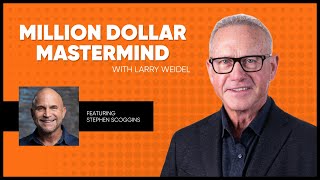
A podcast interview where Stephen Scoggins recounts rising from homelessness to build and exit a multi-state construction and real-estate business (peaked near nine figures). He emphasizes mindset shifts (overcoming limiting beliefs), disciplined application of principles, disciplined self-development across life 'pillars', strategic leadership (hire slow, fire fast), and building recurring-revenue and margin products for thought leaders while balancing family and legacy.
Welcome to this edition of the million Dollar Mastermind podcast. This is where we pick the brains of high achievers from all walks of life and get their hard earned real world insights on winning. I'm your host, Larry Wydell.
I'm talking with Stephen Skoggins from Utah. Hello, Stephen.
Larry. What's going on, my friend? Dude. Scott, Happy to see you.
Yes. You've just moved back. Moved to Utah or back to Utah?
No, I was born and raised in North Carolina but exited the business this year, or technically last year.
Yeah.
And decided I wanted to stay at the mountains for the rest of my life and. Yeah. So moved out here and they're going to bring live events, business out this way in the near future and all that good stuff. So.
Yeah, we're in North Carolina, New Virginia. Where in new.
The Raleigh area.
Raleigh. Okay. Well, I was over in Greensboro for about 28 years, so we were right down the road. Yeah.
Yeah. That's awesome.
Yeah. So. And I'm talking to you now from Aspen. So we're not too far apart now. About six hour drive.
That's awesome. So.
Congratulations on the big bounce you did at a young age. You really showed a lot of courage.
Thank you.
Where you found yourself and you can tell the story, but what we show is that you found yourself homeless for some reason and you got a second chance. I don't know how that happened, but then you turned that into launch a multimillion dollar construction firm and out of. I've got a degree in construction out of Georgia tech and built 100 houses coming the first four years out of there. So I know, I know how brutal that business would be, at least in the residential area. You know, I don't know what area you were in, but it's a brutal area to go out and make your mark as a young person because everybody, you know, most guys are going to be older than you and want to pull tricks on you and everything.
If you went through what I went.
Through, they try and pull their BS on you, you know. But yeah, how did you find yourself in that situation at 22?
You know what's crazy is I think it's the same as what takes most business owners out from mouth and business. And I say that loosely because a lot of the statistics will show that most businesses fail because they're under capitalized. They don't have the right management team, they don't have the right product fit. I actually believe it's completely different and I believe it has more to do with pride, arrogance and ignorance and Those are the three things that also led me to homelessness. The year prior to becoming homeless, I had been making really good money. My dad's employer at the time gave me a business of my own, bought me all the equipment, everything I needed to work, and put me in a business for myself. But at 19 years old, I went to making about six figures. And this is late 90s. So as you can imagine, the six figures is a lot of money for a 19 year old kid that's never been trained to handle money, who's always grown up in kind of a, more of a, more of an impoverished environment than not right. And as a result, between the ignorance that it had with, you know, handled it, having the character to manage wealth on top of the arrogance that came with it, that ultimately led me to severe depression, anxiety and things of that nature. And yeah, it later led me to kind of sleeping on the streets for a little while. Not something I'm super proud of.
Talk about the depression, you know, because young people, you know, the older we get, we, you know, we feel like the young kids have the idyllic life, you know, but then you find out that, you know, even the young teenagers and eight, you know, pre, you know, in elementary school, they're going through all these traumas and y' all hear and I'll interview people and they'll say, you know, they were talking to God in the middle of the night, you know, at 8 years old, you know, and because of their father or their, you know, some kind of situation. And the thing is that it's, you know, trauma, depression thing. I mean, young people commit suicide, folks, you know, so the thing is that they go through all of the, they feel these emotions and you know, we need to be aware of that. But what I found is that the young people, if they get the right information, you know, you get things to run on. And that's why I do this, is because I was recovering, I've been. Last 16 years, I've been recovering from a monster bicycle accident in the middle of Palm beach. And I got shut down on the couch and I was realizing, you know what, your life would have been really bad if you hadn't had these people, not really mentors, but friends, acquaintances, relatives, whatever that were high achievers that you, by the grace of God intersected with at a young age. And they were able to say things to you and, you know, put these thoughts in your head. And that's really why we do this, is to kind of get those things out there, remind people of it. But what I found is that young people, like, if you had been told, I think at 19, that you're doing great. But let me explain life to you, Steven. You know, most young people are inconsistent. And the track for most young people, you want to be like most people, you want to be special. Well, if you want to be special, you're going to do one thing, you're going to be consistent, because young people usually blow it. And then it's very hard to come back because they realize all the work they went through to get started. And so, you know, things like that and a timely way can make all the difference in the world. And I've got one kid right now that has gone in like 12 years from making like $40,000 a year. This is probably about 12 years, $40,000 a year to now he's up into the, know, 4 or 5 million range and climbing because, you know, and he points back to that one piece of advice early on. You know, I'm not going to be the kid that's inconsistent. And so.
That's right.
Don't be too hard on yourself, Steve. That's what I'm saying is like you don't know what you don't know when you're young. Right?
Yeah. Well, that and you, you gotta remember fact. The interesting thing about depression specifically is there's typically three, three key factors. One is a grossly overstated, limiting belief, whatever that may be. My father.
Overstated, limiting belief.
An overstated, limiting belief. For me, my father used to run around saying, scoggins don't get ahead, they get by.
Ah, okay. Really?
So 400 plus years of Skoggins history. Up until that point, there had not been an affluent or a influential Scoggins on the planet that we were aware of in our direct line. Okay. On top of that, there is also the chemical imbalance of not getting enough to your brain. Because we were an impoverished environment, we ate when we could. We didn't have a lot of, you know, I can have overabundance of food. As a result, you're undernourished in many respects. So there's a nourishment component to it. And the third thing is the, the types of materials that you're consuming, that's either helping you break away from that limiting belief or get deeper into the limiting belief. So what I mean by that is a lot of times I see a lot of folks that are struggling with anxiety and depression, but they're continuing to consume the same materials through their eyes and their ears on a regular basis that is not beneficial to them to begin with. They're not reading the right books. They're not going to the right seminars. They're not listening to podcasts. They're not really. They're not really spending enough time in the area of trying to grow themselves to a new level within themselves. And fortunately, Steve Merrick, you mentioned a mentor. The guy that gave me my first shot was the guy that gave me my second shot that I didn't deserve. And never forget this, he asked me one quick. He asked me one day, he said, stephen, what is the difference between a rich man and a poor man? And, you know, I was a teenager, so I was like, duh, of course it's money.
Yeah.
He said, absolutely not. It's the way they think. Now, the next question was twice as important as the first question. He said, do you want to learn to think like me, or do you want to continue thinking like your father? Wow. My father worked for him. Okay. But here's the contrast. And I find that you can overcome depression and anxiety by getting to a healthy respect of contrast. Contrast. My father would make money on Friday. It would be gone by Monday. He would borrow money with no intent to repay. He struggled with alcoholism for a long period of his life. He's been, thank God, sober for a long time now. He's been. He's a great grandfather right to the. To this day. On the other hand, Steve Meyer was very influential. He was very affluent. He was a gracious giver, continually, always giving to other people. You never knew what he was. You never knew what he was giving because he would always make it kind of with the right hand, didn't know what the left hand was doing. Like, when you look at those contrasts, you have to ultimately say, what life do I want to live? And when you decide what life you want to live, then you can decide what business you need to build. And that's how I kind of look at the contrast. When Steve told me in that moment, he gave me a quote that I've kind of used as my North Star, if you will. He said, you have to be willing to do today what others won't, so you can have tomorrow what others don't.
Right.
What I didn't fully understand at the time, he wasn't necessarily talking about houses and cars and fun stuff. Now, thank God, you know, I'm able to enjoy those things now. He was talking about the overall condition of life. Are your relationships healthy? Are you. Is your finance healthy? Is your business healthy? What kind of leader are you? Going to be. You know, I went the first 15 years of building a large, large organization as a really terrible leader because I was leading out of insecurity from the homeless kid. Right. Which is how. Which is when you start going in and getting other levels of mentorship. So those are some of the key factors, I think, that led me to that place, got me out of that place. And I think the. Hopefully the audience can take away from. If they. If they just ask themselves right now, am I living the life that I want to live? Because Time and Harris Paul did a thing probably three years ago. It discovered that 70% of the people would say they're not living the life that they're meant to live. They would say that they're living someone else's life because of someone else's conditioning.
Now, as you started that, that turnaround, how did that turnaround proceed? You know, because usually turnarounds. And I know you're a. You have made yourself an expert on turnaround. You've written a book on. On it. I'm going to let you talk about it. You got a foundation, you know, you. I'm sure you talk to people about it all the time, but. And I'm sure a lot of those lessons came out of your original turnaround.
Talk about that, for sure.
Yeah.
Well, the turn. All right, so the turnaround happens. And you've already mentioned it. Okay? It's understanding that motivation is not discipline, okay? The discipline to do the right thing at the right time in the right way. Consistently. You mentioned that word earlier. Consistently, over an extended period of time is how you turn around anything. It's how you turn around a business, it's how you turn around life, it's how you turn around a marriage. It's how you turn anything around, Basically. There's an old saying that one of my mentors used to say that he would say that principles govern promises and the wealthy get wealthy because they follow a set of principles. Great marriages are built on a set of principles. You know, I. E. Don't be unfaithful. Hey, there's a great principle right in the finance category. Don't spend more than you make. Like, these basic principles most of us know at a high level, but none of us ever apply them through the course of discipline consistently over time, you know, so one of the things I always say that you look at the area you're trying to turn around, whatever that area is, what I would do is I would look at it and say, okay, am I following a set of principles that can guarantee success because principles govern promises. If you're going to live a promise, I. E. A blessing, you know, some kind of level of enjoyment out of this area. You've got to find the principles that you can align yourself with consistently to ultimately lead you to the result. Because principles by nature give a defined result. So if your principle is I'm going to spend more money, I'm not going to pay attention, I'm not going to budget, I'm not going to look at my P and ls, I'm not going to treat my team well, you're going to receive the consequence of living that principle or the anti principle versus I need my number one principle in business. I need to become a consistently better leader over and over and over again. That never needs to stop. Okay. If I have that as a guiding light, then the promise I get to live out is I continually become a better leader, which means I build a better business and lead better teams. So I think at the foundational level it's principle based fundamentals through the lens of discipline consistently over time get you out of pretty much anything.
Now as let's go back to how you got that in that information in your head. Because the, the thing Stephen, about the podcast and I do in our financial services business, I do a Monday morning call where we, we, we spotlight the, the best and brightest in the company is because you can, you, you know, we all can learn. We, we learn like layers of an onion. You know, it's just like degrees of these truths or this wisdom or these, these principles are not formed like overnight. You know, it's like making, you know, the pressure on an oyster, you know, makes a pearl type thing. And yeah, it, it's a, and it's a grading type process, you know, rubbing off the edges, you know. And so how did you, I'm sure you, you, you had a lot of rough edges and a lot of things. You know, you were starting from scratch. Young person, you don't know what you don't know. But now they, the guy got your attention, right? He gave you the chance.
Sure.
And so what changes did you make right away? And then what changes did you, you grow into?
Well, I think it's, it's first of all that, that that moment was what I refer to as the awakening. And I find that on average we'll have five or six awakening moments in our lifetime. Now the power of choice comes into that. I could have chosen to not listen in that moment or I could have said, hey, this guy knows something I don't know, and he can teach it to me, or maybe he's willing to teach it to me. So I think just being open, number one more than anything else to a transformation. And you also have to understand that a transformation is an inside job. Everything flows out of the inside of you. So if you want to replace the negative things that are inside of your head, your heart, your environment, your, your experiences, you have to choose books, resources, seminars, podcast, and consume that stuff as if your life depended on it. I'm self taught. I have a ged. That's the extent of my, my, my education, right. And I went on to build a pretty sizable business and several of them, matter of fact. And it's only because of the self taught of being teachable, right? But being teachable but while simultaneously maintaining a spirit of humility, arrogance and pride got me in trouble. Humility, confidence, discipline, consistency got me out of trouble. Right? I'll give you this. So you know, I know you know Zig Ziglar, right? So everybody knows Zig Ziglar, right? He used to have, he used to have something called the will of life. It was seven areas, seven pie slices. And he says you have to focus on all these areas at the same time for your life to have meaning and purpose and significance and be successful. Okay, so great. Thanks, Zig. I use that. And I also added on a, a, an additional pillar. We call them the eight pillars of life. Same same concept. The eighth pillar is contribution. Okay. I believe a life well lived is adding in the factor contribution. I say all that to say that one of the things that I had to decide to do, and I think everyone should decide to do right now is to pick one area of your life that you're going to consume content on, that you can take actionable steps on, that you can on a daily basis. I'll give you an example. On Mondays is my financial pillar. I'm reading, I'm getting ready to start Tony Robbins new book which is, has more to do with private equity since I've, I now have liquidity and resources and stuff that I need to invest in different areas to make sure I stay out of trouble. I'm also going to have more advisory calls with other, more, you know, more advisors.
Right.
I'm going to spend time in that financial pillar, that financial lane. On Mondays. Tuesdays I go to my spiritual pillar. I'll do a deep dive on my spiritual nature. Wednesdays I'll go to my deep dive in my emotional nature. My, my ability to have, feel emotionally secure, confident, self reliant. Motivated, inspired things of the things of that nature on Thursdays. It's relationships. How can I better my relationship? Who do I need to pick up the phone and text right now that I haven't talked to in a while? That was a major impactor in my life. Right. When you start segmenting these categories on your, on, on a daily basis throughout the course of your life, you got seven days in a week, technically there's seven slices. Contribution kind of happens as a byproduct of doing the seven. Well, you're able to focus with laser, laser attention on those categories and develop them over time. That has been the number one thing that I do differently than other people that I'm aware of that have been either not successful or even successful. There's a lot of super successful people that are very successful in one or two or three categories. Right? I know, I know. I got a couple of friends of mine that are, they're in the billionaire club. They're really good guys. They make a lot of money, they do a lot of, they do a lot of charitable contribution. They have a lot of assets. They have all the things that you would think would make a successful life. A couple of them until recently were very unhappy. They were lonely, they were isolated, they didn't have relationship, they didn't, they, they, you know, they. Someone coming into their inner circle. What does this person want from me?
Right.
Rather than does this person want to build a relationship with me? Which is why I say you can get yourself into success if you will, but also get yourself into trouble. That well rounded approach on a consistent basis will deliver you long term results through consistency. And I think that anyone that will follow that principle of following the eight, those, those seven areas on a consistent basis will not only break three, they'll also provide a way of legacy. You see, Steve Meyer created a legacy that outlived himself through me. I stand on stages all the time and I talk about this and that and Steve Myers incorporated their stories like he died in 2003, long before I ever even tripped over 50 million, $60 million in revenue. Like that was long before any of that stuff had ever happened. I'd never graced the stage. I'd never written a book. I'd never started building course curriculums for entrepreneurs. None of that stuff ever took place. That one conversation in that Jeep Grand Cherokee of do you want to learn to think like me or do you want to continue thinking like your father? Right. Transform my life from the inside out. Because by definition, if I chose to think like Steve, I was going to have to learn to think differently every single day for the rest of my life. And by segmenting those seven categories in that area, you can learn to think differently about those seven categories every single day and build a very well rounded life and and massive success.
For those of you who are sick and tired of fooling around and are dead serious about wanting to move up fast, I've got something especially for you. I've combined the best insights from over 40 years in business and making $70 million in income and compressed them into a free webinar. That's right. It's a free resource if you, if you want to find out exactly what the concepts are that I use in coaching million dollar earners, Register now@widelonwinning.com you'll discover the five part framework used by so many to reach their financial, personal and professional goals. You can find that link in this episode's show.
Notes.
How big water your construction company and what area did it spread into? Was it residential? You know, how did that evolve? I'm sure you started project and kind of it out, right?
Yeah, I mean it was started with a trash pile on a, on a residential construction site where I built my scaffolding and went to work, did my first four or five houses by myself. So it started in the residential new construction category that briefly led into remodeling, that later led into commercial. So by the time I actually exited and retired from the business this last year, we had our best year had been just under nine figures and we had also been in commercial about probably about 40%, 60% residential. And that was kind of like the general breakdown. We operated in multiple states, we had 400 plus team members. When you factor in some of the 1099 help and stuff that we had across multiple states, it was a pretty sizable organization for a high school dropout.
You know, in the grand scheme of things, absolutely amazing. Now how did that, that, was that by design or did you just have a grab a tiger by the tail and business came in and you know, you're just, you're just growing and growing, you know, this date, you know, from state to state to project to project. How did you, what was your thinking as you're going through that growth?
Well, I'll tell you what, I think this happens for a lot of entrepreneurs. When you first get started the first five or 10 years, you're very tactical, like what needs to happen today to get a paycheck tomorrow. And I think a lot of businesses start off that way is it Marketing, is it sales? Is it activity? What is it? Somewhere along the way, if you start to have enough pain in your business, you move from tactical thinking to strategical thinking, right? So about midway through the game plan, I realized that I had to learn how to read a balance sheet and a P and L and an income statement. And when I could learn to read those things, all of a sudden now I could see what was actually going on in the business. Once I knew what was actually going on in the business, now I could actually laser focus on areas that needed improvements, whether that was me, the team, or beyond. So I think it's the natural trajectory of any business to start at a tactical level. And then as you're growing in success and pain points, you will either become a strategical thinker and grow or you'll stay a tactical thinker and stay stagnant. It happened that way. I say all that to say that when I exited the business this last year, I never thought it was going to be as big as it. Big as it got. That was not the overall intention. My intention first, first and foremost was to feed myself and get some shelter. So I knocked that out. Then it was to get out of debt. Then it was to start to go on, maybe, maybe go on a vacation once a year, right? So there was a lot of personal goals that were driving business goals. And then somewhere along the lines I discovered that I wanted to create a legacy that outlived me, just like Steve did with me. So I started teaching my team. I was joking around with people all the time. They asked me what, what led to the success of the construction company. I say it's because it was construction company and on the surface, but it was actually a personal development company underneath. So we would have team meetings where we're talking about the books we're reading, we'd have keynote, we'd bring keynote speakers in, I'd send people to seminars, would host seminars. That aspect of continually trying to grow your team from the inside out organically grows your business from the outside, you know, so that goes from a tactical strategical and now you've got total team alignment. And now this is how this, that's is how the business actually grew to the state in which it was before I exited. I say all that to say that I didn't plan it, I just, I just went after it. I got after it on a consistent basis and good things happened. Yeah, with a lot of pain along the way.
That comes back to one of my principles, which is you focus on growth and Then the problem areas will reveal, you know, the next problem you need to fix is going to show up, you know, and don't worry about the problems you're going to be fixing two, three years from now. Fix the one that's going to be the biggest annoyance, you know, for the next month and hold you back from, you know, the next. And pain in construction has, as I remember, has a lot to do with missing deadlines, not having supplies, not having personnel or personnel. Disappointing. You are people not, you know, supervisory people not paying attention to you and not doing it. I use. You'll. You'll. I think you'll find this funny. I used to carry around again. North side of Atlanta, we're building houses. I got so tired of arguing with the subs when I come back and they'd done something totally different than what I, you know, we had.
Yeah.
Design, planned, drawn. I just got to where, you know, and then there's a big debate. It's better like this, you know, it's better, you know, and then you, you got to debate it and then find out. So I got to the point where I just carried around a 10 pound sledge and a chainsaw in my truck and if I can just break it loose and start over, if I show, if I showed up and they built a, you know, a big monstrosity either out of mace or any out of wood, I'd either take out the 10 pound sledge and just. I wouldn't say a word. I just knock it out and say, do it like I told you the last, or I'd go in there and cut it out with a chainsaw. Because, you know.
Yeah.
You know, I got tired of the debates. But their pain comes up very quickly because you have deadlines in construction and you know, you have inspectors coming in that is going to make sure you hit the right thing. What kind of pain that you run into as a young guy that you can remember the earliest type pain, things that you had to run into and deal with that. Cause you know, that caused you to grow, you know, get serious. I'm going to grow. I'm going to get better. Or, you know, this, you know, I don't want to deal with this the rest of my life.
Yeah, I think the greatest mistake I ever made in building a business was trying to build a business without building myself. I say all that to say that about four or five, six years in, I started hiring on staff that had C, cfo, coo, these different acronyms behind their name. Now these people I was bringing in intensified my insecurity because they were qualified to be in those roles. But yet as the founder, the quote unquote CEO, I wasn't trained how to do any of that stuff. Right, right. So you, you find yourself shooting down really great ideas, mistreating really good people because of insecurities or because of. You don't want to let them know you don't. You don't know what you don't know. Right. One thing I would say to any CEO founder is I would rather you or inspire you or invite you to go ahead and admit where you struggle to your management team and let your management team backfill in those areas and hire as such. So if you know you're not really good with the, the, the Excel spreadsheets and the details, hire someone that it is that you can trust and is reliable. I had so many things around my business outside of the things that you already mentioned, the construction field supplies and subcontractors and all that because that's, that's true for all businesses. So much of my struggles in business dealt with me being in my own way.
Really? Really?
Yep. Not being, not taking enough time to make an important decision. So being in a rush, not letting someone go when they really needed to be let go, not hiring someone of higher caliber and, and keeping and holding on to somebody that been with for. Well, he's been with me for 10 years. Right. You know, because you don't want. But the reality is, is the, the company is a lot like a child. A baby, if you will. If you don't feed the baby the right nutrient nutrients, the baby is not going to last.
Yeah.
Your business is the same way. So getting accustomed to making the hard decisions that you must make as a founder and a CEO on a consistent basis, but making them in wisdom is vital to any business success. Which is why I say a lot of my problems were self induced self inflicted gunshots, if you will.
Yeah.
Right. You know how I handled my team, how I handled my finances. I was really good with clients and customers. I could sell like nobody's business. I could create the deals and get all that stuff going. But you still have to fulfill the obligation if you're going to have a successful company.
Yeah.
And if your team is not ready to fulfillment and you're leading them poorly in the fulfillment cycle and then you're going to get yourself into trouble. So those are like probably the big ones for me.
Yeah. It's like you have to have two things. That's why the ability to say no is so important in leadership in the sense that everybody's got a great idea and once you get going and get popular, you know, people will, you know, business will line up. But so you have these opportunities, but you've got to evaluate. If you're in charge, you got to evaluate. Do we have the capacity to execute? Now we've got an idea, now we got a new project. Possibly. I use the example of like when Coca Cola had the opportunity to move into communist, into China, billions of people, the door opened. If they did not have the management team in place to be able to move over there, they could have taken advantage of that opportunity. They could have said they would, but you know, it takes years to get those people in place. And so, you know, that was the sign of good management that they could open that door and they could move in. And so that's why, you know, it's really instructive what you were doing with building your management team and doing all these extra things and leadership development thing. Because whether you knew it or not, you are creating the groundwork for future growth. But I hear that you sold that business or you got out of that business, which I can understand because construction is a morning, noon and night, relentless. You can't get away from a thing.
As I remember, especially when it gets that size. Yeah, for sure.
And so the thing is that I could understand you. There's only a period of time that you can be a professional athlete and there's only so many times, you know, like see the average, you know, On a Fortune 500 company, the average term of a CEO is five years because it's intensive pressure cooker type thing. And so.
Well, and the reality is the business is going to need new levels of talent. So I'll tell you this much. One of my choices of why I chose to exit this last year and when I exited, I actually transitioned to my existing management team plus a new CEO. So I brought a CEO in that I knew very well, very established, very, very, very gifted in his, in, in that role. And I merged him with our internal team and as a result we have a very, a very nice plan that they're executing on already, which is great. But one of the primary choices of me deciding when to exit or when to retire from that particular business came down to a couple of key questions. Do I really love this? Right? Do I love this type of business? Am I really the most qualified to take it from nine figures to beyond? Okay, so a qualification aspects. Do I have the desire to do what's necessary to go to nine figures and beyond. And when I began to answer those questions I began to discover that I had a very competent executive management team that missed. It was just missing a couple pieces. So I brought those pieces in. I didn't love the. I love the construction industry for what it did for me and the avenue pregraded for me. But it's not something that I enjoy managing now. I can, you know, invest in real estate and things of that nature. More of at a passive level which is a lot more fulfilling to me because I still understand it in the business. Right. Thirdly, I have a passion and desire to basically take that 8 out of 10 businesses fail thing and turn it on its head.
Yeah.
I want to go in and I've done this a few times. I'll take a five or six figure entrepreneur, somebody's very early stage, someone I refer to as the everyday entrepreneur and I will pour into them just as Steve Meyrick did to me to help them create an eight figure, you know, business and beyond the. And I have more excitement around that. I can make a bigger impact myself personally around that than anything else which is why I chose to do it. On the flip side, I also realized because of the. I wasn't as crazy about the business. I didn't real while I could push it to nine figures and beyond, I didn't really have the desire to like really grit after it. I was doing a disservice to my team.
Right.
I think a lot of founders and CEOs will will stay on too long because it's their baby and they own it, you know, that kind of thing. And they'll end up running it into the ground or running it towards what I recall a declining factor because the reality is is they don't. They're not really passionate about it anymore, you know, when I exit.
Amazing, isn't it? Amazing how the growth of a company is directly related to the passion of the leader. It's amazing. And that passion starts to fade. The growth it. It affects everything. It's amazing, isn't it?
You can't hide it 100% if you're. And here's the key point for anyone listening that owns a business. If you're apathetic about your business.
Yeah.
Find someone else to entrepreneurs, true entrepreneurs deal in extremes.
Yeah.
They're either all in or they're all out. They're. They very seldom can bridge the gap between both. And I don't want to discourage entrepreneurs who are trying to find the balance between their family and their. And their Lifestyle. What I would say is if you're not willing to go ahead and put calendar time with your family already in your calendar now, don't anticipate you're going to do it 20 years from now after you made a bazillion dollars.
Yeah.
By that time, the window has passed for you to actually connect with your family. In this new season that I'm going into now, which is, you know, I'm going to be building another business because that's what I do. I can't help myself and, you know, but now it's about what I want to do. So five, six hours a day I'm working and now I've got time with the family as an early stage entrepreneurs with an average business at 12 hours a day. I, you know, I think I'm interested.
In your thought on this. I believe the answer to the balance thing for an entrepreneur is that you work to the point where you have the opportunity to. Where when things come up in your life, like with your kids, you know, they, you know, they're in a sports thing and now they, you know, they're going to the nationals or they're, you know, know, competition and like, for that period of time, you're all in with your, that child, you know, for right now, I'm all in on that child. You know, keep the other things going. I'm not going to be there forever. I'm not, you know, but to be able to go all in as you choose and still, you know, still set things up to where it's not dependent on you running, you know, you reach that point, but where it's like a farmer, when it's, when it's harvest time and the crops are ready, the hay's ready and the rains are coming, you better, you know, you better be able to go around the, you know, 24 hours around the clock and get that hay in the barn, otherwise the whole year is wasted. And that kind of thing, you know, for a short blips, you're all in on whatever needs to be your attention, but you're not locked. You know, the thing is, when we get started, we're locked into that thing and you can't break free. But it's important to realize, you know, if you build a team, you do the things you're talking about and you get to where you can delegate and you can trust your people, then you can pull out for short periods of time and go all in on a family project or, you know, with your, your spouse or your church, there's A.
Major difference, major difference in going on an extended vacation and then choosing a half in, half out lifestyle. A couple things. First of all, with your entrepreneurs, I would say for those of you who think if it's up to me or if it's, if it's to be, it's up to me, you are not building, you are not building a scalable business. A business can only be scaled as if it could be ran without you being there.
Right?
Okay. Long term, we can scale a business. The other thing too, on the family aspect, I heard this and it changed how I looked at the family dynamic. So I think it's as important. Most business owners, sales teams, people that work in a business are more than happy to go the extra mile for their customers. They'll pick up the phone, they would never ignore them. They'll send the extra email, they'll write the handwritten card, they'll remember the birthdays, they'll, you know, give them a bonus when they buy something. This, that or the other thing. This, this comment changed my life changed as it relates to the family. I had a good friend of mine, he had built a, he had built a, at the time, a nine figure business. He had gone through his fourth divorce, he had numerous children. And he said it finally dawned on him that the thing that he was missing was he never treated his family as if they were customers.
Ah.
So think about this. If your family is your customer, when your son's about to start his first grade, you know, write him a handwritten card, pay attention to his football games, pay attention to the birthdays, pay attention to the date nights. You know what I'm saying? So it's. For some reason we. One of the things is, and this is, I don't, this is a man thing. It's a man thing for me because it's something I had to break free from. I felt like that if I wasn't providing well, I wasn't doing well with my family. Okay. What I've discovered more than anything else is they need safety and security, sure. But they care more about the quality time than they do about the stuff and the trips. They would rather go hop in a car and go to a local beach or the local mountains and have a getaway weekend that doesn't really cost much of anything in the grand scheme of things than a trip to Maui.
Yeah, right.
I'm going to invite every entrepreneur, every business owner, every C suite professional listening to this podcast, watching the podcast to today start to treat their family as if they're customers. As if you value their business, you value their time, they've. You value them. And if you'll do that when you need them to show up, when you, when you're going to go through a, an extended season for 18 months, where you're going to be and you can sit down and say, hey guys, I got this big thing over here. This is what it could mean for us. It's an 18 month commitment. I'm going to go balls to the wall for this for 18 months. This is my game plan. They're going to be like, yeah, dad, let's go. Go get it, dad.
Right, right.
It's a whole lot different than dad's not around again, where's. You know. And you have absent father syndrome. So. And I'm sure that happens in, in male and feel male and female environment. I'm just, that's my frame of reference as a man is right. Decide to treat your family as if they're customers and you'd be surprised at how much more initiative or inspiration you will get in building your thing. Because now you have the team buy in, you have the family buy in and you have your vision.
Yeah.
And now you're unified and now you can get after it.
Yeah. Because it's a matter of the difference with a customer and looking at them as a customer is customers can leave, they go somewhere else. And if you take the family for granted, like they're always going to be here. Why? Yeah, it's like going to. You can leave through. Huh.
You can leave too.
Right. And the thing is, you know, when, when things are. It's like people who live in New York City never go see to the Empire State Building or go to the Statue of Liberty because like, what's it going to leave? We can do it next year, we can do the year after that. And then they never go see it. And that's kind of the way people treat their family. You know, I was like, well, it's easy to push them back. And how did you get going in other businesses? You know, because you're running like a maniac in your construction business. Seems like you were, you know, you're doing a lot of outside training and support and expansion, all of it. You know. Now you're looking glutton for punishment, Steve. You're a glutton for punishment. It sounds like.
Yeah, I'm definitely a builder by nature. You know, it's funny, started with construction that led into real estate investments. That's kind of a, a silo. Right. It's a lateral Move. And then that in that real estate investment I could actually use some of my services from other business. So it's kind of a horror, almost like a horizontal integration. I stumbled my way into speaking and things of that nature. At a happenstance event with one of the Dave Ramsey's events, a speaker had just left. I was working with an immersion coach at the time. He's like, dude, you'd be a great speaker. I'm like, I'm a construction guy, I know nothing about speaking. He goes, well, there's already somebody pretty famous that started in construction and then had a massive business or massive movement. I'm like, yeah, who's that? His name's Jesus. I'm like, oh yeah. So all right, I can deal with that. So, long story short is I think there's a natural evolution of doing what you need to do. You ultimately get to a place, you get to do what you want to do. I discovered through the process of building business that I enjoy building people within the business. That gave me the skill sets to now to build people outside of the businesses. So that's that natural evolution for me. I know it's not normal. A lot of folks will go from whatever their, their business niche is into segments, vertical and horizontal integration, which still makes a lot of sense. I integrated them differently and more of an undertone with the personal development piece. So you know, I went from construction to real estate, real estate to personal development, personal development to thought leadership, thought leadership to events and events, all the way back to personal development. So it's a full circle for me.
What are your other companies right now?
Well, the, the one that I exited was a roll up of four. So I'm down to three companies now instead of seven. One is a, is a real estate business, as you can imagine, which is an investment company. The other is Scoggins International which is media events and empowering education. And recently I began working with other aspiring and developing thought leaders to help them build out the infrastructure that they need to have a sustainable brand. A lot of thought leaders that are up and comers, they got a really good presence, they're doing really well in social, but they don't have a business yet. A lot of times they don't have a business. They never ran a business. Yeah, they're really good at teaching a concept or content, but they don't know how it all comes together. They don't know what automations are, they don't know what needs to be delegated or eliminated or. So I began working with a guy by the name of Randy Garn. In that third business where we developed.
Thought leaders, what is the name of that business?
We're still toying with the idea of the name of the business right now.
Yeah, you and I might talk about.
That's one of the reasons I moved that. Utah.
You and I might brainstorm a little bit on that if you're interested, because I've got a fascination with that myself. Talk about your. When you wrote the book. When you wrote the book, what was motivating you there? And when did you write the book?
So I wrote the Journey Principles back in 2014, and it was a way for me to process my Forrest Gump of a life to that point. For any of the readers that have read the Journey Principles, it never fails that a lot of readers have one or two or three chapters that they personally identify with. I wrote it in such a way that allows for a conversation to take place with a lot of, well, questions I was asking myself, you know, so, for example, a silly question was, what does it take to change the essence of a man? Like, how do you actually create behavioral change in a human being that has been operating on a program since the day they were born? How do you have a pattern interrupt that allows you to do that? So that was one of the core concepts. The new book, Unstoppable Startup, will be releasing late next year, and that's designed to be a strategic life plan, a business plan, if you will, for entrepreneurs who ultimately want to build and scale a business without losing their family in the process.
Yeah, talk about your podcast. That's called the Unstoppable Show.
Yeah, I mean, so it's. So all things are unstoppable. So for anyone who knows my backstory, one of the things that I love is I love other people's stories that they just decided not to give up when everyone should have thrown in the towel at any given moment. We've been very blessed to have a lot of really cool guests on and in that show. One of the core concepts we're looking for strategical thought that can drive tactical action for every single listener that listens, listens, or watches the show. We drip. We just tripped over 120 some thousand folks on YouTube, countless downloads. So it's a really cool way to allow people to see their own stories within the stories of other people. Because a lot of times, if you're going through a difficult circumstance, it's very easy to. To get lost in the fact that this is my story. I've got all this stuff Going on. This doesn't happen to anybody else. It only happens to me. And when you can showcase countless stories of people who became incredibly successful after going through incredibly difficult things, by definition, they were unstoppable because they kept moving forward. You're able to give inspiration, hope, and tactical action steps. So that's kind of our heart by the show.
Explain that phrase. Tactical strategic. Explain that. What. What's. What's the thinking behind that?
Yeah. So a strategical concept will have tactical action steps mixed in the middle. So if I say I want to increase my income by a hundred thousand dollars next year. Okay. And I can. I have a. Bring a guest on that can actually talk about how to actually do that. Each show should have four to five aspects, four to five tactical steps that the listener can take immediately following the show to begin to set the dominoes up in their favor. So a strategical process is what needs to happen, in what timeframe it needs to happen, and how does it need to happen, and more importantly, why does it need to happen? And if all of those line up, by definition, you're going to have milestones that shake out of those things that become the tactical action steps and give an exam.
Can you think of an example of a recent one that you had on?
Sure. One recent example is a guy by the name of Light Watkins. Light Watkins is a minimalist by nature. He's. He's very successful financially, but yet he travels everywhere and lives nowhere. And one of the key principles that he talks about, this tactical, is a meditative practice that allows you to basically let go of what you can't control and focus on the things that you can create movement on. A lot of us. I think J Mar should say minor in the major things.
Yeah.
Or major in the minor.
Major in the minor.
Right. It's that. It's that concept. You're. You're focused on the wrong stuff, which is why you're not making progress.
Yeah.
And by learning to let go of what's in your way and kind of those roadblocks, rather than focus on them, you're able to put all your energy and attention into advancing yourself.
Yeah. And so how long have you done the podcast?
We are pushing our. Almost our third year now.
Yeah.
Yeah.
And so what has it done for you? I mean, is it. How many people are involved in this project? Is it primarily you and your staff, or do you have a outside firm that kind of works with you like I do with fame, you know, out.
Of a. Yeah, I. You know, we do it all internally it's, it's, it's more of a. For us, it's more of a kind of a quality control thing. I'm very particular on how I like the things to be released and launched and stuff like that. And I was unable early days to find an outside partner that could come in to help us really structure it, with the exception of our producer.
Yeah.
Our producer, Bo, has been with me for three years. He's a big reason why we have some of the guests that we have on through key relationships and things that he's brought to the table. But more importantly, our entire team comes together and we position the content from a place of why do we do this? The way that serves the audience best.
Now, how much of a core team do you. You know, I know you're going through a transition, you've downsized, you offloaded. How, what, what kind of core team are you maintaining with you right now? Because I'm sure it can expand at any time as other things open up.
Yeah. So our Nucleus is only four people. Yeah. We only need.
Amazing what you can do.
I didn't 100 like I have with the other business.
Right.
The nucleus is four. We can expand for events up to 25. And then we kind of. We kind of stay in that. One of the things that I discovered this is. It's going to sound kind of crazy, but is I never wanted to build a business as large as the last one that I just exited. Right. I'm more than okay doing. Doing well and doing and doing and, and making impact and making income along the way. I'm okay with that. But I'm looking for peace of mind nowadays.
Yeah. And.
And I can build a sizable thought leadership business that does quite well with a lot higher margins than construction and allows me to bless my team at a lot greater level. Cause I'm a big person of overflow. So whatever comes in, overflows out.
Well, the thing about that, Steve, is until you push the limits, you never find out where the edge is for you, that you. You know what you really want. And now that you've done that before, it's easier for you to kind of have a feel the instincts for that.
It is.
And the greatest thing we deal. I love this phrase that the founder of our previous company said. He said you work to get to the point where on a daily basis, you instinctively do enough of the right things to get ahead. But then once you've done enough, enough is enough for that day.
That's right. Well, the reality is that you get you can get to a place where you've invested in your team and your business so much that you get more choices. Ultimately, every entrepreneur wants greater levels of freedom, which is ironic because you have to build a sustainable empire, if you will, to have a greater level of freedom, which is kind of. So it's kind of. Kind of a counterintuitive, counterproductive until you get to the place of where you'd invested in your business. You've invested in your management team, you've invested in the ERP systems and the infrastructure and all the fulfillment processes, where now you can literally run your. Your entire company by management dashboard. Right. Your management dashboard gives you all the widgets, all the things that you learned along the way of what needed to be in the management dashboard, and you just get to a place where you get more lift for the effort.
Yeah.
So if I invest an hour of my time, I can get eight to 10 hours of productivity, whereas the former me would have to spend 12 hours to get one hour of productivity.
Yeah. How has your life changed from early on? How would you look at it in terms of options that you've got, opportunities that you have that are way beyond what you thought you were? You know, we're headed your way. One thing we like to point out to people on the way up is you've got goals in mind. You think they're going to be certain rewards, but if you keep your head down, you'll find out the payoff is so much bigger and in so many more ways than your wildest dreams that you can't even think of when you're starting, you know? But how has that unfolded for you?
You know, I think it's. I think it's a lot like human nature. Right. So you start an endeavor for what you need and want, and then over time, as you grain in wisdom and understanding and experience, you realize what you really want to do is you want to build something that outlives you, which means it's now focused on others and not you. The people that you mentioned, John Maxwell earlier, when, before we hopped on air. Awesome guy. One of the reasons he's been so uber successful is because his entire organizational structure, whether his management team or people he has on his. In his, in his. His sphere of influence, are all impacted by him on a daily basis. John has made massive impact, and as a result, he gets to make income via flow rather than force. So I've also gone from force to flow. Right. So I used to have to force it to make it happen. I got to make it happen. I got to make it happen. And now because I'm. I'm able to position it in an act of service of helping others do different types of things. Helping business owners, helping thought leaders, you know, helping my team. Now, income comes in as a byproduct of flow and the biggest transition.
And when you talk expand on that, like if you're talking to a thought leader and they want to turn that into realize, you know, to monetize it, basically. Yeah. The thing is you can't. Not everybody can go out and get 20, you know, 20 million followers on YouTube, you know, know or, you know, like, what do you do before, you know, from start to where you get the 20. Many follow 20 million followers on YouTube.
Well, the. The biggest mistake I see thought leaders make, there's a massive mistake I see thought leaders make. Thought leaders try to build their entire infrastructure and organization based on another or a handful of other thought leaders. So I'll give you an example. What works for Ed Mylet, who's a friend, does not work for me. Okay. What works for ET doesn't necessarily work for me, but it's closer. Closer in alignment to what I would do. They. They've managed to monetize their. Yeah, Eric Thomas. Okay. They've managed to monetize their brands in different ways with different parts and pieces. So Ed has a lot more endorsements now and things of that nature that go on top of his speaking plus his other. His actual business endeavors. ET Is almost exclusively speaking and training. Okay. I had another thought leader I was working with, and we were like, all right, well, if you're going to be a successful thought leader and build a business, you have to have two things. You have to have a reoccurring revenue model that provides cash flow. You have to have a margin maker, things that actually create profitability. And so we were breaking down the different types of products and services that could fit neither one of those buckets or so or those silos. And one that works for a lot of people is a mastermind concept. Okay? You have a thought leader, you're seen as a thought leader. You get a group of 10 or 20 or 15 people as part of a mastermind. They obviously pay to be part of the mastermind, and then you give them as much value as you can give them. Okay. That's what's called a one to many offer. Okay, well, in this particular case, this thought leader I brought in, I said, well, this is a concept. What do you think about it? She goes, honestly, it sounds exhausting I'm like, really? She was like, yeah, being on like calls all the time. And I'm like, okay, well that, so that's not going to work for you. But actually had she force fit herself into that, she would be trying to monetize in something that she wasn't passionate about. So what we did for her is we actually created a retreat model where she actually takes a group of people. She'll spend the first half of the day training and then hand off, hand off to a certain level of coaches for her and then have a night, kind of a night social and have a retreat at a beautiful destination. So she still gets to teach and exercise that muscle, but she doesn't have to do all the heavy lifting. That's where the coaches come into play. So that model ended up making her close to seven figures in year one because she was passionate about it and she was passionate about how she was serving and she was able to serve in an organic and authentic manner.
Yeah.
So a lot of thought leaders don't get to that research. A lot of thought leaders are, well, let's just do what John's doing or let's do what Dave Ramsey's doing or let's do what Ed my let's doing or let's do with like they're just, they're copying rather than being the number one of themselves. Right. So I'm really good on stage. I can teach on stage. I can teach on an online platform, you know, a mastermind. I could, I don't, I can't really do a mastermind that's recurring. I can do a once a week coaching call with a bunch of people. Right. Because I'm looking, I am personally looking for a time on. Return of. I'm sorry, return on time.
Right.
So if I invest an hour, how much lift can I get if I'm on a digital process? I got a digital concept, unstoppable startup, for example, a curriculum that people can watch at their leisure, but then on top of that add coaching and mentorship along alongside of it. I'm spending probably 80 hours creating the curriculum, filming it all, getting it all done, but it's done. That's my reoccurring revenue model. Okay. The coaching concept and the other things like that is I only want to work with people that are serious. I don't want to work with people that are. I'm, I'm going to invest an hour, we're going to talk through things, we're going to talk about building your business and you take no Action. Right. So you get to be more selective when you start building out the packages in such a way that are authentic to you. So my number one thing for anyone who's aspiring to be a thought leader is build out a monetization path with a reoccurring revenue model and a margin maker. But make sure the products or services you're offering are authentic to what you want to do and how you show up best in the service of others.
What would a margin maker be different from? Recurring revenue stream? Yeah.
So margin makers that with the retreat model, most people can't do a retreat every, every week. You're still trading time for money. Okay. Margin makers, in a grand, in, in a roundabout way, are still trading time for money. Reoccurring revenue models are typically set on an automated sequence. Once you, you have people come into the program, they have a great experience that that program begins to build on itself and then that leads your, leads them ultimately to the margin makers where they get to spend more in depth time with you one on one or in a coaching concept.
Yeah.
The margin makers themselves are only happening a handful of times a year where the reoccurring revenue model sequence is happening throughout the entirety of the entire year. So that's probably the biggest difference between the two.
What are you, how have you, you know, we're talking about your journey and what have you learned that you could pass on to people that are on the way up, maybe they're in the middle of their big project and on the other side of the mountain where you sell that, you retire from it, you move on from it, but you still have energy, you still have things you want to do, ideas to pursue. But again, you go from 400 people in multiple states to like four people. And.
What said, it's a lot more fun to have a smaller team.
Yeah. What, what have you, what, what are the light bulb things? What have you learned about that, that maybe you didn't, you weren't aware of going in?
I would say that I chased income over impact way too, way too much.
Yeah.
So I've reversed that, I think and I say let's look at it this way. You can have a service based business that may not make a worldwide impact, but you're making an impact on your customer base. So how can you make the most positive impact on your customer base and the community that you're serving in? Okay. So how can your plumbing company not only serve the customer, but create a community give back program or feed people in need or whatever that stuff is a whole lot more fulfilling. And as a byproduct, ironically, you end up making more money along the way. So I think impact before income always, I think, was number one. Number two, hire slow fire, fast, delegate and mentor often because that, that one thing had me hold on to people way too long. That impeded the progress of the business, which created more frustration and a lower level of a lifestyle for me.
Yeah. Unbelievable. Well, I appreciate your time, Steve. This has been a lot of fun. And before we go, do you think you have one last thing you'd like to pass on to the leaders and high achievers that are listening here today?
Absolutely. I would say it this way. The word unstoppable is not. Is more than a word. It's a lifestyle. And to become unstoppable, all you have to do is get yourself back up one more time. Then you look, then you fall down and you'll be unstoppable.
Unbelievable. Thank you very much, Stephen. It's been a ball. And I wish you the best in your new adventures over there. And maybe I'll stop in and see your. Your operation over there when I come over to ski and Salt Lake.
Come on. Anytime, my buddy.
All right, thanks so much.
See you, buddy.
Thanks for listening to the Million Dollar Mastermind. If you felt there were any valuable takeaways from this episode, please take a minute. Leave us a five star review. Your feedback is important and really helps us get the word out to a wider audience. Remember, we have a a valuable webinar that is absolutely free. Register for it right now at whiteallonwinning. Com. Thanks for listening.
More from Larry









Rick Jordan on Self-Engineered Proximity, Cyber Security Moats, and Truth-Based Leadership

Fire Fast or Fail Slow: Kevin Brittingham Reveals the One Rule That Built a $100M Empire
