From Poverty to Fortune 500: Jim Keyes on Transforming 7-Eleven & Blockbuster
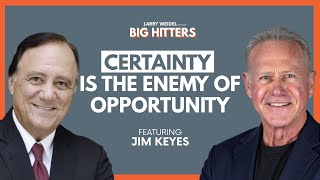
A July 2025 interview where Jim Keyes (former CEO of 7‑Eleven and Blockbuster) discusses his journey from poverty to corporate leadership, the central idea that 'education is freedom,' the value of broad learning and creativity, opportunistic career moves (moving across finance/operations/marketing), and his advocacy for large-scale education goals (e.g., literacy initiatives). The transcript also notes his artistic pursuits, work with influencers (MrBeast), and specific career actions (acquiring Movielink to add streaming at Blockbuster).
Foreign.
Hello, everybody. We're talking with Jim Keys in Dallas. Hello, Jim. Leonardo da Vinci style guy. And you know, congratulations. You know, thank goodness for people like you who go out there and are not limited by a success, a huge success in one area of your life, living that maxed out life. And so what we can say, You've been a CEO of two Fortune 500 companies, Seven Eleven and Blockbuster. You've been in all kind of industries. In fact, you know, they've got me a lineup of your achievements and we'd be going on forever, you know, but what, what blows my mind is, you know, you've written a book, but you've get, you know, you, you've excelled in art. You're a musician, you're a composer, you've, your creativity's gone into sculpture, you know, sculpting, painting, composing. Modern Renaissance man does not do you justice. But how, and you know, where did all of this, this, where would you say you got going on, on the idea of doing so many different things in your life? You know, where did you, what caught your eye moving up the ladder in your formative years?
Would you say it says it all?
Larry, could you hold it up a little bit more? Okay.
I put a book out recently and it's called Education is Freedom. And it literally, those three words say it all, because the more you learn, the more you can do. And we tend to think it's all about money and all about getting a job and all about, you know, how much we have or how much we make. And really it's about how much we can do. That's freedom to me.
Where did you, where did that concept, you know, the clarity of that concept, where did that come to you and what, what was behind that?
Well, I had a secret weapon. I grew up dirt poor and, and it was a huge advantage. And no one looks at it that way, but when you're poor, you're, you're sitting back going, wait a minute. First of all, I don't even know I'm poor. And, and it's not about money when you're poor because you don't have any, so we don't really care. It's about, it's about wanting to do stuff. And I learned from, literally from having nothing that the more I learned, the more I could do. And, and it was a huge advantage. And it, it was a learning that started literally when I was a kid and it never stopped. I, I, I was, I, I, I realized as a kid that, you know, if I learn how to do this, whatever this is, then it's going to open up more doors and, wow, look how many doors that open. What if I go learn that? How many doors could that open? And, and that just became a multiplier effect. And any of us can do this.
Well, and the thing is, you started for someone to do that, to follow that track, is to have accepted and believe the idea that I can improve, I can get better. And I'm not limited because I don't know it now. In fact, one of my friends said it best, and he lives in Dallas, by the way, Bill Arender. He said, I may not be good enough today, but I may be good enough tomorrow. And so, you know, yeah, it started.
Probably with my dad, who never got past the sixth grade, nor did my mom. So they didn't know what to tell me. They didn't know how to teach me the importance of education, but they knew it was important because when they, they would tell me, look around, you know, and look at who has the freedom to do anything they want to do. It's not people who didn't go to school. It's people who have made themselves better at whatever it is they do. And this, this isn't an elite thing. It could be somebody that's the best plumber in the world or someone that is the best scientist in the world. It didn't matter. They got there by learning. And that, that sunk in with me. And, you know, I had the other advantage, Larry. I grew up in the age of the Apollo program and Gemini and, and, and he. These were ordinary guys doing extraordinary things. That was a huge inspiration for me because it's one thing to look at people and say, oh, well, they're wealthy and so they accomplish all this stuff because they, you know, maybe inherited it or whatever. Well, when you look at the astronauts, these were just guys that were smart, that applied themselves. They were scientists, they were pilots, there were doctors, and they accomplished a lot, even though they didn't come from much of anything.
Well, you used two magic words, applied and accomplished there. And the thing is, you and I both know from running companies and doing training, there's a certain way, large subset the population out there that think learning is going to change things, but it not, it comes into actually applying. You know, I always tell people, greatness comes from not your foundation, but what you do with your foundational knowledge. You know, you got to do something with it and you got to apply it. You got to achieve. And so somewhere along the way, you, you are, look, I get the idea. I Don't even. No, you're back. I got the idea that, you know, you're somebody who, from the beginning, we're learning for a purpose. You had something in your mind you wanted to do, you got the information, you went out and did it, and you saw some positive things happen. Would that be accurate?
I have to modify that a little bit because I've seen, I've seen people today believing that they have to have a purpose, they've got to have a goal. We've got parents telling kids when they're, you know, 10 years old, what do you want to be? You have to know right now. And we have to make you a doctor or we have to make you an accountant or something. I mean, I didn't know what I wanted to be. I was 20 years old. Most of us don't. We haven't seen the world. How in the world would we know what we want to be when we're that young? So what I did, which was very different than many paths, I was opportunistic. I said, the more things I learn about, the more options I'll have later in life. I want, I don't, I don't want to put myself in a box because what if I put myself in an accounting box and then it turns out I hate accounting. Now I'm 30 years old, it's too late.
Yeah, that's very perceptive. And, you know, when I grew up, I didn't, I wasn't attracted to doing anything, but I was repelled by a lot of jobs I saw. You know, it's like, in fact, I got a big strong talking to by my mother when I was finishing college. It's like, you know, or in college, it's like, you know, at some point you're going to have to find something you like. You can't be criticizing people all your life, you know. And I said, I'm not criticizing them as criticizing that. I, I can't see myself doing that job, you know, and the thing is that I wish, I wish I'd had that light bulb come on in my head when you did, because I could remember 17 years old, when I was 17 years old, you know, do all the jobs that you do as a teenager and up in. Actually was up in West Hampton, in the Hamptons in the summer. It just seems like all the jobs were hot. You know, you're working at that, you know, the sub thing by a 500 degree oven, or you're carrying roofing up on the roof of a, you know, of a house. On the beach, it seemed like all the jobs were hot. And I can remember saying to myself, I don't know what the world it is, but I don't want. I want to do whatever it is that'll cause me to not have to be working for minimum wage. Wherever I am. I want to be on the higher end of it. But I wish that thought had come to me earlier. I think it would have done me a good. You know, it would have helped if I thought, let's go and create options. Because again, I was thinking career path. And, you know, I. I'd been on the art path since I was 12, art photography path since I was 12, 13 years old, and there was nobody around there for me to follow in terms of making that a career. Here's what you do. You create options. You follow your natural curiosity and you learn as much about as many things you're curious about and see what doors open to you. Would you agree with that?
Absolutely. Absolutely. It's, you know, Larry, one of the things that's really, I'm finding out there now is a really dangerous narrative going on. And it's, it's not. This is not ideological. It's coming from both sides. It's, it's a. The idea that, you know, education is not relevant today. It's just not as important. Here's one that I hear a lot. Don't waste your time with these silly degree programs that'll never make you any money. And I mean, you just described the liberal arts, which is by design to give you optionality, and yet we're encouraging people to specialize at an age when they just don't know what they want to do. And they haven't really formed as human beings completely yet, nor have they seen the world. So, yeah, I think it's a very dangerous narrative. And I'm encouraging, I'm out encouraging, just the opposite of many, many people who are encouraging specialization, especially on the technical side of things. And here's what I. Here's what I'm telling people. I'm saying, look, AI is going to change everything. We know that. But it's going to go very, very deep on many things. That means humans are going to have to be more and more broad on many things because humans are going to have to pivot and humans are going to have to manage the machines with things that are not as technical, with questions about philosophy and humanity that we may never, ever learn if we go down that technical path. Right.
Well, then you have to learn how to solve problems that are Seems to be unsolvable. And also your logic. You know, the thing is being in a college situation where you're on your own, you've got deadlines, you've got requirements, you've got things, you've got things to do that you don't want to do. It's wonderful to be infatuated with what your line. But, you know, you want to get the degree, you want to get out, you want to have, you know, make the count, you're going to have to do things you don't want to do. And you know, as for me, one of the worst was getting up and being in class at 9 o' clock in the morning. Now that was, you know, I think I had the award for most missed classes or late classes at my freshman year. And so just simple living life skills, you know, and having to be function independently, successfully in the world where you didn't quit. Because everybody, I think everybody their freshman year, their first semester or quarter wants to quit. You know, it's over. You're overwhelmed. But, but you don't quit. You know, you find, you find, you find your way and you start to develop those problem solving approaches that you wind up using the rest of your life. But if you don't go through that, there's certain things other people can teach you, but there's certain things you got to teach yourself by putting yourself up to the challenge. Does that make sense?
No, absolutely, absolutely. And you know, here's the irony. You got guys like Elon Musk, Peter Thiel, all these, you know, successful people telling kids, don't waste your time with school, you gotta go make money. And it's totally the opposite message because if you're a kid, somebody told me that when I was 15, I'd be, Yay. I don't have to, I don't have to. I don't have to have that discipline of sitting in a class, I'll go learn the things I feel like learning. Which would have meant I would have learned nothing of relevance, of commercial relevance in the real world. Most of us just don't have the discipline necessary. Now maybe Elon did have that discipline and maybe he could have learned everything he needed to learn via, you know, self study. Most of us are just not that wired that way. And we need structure and we need a little bit more definition and frankly, we need somebody to tell us learn things we don't find interesting because that's, that's where we really learn when we're outside of that comfort zone. That's where learning really begins.
Yeah. And even, you know, on the podcast, you know, I'm constantly learning. But I had to talk to a fellow out here one time, very successful, and he's. He said he had a degree in philosophy from one of the Ivy League schools. I said, well, what were you thinking and what practical use? He said, and again, I didn't know. But he said, because I studied architecture and building construction, I didn't know about philosophy. And so he said, you learn to think. He said, you learn foundational things about how to approach a complex issue, sort it out and come to a great conclusion so you can move forward in your life. And that's, you know, without that skill. You're really handicapped, aren't you?
Yeah, you are. You know, let me give you. You want a great example? I got one for you. I studied political science. It's not like I do any politics today, right. I'm not. I'm not a political scientist. Right.
That.
Nothing to do with running 7:11 or blockbuster or anything, but it taught me to write, it taught me to read, it taught me to think. And those were skills that I found were very, very valuable later on in my career. That communication skill that I learned in, during my studies of political science.
And that's the great thing that you have, that perspective of what you've done and where you've been, and that's what people are going to get from the book. So many people have the business success and are just empty inside because they thought that was going to, you know, fill all of the voids, and it doesn't. And so it really helps you to know there's a real big world out there. Like my son, my younger son loves to travel. He says, you know, as much traveling as he's done, he said every time he goes to a new city, it's just like, mind blowing how many new things are out there. And you're sitting in your condo or your apartment or your town and you think this is the world, but that's not the world. There's no reason to be overwhelmed. There's an unlimited number of great things. Now you. I want to get to it, but, you know, you have explored those things through the music and the painting and the sculpture, did this, that the other. And it does give you. I think you and I could. Hopefully we'll do a lot of podcasts over the, you know, over the coming years because we got a lot to explore. But I think it's. I think it gave me a tremendous advantage in business when it started to build My, you know, financial services business and expand and solve problems and all because of the composition skills that I got from art, the observational skills I got from having to do that sketching and things like that right from the beginning, the editing skills, you know, you knew how to frame things, how to communicate things. I just think the arts are an incredibly undervalued tool for business because you got to solve problems, you got to, in terms of how you think and you envision a situation or an issue. Would you agree with that?
Absolutely. Larry, when you read the book, go straight to the chapter on creativity. I opened the chapter with a quote from Einstein that I love. It's one of my favorites. He said, creativity, which you're a creative. Creativity is intelligence, having fun. I mean, it is, right? It is. Think about, think about music. Music is math. No one thinks of music as math. It is highly mathematical. And yet it's a heck of a lot more, more fun to sit down at a piano and compose a song using ultimately mathematics than it is to sit down and do a whole bunch of equations on the blackboard. Right. But you still have to use your mind. It's just you're using a different portion of your brain perhaps than you would use in calculus, but it's, it's still math and it's beautiful.
Well, what it allows you to also to do is my cousin Edward, my cousin Edward, I bore people with this. But he was the inventor of the personal computer H. Edward Roberts. And that's where Bill Gates and Paul Allen got started at 19 to 20 year olds writing software for the Altair computer in Albuquerque. But he used to tell me that if you're going to be a business for yourself, you've got to live. You know, he was always saying things a little bit different than other people said, but he said you've got to learn to live with a large degree of ambiguity. And if, if you're a creative, you're more. And, and that's the way it is in the real world. I mean, if you're growing a business, you're, you're facing situation you never had to face before. And you've got to say, okay, what.
Are we going to do?
Let's figure it out. And that kind of training serves you well. That mentality, you don't fall apart, you don't fall apart when there's not a formula for you to follow.
You know, I'll give you a great quote. You know, I'm having to, I'm coming up with some fun ways of putting things because in the course of being out talking about this stuff, I get challenged a lot. And so here's a quote to you, exactly to your point. Certainty is the enemy of opportunity.
Oh, what a quote.
Because we all want certainty. I want to know. I don't want to take a chance. I want to know exactly what's going to happen. And yet it's what you don't know that A, causes you to learn and B, creates opportunity because no one wants to go there. That's where entrepreneurialism lives in uncertainty. Right. Ambiguity.
What a great quote. Thank you. Talk about how you came out of now a political science degree and then all of a sudden when your first, first company that you went to the top of was 7 11.
No, I actually started my career with an oil company, with Gulf Oil. And I talked myself into an internship because I didn't. I wasn't an engineer. I got in the interview and they said, didn't you read the requirements for the job? We're looking for an engineer. And I needed a job. It was a summer job. So I just started to riff. I said, well, this is exactly the problem with the oil companies. You need people that are not engineers.
I don't know.
I had no fear, and this is a critical point. I had no fear. I had nothing to lose, so why not? And the guy, for some reason, was impressed with my. My hotspy guest and said, you know, I'll tell you what, we're going to. You got to. You got 45 minutes. I'll listen to you. And we talked for 45 minutes. I got the job. So kid with a political science degree and an MBA ended up getting a job with an oil company in an environment that everybody else was an entrepreneur. And it turned out to be a huge competitive advantage because I thought differently, I communicated differently, and the company did need a different point of view. And so it turned out to be a great launch from my career. I ended up then going to 711 because they bought an oil company to help supply gasoline for their stores. Yeah. And yeah, it ended up by. By thinking out of the box and allowing myself to have the guts to get out of the box that I was being put in. I wasn't a political scientist. I was able to use my differentiation in the marketplace to be different from everybody else around me, and that ended up being a career.
When you got in, how did you rise to the, to the top of, you know, Fortune 500 company like that? I mean, that's, that's sky skywalking. There isn't it.
It didn't take very long. I think it was 15 years end to end from the time I joined 711 to becoming CEO. And it, it really is a function of getting out of the box that people put you in. And, and it's. First of all, we create our own box. We say, I'm an engineer and this is what I do. On the corporate side, you'll find people make a choice. Are you a financial person or are you an operations person, or are you a staff person, maybe an administrative person? Right. Well, I find myself being put in one of those boxes. I started my career. They called me a financial person because I was in planning, right? M and A. And so I raised my hand and said, I want to be an operations. Okay, we'll put you in operations. Now. Sometimes I had to take a lower salary, but I was learning. And then in that job, I would, if I, if I ever got stuck and felt like I had a bad boss or I wasn't learning anymore, raise my hand again. Let me, let me do this. And so I kept moving back and forth. Finance, operations, marketing. By the time 10, 15 years go by, I had sat in virtually every chair at 7:11. And they needed a CEO. And they said, well, Jim's done every job here. I mean, are we going to bring somebody in from the outside or, you know, he knows the company better than anybody else from the operations side, the financial side, the marketing side. Let's give him a shot.
You got there by keeping yourself learning and enthused. And you, you did what most people are not smart enough or not don't think about doing is when they run into a roadblock. The corporate there. And that this, you know, it just. You can't move up. People in front of me. Got a bad boss, bad situation. You jumped out, you know, said, let me jump somewhere else, but I don't have to jump to another company. I can jump somewhere inside here and not lose ground. You lose ground when you go to another company and sometimes you get a pay raise that, that makes, you know, makes it worthwhile. But that's certainly another option that I think more people ought to think about. Preparing yourself for bigger things down the road, because you can do more than everybody. In fact, in our company, when we went independent, we had the guy who got the CEO job. That's how exactly, that's exactly how he got promoted. He had done every job. He had run every department. And so let's, let's go get John, you know, John Addison. And so anyway, the, you migrate over to Blockbuster. Was that a big change for you?
It was not as big a change as you might think it was. 711 was all about convenience. People think of it as well, beer, soft drinks, cigarettes. It was really selling convenience. And if you think about what Blockbuster was selling, they weren't renting DVDs, they were providing convenient access to media entertainment. And they evolved before I got there from just rentals in the store to DVDs by mail. And they called it total access. Well, when I got there, very first thing I did was to take them to streaming and literally acquired, within the first six months on the job, acquired a streaming video company from the studios called Movielink. So now we had true total access. We could provide customers the most convenient access to media entertainment. Now everybody says, well, what happened then? What happened? Well, change happens. And in 2008, the financial markets collapsed. Lehman Brothers went away. General Motors and Ford had to go to D.C. to beg for relief. They got bailouts, remember, and Blockbuster had a billion dollars of debt. We did our best to try to power through that very difficult period of time, but it took our eye off the ball. We weren't able to compete on the streaming side of the business as effectively as we would like to because of the financial crisis, but we were able to restructure the company, got it sold to Dish Networks, who then ultimately it was Dish Networks that decided that they were going to shut the stores down and shelve the brand for now.
Somehow from that you always seem to land on your feet and you've got so many things I'd like to talk about. How did you get connected with. I forget his, his real name, but Mr. Beast, you know, the YouTube. What a good kid he is, isn't he?
He's an amazing young man. I mean, for a 26 year old young man to have accomplished what he accomplished. But here's what I really like about him, Larry. Here's a kid who has enough money to do anything he wants, but he is turning his efforts to philanthropy and teaching millions and millions of kids the importance of giving back in fun ways. Whether it's let's go get a bunch of blind people in and pay for their surgeries to help them. See, in my case, he was doing something with education. He went to a place called Ron Clark Academy in Atlanta and he brought in hundreds of teachers to teach them this method that was working in an inner city school in Atlanta. And so they reached out to me. I had been collaborating with them on a couple of other potential things and they reached out to me and said, how'd you like to partner on this? If you'll provide some scholarships, we'll, you know, help the awareness of your book. So I was thrilled, I mean, for Mr. Beast for Jimmy to hold up my book and say, read this book. Make a video telling us why education is important to you. Larry, I had kids from all over the world posting videos that would break your heart. I mean, just make you melt, saying, I'm going to change my whole community. I'm going to change my family and my whole community by getting an education. It's a beautiful thing.
It really shows the power of ideas. I don't know where I got this in my head. A good idea doesn't care who uses it. And so it's a matter of putting these ideas out. It's like planning seeds and you know, and you. There's a lot of fertile ground out there. There's a lot of amazing people that are just looking like they're ready for something, you know, and here's what I, here's how I look at it. You know, my community that I have is that, you know, the big hitter community is built around the idea of, in every walk of life, there's 20 percenters that do 80% of the work. They have 80% of the personality they have, they have 80% of the, create 80% of the fun for everybody else. You know, they're the ones throwing the party saying why don't we do this, why don't we go there? And, and then they are already that way. But they're capable of becoming 1 percenters given the right ideas and environment and things like that. And you know, that's why let's create a community where you can help the 20 percenters become 1 percenters just by exposing them to these kind of ideas. And that's what your, you know, what a godsend. I mean it's almost divine intervention like on your book that you had the concept, the ideas, but then to have Jimmy come along to where you guys can connect and then, you know, it just shows. It's, you know, it's the idea of people magic. You know, when people talk, magic can happen and it can explode around the world. You're seeing this explode around the world, aren't you Larry?
I, I'm, I'm on a plane this week to Australia. I've been in the Middle East, I'm going to Ghana. This in, in a couple of months I'll be in Spain, Italy, all over London. And the message is resonating. But you want to hear where this is going? And this is, you said it, it's divine intervention. I'm convinced that, you know, I wrote this book just to help a few people, and now this message is spreading around the world. But here we are in the United States and we've got a war in education going on right now. And it's, and it's kind of based on a lot of fear. Oh, my gosh. They're te. What are they teaching my kids? During the pandemic opened a lot of people's eyes to what's going on in the schools and all this stuff. And we're riddled, riddled with fear. So here's my idea. The administration was committed to changing education. They said, we're going to eliminate the Department of Education. So I kind of inserted myself into the transition team members that I knew and said, I got a better idea. Do what you want to do with the Department of Education. But here is the mega idea. You ready for it? Make education great again. A mega idea. So, so here's where I'm heading with this. We're America. We have as much as, and this is a shocking number that no one's paying much attention to as much as 50% of our 8th grade population functionally illiterate for a whole host of reasons. You know, first generation Americans, foreign language skills issues, teachers, blah, schools, blah, blah, blah. And with this environment, we're running around being the victims. Well, yeah, you know, it's the teachers unions, it's this, it's that. A lot of blame each way going on. I'm going, wait, we're America. We fix things. We don't blame. We're not a victim. Nobody's doing this to us. Let's do a JFK 1962 moment where we stand up and say, in this decade, we're going to land a man on the moon. Not because it's easy, because it's hard. So I'm petitioning Donald Trump to say, let's have 100% literacy by the third grade in this country and let's be in the top three of OECD countries in math and science. And we're going to do it in this decade not because it's easy, but because it is hard.
Let me give you another thing about divine intervention. You're the political science guy. You know, you start off political science, and now look at this. Where could you make them? Where could you make a bigger impact in the political thing around the world? There's not, there's not a decent politician or person in the world who would take a stand against this, you know, and this is needed everywhere. So this is, this is exciting. I knew this is going to be a great podcast. I had no idea it was going to be this great, Jim.
So Larry, here, here's, here's another example of divine intervention. I mean, I didn't think, I didn't grow up thinking I was going to be a CEO of a multinational company, right? Nevermind2. But here's what I learned. I learned the power of scale. I learned that technology could make 711 better on a very local level. And think of what that means. That we were able to harness the power of technology not only to be your neighborhood store, but that now because of that technology, we could leverage our scope with many, many stores and have the best cost of goods and the best delivery systems, et cetera, et cetera. And yet we could still be independently nimble at very local levels. That's exactly what the school system needs. What we lack today is the power of technology to bring the best tools in the world to every school and every remote corner of the country and then eventually the world.
Well, and then that will come because of the intent. And the intent starts with the vision which you have put out there and getting our leaders to buy into that and to promote it. So thanks so much, Jim. This has been mind blowing and you know, we just got to do this again. And here's the deal. I like to give our guests a chance to have say a final word. And so in party, what would you say to. I'll say get your book. But for you enjoy enjoying the, you know, help, help start, you know, get this on people's consciousness. You know, the idea of, you know, something that can have ripple effects that can go on for generations. And so to make, make a change that will last basically is, is what you're promoting. So anyway, what, what would your final word be?
So Larry, I, I'll use my book as a prop because the book by design has a globe on it. And this is intended to portray the importance of perspective. This is what the astronauts see when they leave the earth. They don't see borders, they don't see races and religions. They see this beautiful planet with perspective. And yet when they land, they get a fire hose of perceptions. And it's perceptions that trigger fear among humans. We're normal, we're mammals, and we have a protective mechanism that when we get afraid, we start we're ready to fight or ready to run away. Well, as humans we can harness our learning, we can harness our knowledge to be better than that. And that's my my objective is to have people use knowledge and faith, whatever religion or whatever context you want to put that in. But the combination of faith and knowledge, we have nothing to fear, absolutely nothing to fear. And that should allow us, Larry, to have perspective and not be influenced by perceptions. When somebody posts something ugly or, you know, see something on the news, we, we're better than this. And education and, and our faith starts with us. We can do this.
Fantastic. Jim, thanks so much. Look forward to the next time. And best wishes on your travel and getting this message out and established and rolling.
Thank you, Larry. Appreciate the opportunity.
More from Larry









Rick Jordan on Self-Engineered Proximity, Cyber Security Moats, and Truth-Based Leadership

Fire Fast or Fail Slow: Kevin Brittingham Reveals the One Rule That Built a $100M Empire
