Go Beyond The Grind To Build A Scalable Business
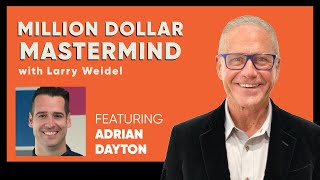
Larry Weidel interviews Adrian Dayton, a Salt Lake City entrepreneur who left law to build and sell a software company. They discuss using the Entrepreneur Operating System to scale, plus practical advice on leadership and time management for growing businesses.
Questions this video answers
He stepped down in June of 2022.
About $1.5 million of investment money plus approximately $400,000 of a government loan.
About $300,000 loss per year for the first six years; in the seventh year a loss of about $50,000.
Over 50,000 users in 12 countries.
The intro states he helped transform and train over 15,000 professionals.
Welcome to this edition of the Million Dollar Mastermind podcast. This is where we pick the brains of high achievers from all walks of life and get their hard earned real world insights on winning. I'm your host, Larry Wydell.
Hello, everybody. We're talking to Adrian Dayton from Salt Lake City. Hello, Adrian.
Hey, how are you?
Larry, this is a lot of fun having you on and I know you've had a lot of adventures in the entrepreneur world and picked up a lot of real world experiences. That's what we want to tap into. And people are starving for information from people that have been there, done that, and know the ropes. And, you know, it's good for me and you to keep talking about it so we don't forget what at least some of what we've learned along the way. You know, it's just like people say. Some people say I don't know what I'm doing. And I tell them I know what I'm doing. But it was like I knew what I was doing in the past. I don't know what I'm doing going forward because I've never been there before, you know, and so we're going to take those lessons and see if we can pass them on and have some fun. So, you know, Salt Lake, how long have you been out in Salt Lake City?
So I grew up in Salt Lake City on.
Oh, did you?
But then I took it detour, so I lived out in Buffalo, New York for 13 years. Wow. And I came back here about five years ago, so.
Okay. And I don't know what kind of skiing they have in Buffalo, but it's world class in Salt Lake City.
That's right. That's right. The quality of my skiing has improved greatly since moving back from Buffalo. So yeah, Buffalo does have a couple of actually decent resorts. They just don't have much altitude. So, you know.
Yeah, yeah. As I remember, Hunter Mountain and places like that outside of New York City is like narrow trails and a lot of ice and.
Right, that's right.
Not like the west, but let's talk about winning. And right now you're running a company called entrepreneur operating systems EOS. And since 22, you've kind of had an amazing run with that thing. We'll talk about how you ramped up with that, but sure. Helped transform and train over 15,000 professionals into effective business developers with LinkedIn, Twitter blogging strategies, and so becoming one of the fastest growing practices in that arena, breaking, it says here, global records in the first six months. So how did you start, you Know, it's always great when you can start with a bang because it's always hard to start. You got to overcome inertia and you've got to put some points on the board to convince yourself and everybody else that you know what you're doing. So it's really great when you can explode out of the gate. In fact, the lesson I would think that you and I would have learned along the way to pass on to people is don't think about just starting your business. Start in your planning process and your learning and your questioning. Try and get a strategy how you can explode out of the gate because then if you don't explode, at least you get a running start. You know, you gotta maximize your chances of winning, but at least you ought to be thinking about an explosive record setting types start and you pull that off. So talk about how you pulled that off.
Yeah, thanks. So I sold my software company and stepped down in June of 22. And then a couple months later I went basically to go through the training to become an EOS implementer. And I thought, you know what, I've sold my company, I made some good money, but I want to still have an impact, I want to still help other companies. So maybe I'll find four or five clients and help leadership teams. And that's the way EOS works is you'll work the leadership team for about five days a year right on their quarterly planning and two days for their annual planning. And so I thought that sounds like a great thing I can do and just take it easy and have a nice comfortable life. And then I was sitting in like the biggest, you know, general room of the last day of the conference after the training and they showed up on the board, all the records, they were like in the fastest out of the gate, you know, from the first six months, like here's the record. And I looked up at that and I said, I don't think I want five clients, I want to break the record. And I, I just saw that and it was interesting because after being, I don't know, there was a couple years selling my company, then a year, you know, for my earn out before I stepped down, I hadn't been so energized in years. And so I got back and I built a huge network of business owners just because I'm social and I just, I just had fun doing it. And so suddenly I had something to offer them. And you know, people kind of say like, oh, what did you do? And it's like, well, I did was I Just called all the people I knew and I said, hey, here's what I'm doing now. Would you like me to help you scale your business? And had a great response.
And then of course, referrals from that I'm sure. Of course, success breeds success. But the deal is now you went out there and let's get the term EOS clear in everybody's mind what that is.
Yeah, yeah, so. So Gino Wickman wrote a very famous business book called Traction and he wrote some others like Rocket Fuel that are great as well. But Traction is the big one. And Traction lays out it's not software, it's a framework for running your business. And that's known as eos or the Entrepreneur operating system.
Most entrepreneurs, they get an idea, they start from scratch, they don't know business. Even if you've been to, you know, MBA or, you know, you have kind of professional degrees, that didn't really, that's really not applicable a lot of that to what you're doing in your startup years and all of that stuff. And so the concept of an entrepreneur operating system, right off the bat, which I'm not familiar with it, but see, right off the bat, the idea of it seems like it could just take a lot of the guesswork out of play.
Absolutely. So Larry, let me share with you like my like EOS story. And look, EOS is amazing, but when I was building my software company, I was a hustler, I was selling, I was making deals, I was building my software, I was a non technical founder. So it was my idea, but someone else did the coding. You know, my team built it. And as the business started to grow, I'd always been great at sales, but no one ever taught me how to run a team, right? And I didn't have an mba, but even if I had an MBA doesn't really teach you how to lead people. It just you look at case studies and it's academics, right? And I remember someone handed me a free copy of Traction. And so I got on a plane ride to California, like long trip, four or five hours. I opened the book, I started reading, read the whole book in one sitting. And it was just like, oh, this is how I run my meetings. This is how I score, create a weekly scorecard. This is how I rate my people and make sure I have the right people in the right seats. It just gave me answers to all of these things that I could have figured out. Like I could have faked it, faked my way through, but just to have a framework suddenly it was like, okay, I'll just do this. And now I can focus all my creativity not on learning how to grow a business, but on building the best product I can. Right.
Yeah.
So anyway, so it was a game changer for me. My business took off at that point, once I had that structure in place, and. Yeah. So that's kind of EOS in a nutshell.
And so here's the thing that before we go on, I got to get this off. I got to get this out of my mind.
Yeah.
I have. Like I was telling you before we got started, I've got a second cousin, a young second cousin that's got a great idea. Fantastic idea. I won't get into it. And he's starting a. He actually is in marketing with a software company, but he wants to start. He was getting my opinion. And usually people call you for their, you know, your opinion. They've already made up their mind. And so anything you say negative is you're raining on their parade. You know, what they really want you to say is, go, go, go, go, go. And maybe I'll put some money into it, you know, but the thing is that to get the reality of us, I hate, I. I'm the wrong guy to talk to about a software company. Because in my experience, the friends I've had and people I've known from little to big to monstrous, it just seems to be a huge pot into which you can pour money and really tough to reach, you know, the point to where you got something that is generating income. And so a lot of times it eats it all up, and then you're bust. But you went through a thing where you were pouring everything into it for years and years before it turned to gold for you, Right?
Yeah. So, I mean, when I started my company, I raised a little bit of money. I put in some of my own money, and, you know, over the first kind of three years, I raised in total about 1.5 million of investment money and about $400,000 of a loan we took from the government. So every year, we lost about $300,000 for the first, really, like, six years. The seventh year, we lost about $50,000. And look, my whole life, I've been. I've been a very, like. What's the word? Conservative, you know, in how I save money and how I spend money. And every single year, it just kind of tore at me that, look, we are growing. We're growing quickly. We're spending more money than we made. Right. We're funding our growth. You know, talk about why?
Why in software? You know, why is that? So people who have, you know, there's going to be thousands of people with great software ideas and a lot of them need to go to market. But what they need to know the facts of how it goes and it kind of helps, helps you plan a little bit.
Yeah, absolutely.
Why is it that this sucker keeps eating up the money?
Yeah, well, there's kind of two points. First off, software companies, especially software as a service, right? SaaS.
Yeah.
Is it's a recurring revenue business and recurring revenue is worth way more than normal revenue. Right. Like, like a dental practice that does a million a year can sell for about a million dollars. Right. Whereas a software company, you know, that does a million dollars a year may sell for five to ten times that. Right. So, so it's all about the multiples. So because of that, $1 of revenue isn't really worth $1. It's really work potentially worth 10 to $20. And so, you know, kind of the prevailing wisdom is for those first few years you want to grow as, as much as you can, as fast as you can, even if you have to sacrifice profits to get there. You know, I remember flying on a flight with a, a banker from Silicon Valley bank, which is kind of funny with their history now, but anyway, but he said to me, he said if you turn the corner and start, become profitable, he said that's the kiss of death. And I said, what do you mean? He said, well, once you're profitable, you're going to be valued based on your ebitda, not on your revenue and your growth rate. You know, and which is a different way to think about it, but software, you're in a different world where you want to be, you want to grow quickly, you know, and so you and.
Your team, about 15, I think you said about 15 full time people, you know, when you're going through this, you're working around the clock. It's an all consuming thing for year after year after year with no end in sight. And how did you keep yourself going through all that?
Yeah, it's a great question. You know, there's a saying by an entrepreneur that you know, like, you know, entrepreneurship is like getting hit in the head by a hammer and the pain stops when the entrepreneurship stops. Right. So anyways, it's very difficult. I think the magic of being an entrepreneur and of building a software company is all about these two combined factors. The fear of failure drives you to have massive growth. And I remember just the terror of like if this thing fails, right? Like I got to do everything I can to make sure this grows. So I read all the books, I listened to the podcasts, I found the mentors. I did everything I could to just give me a little bit of an edge so I could make this thing succeed. And I think when we're growing, when we're growing, we can deal with a lot of adversity because it's so rewarding. You know, that's one thing I miss the most, is the high growth you experience personally as you're building a company.
Yeah. And when you go through that thing, you run into specific problems at each level, and that's where, you know, it's just like. It's not like it's the same thing for six years. It's like, now we're in this phase, now we're in this phase. Now this has happened, now this is bad. What are we going to do? And so then it's a matter of finding out people who know the answers to that particular problem. Is that how you went through it?
Yeah. I mean, it's interesting because before I started my software company, I had this really great executive coach, and he helped me build my first business, which was like a consulting business, which was similar to his business. And every question I ever had, he had the answer for me. And then I started this software company, and I was like, what do I do with this? And he's like, I don't know. I mean, it's almost like it was just outside of his experience. Right. And so I realized, like, oh, I can't just use a smart business mentor. I gotta find someone that's been on this journey before. Right. So I had to find some mentors that had built and scaled software companies.
And how'd you go about doing that? Are there conferences? Are there? You know what?
Yeah, I mean, I. I found some local mentors in my community that were introduced to me. There's a gentleman by the name of Dan Martell, and I joined his. He had a SaaS academy. And so three times a year, you would fly in for an intensive with dozens of other CEOs of software companies. And, like, Dan's awesome. He's still a dear friend of mine. But the best part of the conference was all these peers. You could just be with all these people. They're in it. They're in it with you and share success stories and share challenges and solutions. You. That was really helpful.
For those of you who are sick and tired of fooling around and are dead serious about wanting to move up fast. I'VE got something especially for you. I've combined the best insights from over 40 years in business and making $70 million in income and compressed them into a free webinar. That's right. It's a free resource. If you want to find out exactly what the concepts are that I use in coaching million dollar earners, Register now@widelowinning.com you'll discover the five part framework used by so many to reach their financial, personal and professional goals. You can find that link in this episode's Show Notes.
It's the talking in the hallways that are big value for a lot of these conferences. But you got to go out, you got to be, you know, the answer is not going to come to you. You've got to go and stir it up. You've got to ask questions, you got to meet people. And the thing is, now, as you went through that, what was the.
I don't know.
Why did you go into software anyway? You didn't know anything about it. This had to be the idea of the century.
Got a good answer for you. Okay, so when I graduated law school, I became a lawyer and I was at a big firm. And one day the head of my department came to My Office 2009, and he shared with me a few words I'll never forget. He said, you're fired. And so I called my wife and she's crying and I'm like, you know, honey, it's okay, don't worry, I have a plan. I'm going to start a business teaching lawyers how to use Twitter and LinkedIn. And she just cried harder. No, she was supportive. And I was the first. I wrote a book on how lawyers could use social media to find clients. And I was the first. And so I got a national reputation. You can't see behind me there's a map with pins all over it. And those are all the.
I did see that when you were talking earlier.
Yeah, it's all the places that I spoke. I flew all over the country, really. But I was making great money. I paid off my house in the first like year and a half. I mean, it was an awesome, it was an awesome ride. But I had a three year old son and one day he was getting driven past the airport by our friends and he pointed at the airport and he said, that's where my dad works. And obviously I didn't work at the airport, but, you know, they were always taking me to the airport. Right. And I just realized, like, that's not the life I wanted. Trading my time for Money getting on planes. And so I. The wheels started turning. What could I provide to the same large law firms and accounting firms as a service through software? So they would just pay me every month and I don't have to travel. And so that sparked the idea for the software I bought, I created.
And so in the software they would say you would put. Create content and take over the posting this.
Yeah, for what it was actually. Let's say a law firm has 100 lawyers. Okay. And a dozen of them, they're already writing articles. They're writing about the Supreme Court. They're writing about changes to property law, they're talking about changes to tax law. They're already writing these articles. And in a perfect world, everyone would get those articles and they'd share it to their LinkedIn accounts and their Twitter accounts. Right. Or Instagram, wherever. Right. Back then it was mostly LinkedIn, except they're busy, so they wouldn't do it.
Yeah.
So what I did is I create a software that would make it easy. Basically, it was like the easy button for social media. They'd get sent an email digest and they would just click one button and it would schedule their entire week of social media posts to their account. So they were still managing their account. I just gave them automation tools that made it much simpler. And then I created a leaderboard. So it made it into a competition and gave them all the analytics to show them the impact of all the sharing.
You know, so, and so this evolved as you went, and how big did it get? I mean, you sold this business, right?
Yeah, Yes, I sold to a private equity firm a few years ago. So it got to where it was being used. We had over 50,000 users in 12 countries.
50,000 users and 12. Yeah.
And most of the users were the top of the food chain lawyers at the biggest law firms in the world.
And how would they go about using this on an annual basis? It's not like they're trained now.
Yeah, yeah, yeah.
And they don't need you. Why do they continue to need that service?
Yeah, it's really just all about, they have a problem, they're so busy that they can't take the time to copy and paste a link into their profile.
Right.
And so now they get an email, they click a button, the job is done.
Yeah.
And so anything that you automate to make people's lives easier has a pretty good chance of succeeding. And this one thing about when you say, why did you get into software? Well, in this market, I had a big unfair advantage. I already knew all the people, right. I knew I had the point of entry my first year. I hired an assistant and all she did was call all the people I knew in the legal space, the. All the, you know, CMOs and marketing directors, and said, hey, you know, Adrian. They're like, of course we know Adrian. Well, he wants it to show you a software great, right? That's how we got our first, you know, few dozen clients, you know, so I think any entrepreneur, right, like, the idea is such a small piece of it, you know, you really shouldn't go into anything unless you have an unfair advantage, right. And you have some edge that's going to make sure you can win. And I knew I had that edge.
Well, you, you're the people, but you also knew the problems, right?
That's right.
And then the other thing that's important that people need to think about, you knew the language, you know, you knew how, you know, attorneys talked and this, you know, how they look, the mindset, how they looked at things and the.
Yeah, they're very cautious, right. They have this very conservative mindset. And so I had to show them how this would make them safer because now things would be approved and there's a process and they like, they love that. So, you know, it's interesting. I've had people say to me since, you know, people in private equity or venture capital, they said, oh, you picked the wrong market. And I said, why did I pick the wrong market? They said, oh, it's. The market's too small. It's like, well, maybe it's small, but that's where I had the advantage. So the risk was low, so there was no chance of it being a billion dollar company. But I knew I was going to make millions, you know.
Well, then you can always expand out.
That's right. That's right. And we made attempts at that. It worked somewhat. We expanded to three or four different industries, but we never got to the massive scale. And the total addressable market wasn't large enough for us to get the big checks from the VCs, which was just as well because I got to keep a lot more of the company and, you know, had a great outcome.
Yeah, like, the biggest music retailer in the world is called Guitar center. And they sell more than guitars, let's just say. But they started with guitars. And so you can start in a niche and organically expand a lot of times.
Yeah, that's right. In fact. Yeah.
But a lot of times that main thing, the thing you start with stays, you know, the big profit center. Sometimes it's not that great to be in all these different markets. You know, if you get. You tap into one vein of gold, you've got a gold mine. You only need one vein. Not everybody has to be Google.
And then, you know, that's the nice thing with large law firms. It's really hard to get in, but they're creatures of habit, so once you get in, as long as they like it, they'll use it forever almost, you know.
And so how did the idea of putting entrepreneur operating system into your business, how did it change things and how fast?
Yeah, yeah. The biggest thing was, was it just gave me a framework.
It seems to me from the outside, it was at a revolutionary impact on you because then you wound up doing it yourself, you know?
Yeah, yeah. I think the biggest change was probably the way we ran our meetings. Okay, so there's a concept, and if you haven't read Traction, I'll send you a copy. It's a fantastic business book, but there's a concept in it that's called the level 10 meeting. Okay. And over the years, I'm sure you've attended a lot of meetings and a lot of bad meetings. Okay. So if you were to average out all the meetings you've ever been to on a scale of 1 to 10, what grade would you give them?
Larry? Now, I have to confess, 98% of the meetings that I've been to over the last 40 years, I've run. So I. Okay, so you might. You might be an easy grader, and I have exp. I have excelled at avoiding the meetings that I don't run.
Yeah, yeah, yeah, Good for you. Good for you. All right. Or. Or.
Or I'm in there for the smallest. I go to meetings that I don't run, just like I went to Georgia Tech, and that is as few classes for as many, many absences as possible. As short a period of time I could be in there that's. You have a little time invested.
You've minimized your time in meetings. So when I asked this question, the average answer I get is a 4 out of 10. Right. And can you imagine if you went to a restaurant and you rated a 4 out of 10? Would you ever go back?
Oh, no. Right.
And so. So this is just one really powerful concept in the operating system is it's called the Level 10 meeting. So the goal of the meeting is, at the end of the meeting, everybody rates the meeting, and the goal is that everyone would rate it a 10 out of 10.
Oh, okay.
So what makes a meeting a 10 out of 10. Well, and we're talking about, this is the weekly executive meeting you have with your company, with your leadership. Okay.
And your leadership.
Yeah. So, and this is like just a, I'll just give you like the agenda really quickly. You start with a segue, right? Everyone shares, I don't know, something good to happen in their business and their life in the last week. You look at the scorecard for the week. What are the key metrics for the company? Right. You look at the quarterly priorities. They're called rocks in the US world. And then after you share any announcements, the lion's share of the meeting is spent on issues, but not issues chosen by the CEO. You have the entire leadership team vote on the three most important issues and you tackle those first. So in the design of this meeting, suddenly the power is taken away from the CEO and it's given to the team to say, how do we make this meeting the best possible? So the reason, after doing this, after following this agenda for a month or two, meeting scores usually go from a four to, to, you know, nine and a half on average. So like the level 10 meeting is a powerful concept. And then, you know, the weekly scorecard is great. And then just this rhythm of every quarter, you have a full day of planning to set the next quarter. Every year you have a two day annual planning. And here's the agenda and here's what you do. So just, you don't have to think about it. It's like, it's almost like in a box, right? Just open it up like salad in a bag. Right. Like, here's how you run your company. And it's all just very simple. And I think it's like human nature for us to complexify things. Right, right. Complicate things, I think is the word. And so EOS just says, okay, your structure you can make very simple. And then if you want to be fancy with your product or whatever, do that. But this works great for scaling your business.
Now, lots of times when the top guy comes in, you know, Moses marches down from the mountain with the ten commandments of our new system of how can operate not always receive with great joy from the team. So how did you implement this to your team and get them to, you know, how receptive were they and how long to take to win them over?
Yeah, it's a great question. It's a great question. And so I can share with you about my company and then with the dozens of companies that I've helped with since.
Yeah.
And the bottleneck in Every company bottleneck is always at the top. Right. And so what EOS does is it creates greater accountability, not just for the members of the team, but for the team towards the CEO. And so my team loved it because I am a. What they'd call a flaming visionary. I can be all over the place, but it helped me have structure. So they knew where we were going and how we were going to get there. And so typically, the team is more on board with EOS than the leader because the leader sometimes sees it as a threat to their power, you know.
Well, it's obvious that if you're letting them have their voice in it, whatever the program is, they're going to be more. Take more ownership because they've had a chance to express. You know, people like to be heard. They don't always have to be. They don't have to win the day, but they like to know that they've been heard and they've been respected.
At its heart. Look, this is not really eos, but this is my feeling. Companies desperately need to evolve from being CEO and founder led to being leadership team led.
Thank you. Yeah.
And making that leap is challenging because it requires. It requires the CEO to let go and to share power. Right?
Yeah. Now, the advantages for a leader to push that go all the way from the fact that if you ever want to have an exit strategy, the people that are going to come in and buy, they're going to look at what's going to be left behind. And that's the management team. It's the client basis, the management team. Right. You know, when they came in, when you sold that thing, what were they looking at?
Yeah, that's a great point. I mean, the private equity company that came in to look at our company and they're kicking the tires. What they loved more than anything is we had clear processes in place. And the main drivers of business, our sales teams and our customer success teams, they were extremely well trained. And they weren't overpaid. We had training that was good enough that our customer success team could be run by recent college graduates. They could run our model. Cause it wasn't about me as a personality. It was about the model we had built, you know, and that went all the way down to our financials. Right. Like, we had our financials built out. In a way they were clean. They were done in the way SaaS companies should do them. And it was organized in a way that they could easily say, oh, this is a portable business. We can buy this business and just start running it. Without making too many changes. In fact, when they bought our company, you know, you always hear about companies being purchased and then these mass layoffs. Right, right. They bought our company in the next 12 months. They didn't make a single change because it was a well run organization.
And then the thing is that a leader should realize the reason to structure your company that way is that it frees, it takes the guesswork and the anxiety and the. There's so many companies or you go through in the startup. So much of it is putting out fires. Yes, you need the fire alarm going all the time, you know, and as you mature you want to get to the point where you're in front of the fires. You know, you put out the fires before they start as much as possible. But by having it a well run and systems in place, train leaders in place running those systems and monitoring it, reporting systems in place, what that allows you to do as the leader is to do other things to think of, see 100%, you know, you could have stayed there. You were not forced to sell, I would imagine. You know, if you had stayed, I'm sure you would have used that freedom to let your mind start thinking about other possibilities and where you could take that organization. And that can only happen, you know, somebody down level is not going to think of the things, the possibilities that, that you would think of.
And so yeah, and if you're operationally in the weeds every day.
Right.
And I think those big ideas, right.
It's destructive to a company for the leader to allow things to be run in a way where they are stuck in the weeds every day.
Yeah.
You know, and so because now look what you're all able to get out of that situation and now you've gone and been able to take that information, get some more training, you decide you sold out. How long before you went in and got yourself trained? Because you went in and got certified in this EOS system.
So there's one other kind of part to the story I want to share with you. Okay. So two years before I left my company, actually almost three years, I was asked to volunteer at an accelerator. So there's an organization called the Entrepreneur organization eo. I don't know if you're familiar with EO and EO has their own accelerator and so they basically use volunteers like myself to spend a half day each month with a group of companies trying to grow from $250,000 a year to a million dollars a year. So I just got asked to volunteer and my business was well run at this point. So I was like, oh, I could give a half day a month. And I tell you that half day a month. It was my favorite day each month. Because these young entrepreneurs, they were just hungry and they were just like I was five years before. They needed to know the way to go to grow their business. And as hard as it was for me to get to a million, my first million dollars in revenue, showing them the way, it was easy, right? It was just so clear to me. And so after three years of that, I ended up running the whole program and we tripled it in size. And this is all just as a volunteer. So when I sold my company, I just said to myself, that's my favorite day each month and I'm not getting paid anything for it. That's my favorite day of the month and I don't get paid anything for it. What if I could make every day like that? Like what if the work I did was always just helping entrepreneurs grow, helping them kind of make the leap from a struggling CEO to a leadership team led company. And I remembered the good experience I had with eos. And look, I read every book I didn't just read, but EOS had a big impact on me. And so I went, got, I decided to go and get. It's not really certified, it's trained. And then once you hit a certain number of sessions, you're officially certified.
You're talking back now in those three years, you're talking to, you know, things always fall into a pattern. You know, if you're a refrigerator repairman, you go to the house, you know, pretty much it's going to be this, this or this. I got to fix, you know, air conditioning. It's going to be something to do with the thermostat, you know. You know, it's not everything doesn't have a thousand variables. And so as you go in and you're doing this, you know, one afternoon a month, half day a month, I'm sure with these entrepreneurs things settle, you know, certain patterns emerge. Oh yeah.
Oh yeah.
And you could recognize them because you've been through them yourself.
What?
Think back. Can you think back to the kind of things you found yourself telling those entrepreneurs at those sessions then yeah, yeah.
I can actually boil it down to one factor that divided the successes that went to a million and those that languished. So the companies that broke through and made it to a million dollars, they all had one thing in common, and that was they all hired a really capable kind of number two, a right hand man, a person Right. A person they could hand everything off to, that wasn't what they were best at. Right. So whether that was an administrative assistant or whether that was an operations manager, you know, making that decision, having the courage to say, you know what, I'm going to hire a full time person that can shoulder the load of a lot of other work I did. That was a tipping point for so many of the people I mentored in those companies.
You know, it's really interesting. I spent so much of, you know, my, basically the bulk of my business career, financial services, recruiting, training, opening financial services offices, much like real estate, you know, and brokerage like. And a lot of them are, most of them are small. And they start out, they were great in sales and they got a few people underneath them and then they opened their own office. You know, the number one thing that kept the small ones small, they would not get a good admin.
A good assistant wouldn't get a good admin. It's so easy.
And they would say, so obvious.
It seems so obvious. Right.
And they're stubborn about it, you know what I'm saying? And like they said, well, my wife can help out. I said, you don't want your wife.
Oh yeah, this my favorite. This is my favorite. This is my favorite. Oh, I don't want to manage anybody. And it's like, it's not about managing them, it's about making your life easier, you know. Right. But yeah, it's tough for people to make that shift psychologically.
Yeah. And so maybe people hearing this, that'll be enough to get them to budge off that spot if they're there. Because you're killing yourself. You know, you're much more powerful if you're linked arms with one other person. You know, the wind can blow you over. A blast of wind can blow you over if it comes from a blind side. But if you're linked arms with someone else, you don't blow over that quick.
And I'll give you another analogy to go with that. And it says the biggest problem, the reason people don't make that higher is because everybody, every new entrepreneur, they underestimate the value of their time. Right. They just don't understand they spend too much time on $20 an hour tasks when they have the brains and the talents to be focusing on hundreds or thousands of dollar tasks and they just need someone else to take this load off of them.
And in their garage, I promise you, most of them have a lawnmower, you know? You know what I'm saying? I never wanted a lawnmower I never, I never, you know, people, I love that.
I love that analogy. That's perfect.
People used to say, you know, you ever work on your lawn? I said, well, I see my lawn, I walk by, I've been introduced once or twice, but we really don't have anything in common. I have other people who deal with the lawn.
Right.
Because you could spend your entire life on the stupid lawn and you get competitive over the lawn. The neighbors got this, the neighbors got like, what are you thinking? You know, and so the simple thing of spending, you know, you're going to spend your time on $20 an hour, $5 an hour, $10 an hour jobs, or do you want to become a 500 or a $5,000 an hour person? You know, you've got, you're only going to have a few hours in the day to be productive, you know, in business, away from sleeping and eating and family and stuff like that. So, you know, we have so little time, we have so little really productive time to invest. People don't look at it as an investment. And, you know, so as you went, when did you along your way, when did you start getting the idea about the value of your time?
Yeah, great question, great question. Well, one thing that made it a lot easier for me is that when I became a consultant, when I started training lawyers on how to use social media to bring in business, most of these lawyers, they were billing somewhere from five to $900 an hour early on. And by the time I left the legal profession, there was people billing over a thousand dollars an hour. And so my thinking was, if I can make it so that in one hour I can teach them what it would take them five hours to learn, then my hour is worth just as much as theirs, at least. So all of my offerings to the lawyers, when I was a consultant to them, I tried to average out around $600 an hour for those services. And so when I started my software business, it was very easy to say, like, I know my hours worth $600. There's, I built this software company so I can make my hour worth even more. And so the light bulb for me was just, you know, anytime I'm doing a task that somebody else can do for a hundred dollars or less, even a hundred dollars, like that's going to be a good deal for me because it's going to allow me to focus on, you know, thousand dollar an hour tasks that's helped me get the light bulb on that.
Well, you know, thinking about value of time and relates to scalability you got accused of choosing too narrow a niche early on, but you have cleverly now moved into a field where you can sell to anybody, any industry.
Yeah. And it's interesting, right? So I had a very tiny niche before and now I have a different niche, which is I want to eat dinner with my family every single night. I don't want to get on a plane. And so my niche now is I work locally, I work. All my clients are within an hour drive. And most of them come here to this beautiful space I have with big whiteboards. They just come to me and then I finish my day, I'm nine minutes away from home and I have dinner with my family every night. So your niche, I think going after niches is huge. And now I have the luxury to choose a very broad niche that allows me to stay home.
Yeah. Is that the kind of situation that would lend itself to zoom type meetings? You know, because here's what the thing about the quarterly meetings and the things like that, what I found in, I wanted to tell you. We train people, open offices and then they would open up the good ones. It is like McDonald's. You work at a McDonald's and you get a McDonald's, then if you're fortunate enough, you can open other McDonald's, use that as a training center rather than a sales center. But then people domino all over the country. And so you have to wind up training your. You can't see everybody on Monday morning. When I was working up in Greensboro, North Carolina for two, I had a two hour radius all my full time, you know, everybody who ran an office would come in within a two hour. I found a full timer, can drive in once a week, two hours. But beyond that, it was tough. But once they got like 300 miles away, 600 miles away, then you had to go back to these weekend rendezvous type meetings. And then it's quarterly and you had to judge the results to see how quick, how often to do those types of meetings. Yeah, but you found that they. If you're going to continue to grow, that was a thing that worked, you know, and people like that because, you know, they could grow too. And so do you see yourself evolving into something like that? Have you had a chance to where you could stay? Because I didn't want to travel either.
Yeah.
I never wanted to be a musician. You gotta be on the road. My father was in the Air Force, he traveled all the time. You know, I didn't want that life.
Well, right. And once you've had an exit, you take some Time to be really clear about what's the life you want to design.
Right.
And so right now, I love in person interactions. So it energizes me having a whole leadership team here where we can get real and we can get raw and we can, you know, get through challenges and work together and grow as a team. But I have a handful of clients that are remote. Right. One that's all over the world. And so I have to start that call at 6am my time. And we have our full day over Zoom. I'll be honest, it's not my favorite.
Yeah.
But there is a scalable version. Right. So I'm starting a monthly coaching program where I can have multiple teams at once come and join me over Zoom, you know, because otherwise I'm limited to about 20 companies I can work with.
Yeah.
Doing the full EOS because I'm. Even though I make great money, I am trading my time for money. Right. And so the entrepreneur, me, can't stop thinking of scalable ways to, like, how.
Can I help more people to point out, okay, you've got in you that same spirit that went to the EOS and saw that competition upon the board of the fastest growing. You still got that in you.
That's right. I don't know. I just can't lose. I don't know. I don't know what it is, you know.
Well, here's the thing. Here's the thing to think about. Because what you told me, I got more excited, more energized than I have been before in, you know, in a long time, you know. Yeah, there's things like that. The competition that energizes. It brings out the best in us. And good things happen when you put yourself in a situation to bring out the best, where you are energized and you have that.
That's right.
Rocket fuel flowing through your veins, you know, like that.
Yeah. And I would say the other big thing for me that's been helpful. There has been throughout my career. I've always relied on great coaches, great executive coaches, great sales coaches, people to help me perform at my best. So that's a big recommendation I have for other entrepreneurs.
Now, what were you referring to when you said, you know, I love the in person meeting, getting people in. We can really get in face to face and wrestle through these things. What kind of thing you, what do you do?
Yeah, yeah, yeah. Great question. So I'm a big fan of Patrick Lencioni's book, five Dysfunctions of a Team.
Okay.
You know, and in that book he talks about if we're going to have open and honest conversations, if we're going to hold each other accountable, we have to have a high degree of trust for one another. You know, And I'm not talking about trust falls. Right. And I'm not talking about like, you know, employee games. What I'm talking about is really knowing one another. And it's interesting. I meet a lot of companies where everyone's very friendly to each other. They don't really know each other, they don't know what's going on in each other's lives. They don't feel safe being vulnerable.
Now talk a little bit more about why that's important. Why, why? You know, as related to feeling safe and.
Yeah, absolutely. So vulnerability, right. Obviously to our partner, that or the person we're married to. Right. I've been married to my wife for almost 18 years. We know each other so well that we can be completely open, we can be completely vulnerable. Right. If we wake up depressed or if I'm thinking about my mother who passed away a few years ago, me and my wife, we can just be with each other in those deep feelings. And because we can be with each other, it means we also can call each other out if. On each other's crap, Right. Like, if we're not living up to our own standard or the ones we set together, we can call each other out because of that vulnerability. But most teams, they have this, they have an illusion of vulnerability, right? But when it comes down to it, they're not willing to call each other out. They're not willing to say, you said you would do this and you didn't come through on it. What happened? Like, we expect better.
So you're saying you found that the lack of ability and lack of really knowing each other very well prevents people from feeling comfortable to call BS on each other when they need to call.
100%. 100%. And the only way to get that level of comfort is to spend time together and to get to know each other. And it's interesting, I mean, as I built my software company, we did these full day quarterly meetings every quarter and every year we did a two day annual. And one component of those was for us to get to know each other. And I think people think about it.
What was the most effective thing you did to get them to know each other during those meetings?
Oh, okay, great question. This, I love this question. Because there's two really good exercises I love. Okay. The first one's a little easier and it's called a Timeline of your life. So you give everyone a big poster board, a bunch of markers. You have everyone 20 minutes to write. It's kind of like a graph of the ups and downs, highs and lows of their whole life from their childhood, you know, and it's all confidential, Right. And so you give people a chance, you know, and as people are sharing their stories, you realize, like, oh, you grew up in a broken family, too, or you had severe illness that had you hospitalized. People make these connections, like, oh, I thought I was the only one that's been through this stuff. But you've been through this too. So that's a great exercise, and that's a good one to start out with, you know? But once your team's ready to be more vulnerable, there's an exercise called the one thing. I love this. The one thing. Everyone goes around and they share one thing they love about everyone on the.
Team and one area that is this, like city slickers. The one thing.
No, no, no, no, it's not. I know it's not like that. It sounds the same.
Yeah.
But it's actually. What is the one thing that you see the person needs to improve on? Ah, an area of improvement. Oh. So you give them a chance to call each other out.
Wow.
And, yeah, that's powerful.
I can see why that first.
And here's what's interesting. When I set it up for the team.
Yeah.
Everyone is biting their fingers and like, ah, like, I don't want to know. I don't want to know.
Right.
And then people start sharing and people are dying to find out what people are seeing, you know? And it's so funny. I get this comment every time. Yeah. So I went home and I told my wife what everyone said about me, and she said, well, of course, like, isn't that obvious, Right? So, I mean, it's just great, right? Because it breaks this, Right. Because we try to be so civil with one another. It keeps us from being totally open and honest with each other. Right. So, like, that's the. In person. It's hard to get that same vulnerability over zoom, Right. That you can get in person.
Okay, can I ask you if we just took 20 minutes and I gave you a board and a pen and say the highs and lows of your life up to this point, what would you say are the low. We talked about some of the highs. What are some of the lows?
Yeah.
Wow.
Great question. So that's a great vulnerability question, Larry, right there.
You know, I'm trying to get to know you, Adrian.
Yeah. Yeah. So I've had a successful life. My mother, who passed away about 15 years ago from breast cancer, she's about 59 years old. That was definitely a low point for me, but she always said that I was just the luckiest person she'd ever met. I've always felt lucky. I've always been very blessed in everything I do. But two years ago, my oldest son. I have three children, started high school, and he has some. He's on the spectrum, but. Very intelligent, bright kid, but entering a loud, noisy high school. Suddenly, this severe social anxiety manifested in him, and he ended up being hospitalized. And look, and then I just switched into entrepreneurship mode, right? Like, okay, we have a problem. Let's solve it. Found the best resources, found the best medication, found the best clinic, found the best psychiatrist, the best family therapist. The best. And you know what? Nothing I did helped. Nothing, Nothing. Nothing worked. It just, like, things just kept getting worse and worse for my son, and it culminated in. Last summer, we sent him for the whole summer away to a summer program, you know, residential program in Hawaii. And it helped a little bit. He came back and, you know, he was. Things went better for a few months, but honestly, it's the toughest challenge I've ever faced in my life because it's my oldest son. I love him more than anything in the world. I just want to help him, but it's been very difficult to help him. You know, your firstborn. Yeah, yeah, yeah.
So what do your. Well, between me and you, I'll pray for it. Okay.
Well, thank you. Thank you, Larry.
When it gets to where we've reached the end of our rope, we don't know what to do. We can pray.
You know, I'm a man of faith as well, Larry, and I promise you, we. He gets a lot of prayers on our behalf and from our family, but he can take a few more. Larry. So his name's Taylor.
So, okay.
Podcast. Feel free to pray for my son, Taylor.
Okay, Taylor. And down the road, I want to get an update on him. And so you and I talk again. But what do people say to you about the number one thing they want for me from you? That they would like you to change, would you say?
Well, I can tell you what my operations manager said. She wanted me to be better at time management, which is absolutely true. But it didn't hurt my feelings because it's obvious. Right? What's so funny is people think that other people don't notice. They know everyone knows this stuff about themselves. They just don't know that Everyone else is aware of it. Right. They think they're hiding it. Right. So, you know, and then the other thing is, like, I'm extremely disorganized. Right. That's why, like, I found team members that complement me, and that's allowed me to have a lot more success.
Yeah. Where did you learn the concept that, you know, it's a very powerful concept. It is good to kind of wrap this up around this idea of the concept that you don't have to be perfect, you don't have to be good at something, or you're never going to amount much of anything. But the deal is that you can free yourself up to kind of be a specialist if you have a staff around you that can make up the weaknesses. Where did you get the concept in your mind that I don't have to be all things to all people? I don't have to be great at everything? You know, I have weak areas. So what, I can hire people that are geniuses at that, and, you know, together we're. I can build a team. You know, the whole idea of team and shoring up your weaknesses with people around you. Where did that concept come into your consciousness?
Yeah, probably the first time that seed was planted in my mind was reading the E. Myth. Right. This whole idea.
Great book. Yeah.
You create the processes. You have people to run the processes. And so that had a big impact on me. But I just. I think also just the concept of. There's a great new book that came out from one of my mentors called buy back your time by Dan Martell.
Okay.
And in this book, it's called buy back your time. And the whole idea is, if you're gonna buy back your time, you need to know what your time's really worth. And, you know, we kind of already talked about this, but if you really know what your time is worth, then you're going to be desperate to find. Surround yourself with the right team that can do the things you're not great at so you can get the full value from your time and what you're best at.
That's very powerful. And can't thank you enough for being on.
Oh, thank you, Larry. This was a delight.
This was a lot of fun. And that's why the most important thing for that fame does for me is, you know, get the right guest because you wind up making me look great.
I hope this worked out for you.
All I have to do is throw a little question in your direction, and, you know, things can bump out. So you've been a big Hit today. And thank you so much. I always like to give the. Our guests the last word. And so for people who've stayed with us, you know, kind of a reward for the people stayed with us the whole time, what would you. Anything in your mind that you'd like to pass on to them?
Yeah, yeah. I mean, I think the biggest thing. This concept of. You brought up a few things that I told you about moments in the last couple years where I've been very energized. Right. And I think as an entrepreneur, or even if you're not an entrepreneur and you think you want to be an entrepreneur, if you have an idea that gives you that kind of energy, if it gives you more energy than anything else. Right. Then you got to follow that path. Listen to that. Listen to that energy. You get an excitement you get. Because I don't care what you do, if you're passionate about it, you're gonna have a pretty fun life.
Absolutely. Thanks so much, Adrian. This has been a lot of fun, and I hope to get over to Salt Lake City during the winter anyway. Maybe we can go skiing. What's your favorite mountain out there?
Snowbird is my favorite. Yeah, Snowbird.
Fantastic.
Yeah. Well, let's do it, Larry.
I look forward to that happening. And congratulations on your new company and incredible success. Let's check back in down the road.
See how things go.
Thanks so much.
Thanks so much, Larry.
Bye. Thank you for listening to this episode.
Of the Million Dollar Mastermind podcast.
Commit to your personal and professional evolution with our free training video. It's designed not just as an educational session, but as a transformative journey for those bold enough to aim for the stars. This isn't just any webinar. It's a roadmap to achieving the extraordinary. It's tailored for those who dare to dream big. And, yes, it is completely free. Join us in a network of ambitious professionals ready to take their career to a new height. Secure your spot now@whitelonwinning.com and let's unlock your potential together. Thanks for being part of this community.
More from Larry









Rick Jordan on Self-Engineered Proximity, Cyber Security Moats, and Truth-Based Leadership

Fire Fast or Fail Slow: Kevin Brittingham Reveals the One Rule That Built a $100M Empire
