How A $20 Lawn Mowing Gig Led To An 8-Figure Business
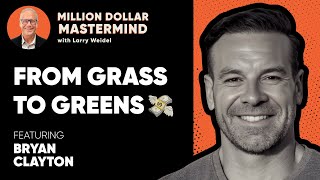
A podcast interview (Million Dollar Mastermind) in which Brian Clayton recounts his entrepreneurial journey from mowing a neighbor’s lawn at age ~15–18 to building and selling an eight-figure landscaping company, then founding GreenPal — an online marketplace for lawn care. The conversation covers founding anecdotes, operational lessons (scaling, hiring, culture), preparing a company for acquisition, product development and iterative, hand‑cranked MVPs, customer-led discovery, and growth strategy (organic/paid channels and metrics).
Welcome to this edition of the million Dollar Mastermind podcast. This is where we pick the brains of high achievers from all walks of life and get their hard earned real world insights on winning. I'm your host, Larry Wydell.
Hello. I'm talking with Brian Clayton, and this is a return interview. Brian, thanks for coming back.
Hey, Larry, it's great to be here, man. Thanks for having me back on.
And you know, for people who don't know, Brian started at 18, and I'm gonna let him tell the story, but he had a, you know, at 18, most of us, I really do not have our act together, but he did at 18 and he went and he made things happen. I still remember this, you know, when we saw you, when I saw that you were rescheduled. Yeah, I still remember the story was so remarkable. But why don't we run through it real quick because this is kind of like a part two, because Brian and I have decided that if we're going to spend time with each other again, we're going to have fun in kind of locker room type talk and, you know, getting, getting real rather than just kind of covering the headlines. So, Brian, give. Bring them up to date on how that happened at 18 and what you actually did.
Yeah, so it was actually a couple years before that. I think I might have been. Been younger than that, 15 or 16. My dad got tired of watching me play Super Mario Kart all day. And he, he said one day, he said, hey, get off your butt. I got a gig for you. You're going to go mow the neighbor's yard. And I told him, I said, I don't, I don't cut grass. And he said, well, you do now. And, and he made me this. I was, My dad was in the military, so this was, this was not a request. It was a direct order. And he made me go mow the neighbor's grass. And, and I begrudgingly did that. And, And I remember when I got done, I got paid $20 for an hour of work. And then in 1996, that was a lot of money. And something like a light bulb just went off in my head. I thought, man, this is awesome. I can just do this. I don't have to hassle my folks for cash anymore. And the first thing I did was I went to my old school desktop computer and printed up some flyers and started passing them out around the neighborhood. And I got like 20 customers that first summer. And I never looked back. I just kept growing that little lawnmower business, kept working it like a video game almost. And over a 15 year period of time, I built it up to a real company. Around 150 employees and eventually 10 million a year in sales. And then that business was acquired by a big national company. And so growing it just being a push mower to 90 trucks, thank God my dad forced me to go mow that first yard.
What branch of the military was he?
He was, he was in the army, so 101st Airborne. And this, this story took place outside of Nashville, Tennessee, in a town called Clarksville, Tennessee, which is near Fort Campbell. Fort Campbell, Kentucky, which is a big, big army army base.
And so was he an officer or enlisted man?
Yeah, yeah, he served in Vietnam. And so he was drafted into Vietnam and then he stuck with it, and then he retired as a major.
If you're a parent, always remember, one of the greatest things you can do for your child is get them as quickly as possible to make their own money. At least one time, make their own money. And they can, you know, they can have that light bulb go on in their mind of this is how things work. And so I wanted to say that. But how did you evolve to where, you know, supervising the people, buying, you know, buying the truck, leasing, you know, getting equipped. There's so many steps involved in that. How big was your organizational structure? It's one thing to have the trucks, it's another thing to have your core group. How big was your organizational team?
Yeah, ultimately the company was around 150 people. And so I had a sales team, I had an ops team. I had 20 middle managers that managed crews and things like that. Three mechanics at one point in time that keep trucks going and lawnmowers fixed and all sorts of salespeople. And it was a big company. And. And how did I get from just me and a push mower to eventually that.
Because you think of it, your dad, you couldn't go to your dad and say, you know, how did you build this great company, dad?
Right, right, right. There was no roadmap. Especially then in the late 90s and early 2000s, you kind of had to learn these things as you, as you went. And it really, it really was kind of like a video game. I just focused one level at a time and didn't worry about anything else other than the level I was on. So. So, you know, it could just, it could just be me and a push mower. Now I know I need some better equipment so I can do work faster. So I need to, I need to save some money, invest in better Equipment, okay, now I've got some good equipment. Now I need a helper, okay? And, and then you do that wrong and you realize that your helper is making more money than you are. Okay, well, I need to figure that out. I'm pricing work wrong. Okay, now I'm going to hire another employee. Okay, now, now here's a big moment. I'm going to get another crew going and it's me and then that crew, okay? And then you do that wrong for a long period of time, you lose money doing that. The, the main kind of common denominator is, is just putting in the reps, trying things out, figuring out what works, what doesn't, and then adjusting along the way. And that never ends. That, that, that, that's something that you're always, you're always experimenting, you're always doing it. You're always figuring out what you did wrong and improving. And little by little, just, just repeat, rinse and repeat. That's how I grew it to an eight figure business.
Well, the thing is, Brian, you and I could stop right now and write 15 books on what you just covered, okay? You know, I think 100 of them.
Have been written, you know, but the.
Thing is when it goes. Because a lot of this stuff just goes over people's head if they haven't been through it. But what I try and tell people on the way up, because they're full of questions. What, what about this or what about that? Or what about what about when I get a 90 trucks, what happened? When I get 900 trucks, what happened? You know, it's just like, wait a minute, you know, you got one problem. You know what your problem is? You need to get bigger next month somehow. You need to make the adjustments that are in your face right now. And all you need to know is how to get better this month, right? And then when the next month rolls around, you know, there's no such thing as from moment. One thing you learned is there's no such thing as momentum. Month to month. You got to crank it up, you know, when the new month comes around. But the thing is like if you decide I gotta, you know, grow or die, and you accept that I don't, you know, I'm gonna grow this month. I don't want to die this month. I like winning. You know, we won last month, I want to win this month. So what do I, what adjustment? And usually it's, it is small, like you said, small adjustments that you keep making. And people say, well, what do I just. I said, whatever your Bottleneck is whatever your problem is, it'll be staring you in the face and keeping you from moving forward. And all you need to do is solve that one and not worry about the future because otherwise you don't solve that when the future won't ever come. That was like one sentence that you said in there. You know, I just wanted to unpack that.
You know, looking at it as, as you don't know how to solve these problems, but you have to experiment your way through. It really is one never ending experiment. You, you may not know why you aren't keeping customers and what's going on, but you need to experiment with, okay, I need to build a customer satisfaction program and a customer satisfaction system. Okay, what might that look like? I don't really know, but let me try these three or four things. And you keep iterating and keep trying and learning what's working, what's not. That's how you get to the result. And the problem is nobody ever gets started because they want to develop and deploy the perfect resolution when in fact, you don't even know what that looks like. And so, and so really you should just be, you should be trying as many things as necessary and figuring out what works in a double down. And you know, I've been guilty of that myself where, where I'll just, I'll just be, I'll just have paralysis because I don't know the answer. So I don't do anything. And that's the worst thing that you can do in business because then a year goes by, two years goes by, and your sales numbers are the same or less because you're not improving. And so it's, it's never ending experimentation.
Well, that's, and that's the thing in business. You're in a, a point. You don't know go left or right, and you don't know which is the way to go. And the answer is go left or right. But take one, and if it's the wrong, if it's the wrong one, it'll probably be obvious to you pretty quick. And how that parallels. One thing I love to do on the podcast is pull out winning principles from all kinds of different walks of life. And this is no different than writers who have told me they get up in the morning are painters or musicians or whatever, you know, they're composing and just write, you know, and they don't work. They're not, they don't worry if it's going to be any good or whatever. You know, we're not worrying about good. Right now we're just getting going and eventually it'll get good if you, but it's never going to get good if you don't get going. And so that's what it, you know, you got to do if you're running a company. And that's what you did, right?
You got to put in those reps and you have to really create that momentum because that momentum creates the, the luck and the serendipity. But if you don't keep that momentum going, it's, it's really hard to, to get new work. I had a saying running my first company, that if you don't have work, you can't get work. And that's how it was running that business. If we didn't figure out how to develop a sales system and keep that work coming in and keep that revenue coming in. And then we reached a hard stop. It was really hard to jump start it again. So keeping that flywheel going is crucial. And the only way I know to do it is just to keep the reps and keep putting the reps in and keep experimenting.
And the thing is that if you're in charge, you need to know if you've got employees, they are watching you like a hawk. They're picking up your attitude, they're picking up your activity. And if you slow down, you hesitate. When you run into problems, you, you know, you're up and down in your energy level and this, that and the other, they're going to copy that same thing. You know, they're going to take you from, from you. And especially any kind of negative.
I mean that happened to me in year seven or eight of my first business. I remember, I remember this very clearly. I was driving to the office one morning at 5:30 in the morning and I had this knot in my stomach. I didn't want to go there. I did not want to go there. I didn't like a lot of the people that worked for me. A lot of our customers were pissed off at us. A lot of our vendors were late getting paid. A lot of our customers owed us money. And it was just a miserable place. And I thought, man, this sucks. And I felt like a victim. I felt like, how did this get so bad? And then I thought, you idiot, you built this. You created all of this. All of this is your doing. You made every single piece of this and all of this is your fault. And so I think as the founder of the business, you get exactly the company culture you deserve. You get exactly the level of enthusiasm from Your people that you deserve, they're marrying your enthusiasm, your customers. You get exactly the type of customer you deserve because you recruited them, you brought them into the business. Same thing with employees. And so it's important for us to remind ourselves of that, that we get exactly the business we deserve, because it's our creation. And a lot of it does start with our attitude and our level of enthusiasm and our mission. You know, us setting the tone and the, and the quality standard for the business. It all starts and stops with us.
Over the years, I'm sure you've had the same thing. A manager or team leader will come to you and say, you know, my people, I just drive me nuts. You know, I need some help on this. You know, my people, they're just not motivated. They, they sit around, you know, they got bad attitudes. They're just boring to be around. And I, I usually break out, start laughing. I said, well, they're getting all of that from you.
You're boring.
You're boring. You're up and down. You're a complainer.
You know, do you really care about what our mission is here? Do you live and breathe it? Do you really embody what, what the mission is? And, and listen, you have to care. You know, you can be like a nice person and, and, or you can be a jerk, but nobody's going to work for you and care about what you're doing unless you have a strong vision and mission for what the business is. And you have to set that. And if you don't, then you get, you wake up in this reality where you have a lot of people that you don't like to work with and a lot of people that have bad attitudes because this stuff has been allowed to fester. And it starts with you. You made a mistake somewhere, and it's important. I had to tell myself time and time again this lesson that everything ultimately has been my doing in the business, and I'm the one who has to fix it.
How did you reach the point where you said, okay, I'm going to sell this thing? And how did that all come about? And the new idea, Was it all part of the same process like we.
Talked about earlier, as you're working through these kind of metaphorical levels of this game, you know, maybe there's 10 levels and, and you're working through them. You are becoming a new person. As, as every level goes by you. If you're, if you're throwing everything in you can into a business, you should be like, unrecognizable to Yourself five years later. And. And that's kind of what was fulfilling me growing the first company. I was learning things like. Like accounting and sales and copywriting and leadership and management, and all of these things I was learning along the way. And I was growing as a human being, and that was like, fulfilling to me. And then I reached kind of a plateau where I hadn't conquered the world or anything in that industry, but the business was doing good and it was profitable, and I had a good team around me. And I was no longer growing. I was no longer. I was no longer getting that fulfillment. And it took me a while to learn that, and I was getting discontent because of that. And so I thought, well, I need to do the next thing. And I don't know what that is, but I know I need to create the space for the next thing. And so one, I need to see about handing this organization off to a bigger one that can take it to the next level. And so from the moment I had that idea to the moment it was acquired was. Was two years. Because the first thing I learned was that I had not built a business that could be acquired. And so I kind of had to take the business down to the studs and rebuild it in such a way that. That a big company would want to be able to buy it and bolt it onto their organization. And so that took a year to do.
Talk about that. That year, and then we'll talk about the next one. Talk about that year. How did you find. How did you find out the missing pieces? And then how did you go about restructuring?
Yeah, Painful. It was. It was really painful. So a couple things. There were probably 20 things, but. But the one. But. But the ones that stand out, the location of the business, I had to move it. I had to move it closer to Nashville, Tennessee, because we needed to be anchored to a major market. And so that was one of the main things. They didn't want to buy something out in the suburbs. Somebody who was going to buy something wanted. That wanted a fit like a dot on the map in a major city. So. So that was the first thing. We had to move the whole organization 40 miles to be closer to Nashville, but still service our clientele down here, and then develop the clientele up here closer to the nucleus of the city. So that was a big one. The way I had kind of built out the org chart was just kind of me shooting from the hip. And so we. We built it where salespeople also manage their own accounts. And that was kind of a weird thing. We did. Whereas every big company, this industry, you had salespeople and you had account managers. And so that was something that we learned talking to. To a guy that sells these companies all the time. He said, listen, nobody's going to buy this thing set up like this. So we had to. We had to hire some more people and put other people in different roles. And so that took a while. And then we had some customers that just weren't good fits for the business. But we held onto them because it was kind of, you know, we didn't want to let anybody go. But the reality was that hard decision should have been made a long time ago. So we had to prune those folks out. There were people in the business, employees that were kind of dead weight that we had to prune out. There were other people that we had to hire in that we didn't have. We needed the head of hr. We didn't have one of those. So all of these things. And the accounting, we were running the accounting just in standard bookkeeper quickbooks, talk to the accountant once a year when these books really needed to be in gap, generally accepted accounting principles. And so that took six months to clean up. So there was just all of these things that I didn't know that I kind of learned on the fly from, in large part from this broker that we hired to help to shepherd us along.
Yeah, the business. Business brokers. But if it's any consolation, you know, this is a lot like, you know, you gotta learn what you don't know. And when in the process of cleaning up, it can happen that. Like when you have a car you've had for a number of years and you say, I'm gonna sell this thing and you clean it up, you polish it up, get new tires, you say, that car looks pretty good.
Yeah, yeah, it starts looking real good. And that's exactly what happened in my case was so going back to the personal development thing. This whole experience pushed me into another level where I was having to make hard decisions. I was having to interview people all over again. I was having to get different people into the organization and recruit them. And. And so it was kind of like another level of the game. And. And so that was rewarding. And then. And then the business was actually tighter and more profitable and ran smoother after doing that. So it was kind of like I fell in love with it all over again. But at that point I kind of like made the decision and it was almost too late. You know, I couldn't go back. And so I saw it through, but it took another year to get buyers interested, get buyers to go. And going through the due diligence period, it took another year.
Yeah. So the first part of it is to do the reorganization and then the second thing is to go back out to the market. And it takes time to sell a company. But you know, Even, even Fortune 500 companies, you know, big companies, hundreds of millions of dollars that come up through the racks, when it comes time for them to be sold, they'll do a similar type process and bring in, but they bring in venture capital people, they'll bring in investment bankers and you know, other companies in the same industry, you know, and they'll, they'll see. What they do is they bring their best financial people with them, right. What they do is ask the questions that matter, you know, at their level, you know, they're on a higher level. And then the, the guys that are trying to sell this thing, you know, they may be a 500 million or something like that, had no idea how screwed up they were, right? But when a billion dollar companies come in, they say, you know, their people ask these kind of questions, they go, oh lord, you know, but they really know how to clean things up. And so it's a common process. And if you're building a company, you can save yourself a lot of time by thinking, you know, in terms of one thing that a company will want to have is they want to have a management team. They want things that are not run, you know, out of their back pocket.
Right.
And you know, the more you can run standard practices and things that people are familiar with, the easier it is for bigger companies basically to absorb. Because it's basically easier for them to see how this could work for, for them. Because they see how it's working for you.
Exactly. They don't want to buy a bunch of problems and they don't want to buy something that's not running smooth. It really kind of has to run without you, the founder. And up until that point that wasn't the case with my business. And ideally at this mid level market, small market level, you work a five year plan to get the business acquired. So you say, okay, I want to sell the business in five years, then you start building it that way. You know, you really don't want to be on the goal line and having to re restructure the thing like, like I had to because it almost cost me the deal a couple of times. And then also the way you run a business that you intend to have acquired at some point is very different than the way you run a business that is a lifestyle, family business. And just, just one quick, like, anecdote of that was, I one time in Las Vegas, toured a Ferrari dealership about 20 years ago. And I remember that Ferrari dealership. I remember seeing the mechanic shop, the mechanic area. And you could like eat off the floor. It looked like a doctor's operating room. And that was just inspiring to me. I was like, man, if this shop is so clean and like, it looks like a doctor's operating room, imagine how good that car is. Like, imagine how good the front of the shop is. And so that was inspiring to me. And so, and so I took that to my little landscaping business. And so we had a big 12,000 foot facility that serviced vehicles and kept our fleet going. And I felt like that if we kept that place clinically clean and organized, kept the office clean and organized, kept our grounds immaculate, that that would translate into the quality of our services we gave our clients. Now, I couldn't measure that. I didn't know if that had any real effect or not, but I probably spent 40 or $50,000 a year maintaining that standard. If you're running a business that you intend to sell, you can probably cut something like that out. And guess what? That's 50,000 times eight. And so you do the math that you, that you basically will get paid more when you go to sell, because you're basically Getting a multiple 5, 6, 7 or 8 on your net profit. So if there's discretionary things like everything I just said that you could cut out, that may or may not necessarily show up in the, on the bottom line or show up in the, in the client offering, you need to do it. And so that was something nobody told me. So there was all kinds of things like that. So, so for anybody out there listening that maybe want to sell your business one time, you need to like, run it by the spreadsheet. Don't run it by the heart.
It's hard to have confidence. If you're thinking about buying a business that's run by a half a dozen super charismatic Rambos, who knows what they do? They just go out there and they get the job done. Yeah, yeah, yeah.
Nobody wants to buy that.
And the thing is, and you know, our people, you know, we're probably talking past where most people are, but it's good to, to think about it. That's a common thing companies do. This is one reason they go into radio silence when they're getting ready to sell. You know, if it's a public Corporation, you, you got to keep your mouth shut. You go to jail because it's stock manipulation, you know, but it's good to go like radio silent when you're right, you've decided to sell. And a lot of times you don't know that if you're an entrepreneur. But you know, to keep your people confident, they don't need to be thinking about it. If they know you're going to do it, you know, they're going to just, it's better smoke and mirrors, you know, and business as usual, you know, keep their eye in the ball moving forward. We've got our targets we're going for and then do all this other stuff. But to cut back and streamline the profitability, it is a common thing that, that people do when they're getting ready to sell. That was a great point that you brought that up to get people that when they get to that point, you know, because we're assuming success on this, when they get to that point, they will have that idea, that awareness in their thinking.
For those of you who are sick and tired of fooling around and are dead serious about wanting to move up fast, I've got something especially for you. I've combined the best insights from over 40 years in business and making $70 million in income and compress them into a free webinar. That's right, it's a free resource. If you want to find out exactly what the concepts are that I use in coaching million dollar earners, Register now@widelonwinning.com youm'll discover the five part framework used by so many to reach their financial, personal and professional goals. You can find that link in this episode's show Notes.
Now let's just talk about the transition. You go from selling and it takes forever. You know, you have many stops and starts and a lot of times it's more nerve wracking than selling a house, of course, but selling a couple hundred thousand dollars house you can have highs and lows and the buyers come back in at the last minute with one thing and another. But selling a business, you pull it off. There comes a time you go to the close, you sign, it's done and there's that last day, you go in and you're not there anymore. You gotta be doing something else. How far along were you into starting the Green Pal, which is of course the online marketplace that for lawn care. How far along into that were you?
So it's a really good question because it's a weird thing you go through that nobody prepares you for. So I had the idea for Green Pal, but I hadn't started it yet. I didn't even know that I was going to because I was really exhausted running the first company for. For 15 years and then getting it sold. I didn't really want to start another intense business like that ever again. And. And so got that done. And then a weird thing happens. You're no longer. You're no longer, like, important. You're no longer needed. You're no longer like the answer to the question, if you. If you get out of bed, if you don't get out of bed in the morning, what then? What? You know, like, my business has always been the answer to that question. And, and, you know, if it wasn't for me, then what. And the, the business is the answer to that question. Well, if it wasn't for me, then these hundred people wouldn't get a paycheck, and, and these customers wouldn't get service. And so then that was gone. All that was. Was gone. And it's a weird thing. It's like a piece of you is gone. And so I really believed that I was going to kind of just being an investor. There's a book called the Cash Flow Quadrant by Robert Kiyosaki I was reading at the time. In one of the quadrants, he talks about the guy who's called the capitalist and this mysterious figure. He's just in deals and he's. Maybe he's doing real estate deals, business deals. I thought, that sounds cool. Maybe I'll just do that. And I tried that for about six months, and it got really boring, really quick. I learned that I needed to have some sort of mission, some sort of goal that I was trying to accomplish, some kind of thing I was trying to tackle. And. And I thought, well, you know, I've got this idea, you know, Uber's doing this stuff for ride sharing. Airbnb is doing this stuff for. For sharing a bedroom. Somebody's going to build a marketplace for the lawn care industry. And I'm pretty sure it'll work. And. And I thought, why can't that be me? And it was very much naivete as an asset. I had no idea how hard it was to pull something like this off. But I just came up with the idea and told two friends about it, and they said, you know what? That's a great idea, and we believe in you. I'll start that business with you tomorrow. I'll quit my job and start that with you tomorrow. And I thought, well, these guys are crazy. Enough to start this thing with me. Maybe it is a good idea. And so we started working on. I remember that first weekend we started working on, okay, this is what the app might look like. And, and we started doing little like, like drawings, what the screens would look like. And then we hired a tech company to build the first version of it. And that was our first mistake. You know, that took six months and almost 100, $150,000. But we, we, we got, we got a little, got a little prototype put out there.
Explain why that was a mistake, because that's a mistake a lot of us make. We're going to hire the tech guys, going to solve all our problems for, for us.
Yeah, we didn't know how to code, we didn't know how to build software. We had never built a website before. We thought, well, we'll just outsource that piece and we'll do, we'll do the marketing piece and, and, and we'll be off and going. And, and so we did that and we pulled together our money and I had taken all the proceeds from the sale of the first company and locked all that down and really illiquid investments, real estate, things like that, because I didn't ever want to go backwards. I didn't want to, I didn't want to ever have to pick up a weed eater ever again. So I was like, poor all over again. I didn't have a lot of cash to put in the second business. And so that was a good thing because I just would have wasted it all. But we pulled our money together and we spent 150 grand paying this dev shop, development shop to build what we thought the app should be. And it took them over six months and, and they gave us the finished product and we tried to release that into the wild and it was just dead on arrival. It had a million things wrong about it. Our vision of what it should be missed the mark of what customers wanted. It was buggy, it was hard to use, it wasn't intuitive. Lawn care guys hated, just had a million problems. And we started to realize that where do we even start to fix this thing? And if we're going to like, change order our way to success, it's going to take 100 years and $100 million. At this rate, it'll never happen. And so we realized that it was naive for us to think that we were going to be in the technology business and not know how to develop tech. And so looking back, it's as silly as saying, I have an idea for a Song I just need to go find a musician. You know, it's like that's not the way it works or, or wanting to open a restaurant and you've never cooked anything other than like the microwave. So we had to learn how to code. We had to teach ourselves how to build software. My co founder went to a boot camp, a software boot camp. It was, it took, look, took like nine months. I, I watched YouTube University for every day for six months. And we learned how to build the whole thing over again, but this time build it in the feedback that customers were telling us. And it goes back to the first business. We were listening to what customers were telling us and baking that into the offering. And that took two or three years, but we finally had something that worked that people like to use and that we could improve upon. And then we got to, I guess you could say we got to first base about three or four years in. And then, and then it's kept making it better and better and better growing it. And now to this day, Green Pals nationwide in the United states has around 300,000 people using it every week for lawnmower.
One thing about, I feel obligated to pass this on to those listening. When you go to a developer, a programmer, I've wasted millions of dollars on this myself. And this is when I had it in my frigging garage, okay? And I had, I threw the cars out and I turned it into a. I had hired the hundred thousand dollar year guys back in 1990, believe it or not. I had my own SQL server, I had my own email back in 1990.
It was a lot harder back then.
Yeah, I went through three, three years of being in my pajamas every weekend, you know, putting this thing together. But what I found was the reason I got had to learn how to build web pages, you know, and the reason why is I would go to the software guy, the guy that I paid for, okay, And I would say, this is what I want it to look like, okay? And then it would always come back totally, completely different. Does that sound familiar? This is one of my younger cousins who worked for me, okay? So I said, come in here. You're going to work in my garage, right? Right here. You're going to come in here every day and I'm going to sit down, we're going to do it one page at a time and I'm going to draw on paper what I want it to look like. The first diagram, simple thing, I gave it to him. A few minutes later, he comes back and shows it to me, it's not even close. I said, edward, see this piece of paper? See what's on that screen? They're not. And he said, they look identical to me. And I thought.
Yeah, over and over and over again. And so until you, you feel like you're going insane and eventually you wind up with something that works and that people will like to use, but you just don't give up, you know, on.
The coding, I will tell people the fastest way I've learned how you learn those. I'm no good at going to a. You know, they got the boot camps and watching YouTube. You. My mind would just. I have to have someone sitting beside me.
Yeah.
And so I do things. I hire the expert come in, sit next to me and say, this is what I want to do. Show me how to do it. And just, you know, no matter how slow you go to learn it, the first time, you got it.
Yeah.
But if you have the experts show you, you don't have to read a book, you don't have to watch it. You have the experts show you exactly what it is you want done without all the other frou frou, you know, and then step.
You got to get dangerously good, just enough to know how it works, how it comes together before you can even begin to delegate this stuff. That was a lesson I learned the hard way.
What was the first thing that you put on your site, the first workable feature? Can you remember back?
The big mistake that most new founders make is they want everything end to end, all the bells and whistles, and then they release it. And I heard a quote somewhere that if you're not embarrassed by your first release, then you waited too long. And so, and so what you really want to do is you want to get something out there that's, that, that's workable, that works, that's got the minimal feature set. And then, and then you kind of hand crank the rest. And so what we did was because we had to rebuild the whole thing ourselves. We just focused on the consumer side of the app. And so we had the ordering system, the place where they could hire their contractor, the place that they could provide their credit card to them, and the place where, where they could see what they had scheduled. And, and that was it. We built those few things and then the rest. It was kind of like wizard of Oz. We were hand cranking it behind the scenes. And so everything that would come in would just get dumped into a spreadsheet. We would let the contractors know, hey, there's a lawn to be Done here, here's the address. How much is it? Okay, it's $45. We would mainly put that in and then, okay, well they hired you. Okay, so you need to be there on Thursday. And so we were just like hand cranking all of the transactions, all of the interactions. And we did that on up to, you know, three or 400 users. And that did a couple things. It allowed us to get something out the door that consumers could use and we could get feedback from them. And then it also informed how the system needed to be built for contractors because we saw how, how what their needs were and how they were, how they would interact with it. So we were able to build the right thing the first time. And that took a couple years to build that whole kind of workflow for both sides of the transaction to where homeowner could list their yard. Contractors would get the opportunity, they put their price in, homeowner hires them, they do the job, they upload a photo, then they approve it, they pay them. Like that took a few years to build, but we would kind of hand crank the gaps along the way.
There's something about reading something, but it's just something about writing it down yourself where, you know, programs in your mind, like what to do with it, what it means. And I remember when I started running an office and we, our numbers started to go and we put out, you know, salesforces in financial services and we'd have leader sheets, competition, scoreboard, leader sheet. And I, I told everybody, I said, I'm going to hand print these suckers until we go over 100 grand a month, which would put us, put, would put us number one in the company because I don't want you guys to think we're some kind of big deal operation. And if you have trouble reading my handwriting, let's get big fast so we can have the secretary type. It forced me to, you know, they like turn in a number and it wouldn't register until I wrote it down. Oh, that guy did that. And then the meaning of that, like he hasn't done that before. We haven't had. And you would probably see like we haven't had business come in from that neighborhood. Like this is the, you know, we just went over 10 yards in that town which we haven't been in before. And those kind of, you know, step by step can dawn on you where you really have your hand on the pulse of what's going on. But there's really no shortcut to that, is there?
That kind of nail it, then scale it Mentality when you're first trying to figure out how something is going to work and how it's going to come together. If you can hand crank the first hundred or thousand transactions, then you kind of know what needs to be built. You also come to discover what your value proposition is. Because when we first started the company, I was starting the company from a contractor's perspective. And as a contractor you always think that consumers only care about the cheapest price and you kind of get jaded. And so we had oriented the offering of what GreenPal is to be the cheapest way you can get your lawn mowed because it's competitive bids. And, and it was our hope to drive down the price. Well, as we were hand cranking this experience, we kept running into the same problem over and over again. Contractor said he'd be there Thursday. He wasn't there Thursday, he wasn't even there Friday. He was there on Monday. So, so it was like, and it was just over and over and over and over again. I want somebody to come out for $5 cheaper. The value was, I just want the guy to show up and do the job when he's supposed to. So, so it was through that discovery.
We got a party on Saturday and I want the yard cut.
You know, please, for the love of God. I mean, I can't tell you like how many times we beat our heads against the wall in those early days trying to figure out, figure out, okay, it's actually not priced. These folks will pay a normal price. They want reliability. And so that early discovery may have saved us tanking the business. Because if we had just tried to automate it all from day one and release one system that was completely done and fully baked and fully baked around this value proposition of price, we would have never discovered that reliability was the real value.
You know, I was building this information system for my financial services organization and I about, I was, you know, about 10% of the whole big monolith. And I couldn't get, I couldn't get them to do it, so I would do it for myself. I harassed them so much, they got to where they said, okay, we'll give you a direct download off the mainframe every day. That's why I had, in my garage and I had all. They said, we'll give you, we'll give you 24,000, you know, information on 24,000 agents, 165 fields every day. And then you can run your own reports, you know, leave us alone, you know, rerun your own reports. Well, I did all that and spent all the money, set it up, and then we have a new CEO. He says, that's such a great idea. Why don't we do it for the whole company? He put my butt out of business.
But.
But it was great. I didn't have to do it anymore. And so, you know, they had me go down to Atlanta and, you know, walk them through the whole process and everything. So I get back home, and they're trying to put it together. And this is like, where I ask you, what's the most important feature? The most important feature has got to be for the most important people you have, which is your customers, you know, so they. They did call me and Rick Kershevel. I never forget. I get a call, and he said, got one question. He said, what's the most important thing that we should have on this? This is a data system for the company. Now, you got people all over the United States and Canada making sales, and the numbers don't show up on the computer at this point until like, two weeks later. So it's like playing the play in the World Series. Month is over, and you find out two weeks later who won, you know, because it's month. Month to month with salespeople are like, you know, who won? You know, did they get that sale, get on or whatever. And I knew it needed to be boom, boom, boom. So they called me and said, what's the most important feature we should have on this? I said, is this candid camera. You call it, you know, is there a camera somewhere in my house? This is a joke, right? And I said, the numbers, Rick.
Yeah.
And you want to know, you know, if you play the NBA, you want it. You're LeBron. You want to know what the other guy, you know, Stephen Curry scored last night, you know, saying. Or Kevin Durant, you know, you want to know who won, what's your competitions? Do it. And I said, the most important thing is the competition scoreboard. Here's what he said to me. Really, it's that important.
I'm living it, I'm breathing it, I'm cranking it. I know.
So. So the thing is that, you know, it's important that you find, you know, you take care of your most important element in there. And this is the customer, you know, and that's where, you know, you had your offer, and then you came in with, you know, to how they could sign up. And then it's the. It's probably the offer, the sign up, and then the follow up is probably what took a While to develop.
Exactly. And starting with that first and then. And then just literally being wizard of Oz for the rest of it. Like, don't even worry about what those systems look like. Just make sure the customer has a good experience. We'll figure out how to automate all this later. But let's start with the best customer experience we can and then build from there and.
Because otherwise they're not coming back. But if you get one customer and they're happy, now you got a customer for the next, you know, X number of years until they sell the house or something.
Something, you know. Yeah. In those early days, it was twofold. One, we needed the customer because we needed revenue, but two, we needed the customer for the R and D. We needed to know what were the features they wanted to see. What, what were they confused by? What do they wish it would do better? Making it really frictionless for them to talk to us was key to us getting through those first few years, building something that people wanted.
So how fast are things growing now, Brian?
We're still growing about 30% a year, even on big numbers. And so that's pretty.
It's amazingly impressive, isn't it?
Yeah. You know, and. And one thing is, is we haven't raised any. Any outside capital. So all of the business has been fueled by its own revenue, which is nice because now we're still in control of it, where, you know, it's just on our cap table was three names, which is nice. There's a. There was a lot of Uber for X ideas that kind of came and went over the last 10 years, and a lot of them raised a bunch of money. And as it turns out, that kind of helped accelerate their demise. Because when. When you raise outside capital like that, you're kind of beholden to put up like 10x growth every year. And if the business isn't ready for that, it's like trying to put rocket boosters on the side of a barn. It just blows apart. And so we were fortunate to not go down that path. And now we're still growing at a good organic rate. We want to get to a million people using it every week. That's our next big goal. And so we're at 300,000 now. We want to get to a million.
Yeah, I mean, you've got some real fun. And you. It's. It's just great to be in a market that has exponential potential, you know, unlimited potential.
It's unlimited. Yeah. And that was one thing I wanted to do with this business was I wanted to Build something that would touch the mass market. My landscaping company was one of the biggest in the state and that was great. But the next go around, I wanted to build something that millions of people could use and that was important to me. So that's one thing that's fun about building this kind of business.
Yeah. And that's something to think about as people are if they're still at the stage of sorting through ideas. Options is, you know, what's the market? What's the market, you know, going to be? What are the competitors in there and all? And do you have a unique take, you know, an I, A unique idea? An idea that's right for the times. And those are big things that you can't get away from. And there's no reason to pour your energy in unless you are convinced this thing because it is like this. It's like the old phrase, give time for your, your efforts to compound and multiply. But if you're in a small box, it can't compound. And right when it gets to compounding the multiplying stage, it's over. You know, Exactly.
You know, exactly. And the guy running the dry cleaning store or the corner market or the restaurant is working just as hard as I am. And so you might as well go after a big idea, something that has unlimited potential. Because business at every level is really hard. You know, a small business is just as hard as a big business. So you might as well go after a big idea.
Yeah. What I always love is people say, you know, back in the 80s, you know, things were so easy, this, that I just don't remember, you know. You know, people were so easy. I don't remember one day where anything was. Was easy, you know.
No. You know, and that's the thing. I mean, when I was building my first business in the 90s, it was just as hard then as it is now. It's always relatively as hard. It doesn't get any easier now. One thing is that some things that are easier today is that you can access any information to do anything. You need to be able to learn how to do like that. Back in my day, I had to send off a paper check and an envelope with a coupon from a trade magazine for some cassette tapes, you know, and that came six weeks later. That was how I learned, you know, some best practices in my industry. Now you learn all that more for free on YouTube. So it is a little easier today in some ways.
Yeah. The sure fire fade way to get your make your business easier is go into a slump Then it'll be real easy, you know, because you're only doing half of the work before. It won't last long, you know. And the thing is, if you're going to be growing, these are the pains of growing, are things you have to deal with. But the thing is, the bigger you get, the bigger the rewards are.
It's more fun, the higher the levels you get. It's just a funner game to play, you know, now that whatever level I'm at, metaphorically, maybe six or seven, it's a lot more fun than levels one or two, let me tell you. And I get to make better bets now. I get to place more interesting bets. I'm doing more interesting things. So it's a lot more fun as you get further down, down the road.
And you're still taking risks and you still take financial setbacks, but it's not like when you did have any money in the bank.
Exactly, exactly. You're just trying to keep the lights on and keep food on the table. It's a lot more fun as you get further on. And that's part of the reward, I think.
Now, as you have gone on podcasts, let's talk about interviews, podcasts, you've done quite a few of those. And what has been that experience for you? What have you learned about what people are interested in and what the focus is out there? What have you learned about winning yourself by being on these different podcasts and exposure to people that talk about business leaders all, you know, as a regular thing.
I hope somebody listens to an interview with me and they. And they come away with, if that guy can do it, I can do it too. And so because I'm just an ordinary guy, I graduated high school with a C. With a C GPA or 2.5 GPA. And so I'm not particularly brilliant or elite at anything. I just have gotten to where I am today just through consistency and not giving up. So I hope somebody can see that and gets inspired to do something that they want to do in life. By the way of me giving interviews and talking about my experiences, building and selling my first company and now building and then transitioning from a blue collar entrepreneur to a tech entrepreneur, I find that sharing those experiences, I get a lot of. I get more out of it than anybody because it helps me crystallize my philosophies, my thoughts, my approach on, on business building and what it is I'm trying to do and where I'm going. So it keeps me on my A game, it keeps me Listening to new, new, new audiobooks, listening to podcasts myself, reading books that I ordinarily wouldn't read. Trying to stay sharp and stay and have something interesting to share. So I become a better version of myself by way of being held accountable to do three or four interviews a week. So that, that's a, that's a huge benefit. And then another piece of it would be. It's impossible to measure, but maybe the exposure helps build the brand for greenpal and helps build my brand. I don't really have a way to close the loop on that, but, you know, maybe there is some benefit there as well. But 90% of the reason is I enjoy doing them. It. It causes me to level up and it causes me to, to crystallize my thoughts and philosophies and then maybe help some people do the thing that they were thinking about doing. Because maybe they, they look at me and say, if he can do it, I can do it too.
I'm sure you know this, but it needs to be restated. For those that don't know. The biggest. At every college, 100% college and university in the United States around the world, the biggest alumni donors are the former C students.
Yeah, that's true. That's always the case.
Because when you're a C student, you realize, you know, you can't cut corners because you could just kind of brainiac your way through it. You're gonna have to work and you.
Got a chip on your shoulder.
Yeah.
And that chip on your shoulder is the thing that causes you to want to succeed and do something bigger. So. Yeah.
So you need to know if you're out there and you say, you know, I just don't have any great intellectual whatever. You know, Elon Musk may be a smart guy, but there's nothing.
99% of entrepreneurs are just, are just doers. They're just doers.
Most smart guys wind up spending their life working for the C students.
That's right. That should be inspiring to anybody listening to this that you don't have to be particularly brilliant or elite at anything. You just need to be consistent and to constantly be pushing whatever it is forward. When you're first getting started, you just need to do two things. You need to build something and you need to get people to use whatever it is, that thing that you built. And if you're not doing anything, anything other than those two things, you're probably wasting your time. You just focus on those two things for five years, you'll have some.
How did you keep yourself on Track. I mean, where did you get your, your mental organization? What contributed to that? You know, like, I remember when I was in high, even in high school, the football team had a guy named Bill Glass came and he was a current NFL player, and he came in with this book he was talking about called Psycho Cybernetics or something by Dr. Maxwell Maltz. Psycho Cybernetics. And basically it was positive thinking, mind programming. And you talked about Jim Brown, the biggest, you know, before the, the game, you know, with Cleveland Browns, he would get. He would go out in the field by himself, you know, and he would go into his, you know, he would put his hands in the grass and imagine running and this, that and the other, you know, all of that. So you know, that you could think your way through, set yourself. Like if someone comes up and insults you or says something, you know, derogatory or infuriating to you, you know, you can control your reaction. You know, it was the educational thing was you don't have to respond, you don't have to lash back in anger. You know, you can, you can look at that and just laugh, you know, and just ignore it, you know. So, you know, it was very empowering. And there were a few things like that along the way. That book, I don't know, made a big difference, but I know I was hearing things, you know, the Dale Carnegie book and things like that along the way. I did do Psycho Cybernetics one time. I remember I was a lousy diver and I was at the pool in the summer and I was over there reading Psycho Cybernetics by sitting by the chain fence. And I got myself all psyched up. I'm going to go off the high dive. I sat over there, walk up. I visualized climbing up, what it would look like from up there, bouncing, diving off. And I actually did it one time. But as soon as I hit the water, the thought that came in my head, don't you ever do that again.
Well, that's great, but you did it. That's what matters.
It worked once, you know, but the thing is that as we grow up, you know, we're influenced by things we hear. And it's interesting what we gravitate to, you know, what sticks to us in terms of principles that. That lead to success. So you had to have some pretty good programming in your mind that went beyond just be consistent and things like that, what anything that, that comes to your phrases you heard. You know, for example, one I heard was great ideas, don't care who use them. And, you know, mediocre leaders are a dime a dozen, but great leaders are priceless. You know, these are things I heard when I was. Anything you can remember?
Yeah. One mantra that, that always made me paranoid that somebody told me when I was starting this second company was, listen to your customers or you'll have none. And that made me paranoid. And so what that caused me to do was two things that I started doing then and I still do now. Where first off, I did all of our own customer support for like four years. Every phone call, email, live chat, I did it all. And then as time went on and we started hiring staff to do that, I still did a piece of it. And then now, still to this day, even though we have 300,000 people using this thing at any given time, I still do at least an hour or two a day of answering the phone for the 1, 800 number or doing email tickets or doing live chat. So I try to this mantra of listen to your customers or you will have none. I try to still let that scare me into getting to a place where there's a big gap between what my customers are thinking and what I'm thinking. So closing that gap by talking to them all the time is what causes me to always stay on track, focusing the team on building what we're supposed to be building, not wasting time on things that nobody wants. And it helps deal with that paranoia of not having any customers one day. So that's something that worked in and still works now.
How far along were you in your current company when we did our last interview? You know, like two or three years ago.
So that would have been. So I think we said that was three years ago. The scary thing is, is it seems like like a year ago, but, but it was three years ago. We were a little less than half the size we are now. So. So we're growing 25, 30% every year. We were at about maybe 150,000, 125,000 people using it. We've, we've. We've overdoed and then doubled. That Covid didn't really help or hurt us. It was just kind of like almost it didn't affect our business. So that was kind of a good thing. And so we hope within the next three years, we'll double again and then double again. So as, as time goes on, you know, these, these big numbers compounding starts to take its place. It's a lot better. When we were, you know, doing a thousand transactions a week, it took us five years to get to a thousand transactions a week. We Celebrated that like it was a million when it happened, because we knew that eventually it would be two, then it would be four, then it would be 10. Now we do 10 a day. And so it's something that, you know, you always want to feel like, oh, look how far we've come. But it's always day one. I mean, it really does feel like day one. We've got a long way to go in terms of how much, how many lawns are getting mowed and how we want green power to help power those.
Yeah, well, everybody's arc of success is different. And that's part of the fun of going through it. The things you figured out, you figure out. Would you say there's any one or more really big adjustments you've learned to and made over the last two years that has really helped propel the growth, you know, kept you from flattening out and allowed you to keep the compounding, because that's a lot of growth.
You know, everybody always says, well, what got you here won't get you there. And so, so what the hell does that mean? And so. And so you always want to be looking for new things to get you. To get you to the next level. And so we did that, and we subscribe to that. That notion of what got us here won't get us there. And so, so two or three years ago, we started looking outside of what our core competencies were for growth. And so we started looking at ways to get new customers through paid media or paid channels. And we started looking for ways to invest in, like, PR and stuff like that. And it was a mistake. We should have just really doubled down on what was already working. There was so much more white space and what we were already doing, and we should have just reinvested in the things that were already working. So we had to spend two or three years, like, not wasting, but. But making bets and other things that didn't pay off to realize that we should have just invested that money, what was already working, and continue to double down on that. So an example for us is we're the easiest way in the United States to get a lawn mowing service to come mow your yard today or tomorrow, even if Your grass is 4ft tall, is the easiest way to do that without making a phone call. And we decided, well, we want to offer snow plowing and we want to offer these other services. And really, in fact, we should just focus on our core competency. And then how do people find out about us? Well, okay, you type in lawn mowing service nearby me Green pal pops up as like the number one or two option. And we should have just focused more on that rather than trying to figure out a way to get Facebook ads to work or something like that. So figuring out what you're the best in the world at and then, and then doubling down on that is what's helped get us to where we are today. And we believe we'll get us as far as we can until that starts showing signs of not working anymore, which it hasn't yet. So we, we gave up on that too, too early and diverted our firepower in places that, that, that didn't pay off, give us roi.
Doubling down on search spend rather than coming up with ads and you know.
Because other channels that weren't proven out.
Yeah, you know, that's one of the dangers that you'll always have in business. You know, it's like climbing a tree, staying on the main branch, going up. It's easy to get diverted out on a side branch and you go too far out, fall back down to the ground, you got to start climbing up again.
Exactly. And, and it's okay to make bets, but don't run the risk of ruin and don't, don't go too far out onto the branch, so to speak. And you need to make bets to experiment and figure out if there's something there. But if it doesn't prove out, revert course, come back to what's already working. Double down on that. Whereas we went a little too far down and wasted too much time on things that weren't working.
Yeah. We had a CEO who used to say, you know, you always should have new beachheads, you know, new frontiers that you're trying. But the thing is, keep a hard look at the numbers that's coming from it.
Right.
Just getting, you know, don't get enamored with a romance of now we're going to be doing the snow plowing, now we're going to be doing, yeah, we're going to be clearing driveways on the moon, you know, or some kind of, you know, with the exact things that, you know, you can't measure and make turn into expanding your company right now. And so as you, you know, you, you've been out and been had the chance to go out and speak live. How, how was that for you?
A little nerve wracking. And you know, it's like one of those things that you, you wonder, is it, you know, by the time you prepare and you, you do it and you deliver, the talk is, is it Worth it is there Roi there? And it goes back to, you just gotta, you just gotta want to do those things. You just gotta love doing those things. You gotta love sharing your thoughts and, and philosophies and, and don't worry about closing the loop on, on Was it worth it or not? I think, I think when it comes to things like interviews, podcasts, blogging, contributing on Quora, doing live events, I think it's just something that you need to enjoy doing as a founder because it's really, really difficult to figure out was it economically worth it or not. That's something I've always tried to remind myself of.
Well, and it can open doors. You know, it's like every opportunity can open. You never know which one. And if you don't open the door, you don't know what's on the other side.
Yeah. And especially I heard somebody smart the other day say that a lot of new CEOs, the determining factor on whether they're going to get, you know, that big CEO job or not is going to be determined on their, their social media presence, their online profile, their ability to garner attention. I don't know how true that's going to ultimately be, but that's, that's a strategy and a, and a thought and a, and, and, you know, mentality that that's definitely something that's new in the last five or 10 years is that it's not necessarily dependent on are you the best candidate. It's also dependent on what is your, what is your personal brand look like, which is kind of interesting. So, you know, whatever that's worth.
You have brought up an interesting point from all the way to the Elon Musk. You know, you see Elon Musk on Twitter, you know, Richard Branson, Martha Stewart on a podcast. You know, you have, you know, all of these things. People are out, they've realized they have to have a high profile if they want to be a leader. They have to be out there, they have to participate, they have to be participators.
Exactly.
Someone's calling you to speak or inviting you. You know, you need as much as possible, as long as you can afford to, to be a yes person, as long as it fits in with your, the values of the company and the audience is, is where you want to be. You need to be. It's like any opportunity. You need to be more yes than no when those opportunities come.
I agree. It's kind of like dieting, you know, or working out in the gym. You could go to the gym every day. For six days and then look exactly the same on Monday. But if you stick with it and you constantly make those deposits after a year, that's when you start to notice, okay, wow. I'm in a different reality now because I've constantly been doing the interviews, I've been doing the live speaking opportunities, I've been doing the blogging, I've been, I've been, I've been doing guest posting. I talk to a reporter when they want my opinion on something. If you do that for a year, then you kind of realize, okay, we've leveled up because of all of these things together.
Absolutely. Well, thanks so much, Brian. This has been fantastic. And I knew we would kind of get a chance to dig deeper, but we really got into a lot of the specifics that you go through, you know, when you're running a business. And hopefully we got some giving people some things to think about. I always like to give my guests the last word. Do you have any one last parting comment you'd like to pass on to the people who have stayed with us this long?
Yeah. You know, one thing that kind of dovetails into one thing we talked about was you think in business that, you know, like, okay, if I just make this higher and I solve these two or three problems and I get this one customer and I fix this one thing on the website, then I'll be good for a while. Then I can just kind of breathe easy and I'll be, I'll be set for a while and life will be easy for a little while. And the reality is, no, just because you solve those seven things, that means you get to solve seven more things. And it's a never ending problem solving kind of experiment. And I think if you can embrace that, it can help make it more fun. But just know that just because you solve, you beat one level of the game, that means that there's a whole nother level with a whole new final boss and that it never ends. And that's what makes it interesting. So, so embrace that and know that that's what's coming.
And know that the next seven that come along, you're going to have the experience of solving this seven as an experience base. So you're going to be a smarter guy, you know? Exactly.
And that's the beauty of it.
And so this has been fantastic. Thanks so much. Look forward to rendezvous back down the road and hearing about how you went over the 1 million.
Sounds great, Larry. I really appreciate it. We'll come back on when we do that.
Thanks so much.
Thank you for listening to this episode of the million dollar mastermind 5. Commit to your personal and professional evolution.
With our free training video. It's designed not just as an educational session, but as a transformative journey for.
Those bold enough to aim for the stars.
This isn't just any webinar. It's a roadmap to achieving the extraordinary.
It's tailored for those who dare to dream big. And yes, it is, is completely free.
Join us in a network of ambitious.
Professionals ready to take their careers to a new heights.
Secure your spot now at whitel on winning.com and let's unlock your potential together. Thanks for being part of this community.
More from Larry









Rick Jordan on Self-Engineered Proximity, Cyber Security Moats, and Truth-Based Leadership

Fire Fast or Fail Slow: Kevin Brittingham Reveals the One Rule That Built a $100M Empire
