How A Rookie Marketer Conquered The Luxury Space with Ben Askins
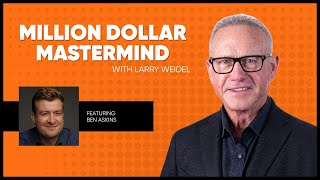
Interview with Ben Askins (guest) on the Million Dollar Mastermind podcast. Ben describes his path from an accident-prone start (Latin & Greek degree) to co-founding a luxury-focused digital marketing agency (started at age 22), growing it over ~9 years (company Verb), selling it in 2021, then founding a green-tech SaaS company (Gaia) launched end of last year. He explains tactics used early on (doing free work to build credibility), pivotal client wins (e.g., a breakout blogger and Bugatti), leadership lessons (delegate, avoid founder bottlenecks), personal habits (clearing inbox every Sunday), and how he built a large personal audience via TikTok (~650k followers in ~8–9 months; ~25M views/month). He also runs a weekly newsletter with career advice and was named to Forbes 2020 (marketing). Closing advice: embrace changes in work culture (hybrid/remote), focus on practical leadership that motivates teams.
Questions this video answers
22
2021
Launched formally at the end of last year (end of 2023—per interview timeline)
About 650,000 followers in ~8–9 months (started March previous year→~9 months)
About 25 million views per month
Welcome to this edition of the million Dollar Mastermind podcast. This is where we pick the brains of high achievers from all walks of life and get their hard earned real world insights on winning. I'm your host, Larry Wydell.
Hello, everyone. We're talking with Dan Askins and he's kind of the leader, one of the leaders of the new generation of leaders around the world making a mark in business. So welcome, Ben.
Wow, that's quite the intro. Very, very, very nice to be here.
Yes, sir. And you know, you've had a lot, you've traveled a lot of roads, made a lot of progress in your early career in business and in reputation, contacts, dealing with global brands. And I'm sure you picked up a lot of valuable insights about what, you know, the way the world works and the way the world doesn't work and how to be successful out there. And because, you know, this is a big company, all the way down to individuals, the principles of winning and making the right choices come down to a lot of the same principles that work consistently over time. And the quicker you can learn those things, the quicker you can start being productive yourself. So when did you get started on your entrepreneurial business leadership type adventure? What was going through your mind at a young age that sent you in this direction?
Yeah, it's really interesting. I do get asked that a lot and I'm kind of what I'd call an accidental entrepreneur in a lot of ways. So I was all set to go down the sort of more traditional job route, as it were. So at university I did work experience, found this insurance company which I quite enjoyed, did a little bit of work there, and they got offered a job at the end of college or university and I was all set to do that, moved to London and then the company was bought that I was about to join and so kind of left with nothing to do. So sort of had already moved to London. And then I met a guy called Chris who was my business partner of my first business. And he sort of said, look, I'm, you know, thinking of doing this thing. And I said, that sounds absolutely amazing. We couldn't have had less of a clue, but we decided to start a digital marketing agency. So I was 22 at the time when I started this. So we decided to start a digital marketing company that essentially provided marketing for luxury and premium brands. And so we set our store, had a tiny little office and slowly grew it over the next eight, nine years. Really?
Did your partner have experience in digital marketing?
No, neither of us did. So he had sold a few websites to make a bit of money at college and I had, I did Latin and Greek at university. So our experience on the digital front was absolutely diddly squats.
So how do you go from diddly whatsoever? How do you go from diddly squad experience and track record, plus you're young. To getting deals with these global brands, you know, Jimmy Choo and Claridge's and you know, these big global brands, the Aston Martin, Omega Mayberg Hotel Group. How do you go and get your foot in the door there to do marketing for them? Seems like they would have shown you the door.
Yeah, well, I think the lucky point we had was we were so low down that the only way was up. But essentially we started off by doing things quite small. So when you have no experience, no background and nothing, you've got to build up credentials. That's kind of step one. So for us, we were young, money wasn't an issue for us at all. So we're very fortunate there. Had no dependents, had nothing like that, very much on a student budget. And so the opportunity we had was to build our credentials. So we started off by doing work for free. So we'd go around and say, look, we'd give you, we'll do the free work for you, we'll give you a website, we'll give you marketing support, whatever it is. And in return, all we ask is you give us a shout out on your socials, you give us credit on the website, et cetera, et cetera. And we used that first wave to kind of build out our initial set of clients. And then off the back of that, we started to leverage those clients to start charging people initially, which was a very exciting moment. We still remember those first paid jobs and to slowly start building out the sport from there. So every sort of raft of clients would then fund the next round or next step up from a sort of size wise. So you don't go from nothing to Aston Martin, but you start off with like small blog sites, you then start work with small businesses, then you start working with medium sized businesses and slowly sort of build out your portfolio that way. So there was no sort of real trick to it, it was just slowly identifying who we wanted to work with and slowly sort of building up our raft of clients from there. Really?
How did you get the idea that would even work? Where did that come from?
Yeah, so, I mean, to be honest, it was our only really real option because we were young, we had no experience with no real skill sets. And so we kind of had to do it that way because genuinely there's no other reason why someone would work with us. So we had to do it that way. It was our only choice. But we'd understood, you know, we worked, you know, we had a good understanding of like how people worked. We'd seen a couple of agencies in our space be sold just before we started and all of that sort of thing. And we just used that to slowly leverage it and build it out from there. And so it kind of was our only route to success really.
Yeah. So the point there is seeing a living, breathing model you would like to be yourself really gives you a head start towards patterning, you know, building those patterns because you can see it happening before your eyes and you see that it works because they're successful and it's easy to believe that this could pay off for you. Was it frightening at that time? Was it what kind of emotions do you go to? Because there's, you know, because you went to that and you went through that to where you were start being able to build. And how long did that take by the way?
So we sold at the 2021, so it's about a nine year journey. All in. We sold Verb. It's interesting. I was never afraid in the early days. I think I was so clueless I didn't know enough to be afraid. If you ask me now I am a lot more scared in my entrepreneurial journey I am today than I was at 22 when I. You want to make of that psychologically? I don't know, but I'm a lot more aware of the decisions that I make. I guess it comes, you know, you go from incompetently incompetent and things like that. And for me I was so incompetent and so clueless, I didn't know enough to be afraid. Whereas now, you know, I'm far from the finished picture. But I have enough experience to recognize that some decisions I make do have wide reaching consequences. And so I'm away more afraid now than I was back at 22. The one big advantage we have was we're a service based business. So I always say this. A lot of young entrepreneurs say, you know, what should my first business be? I always say get in the service base because you don't need investment, you don't need funding, you don't need anything to get up and running. You can bootstrap it hard. And because if you're young, you often don't have the credentials, you don't have the appearance to kind of People trust you with money. To fund a company, you have to bootstrap it. It's very rare you get funding or certainly funding at an acceptable deal. And so I always recommend a service based, like a digital agency, like a sort of, well, any sort of service base, because that's the best way to get your foot in the door from an entreprene perspective.
And one thing that you did right, that I like to point out, was you did not look for a handout or someone to come bail you out. You didn't like, stay on the dole and wait for other jobs to, you know, the economy to shift and jobs to come back. You went on the, you know, you figured out this is our only option. No one's going to bail us out or solve our problem other than ourselves. And you dove right in. What do you think caused you to have that up take charge type approach?
Yeah, I don't know. I think it goes back to you're weirdly confident when you're young. Sometimes you really are, like, overly confident, I would say, in a lot of ways. And I think for us it was just a case of it sounded fun, it sounded interesting, it sounded exciting. And when you're young, those emotions matter, right? You know. Well, like I said, you know, go back to when we were, we had no dependence, no why, you know, nothing that, you know, with, you know, we were completely free in that sense. You know, we're very lucky. I think it's one of the advantages of being young when you start a business is you don't have the pressures of a mortgage and all of that sort of thing. And so I think when. So when something gets exciting, you're really happy to work hard on it. And so for us, it wasn't a sort of negative perspective. Oh, what we're going to do, our backs against the wall. It was like, no, actually we really want to do this. And we think we never thought we were crazy, right? No one thought, you know, how's your little business going? How's your little company or how's your little whatever. Everyone used the word little for the first two, three years of our journey. And it was only after we kind of established, people started to recognize what we'd built. So I think people laughing at you is a big motivation, like wanting to prove people wrong. I remember a couple of networking events early on where agencies who are much bigger than us would sort of go, oh, you know, they treat you like the kid brother, right? Which is nice in a certain way, but gets quite patronizing. Quite quickly. And so that was always a driver for us, just being that and super, super competitive, I think, which you have to be in this sort of world, really.
Where'd you get the competitive streak?
Having three siblings and playing a lot of sport when I was younger.
I suspect playing sports at early ages are great trainers for so many things you need later in life. You know, learning to deal, work with a team, learning how to deal with defeat, learning how to compete in a game situation with a clock running, getting behind, coming back, taking charge and that. I find there's a lot of people who, they go through their formative years without being in a competitive situation of some kind, kind of at a disadvantage. You know, it's almost like prepares them to be an employee because when you're out there on your own, you got to compete, you, you've got to, you got to find that fight inside yourself. And it sounds like those, your networking events did you a big favor by putting you in front of people that could kind of hold you in contempt and let it be known they didn't think much of you.
Yeah, it does. And those little things have an. I still hate networking events. I mean, I don't know many people who love them, but even now, and I think it probably does go back to those few early car crashes where we would go, you know, very proud of our business and people just completely ignore you, basically where it's interesting. So I still don't like networking events. So I do find it interesting how those early lessons in your career really do stay with you. So now, you know, a lot of the sort of rules and guidelines that I set myself very much come from either horrendous mistakes I've made or experiences where I felt particularly powerful, either positive or negative emotions and basically just never want to sort of go through that again. So. Yeah, no, I totally agree with you. And I think sports, sport for me has always been outlets. I'm one of those people, you know, if I want to de. Stress my long day exercise for me has always been that, that thing for me. And I, I find running incredibly boring, if I'm being honest. So for me, team sports is the natural answer to that. So. Ye. Totally agree. And growing up with brothers and an active family, it, you know, it stays with you for sure.
When you say rules and guidelines and I set for myself, what's the first thing of those that would come to your mind?
Yeah, so I. So the first one is every Sunday, without fail, I clear my inbox. So my inbox is my to do list. I'm very strict about what emails I respond to and what emails I get cc'd in and all that sort of thing. And that comes from the early days of the business where I completely lost control of my inbox and I felt like I was drowning under messages but didn't hire quick enough and all that sort of thing. So for me, I sort of decided that every week I start Monday morning with a clean inbox. That's just what I do. It's just how I center myself, how I get ready for the day. And I don't think I've ever missed that. I really haven't. Even if I'm on holiday, whatever it might be. So that's like an obvious example of something I do every week without even thinking about it. It's just I won't be able to sleep as well as I could if I didn't do that. So it's just stuff like that which sort of get ingrained in with you, where. Because a lot of people go, oh, you've got to like, be disciplined. I kind of. I agree and I disagree with that. I think discipline comes from something that's naturally ingrained with you. If you're always working on discipline, I don't think you have discipline. I think discipline, you train your body to do it, that you just almost do it without even thinking. And that's kind of always been my view about things like that.
I couldn't agree more. Because it's like you grow into these disciplined behaviors automatically from an internal desire to, you see ways of making things easier for yourself or less pain for yourself or to offload stress. And you wind up doing it because, you know, it makes, you know, you, you, you realize this is going to make my life easier. And so you're not doing it because of some commitment you made to discipline or to obey the rules. You're doing it because this has got a payoff for me, you know, And I, I'd rather do that than not, you know, start the week under the, under the gun with a pile of emails hanging over my head, you know, and so that's a great point.
And I think it goes. I think you have to be smart about it as well. I mean, another good example is I hate morning meetings. Always have. I've never, always struggled to get going in the morning. I've always done late nights. I always have. I find it easier to work in the evenings, things a bit quieter. I get a lot of my thinking done then, and so I kind of set my day up for that. You know, I try and get a lot of the sort of easy tasks out in the morning and know that I do my best work after lunch. And that's not, you know, I don't know, would you call that discipline or would you sort of recognize that that's just me understanding how I like to work what's best for my business and going through the motions like that, I.
Think that's one of the keys to being successful for a long, a long run. You know, you develop an approach to life and business and projects that suit you that you have discovered fits you and where you can be the most productive. You know, that's the whole idea. How can we get ourselves to be the most productive and have the best attitude too, you know. You know, or be going to these networking events, you know that this always puts me in a foul mood and then I've. But I'm going to go to them. You know, it's just, you know, you find the things that put you in a good mood and people put you in a good mood, the situations you design, the systems. And I think that's where a lot of good disciplines kind of comes from.
For those of you who are sick and tired of fooling around and are dead serious about wanting to move up fast, I've got something especially for you. I've combined the best insights from over 40 years in business and making $70 million in income and compressed them into a free webinar. That's right. It's a free resource if you want to find. Find out exactly what the concepts are that I use in coaching million dollar earners. Register now@WlonWinning.com you'll discover the five part framework used by so many to reach their financial, personal and professional goals. You can find that link in this episode's show Notes.
Now let's talk about how you got your. Talk about some of your first big breaks in the. It's one thing to start a business, be able to make a living and say, you know, get paid. Hey, we got paid. But then when you make you get some big breakthroughs, it's like, hey, we could be big at this. You know, it's not. We could just, you go beyond. We could be successful. This, we could be big at this. You know, we're getting some really powerful recognition clients. Where do some of those great big breakthroughs occur for you and the, what'd you say, nine years of that? That stage?
Yeah. So it's interesting, I can pick three or four clients which were moments for us. And I recognize a business on moments. I don't really look at time, I look at stages. And individual clients kicked off the new stage for us. There was one, you know, one, a very early one. We did a lot of free work for like these bloggers and this blog. One blogger just took off. She just became unbelievably famous. It was one of the most visited websites in the uk and that wasn't really anything to do with us. That was a huge break for us because we'd done nothing beyond build the infrastructure and done a little bit of the marketing. But actually it was all her who kind of blew up. But she absolutely blew up. Everyone saw our website and we started to get huge in and dates from brands saying, oh, we really admire this person. And that was our first big break because it was our transition from like small blogging, small businesses to first proper businesses who wanted to kind of work with us. The next one was a brand called Bugatti. So that's obviously a famous car brand. For us, that was a really iconic moment because we beat out a lot of these big players. We kind of established. We were always like the sort of the young agencies sort of scrapping for it. And that's the first time we went up against the big, big agencies in the UK and we absolutely wiped the floor with them because, you know, they. I think we get to a point where if it's a huge opportunity for you, it's less of an opportunity for people who are a lot bigger than you. And that's your opportunity, right? You can take it more seriously, you can put more hours in, you can. You can make a lot bigger effort. And so for us, I think our big breaks were recognizing those moments where, hey, or if we got this one, that that's a new level for us, that that's where we really sort of go into this next sort of stratosphere of what we're aiming for. So I think for us, it was two or three clients along the way that sort of symbolized a moment where from there we grew very, very quickly or had a huge growth spurt off the back of that client because we're always very good at leveraging our wins into new business. And that was one of the few things that we did quite well. There are many things we did terribly, but that was one of the few things we did really well was leverag to kind of build on that and go bigger and better the next year. And so I think for us, that was one of our big moments for sure.
It sounds like you found that the extra effort you put into the preparation showed up that the client, when you did your presentation, they could tell who was taking this more serious than the next person. And that's really an advantage in up and coming firm has they. You don't think about.
Don't.
Do you?
Yeah. I think there's two things I always say to people when I go into these meetings is one is people really care. If you've made an effort, that goes a hell of a long way because people can feel it, they can see it and if you feel like they, if they feel like that you're taking them seriously, it makes a huge difference. As opposed to someone who lazily put something together. It feels very templated and things like that. The second thing is how much they like you. It really does make a difference. I always say this to people in the sense of how, how, how you make people feel carries a hell of a lot of weight when it comes to business decisions. Like you think it doesn't. You think every company goes, we have an amazing procurement process. We, we always make these decisions on X, Y and Z factor. But it is amazing how much it comes down to. I just get a good feeling about these people. I like these people. And it can be the most technical, scientific decision that with all the templates and I've sat in those meetings and people fill out forms on whether this company's good and they give them a mark and a score. But it is amazing how much it comes down to how do you make people feel about you? And if you get people exc thing, if you get people feeling good about it, that carries a hell of a lot of weight in business because it's a personal relationship. Even for these big tech digital companies.
I think that's a big point Ben, that they're big companies, but they're people at big companies and relationships matter and they so much a business in life is who's likable and who's not. It's like who gets the job, you know, who gets, you know, who gets the, you know, who's elected, you know, who are the voters going to. First sort you can do is like who's the most likable candidate. And maybe they're both dislikable but you say who's the least dislikable, you know. But you know that those people, those relationships, those likability. It's amazing how that comes down to something as basic as that, isn't it?
Yeah, it's amazing. But it also kind of makes sense because these relationships, you talk to these people a lot. If it's a big client or a big piece of work or a big project, you have to talk to people a lot. And so people are sitting there going, if I'm going to spend the next six months of my life talking to this person, you know, two, three, four times a day, why not pick the person who makes me laugh or I quite enjoy or I find quite interesting or I find quite easy to talk to or all those sort of things. So it makes complete sense when you actually break it down, even though it sounds wild when you say these massive. Because a lot of companies are quite faceless, right? They go, oh, it's, you know, BT won this account or, you know, whatever it might be. But actually people make those decisions. People find you exactly like you say. So, yeah, I mean, it kind of makes complete sense. So I always say, like, never underestimate, just have building a nice relationship with someone because, God, that above, that gets you quite a long way.
What did you learn about business and being a success in business? As you got exposed to bigger and bigger and more and more successful companies, did you notice things about how they went about their business and find things that you can incorporate or that inspired you?
Yeah, I think the trick when you're so. It's amazing how often you see an entrepreneur, he starts a business, it goes very well, it gets to a certain point and the company just stalls. And you know why it stalls? It's always the entrepreneur and it's always the founder because they've not let go. I think the delegation element for us was absolutely key because we realized very quickly on there are some things we were very good at, some things we could manage to do and some things we were just awful at. And the best thing we can do is to hire people to do those bits were all flat and to delegate so you can focus on the next level. And so for us, like getting. I remember there was a year where we stalled a little bit and it was because we were trying to do everything and we were a bit worried about investing in the future and we, you know, we've been sort of holding fire and hiring a few key positions and then we just thought, no, this is ridiculous, let's take a slight hit, let's hire to these positions, let's focus on growth. And we had our best year ever. So the delegation element for us, I just can't overemphasize how important is. And recognizing you can't do everything, you're certainly not good at everything. And if you allow yourself to be a bottleneck, that's the quickest way to stall a business.
When did you co found the. What is it? Gaia, the green technology company.
So I co founded that. So I sold my business in 2021. I had a two year earn out where I worked for the company who bought us for two years. And so I founded Gaia at the end of last year. So we launched formally. Yeah, end of last year.
Now this is a, a software company, is that right?
It's a green technology company which is a completely new space for me. So my first business, luxury digital marketing. My new business, green tech, it's very different but for me it represented an area I find absolutely fascinating because green tech is one of the most fraught, like politicized, argumentative spaces you can be in or certainly the green side, not the technology side. And so for me I found the whole input and I find the arguments that people have around these conversations completely flawed and I really do. I think there's way too much pressure on the consumer and I think there's way there's nowhere near enough pressure on governments to make these decisions because it's very easy to go, oh, businesses are evil and they're just ruining the environment. And I go, well hang on, it costs a lot of money to just change things voluntarily. That's just not how anything works. The second thing I say is everyone always goes, oh, why is the CEO not just prioritize the environment? I said, well if he did that, he'd be fired by the board of directors by lunchtime. So you can't just do that. It has, it has to come from government and it has to be sustainable from a financial perspective. But the argument I really dislike is I've never understood this logic of, oh, you either pick the environment or financial success. There's obviously a space in the middle where you can make something sustainable work but also make it a financial success. So we set up Gaia to essentially fulfill the promise where governments roll out new climate and green laws and regulations and we build products that allow companies to achieve those rules and regulations. So we're a SaaS based business, we've got a couple of different products, but yeah, it's a really interesting space. I've had a lot of arguments with a lot of different people around. It's a very heated discussion and I'm sort of circling the middle, sort of trying to, you know, herd cats into the center to kind of recognize that everyone's kind of arguing about the same thing, but everyone's so impassioned about it that no one's really listening to each other.
How do, how do you evolve from those involvements to where you've developed such a big voice for. Become a champion of the younger generation in the workplace where, you know, you have such a wide following of 500,000 people across a variety of platforms, talking about companies, managers, making money the right way. How do you go from that kind of background to that kind of influence?
Yeah, so it started off, I was starting to see some really. So I'm obviously, you know, my first business was digital. I'm fairly abreast of the social platforms. I understand how they work. And I was seeing this weird trend of bad business advice. You know, obviously hypocrisy of me saying this whilst on a podcast, but I think the sort of podcast approach to business damaged things where people realize that instead of. Basically what happened was a huge raft of people decided that instead of doing the hard graft and actually starting a business and making it a success, you could just rent a podcast room and pretend you've done it. And you start throwing out these sort of weird business advices. And, and there's a. There's a group of people in particular was just offering this really poor advice, but they had hundreds of thousands of followers. And so it starts off quite extensively. I would just like read, watch some of these videos and just react to them and explain why they were wrong, basically. And it kind of built from there. And then people starting to message me about their, like, work bosses and they complain about their work and their bosses. And for me, you know, when you. The more people you have, the more important like motivation is. And for me, I've always genuinely believed that if people like their job, if they're motivated, if they've got a vision, if they've got good leadership, if they're kind of up for it, if they're paid competitively and all that sort of thing, your business does better. It just does. But it's amazing how companies think and companies agree with me, but then still go out of their way to kind of, in a really basic way, hack off their team, do some really basic mistakes, like. And we're talking some big hitters as well. I heard this amazing one where one of the big four firms here in the UK had a big pay rise. They gave all their juniors a pay rise and the partner announced it, said on the call, you know, I don't think you deserve it, but here's your pay rise. I mean, Obviously you're just. The only reason we're doing this is because, you know, we have to because of the market, because I don't think you deserve it at all. And you think, my God, you've just unmotivated a whole team by giving them a 20% pay rise. That's the most idiotic thing I've ever heard. Like, what are you playing? And, and so I just started to read out some of these stories and explain why I thought they were wrong, what I think a business should do. And I do try to. I don't. I think people think I just like hate bosses. Like, I don't hate bosses, I just hate bad bosses. Because I'm a big believer in, you know, and it's amazing. I sit in front of these managers, I say, do you think people do better work if they're happy or if they're not happy? And they go, happy. I go, then talk me through these last four or five decisions you've made because it looks like you're actively trying to make them quit. So I'm always a believer of give people a good environment because I think it's the right thing to do. But I also am a big believer in that genuinely helps your business because I've run a company with a motivated team and I've also run a company which had unmotivated team in stages and let me tell you, it was a hell of a lot easier when they were motivated and up for the fight. Really.
What platform did you make these let your opinion on these situations? You know what, write a blog or you put on LinkedIn or what platform did you are using where the word got out about.
TikTok? Yeah, no, TikTok was the big. I do post on other platforms now and I'm starting to launch new channels. But yeah, TikTok was the big one for me. So I think in, yeah, about eight months I jumped to 650,000 or something.
Really? And how long would these. Would this be you and video talking through something? Is that how you would do it? Very simply, low tech.
Yeah, just camera set up. At home I have a guy who helps with editing. So yeah, once every two weeks I'll film a batch of these stories and people send me the content. That's kind of what's amazing about it is a really. In a weird way, it's kind of more low effort now than it was at the start because people send me stories and so I just re read them out and react to them. But it's amazing the power of the Personal brand I've been quite amazed by in the last year because, you know, my, my videos get about 25 million views a month now, which is more than a lot of news channels. Like, it's amazing how much these brands can really help grow your business. But also you sort of get your voice out there and you know what you stand for and what you believe. So it's been a journey these last of eight months or so for sure.
20, 25 million.
Yeah.
Oh, these are numbers that are just hard to relate to, aren't they?
Yeah, it's wild. And you think it's just, and like you can imagine a stadium of 25 million or a, you know, me like think how many, think how many people that is. It's, it's hundreds of thousands of hours of people watching me just kind of rant about bosses on. It's wild. It's, it's a whole new world out there. And you know, people in the States, it's Australia, it's South Africa, it's not just the uk. So yeah, it's, it's been, it's been kind of wild when you actually break it down and think about the numbers.
Wait, you know, that's kind of like more than all of the people in all the stadiums of all the games of the World cup or something.
Yeah. And think about what like, yeah, what, you know, think how much it costs to, you know, attract 25 million viewers to a TV show for example. Or. And this is just simply me and my video editor just talking in, in the kitchen of my flat basically.
Now when you, how long are these videos? What, what have you found is the most effective length for those TikTok videos?
So tick Tock as a platform is definitely pushing longer form content. So Tick Tock started off like 10, 15 second like fun reels. They're now definitely moving. They're definitely moving in on, you know, sort of Instagram and YouTube and, and sort of take market capital and that kind of push towards long form content. YouTube in particular. So about two to three minutes long now, each video.
Okay. And so two to three minutes would be the long form. And are you finding a better response from those than you had earlier on or about the same?
Definitely. I think people, people do just buy into, I mean I, I do a different types of content but one, I talk about worst bosses and read a story outs, those definitely do best. But you know, I think it's important to try new things. You know, I posted an 8 minute one once and that did very well. So you Know, it's good to mix it up, but yeah, definitely the longer the better. Seems to go be going that way actually.
Amazing that anyone could have that kind of spread or that kind of impact. And you said eight months. All of this is a recent phenomena.
Yeah. So I start maybe nine now. I started end of March last year, so nine. Nine. I guess now.
Really now. What do you think? How did you get recognized by Forbes? Was that for your digital media work? Like top under 30 recognition there?
Yeah, so that was for the. My first business verb. So we were the class of 2020. So me and my business partner, you know, very, very honored. But we were in assigned the class of 2020 for marketing, which was, yeah, a huge, huge honor for sure. It was very nice moment.
And do you. How does something like that, how big of an impact does something like that make? Does that lay the groundwork for. Give you credibility as you start your green technology company, as you start with TikTok? Are these things all pretty much different?
Yeah, so I always describe it as moving the boulder. You know, my second business is a hell of a lot easier. I mean, it's hard in a lot of ways, as all businesses are. It's a new space. But the knowledge that I have for my first business makes it so much more straightforward and the profile I have, you know, we, we raised funds for this first for the second business. And the reason I was able to raise funds was because I had the credentials of the first business. You know, I would never have been able to do that for my first company. So, yeah, it makes a huge difference. And it's about getting the boulder, removing. You know, the hardest point is day one, day two, day three. Those are the hardest times. The hardest pound to win or the hardest dollar is those first few that you win. And it just gets easier and easier and easier as soon as you get the ball rolling. And that's not to say it's ever easy because I think that's the wrong word. But it gets easier. And so for me it adds credentials, things like that for sure. It's obviously a nice gratification for myself. It kind of tells me I'm on the right track, which I think is important as well, and kind of keeps you motivated. But I think it was a moment for sure. You know, we described moments I think people sort of recognized, you know, that was a moment where everyone went, oh, wow, they've got an actual business that's not just, you know, a little hobby, side hustle, whatever you want to call it. That's a legitimate business and it's being recognized by, you know, a famous publication. So it was a very nice moment, for sure. But I think those moments are important because I think entrepreneurs in general are quite bad at recognizing how far they are because. And it goes back to everyone trying to win, win the week one nil. They sort of go, oh, this week was good, or this week was bad. It's like, actually, no, in a week you'll have lots of small wins and lots of small losses. And as long as your wins outnumber your losses, you can take that as a win. Whereas if you kind of put it all or nothing, you're going to end up disappointed in a lot of weeks of the year, I'm afraid.
One little specific question about TikTok posts. How often are you posting? You say once every two weeks. You get together and do a batch of these. How often do you roll them out?
Once every day. And that consistency is really important. If anyone's looking to grow on social. Step one is just being consistent and not being too fussy because your first contact. I'll just tell you now, even if you're really proud of it, your first few efforts are going to be terrible. You know, I look back at what I did nine months ago and it's just. It's just cringy. It's so embarrassing. But I don't delete them because I think it's important to kind of recognize how far you've gone. And I've no doubt I'll be sitting here in a year saying, looking at posts that I did this week going, well, that was embarrassing. I can't believe I was doing that. So, you know, there's a great phrase that I love, which I comment with. One of the big marketing firms came up with was, you know, you can't do your hundredth without doing your first. And I really do buy into that. You know, sometimes you just have. There's no perfect time to do something. There's no perfect way to do something. Sometimes you just have to get cracking. And I'm a big believer in that philosophy.
And there's really hard to be good at anything until you do at least 100 of them, you know, and I learned that early on and now as you. When did you start your newsletter?
I started my newsletter end of last year. Towards the end of last year, yeah.
So that was before the TikTok adventure.
So no, so it was just after. So since TikTok's kind of blown up, I've started to establish new channels. So my newsletters. Newsletter 1 I really enjoy doing, actually, I do like writing. It's not something I get to do too often at the moment. So I send a weekly newsletter giving career advice out to younger generations.
And what you do are people. You're responding to messages that people leave for you, questions they're leaving for you. You're just a Q and A type thing.
Yes. You know, you sort of start to find your voice. But essentially what I do is I pick out one of the stories that someone sends to me and establish a theme from that and then I write a piece about, you know, go to a little bit more detail, try to give people more exercise. I'm a big fan of practical advice. I think it's very easy to just say like, oh, quit your job, or you know, just do something you love and throw out cliches like. But actually what people need is, you know, here are the three ways I exercises I do to work out what you would like to do, or here are the. Here's the process you should do to actually quit your job. You know, it's things like that which I think practical advice is often lacking online. And so, you know, my newsletter is my way to try and fill that void a little bit.
Yeah. And how do people get on your newsletter?
So if go my LinkedIn profile or my. Any of my social platforms, you should see the link there and you click on that and you can subscribe straight away. And it's completely free.
Yeah. Fantastic. So where are you, where are you speaking from today?
I am in London, where I live just south of the river in London.
Now you have an affinity for Greece for some reason and you, you speak passable Greece, Greek, as far as I understand. Where does that affinity come for? Come from?
So I, I spent 10 years of my childhood living in Greece, so when I was 2, my dad's job took us out there. So I lived there TILL I was 13.
Yeah. And any, any aspirations to living there more permanently in the future?
So. So I mean, Greece, we go there every year with, with my family is the Greek islands are by far and away my favorite place on earth. It's just one of those locations that just feed your very soul. You know, the food's amazing, the people is amazing. It's not a place I don't think I will, certainly not in the near future I will live there. But that. It's a place I will never not go to because I just find it the most incredible place on earth.
I've never, I've never heard the Phrase. The Greek highlands, I've heard. The Scottish island, I've never heard.
Sorry, sorry. The Greek, the Greek islands. Okay.
I was, I was going short circuited there for a minute.
Yeah, yeah, yeah. The Greek kilts are not what you'd like, right?
Well, I appreciate your time. I wish you the best in your new adventure. I'm looking forward to circling back and touching base with you in the future because I feel like you're going to, you're going to learn a lot of things, you're going to help a lot of people. And what would you say is the main pain you went through? Our sacrifice price you had to pay. There's always a price you have to pay for success. What would you say? You look back, what is the biggest price? Sacrifice, painful type things you had to force yourself to go through, or maybe you went through no choice of your own, it just happened and you had to endure it. What would you tell people.
For sure? It's my personal life. I lost contact with friends who I've been friends with since school. I lost contact with a lot of family and I actually made a conscious decision to course. Correct. So it was about five, six, seven years in, you know, me and my business partner, we recognize that actually, you know, although we were on paper very successful, so monetary perspective, actually we both recognized this wasn't long term, it wasn't worth it. And so for us, we made a conscious decision to spend more time with friends and family and all of that. And we've never regretted that decision. You know, even if you, you know, knocked a little bit off the valuation, the company, we decided that actually, because that's success. Right, but what's the cost of success? And I think what the cost is, is an important decision and a question to ask yourself because, you know, people go, I want to be a millionaire. And you go, okay, would you accept how many millions? You know, how few millions would you want if you also got to do this and this with your life and enjoy that part and if you'd be happy and all that sort of thing. So the cost of success is something I always get people to think about because, you know, I've lived and breathed and I know how important it is. So for me, I was quite lucky. I was able to course correct and save some of those relationships where I lost contact, but there were some I didn't. And that's the price I've definitely paid. So for me, I do think about that a lot and recognize the importance of carving out that time for you as much as it is for your business.
Great words of wisdom. I wish you nothing but the best. Ben, do you have any parting, One more bit of parting insight to pass on for all of the up and coming high achievers, motivated people who've been listening to us.
Yes, the working life has changed forever and the entrepreneurs that are going to be the most successful are the ones who accept that and not try and keep it to the way things were. I think the next few years are going to change how we recognize work life culture and work life balance and what people want from their jobs. And I think the entrepreneurs and the businesses are the most successful are the ones who are going to embrace that rather than just fight it.
So what would the big, what would the big distinction be in someone who embraces that versus someone who doesn't?
I mean, I think, I mean, Covid tore up the rule book, right? You know, working from home and establishing remote working changed the rule book on how businesses work. And I'm seeing a real trend at the moment of and a disconnect between teams and like what bosses and entrepreneurs and founders want to. And people want founders and entrepreneurs want people in the office. And a lot of people don't want to do me in the office five days a week. I'm a big fan of hybrid working. I think that works best for all involved. But the businesses that are going to struggle are the ones who don't recognize the world has changed from what you were used to. And I think for me, the advice I try and give is the best entrepreneurs in the business kind of embrace change and go with the flow. If you try and fight it, you always lose out in the long run, I think. And so that's kind of my parting thought, I guess you'd say.
Yeah, it appears to be a losing game to fight the way the world is headed. It's hard to win that fight by yourself. It's better to get yourself in the middle of where the momentum is and let it work for you rather than against you.
I think.
Ben, I wish you.
Exactly, Exactly.
I'm amazed.
Likewise. It's nice to meet you.
I'm amazed that you're following. I'm excited about what you've learned so far and I'm excited about how you're using it to impact other people in a positive way so early in your career. And so I know that's going to pay big dividends for you. So congratulations.
I really appreciate that. That's very kind and thank you so much for having me on.
We'll look forward to talking down the road. Thanks so much.
Looking forward to it. Take care.
Thanks for listening to the Million Dollar Mastermind. If you felt there were any valuable takeaways from this episode, please take a minute and leave us a five star review. Your feedback is important and really helps us get the word out to a wider audience. Remember, we have a valuable webinar that is absolutely free. Register for it right now@whiteallonwinning.com thanks for listening.
More from Larry









Rick Jordan on Self-Engineered Proximity, Cyber Security Moats, and Truth-Based Leadership

Fire Fast or Fail Slow: Kevin Brittingham Reveals the One Rule That Built a $100M Empire
