How Alan Went From Washington to Mentoring with Alan Pentz
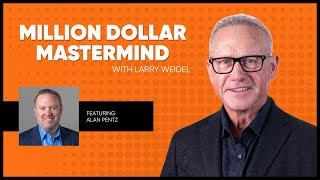
Alan Pitt moved from Capitol Hill to founding Corner Alliance, a consulting firm he scaled by obsessing over labor efficiency and treating the company as an asset to sell. Now he mentors small business owners through his podcast and is writing a book on public-private partnerships.
Questions this video answers
$21,500 (circa 1995)
University of Texas at Austin (MBA, started in 2000)
Corner Alliance
The Small Business Mentor (podcast; newsletter at smallbusinessmentor.co)
Winning the Long Competition: The Key to the Next American Century
Welcome to this edition of the Million Dollar Mastermind podcast. This is where we pick the brains of high achievers from all walks of life and get their hard earned real world insights on winning. I'm your host, Larry Wydell. Great this afternoon to be able to talk to Alan Pitt. Hello, Alan.
Hey, how are you, Larry? Great to be here.
Where are you talking from at the moment?
I'm just outside our nation's capital, Washington, D.C. in Chevy Chase, Maryland. In a basement in Chevy Chase, Maryland.
Well, that's all the intelligence network needs to know.
It's an undisclosed location.
Undisclosed location. So we're going to have fun talking today about your adventures inside the behind the scenes with so many of, you know, like big companies, but also the government and inside that world. And so talk to me about when you started out. It's always interesting to hear, Alan, what people started out in life, interested in and thinking they were going to do and then how they work their way into what they're actually doing. You know, sometimes.
Where do you want me to start, Larry?
Like, yeah, let's dial it, dial it back to, you know, a lot of these probably when it is, when it, it's formative, even when you're a kid, you know, and it's good for people to hear about because everybody's got kids, you know, and so it's good to know what's going on in their minds, which a lot of times is absolutely amazing. Yeah, yeah.
I probably wanted to be a fireman or something or astronaut. It wasn't anything amazing. But I guess I can start in the professional world post college. So I say now, after seeing ChatGPT, that I was at the first revolution, which I saw in the computer lab back when we had those at college. I saw them load Mosaic, the first Internet browser, onto the computers there, followed by Netscape. So I said, this is the future. Did an email for the first time and promptly went to Washington D.C. and got involved in politics. So I completely missed it. I knew I should have done something. I should have gone to Silicon Valley. I'd be a billionaire right now, Larry. But I went to D.C. instead and I worked on Capitol Hill for several years.
And so what kind of work were you drawn to? At what stage of your life was this?
Yeah, when I just Post College at 22, 23 and I was pretty into policy and politics and I thought, you know, I was going to change the world and all that kind of stuff.
So you can make a difference.
Yeah, yeah, exactly. And find out that that was not the case. But, you know, yes, that was how I was marketed us.
Well, you probably did make some, you know, everybody, you know, I think, you know, I'm sure you made an impact, you know, to some degree. But, you know, even, you know, even if you're. I learned this a long time ago when you're a CEO of and you know this, you're a CEO now of a corporation, the bigger it is, much less a bureaucracy. Whether you're the president of it, it kind of runs its own thing. And for you to get out there and you raise your hand and we're going to do this, we're going to do that, it's like, yeah, yeah, good luck.
Yeah, exactly.
Good luck on that one. Everyone applauds and lets you go back to sleep and then they keep doing what they, they've been doing, you know, but so why were you interested? You know, how did you get interested in policy and things like that? That's, that's a different kind of interest level, which whatever that interest was, is probably why you went to Washington rather than Silicon Valley.
Yeah, I know. I guess I was always somebody who was really interested in history. I was raised by. My father was a lawyer, but almost became a history professor. So I had that kind of in the blood. Lots of debate at the family dinner table. So I think I didn't quite know what I wanted to do when I graduated from college. So my now wife moved down here and she got, she had like some kind of internship. Geez. Like, hey, there are all these legislative assistant people on Capitol Hill that I meet and they don't seem any smarter than you, so you should go get a job there. So I did.
Yeah.
Got the job. Yeah. So.
It'S pretty interesting how those things evolve. I'm out in ASPA today and actually got my first trip up the mountain and in spite of being covered by face mask, helmets and everything, I look like I've laid out in the sun for three hours in the equator.
I heard you guys got, what aren't they getting like three feet out there? I mean, the snow sounds incredible.
You got a lot of. But it's been, you know, a week or so ago. But some more is coming this weekend. It looks like we're going to get batches of, you know, 4 inches at a time every day, which is ideal.
You know, but I would rather be there than in a undisclosed basement in Chevy Chase, Maryland. I play that much.
Well, when you got interested in politics, the policy. What about it? What about it? Did you felt like, you know, I was Going to tell you, I'm right next to the Mezzalona restaurant here in town. Everybody knows. And back when he was speaker of the the House, Paul Ryan came by our table and, you know, loud rest. And I said. I said something to her, hey, Paul, blah, blah, blah, blah, blah, you know, and he. He came in and stood there for, like, 20 minutes talking to us. Turns out his grandmother, he grew up coming to Aspen, and his grandmother had a place here. And when he graduated from college, he was going to be a ski bump for like, two or three years. And his mother heard that, didn't even say anything to him, but she negotiated and got him a job as an intern in Washington. So he never got. She never let the ski bump phase get. He said, I went into Washington as an intern and I never left.
Yeah, that's right. In dc, we call it the vortex. Once you get a job in dc, you're stuck here forever because there are no other jobs like that in the rest of the country. And somehow you just get sucked in. So my advice to people moving here is get out in the first couple of years or else it's done. You're here forever.
When you get in, it's like people joining the military or. So that's what my dad did. He got kind of warped by that, and that was the only place for him forever. But dc, it's an interesting thing that you don't know you're getting into as a kid when you go to dc, that there is a vortex. I'm sure there is. It's real?
Oh, yeah. Oh, yeah. It could be very profitable, though. So that's a good part.
Right. So what was fascinating to you about that? You know, when I read your bio and you're in consulting and marketing and all of these things, it's like, what was the fascination there? Because there's gotta be fascination that you don't find other ways. Adventures you get to get into and, you know, electricity running because of certain projects, and you get a chance to be around. And what jumped out to you?
Yeah, I mean, I think for, you know, specifically working on Capitol Hill, it's a. It's really about the intellectual interest. It's certainly not for the paycheck when you're on Capitol Hill. I think my first job, I made $21,500 in, like, 1995 or something like that.
Really?
Yeah. It's barely survival wages.
Wow.
So, yeah, it's not for the money. I think there's a lot of intellectually interesting issues, and you get to learn a lot about stuff. And especially for young, to be honest, I kind of, I kind of downgrade the job a bit. But you learn a lot very quickly. And as a young per, you know, the whole, the whole hill, most of the hill and a lot of our government is run by 23 year olds. So you know, for a smart, young ambitious person, you get to meet a lot of people at a different level than you would in probably most other jobs. And it isn't, you know, it's not a cubicle job. There's all sorts of stuff, although you're probably in a cubicle. But it's pretty exciting. I mean there's a bunch of stuff happening and you get to jump from issue to issue and yeah, it's fun.
Speak about that than much of the government is run or the world is run by 23 year olds. You see that in the Navy on these battleships you have these multi billion dollar airplanes and computer systems and then you have these 20 year old kids in charge, you know, and basically flying the jets too. So what, what, how did you see that and how, how quickly did you realize, you know, you, you could get in kind of an influential position and you know, run, run some things that would be, you know, exciting.
Yeah, I mean it's, it's a lot of fun, like I said. And there were receptions every night so you could eat free at you know like the dentist convention or whatever it was who were on Capitol Hill. And Yeah, I mean I think the reason there's a lot of young people is because it's a lot of hours, you don't get paid much. Other people aren't going to put up with that. But you know, and it was a great thing. For a few years I worked on both the House and the Senate side and. But you know, by the end I had really seen the writing on the wall. It was not a place I wanted to be long term. There's a, you know, I saw some, I saw some lifers there and it was a pretty scary picture when you looked at them. I was like, I don't want to be that guy.
So what kind of options popped up to you and which, which had the most appeal?
Yeah, I mean really, you know, the normal track is to work your way into, you know, a prominent committee with or leadership, member of the leadership. And then to make the jump to K Street as they call it. And the lobbying, I had looked at that. I ended up at the end working for a senator named Max Baucus who was taking over the finance Committee in the, in 2000. And you know that, that was certainly a prestigious role. You know, they cover all the tax writing and do all the healthcare stuff. So yeah, that would have been the path. But really that siren call of technologies was still there that I had rejected back at that computer lab. So I left in about 2000 to get my MBA at the University of Texas at Austin. And I wanted to leave government behind. I was done. I wanted to go out into the bright world of tech. And so yeah, landed down in Austin and got off the Hill.
Yeah. So when did that lead to in terms of business and employment and a real, other than education, a real new adventure.
Yeah. So, I mean, I went down to Austin in 2000 and if you can do the math on a two year MBA program, you realize that I graduated during maybe the worst tech recession in history. So Austin was pretty devastated in 2002. So there were no jobs in Austin and there were no jobs in tech. So I had a great time there. Love the school and Austin's such a great place. But you know, I had to crawl back to D.C. the vortex sucked me back in and my now wife had a job up here and we came back up and it was at that time, it was post 9 11, pre Iraq war. So the administration was spending a lot of money on government consulting and contracting. So that was really the one job hiring in the country it felt like for MBAs and ended up working for a small company that was doing what they called back then, eGov, working on some projects that, you know, to be honest, my company, my main company today still is involved in. So we, we were helping the federal government, had a lot of, was working a lot at that point on getting interoperability for public safety communications. So it's like, Right. You know, post 911 there had been a lot of problems with police and fire being able to talk to each other during the towers coming down resulted in a lot of firefighters dying because their communication systems weren't interoperable. And so I ended up working on a project to try to help that. And that's morphed over the years through different permutations into a bunch of projects that my company's still involved in.
It's interesting that your early years did not yield a bumper crop of networking contacts that would have lots of jobs, you know, because that's what you would assume.
Yeah, it could. Well, if I had stayed and. But, but having left and gone to Austin to get an mba, I did, I did consider going back to the Hill, but I was like some weird person. They were like, look at an mba. They'd be like, what were you doing that for? Like, that makes no sense to us. So I was really, I had really like morphed a little bit so that I was no longer really a political person and they didn't understand what I was doing. But I had not yet become a full fledged business person because I still, most of my experience had been on the Hill. So I was sort of caught between two worlds there.
Yeah, the. When did you first get into a situation where you were really challenged?
Oh well, I mean that, that's all, that's all through. But you know, I'd say the, my, my journey as an entrepreneur really started when, you know, I was working at this company and it was, it was a small government contracting company up here. It was bought by a much larger company and then, you know, through that process kind of lost the culture it had had. So it was really, for me, I started out owning businesses because I wanted a better place to work and still do the work I was doing. So a partner and I decided to strike out on our own about 17 years ago, I guess and founded my main company Corner alliance then. And it was really, you know, it wasn't some great idea. It wasn't, you know, like a hole in the market or anything like that. It was simply I wanted to work on, I wanted to keep doing the work I did in the environment I wanted. And it seemed like setting up a company was the best way to do that. So I really kind of stumbled into entrepreneurship and so that was my first real challenge was like, what do I do now that this job I had that I like was kind of changed because of the company I was working for, selling and then kind of setting up my own thing after.
And so it seems like that was when you first started to really use your, you know, the consulting and the other you really started to use that mba. Maybe not the training, but the outlook and the fundamentals and different way of looking at things which you wouldn't have no reference point if you had just remained a policy geek or something, you know.
Yeah, well, I say actually so I think an MBA is really great at teaching you how to be a mid level finance person at like a Fortune 500 company. It's not real great at teaching you how to run a small business. So like I said, I started the business with a partner. We were really just government consultants who happen to own a company. But over the year we did that. We were mostly billable, doing our own doing the work ourselves. Um, we were really almost 1099s in a sense. But we, you know, over time we added a couple of people, we got a little more work. But it was really about four or five years in that I had to learn how to run a business because you know, like I say, at that point I didn't even know how to get into our bank account. Like we had a back office person doing all that and I was just billable with clients all day long. Um, but then, you know, we weren't doing projections, we weren't looking out at, you know, we weren't doing monthly financials, nothing like that. And one day we realized, oh, you're gonna lose, we're gonna start losing money. Cause like a contract had changed and we lost some of the work on it and you know, we started losing money and we started going and we started putting money on the line of credit to float people and all this stuff. So that really started what I call my journey from being a consultant who happened to own a company to being a business owner who happened to own a consulting firm. And it was really through a process that took me time. It's still going on today, probably five, 10, five years. Three. Three to five years to really learn how to run a small business and how to make it successful.
Well, the, how much of the consulting work is collaborative? You know, you said it's something I like to do. And you know, in the first company, the culture changed or whatever. So how much of that is collaborative, done with teams? How much of it is done? You know, you're the lone ranger running in there.
It's 100%, it's all teams. Yeah, there's very little sitting in the back office analyzing things. You know, it's, it's really a collab, you know, it's a, it's a professional services gig. It's client based. And it's all about, you know, working with a team and having good relationships with clients. So it's really, it's, it's not, it's not a profession for the introverted or uncommunicative.
Well, how did you get, you know, there's a couple of things I wanted to talk about, but how did you get good at it? You know, when you came in, how did you get good at it? Because you're not going to start, you know. And when did you find out you really liked this work and you had to be in the process getting good talk about that? That process.
Yeah, I mean, I think some of it was a Natural ability. So, you know, I think I realized I was good at sales and, you know, professional services is not selling widgets or software, but I was really good at developing client relationships and figuring out what the client needed and building a relationship based on that and then building it, you know, really building a team to get them what they needed. So I think. I think for me, it was. The process was about me figuring out what I was actually good at. And I think for a long time, you know, I probably thought of sales when I worked on Capitol Hill as like being Willy Loman or something, you know, pedaling. Pedaling stuff door to door, which now I think is really cool and people should do. But at the time, I would have been like, oh, I'm not going to do that. Yeah. So I think going into consulting and, you know, getting into business, I realized, oh, yeah, I am actually good at sales. And sales is like the most important thing to be.
And so sales is the most important thing of consulting.
It's the most important thing of business, Larry. If there is no customer, there is. There is no business.
But at some point, you've got to do the consulting. Because the great mystery of consulting is, what in the world are they. They doing? You know, what are you.
You know, like, they're looking. They're taking your watch and telling you what time it is. Right. No, I mean, I. To be honest, like, a lot of consulting, particularly in the federal government, is really just outsourced intelligence.
Yeah.
So you're really just doing the job that they can't get their own employees to do. And particularly in the federal government, you have a lot of that because of the hire. There's pretty severe hiring restrictions, and it's very difficult to hire people. So they usually. And they can't fire people. Right. So if they have a program that's going to go on for three to five years, they actually don't want to hire a lot of federal employees because they've got them for 50. Right. So to be honest, a lot of it is outsourced labor. Just.
Right.
Pure and simple.
How did you go through the process of realizing what, you know, what was your impression of what this consulting position was going to be involving with you? And then how long did it take for you to realize what you're telling me now is mainly going to be about sales and everything? How long did that happen and how much. How different was that from what you had? A preconception?
Yeah, I mean, I think probably during business school, I learned a lot about consulting, and it's one of the top three professions. So yeah, probably had a good idea of it. But I think when I got in, realizing that, I think why I was good at it is because I could understand what the client wanted. Even though they weren't telling you in detail what they wanted. Right. So it's about this reading people, understanding how to ask them questions to clarify. And I think for me, I have a pretty good framework for thinking brain. So like I'm always, I'm always listening to something to try to understand the overall framework of what you're talking about. And so I can put it in context, which sounds a little, you know, it's a little abstract, but, but for me I need to know, oh, what's the architecture of this that we're talking about? And then I can see where your request fits in that and figure out how to help you build to that architecture. I think there's, that's, to me, that's what great salespeople do. They don't just, they don't just ask you stupid questions. They're actually like trying to understand who you are and exactly what you're after and how that fits in with, you know, the organization you work in. Like, what does that mean when your boss, how is your boss gonna act like, you know, if you buy this versus that? What's the actual. Like, are you, you know, there's a famous thing like, are you, are you looking for a screw or are you looking for a picture to be hung up? Right.
Yeah.
So what's the ultimate goal of what you're trying to do? I think that, you know, to me, the great salespeople are just people who know how to read someone get the detail of what they're trying to really say, even though they can't maybe articulate it them.
For those of you who are sick and tired of fooling around and are dead serious about wanting to move up fast, I've got something especially for you. I've combined the best insights from over 40 years in business and making $70 million in income and compressed them into a free webinar. That's right. It's a free resource if you want to find out exactly what the concepts are that I use in coaching million earners, Register now@wdellonwinning.com you'll discover the five part framework used by so many to reach their financial, personal and professional goals. You can find that link in this episode's show Notes. Now, are you dealing with the. The entrepreneur, is it? I guess it's a forest. You Know, you can't see the forest for the trees type thing when you're in the middle of the, the battle. A lot of the, a lot of the times the to do list accelerates, especially if it's a well run company, it grows and then the problem with when it grows is things that you outgrow the systems and you know, the workload that your existing situation can handle. And then it creates all kind of confusions where people are doing two or three different things. Other options are coming up, you have to sort through them. You got to handle today's, probably got to meet today's deadlines and it can get over, you know, quickly get overwhelming in well run companies. And so what you're telling me is that the value that you bring to the table is helping them see, you know, like the, the forest for the trees type thing just kind of, and.
To be honest, that's sort of what I've focused on and now being more of what I consider a business owner and an investor rather than a consultant. You know, to be honest, I haven't done government consulting for like five or six years now. But even though I own the company, but you know what, what, what I felt like I had to learn to get out of, you know, talked about that time when realized, you know, we were, we were losing money and realized we had to run the business in a different way was I had to go from being, you know, a consultant, operator, like so think about it, from general business, not just mine. Like I had to go from really being the guy who did the work that I would call, I would call that being an operator. You're kind of like in the middle doing everything and you're the hub and everybody else is a spoke coming to you. I had to evolve from that to becoming really a business owner. And to me that was, that was really about building a team that could handle. So it wasn't hub and spoke anymore. There was a team that was managing the functions of the business across that then was reporting to me as a, as a leader, as a CEO, right? So that to me was going from operator to, to owner. And then I think the ultimate, like the transition I'm going through now is going from where you've built, you know, a team to really, you know, crafting that team over time and building them into leaders where they have teams and you become what I, I consider the investor where really the company is mostly self managing and you're now looking across your company, other options, other investments and figuring out where to allocate your capital where the market's going. That, to me, is sort of the journey I've gone through is like being that person in the thick of it to being the person building the team to manage the business, to now being the investor who's looking across multiple options and quite frankly, helping other people do what I did to build their businesses.
Well, what's been the biggest help to you personally in going through that transition and the other transitions you've. You've had to go through?
Yeah, I mean, I'd say the number one thing that. So. So when I was losing money, this is probably 20 mid 2010s somewhere around there. I was not sleeping well. And we all know that, Alan. Yes, exactly. As the debts racking up on the line.
Yeah, we all know that phase, unfortunately.
Yes, yes, yes. And so, you know, I spent a lot of time searching around there. There was no lesson in business school about personal guarantees on credit lines. Right. They didn't teach you that because you were going to be at Disney with their massive, you know, bond portfolio or whatever. So, you know, I think for me, I started searching around for somebody to help me.
Yeah.
And I found a guy named Craig crabtree talking on YouTube about how to run. You know, he talks a lot about finance, but he talks a lot about a concept called labor efficiency and how labor is the lever that creates productivity in companies. Taught you a whole system about it. Anyway, it's not important what the system was. Um, but I was like. It was like a ray of sunshine coming into my dark room where I wasn't sleeping, and I was like, oh, this guy's telling the truth. Like, this is amazing. And ended up hiring him. And, you know, I've. Greg's been a mentor of mine for 10 years, but really that was the entree for me into business education, peer groups, and mentoring. So, you know, I joined the Entrepreneurs Organization eventually. When we got larger, I joined Young Presidents Organization, ypo. And what's the president?
What is. What is the president? What is that one?
Ypo, Young Presidents Organization. It's, you know, business Owner Group. A little bit bigger qualification to get into than Entrepreneurs Organization. And so those are really peer groups where I met other business owners. I didn't really know other business owners at that point and did a lot of education. I've done masterminds, I've done courses. I. I read a lot. And. And so it really took that peer group, being with other business owners to realize, oh, yeah, I'm a business owner now. So all the, all the. All you know, and like, Greg has this great line that, like, once you get to gross margin, all businesses taste like chicken. And so, yeah, you can have all this different stuff in cogs and, you know, you have materials or not or labor, high or low, you know, but by the time you get down there, everything's the same. And so I could learn from people who ran manufacturing companies or other things. So it was really that peer mentoring and the knowledge I got from learning days at EO and. And going to. I'm doing this entrepreneurial master's program that's part of eo. That's where I really learned the concepts that helped me turn around the business. And frankly, we've grown it quite large now and we're on a real tear. And it's all because of that learning.
What were some of the biggest light bulbs that went on for you from that process or in that environment that you can remember other than, you know, you went from doing to getting the job done, you know, and, you know, running the company that does the job rather than doing the job yourself, you know, that's the entrepreneur myth that, you know, I've got a company, but really I'm the only guy working there.
That's right. Yeah. Yeah, you got a job.
Yeah.
You just happen to pay yourself.
Right. So what would you. Other than that, you know, where you got the picture of, you know, which is important. You got to get the picture in your mind of what you've got to be now. But what are some other things? That kind of light bulbs that came to you from that, you know, that kind of origami out from that, you know.
Yeah. I mean, there are three main things that I think are crucial for me. The first was what I mentioned with Greg, which is that all business is about applying labor to problems to create productivity for customers. Right. So labor is what it's all about. The cost you pay for it, the leverage you get out of it, all that and then kind of related to that. So I measure that very closely, and it's a benchmark we use throughout all the companies that I'm involved with now. But related to that is the concept of that. There's a guy, Brent Beshore, is a great. He has a kind of permanent hold private equity company. And he said all small businesses stay small for a reason. And my corollary to that was, and it's because of the owner, and it's because the owner won't make the decisions they have to make. And those decisions almost always involve poor performance of team members and or not just poor performance, the inability of team members, particularly leaders, to grow as quickly as the company grows. So I think a fundamental insight was the, you know, it's the people who got you here won't get you there.
Right.
And every time the company doubles or triples. You know, my estimate now is 50 to 75% of the leadership team needs to turn over. And that was a harsh reality that I did not want to deal with for a long time. And I said my company didn't grow for several years because what was the.
Breaking point where you absolutely had to face up to that issue?
Yeah. I mean, it was like facing the loss of clients and not seeing growth for a couple of years. So, like, I've had that happen two or three times throughout my career. And, you know, you can talk to people about, you know, I built a leadership team, and you go day to day making decisions, and you can kind of make excuses for why things aren't happening. You can understand the reason in the moment why XYZ isn't growing or this client isn't happier than they should be. And you can kind of go along with those excuses. You're kind of a part of the decisions that are made.
Yeah.
So sometimes you feel like it's partly your fault, which I'm sure it is. But at a certain point, you've got to say, all right, I have repeated patterns. Like, I always just say, whatever department all the problems are coming from, that's the leader you got to replace. Right. I mean, it's clear if it just keeps happening.
Right.
That's the problem. Right. It doesn't really matter what. What else is going on.
Yeah. And.
And, you know, I think that the issue is, you know, you're a $5 million company, say, and you want to get to 10, and you're not growing. Well, you don't know how to grow. And nobody else on the team knows how to grow to 10, because you've never done it. And it's not anyone's fault, but you're like the one person who isn't going to go Right. Unless you sell the company. So it's sort of like, all right, the person who's going to fire the people and hire the new people, I guess that's going to have to be me because no one else is going to do it. So. So I do think that it's just a. It's a kind of a. It's a hard thing. It's a hard lesson to learn. And I fundamentally believe that one of the reasons Most companies don't grow is because of this issue that business owners don't want to clean up. The, the leadership issues. I mean, it could be some other stuff too.
Right.
Obviously, if you're embezzling money or spending all your money on Ferraris, you're not going to grow either. But, but mostly I think it's they hold on to they prize loyalty over the growth of the company. And that's. If you want to do that, that's fine. There's anyone's decision. It's just, you know, companies can grow a lot faster than people. Yeah, that's the reality.
And those three things that I just think there's more there. Could you. You know, I don't want to run through those because those are really powerful. And that's kind of a lifetime of observation, plus going through those experiences yourself. But those, those three, I'd like to pull them if you'd pull them out again and roll through them. But I think it would be help a lot of people.
Yeah. I mean, so first was the first thing you need to understand in business is to measure the efficiency of the labor you're employing on whatever tasks you're employing it on. So that isn't about. The second issue is a little more about your leadership team and that kind of thing. But the first is really like, am I employing the right mix of labor to make money off of what I'm doing? And so Greg Crabtree has a simple calculation called his labor efficiency ratio. And so you should be making $2 in revenue. I mean, Greg usually takes out subcontractors and materials from that, but either way it depends a little bit on the business. But basically you should be making $2 in revenue for every dollar in labor you pay. And that's pretty universal across businesses. Again, some adjustment for cogs. If you're a construction company and you do $18 million in pass throughs and you're a $20 million company, you're not going to have a 2D 2L. But once you take out that pass through, that's what you should have the two on. And that's just like, it's almost fundamental across all businesses. And so I urge all business owners to start there. Like, is the labor you're employing getting you the revenue you require to run a profitable, decent business? And so that, that's like the first thing.
So you're, you would compare that by doing the Glo, the gross labor expense versus gross revenue, Is that right?
Right. And with the exceptions of like, if you have a lot of you can take out pass through like subcontractors.
Yeah.
That you're not managing and, and some materials. But yeah like he calls it gross margin. It's a. Anyway it gets a little complicated with what, what figure you're using. But basically take revenue minus subcontractors and direct materials and you should be getting $2 of that revenue for every dollar of labor.
Regardless of what business you're in.
Regardless of what business you're in.
Yeah.
And almost all of them go in a narrow range around that too. I'm sure like Google and Facebook are different but if you're not getting that you don't have good business and you should go get another business.
Yeah.
So that was the first realization I.
Had.
And you can really measure and hire around that metric and it's kept me in good stead for 10 years now. The second part was really focusing on the leadership team you have is what will determine whether you grow or not. And every time that revenue figure grows two to three times, you're going to have to do surgery on that leadership team. It's not going to stay the same. You're not going to have people from 1 million go to 50 or you could have one person. Right. But you're not going to have the whole team go with you the whole way. And so that is an important caveat. There are one or two people who probably can take that journey with you. Exceptional people.
And to shed some light on the point why that happens and so you should made up your make up your mind to try and fight it too much is the fact that usually that's a company that has done well. You know, they've got, you know increase and people are feeling good, they're not feeling like crap. You know, I've got to get two or three times better. You know, they're all the mid level managers are feeling pretty good about things, you know and like you know they're expecting some pay raises and you know, some bonuses and expecting some good rewards because things have grown and they've had a role in that but they haven't been the driver. You know, the difference is who's the driver of this thing. And you need people with more drive as you grow your company. You could be the driver but you need more. It's a lot easier if you've got some more drivers involved. I find that the highest, higher level of an employee this is has to do with their initiative and their energy they bring to what they're doing. Are they thinking and that stems from what they want to do. And so when you get a batch of people they've been doing well, they're not really as a group probably thinking about, I got to get two or three times better like the entrepreneur. Because I know when I ran my, the sales force every October, I started evaluating, you know, has a year gone the way I wanted? You know, what's it going to be next year? And the one thing I would always say to myself, I don't want to be the reason we don't grow next year. I can take that. You know, I can take just about anything, but I don't want fingers pointed back to me. You were thinking too small. You didn't make these changes, you know, because the one thing an entrepreneur should do is, is take yourself out of the equation of being the problem. Just make sure you're not the problem.
You know, on these things. Exactly. And yeah, and I don't. Go ahead. And I don't think I hit the third thing, actually. So the third thing I think I really learned that I think is fundamental is your business is an asset and you have to treat it as an asset. Right. So I think that owners turn it into their life, they turn it into their family, they turn it into all sorts of whatever. It's always a reflection of the owner. Right. But I think it's the most healthy when you get into that investment mindset where you're the investor looking at it as an asset, that helps you look at it more objectively. I always try to say, like, you should think about an acquirer. What do they look at your company?
Right, exactly.
Because that really helps you make smarter decisions. And, and look, the market is the market. You're not. Yeah, there are innovations and there are, there, there are disruptive, innovative firms that do totally different things. And I don't deny that and think that's great and you should try to do that stuff. But the reality is you're not going to transform a business into something else that's always going to be an asset.
Right.
And you're much better off understanding it that way. And then always trading off like, is this asset the right asset that I want to own? Is it? Can I improve it? Can I do this? You know, and so I, I just think that helps you have a third party perspective from the market that you don't get too wrapped up in the sort of team and family inside the company as well.
It's almost like, you know, if you, if you had the balls, it's almost like you ought to try and sell Your company periodically, you know, you should really just to hear what people would ask what's important to them and get the feedback, you know, just getting honest evaluate. Those are the people who'll give you an honest evaluation of what you've got. And I mean where your head.
Hopefully you don't, hopefully you don't pay the lawyers. But yes, I agree that to be honest, I think one, you know, sort of a version of that is you should probably go talk to brokers and investment bankers in your space periodically. Hey, I mean I do that all the time. What are you seeing? Like what does this company look like compared to others and what are the key factors? And you know, keep that market discipline.
Definitely where you work with the government, there is a big danger. You talk, you mentioned a couple of times we went through this. It's like revenue started drying up and you know, we need to restock the pantry with clients. There's a real danger of. It seems to me, you know, from the outside that there'd be a real danger of being too big of a government contractor because, you know, it seems like there's. The more clients you have, you know, you got some stability. But you know, you can get to where like you work with Walmart and Walmart owns you, you know, or General Motors owns you and you know, pretty soon you're back to being an employee again. You know, you're not the raging entrepreneur. And so what have you found out about government contracts and how people should approach that? Which would be the same to if any big company, you know, you know, providing product.
Yeah, I mean, I think, you know, I've heard that the customer concentration idea in there, I mean to me working for the government is like my clients are pharma. Right. Or my clients are all the auto companies.
Right.
I mean government's really a different. Agency by agency is a very different beast. But to your point, it does have cycles. And when we were losing money, it was during the sequestration time after the Obama Boehner budget deal. And you know, the government budgets were flat to down and the government was competing a lot of work at low cost, technically acceptable and it wasn't a great time. And to win work, you had to really cut your rates down and we weren't willing to do that and blah, blah, blah. So yeah, I mean my business has cycles like any other business. Right. But I'm invested in several other businesses now and they're on the economic cycle with the economy and I'm not. So it's also nice to be On a different cycle. So your stock portfolio can go up or down and your business is going in a different direction. Right. It's nice.
What do you enjoy most about what you're doing now? Because you mentioned you've gotten involved in a lot of things you talk about. Board member of the entrepreneurially, entrepreneurial organization. What are the things you enjoy the most now?
Yeah, I mean my real second part of my career here in business has been, you know, I'm still building the company. I've really moved it. You know, the team that's in place now and emerging at my core company has really got most of the company under control. So it's a virtual self managing organization. I would say virtually there.
Right.
Um, and I, my real passion is to get to those business owners and entrepreneurs that were me in 2012, 2015, trying, you know, staying up at night, trying to figure out what to do and help them get the, in all the, the key lessons and knowledge and techniques and tactics and everything that I learned over quite frankly having to hunt and peck for it over these groups and educational opportunities over 10 years. My goal long term is actually to develop a way to get people that knowledge within a much shorter time frame, six to 12 months or something. So I think I will. I've started a company and podcast called the Small Business Mentor where my long term goal is to build something like that so that, you know, we can take entrepreneurs through a journey to like learn how to run, you know. So it's like a small business MBA kind of concept. So that's one thing I've worked on.
But, but is that up and running now?
So, so the podcast and my newsletter are up and running now. We don't have the educational part. That's my, that's my aspirational goal. Yeah, I need to work and how.
Do people find, how do people get to, to that newsletter and the podcast?
Yeah, so just go into Apple or Google or wherever you get podcasts and search the Small Business Mentor. And then the newsletter is at Small Business Mentor Co. And how long have.
You been doing that?
So both. I started recording episodes in December, so.
Oh, dead yet. Okay.
Yeah, yeah, yeah, yeah. So I just got the company to self managing. Now I'm moving out. But then you know, the other thing I'm doing out of that, that's, that's one of my long term goals. But I've been doing minority investments helping people buy companies. So I helped some, some friends buy a metal fabrication facility up in, in Massachusetts. It's been amazing experience and, and gotten involved in an affordable housing company and also done some solar investments. So I'm really enjoying, like, other aspects, you know, looking at other businesses. And it is true, like, at a certain point, they taste like chickens. Yeah. It's kind of cool to, to kind of go across and actually mentor those guys.
I'll tell you this, Alan. It's. It's basically the same track I'm on with the concept of this podcast, which is the principles of winning from the people who wind up at the top. Pretty much comes into the same river. You know what I'm saying?
There you go.
You don't, you don't win Super Bowls and become champions and do that, you know, you're not going to have a Tiger woods emerge in a sport. And he said, well, I just drink beer every night and screw around and everything. And winter, that might be a bubble. Watson, who wins the occasional, you know, Masters or something, never had a lesson, but by and large, you're going to fade into the mist. If you're going to be a Michael Jordan or Tiger woods in any industry or have that kind of company, they're going to follow certain patterns. And that's why I love to interview people like yourself, because you've got a very unique background, and it's great for people to hear these kinds of concepts coming from you hear that it's applicable to what they're going through at all.
Well, I would say to that point, Larry, like, I emphasize peer groups a lot when you asked earlier, but. But also. Yeah, mentors and coaches. You know, I still have a coach. I've had, you know, I probably had a dozen coaches. And actually, during the time when I didn't. When we weren't doing well, I did not. And that was probably the problem.
Yeah.
And I didn't know how to access that then. I wasn't really involved. But it was getting involved in peer groups where I realized, oh, everybody else is doing this. This is how you win. So I, I think it's fundamental. I mean, Djokovic and whoever's never. I haven't watched tennis in a while, but whoever's number one now, they have a coach, right? Everyone has a coach.
Yeah, yeah. They all have a coach. They've got a team. You know, there's, there's parallels that you just can't get away from now as you go. What's interesting with, with you, Allan, is the. Did you have an itch to be a writer? I noticed that you did some writing, speech writing when you were back working with Senator Bacchus.
Bacchus, yeah.
Was that before you went for your mba?
Yeah, that was. Yeah, that was right before.
So how do you. How do you morph into a press from intern to your press secretary to speech writer, over how many years does that transition happen?
Yeah, I mean, I was four, I think, something like that. But, yeah, I mean, writing has always been something I love doing, and so I now, you know, now writing about. It's a lot better than having to write the speeches I did for Max. He's a great guy, but there's some boring stuff I had to write about. And Max might not have been the greatest speaker on the face of the earth, but we won't talk about that publicly. So, yeah, he was a great guy. So love you, Max, if you're listening to this podcast, but I'm sure he's not, but he. And then. Yeah. So, I mean, it's been. It's always. I think one of the things that helped me as a consultant was I was a much better writer than almost anybody else in business school.
Tell people why they should consider doing some more writing what it does for you in terms of organizing your brain and getting your thoughts down. Explain to them who haven't written a book. We'll get into your book in a minute. But explain to them the writing process. Because I never thought about, you know, I was always writing notes for speeches and organizing the training programs and things like that. But, you know, in terms of journaling or, you know, writing books, it just didn't dawn on me. I thought that was the last thing I would do. But once I got into it, you know, the light bulbs went on about how it, you know, how it organizes you and how you can kind of argue these things out in your head to get them down on paper. Talk from your standpoint what it does for you.
Well, I really think, look, everything in life is. There's. Somebody wrote a book a while ago called Everything Sales, even if you don't think right, because basically you're always trying to communicate some idea and sell people on something, like, whether it's a project you want to do, whether it's an idea as a professor, whether you know any of those things. So as long as we're dealing with other humans, communicating effectively and concisely and clearly is going to be crucial. And I would say both speaking and writing are both incredibly important skills and definitely was a huge. I mean, I went farther in business once I got the shot because I could write and speak better than the business students hadn't been trained on that.
There you go.
That's all I did is write and speak. And I was a speechwriter. I wrote speeches, I wrote documents. I had to go speak for the congressman. Not so much a senator, but, well, I guess I was a press secretary, so I talked to the press. So yeah, like writing and speaking was the lingua franca. I guess that's a little redundant, but was what I did. And so once I got into business and got the core business skills, I was able to really excel a lot faster because of that ability. So I highly recommend people do that now.
When did you get the idea to write book and the things. It seems like you're close to Washington. You still have a policy mentality about how things affect how things work in business, how they work in government, and what people need to be thinking about over the long term. I really find that people who are short term thinkers. One of the big difference between people who really are successful are they're more long term thinkers. Interesting and commitment. They're thinking. It's not like maybe not that detailed, but they've got their eye down the road and they're working on a plan and that allows you to give time for your efforts to compound and multiply.
You're thinking of where compounding, that's a big theme of mine recently, Larry actually is compounding is king. It's everything.
Yeah. Because it's like, where are you going? And you know, do you want to always be starting over? Do you want to get something started and then have it, you know, keep it, keep the tire rolling down the road, you know, have. Have a road to roll on and be able to keep it rather than always being looking for a road and looking for a tire to get started, you know?
Yeah, yeah. No, I mean I. I wrote a book called about what I see as the long competition. So it's called winning the long competition, the key to the next American century. So it is my policy geek part coming back out and part of what I'll do going forward will be policy related because I can't shake it. Just like I couldn't shake the Internet and that computer lab. I can't shake the policy from Capitol Hill. But yeah, like that came out of what is really a synthesis of all the stuff I've done, which is work in the government, work in business and seeing how those things come together in a way that I feel like the normal policy conversation doesn't capture. It's usually one or the other people are looking one side or the other and and to realize, you know, to point out things like the government has been involved in American business as a investor, customer since Alexander Hamilton wrote his third letter to Congress on report on manufacturers. Right. So there had been a sort of ethos when I was on the Hill. And you look at, you know, look at these Google employees from 10, five, seven years ago, talking about doing business with the Pentagon was evil and they're going to quit. And they killed a bunch of projects around that. And I was looking at that, just saying, like, what are you talking about? Like, Silicon Valley was created by the Defense Department to make semiconductors for missile guidance systems. That's why in Silicon Valley. In Silicon Valley. And they were the early customer. So I wanted to write a book about why this partnership between U.S. business and policy in the government has been basically the way we've done business since Alexander Hamilton and will probably be the reason the United States will be the preeminent power for the foreseeable future. And I don't think China can compete with that system. And so the book was really an effort to kind of capture the stories about how that partnership between government and the private sector can be really productive. One of my favorites, actually, that begins the book is about the driverless challenge, the grand challenge that darpa, the Defense Advanced Research Projects Agency, conducted in the early 2000s. And that challenge, they were trying to get autonomous trucks and tanks so they would have less casualties. The big contractors couldn't do it. So they did this grand challenge, $2 million pot, or I think the first one was a million, then it went to 2 million. It spawned the entire driverless car industry. Everybody, every program, Tesla, Ford, all of it, Cruise, all of it came out of those people. And they would not have been put, they would not have been put together, nor would they have, nor would the, the, the industry have ever been created, I think, without that government. $2 million. I mean, that's it, 2 million. We're talking about a trillions of dollar industry. Now, the government didn't direct it, right. They helped spawn it. They helped gather the people, they helped provide some early funding, they helped be a customer, you know, and, but as opposed to like maybe another country where they would like try to program it and, and run it. You know, we have this sort of different relationship. And that's what I was trying to capture. Like that. Yeah, that productive partnership.
I love the book. And I would just say, Alan, I just wish, you know, you know, maybe in Congress the senators have longer terms because you need people in there that are thinking longer Term. But you know, maybe the next.
We're not incentivizing two two year terms. You're not incentivizing.
Yeah. Or at least people are going to be in the house forever, you know, like a Pelosi or somebody. But you know, they, you know, the people that are going to be there for a while, like running the bureaucracy, you know, they're people inside the bureaucracy that never leave, they just move around. But to get that, you know, I wish, you know, this book would catch on. You know, I hope you'll, you'll, you'll get the opportunity to do some speaking about that in, in Congress, in Washington, in D.C. because it's such a point that is like a roadmap for increasing our investment and innovation in core areas can be such a game changer.
Yeah, well, I am encouraged. This was not the result of my book but I have seen things like Andreessen Horowitz now has an American Dynamism fund. They were a big funder of Anduril, who's a new kind of defense firm. They are really leading, I give huge credit to them. They are really leading a Silicon Valley effort to re engage with the Pentagon as the former Google CEO Eric Schmidt has been extremely active in that. And so I do think the book resulted from a time where we were in that transition and I clearly wasn't the only person seeing that. But I am very encouraged about the last few years and I think we're seeing the foundations of a new kind of relationship being built, which is great.
Yeah. Well, I wish you the best and you know, your energy into the small business mentorship pro space I know is going to pay dividends for you. How has your life turned out in terms of. Are you enjoying life?
Oh man, I love it, Larry. I get to do like I think one of the things about business ownership, this actually. What. All right, I got four things about business ownership. Okay. I'm gonna add one on the podcast here. I think the fourth one is you can really architect your own life when you have a business and if you do that transition, this is why you wanna do it right from that operator to investor. Because really when you're that operator, the business is running you. You have a job, you just happen to pay yourself right. But you have the opportunity to build the team to create the self managing company to then go pursue these other interest want. Not to mention you have some capital to do it with. Right. You know, and some credibility. So I just think like being a business owner is the hardest thing I've Ever done. You know, having to do this, having to deal with the fact that people I worked with for 20 years needed to go and stuff like that. It takes a chunk out of you.
Yeah.
But on the other hand, it's this experience that allows you to create your own life. And, and I think it's fantastic. I get to do whatever. If my kids want to go somewhere for the weekend or during the week, I can go and I can spend time with my family the way I want to. I can pursue all these different interests. It's an incredible.
And you can operate from a bunker that is off the grid.
Undisclosed bunker. That's right.
Nobody knows where you are.
I don't think there are any undisclosed bunkers at Chevy Chase, Maryland, but if there was, I'm in one. Yeah, no, it's, it's fantastic.
Well, and the other thing is you're able to start these new programs, you know what I'm saying? It's like, yeah, of course, you know, starting the podcast thing, start this other thing which is a real key to regenerating your life, and stay. You know, they wonder, they wonder why people like us, Alan, why do you stay at it? You know, why do you keep doing it? It's because, actually, you know, in spite of it being an incredible drag, it's so much fun, you know. You know, plus you get around people that are inspired. When you are moving forward, I know on your, your podcast and some of these other adventures you're launching off, you're going to meet some of the most mind blowing people that otherwise you wouldn't have run in, you know, and they, they, they just. That inspiration just rubs off on you. And so.
Yeah, and I have, you know, I have, I'm from. Most of my friends are not business owners and you know, they're starting to like, think about retirement. I'm like, what are you talking about? I, I feel like, like you, Larry, you're, you're a shark. If you stop swimming, you die. Right. So that's sort of how I am. And, and, but I get it. If you're working eight hours a day doing something and you kind of like, right, maybe, maybe you decided to stay there just to get the five years. Yeah, I can understand you want to bail on that and move. No, no shade on Florida. Move to South Carolina. You're in Florida. But, you know, I get it. But like, for me, that's no way. Yeah, I'm going to be doing, I'm going to be doing some version of this until they put me in a Coffin.
Well, thanks so much, man. This has been so much fun talking and getting a behind the scenes look at those worlds. I always like to give my guests the last word, a chance to, you know, have a party shot for the, you know, up and coming generation or the people that are ready for a new launch, a new phase of their life.
I'll give them the best advice that got me to start my business. I had a buddy, Simon, in business school, and I was thinking about starting a company. I was 33 or 4 or something like that. And I was like, oh, should I do this? Should I not do it? And he said, look man, you're never going to get cheaper. And I was like, you're right. So if I'm going to do it, I better do it right now. Right? Like in 10 years, I'm going to have kids in college, I'm going to have bigger houses, I'm going to have all these obligations. So whatever it is you want to do, just go do it because you're never going to get cheaper.
Fantastic. Thanks so much, Alan.
Yeah, I appreciate it, Larry.
It's been a lot of fun and look forward to checking in down the road and seeing what new adventures we'll.
Have you on our pod. Come on, we'll get you on over.
All right. Thanks so much, man.
See you later.
Thanks for listening to the Million Dollar Mastermind. If you felt there were any valuable takeaways from this episode, please take a minute. Leave us a five star review. Your feedback is important and really helps us get the word out to a wider audience. Remember, we have a valuable webinar that is absolutely free. Register for it right now@whiteallnwinning.com thanks for listening.
More from Larry









Rick Jordan on Self-Engineered Proximity, Cyber Security Moats, and Truth-Based Leadership

Fire Fast or Fail Slow: Kevin Brittingham Reveals the One Rule That Built a $100M Empire
