How Military Discipline Built A Luxury Powerhouse
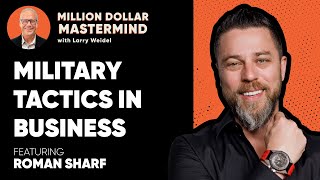
Interview (2024) of Roman Sharp by Larry Weidel about building Luxury Bazaar. Sharp recounts shifting from a wholesale (B2B) model—which helped reach ~$100M in scale but left large receivables—to a B2C focus during COVID supported by an in-house media team and video content; the pivot produced a peak year of $133M in sales and sustained online growth. He also describes operational practices (SOPs, KPIs), a 20,000 sq ft fulfillment facility, travel for industry shows, and long-term plans toward an eventual exit while preserving company culture.
Questions this video answers
$133 million in sales.
Reached the $100 million mark (from B2B/wholesale activities).
Upwards of $28 million in receivables.
About 25% jewelry and about 5% watches.
About half a million subscribers.
Welcome to this edition of the million dollar Mastermind podcast. This is where we pick the brains of high achievers from all walks of life and get their hard earned real world insights on winning. I'm your host, Larry Wydell.
Hello, everyone. We're talking with Roman Sharp. And Roman, congratulations on the growth of your luxury brand business.
Thank you, Larry. Good to see you again.
Yeah, and we were just talking about the growth since you were on. It's pretty phenomenal. You know, I got to give you a compliment for getting in the online luxury brand business as early as you did. Because, for example, I'm hearing now that like online auction sales, you know, Christie and sophomore, all of those, that 80 or 90% of those sales come over the Internet or come online or they're works of art. They're spending millions of dollars for or bought from jpegs, you know, looking at jpegs on the screen. And early on, it wasn't like that. It was like you'd buy the cheaper stuff, but the nicest stuff, you had to go in the store and touch it and feel it and everything. And you got really took that opportunity to get in front of everything and turned into incredible momentum. Great timing. So congratulations on that. And so tell everybody it's luxury bazaar is your business and do a lot of luxury goods, especially watches. So let's talk about the growth where you've gone over the last three or four years.
So we had shifted gears in three, four years. One of the things that grew my business about six, seven years ago, for me to hit the $100 million mark, I sort of swerve my business back into the B2B side, I. E. Lots of wholesale, as we call it. And wholesale in my industry doesn't necessarily mean that I'm selling a hundred Rolexes at a time. It simply means I'm doing B2B. So I'm selling goods to another dealer, smaller dealer, that's then in turn reselling. It often involves giving people terms and things of that nature. That's the one thing that took our business over $100 million. And right before COVID hit, I took a look at the business and I said, okay, great. We're doing wonderful numbers. The margins, okay, I can live with the margins. But as the nature of a wholesale business, we ended up with a lot of accounts receivables in China, accounts payables, and a few things that were we call bad debt expense, I. E. People go bad in the industry. In the industry. And I realized that I'm also building something that, yes, the rep, it brought me the revenue, brought me the profits, but didn't really build a product. So I sat down with the team, I made a decision to say, you know what, we're going to go back to our roots where we started 22 years ago and go back to B2C. Now this was supposed to be a slow transition, not something that would happen overnight because yet you still have clients that owe you millions and so on and so forth. And you have to kind of ease out of that space and ease back into the other space, which is the B2C side of things. But then Covid happened and it just kind of made us basically flip the switch almost instantly. Because the first few months during COVID everybody got scared and especially on the B2B side and there was really no business. So turn our attention more back to me to direct to consumer. And this is where we basically said, well I said, like I spoke with my cmo, I said, look, I don't want to do the traditional e commerce marketing that everybody does I. E. You pay per click, paying Google, doing Google Facebook ads, yes, those things work. But the return on investment or often what you spend on that is outrageous and doesn't leave you with much profit and it doesn't make you grow organically in the online space. So I basically said, let's do brand name recognition. People know the name luxury bazaar because we were one of the first online to start selling watches and jewelry. But they don't know our faces, they don't know what we're all about. And today's day and age you have. When I started, it was me and a handful of guys selling watches online. Today it's me and a handful of millions of guys. So the worst part of that is one cannot differentiate between $100 million company or a guy selling something out of his basement, which is, there's nothing wrong with it. That's how I started. Right, right. They have differentiation with that. So we went heavy duty into media production. I have an entire media team that I employ. I have three videographers, three photographers, three social media people, graphic designers. So I have it all in house and basically I put a camera on my desk and I started talking, showing my face and telling people, hey, you guys already know who we are. Let me show you a little bit deeper. And it was that brand name recognition that propelled our B C business almost instantly with the help of the hype of COVID The market its helping along really nicely while it was happening. And it allowed us to almost instantly switch from B2B to B2C while keeping the same numbers. And the best year with that best year, we did 133 million in sales. My expectation was to go down 20 or 25% initially. And we did not.
Yeah. And the thing was B2B businesses, people, stores were closed. So your watches were sitting in closed stores and you weren't getting your invoices paid because people were just sitting on the inventory in their stores. And I come out of the construction business many years ago. And that backup can happen when the economy goes bad, which it always does for one reason or another. If the banks start to tighten up and people can't get mortgages, that means the house they were going to sell to get money to put into the house you built for them. The people they're selling to can't get financing. So there's a back. It kind of stacks back up and somebody's holding the car. And you found yourself all of a sudden all the trailers were backed up and nobody was giving you any money. And that has to be. It's surprising how fast that can happen.
Isn't happened almost overnight. And the scariest part is at the time that happened when the wheel stop, as we say. During COVID I had upwards of 28 million in receivable.
How much?
28 million people owed me that dipped.
Into your petty cash.
So for me, it was scary before COVID hit because that number keeps climbing because as you're doing business with somebody, you're taking more and more credit. They're paying you.
Right.
And essentially you get to a point where you become a bank, but money costs you. You lend it out at Y. You're no longer a watch dealer, you're just a commodity trader. And you're basically charging interest on the. On your goods, but that's what it comes out to be now. While at the same time, I'm taking all credit from others and balancing out the two. And hopefully one is less than the other at the end of the day. But I didn't want to. I didn't want to be in that wheel. And I'm sort of thankful that it happened the way it happened for us to transition back to B2C because today my receivables are my ongoing current sales. Now I do still have a few wholesale accounts and maybe a couple of million of receivables, but that's something I can sleep with.
Yeah. And the thing is, when the economy goes screwy or things happen out there politically and we're all scratching our heads Saying, well, what does this mean? What does this mean? It's really traumatic if you're the owner of a business and you're saying, what does this mean to my cash flow, to my receivables, all this money, all of these basically all these loans I've got out there, what does this mean for me as a banker? How long am I going to have to live through this thing? And what was the scariest? How tight did it get for you?
So for the first three. Was it three to four months when Covid started and the wheel sort of stopped and it was. Business went from up here to all the way down. It gets scary, but. And I knew that essentially I have a choice. I could have not allowed total equity of my company go down drastically, which it did, by letting go of a bunch of people, by tightening up a little bit, and by saying, hey, business is down, everybody out. We'll figure it out when business comes back up. However, for me, it's never been about the money. It's always been about the people. The people that have been with me for years, 10 years, 15 years. And I wasn't going to be the guy to say, you know what? I'm going to let all these people go. When things get better, I'll bring them back home, let them go on unemployment and see what happens. What? Instead, I kept everybody on. I cut my own take home, literally in half. And I said, you know what? These guys have helped me make money for years, so I'm not going to abandon them because if they were to go to unemployment, they would lose their health benefits, dental benefits, and hope to do so. I said, you know what? I'm going to let it ride. I know this is temporary. Something is going to happen. Because usually when you have a sort of a shakeup in the world, you usually then tend to have something like money coming into the market. And I knew that there was going to be. With all these business closures and everything else that's going on, I knew the government was going to step in and do what? Print money as they usually do. And they did. And they printed, oh, my God, did they print money? And that caused that ridiculous spike in the market. Car market, watch market, jewelry market, collectibles market, you name it, prices were going to do. I mean, we got to a point where stuff I was selling for $5 a year later was selling for $20.4x. Right? That. Just using it as an example. Same app think happened with cars. Our car was 100 grand. All of a sudden was trading for 200 grand, right. Supplying. Because people had all this money, they wanted to spend it. Everybody of course thought this was never end. And as we know it did.
Yeah. And so how much are you in is it watches and how much have you diversified into other luxury brands?
So we're about 25% jewelry and about 5% watches.
And so what's funny to me when I've got, I'm wearing, you know, I have my collection of watches and I don't have a Richard Mille, but I have a collection of watches and was great. And then somehow the Apple watch came out and I finally got talked into trying that. And you fall into that pattern. I'm thinking, what is this going to do for the luxury watch business? And it appears like one thought would have been, well, this is beginning of the end in terms of luxury watches. But it's kind of been the opposite.
Hasn't did nothing. It absolutely no effect on it. If you look at, if you go back to 1969 when Seiko came out with their first quartz watch, that actually was a big real scare in the switch watch world, right? Because now all of a sudden you had a watch that was uber accurate. There was no mechanical watch that can match the accuracy of a quartz watch. But it was also around the time where watches were more of a tool rather than a luxury. Where today is completely the opposite. You can't flex in your Apple watch, right? While I see also a lot of people utilizing the Apple watch for some of the things it does for your health and staying connected all the time. But at the same token, I usually see those people wear two watches, right? You have all these fitness things now, the loops and all that other stuff that people wear on the other end today. Nothing is going to ever replace flex, right. And that's a phenomenon that came about relatively in a short time, right? Because again, 50s, 60s, 70s, Rolex was a tool wash day. Rolex is a flex first and foremost. The mentality has changed. And you also have your true die card collectors that understand the quality, the craftsmanship of the horology behind a company that's 200 years old has been doing it continuously. They understand the rarity of things and they also appreciate history. It's the same look. A Toyota Prius will get you to the same destination as your Mercedes S500. And as the joke goes, I pulled up to me at a light driving a Toyota Prius. I was driving a Mercedes S Class. He rolled out his window, said, I get 68 miles in this thing. What do you get yours. And I told him I get laid. So that's the concept that we're talking about, right? So an Apple watch will show you the time, but a Rolex will get you laid, as they say.
So yeah, your fascination with watches, of all the things you could have gone into and sold, how did it start? I mean, in other words, you made a great choice, Roman. Obviously it's paid by now. You would know it if it wasn't going to be a great choice. But whenever, you know, any product line gets challenged and there's developments and it's nice to be at a product line where you have the history and you can market that. There's collectibles in there as well as kind of like the art world. There's new art coming out all the time, but then you have the masters that people want to collect. People specialize in different things, are attracted to different things. What got you going and fascinated with watches right from the beginning? And the only way I, the reason I say this is I really like to encourage people to think about the choices they make when they're starting things like where is this going to lead me? And you can, you can do everything right, you can pay the price, you can stand up to all the challenges, put in the hours, but if you choose the wrong horse to ride, it's, you're only going to have so much results. And you chose the watch line, the luxury brands to go in there. What was your thinking?
I'll tell you like this and often people think about it in a perspective that you just asked, but really it's not that perspective that one needs to look at. It's really, you have a lot of young men that come and I've gone to colleges and I've spoken to a lot of young men in regards to entrepreneurship and etc. And I've asked them all the same question. It's not about the what, it's about the sort of the wing of business you want to take, right? Because there are a lot of different approaches. The place that I'm in, I'm in a buy and sell space. I procure goods and I resell them. Right. So theoretically I'm a reseller of goods, right? Goods that I do not manufacture. Obviously there are facets to my business. Pre owned the big luxury, brand new closeouts. There's all kinds of facets to our industry. But the bottom line, it comes down to the fact that I'm buying and I am selling, right? That's the type of business I'm in. You have all kinds of service businesses out there from, you know, you have all kinds of tech businesses out there today. Today you have AI. There's so many different businesses that you can go into. The question you should ask yourself is not whether or not I am made for, or I should go into buying and selling watches, but am I somebody that is good enough to go into buying and selling to begin with? The product itself almost becomes irrelevant because it comes down to product knowledge, market knowledge and ability to market, ability to put it in, ability to be in the right market, and ability to stay competitive and pricing it. It doesn't matter what you're selling. But the way I got into watches is. Well, first of all, I'm an engineer by trade. I went to school for computer science and electrical engineering. So these tiny little movements inside these watches have always fascinated me. But what I think what fascinated me more is the fact that I grew up very poor. I came here at the age of 13 as a refugee from the former Soviet Union. My dad had $4 in his pocket, so. And I started working from day one. I've been working since I was 13 years old, and I'm almost 50, so that was not a strange thing to make. But having grown up poor, what does a poor boy strive for? You look around, you see a nice car drive by. There's a reason I drive an S Class Mercedes, because when I was a kid, I saw one and I said, one day I'll drive that car. And then you would strive for. What are some of the. Some nicer clothing, nicer restaurants. I'm thinking more of a luxury lifestyle. And part of that has always been watches. Which is why when I post the military, post college, post me getting my first job making $50,000 a year, the very first thing I spent my money on was a Rolex I bought from a Buddy and Atlantic, 34,000 bucks. So watches. But how I actually fell into the watches, I didn't make that decision. It came to me by accident. It was an opportunity to present it to me by somebody else who was in the industry who simply said, hey, you know, computers, why don't I give you some stuff, try to sell this stuff online. And the rest, they say, is history. It could have been an art dealer, it could have been a jewelry dealer. It could have been a slew of things. But the bottom line is I made a decision to go into the type of business where I am buying and selling goods.
And what were the pieces of the picture that was presented to you by this friend or Whatever that. What clicked in your mind that this.
Could work to be 100% honest, the first thing I said is, yes, I can certainly do things online and I have the knowledge and I have the know how. While most people had no clue at the time because it was the Internet was so new. The first thing that I actually said out loud to my wife, I said, who the hell's going to buy $10,000 watches on eBay? And it was my wife, it's good to have a good partner that said, you know what, I think we should try this because I think it will work. So sometimes it helps to have a good life partner too on your side to tell you, hey, not be a bad idea. The issue, of course, was at the time I was also working for a major bank. I was commuted to New York City two hours each way. So four hours of my day was my commute. And I had a pretty demanding job and my wife was six months pregnant with my son. It was a tough first three years, but it was all worth it at the end.
Yeah. And what you saw was how did you have special knowledge and confidence that you could sell things online?
I didn't have the special knowledge. I had the confidence in terms of I had confidence in myself as a sales, as a salesperson, number one. And number two, I had confidence in myself that whatever it is I touch, I can learn. Meaning that I can do this on the fly, I can learn on a fly, I can pick up a watch and I can learn everything I need to know about it on the fly. And mind you, very not a whole lot of information on the Internet at that time. Mostly books, catalogs and things of that nature. Right. Later you can go online, you can pretty much find out everything I know about watch. But back then it was the confidence of knowing that I'll figure it out and know and having the confidence knowing that I can sell.
Now how did you get that? You, I guess you'd done selling growing up as part of probably many, many things.
Yeah, I did a lot of telemarketing, which was over the phone sales, and I was really good at it. I'd sold everything from New York Newsday to Crapmatic adjustable beds, if you remember those. So I was very confident on the phone and mind you, while you on the Internet, it's no different. Except now we added the thing called email. So you would communicate via email, but often you would communicate on the phone with people. And that to me was second nature.
For those of you who are sick and tired of fooling around and are dead serious about wanting to move up fast. I've got something especially for you. I've combined the best insights from over 40 years in business and making $70 million in income and combined press them into a free webinar. That's right, it's a free resource. If you want to find out exactly what the concepts are that I use in coaching million dollar earners, Register now@widelonwinning.com you'll discover the five part framework used by so many to reach their financial, personal and professional goals. You can find that link in this episode's show Notes.
Now, my memory's not always that great, but seems like I remember asking you early on how did you develop your systems for your team when you started added employees? And you said, I think you said you learned it in the military sop Standard operating procedure. Is that right?
That is exactly correct.
My mind is not gone yet. Roman. Okay.
Early on I was a one man van. And then as the business started to grow, I left banking. I started doing it full time, opened up my first office and as early as having three people in the office, when something was done more than once and was repeated on a daily basis, weekly basis, a monthly basis, I would just put it down into a Word document and say, hey, this is how you do it. Because I realized that I cannot do everything by myself. So I'm going to continue hiring staff. But the minute that I hired staff to do what, to take something off of my plate, I'd say, well, here's a document. This is how I did it, right? This is how I want you to do. But at the same time, my expectation is for you to improve on my process. Right? Make suggestions. I don't want you to be a robot. I want you to put forth your opinion to how we can make things better. Until this day we have SOPs in every single department in here.
Well, and the thing is, thinking like that causes you to notice what's happening and to when you write it down, you take the guess. The idea is to take the guesswork out of repetitive processes and as soon as you can get that down, you can turn it over and duplicate yourself. The quicker you can train somebody else and the less thinking, the less brilliant they're going to have to be to do it. All they're going to do is follow the bouncing ball that you laid out in front of them. And if I ever write a book on it, my first book was Fundamentals of winning the serial winner, how you win again and make it a way of life. The second two books that I've never written. One was going to be how you become elite once you start winning. How can you go to the top? What are things that differentiate the people that are top? And then the third book was going to be about building the team. But the thing about building, you know, an elite winning team because you're. You're never going to go very far without a team. And you've learned that. But you were thinking you were doing a lot of the right things right from the beginning, Roman, where you were, whether you knew it or not, you were setting your. You were organized mentally for success and just things like that. And it served you very well. And coming up, I'm curious, what was your standard operating procedure that you figured out in sales early on doing all these different jobs? You're getting people on the phone. How did your. I'm sure your mind went into patterns. You know, the first thing you know, get them comfortable and then find the need and all that. How did your mind work when it comes to sales?
I'm a true believer that a salesperson is first born and then trained. If you're not born to do sales, it's not for you. And there's absolutely nothing wrong with that. There are colleagues of mine that were engineers, that were brilliant engineers, but they couldn't put two words together when it came to a conversation. Right. It just didn't make them a bad person. Right. It just made them who they are. So I do believe first and foremost you have to have something in you to be a salesperson. But then you can be trained. And the idea behind this, the operating procedures that I put forth was not really how to sell is what is the process from A to Z? Because the number one thing here till this day is, and this is the, you know, we use a lot more bigger robust systems now, obviously, because we have a multit of sales people. But the main thing is stay on top of your. If you cannot stay on top of your stuff, whether till this day, beside with all the fancy systems I have, I still have a notepad. And when. And because we multitask so much at any given time, the minute something pops into my head as I'm doing something else, I just write it down and guess what, I go down my list, I get it done and I cross it off. When it comes to sales now, you're dealing with sometimes 500 different inquiries at any given time, 500 different ways of communication. So we put a system in place that helps you with it, helps you Keep it organized. But the SOP states that you must do X, Y and Z while utilizing these systems. That will make your life easier. At the end of the day, you just can't. If you don't follow those steps, you're not able to do your job properly. Stuff is going to fall through the cracks and clients are going to be left upset because somebody didn't get back to them. It's not about how to sell. You have it. You be yourself. It's what I tell every salesperson. As long as you're yourself, don't try to be somebody that you're not. And educate your consumer first and foremost to a point where they would feel stupid to buy anywhere else besides you, regardless of price within. That's the goal.
Well, that thing that you. I like to make sure people don't let that go over their head. What you just said in the beginning, and that is you show the pad. Something jumps in my head, I write it down. And what I've learned early in my career when I have 10,000 things to keep up with and they were coming fast, like bullets, you know, they were coming at me, is like, write it down. Because when you write it down, your memory is not going to be great if you overtax it. And I could have a great memory if I didn't ask you to do that much. And the more things I wrote down, the less my memory had to fill in the gaps. And you can look like you've got a great memory, but whereas most of the stuff you write down and you don't have to just come up when.
You get a little older, as they say. I remember what I did 15 years ago. I don't remember what I had for breakfast. So this is so true. As I got older, I realized that unless it's in here, right? And this is again, just small things, small nose. We still, for everything else, we have systems in place. And this is all automated. This is all sitting on a computer. It's. It spits out reminders. It tells you the tasks that you have to do for the day. We keep track of our media team, social team, of our logistics team. Everything is organized in an electronic way where we set goals for teams, right? So they need to hit certain KPIs, whether it's social media, whether it's video, whether it's logistics, whether it's sales. And a wise man once said one thing. He said that don't ever set goals, results of which you cannot measure. Do you know who said that? I did. But think about what I said, don't set goal results of which you cannot measure. Which means that I'm a big analytics and reporting guy. Right. System is placed in a way where depending on the time frame that you need, usually once a week, once a month, once a quarter, I review all of these reports and I see, have these goals been met? Right. Because if I'm just going to set goals out there for people, but then I'm not going to measure those results, meaning I don't have the systems in place to report on the goals that I'm studying or the task that I put forth in any department. It's useless because there's no accountability then. Because without accountability, what do you really have? You don't have anything.
Right. And I want to make sure people pick up the thread of what you're saying. What? Because you're speaking as a person who is running a successful business and has run a successful business and it grows. And it's not by accident. These things are not by accident. And if you go out there and you look at all of the business books, there's common themes that come up and one thing that comes up is you got to run your business. You can't let your business run you. And I think every leader, CEO, whatever comes to a point in time because there's ebbs and flows, crises, common things. But you know, there's always times where we get behind the eight ball and everything. And you're, you find yourself like your fireman, putting out fires all the time. But that's not the efficient way to operate. And the thing is that if you do what you said, if the end result of keeping up with things, you, you stay on track. Number one, you know where the track is, you stay on track and then you stay on top of what you're supposed to be doing. You stay on time, then you can think, then you can realize where you're a little bit behind the curve. You can notice we're not, you know, our numbers are not where it needs to be. Attitudes are not like where it needs to be. You don't notice those things if you're overwhelmed, do you?
Of course. Listen, one of the things that I also try and do and not do at the same time is I try to find a happy medium between allowing my resources, my human resources that I have here to do their thing. Obviously without micromanaging. This is the hardest thing to do, especially when you start as a one man band and grow into a company early on especially. But I'm a firm believer to utilizing human resources that you have to the up most of their capability but also based on their compensation and with an acceptable margin of error because early on you cannot replicate yourself. There's no other Roman and I have plenty of employees that are here today that I cannot replicate them either. But it also comes back to compensation as well. I have an individual that's doing something 2x better than the other one. He's getting paid 2x but yet the job is getting done or the ultimate overall task is getting done. As a team, you're never going to have. There's always going to be the best salesperson and. And the worst salesperson, right? Yes. There's a playoff where I put a threshold where I want all my sales people to be at a minimum. But listen, you're going to have your number one football player on the team and you're going to have not your fourth string quarterback. Right? But at the end of the day the fourth string quarterback still performs a task that's needed of him but he doesn't get paid as much as the other guy. I would love to have nothing but superstars on my sales team that are doing $2 million in sales a month. But I have guys that do a half a million a month as well or a million a month and guess what? They're still just as good. And the compensation shows it's very directly, it's directly relevant to the abilities of the research or the human resource that I'm utilizing. And the dream of people trying to do things like I do, that's a patron. It doesn't happen because I'm the owner, I'm the guy that owns the business and I still pop my head in often to ensure that even on the lowest level down logistics where people attack in boxes or in social media, I will still pop my head in every so often, make sure I have an open door where everybody can come in and freely talk to me and most importantly get in likes. Because I've been doing this for a little bit. I'm a little bit older, a little bit wiser, a lot of kids, young kids working for me and they're welcome to step into my office at any given time without fear of retribution, of me thinking, oh, they don't know what they're doing, I'm going to get somebody else off the table completely. I told every new employee, I tell you, I don't care what you do here because I've done it all. Remember I was a one man band. I did every department, I did every job Feel free. My door is open. Come in, ask for advice and don't think it's going to reflect negatively on you because you don't know how to do something, it's actually going to reflect positively.
Describe for us your operation. Is it mainly virtual? I mean, do you have a big facility? How much, what do your different people do?
I have a 20,000 square foot facility here in Southampton, Pennsylvania. I'm just right outside of Philadelphia and I have an office in Hong Kong, a small office in Hong Kong which we use for logistical purposes. It's a gateway between us and Middle east and mainland China, et cetera. But for the most part, majority of the work is done here. We are not open to the public, but the public does come in once in a while. It's our office with not a storefront. So, you know, if you're going to randomly come off the street and try to ring the doorbell and I want to look at the camera and I don't like the way you look, I just won't let you in. I ask people to make a phone call and say that you are coming. And we do get a fair share of people that come in here, but for the most part it's just me and the team that's out here in Southampton, Pennsylvania.
So you're, you're storing your merchandise there, you're shipping your merchandise from there?
We're an Internet company.
Yeah, yeah. So you do your, how, what percent of your fulfillment do you do?
A hundred.
You do 100% of your fulfillment?
Yes, of course.
And so how long have you had the 20,000 square foot facility? And what was that like? How much of a step was that?
So that was 12 years ago. 12. Almost 13 years ago, we bought this building. Prior to that we had an office that was roughly 4,500 square feet that we also owned. And before that I rented an office that was about, let's say, about a thousand square feet. And prior to that I was in my basement.
Yeah, you obviously are maximizing or optimizing, let's say your facility now, because I think you've got, you've increased five or six times your gross sales since we were on a couple of years ago. And it's great to be able to do that without having to take on more facility, isn't it?
So the facility, the current facility, I mean, that I bought, I bought it with, in the back of my mind knowing that I didn't need that much space when I first took it on, because at the time I had 12 people working for me. But I knew that we were growing and I knew that we were going to grow and the last thing I wanted to do is to make a move and then have to make another move. Because setting up security, setting up logistics, setting up networks and all those things within any facility, regardless of size, gets expensive. We have, before we moved in here, I spent a quarter million dollars on security alone. So. And remember, I also have a bank vault inside the facility. That's not a cheap thing to move around. In fact, it's cheaper to have another bolt brought into a facility than to move your existing. It's literally cheaper to leave the old one at the old. We literally left the bank vault in the old place. It was cheaper to leave it there and then bring another one here.
Wow.
So it's. So there's a lot of things that are going on right now as far as growth is concerned. We have plenty of space here as far as, I mean, I can get up here, I can get up to 100 employees if I wanted to. So for me, the growth is now going to take place in retail facilities and we're looking to get out and expand our retail reach, not just online, but also physically.
So when you decided we've got to get our message out and we've got to use social media, the Internet and so we've got to raise our profile. What steps did you go through and how did that sequence work?
It's actually not that difficult. It's a question of knowing what you're talking about. Having the ability to put it on camera and put it out to people and people online, they, they can call through bullshit in a matter of seconds. And I told my CMO at the time when he said, grab a camera, start talking. I told him, I said, I am going to be the guy to tell it like it is, beat around the bush. I'm not going to be the suit and white gloves guy. I'm going to be me wearing T shirts and jeans. This is who I am. This is what I, this is how I do things and I'm going to tell people how it is. But here's the problem. Like, I realized that as I went into the space of YouTube, for example, I realized that, hey, there's already a ton of content out there and you're competing with a lot of guys out there that are creating watch content. So how am I going to differentiate myself from everybody else considering that the space itself on YouTube is tiny? It's this big because the watch space in itself in comparison to everything else in the world is very, it's a very small niche space right. For expensive watches. So I said, you know what I'm going to do? Yes. I have the knowledge to tell you about the inner workings of the watch, the history of the watch company, where it came from, what are the previous models, etc. Etc. And I'm going to run through all that and I'm going to describe all that, but I'm also going to give people my opinion because at that point I've had 15 years of experience selling these things. So not only am I going to give you my opinion on the watch, I'm going to tell you about reselling what these things sell for, what are they being bought for, wholesale, retail, etc. I'm going to give people the type of information that is not here. Beautiful watch, great complications. Buy it. This is what the information you need in order to purchase this watch. I'm giving you the market price, I'm giving you historical market data. I'm telling you that five years ago I was selling the watch for X, today selling for Y. That allows the consumer to take that information and educate himself. And guess what? He may not be ready to buy today, but when he is, he's going to think of me company and come back and say, you know what, I remember watching that video Roland told me about that watch, I'm ready to buy it. I'm going to give him a call because he seems like he knows what he's talking about. And that's what kind of did propel us to sort of cement the rapport that we had as a company already. But now with faces behind it and real knowledge that people can refer back to because these videos are evergreen.
Well, your YouTube channel is. May have started it at small and nothing but it's pretty darn popular. Over 200,000 subscribers already.
A half a million almost.
Oh, half a million. Really? Over a half a million. That close to close to, yeah. And how is that, is that a hockey stick type growth? Is it a gradual how it.
It was a hockey stick type growth because after we did what I like what we call the Talking Heads video, right like me and you, what we're recording is called Talking Heads. We decided to, to open up sort of the curtains and, and show the behind the scenes and the inner workings of the company. And what that did is we came out with a show called Great Market and that showed our day to day operations. It showed what we do here on the daily, how we buy, what we pay, how much we sell it for all the drama that goes behind. There's a ton of drama behind in the watch industry. People try to screw you for money, et cetera, et cetera. We took our cameras to trade shows. We took our cameras to the wonderful places we traveled to, like Middle east, Hong Kong, etc. And we showed the world a this is what it's like to be a watch dealer. And this is the company you're dealing with. And nothing is hidden. Everybody in the world knows what the guy that ships boxes looks like, or my head of logistics or my CMO and every single one of my sales staff. And what happens. Like any reality TV show, what happens. You watch a Netflix show, random show, doesn't matter what it is. What do you do? You often fall in love with a character. We absolutely hate a character. Characters in reality will raise emotions in an individual, and when those emotions are raised, they can be raised in a negative or a positive way, but it doesn't matter. They remember that individual. So now, outside of me as me doing talking heads video, that made me a bottleneck. Now I'm not the only one doing videos. Now the entire team is on video. And now there are clients out there that call in and say, I want to talk to Alex or Anna or Dom or Kevin or whoever. Because they've seen them and they've been following them. They fell in love with them as a character. They like their style. Because the one thing, remember earlier what I told you, I told my salespeople, number one thing you need to remember is to be yourself. And they are themselves on camera. And when people see that, they understand that, hey, this is. This is true. This is how this guy is. This isn't porn stars where everything's staged. This is real, real tv. This is what we do here on a daily basis. And the cameras are just rolling. So that was what propelled YouTube. That is what propelled our other social media channels like Instagram, TikTok, et cetera. And that directly related to increased sales. There is also, I feel, something that saved us because two years ago, a little less, we had a dip in the market when Covid was over and people bought enough. And that's when everything went down in price, if you remember. And guess what? We're still here. While some did not survive that dip, this was probably comparable to the 08 crisis, as I remember. The only reason I survived the 08 crisis, because my business just wasn't that big yet. I wasn't that exposed, but this was very comparable. But having experience, we foresaw this Dip coming. So we prepared. So therefore again, we were in the position to say, okay, while business is down, but we can handle it and we can slowly bring it back up because markets are like this.
Yeah. Well, now, as you started into, you know, YouTube, how much experimenting did you, you know, the shorts, they haven't had the shorts out there until recently. But you were putting regular videos up. How did you settle on the right kind of pattern, the length, the style? How much experimenting did you go with that?
There's really no hundred percent way proof of figuring out the algorithms of any social media platform. And they're always changing, right? To be fair, when it comes to social media, like most recently Instagram changed their algorithms and all of a sudden the content is not getting as much as many views. It's like. And you basically throw shit against the wall to see if it sticks because that, anybody out there that tells you, I'm the foremost expert, I know exactly what to do. You'll follow the trends. You follow the trends that the platforms want you to do. Why did YouTube come out with shorts? Because they wanted to compete with TikTok and Instagram. Right. So they, they gave your shorts more attention, they put them up there in front of eyes and that's what propelled. That's. We picked up a lot of subscribers because of the shorts. But then when that was over, shorts weren't as effective anymore. It was a time where they wanted one hour long videos, that there was a time where they want a 12 minute video. So there's basic principles that you follow and you see what's worked for you in the past. But lucky for me, I have a team in place that does all that. You know, I don't need to make that decision. I just. Talking to a camera.
Yeah. When you have. It's no accident that half of your screen is this bright red billboard basically with shiny luxury glitter and it says status.
Talk about how you got through two paintings. I say branded status, it's a play on words, okay? And behind them there's a collage on the branded. There's a bunch of different brands, watch brands.
Oh, okay.
And under status, there are a bunch of famous folks, right? Actors and athletes and things of that. And branded status, it's, it raises a question. Just because you have a big name, does that give you status? And just because wearing something brand name, it's a bit of a play on words. It's something that myself and my kids put together ourselves. So it took us six months to make because I cut out a bunch of Little things and glue it together and then paint over it. Peter Tuney is an artist. He's a modern artist who is actually his studios in Wynwood Walls in Miami. And I remember a long time ago, these paintings are more than 10 years old. We went into Wynwood Walls, myself, my wife and our two kids at the time, I have three now, and we went into a studio. We really took a liking to his play on words and how he did these collages. And I found the one canvas that I like. I said, how much? I said, It's $300,000. Meanwhile, we made a decision that we're just going to make them ourselves instead of spending 300 grand.
Well, you did a great job.
It looks great. A lot of people walk in and they think it's Peter tuning, but I have to tell them that it's paying.
Peter joint in the course of a year now. How much traveling are you actually doing? And it sounds like getting ready to.
Leave to Geneva next Tuesday. I just came back from a trip a month ago and a half ago. I was in London. I was also in Germany. We since we scaled down our B2B, we also scaled down on the amount of trade shows that we do. When I was full blown B2B or mostly B2B, I was out of the house, probably. I did. My wife did the math. I was out of the mouth. Two out of the house, two full months on business. So 60 days out of the year I was out of the house. And that was Middle East, Hong Kong, Vegas, la. Best part about our industry takes you to phone places. I don't go to Oklahoma. Right. I go to Dubai, I go to Oman, I go to Hong Kong, I go to Singapore, I go to a lot of good places. And now my travel is really consistent mostly of being in places where I need to be in the industry. I'm going to Geneva because Geneva watch days we have there's anybody who's anybody in the watch industry will be there. But mostly majority of our fan base, if you will, that follows us is going to be there as well. Because they are going to be there for the show. And then, you know, if you. I, not to sound conceited, but because we're in such a small space on YouTube, on social media, once you get a following, you sort of become a celebrity in your own space. Right? And I use that word because I don't consider myself a celebrity. But you know, anywhere I would go today, any major city or Sally. But I mean you walk down the street, somebody Will recognize. Say, Roman, I love your videos. Right. And it's good to be in places where there's a large concentration of watch people to show your face, to shake people's hands, to talk to them. I'm going to be doing a couple of panels there with a magazine. I'm going to be visiting a couple of brands that I work with, looking at what's new because you also have to keep up with the industry. You're going to talk about it, right? I My knowledge is only as good as the next piece of news that comes out in the morning.
The Oklahoma. There are some people that think they have a lot of fun there, too.
I've never been and I positive to anybody who's from Oklahoma, I'll tell you like this Elizabethtown, Kentucky. Have you ever heard of it?
Yeah.
Okay. It's a tiny little town outside of Fort Knox. We'll use that as an example. Not a whole lot of fun things going on over there.
Yeah, well, I thought I would just divert any kind of unnecessary chatter from that.
But I'm sure Oklahoma followers, I apologize.
And I'm sure they would recognize your brand walking in your YouTube thing. You'd probably be a celebrity in Oklahoma if you were walking down the street too. But I doubt they buy as many luxury watches as they do in Hong Kong. So if you have to go to a trade show.
Hong Kong, Hong Kong. Right now, at the very moment Hong Kong and actually mainland China down, they're dragging the export market from Switzerland down tremendously. They're down about 30% because of what's going on economically in their currencies and all that other stuff. But luckily for us, when one market is down, another one emerges. I just did a segment every week I do a segment called Watch News Weekly and I talked about exports out of Switzerland. And right now we're actually up 2%, which is good for the month of July. And again, the only reason it's only 2% is because of China and Hong Kong markets being down. But Japanese market is up and so is the US Market. Right. So when one is down, the other one is up. But mainly China and Hong Kong are sort of the biggest indicator in our industry for us and simply because China makes up for 60% of all luxury goods bought worldwide and 22% of that is watches and jewelry. So it's a significant marker for us to watch and keep an eye out on. It affects pricing across the market. It affects. It affects a lot of things. But lucky for us, like I said, when one market is down, the other one is up. When we do look at these things globally and we pay close attention to it, it makes us. It allows us to shop in places like Hong Kong at the very moment where prices may be slightly less. And we're talking about a couple of points here and there, but across items with an average price tag of 15 to $20,000, it doesn't make it.
Now, with three kids, it's probably tough for your wife to get away, but it's nice to know that if she wanted to, she could go, you could work, work the babysitting arrangements out or and if she wanted to go with you on a business trip, you'd be going to some pretty nice places. That's kind of one of our priorities.
And I've always said this as a priority is I have. I'm a pretty simple guy. I. People ask me what are my priorities. My priorities are simple. It's family, God, country, right? Simple. As cliche as it sound, these are my priorities. So ever since my kids have been little, we've taken them any chance we've gotten, whether it's a small weekend, a short weekend, a long weekend, a spring break or whatever it might be. They've been to dozens of major metropolitan areas all over the United States. They've been up and down the east coast, the West Coast, Canada, the Keys that we've been overseas with them. And whenever we travel, we make sure that it's history. It's art, cuisine, kiddie stuff they learn as they're traveling. And once a year, sometimes twice, me and my wife will take the time to ourselves too and go somewhere in the summer. We always go away for two weeks with our kids somewhere nice, somewhere we have very similar interests. We both like art, we're both like history, we're both like fine wine. So my last trip I was in Portugal. Guess what? We visited a bunch of wineries, we went to a bunch of museums and art studios, we visited a bunch of historical places and we ate a lot of good food. And I do make sure that it's not just work. And the reason I'm telling you I need to get off in five minutes because believe it or not, all these years we've been married 22 years. And all these years, if I'm not traveling, I'm home for dinner every night at 6:30 and I sit down with my kids to have that dinner at 6:30 every night. And every morning I have breakfast with my kids.
That's fantastic. Congratulations. And obviously you've seen that pay dividends for you. Where did you say you're from?
You said you came over originally from the Soviet Union.
And so have you been back? Have you taken the family back over there?
So I'm from Ukraine at the time. It's from Ukraine, so I was there before the war started. I actually took my oldest son to show him where I was born. And he looked around and he's like, wow, this looks like a crack house, right? And I'm like, no, this is actually a pretty decent Soviet apartment, believe it or not. It was 450 square feet. He's like, wow. And like, what do you mean? That's huge. An average apartment was 200 square feet. And I showed him around. I showed him Odessa, which is where I'm from. I also took on the kia. And, you know, it was. It was a good experience for him. It was a good experience for me. I've been back and forth. We left in 1988. I've been back about three, four times because I still had a sister there. So I would travel every so often there. She would travel here. But let's just say it's a lot better here. And especially with the war and everything that's going on in the world today, it's not very peachy over there, as you can imagine. I have since brought my nephew, his wife, into two kids over here since the war started. They moved permanently to the United States. My sister, unfortunately, is no longer with us, so he was the only family I had left there. Everybody else is here.
Well, I really excited for you and your family, and. Because the thing is, you put yourself through the ringer and you put up with all the trauma of running and building a business, and you wanted to pay off, but you wanted to pay off and more than money. And, you know, you've been able to balance the whole thing out. It's really fun to check in with you and to see how the things are going at work. Do you have how. How big of a. You know, I got to say, compliment you on your move into social media. That was a masterstroke of being a CEO. You know that when you're CEO, you're president, the company, owned the company, you've got to make those kind of shots. But you did it, obviously, at the right time, called the right shot, and you're now the payoff, and everybody on your team gets to benefit from it. So my compliments to you on that. And now, as you've got a feel for where you're headed and as we wrap this thing up, where do you see? What are you excited about? The possibilities of being able to happen with the organization and the team and the brand that you put together.
I know exactly what's happening right now. I'm working on a less hooray big project to bring something to the market that doesn't exist in the watch space today. Based again, on the experience that we have and the staff and everybody else. And right now we're. I'm working towards an exit. I'm at a point in my life where I have to start thinking about that exit. I have to start thinking about an exit that's gonna not necessarily destroy the company, but take it to the next level and uplift some of the younger people that are here with it. While I go and eat good food, drink fine wine and look at history all over the world and enjoy my kids and hopefully my son's already 22. You know, it's only a matter of time. I'll enjoy grandkids. And that's what it's about for me. It's now I'm working on something towards a grand exit where I can pass the reins on to someone else. And I'll still do YouTube videos because I actually like it. I have a very narcissistic personality, so I do like doing videos and I like to sound. But I certainly want to be able to. As you said, I wanted to be. I wanted to step back a little bit and take some chips off the table, as they say, and start enjoying however many years God gave me to live.
Do you have 10 seconds as a parting shot to send off our people who've stayed with us to the end as a last word?
Well, the last word is, I think that if you follow the most basic principles and the like. Right. And again. And those are family, God, country, if you have. If you make your family your number one priority, you know what you're doing everything for, you know what you're fighting for, you know what you're working for, you know that it's all worth it. It's not about the money. It's about how you're able to provide for those that are closest to you. If you have religion in your life without anything, you don't have to be a fanatic about it. But if you have a religion in your life, regardless of what your religious beliefs are, every religious book will tell you things that you should do that are all good and tell you the things that you shouldn't do that are bad, dating back thousands of years. And if you love the country that you in, you'll understand. You have to understand why you love this country. For me, this is a land of opportunity. I came from the land of communism, so I know the difference really, really well. And sometimes a lot of people in this country take it for granted. Not trying to get political on anybody, but think about where you are, do a comparison to other places in the world, and realize that this country provides you with every opportunity in the world as long as you want to be willing to work hard for it.
Yeah. Fantastic. I appreciate your time, Larry.
I appreciate it, as always. Thank you.
Yeah. Looking forward to do it again. I'm glad you're able to make the time. And good luck in your next trip, man.
Thank you. Have a good weekend.
All right, we'll see. Bye. Thank you for listening to this episode.
Of the Million Dollar Mastermind podcast.
Commit to your personal and professional evolution with our free training video. It's designed not just as an educational session, but as a transformative journey for.
Those bold enough to aim for the stars.
This isn't just any webinar. It's a roadmap to achieving the extraordinary. It's tailored for those who dare to drive, dream big. And yes, it is completely free. Join us in a network of ambitious.
Professionals ready to take their careers to a new heights.
Secure your spot now@whitelonwinning.com and let's unlock your potential together. Thanks for being part of this community.
More from Larry









Rick Jordan on Self-Engineered Proximity, Cyber Security Moats, and Truth-Based Leadership

Fire Fast or Fail Slow: Kevin Brittingham Reveals the One Rule That Built a $100M Empire
