How To Build A Successful Online Business From Scratch with Jason Wojciechowicz
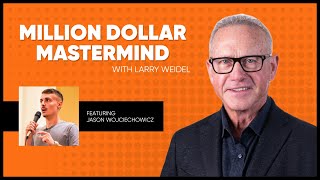
Jason Wojciechowicz went from flipping Pokémon cards to running a seven-figure marketing agency. He started with 50 Instagram DMs and 50 calls a day, scaled to 150 messages daily, and moved from $97 hosting offers to $500/month ad management retainers. He shares what worked on Instagram, Threads, and YouTube, plus how he hired and navigated growth.
Questions this video answers
$100 million
Over 155 clients
$35,000 per month
About 100 messages/calls per day (50 Instagram DMs + 50 cold calls), later scaling to ~150 messages/day including Facebook/LinkedIn
They welcome to this edition of the Million Dollar Mastermind podcast. This is where we pick the brains of high achievers from all walks of life and get their hard earned real world insights on winning. I'm your host, Larry Wydell. Hello everybody. We're talking to Wojo. Help me with the last name so everybody will know. I, I thought I had it, but.
Yeah, yeah, yeah, it's Jason Wojahowitz.
Yeah, Wojahowitz, Wojahowitz and Jason.
Wow.
I don't usually do this Jason, but you're, you know, you're a young guy with, usually you have to go to Wikipedia. You get an older guy and you go to his Wikipedia page and find this kind of list of achievements.
But.
You'Ve been featured in Entrepreneur magazine, you've been listed in the New York weekly 30 under 30, ranked number seven, featured in Forbes, New York had a net worth of 3 million by the age of 25. In LA Weekly, you're mentioned as a top 20 entrepreneur to watch out for in 2023. And Yahoo Finance listed you as a top 20 Instagram account. And you run, you know, you help people and traders have prior sales and social proof and bring about more leads and sales and help multiply what they've got going on. And so congratulations on your success. Over the last three years you've scaled 46 and seven figure businesses that still work to, they're still operational. It's one thing to build them up, it's another thing to keep them running. So congratulations, people can go to Instagram and see your account. You generate a hundred million in online business with paid ads and have over 155 clients. That's a lot of people to keep up with. And so good for you young man and proud of you. And I told you when I saw your Instagram account I could feel the energy and the drive and the boldness that you project and we got to project. That doesn't come. You don't find somebody who's lazy, who doesn't know what they're talking about and are just making stuff up or posing. I'm trying to be like this guy. You don't find people who are posing that have that boldness. You're talking, speaking from the heart. And that's why I love to have people like yourself, and especially a young guy like yourself who could come in and share those kind of experiences because you've learned about what works. And I picked up a lot of that from just a few of your posts on your Instagram account. And welcome anybody to go in and check that out. And so congratulations on a. A bulldozer, explosive start to your career. It's going to be fun seeing, talking to you five, ten years out from now, which hopefully we'll get a chance to do. But you got a real positive trajectory, and I want to congratulate you on that. And let's talk about what you've learned about winning. And I've given people a little bit of an idea of what you've accomplished and where you are. Where did this dynamic start? You know, what are the seeds of this kind of drive, insight, curiosity that led you to where you are today? How early on did you realize there was something bubbling inside of you wanted to do, something big and something special?
Yeah, I think it was when I was at an early age, when I was very, very young, probably about 14, 15 years old, and I was working at a local cafe in my area in New York, and I just realized that, like, working for somebody else, I didn't have the right, like, flexibility, the right time, just the right, like, creativity to speak my mind on things that I wanted to do and achieve. And while I was working at that job, I was, you know, getting paid five bucks an hour under the table. It was nothing insane. And I was like, all right, well, like, is this all there is to life? Like, do I just do this for the next five, ten years and just, like, get a paycheck? And my boss was like, hey, go to culinary school. And I was like, all right, like, I might as well go to culinary school because I don't know anything about anything else. Like, I had no self awareness. And that also steps in the fact that my parents didn't make much money. So, like, if we went shopping for stuff, like $3 for a pizza or like a difference in a pizza being a medium and a large, like, that was a big thing for us, like, just spending an extra couple bucks or like the difference between a $60 pair of sneakers and an $80 pair of sneakers. Like, it just didn't work out the way that I wanted it. And also, just one thing that I always realized is when my parents would come home, they would be like, oh, like, our boss doesn't listen to us. Like, they don't care about our opinion. You know, we're just working for them or making them all this money. They don't care. And one thing always stuck in my head was, people don't listen to you if you don't make a lot of money. And that was this, like, this belief that stuck in my head, I was like, all right, well, I was a skinny teenager in high school going into college. Like, no one listened to me. But everybody listened to the kid who had the popular dad, who ran the local business down the street, who had the big house because he hosted all the parties in the basement. Like, that was who people listened to. But now with me, I was like, oh, no one listen to me because I'm broke and I'm skinny and I'm short, so how do I get people to listen to me? I was like, well, I have to get rich. Like, no one's going to care. And that's what, like, stem to winning. And I was like, unless I make money, no one's going to listen to what I have to say because there's no proof behind it, right? There's no. There's no, like, validity. It's just like, if you want to win and you're mad you're not winning, it's because no one's listening to you. You're aggravated about it because that's why you're at a job, because you decided to listen to somebody else. No one listens to you. You're just given the tools and the tasks to do what you're going to do, and then you go home and there's no passion behind it. It's just like, oh, I did whatever my boss told me to do today. And being able to have your voice heard was important to me because of creativity reasons.
Now, you've. You've mentioned nobody would listen. Listen to you or pay any attention to From a young age, it was important to you that you got noticed.
Oh, yeah. Because I knew that I was smart. Like, I knew that I had this creativity because when I was in culinary school, just to kind of conclude on that, I was, you know, like, very rebellious. Like, I knew I didn't like school. Like, I was just partying all the time. I was playing video games. I didn't do anything in school. Like, I barely went to class. And one day it was snowing in school, and I had to go outside and shovel the snow. And I go to the back trunk, and there's this box of Pokemon cards. And I was like, oh, like, I used to love Pokemon cards. I used to be a kid. And I took these cards out and I started flipping them on ebay, like, in my dorm room. I refused to go to class. I was like, all right, if I make 7 bucks here, 5 bucks here, 10 bucks here on Pokemon cards, like, that's satisfying to me. And I Did that for about three months and I saved, like, maybe like three, four grand. It was so cool. Like, and after that was up, I decided to call my parents and I dropped out of culinary school. Then I went to business school instead because I saw that I was savvy with, like, numbers and flipping things. I was like, all right, like, I'm not going to be good in the kitchen. Like, I need to do something where I can control, like, my freedom. Because, dude, I was going from CVS to Target to Walmart, buying the cards, getting back in the car, opening up all the packs. If I got a good card, I would take a picture, put it on ebay, run to the post office. Seller would buy them very quickly. Do these cards would sell in 30 minutes. And then I would run to the post office, get the. Like, get the thing packed up and sent, and then I was off to Walmart again. I took the profit, ran to Walmart, bought more packs. Like, I used to go around the entire area and I would sell them out every week. They used to get so pissed because when I would walk in, they were like, dude, we don't have any more packs.
You bought them all.
And I was like, I'm sorry, but, like, I'm doing this. Like, I had to go from multiple stores back and forth. And I just think that. I think I was just more willing to bet on myself because I was like, hey, like, even if I worked 14 hours a day, I'm just more satisfied doing this than being in a classroom, than sitting at a desk. Like, this is it for me. Like, I'm excited about it. And yeah, like, even working, yeah, like, even working a job for six, seven hours, that wasn't enticing. Like, it just wasn't. And I was like, all right, well, I want to control my income. I want to control my destiny. I got to make money on my own.
Well, the. With me, I specifically remember and I lived out in the Hamptons at the time I was 17, and I'd worked in, you know, in the summer jobs, you know, it's hasty freeze, you know, I worked in restaurants and I worked out of the Hero place with a 500 degree oven in the hot sun along the side of the highway with all the people coming out from New York City and, you know, you're making minimum wage. But what it also dawned to me was the lower the income, the less respect you get treated like Turk and you get more ignored. And it's like, you know, at that time, you know, when I hear that you did, you know, your instinct spoke and you responded. Because the thing what spoke to me was, I don't even know what I'm saying right now, but I'm going to do whatever it takes. College, this, that, the other. I'm going to figure out where I can get in whatever situation I get into, company, occupation, whatever. I'm going to be in the top half. I'm going to be in the top group. Because the people in the bottom not only don't get paid anything, they get treated like dirt. And so it's interesting that you had that thing at 14 years old, the light bulbs were turning on for you. And as you went through business school, what did you notice about that?
I think when I was in business school, I noticed that all my teachers never ran a business. And I was like, what is going on right now? And that was, like, where I started getting very. Like, that was where you talk about in the beginning about the curiosity. That was. My curiosity was like, okay, well, if my teachers don't run a business, where can I find one? That's what I want. Online started searching for, like, just business advice. And that's when I found videos of, like, Gary Vaynerchuk, and I found Tai Lopez's course, and I bought that. And, like, I started diving into from people that I wanted to learn from because, like, you know, like. Like, there was a professor at my school who worked at Xerox, which is a printing company. He's like, yeah, you know, I control the supply chain. I'm like, you don't own it, though. Like, what. What is going on? Like, I'm paying all this money to go to school. You don't own it. You don't. You're not like a leader. You don't control anything. Like, they could fire you tomorrow. He's like, yeah, but I know, like, how people and supply works. And I'm like, that's not all a business is, man. Like, and that's where I just started to drift away from school and get rebellious again. Like, I used to challenge my parents about. I was like, oh, like, this is so stupid. I went out like, can we just not do this? And they were always like, oh, well. Like, because I had a ride because I played tennis. So, like, I didn't really have to pay much. I was like, all right, like, I'll just, like, go. I'll play tennis, I'll get my education, and then I'll go do my own thing. But, like, it was. It was just tough because, like, my dad was so into school, my dad was a lab scientist for Pfizer and like, he didn't even make a lot of money. They would work him 11 hours a day. He would work home and be so pissed and make 80 grand a year. Like, that's not. And my mom didn't even work. So like we were making less than six figures a year. And like 80 grand a year for anybody who's listening, like, that's not enough to really live. Like, you can barely do anything with that. So it's like. And that's what I started to see. Like my dad getting mad every Friday, sitting down, eating dinner. You would get pissed at like all the bills in the mail. I remember those days. Like, you didn't want to sit next to him and eat because you just felt like he was going to like throw the mail at you because he was just that mad and those things. Always said when I was a kid, I always wanted to get to that point where I was like, hey, like, I don't care about a $20 bill for, for overcharging the phone bill or like 80 bucks in electricity or whatever. It was like I didn't want to care about stuff like that. I was just like, why let a piece of paper stress you out that much? So that was really where a lot of the stuff came from.
So where did you take your first stab out at making your mark in the world on your own?
Yeah. So when I was done with college, well, not done with college, but about a year before, I was going through Ty Lop business course and I started like cold approaching local businesses. I was going to local businesses and I was like, hey, I'll manage your social media. I'll record videos for you, I'll take pictures. I saved up some money at the time and I bought like this, maybe like it was like a cheaper Canon, but it was a nice Canon camera. And you know, I was taking pictures, shooting video, all this stuff, and I was offering them like packages, like 300 bucks a month. Like, I was really like eating shit to learn and like trying to figure out where I standed. And I was like, maybe had like 10 clients. I, I door to door knocked for probably four weeks and I had a 3k month business. And the funny thing is is like, I bring this up, I was talking to my friend last night and he's like, dude, like, how do people not understand that making money is a lot easier than it looks? And I'm like, dude, if I was starting from zero right now and I lived in a big city, I would Just get me and my best friend, and I would door knock 50 businesses a day, and you would close two of them each, and you have four CL clients a day. Like you would be able to do it. The problem is, is that they just don't do it because they're lazy or they don't believe in themselves. And that's really like it. And it's like, it's not that hard. And when I was done with that, I saved up some money. Maybe like seven, eight grand. And my dad comes to me, he's like, yo, you're about to finish school. You got to get out or you're paying us 600 bucks a month. And I was like, well, I mean, I'm gonna be honest, man. Like, I could afford it barely. But, like, I'm just not. Because I had other expenses too. Like, I had other debt to pay off and stuff like that. So, you know, plus being a 1099 worker, I had to pay taxes on that three grand a month. You know, I didn't understand like S Corp and all that stuff yet. I was still getting taxed like a sole prop. So I basically was like, hey, like, I. I could afford it, but I'd rather go try to find somewhere where I would live that was around the same price, that was sunny. Because I hated the weather in New York. It was so freaking cold, I couldn't stand it. So, like, that's when I went on Facebook, Marketplace, and I found a room in a college house, and it was like 7:50amonth. And I was like, damn, that's so much. I'm like, can I really do this? And I called the guy, his name was Steve, and we're still friends at his very day. I FaceTime them. And I'm like, dude, like, I need this place. Like, can you shoot me a FaceTime so I can see what it looks like? And he's like, yeah, we got two dogs, beautiful backyard. Like, it was a really nice house. And he was like, yeah, you know, we're all in college because they were doing like, PhDs and stuff. They were in college longer than me because I was just doing a bachelor's, so they were going for the full fledged med school thing. So I was like, all right. Like, is there like noise hours? Like, are you guys okay? He's like, yeah, we still have fun. Like, we do drinking games. We have fun. Like, yeah, we're in college. And I was like, all right, like, that's cool. I still get to keep, like, some of my youthfulness by living here. So dude, I then mowed him 750 and I moved the next day. Like I dead ass just picked my stuff up, got it in my like at the time I had this like beat up Mazda and I put all the stuff in there and I drove down. 4 o' clock in the morning, I literally woke up and I was like, mom, dad, I'm out, like I'm going to Orlando. And they were like, what do you mean you're going? I was like, yeah, I, I paid 7:50, like I'm going to Orlando. And they didn't believe it for an hour. So like I set my alarm for 3:30am and I'm like, shit, I got to wake up my parents. So I wake them up and I'm like, yo, I'm leaving. And they're like, where are you going? I'm like, I'm moving to Orlando. So I scared the hell out of them. It was the funniest day. But like the one thing I'll never forget is when I was driving. I'm on a, I'm on a 16 hour car ride, right? The amount of adrenaline, like I don't know if anybody's ever been in a situation who's listening to this that like has ever like maybe got in a fight or like maybe got a really big adrenaline rush. But like when you're driving behind the wheel and you know that you're about to start like a real life, like, dude, my veins were popping out of my arms. It was nuts. Like I didn't take a break unless I go to the bathroom. Like I didn't even eat. I was so focused on getting to Orlando that the amount of energy and adrenaline was just kicking in. Like I went nonstop. I got there at about 12:05 the next morning. Like 12:05am, 12:10am I just made it at midnight. And I did it with no hotel stops, like one fast food stop and like a couple bathroom breaks. And I just went for, I just gunned it and it was nuts. And the next morning I wake up and dude, it's so weird, like living in the same house for the longest time of my life. I didn't know anything about the area. So like this is funny. So I get there and I had like the crappiest phone plan ever. It was like five megabytes a month. No, five gigabytes a month, which is not a lot. And I used it all on Google Maps driving down there. So I get to Orlando and I'm trying to find the grocery store. Like all of this shit. And I had no data. So then I call the phone company. They're like, yeah, it's an extra 80 bucks a month. And I was like, damn, that's a lot, too. And I start, like, freaking the hell out. And it was just so funny. Like, I had so many money blocks, but I was just, like, excited about, you know, starting my life. And, dude, having all those bills and having all the accountability. Like, I like my rent now and groceries. Like, my mom didn't cook for me anymore. Like, what the hell do I do? So that all really pushed me to be, like, a lot better at just, like, being more independent. And it forced me to grow. It forced me to be more mature and, like, look at things through a different lens. And that's where, like, I had no backup plan. Like, my dad was letting me move back in, because when I left, oh, they were furious. They were so pissed. They're like, you didn't tell us all this stuff. Like, you know, if you're going to come back, we're going to charge you more. And I'm like, bro, that's not how parents should be, first of all. And then, yeah, like, that was it. And then I just started building the agency, and within three months, I had my first $10,000 a month. And then we just kept scaling and scaling and scaling. I kept growing. And then, like, dude, five years later, now we're here. And it was. It was just an interesting time in my life. And I learned so much by just going out on my own and putting my back against the wall.
And now you flip down to Tampa, right?
Is that what you're based on? Yeah, we're in St. Pete, so it's like a subsector of Tampa. But, yeah, it's a nice area. Not bad.
Very nice area. And so the thing is, that strikes me about what you've told me is, as entrepreneurs, it's only the lonely type life. So much of it, you know, you hear the people have partners or they got a spouse, and they're, you know, they do everything together. But most of the time, you're in there and it's like, it's just me. But you. You threw yourself into it, and you're driving down there not have, you know, no scouting trips, no careful planning. You know, there's like, okay, they told me to get out. I'm out, and I'm going to go someplace where it's warm and start to take control of your life. And so as you got down there, let me ask you this was the weather Better in Orlando?
Hell yeah. Yeah. Like, I literally drove down there and the first thing I do, I get out the car and I'm like, damn, I had a sweat on and like a sweatpants. And I hop out the car and I smell it. Because like, dude, the other thing too about like kind of being broke was I didn't turn the AC on the whole time in the car. Like, I didn't want to waste all the gas. Like, dude, I was still a rogue minded person. I was like, I don't keep stopping for gas. I'm using all this ac. Like, let me just like put the windows open and shit. So I just put the windows open and like, I get out the car and I'm like, damn. The first impression I have, body odor. This is bad. So, like, I'm outside the house and I'm like, dude, this is so bad, I'm smelling myself. And I'm like, they didn't notice though. I was like, all right, where's the room? And I took a shower right away. I was like, ah, so bad. But like, dude, I was, I was a very, like, I guess you could say like a very like, taken back child. Like, I was very like, introverted. I didn't do all the social. Like, it was tough for me, but that house was the best year and a half of my life. Being innocent and having fun and just like tapping into things that I didn't have the freedom to do when I was a kid. Like, when I was a kid I had curfews or I couldn't see friends on certain times because, you know, my mom had to get her hair done and all this stupid stuff that my parents do on the weekend or whatever. Like, oh, we don't have a car right now. You can't go anywhere now. I was like, yo, I get to go wherever I want, when I want, how I want. I get to say whatever I want. Like, this is crazy. So I never got those freedoms. Like, it was, it was like a really good, like, breath of fresh air. Like, eating the things that I wanted. Like, dude, there'd be times where we go out to eat. And my mom was like, no, you've had a cheeseburger three days in a row. You're not getting another one. And I'm like, what? And like, just things like that. I was like, just let me eat what I want to eat. Like, what is wrong with you? So just things like that. I had the freedom to do whatever I wanted.
Now how did you, you know, in your mind? Driving down in the car. You know, you're a monomaniac on a mission, which I think it sounds like you've lived your life a lot like that. And you got your destination in mind. You're headed down there like a bullet. And as you're thinking, were you strategizing in your mind about what you're going to do when you get there? And when did you get to the point that. Where you started thinking about, okay, this is what I'm going to do now, you know, and, you know, and some, maybe some activities, specific activities came to you and, you know, how hard was it to get operational into a pattern of where you could, you know, because that phrase, I. I've started saying this on here occasionally. It's like, where on an instinctive base basis, on a daily basis, you instinctively know if you're doing enough of the right things to get ahead, you know, you get in that flow, that workflow.
And how.
How long did it take you to kind of get your feet on the ground, meet the people in the room, get somewhat comfortable with that, the lay of the town, and launch, you know, get, get, get on some kind of schedule?
Yeah. So for the first, like, three weeks, I'm not gonna lie, I completely did zero work. Like, I was just excited about being in a new city, and I just explored. Like, I was just like, hey, like, I already had some of my clients. Like, I had them on scheduled posting, so it was automated for a couple weeks. I did that on purpose because I was like, like, the first couple days, I just did a bunch of work the first couple days, got all the clients scheduled for a couple weeks, and I was like, all right, let's go explore Orlando. So I went to, like, Disney Springs and all these, like, the amusement parks, and, like, I did all that stuff. And I was like, oh, my God. Like, there's nothing like this in New York. This is crazy. And it was nuts. And as far as getting operational after those three weeks, I, like, got my shit together because something happened to my car. And, like, one of the rotors went. And, like, if you don't know what a rotor is, it's like the same with a. Like, it's basically on the back of a brake, dude. The thing was like, 300. And when I got my first ever mechanic, Bill, I almost, like, freaked out. And that's when I was like, oh, shit. I gotta, like, step up my game because what if this happens to the other three rotors on my car? So, yeah, that's where I was like, all right, you know, I need my car, obviously. So that's when I started doing the whole, like, 100 a day. And, like, do. People who are listening are definitely going to resonate with this, but if they haven't gone off the ground yet, they're going to love this. So, like, if you just do a hundred of something a day, like, you're bound to get results that you want. So, like, what I did was I would do 50 cold Instagram messages a day and 50 cold calls a day. So I would pull up a list on Yelp of all the local businesses, and I would just call 50 of them and set appointments, and then the other 50 were just messages. And, like, at the time, I was posting videos online of my journey, and I was getting a good following. I had, like 40,000 followers at the time. It wasn't crazy, but, like, it was a good audience, and I used that when I cold DM people. I got a lot of high reply rates because of that. The reply rates were very high because I had 40,000 followers, and, like, I was able to set appointments a lot easier. The thing too was I was so motivated. I was posting content, like, at least twice a day. I was posting a video of me talking and then, like, a picture. I had my Canon camera still, so I'd put it on the tripod. I would just, like. I would put a timer on, and I would just, like, go run outside and take a picture. It was so funny. Like, all my roommates would make fun of me for it, but I would, like, put the Canon camera down and, like, sit on the couch of my laptop and, like, set the. The timer to five seconds. I would run over and, like, take a picture. It was so funny. And like, dude, just putting out all the content and doing a hundred of something a day, it just made me a lot faster. Like, it just helped me out. And then once I made about six, seven grand a month. That's when I took about a thousand bucks a month. And I made my first hire, which was a va, And I found a VA who was willing to do, like, cold outreach for me. So she got my Instagram, and she would do the same thing every day for me. 50 messages a day. And then I was like, wait a second. I remember her name. At the time, she wasn't working anymore. I was like. I was like, dial. I was like, why don't we do Facebook too? Like, we could do Instagram messages in Facebook and do 100 messages a day. And then she brought up a good idea. She was like, oh, my God. You could do LinkedIn too. And I was like, oh my God, we could do LinkedIn too. Like let's do 150 a day. And then I gave her a little bit more money to do that because then she didn't understand that workload. Like it was actually a lot of messages. And dude, 150 messages a day got us about four to five book calls a day. And I was closing deals and that was it.
For those of you who are sick and tired of fooling around and are dead serious about wanting to move up fast, I've got something especially for you. I've combined the best insights from over 40 years in business and making $70 million in income and compressed them into a free webinar. That's right. It's a free resource. If you want want to find out exactly what the concepts are that I use in coaching million dollar earners, Register now@widelawnwinning.com you'll discover the five part framework used by so many to reach their financial, personal and professional goals. You can find that link in this episode's show Notes. Let's just talk about. But there's several things I want to dig into and that is as you. What would you. Your scripting kind of developed, I'm sure from doing it yourself and all by the time you got to Orlando, what was your scripting? What did you figure it out about your scripting for the cold call outreach and then also on the direct outreach to set up appointment and then when you went in. Go ahead.
Yeah, so my offers were there. There were two offers that I ran on cold dms. It was, hey, are you running ads? They would say, no. I'm like, hey, is there a reason why you're not running paid traffic? Then they would tell me the reason. I'm like, well, have you thought about doing X, Y and Z? No, I haven't. Well, I could show you and don't worry, I'm not going to say anything on the call. I do a free trial. You could book a call. And that's how I would book calls on the script. With the cold calling. It was, hey, I live in your area. I'm five minutes down the road. I'm offering about six to eight business owners this month a free website. And I was wondering if you were interested. And then I would get them on the free website and then I would get them on the hosting. So like the hosting to manage it was like 97amonth. And then they're like, well, this website's cool, but like how do I send traffic to it? I was like, ah, that's me. So then I would run ads for them too. So Those are my two offers that I ran. It was a 14 day free trial and then a free website. And dude, what I would do is, is I would make the website for them if they agreed to do ad services. So I would get the website done from someone on Fiverr and I would pay them like 150 bucks to make the website. And then I was banking on them staying on the ads for $500 a month. And that, and that was my plan was 500 bucks a month for ad services. So I was like, okay, well I'll eat 150 for the first month, make 350, and then I make 500 bucks a month for the next five months and I'll just get clients on that. And that's just how I built the business.
The 500. What was the service for the 500? Did they have an ad budget in addition to that? And yeah, for the 500, you did what?
I managed their Google and Facebook ads and the ad spend was on top. So like they would spend like 30 bucks a day, 20 bucks a day. And I would manage that ad spend on Facebook and Google. So that was me, you know, setting up new campaigns, doing retargeting, like doing Google call ads because they were local Google, my business ads, Facebook messenger ads, things that were easy to set up. And then you know, like the, the, the, the thing that was important to me was building a relationship with the clients because I was solo. So like, dude, I would support their business. I would go over and eat lunch real quick at one of their business. I would go eat lunch, you know, I'd give a nice tip and I leave little customer retention hacks. Like that's what I would do. Like, and it was easy. Like, or I had a client who was a tire shop. I bought my tire from him when it popped. Like little things like that that would make sure that they knew, like, yo, we can't just get rid of him. Like, yeah, it was this, it was easier. But then it wasn't scalable because there's only so much money I can make in a local area. Like, it just wasn't scale. So I was like, yeah, all right, well I got to get a team. I gotta, you know, find clients across the country. And that's when I came across probably the most insane client of my entire life. I still work her to this very day. She is my highest paying client. And we were getting A lot of messages on Instagram because the cold dms. And one person reached out to me. His name is Jason Granite. And he messaged me. He's like, yo, dude, you're good at marketing. Like, you know you're getting off the ground. I have this group of mortgage lenders that go on Zoom every week, and they drink wine and they talk shit about the markets. And I was like, okay. Like, what does that do with me, dude? Like, yeah, I'm a dude. I'm not a mortgage letter. So, yeah, he's like, no, dude, I want you to come and speak about SEO and ads. And I was like, oh, okay, okay. I'll make slides. So I make slides. I hop on this call, and to be honest, man, I didn't think anything of it. I was like, oh, like. Like, no one cares about me. I'm. I'm not a mortgage. Like, this is really that important. Little did I realize that while I was talking, there was a. There was someone in there. Her name was Jen Beast, and she didn't have her camera on. And I was talking about this stuff, and she put in the Zoom chat. She was like, oh, my God, you're so cute. Call me in the morning. I'm going to hire you. And I was like, oh, sick. I got a client. So I call her in the morning, and, dude, like, when I was like, back then, I was hungry. Like, I would call somebody 20 times till they picked up, and she was like, I'm on a client call. Like, call me in 15 minutes. And I wait. I call her 15 minutes. She doesn't answer. I'm like, oh, my God, this is crazy. So then she's like, no, five more minutes. I finally get her on the phone, and she's like, Yeah, I need YouTube done. Like, I need someone to post me on YouTube. I need three blog posts a month. I need. My Facebook ads ran, and my YouTube ads ran, and I was like, ooh, I could charge a good amount for this. Like, this is good. So I'm on the call her, and I'm like, yeah. Like, this is the most I've ever tried to pitch before, too. I was like, I'll do it for 1500amonth. And she's like, yeah, no shot. And I was like, what do you mean, no shot? She's like, that's too cheap. It's probably not good. And I was like, oh, shit. I fucking charged too small. And she was such a nice lady. She is. She's like, what? I call my Internet mom. She is the most down to earth lady I've ever worked with. And she's like, hey, I'm going to go to the bathroom, and I want to come back, and you have to give me something better than that. Like, that's just too cheap. I'm not going to value it. I don't give a shit if it's $1,500 a month. So I was like, okay. And this is where my money block breaks. This was the moment where my money block was gone. So she comes back, and I'm like, okay, 3,000. She's like, still, it's not enough. Like, can you do more blog posts or something? Like. Like what? Like, why is it so fricking cheap? And I was like, damn. Like, how much are you paying your marketing person? And then we wind up settling. Do. This is the craziest part. She's like, okay, if you post me on Instagram and Facebook and you build me a landing page and a website, I'll give you seven grand a month. I'm like, $7,000 a month. I almost freaking died on this call. Like, I was legit sitting on the call, and I was shaking because I didn't know, like, what that felt like. And, you know, like. And then as we started working together, she raised the rate, you know, a little bit here and there. I went to, like, 92.50amonth, and that's what got me over 10.10k a month. And it was funny because during the call, she was like, okay, let's do six grand. And I asked the boldest question. I was like, honestly, can we do seven? Because that would make me make ten grand a month. And she was like, fuck it, fine. And I was like, what? So it was the funniest thing ever. And to this very day, I now have a corporate contract with the company she's under, and they pay me $35,000 a month now. And that's my biggest client, hands down. It's the most insane story.
Now, you. Yeah, it takes a while for that to sink in. That is an insane story. But let me hit reverse and go back to something that you rolled through. You know, when we do things, Jason, we kind of take ourselves for granted. You know what I'm saying? And, you know, the fact that you said, you know, by the way, you know, I posted my. On my trip down, and when I got there, because I had 40,000 followers. Take me from getting zero to 40,000 followers.
Oh, yeah. So, okay, yeah, there's a little bit of a backstory here. So I actually did skip over this a little bit. Okay.
Yeah.
You. Yeah. That's really good that you pointed that out. Okay. So the way that I learned marketing was not just from Tai Lopez. There was a brand when I was in my junior year of college, okay. And it was called Hustle Island. It was a T shirt brand. And I found them on. On Instagram, and I bought one of their shirts. I started making videos with these shirts on it. It was a black T shirt and had certain words on it like, hustle, patience, gratitude, legacy, like, entrepreneurship terms. So I got them in the mail. They were like, free plus shipping offers. $7. The shirts free, but just pay for the. So I bought this set of four of them at. I got them at the house, and I started making videos with them. And I started talking to college kids about, like, yo. Like, this is not it. Like, like, you need to, like, hustle, like, have patience. Like, like, basically saying, forget about school. And I was doing that, and, like, the feedback I was getting was insane. Like, the followers and the likes and the comments. And then eventually Greg Barry, who was the owner, he reached out. He's like, dude, I love these videos. Can you shoot a couple for us that are custom? Because I want to be able to push them as ads? And I was like, oh, like, sick, dude. Like, send me some hoodies and stuff. I'll do it. He winds up getting the videos back, and he runs them as ads. He's like, dude, these ads outperformed all of our other creatives, and we spend millions a year. And I'm like, what the hell did he just say? So that's when I had this bubble. Like, wow, I made creatives that did that well. And I didn't really think much of it. I downplayed it because I was like.
Oh, now you were posting. So if you could tell me a little bit more about this, because this seems like a striking the match type event in your life.
So. Yeah, yeah, yeah. You were.
Where were you posting? And, you know, there's this company, they put out T shirts that had these slogans on it. And then you did some videos to follow up. Where. Where did you know based off that? You know, I guess you reference back to that because I could tell. So how did you reference back to them? Where did you make these videos and post those videos?
Yeah. So a big thing, like five about four and a half ish years ago was that posting was easier. Like, it was easier to grow organically. It was a lot more efficient, and you didn't get, like, suppressed by an algo. It was a lot easier to grow. So posting back then was probably 20 times easier than it is now. So, like, getting followers and all the likes in the comments was actually really easy back then. So I would hit the trending page a lot because everybody in the comment section was like, oh, this cute kid. He's an entrepreneur. Like, we're gonna follow him. It was like this, like, sympathy follow. Like, they were like, always so cute and little. Like, that's what they thought. And also, I was posting on Instagram twice a day. They were like two to four minute videos length. And I would just rant about topics like why? Dude, I remember this one funny video. Oh, my God. I talked about how people at restaurants who, like, take forever to order are the most annoying people to sit down and eat dinner with. That was one funny video that went really viral. And then there was another one where I was like, hey, the reason why you look at money differently is because you're the person that won't add chicken to their salad. Like, you know how you go to a restaurant, you order salad, they're like, oh, you want to add shake and it's $8. And some people are like, nah, nah, that's fine, because they don't want to pay for it. And I. I made a video about that and that went viral. But, like, all these, like, Hustle videos and all that, they. They did really well. And I just posted consistently every single day. The algorithm's a lot different now. I think the biggest thing was just consistency, like, being able to keep up with it because people post.
This was under your own name, your own account, right?
Yeah, it was. Yeah, it was just. It was just the. The. The Jason Wojo, the one that I have now. Yeah. And like, dude, it was crazy. Like, all the old videos that we would post, and they were just really, like, crappy edited. Like, they weren't that great. It was just consistent. It was just being around dude. It was. It was just, yeah, hey, like, I'm Jason and welcome to my life. And that was it. And I think people also resonate with me too, because I said bold things, like, like the videos about the restaurant, all that stuff. Like, I was bold. I would say things that, like, you know, weren't rude, but, like, I was just so passionate about certain topics that I would say things to become polarizing. So, like, if anybody's watching this or listening and you want to get more followers, you want to grow, you have to say things that are polarizing, have controversy and branch curiosity. Those are the three main points in any video that will get you more views by far.
Could you repeat, Repeat those?
Yeah. So branch curiosity, controversy and being polarizing.
What's branch curiosity? What's branch curiosity?
So the curiosity is more so based in like, Let me think about this for a second. So like, curiosity is derived in like hitting the human psyche to want to learn more. So like, for example, right, if you made a video that said, oh, yeah, I'm going to help you build your sales team by redoing your sales script, and here's what my sales script would look like. That is a boring video. But what if I said instead, hey, pull out your sales script. I'm going to add this one line and you're going to make three times more money. That's sexier. So like, you're branching the curiosity for them to wait for what this one line is.
I see.
Controversy is like, if I had a video where I was like, let me think about this. If I was like, hey, if you drive a Toyota, no one's gonna listen to you unless you have a sports car. Like, you're building controversy where there's two sides. Or like, hey, if you are driving X car, you don't make money, you're broke. Like something like that. That is polarizing and controversial. So there's two sides. There was a question that I asked somebody on a podcast and he was like, bro, that is hands down the best question I've ever been asked. And I don't know, do you have kids? Yeah. Yeah. Okay, so here, this is a good question. Was the best day of your life getting married or having your first child?
There you go.
Like, dude, that's a good video hook. Because someone who's married sometimes would be scared to answer that if their wife is listening.
Yeah.
And like, dude, he was like, bro, that's hands down a great, like reels question. To get like good short form content and like just stuff like that. You're building two sides because some people are going to go in the comment section and say, no. Like, that guy's stupid for saying his kid. Like, it was love at first sight. Like, of course it was the best day of my life. You know, it's like without the love, the kid wouldn't have happened. Or like, dude, people cast their opinion in there and it just causes more engagement. It causes the post to go more viral.
Fantastic. And so you've been going for how long? You know, how long have you been running your account? Was this on Instagram, Twitter, LinkedIn?
What is was Instagram Yeah, for about five and a half, six years I've been running that account.
Yeah, yeah, they do suppress the crap out of it now. But is there any platform that you found? I'm just curious right now. You branch my curiosity in your experience right now, which one is the, the, which one of these platforms seem to suppress the least that you found? Is there one?
Yeah. This will be a cool answer because I'll go more specific. Right. So if you're trying to build a business, TikTok is going to get you the highest reach but low quality leads. If you want to sell more high ticket, you got to do YouTube and Instagram. You post on all three, but the audience and what you're looking for is dictated by the platform. So like if you just, if you just want to sit there and get more views and followers, do TikTok. If you want to get more high ticket paying clients, YouTube has the highest quality people out there. YouTube wins hands down. Like all of my clients who are paying 10, 20k a month, they're all YouTube people who've watched my channel. They are the best clients because here's the thing that people need to realize is that they're willing to watch long form. Hence why podcasts are good too. Like I get a lot of clients from podcasts because they get to listen to an hour of me talking and I've built that like consensual rapport with them to where I don't have to hard sell or get on three sales calls with them and try for a week to close them. Like the people who book from podcasts are just better leads. So that's where I believe that if you're going for short term sales, then short form wins. But if you want long term money, long form is, is just going to crush.
Now do you find that you pick up much business from the Twitter? So that would be video content basically, is what.
Yeah.
And so you, do you find any reason for sales or big bigger ticket sales on LinkedIn or Twitter? Like if you build a link, you.
Double your following year. Yeah, LinkedIn or whatever. Yeah, LinkedIn's good as well. So I, I, I appreciate you bringing that up because LinkedIn's great. LinkedIn just as good as YouTube. You just have to be a lot better at content because LinkedIn's so saturated with just everybody posting their business tips and all, like their HR tips and all that. So like LinkedIn's good. The other thing I will say is Twitter not really that great. Threads is good though. The Instagram app That's like kind of like Twitter. That's a great app. We. We went from 0 to 16,000 followers on there in four months. And I'm telling you right now. Threads. Yeah. That if you post two to three times a day on Threads, you'll get a ton of followers. I'm telling you right now, if anybody. I mean, I don't know if you do this in your business, but Threads is killer right now. The reach is insane. And the best part is, is that if they go to your threads, they can easily click your profile and go to your Instagram, too. So you're getting two followers for one. It is hands down, the biggest arbitrage threats.
Yeah. Now, are most of those text posts or those video posts, too?
They're all just text. You can do short form, but, like, text does well.
So you go down. So you really didn't go down. Only the lonely, all by yourself. You went down in the car. You're carrying an audience of 40,000 with you. It wasn't a jump out of the airplane without a parachute type move that your parents probably thought it would appear to someone who didn't know what you knew. And so it was actually a necessary step. I'll never forget being in the back of a cab in New York City. The taxi driver's just ran and raving about living in the city and what a pile of crap it is. And this is wrong. And this. I said, why don't you move? I just couldn't think anymore. I said, why don't you move? You know what he said?
Where?
I said, anywhere. Anywhere where you're not getting this much crap raining down on your parade every day, you know, because it's definitely toxic for you. But the thing is, you grabbed that thing and ran to sunlight, actually ran to daylight down there in Orlando. So as you got down there and got opera, what was the next big breakthrough? The. The. This client. That was. How. How long were you down in Orlando before you stumbled across this lady?
And. Yeah, about six, seven months. Yeah, it was about six to seven months. Yeah.
And one thing I would point out to people listening to this, Jason, is the fact of when. It's kind of like when I moved to North Carolina and opened up a pioneer operation in financial services. The way I looked at it is I was up there. I had nothing. But it was like a poker game. You got to ante up. You got to get in the game. And the only way you can get in the game if you don't have anything is activity, and that is Contacts. And I made up my mind. I had to make 500 contacts as fast as possible. 500 presentations. I didn't want to think about anything else. I wanted to get 500 under my belt. And that was my Andy up. And I said, if that doesn't do it, I'll reassess and then I'll run another 500, you know what I'm saying? But I'm going to learn something from doing 500. And the thing was, I never got past 133 before. I had so much business that I didn't have time to do it anymore directly myself.
Yeah, it's great.
But the payoff, the point is, you know, you're going to maybe do hundreds in the beginning, but what you're doing is racing, you're accelerating, you know, your progress to the day where these mother load type clients can come in. Have you seen that happen before? I mean, since then, I mean.
Yeah, of course. Yeah. It's all just a ripple effect.
Talk about that. You know what, how have you seen that work? Because this is something you prove to yourself.
Yeah. So like with the, with the bigger clients, it's like the, like I was saying before with the platforms and like where the quality is, if you're talking to high level people, you actually just need to give it to them really simply. Like people who are already making money don't need the whole spiel. They just need to know like, is this thing gonna work? How simple is it? Do I have to be involved? And how much is it? That's all I really care about. Like that was, that was the biggest thing for me was that when I was like first starting out, I thought more was better. And sometimes it's not. Like more is not better. Regardless of what people think, it's not. So like the other thing too was with these clients who were bigger, I made sure that I took care of them, obviously. But you know, I, I also did stuff in person with them. Like I would fly out to them, build relationships, have dinner, like do all the craz rock work in the beginning so they didn't have to leave because I wanted to get. Because here's the thing too about big clients. If you have big clients and they send you a referral, that's another big client. Because odds are if they're a big client, their friends are all rich too. So it's like if you don't do a good service for them, they're not going to refer you to other people.
What was the, you know, it sounds like you've had a golden ride. How do you get featured and how do you have the ripple effect? Do they find you? Do you apply for these, this, cat recognition in magazines and this, that and the other? And if so, how did you find out that that's something you should be doing in terms of building credibility? Because the thing is, the rest of your career now, the great thing is, Jase, the rest of your career, you've got a resume. I mean, you could, you know, if it took you the time, you're 40 or 50 to get this, maybe you'll. You can take it, push it for like 20 years. But now you got 40 or 50 years of being able to brag on this, regardless what other recognition comes, you know. So how do you know for people who want to get that credibility rate, is there any way they can, anything they can do to accelerate other than building their business and being a success to get the word out?
Yeah, it really just depends on where they're at in their business. I mean, when I started investing in press and like going to media outlets and hiring press agencies was when. Cause some of the press, like some of the press is free and some of it I had to pay for because you have to pay to get above a certain slot and then you have to pay to get your whole thing submitted and then it goes to a review team and it's like, it's tough. Like Forbes and Entrepreneur. It's really hard to get in those. The Forbes New York one that was actually free, I submitted for that and I got in that. The New York Weekly one was because I had a teacher back in New York who like, knew that I was doing all this entrepreneur stuff. And she like sent me this link to submit my info for it. She was like looking out for me, I guess, and I submitted for that. But I think that when you're making at least 20,000amonth, give or take, you should start investing in your authority build and your branding and your website and your overall content. Like that's where you have the supply of cash to, you know, back invest. Either getting on podcasts or, you know, because there's podcasts where they charge, that's part of the industry. And then there's content, press and just having a good ecosystem, like making sure that all your branding matches, making sure all your fonts match, you know, like that congruency is really important and people miss that. I mean, those are. That's the biggest thing I'm saying is like getting all those publications, you actually have to have good credibility. You can't just go to them and pay them. They're not just going to publish you if you don't have, like, any proof. Like, if you have a good website, a good following, you've been consistent for years. Like, that's when you can then go to these publications, say, hey, like, I have 150,000 followers. You know, these are my results I'm getting from my clients. Here's what stages I've spoke on. Like, I want to get in this article. Like, that's where you can then pitch them.
So when did you learn about the fact that the priority element would be beneficial for you? How did you learn that? And what was the first one?
The first one was when I was on a sales call once and a client said to me, hey, well, prospect. They were like, hey, like, I don't really know if I'm gonna move forward with you because I don't see anything on Google about you. And I was like, huh? Like, who cares? Like, what? Like, what are you talking about? Like. And he's like, dude, there's no reviews. There's no articles. Like, you must not be as good as you're saying. And I was like, damn, bro, what does that even mean? So then I, like, went online after the call, and I was like, what is pr? And I started researching it, and I actually have one of my really good friends, Dylan Kivo, who got me into the PR space. And Dylan's still my friend to this very day, but, dude, he runs a huge PR firm, and, like, he, you know, guides me, and he's always a good friend to, you know, stay in touch with, but he got me into that whole space of knowing what PR is, how it navigates. Like, and then there's also another company that worked with called Fame Media. They're great. Like, they are, hands down the best PR firm. Like, Fame Media is awesome. They always make sure that I'm getting taken care of. And, like, they, you know, they're always submitting stuff for me, like, for free on. On my behalf, just to, like, bring value to me and just, like, have, you know, good retention with me. And I give them a lot of referrals. So it's, like. It's cool. Yeah.
And how did you find fame? Now, this is. Is this the same fame? That's. That's.
That.
Does my podcast, Tom and the Gang, or is it.
I don't think it's. Yeah, No, I don't think it's them. No. Qumran and this other guy run it, and they are. How do I find out about them. Oh yeah, I got cold DM by them through Instagram. They cold DM me. They're like, hey, like we have a bunch of articles I think you'd be a good fit for. Like, book a call, let's see if you qualify. And then I booked a call and like, you know, I went over my stuff and they're like, yeah, like I think we could give you a spot. And then, you know, they, they basically just, you know, gave me a package and I was like, all right, cool. Like this makes sense. And then that was it. I was off the race with them and I've been friends with them ever since.
And how much about your ongoing program in terms of your how, how do you, what kind of strategy have you put together and evolved into for running your business at this point? And you know, what is the game plan you're running? Because, you know, it would seem like it had to evolve. And you've already talked about wanting to outgrow the regional limitations, take this thing nationwide, which has to do with outreach, has to do with staffing, but you know, it's going to be more successful if it's tied together with an underlying strategy, you know. And so what kind of strategy are you running under right now?
So most of our traffic is mostly paid ads. So like paid ads or most of our traffic comes from. And then on top of that is organic. So like me posting all the time, doing partner posts with people, that's a huge piece of our traffic. And then, you know, we also run low ticket digital products. So like I run low ticket funnels. I get people on ecosystem, they can buy like you know, $10 digital products, $17 digital products. Something that's like a tease for me to build more rapport and value with them. And then you know that that's a big thing that I've done over a good amount of time is like running digital products. And then on top of that, you know, doing more podcasts, getting in more press. Also we run a big event business. Our tour actually starts in four days. We're doing a 22 city tour where we do one event a week for 22 weeks straight. We get 150 business owners in a room and then obviously we pitch if they want to work with us. But like we're doing that and those are all the really like that's our big strategy. Just like scaling upon eyeballs and reach and having multiple avenues to like touch the masses.
So what's your game plan for 20? That's pretty ambitious game plan. 22 cities, 150 in each location. You've got to be geared up for a big explosion in business.
Yeah, I mean we're getting like a bunch of new strategy leads and new hires into the business right now. That's one of our big priorities because we are going to get a big influx of clients and we're getting prepared for that. So like Casey is my ops guy. He's managing all that. So that's been a big priority for us because that's been tough. Like hiring is one of the hardest things when you're scaling a business. You got to make sure you don't bring in any negative, you know, people in the company. Make sure you bring people who are aligned with the right core values and the environment. So that's been our biggest thing. Like now we have a team of 54 and like we're scaling pretty rapidly. It's just that these events are going to really challenge us and I think that's what we need. We need a challenge. We need to be able to like provide that, you know, good value to people in person and give them what they deserve and like really build good relations with people moving forward. Because that's going to be our business is also affiliates. We just got this client who runs a big PR firm and she came on Danielle and she has 80 clients who she wants to give to us and we were like, dude, that's a ton. Like for us to take that on, we would need like 12 new hires. So you know, we've been waiting for her to like give us some. We're doing like a trickle, like, like a water down effect and like it's been going well but like we're just trying to build more partnerships and do more affiliates and just like really would.
You be doing now when you like you say pick up 80, 80 clients, what would you actually your team be doing for them? Or what are you, what are you, what are you offering?
What are you offering? Yeah, so we help, yeah, we help them build, package and refine their offer, make it more irresistible to the marketplace. We set up their landing pages, we do their copy, we, you know, edit their website. If they're an E comm store, we optimize their product pages. If they're Shopify, Squarespace, Wix, you know, WordPress, we, you know, help them with their creatives, their image creatives, we help them with getting video content. We have a video agency that can go fly out to them and shoot creatives and then we have our back end strategy team that does all their KPIs. So like, hey, what are your numbers? How do we increase your, you know, like your show rates? How do we increase your average order values? How do we increase your lifetime value? Like, is your sales team slacking? Do you want to get them on a zoom call with us? We can help you train them. Like we're touching every part of their business so that they cannot just run ads. They can get an entire ecosystem that's willing to benefit them and that's important for them.
Now would you say that. What have you found, what have you found in terms of managing. You know, here you go from being in a car, driving down to Orlando by yourself and now you've got this organization and it's going through, going to be going through a pretty rapid expansion. So you've had a lot of voices in your head, you've had a lot of thinking through. You probably had a lot of trial and error. What have you found in terms of in house and remote working? What kind of formulation are you on for right. Right now?
So yeah, so that's a great question. It's all virtual right now. But like I've done in person in the past. I had a huge office in Daytona Beach. It was a massive office, like 30,000 squ feet, two floors. It was freaking nuts. And wow, dude, the rent was nuts. And I basically bit off more than I could shoot. And I realized that I had to be in person and I didn't want that. I want to have the freedom. I was like, ah, like we're all in person. Like, and it was just like to me it made everybody feel like they had a job. And I want everybody to feel like they had the flexibility over the hell they wanted. I'm like, yo, if you work for me and you really like us and you really like the company and you want to go travel and do stuff, be my guest. But at least get your work done and have good work life balance. People always say like, oh, there is no such thing as work life balance. There is when you're working for a company that doesn't suck. Like, that's just the truth. If they don't have, if they have good systems and good leadership and good processes, then they should be able to go away. If they can't, then the company's trash. I mean, I hate to be that person, but it's the truth.
Like, just how did you offload your thirty thousand dollar commitment on office space?
Oh my. Okay, so that was probably one of the scariest days in my Life was like, I went to him, I remember his, I remember him at the time. Oh, geez, dude, he was, he was a really nice guy and he gave me the building for a discount and like, I was paying rent on it and I was like, dude, I'm gonna be honest, man, like, I can't afford the rest of us. He's like, what do you mean? I was like, bro, like, my payroll's too high for this. Like, I need that 30 something thousand dollars back. Like, I need to get it back not from Pin, but like back in general. So he's like, dude, like, what are you going to do? I'm like, here's the thing, dude, I'll pay the 30 grand a month until I find somebody to take it over. Because I was at a three year lease, I was nine months in, dude, I'm not paying another 800 grand. So.
Right.
I was like, dude, I need to offload this. Like he said, all right, dude, as long as you find somebody, then I'll let it off. And I found somebody in like two weeks. It was easy, but like, it was, yeah, it was just tough, dude, because we spent so much money on stuff like technology, desks, computers. Oh my God, I spent.
Did you know it was going to be easy though? I mean, you know, you know, the trauma of it. Were you surprised how quickly you offloaded it?
I was surprised. I thought I was going to be really suckered into that. I was really worried and it was like, yeah, it was not easy.
Different type sale than you've been making. You know, you've been offering services and this idea now you have to go in and figure another offer, get another group of people to talk to. Would you buy a list? Did you, you know, get out the Google what size, you figure out what size company would take on something like that. And usually on sales like that it's getting the right, right company at the right time, you know, and you have to go through a lot of numbers for something.
It wind up being a medical billing company that was doing $200 million a year. And I was like, you guys can't afford this. Like, and they took it. So it was cool. But like. And this was due, this was in Daytona beach where I was still in a relationship. Like I was trying to figure out my relationship. I just got a dog and I had a building that could barely afford. And I was like, damn, this is stupid. Like, what am I doing? Like, it was the worst investment ever. And it's, it's good, dude. Like, I, I, I Just learned something like, it's fine.
Well, that's. That's what I was going to say, because things like that, you probably. That process of having to, you know, the. The knife at your throat to figure out how to sell something big real quick, put you through a thing where you had to solve the problem for yourself. And you probably learned things that you're using today that you wouldn't have learned any other way. Which is any chance of that.
I mean, I wasn't really thinking of that. That's a good question, though. I wasn't really thinking of that at all. Yeah, I mean, it was just. I feel like the biggest lesson I learned was that you can't bite off more than you can chew.
Right?
Like, that was the biggest thing that I learned.
Yeah, well, you know, like, the reason I asked that was most of the time, we're talking from our own experience, and when we go through nightmare things ourselves and we figure things out for ourselves, that kind of gives us a platform, you know, it was like, you know, God bless him. Toby Keith just passed, you know, and I was reading something about him, and he talked when he's talking to the BBC, and he said, I just write songs about what I know. And, you know a lot about what we do in business and our service. Things we do is we talk about things we know. And when you go through these nightmare experiences, you learn things you wish you didn't have to learn, but then, you know, you know, and so that puts you stronger if you have to deal with it again, if for nothing else as to avoid letting yourself get in that situation. You know, you could. You could smell it coming a hundred miles away. And you just steer around that issue, you know, because people are always going to suggest to you the rest of your life, hey, we need a big facility. And once you. Once you've been there and done that, you're like, well, you know, let's think about it.
Yeah, it was so. It was so stressful. Like, some days I didn't know how to, like, react to things. And, like. And then at one point, I had two employees who were, like, doing stuff together outside of work. And then it started causing conflict. And I was like, oh, dude, this is, like, insane. And I just didn't know how to handle that stuff. I didn't even have enough time to handle myself. Meanwhile, I handle other people. And I was like, dude, this is just. This is not it for me. Like, we need to close this down asap. It's crazy.
And the way you did solve it Was what? You just decided to wade in and deal with it.
Yeah. And I made everybody go virtual. I just made everybody go virtual. I was like, yo, guys, just go home. Like, I can't do this right now. Yeah. It was just like, yeah, yeah.
Well, the. You've had a wonderful ride. What is it? How. How much do you recommend the entrepreneurial adventure that you've been through? You know, having lived through it so far and get. Gotten this far in it, how much do you recommend it to people who think they would, like, you know, they'd like to go through it? You know, the price you have to pay for it and everything and versus the rewards?
I think, like, I would recommend it for people who have patience, which is so, like, unquantifiable, which is more of an internal thing. If you don't have patience and you're not okay spending money and losing a little bit, it's probably not for you. Like, dude, there's people that I coach, and they're like, yeah, man, I'm trying to get this thing off the ground. Like, what do you think I should do? And I'm like, bro, how much money do you have? He's like, oh, like, I have, like, eight grand. I'm like, dude, to be honest, like, do you have what it takes to go to zero? Like, can we just, like, get this out of the air? And just. Some people just don't have what it takes to go to zero. Sometimes they don't want to lose, to gain. And I'm like, dude, to be honest, man, my advice is you should go get a job. Like, I feel like it's easier for you. I hate to push people's dreams, but, like, it's not for everybody. It's just not. It's so tough, dude, and it's so freaking lonely. And it just makes you, like, rethink a lot of decisions in your life that you've made. Sometimes, like, there's times where I wanted to pack up and quit. I was like, man, I'm tired. I want to go back home, freaking, go flip a burger or something. I was like, this is stressful as hell. Like, I didn't know what to do, so.
Well, even when you're successful, Jason, as you're going through it, it's like raising a toddler, the excruciating thing, you know, a year later, you know, look at the baby, how much progress it's made. Unbelievable. It's incredible. But as you're going through it hour by hour, and they're pooping all over the place and, you know, belching all over you and waking you up in the middle of the night and everything. It's just like I'm a living hell, you know. And you know, of course they do fun things and entertaining, but as you're living through it minute by minute, I've found even the fast growth, growth companies can drive you nuts when you're having like the rocket ship growth. When you're in the middle of it, it's like, we're going to the moon.
Yeah.
But you're in this little capsule out in the middle of space. Yeah, it could be a little frightening, you know, but then you came back and I, you know, I'm one of the people who walked on the moon, you know, you know, it's great later, but it was there a point where you, you had to make a decision. You decide, I'm in on this. I know what it is and I see the stresses of it. I could go another route, but no, I'm in on this.
Yeah, I mean, I think too, like, I just also was more self aware to know that I couldn't survive in a job.
There you go, There you go.
That was it too. Like, I knew that I couldn't. Dude, I had four jobs when I was in high school, going out of college. Like four little jobs, dude. I got fired for every single one. Like, I don't know what the hell I was doing. Like, funny story, I got fired from Staples because I used to sit in the back room and I would scare people out of the boxes. Like, that's all I did. I used to just sit in the back, dude, I didn't know what the hell I was doing. Like, that's how I got fired, dude. I had no freaking clue what I was doing at all in my, like, yeah, I had no friggin idea.
Well, that's one thing to be able to tell yourself is like, it may be because most entrepreneurs want to really quit about twice a day. That's kind of how, you know you're in a real growth mode. The emotions boil over and it's like, I'm not taking this anymore. You know, it's like, okay, now we got that out of the way, let me get back to work. But it's more the rule rather than the exception. But part of it is realizing, no, I can't go back to work for somebody else. I just don't fit anywhere else, you know, or I don't want, I don't want to be under somebody else's thumb, you know, or I don't want to live with those restrictions. I can't live for those. So I better figure this one out, you know, and so the quicker you get to that point, the better. Thanks so much for being on. This is great. We could talk forever and then what we'll do is we'll, we'll take a one, two, three year pause and then come back and do it again if you're up for it, you know. Yeah, of course.
I appreciate it, Larry. Thanks for having me on.
Thanks for listening to the Million Dollar Mastermind. If you felt there were any valuable takeaways from this episode, please take a minute and leave us a five star review. Your feedback is important and really helps us get the word out to a wider audience. Remember, we have a valuable webinar that is absolutely free. Register for it right now, now@whiteallumwinning.com thanks for listening.
More from Larry









Rick Jordan on Self-Engineered Proximity, Cyber Security Moats, and Truth-Based Leadership

Fire Fast or Fail Slow: Kevin Brittingham Reveals the One Rule That Built a $100M Empire
