How To Transform Personal Struggles Into Entrepreneurial Success
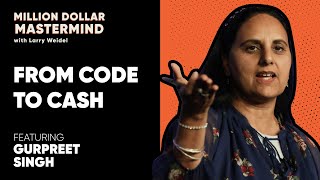
Gurpreet Singh came to the U.S. from India at age 3, learned programming at 12, and worked a two-hour commute as a programmer before taking on $40,000 in debt to start a financial-services company. She scaled it to 39 offices in roughly two years through team-building and personal-development practices like reading and mentorship.
Questions this video answers
Age 3.
At age 12 (junior high program teaching computers/programming).
About $80,000.
About four hours total (two hours each way).
About $40,000 in debt.
Welcome to this edition of the Million Dollar Mastermind podcast. This is where we pick the brains of high achievers from all walks of life and get their hard earned real world insights on winning. I'm your host, Larry Wydell. Hello, Gurpreet Singh. Thanks for joining us.
Thank you for having me.
And you got an exciting story for people that are locked in jobs behind a desk and wanting to get out behind the desk. And you see people doing, having a business of their own and you just feel like you got more potential than your current career, your current opportunity, your current job offers you, but you don't, you don't feel like you're in a box and you're in a routine. You're successful at it, you've got obligations. And so a lot of questions about how you make the transition. Which industry would you go to? That's issue that we want to provide some light on and show people that it's compounded if you're female, it's compounded if you have a different background. Like Indian. Is it an Indian background? Is that what you're. And so we'll get into that story about all of that compounds and ups the complexity factor. But you're living proof that this can happen. You can do it because you went from the computer five years of being a computer programmer to where now you have built a regional powerhouse organization in financial services in the most competitive marketplace in the country up in the northeast and with 20 offices, a thousand people, and you're on the verge of a huge growth surge and unlimited market opportunity. And so you position yourself very, very well, great fundamentals and foundation in place. But where you've come so far is astounding. So we're going to dig into that and see if we can let people pick up some answers that they can put in their toolbox of ideas to use when they run into some of these kinds of problems. So talk about at what stage of your life were you, did you get into computer programming that job and what led you to it? Because I would imagine that was probably, you were probably pretty excited to get that job.
Yeah, absolutely. When I was 12 years old, they started a program in my junior high school where they introduced computers and computer programming. And they said, listen, you can come early 7am and we'll be teaching you these skills. So that's what I signed up for. And as I went through junior high school and high school, I went to business high school and they taught me, they kept continuing to teach me these things and then that's What I decided to go into in college.
And why did you like that? Why did that stick out to you rather than sports or music or art or something like that?
Well, it stuck out to me because I didn't want to deal with a lot of people. So this was behind the desk. You're doing your programming, and you're working very little with people. You're working programs. And at that time, I was not a people person, and I didn't want to interact with a lot of people. So that was the perfect fit for me.
And the idea of developing skills. I just think it's a good thing for kids to be, you know, a thought to have in their mind is they're growing up of, like, developing skills that you can use throughout your life. Because even if you're, you know, not in that, you can go to the top and develop skills in one area, you makes it easier to develop skills in another area, become super proficient at it. It's kind of like when you're learning a musical instrument, they want you to learn. Get to the point. Because what your. Your tendency is like, hey, I like this song. You go in to see this week, you see their guitar teacher, whatever. How does that work? And then you kind of get to where you can play that. The next week, it's another song. You never really learned to play anything. So what they want you do is to get to where as soon as possible, get where you can play one song at a performance level. Because then you have it in your mind like, this is. This is playing esau. And it's the same thing with developing a skill, it seemed like. And so you're developing a skill at a young age and probably feeling pretty good about yourself, about the things you're learning.
Yeah, absolutely. And the skill that I developed, actually, was getting up early and going to school early and habits that have stuck with me. The work ethic. Yeah, the work ethic skill. And also, if you want something, go for it. And being that I'm from an immigrant family, my parents migrated from India, we saw them work hard, and that was just part of our DNA. It's, if you want something, go get it, work hard, show up early, and make it happen.
And so talk about an immigrant family. How long by the time you were 12 years old, you're in high school. How long had they been here? Were you involved in that immigration experience?
Yeah, well, I came here when I was 3, and I was born in India, and I came here when I was three years old. So I didn't learn how to speak English until I was six, because I never went to school till I was six and that's when I learned English was my second language.
Yeah. And how did that impact you growing up? Do you think it made an impact on you one way or the other?
I mean, it made an impact as when I went to school, it opened up a new world, a new language, because I was only familiar with what I was learning at home, which was my own native language. So that opened up a whole new world of possibilities.
I guess one way of looking at it, Gerpreet, is when in your young life did you. Did it dawn on you, you have to learn a new language at 6? And. But when did you really. Where did the impact of being an immigrant impact you and that this was part of your reality?
Well, I think it impacted me because as I said, my parents worked hard. They came here for a better life. So there was no mentality of, oh, somebody's going to give you something, or you're here to just wait for things to happen. It's make things happen. You came across all this time for a better life for your family. That's where my parents, my father, my mother, my sisters. That's the mentality. So the mentality was go after everything you can get your hands on because that's where the opportunity is.
Yeah. And so as you're going through skill, I mean, through school, by the time you're 12 years old, you get the opportunity to get involved in the coding and class, and that basically forced you to now get up early, develop some discipline, and that stayed with you. I mean, so you were doing this all the way through high school?
Yes, through high school. And then I went to junior high school there. And then I decided to go to high school further away because there was a business school that I applied for. So my friends all went to the local school school. They're like, oh, you're going to take the train and you're going to take the bus and you're going to go to Manhattan because that's the big city, right. And you're going to go to school there every day. And I said, yeah, because I'm going to be able to learn so much more. And it was fabulous because it was a business school and they taught us skills that I use. I mean, up until today, did that.
Give put you in a lead position in terms of getting employment as you graduated from that school or what happened after that high school, that business school?
Right. Well, during high school, at that time, there was internships with payment. We got to go to work. So I worked for places like Manufacturers Hanover, which is now Chase. I've got to work in the financial industry. I actually worked for a company where I was in charge of like, 39 phone lines. So that was a learning experience in itself because I had to manage all this and the phone calls would go crazy and I was like, oh, my God, this is overwhelming. But then I learned a lot because the people I worked with, they were specialists in different parts of the world because it was a international company. They created dental supplies and they. They had dentists all over the world that created this product. So I was able to talk to these people as they would come into the main, like the main hub, which was in Queens. Well, it's kind of Long island city near Manhattan. And I was able to talk to them and they were able to bring all these ideas and their heritage and where they came from. And I was like, wow, this is opportunity as it at its best.
And what particularly did you learn at a young age about managing 39 phone lines? What would you learn to see, like, you just like, running from the lions? I don't know.
Well, what I learned was that you had to pay attention, you had to focus. There was no, you can't just go on coffee break because if you walk away, the lines are ringing and these are orders coming in. These are millions of dollars of orders coming in on the phone line. So if I was able to not do the job well, that was losses for the company. So I was actually able to focus. Because at that time, you didn't have phones, you didn't bring your phone to work. You were able to. I had to show up at 8am, prepare everything, and leave there at 6pm because that's what the phone lines are open. And I had to transfer these lines to other people. So it might have seemed like an easy job, but it really taught me about focus.
Yeah. Now, as you graduated from school, did you go to college in the city or. Or where?
Yeah, well, I went to St. John's University, which was in New York. And that was another great experience because I actually met, which I didn't know, my future mentors or people that I listened to, like Dr. Wayne Dyer used to tell teach there. And I used to listen to him and I was like, oh, my God, I can't believe it that I. I missed him in the college. But after college I started learning these things and he was right there and I missed that opportunity. But I was able to connect the two and Then the second thing I would say I would learned in the college is again, we didn't just go to college. That college required us to have six months. Every six months we had a different internship at the college. So we would work with different departments. We would work. One year I worked with the alumni department. And then that blew my mind even more because I would have to. I would see all these checks come in as donations. And here I was, I was like, I wasn't wealthy, I was poor, I was broke. But I was able to see this. And I was like, wait a minute, there's a lot of money out there. I just have to figure out how to attract it.
Yeah, that's a big breakthrough in all of our lives to realize everybody's not poor out there. No matter. Everybody I know might be poor or might be starving, but there's a lot of money. There's a lot of people that have a lot of money. And I remember where that hit me was our first convention. We went over to Hawaii. And I'd always been under the impression that these were the exclusive places and you had to be very few people could go, well, there's zillions of people there and a lot of them were young, younger than me, and they were bringing their whole families. I'm thinking, you know, the light bulb finally went on, that there's a lot of opportunity, there's a lot of success out there in the world. And that's what we're trying to put the light bulb on here. Because there's things people do to create that success for themselves. It doesn't fall out of the sky. They're not taking their families over to on these luxury vacations because everybody won the lottery or everybody just inherited from a rich uncle. Now most of them made their own money. And almost always in the United States, you find already in the world of the billionaires, of the millionaires, most of them made their money money. It wasn't inherited, in other words. And so as you're coming up, you get out of St. John's you're still thinking the career path is coding. And why do you think you didn't think. The thought didn't come into your mind while you're looking at all these big checks coming in the alumni office and how to get my hands, how can I get position myself to where that that can happen to me. Why do you think that light bulb didn't go on at that time?
I would say it's one thing called belief in yourself. See, a lot of people, they're seeing the external world and they're saying, oh, it's okay for this person, and I'm happy for this person, I'm happy for that person. But because they have lack of confidence and belief in themselves, they never feel that they're good enough to attract it. So. So I think what I shifted in those years after that was I was able to connect to a self development program which taught me how to believe in me that I'm worth it, that it's okay, that these other people have it and I'm not mad they have it. I'm not being a victim. I'm not saying, oh, poor little me, I don't have it. And they have it and they got it easy. No, it was digging into the habits of successful people and say, if I duplicate this, then the universe is going to give it to me too.
Yeah, well, now you go out and the main thing is you're. You're getting mentally stronger. You're developing your social skills, you're developing your technical skills, and you go out and you get a pretty good job in Cody. Who was that with and why? Was that a great job?
Yes. The first job I ever had was in New Jersey and It was about $80,000 and it was pretty decent. But. But I realized I had to spend so much time traveling there every morning and every evening to what, Get a paycheck so I can build someone else's life where I can be building my own future and owning something versus just loaning it.
And how much were you traveling then?
It was two hours in the morning, two hours in the evening. That was four hours of my time. And that's when I started using those two hours to what? Develop myself, to read and listen. And they had those players, those CD players, and they had the books. I would carry the books with me. So I would sit on the train and I. It was almost like traveling and having a university on the train. And I would finish chapter after chapter, and in the evening I would finish the rest of the chapters. But then I would do the same thing every day until it just becomes where you say, well, there's something better out there.
Yeah, I've heard people say that they use their car like that. It's like every time they get in their car, class begins. You can cover a lot of class material when you're in the. In the car. If you get established that habit, that routine, and set yourself up to have that material already there when you get in. And so as you're going along, what other skills did you do, did you develop any other skills on the job that are useful to you later once you got out of college?
Yeah, I believe I did. I was able to interact with people more. I was able to become a team player more. I was able to do different projects as a team versus an individual. And I was able to communicate better. Because if you don't communicate well to either other people or yourself, you're blocking what you really want. And once you communicate it and you have a clear, concise mental picture now, the world is what out there for you to take.
For those of you who are sick and tired of fooling around and are dead serious about wanting to move up fast, I've got something especially for for you. I've combined the best insights from over 40 years in business and making $70 million in income and compressed them into a free webinar. That's right, it's a free resource. If you want to find out exactly what the concepts are that I use in coaching million dollar earners, Register now@widelowinning.com you'll discover the five part framework used by so many to reach their financial, personal and professional goals. You can find that link in this episode's show Notes. Now, were you on a management trajectory when you left that and started your own business? Were you pretty much still programming or what? When you say you're a part of the team and everything, what were you doing inside the team?
Well, basically you're setting different programs. But I don't think I was on a management trajectory because the people I worked there worked there for 30, 40 years and they had no intention of retiring because they would have to get out of the way for me to have management. So I, I really realized that this is going to be a long shot because these people, they are not going anywhere.
How scary was it and what are the first steps you had to put yourself through to how did you evaluate opportunities and how did you make the decision to branch out and go in another direction?
Well, the decisions are very simple. You use common sense, you observe, you look at other people's lives if they're in your field, and then 20, 30, 40 years from now, this is where their life looks like, then your life will probably be the same. But you have to step out of that box and you have to say, listen, I don't want this kind of life and I don't want that same end in mind. So it was almost like when you start learning these things or you start learning the habits and the laws of the universe it becomes common sense, like, oh, okay, this makes sense. So if something makes sense, you have to move on because if you stay where you are, then you're really hurting yourself.
How long did it take you to find something that appealed to you as an alternative career path?
I would say, as I was working in the field for five years with the programming right after, when the opportunity came along, I believe even though I didn't expect excel in the opportunities right away, but I did have an awakening that these are some of the things I need to position myself. I need to believe in myself more. I need to learn those proper skills in the new field which is doable. And then I need to understand that what's out there is available for other people, but it's available for me too. And I'm just willing. Am I willing? I was asking myself this question when I was struggling with people skills, I was asking myself this question daily. I said, listen, self, do you want to be financially or wealthy in the future? Yes, you do. Then you need to get over yourself and you need to go ahead and become a better people person. That's it. It's a conversation. That's it. It's over. If you want this, then you need to do this. So it was more common sense than anything else.
Yeah. That's a principle that I first put in my book and then I since put in my course that we ultimately, the higher you go, you've got to become your own best self coach. You can learn from other people, but only you know you and only you are there right when you're facing these challenges. And you can either you can take forever to try and find someone else that would give you your answer, or you could dig it out and find it out for yourself. And a lot of these answers you wind up using over and over the rest of your life because these, these roadblocks are recurring. It seems like they're recurring as you go down the road. They show up at different levels of success. But as you went in and what was your financial obligations at the time you made the transition? Did you have a lot of obligations on you or was it easy for you to make the transition because you're giving up a steady income?
Well, I had obligations. I had $40,000 in debt. And I had to bet on myself and I had to bet on realizing I was a young. At that time, I was transitioning into marriage, being a young, a future young mother because my child came right away after we got married. And there was a lot of you had to do A lot of kind of soul searching and say, okay, what do I want? Do I want something better or do I want to stay the same? Right. If I want something better, then I need to be better. If I'm better, I'm going to attract better, which means better opportunities, better money. Then the future for my family is better too. But it all starts with me because a lot of people say, oh, I love my family, I love this, I love that. But they're not willing to make the changes to themselves because nothing is automatic. Success is not automatic. It has to be a daily grind.
Was it your goal to as quickly as possible replace the income that you had left behind? Did you put yourself on the clock? Was it kind of a race? One principle that I talk about all the time is when you're in business for yourself, you don't work, you race. The sooner you get there, you're smart enough to know the sooner you get to the next target in front of you, the quicker you're going to start enjoying the benefits. And you don't want to drag it out because you got less time to enjoy, so you want to get there fast. And so did you have that kind of thinking or were you. Did you have any idea of a target in mind?
Yeah, absolutely. And it all brought me back to the again, being an immigrant and having that immigrant work ethic and wanting it and taking it right. Being in that place of remembering coming from another place and saying, okay, am I better? Did I do something better? Can I do something better for my family? So it was almost like going back to that space where you come from and what you're willing to fight for. So that's what kept me focused on working 60, 70, 80 hours a week. Because I said, wait a minute, if I did it for someone else, I'm doing it for myself.
Now you're in the process of overcoming those feelings of inferiority and disadvantage. You know, I'm disadvantaged for this, I'm disadvantaged for that. I'm an immigrant child of immigrant parents, second language. I'm not a people person. I'm female. And I, you know that. Did you see people along the way that you met that gave in to those kind of feelings and kind of sold themselves short?
Yeah, absolutely, all the time. And the ones that I saw bail out the fastest were the people that, quote, unquote, call themselves smart because they, they were logical, Right? So I was not a logical person. I backed everything from emotion, and I knew that emotion would drive me and that the logic was going to be there. But I needed to do that emotional side. Because the E and emotion is the energy that drives you. Right. Because logic is someone that needs proof. I don't need proof. I just need the emotion and the energy to know that I can move forward. And once I had that, I wasn't stuck on, oh, when will it happen? Is it going to happen? Yes, it's going to happen. When it's going to happen? Well, the universe knows when it's going to happen and I know eventually it's going to happen. So let me continue the journey.
How long did it take you to when you start getting your first successes and where you prove to yourself like, I can make this, I can make this go, this is going to work?
Yeah. Well, it took me two years initially to make any type of transition financially, but the two years I made the transition realizing that I had to work on myself. So that work that I was doing on myself would cause me to have the financial growth. But if I didn't do this work on myself, quite honestly, the game was going to. The game was going to be over. It was going to be over and I knew that I couldn't give in. So I had to keep working on myself.
How would you explain to people how did you view that, what that meant working on yourself, continuing to move forward, continue to do what was in front of you, staying on track where the results were, not coming in yet or not, and keeping keeping the faith that if I keep doing what I'm supposed to do, eventually things are going to start coming my way. What would you say is how you kept improving?
Right. So working on myself is very simple. And I tell this to people all the time. It's reading, listening and writing. It's being able to have those new thoughts by reading, and then we learn by listening. Right. So these are the three most powerful things we learn in a classroom. Right. That's why we have teachers and we have. We're become students. Right. So I became a student of life. And once I realized that I was capable of reading, I was capable of listening and I was capable of writing. This is what's required for success. And I could duplicate that within myself daily. And if I do this, it's going to take my life to the next level.
Another thing is you're seeking out answers to questions that you have. You just don't let these questions stop you. I would always say to people, they came to visit, they're in for a meeting or something, and they happen to jump in the car and they're riding with me over to next location or whatever. And I said, I'm not surprised by your lack of success, but I am surprised that you have me in the car with you probably the one time in your life and you're not asking me questions. What is going on in your mind? You've got me right here. And if you didn't have questions, you'd be doing a whole lot more than you're doing right now. And what I did is this thing really preps you. Going through this process preps you. You program yourself to take the mystery out of the magic or of how you actually become successful and get it down into step by step, things that you can teach to other people. And that allows you, once you get your business going, to develop and train your management, but also develop the train management where you can expand and open other offices, which I know that's what you did. And I went through the same thing myself because I had, I had mentors that I grew up in an office. I don't know, when you, you're in financial services, you have the thing where you can go just open your own office right off the bat as a. Any professional coming out of medicine or accounting or cpa, you can go out there and open an office, put at your shingle, and then just start to build that way or what. The more common approach is to start in someone else's office as again an apprenticeship, a mentorship type program, a trainee program. And then once you learn the ropes, earn the right to get promoted out and get your own operation and turn yourself loose. And if you're good enough, then you can, in other words, not just run a McDonald's but get your own McDonald's type thing. And if you're really good and you're really motivated to do it, then you can start taking people in that work inside your operation and train them and spin them off to their operation. And you've done that 20 times. And a lot of that, you're seeing the fruits of you taking the time to learn this stuff, write it down, get these specific answers to specific situations. And you were really programming yourself for really the rest of your life to have growth the rest of your life. And that's a great thing. When I came in Gupreet, I would ask questions. I was surrounded. I was the dumbest guy in the room. Everybody else was a charismatic, natural salesperson. I had no sales. I had to learn it. I told people that it would have been easier for me. I always thought sales was a magic process. It's Like a magic trick. Because I would watch people make sales and I had no clue how they did it. I'd listen to them talk, they'd show things to people. And then at the end, people would give them a check or fill out a form. And I thought, how did this happen? It happened right in front of my eyes. What just happened? And so I had to step by step, ask questions. And I got a little tape recorder, a little cheap tape recorder, cassettes, 29 cent cassettes. And I would take the tape recorder and I would ask the question, listen to them answer it. You know, take 10 or 15 minutes, I'd go in the other room, I'd transcribe it longhand, I'd make it a long outline out of that, then a short outline, then a one word outline. By that time I knew it, and that was me writing it down. But it's kind of like I put myself through the same process on anything I needed to learn, any presentation I needed to know, anything that I needed to train someone else on or whatever. I'd go in and do that same process, ask it, write it down, make an outline. I'd wind up memorizing it just by doing it from long to short. And most of the time I never had to look at the outlines ever again because it was in my. I kind of made it part of my DNA. And so that helped me in training. I found, Gurpreet, that the harder it is for you to learn something, the better a trainer you are. Because you have to break it down into the real small pieces so it makes sense to you. But that makes that elevates you in terms of being able to explain it to other people. Have you found the same thing?
Yeah, absolutely. And I love what you said. And you use the keyword mentor. And that's what every morning when I speak to my mentor. And I remember the quote from Walt Whitman, be curious, not judgmental. I'm very curious. I'm a very curious person. I ask a lot of questions. So if you're in front of me and you have your success, I will ask you everything. Because I know from that I'll get the understanding and put that pieces of the puzzle together. And every time the puzzle unfolds now, I get a new breakthrough.
When you started your own operation, you opened your own office, and now, I mean, it's real, it's your business, you have to sign a lease, you have to sign the paperwork. Was that a scary moment for you?
I'd say it was scary, but it was also Invigorating. It's like the rest of your life is in front of you. Make things happen. Don't sit here in the office waiting for things to happen. Make things happen. So I think it was an exciting time of my life because it was something I was looking forward to. That daily focus, that daily grind was.
In your mind that you wanted to have out of that office. Did you want to have a place where you could do business, have a few assistants, and you could be like the. The Lone Ranger, doing most of the business yourself, or did you want to build an organization right from the beginning?
Well, from the beginning, I was kind of a Lone Ranger because I told you I had this issue with myself where I wasn't the best people person. But then when I realized, and of course, being in a partnership with my husband, he made me realize, wait a minute. If you're building, going solo, it's going to be limited. You need to build a team so you can grow and get better and change. So I think when he said that to me, it was almost like a challenge. And once I'm challenged, I'm going to challenge myself. So the best thing was that conversation with him, because now I was able to address the issues with myself and say, wait a minute, you can do this. Just like you set out to do this, you can do this, too. So it almost becomes like an aha moment where you say, hmm, it's not as hard as it seems. It might take some work, but it can be done.
And convincing yourself that it can be done is opens the door to everything that comes thereafter. And also, he handled it very wisely. He. He didn't lecture you. He just put the options in front of you if you keep doing what you're doing. And that's an important skill to have or technique to have when you're dealing with people is like, you can continue the way you're doing now, and things will probably turn out great with this, but it'll probably be limited. Eventually, down the road, you're going to get as good as you can get. You're going to be as busy as you can get be. And at that point, it's just going to be, you're going to be in a rocking chair type life. You'll have things to do, but you know, you're not going to be going anywhere after that point. And so the thing is that there's another option on the table is to start adding some people, mixing in some other people in with what you're doing, and step by step, Training them, even though it's frustrating, you gotta train them and hire the right kind of people. But the payoffs that person might be with you for. Be with you and improving for the next 30 years. And so lots of opportunity there, but the choice is up to you. And so that's a great skill to be able to have and know how to talk to people when they're at that moment to where it can be their decision to buy in and not you trying to force it down their throat. Because obviously you have. How long did it take you of running that office? Once you got the idea that I can blend some people in here and get bigger, how long did that take now before you got a sizable organization running out of that office?
Well, I would say it took six months. It didn't take as long as I thought it would, but it didn't. Of course we want immediate results. Right. But it almost seems like I was in a bubble and it was almost like a dream. And you're working through the dream, and then all of a sudden you wake up and you realize you're. You're halfway there. That the decision was like really the big, big. The big, I guess, aha moment. And then the rest is just work that has to be done around that decision. Because most people don't decide. They say they do, but the actions say that I haven't decided yet, but I had made the decision. So it was almost like you decided. So whatever you decide, the universe is going to partner with you and help you with that decision. So it was really like kind of a seamless process. And it was a very beautiful journey, I must say.
So what. How did that decision play out in your daily activity about how you would go about your work? I would imagine it transitioned from you primarily looking for prospects for sales and making sales and going on sales appointments to where you blended in with that, looking for some people to add to your team.
Yeah, absolutely. And what I did is I shifted my thought to say, listen, if I find people for my team, the sales and the products are so simple. The people on the team are going to be able to market them. It's not difficult. It's just a matter of getting someone again, 80%. I was reading a book out there, and they said, 80% of the population, and this is the worldwide, this is not only us. 80% of the human race is walking around right now feeling they're not good enough. That's a big population. And I felt like I had to make people realize what they. What they were good At. And once I was able to do that, it was unlocking them to the possibilities. So that was the major work that had to be done in there.
And how did you. How did you figure out how to do. Do that most effectively?
Well, it was simple. I asked people where their life is, because I think people ask a question like, well, what's your goal? People never heard about goals. I mean, people even in Harvard, people who graduated from Harvard, they didn't even put their goals down. So imagine the regular person, Joe Schmo out there, who doesn't feel worthy. They're like, goal. What are you talking about? But I was able to say, hey, where's your life today? Let's have a snapshot of your life right now. Where do you work? Who's your family? How many kids do you have? You know, basic stuff like that. But then where do you want it to be? Like, what are some of your things that you dream about? Oh, you dream about going to Italy. You dream about going to Greece. That's very doable. That's very possible. We can list these things down, and we have a game plan to get them done. And you'll be surprised how many people actually hit their goals.
How long did it take you to get your first one, your first person, and how did that. You go from zero to six months. What was that transition? Life? Because that was really the transition into a whole new way of life. You make that decision six months. How long did it take you to get your first person in? And how long did it take you to get clear on the kind of person you wanted to get? Not just, you know, adding people in. I want to get specific about who I want to have on my team.
Yeah, it was nearly immediate, and it was just, like I said, the decision was made, and I was clear about who I wanted because we. We attract who we are, right? Not who we want to be. And I was clear about that person who will have that hunger. Like, I did like that coming. Like I said, I keep bringing it back to that immigrant mindset. But, you know, when you come to JFK airport in New York and you see people come for the first time, they come with their eyes, lighted up, the new world they left behind, their life and now the possibilities. Right? I was like, that person. And immediately as I started talking to people, they're like, wow, that's what you're doing. I want to do that, too. And I was like, are you sure? It was such a short period of time that because I didn't believe in myself, so, so much. I even asked those people that said, yes, are you sure? And then I'm like saying to myself, are you crazy? What's wrong with you? So it was immediate in that process of building people, because we're not taught to build other people, because when we're on a job, we're afraid to share everything with people because we might be afraid of them taking our jobs. Right, right here. So I was able to let go of the fear and say, hey, you know what? I'm going to be the CEO of my company. That's the Chief Encouraging Officer. I heard that from John Maxwell. And when I heard it, I said, oh, my God, that's what I want to be, a CEO, a Chief Encouraging Officer. Even though that person might not be the one I'm looking for. But if I encourage them, when I'm speaking, speaking, I'm really speaking to myself. Whether they, whether they believe it or not, that's up to them. But what it's doing, it's. It's reprogramming my mind into a better mindset. So I thank all those people, those negative people out there, because I was out there affirming the great things in life and they were contradicting and I was affirming, but because I was saying it, it happened in my mind, even if it didn't happen in theirs. If that made sense.
Right. So now you go from convincing people that they can be successful, they can change their career, they can join, become a part of what you're doing, where now people are opening their own offices, which a whole nother level of commitment. And that's become quite a thing to open. 20 offices, have 20 functioning.
39. It's actually 39. I undergrade 39.
Well, I knew you're, you were a position for amazing growth. I didn't know we were going to have double the number by the time the podcast was over.
But remember, I'm not a person. I forget my own number sometimes. I'm a more action oriented, get it done and let's move on to the next kind of person.
Yeah, well, that's what I tell people. Like if they say, how much stock do you have or how much this or how many offices you have, if you know the answer, you don't have enough. Because when you have enough, that's growing so fast you can't keep up with them. And you appear to be a perfect example of it. And so how is this happening where people are coming through and opening their own offices? And what's that process all about for them and for you? Because this is a significant powerhouse operation up there in that region.
Yeah, well, again, like I told you, I was the chief encouraging officer. I told the people that I was mentoring, I told them to change their vocabulary, okay? I didn't want them to use the word problem. I wanted them to use the word situation. So I would take out a pen and pad if I'm visiting with you. I would say, larry, what are some of the situations you're facing? I don't say problems because in problems people start thinking negativity, right? And we would list down the situations. And then I would say, hey, listen, now that we have the situations, let's list down the solutions. So I would attack each situation with a solution. So when I left there, their belief level was higher. But I would not just give them like a hyped up motivational talk. I would give them strategies for each situation. I would say, hey, you know what, Larry, you're having a tough time meeting with people. Let's look through your phone book or your phone or your phone or your phone book. Some people still write their phone book. And let's go through the resources you have. And based on my experience, I'm going to help you so we can transition. And all of a sudden you would see that big cloud went away. We're like, you're actually going to help me do this? I say yes, because this is what I do. And when I would leave there, now they feel like Superman and now they can go conquer the world. So I felt like every situation was that way and that's what helped me to transition their thinking. And then that would empower me to go get more people because I was like, wait a minute, if I could do it for that person and I can go do it for XYZ now.
Have you learned how have your systems developed? Because in the beginning it's just you doing what you do. And then as you get an office, you have a bunch of people in there operating and they're doing a lot of the things, they're extension of you, but you have to be even more organized. And when you have offices in other states and then they're opening other offices, they're on the move. How elaborate are your systems? How much do you travel? How much do you stay in communication? You raise the communication idea early on. The importance of it. How often are you in communication with your people on the phone, with their numbers and also with you on site?
All the time. And thank God for technology because we can be on zoom now and we can see each other. Right? Before it was just on the phone. We don't see the facial expressions. You're able to have a zoom call with one of your offices and if they're farther away, you can say, hey, listen, you know what? The, the time I'm going to spend two hours going in, two hours coming, that's four hours, right? I'm going to invest that time in you and we're going to be on this call and go over the situations and the solutions. So I think the best thing I do all the time is I communicate all the time. And the systems that I have for training, I delegated. I want to, I want people to show me that they're able to teach this stuff the same way they must have. They might have a different personality, but they've got to get the point across. If they don't get the point across, it's not going to work.
How do you keep your people unified and where they feel like they're part of a team and how important is that?
Well, unity is important, but I think people mistake unity with conformity. And people think, well, oh, because I do it this way, you're going to do it this way. No, unity just means you and I, we are after the same thing. We're all here to help our families. You might do it a little different, I might do it a little different. But at the end of the day, the end in mind is the same. And if I. You can't come with an attitude of, well, you know what? I already did my part in the past and you know what, I'm just here to pass time because people hate for you to be on the sideline and they're out there slopping it up and working and you're sitting here saying, well, you know what? I just did everything I needed to do and I have a great life. People don't like that. They're like, are you in the game? Yes, I'm in the game. I might be at a little higher level game or I might be ahead of you in the game because I came before you, but I'm playing the same game you're playing. So when that happens, people become unified and they, they respect you because now you're looking out for them.
How would you say your life has changed, Gurpreet, over the last few years, where you've gone from, you have to look back from going to being an employee, spending those two hours every day going and coming to just a job job to where now you're spearheading this organization in a very technical, professional field and having amazing success. How has that paid off for you in your personal life? And has it made things? How has it made it better? Is it worth it for you that you put yourself through all of this?
Yeah. Well, it reminds me of a quote that again, John Maxwell, I always talk about him because I listen to him a lot. And he said, leadership is a wonderful thing position, but it's also a 24 7. Leadership is 24 7. So I feel that leadership has energized me to provide value to people. And because of my journey, I'm able to walk that journey with them and I'm able to take that road with them. So to me, I'm more invigorated today than I was when I started. And now it feels like I have the ticket to freedom. And the freedom is not from financial freedom. I mean freedom of who I am. I can be myself and I can basically, I don't have to be someone else. I don't have to prove anything to other people, but I want to be the best person I can. And the only way that's going to happen is to continue growing, is to continue developing my mind and continuing to connect with people like yourself who are creating these resources and saying, wait a minute, I can get you the insight that's required. Now we just have to apply it so we can move further. So it's really a great journey.
So in your personal life, how would you tell that person who was going to that job and spending their life coding, how would you tell them this is paid off for you? Like, if you say, if you go through this transition that I went through, here's how it can pay off for you and enriching your life. How would you say?
Well, I would say that working on yourself, you believe in yourself, you become better. It's worth it. Because what you do on the inside is going to show up on the outside, right? Of course, financially, it's going to show up because we want to have financial empowerment, but it's also going to show up because you want to be just a better person, a better human being, a better teammate, a better wife, a better mother, a better daughter, whatever. You're better. Because now your attitude is not a victim. Your attitude is like, wait a minute, I can win this, whatever it is, I can be the victor of my life. So that just frees you up. Because then the world is full of possibilities. There's no restriction. It's unlimited. It's like 10x the world is a 10x world. It's not a small world. And that, I think that self, that sense of satisfaction, it's not anything you can buy. It's something you can only go through the journey and develop because you become.
Somebody who's a difference maker in other people's lives. And the thing is, when you have a job, no matter how great the job is or you're, you're basically working for a company, performing a task, and you're basically filling a slot and hopefully doing a great job filling the slot, but they can run ads and get somebody else to come in and fill that slot, build that website, write that code, build that app or whatever. But when you go out there and you're creating products and delivering products, like Casey Diaz, I was asking him explain how he got so excited about being in the printing business. And he said, well, you make a sign, people have an idea, they're starting a business and they want a new sign and you selected everything. But then when you build it and they come in and then you install it, he said, to see that, you know, the smiles on their faces and the satisfaction, that's kind of like a little part of their dream coming alive. And he said, it's just very rewarding to be a part of that. And when you're in sales, you get the thing of being able to help a family, a business owner, providing a service, you're selling it something new to make their life better. But when you're offering, you're building people and you're offering them the opportunity to come up and not only learn a skill, but to, if they're motivated and they've got the ability, go on and do something bigger with that, even get their own office, their own business and change their life, become financially independent with the same spending the same time, it's much more rewarding to spend your time helping people change their lives rather than just delivering a product. And what comes to mind with some of the people that you've seen go through transformations that makes you proud of what you've been able to accomplish through your business other than make money and move, you know, sell products and things like that. What are some of the biggest transformations you've seen?
Well, I've seen people becoming debt free. I've seen people get their life back. I've seen people buy their mama house. I've seen them maybe being able to pay for medical challenges for their family. I've seen all of that happen. And when it happens, it's just invigorating. Because you were able to show them a system that provided them that. Because on their job they wouldn't be able to do that. Right. It was limited. So I've seen that all. And I mean, I've seen transformations in people's lives, but I've also seen people's transformation in their. Their thought process where they're no longer that negative person, they're no longer that doubting person, where they believe in themselves and they want to conquer the world. So to me, that's the best feeling.
Yeah. Well, congratulations, Gurpreet. It's been fun talking with you. Hopefully we're going to get a chance to do it again. Hopefully your offices and your network will expand. And because I know you're in. I knew you were in a big growth surge right now, but I didn't know you'd already exploded from 20 to 39 offices.
Yeah.
You might be up to 45. It's 10 minutes later.
Yep, that's it. The goal is to have at least minimum 100 in the next year or so. So we have to get to work.
Yeah. Well, let's make an appointment to get back and talk. Talk about that. But it's not all roses and it's not all staying calm. What would you say it was the biggest challenge for you? Just so people will know you're a real person and you're living a real life and things don't always go great. What was a real toughest crossroads for you or challenge for you as you. You went through this road?
Well, the biggest challenges I mentioned was the people to basically deal with people, to get along with people, to work with people. Because when you don't know how to work with yourself, you can't work with the. The public out there. So it was really getting a system to change myself that would help me change how I handle dealing or building a team or dealing with people. I think that was the most challenging, but it was also the most invigorating. So it was, as you said earlier, the challenge grows us the most. I think that challenge grew the most for me. To become the person who can work with basically any person and then help them see where we needed to go.
Yeah, I think all of us, the changes we have to make ourselves are the toughest in how we approach things. We have to become more flexible and more open. But those changes put us in a position to have much more success throughout our life because we're not so rigid. We're not creating more problems than we're solving as we go through life. So many managers are out there, they're putting, they make the soup and then they put a drop of poison in the soup. At the end of the day, they, they say something to poison the whole mixture is like they put a big party on for their team, but then they say something in the process where nobody enjoyed it. They hate the manager even more than when they started. And it's important not to be your own worst enemy out there. And that's, I think that's a process we, we all go through some stage or another.
Yes, absolutely.
Thanks so much. Dharpreet any. I always like to give our guest a last word. So do you have a last word for those that have stayed with us throughout the to the end?
Well, the last word is believe in yourself and go through the journey. And believe in yourself. Because when you believe in yourself, the world is unlimited and you might heal, hit those roadblocks. But guess what? If you come to a dead end, you just turn around and you go in another street. So don't limit yourself. Just continue and challenge yourself to become the best you. And it doesn't mean you have to go from 0 to 100. It's a process daily. Right. Life is. Success is in your daily agenda. And every day, if you do the small things, you'll be surprised how they add up.
Absolutely. And just make up your mind you're not going to be in that 80%. That because their answers are out there, you've just got to go look for them. And as our good friend Bill Arender says, I may not be good enough today, but I probably can be tomorrow. And so don't give up today because of what could happen tomorrow. The answers are all out there, so keep on going. Thanks so much, Gurpreet. This has been fun.
Yes, it's been great. I appreciate you having me on. It's been an honor. And I hope that someone can get something out of it.
I know they will. Thank you. Thank you for listening to this episode of the million Dollar Mastermind podcast. Commit to your personal and professional evolution with our free training video. It's designed not just as an educational session, but as a transformative journey for those bold enough to aim for the stars. This isn't just any webinar. It's a roadmap to achieving the extraordinary. It's tailored for those who dare to dream big. And yes, it is completely free. Join us in a network of ambitious professionals ready to take their careers to a new heights. Secure your spot now@whitelonwinning.com and let's unlock your potential together. Thanks for being part of this community.
More from Larry









Rick Jordan on Self-Engineered Proximity, Cyber Security Moats, and Truth-Based Leadership

Fire Fast or Fail Slow: Kevin Brittingham Reveals the One Rule That Built a $100M Empire
