Lessons From A Successful 46-Year-Old Career In Financial Services
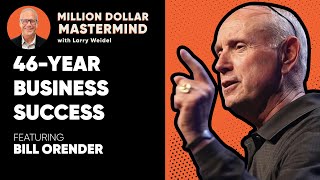
Larry Weidel and Bill Arender discuss building a direct-sales financial services company over 46 years. They cover choosing industries with growth potential, designing compensation to keep people motivated, and why persistence through setbacks matters more than avoiding them.
Hello, Bill Arender.
Hey, hello, Larry. Longtime friend, Larry Wydell. It's great to see you again and here talk with you today.
Yes, Bill, and thanks for getting on and making the time to talk today. And it's going to be fun to see what's on your mind. And for those of y' all that don't know, Bill and I have been in business since 1975. He's been in the business since 74. But we've been a part of one of the most prolific success stories in American business and financial services. And it's had many names. Many companies merge and sell and grow and go bigger, bigger, bigger. But over the long haul, it's been two primary names. It's Al Williams and Primerica. I don't use the names that much because the lawyers always trying to pick a fight with you using their name and everything. And so I don't let it come out of my mouth that much. But we are, to toot our horn, the largest independent financial services organization in the world. We did start with a handful of us and Bill is around a little year or so longer than me and you know, as a result got up the ladder quicker than I did. But together, I think where when the company actually went independent in 77, we might be the final, in the final nine people still standing that founded the company. I don't know what it is founded the company, but we were there. So for 46 years we've been talking to people about financial services and we've been involved in doing good things and bad things ourselves and making mistakes and learning, seeing other people make mistakes and some amazing growth stories, just absolutely astronomical. In our company right now, we have more million dollar earners than any other company in direct sales, I think most direct sales companies combined. And so we've seen a lot of success and we've seen the arc of success in a lot of people that have been owners of companies that we've done business with and sold for, like Sandy Weil of Citigroup. He was at 2000, I think Citigroup was the number one company in the world. He was running it. And so bigger than Apple and Google. And all of that came later. But so we've been around. We were the marketing engine for all of that and we went independent in 2010. But from that we've learned some things. And Bill is kind of like a part in addition to everything else. He's kind of like a historian, in a sense archivist of a lot of the principles that the company, because when you go 46 years, you start from scratch and you start with a bunch of people from all kinds of different industries, and you start with the guy running things in charge, who was an ex football coach. That it's quite a story, but it's not supposed to last 46 years. You're not supposed to go from a couple of people selling my term and invested difference to where you're on the New York Stock Exchange, like Bill and I were in 2010, ringing the bell up there on the platform. And so it's quite a track record, quite a trajectory. And it's been our privilege. We thank God every day that he got us here rather than somewhere else, because we could have worked just as harder, harder somewhere else and not seen any of the success. So we're grateful. And this is us giving back. We're passing on the wisdom. The way you get to be a genius in life. If you're successful in life, you become a genius to certain people. And let me give you the short course on how you become a genius. You make millions of mistakes that other people haven't made yet, so you learn lessons that they haven't learned yet. So you appear to them to be a genius, but unfortunately, you have all the scars with you of accumulating that knowledge. And so anyway, Bill, we're going to have some fun today, and hopefully people are going to learn from us. So what is on your mind right now? As we started before, we were thinking about what to cover. You had one thing that's really on your mind right now. So let's get it out there and see where it takes us.
You know, a lot of people, Larry, thank you, by the way, for having me. It's really an honor and a privilege to be here. A lot of people take a look at our company as an example. And by the way, I heard a statistic that's relevant. Only 12% of the companies that existed 50 years ago are still running today.
Really?
Because acquisition, mergers, consolidations are out and only 12% of them. So to have a company like ours that are 47 years old, it's a rarity. We don't realize that. And when people take a look at our company, Larry, they always think about, yeah, you had a crusade. You're out there helping people. And because of your unique concept of buy, chairman, invest the difference, that's why you succeeded. Well, I want to disagree with that. We succeeded because we had a great concept and we had a great money, motivation, incentive to do it.
Yeah.
You know, when people come here we don't realize that this thing just by itself would not move. So when you get a lot of money motivated people combined with something that we believed in, we soared. We started making money hand over fist because of. We worked hard, but also because we believed in it and it was right. But our company put together a compensation system that is the finest in the United States. We know, in the industry, but in the United States, our compensation package. I was talking to somebody the other day and they talked about summarizing our company. It's a money making machine. So my grandson asked me, why did you decide to go into financial services? I says, I didn't. I wanted to make money. I wanted to make lots of money. I wanted to be financially independent. And financial services was the avenue that afforded me that luxury of making that kind of money. And so to me, Larry, if people would understand the money consciousness and money motivation must be a major part of their life and not one of those hidden parts that they're embarrassed by. You and I have talked about this many times, Larry, let's talk about.
I wanted to kind of get around to just get people think about maxing out in your life. Because what we. That's a lot of how this thing was set up. We wanted to get in something and then once we were in it, we said, this is a great opportunity. It's kind of like Bill Gates and the idea of the computers. Because right from the beginning he realized, hey, this can be on every desk, every workstation, every person, every office. You know, he had this idea of the scale of it. You know, it can be evolved. And so you've got to think like, how big can this thing get that I'm working at? You know? And he was like, one thing you need to think about, where in the heck are you working? What kind of industry are you working in, what kind of company you're working in? And Bill, I did choose financial services because I was in construction And I worked 80 freaking hours a week for four years almost. And you know, my reward was three days before Christmas in 74. I went in at seven freaking o' clock in the morning, out in Alpharetta in the bitter cold. And my boss said, come over here. He said, you know, we're during the numbers last night, the oil embargo is dried up. All of the financing at the banks and houses, people want to buy our houses. They loved our houses. But he said, they want to buy, but they can't get financing. And then they're trying to sell their house and the people are trying to buy their house so they can buy our house. They can't get financing. And so Larry, the end of that is Billy Carter, Goldman Sachs oil embargo, no financing. You working 80 hours a week out here in construction, having houses that people were drooling over, wanting to buy. Not good enough, Larry. You're out three days before Christmas. And I just spent my last savings to buy my wife a mega sewing machine. That was her dream of all time that she want. There was my Christmas money down the drain. But I figured, you know, I got paychecks coming in, I got bonuses coming in this and the other. And I had a 5 month old son and another 14 month old son, another one on the way or year and a half Adam and another one on the way in five months, no problem. You know, we're going to sell in these things and people love us. In fact, the guy we had such a reputation and I'm the one who built the friggin houses, he stayed inside down at Sandy Springs, inside of his house. And he supposedly was Mr. Inside Financial Guy. I was Mr. Outside Building the houses. And the year after I got laid off because we couldn't sell houses, he got elected president of the Atlanta Homebuilders association off the houses I built. And I'm out there going to visit the relatives, eating their food because I can't figure out what I'm going to do next. But one thing, Bill, I made up my mind. I was through with that industry. I was not going to make that mistake again, ladies and gentlemen. And so if you, you know, life will teach you, life will send you signals if you'll pay attention. But that was one is like I had no one come up to me and say you need to choose the right industry and this, that and the other. Where's that industry going? Where's that company going inside that? Nobody came up told me that, but life told me that reality taught me that it was like. So what I said was, I'm going to learn something different. I got to put 80 hours a week in. I'm going to get something different. And so I said, started looking at industries. I said, which was the most successful industry to come out of the Great Depression? Because we were in kind of a depression, you know, in the country. And someone told me financial services was the only industry that survived during the Great Depression. I said, sold, I'm getting a financial services one way or the other. If you're looking out there and you want to maximize your life, I'm not going to go through the whole checklist of things that right now. But maybe they'll come up during the course of this discussion. But one thing you got to look for is a industry that's on the move, that's big, that has opportunity. And Bill, we've had exponential growth for 46 years and we're like doing 1 or 2% of the market because we deal with middle income families and they're constantly being formed and reformed and then new kids growing up, making, having families. And so it's like trying to count all the grains of sand on all the oceans of the world in terms of this market is so big. And so I, I would tell those of y' all listening is like get yourself in a great industry that has a big market. You don't want to max out doing like I was 80 hours a week in something that is fragile. And one thing I learned about people and I'm sure you know contractors, Bill, they pretty much go feast or famine on seven year cycles. I noticed people out there, there are builders I built with, we'd see them in the construction shack cause there was no such thing as cell phones and, and that was the only phones. But in the construction shack you go in there and on seven year cycles they have success because houses are selling, they join the country club, they send their kids to the private schools, they take the nice vacation, they get the extra two or three vehicles, everything is grossy. And then at the end of the seven year cycle they're divorced, they're out of the country club, they're living in a trailer somewhere. They're just trying to hold their company together until the market turns. And I said I just cannot put myself through that. I got to get in a different end. And it's not just one or two. Everybody in construction goes through that. That's the industry. And so look around folks, where you are. Smell the roses and see if you're. Find a place you can bust your rear but find a place that there's a potential for growth. And we benefited from that, haven't we?
No, you're right. No, I be with the steel business, steel industry, the US Steel, Bethlehem Steel, National Steel, all these great steel companies which were the background. Carnegie Steel at one time. And I went to that industry, I thought it's going to be here forever. But we didn't realize there was the foreign imports. And they killed us and the unions and killed us because they could too expensive to make this deal. Now there maybe is one steel mill in the United States. They're all coming from foreign. And the company I worked with, which is the third largest steel company, United States, formed around the year 1900, is gone. It sold off all the pieces. So you're right. You're only as good as your industry. Tell me the industry you're in and I'll tell you where you're going.
Thank you.
You cannot. You have to figure out the industry. Is this the industry that's going to take me where I want to go? Most people are just concerned about a job. I need a job and looks good. Now, very few people think beyond the current. Is this going to be here 30, 40 years from now? Like the construction business, the feast or famine. So, Larry, you're right. We lucked into Larry. I did the financial services. I didn't look at it and say this is the industry to be in. But Larry, there's something called a wall of wealth. You doubt you know it. Yeah, this is something happening that's never happened in the world. And this is the generation to generation wealth transfer of $85 trillion, Larry, in the next 30 to 40 years is moving. And so we have a philosophy in our company saying, friends don't let friends go through life without a mutual fund license. And our people, you know, are making tons of money. When we started the company, you and I, mutual funds, just the little thing we did for 25amonth now, boy, my gosh, your business alone, Larry's got to be doing close to 50 million a month of securities business.
Yeah.
And you've got what, how many billions of dollars in assets under management? 20 billion or something like that.
Yeah, yeah. It's just an astronomical thing.
Yeah.
And the thing is, when you build organization, it's not that you sell that. You build organization and they sell it. Cause right now what I tell people is I never. I actually don't have recall memory of ever making a security sale. I'm sure I did, but I didn't sell a billion. I'll sell. I'll say that. And so the thing is, that's something else you want to get into when you think of an opportunity. But what we're talking about here, there's a lot of growth industries out there, you know. And so think about what you're doing. So what we're trying to do is pass advice on to people from what we've learned. And so get yourself an industry. And then the other thing is get it in your fat head to do it big. I mean, let's quit screwing around on this thing. When we started, Bill, we were as dumb as anybody else. But we wanted to do something great with our life. We were unapologetic about wanting to do something great. It's going to be hard, it's going to be tough. But we, we did not back down from that. And as a result, all the decisions we made were triggered by that emotion. We wanted to get as far up the ladder as fast as possible. We wanted to stay there as long as possible. Now we were having insane growth 46 years later. But that started back there with that desire to do something big and started in an industry where it could happen. So you got to create the possibilities for good things to happen to you by the decisions you make. And one of those decisions is to say to get mature enough to get past the point where, say, I want to make money. I don't want to take advantage of anybody. I don't want to lie, cheat and steal to do it. But if I'm going to kill myself, you know, if I'm going to get in it, be successful in anything, folks, it's going to wear your ass out. I mean, it's. I'm sorry. There's a lot of people. If it was easy, you've heard that. If it's easy, everybody's doing it. So you're going to wind up doing things most people wouldn't do for longer than most people would do it and it to the outside. But see, what they don't know is that it's worth probably 100 or a thousand times more than they think it is. Otherwise they wouldn't give up. You keep on going and you get the big payoff. But you're going to have to go through a lot of those lonely hours working where overcoming things, you know, like I saw a thing on Peacock Network, they got a thing about Joe Montana, greatest quarterback of all time until Tom Brady came along. The thing is that, I mean, they just. That guy had so much abuse in high school from his coaches in college. He play, he saved the game. They'd still have him on the bench. He'd come in and Notre Dame, two or three or four games, they were hopelessly behind. And coach ran him in there with three or four minutes ago. He does like three touchdowns, bam, bam, bam. Win the game. You know, he kept the coach employed. And then the coach has him on the bench the next game. But he went through that. And then that did Bill Walsh, that hero, the great genius at San Francisco after the super bowl, he wins the second Super Bowl. This blows my mind. And so you're going to get screwed like this in business. I'm just telling you, I'm trying to tell you you're going to get screwed. You're going to pay a price. You're going to be abused and misused. People don't respect you and people take advantage of you and everything. That's just part of the drill. But you stay in there and hang in there, and you got these incredible achievements and all these other people fall by the wayside. But you know that Bill Walsh went out there and traded behind everybody's back for Steve Young, who's probably the best quarterback in the league, and told him by the end of the following season he would be starting for the San Francisco 49ers. And this after, when Joe Montana at this point has not had a serious injury, he's in the prime of his career and he's just won two Super Bowls and everybody loves him. And the coach goes out there and he's got this little snake play to bring in another quarterback. Like, you know, he might not keep it going, but, you know, it's just like, wait a minute, I thought we were buddies, Bill. We're figuring out how to win these games together, you know, all for one, one for all, and this guy's going behind my back. That was why Steve Young was always such a thorn in Montana side and was unhappy on the bench because he had been told he was going to be the starter. And so this is what happens in life. People do things in charge. People are in charge of you. They do things that are right for them or they think that's right for you, and it's really, they're stabbing you in the back. But you're going to have to overcome things like that. But make sure it's in an industry where you can have growth. Make sure it's in a financial thing where the rewards are worth overcoming, that kind of stuff where it's going to be worth it. And you can start to make those kind of decisions. You never make all of them right, but you're more likely to make that more right than wrong. If your idea is, I want to get as big as possible as fast as possible, I want to stay there as long as possible. I want the biggest payoff. I'm doing this to make money. And the right way, There is a right way. I'm not going to worship money. I'll make a lot of it. I'd be happy to give it away, but I'm going to make it, and it's going to go through my hands. So anyway, Bill, that's something you see, people are still don't get over. But until you do that, you're not going to bust your rear, are you?
You talk about the word big, and Larry, I love the analogies you use. And I remember going through the mental gymnastics about making money. And I know you can make money in our industry, but a lot of people tap out and they don't go too big. They just stop at the thermostat setting of 1000-001500-00200,000, and they get satisfied. And I remember going through the gymnastics on it, thinking, if I can make $100,000 a year, I'm going to make 100,000 a year. That's when no one made 100,000. Then I went to, if I can make $10,000 a week, I'm going to make 10,000 a week. If I can make 10,000 a day, I'm going to make 10 thousand. If I can make 10 thousand an hour, if I can make 10,000aminute, if I can make 10 thousand a second. And that stuck in my subconscious and caused me to create this economic doggernaut that you and I have created in our businesses with our teams and our brokers and our agents and that are into the tens of thousands of people that we have creating lifetime incomes for us that we never could have made, being really good at it by ourselves again. Bill, why did you choose financial services? Because that's where the money is. Bill, why did you choose building and creating a brokerage operation? Because I said that's where you make the most money. I think when people start looking at that versus the world, say, just be happy. Just find something you enjoy doing. You know, you do what you love and you'll never work a day in your life. The information that they're getting is wrong. Yeah, don't worry about the money. Just help people and the money will be there. That's not true. And again, most people are not listening to the people that I listen to and I know you listen to regarding getting big financially and making money. And to do that, you got to help a lot of people. Yeah, Larry.
Yeah. You've got to develop a passion for whatever it is you're doing. I'm still talking about the lesson I learned from Casey Diaz, who came out of the gang experience and supermax and, you know, gets out there and he starts a build. For 23 years he had a painting business, and now he's written bestselling books and got a movie and in the works about his story. But I was asking about how could you come out of the gangs out of a supermax and how could you get excited about doing the paint business? He said, well, the first time I did it, he said, we went out there and we made this sign. This guy came in, we made this sign. First of all, he made money. He said, I did it myself over a weekend. It was something with metal and this. And there he said, I think the first one he did, he made 18,000. The second one he did, he got a job, he made 63,000. And it wasn't that hard, so he made money. But he said that he's. I said, I got excited about the business when it came time to deliver the signs to the people. And I saw how excited they were about it because this is part of their dream and they had envisioned it and then here it is now, reality. And they could put it up on the building or whatever. And he said, being a part of that made me proud. I had a pride about that. And from that he developed a passion about. Because he could make money at it. It was something he could do, but he found a money making thing he could get passionate about. And so you can't just say I'm passionate about playing the piano. Well, if you're a crap piano player or you're. Let's just say you're a college level piano concert player. And then it comes time to go pro and you realize, I just don't have it at that level. You gotta let reality take over and send you another direction. You don't want to be a fool about it, but you can take what I think even that is good. Bill, if I was that guy and I wanted to be a classical concert pianist, I would have skills, I would have developed discipline, I would have had approach to life, I would learn how to. And then if I got up to that level and then I found out, nope, I'm just not that good enough. Yeah, but I've got that whole approach to life that I've developed. I've learned how you get at least that good almost one step away. And I can take that energy, that insight, that discipline, that dedication, and move it over into something else and then go on and have unlimited success. So I think it's good if you follow your passion as far as it'll take you, but then you use what you get from that to propel yourself further into an unlimited opportunity. That's why I'm saying find an industry, find a slot that's got room for you to Be unlimited, big. But we'll say this. We're talking about legally, legitimately, ethically, morally. You don't cut corners. You don't stab people in the back. You don't get up, make more, quicker, faster, better by taking advantage of other people. Because you know who does that? Fools. You've got to be. The thing about taking advantage of people, lying, cheating and stealing your way to money is that's not going to be the last piece of what we talked about. It's not going to last. People will find you out. People will find you out, as our Secret Service director found out, and I would say more about our president found out. But anyway, people will eventually reality catches up with you. And so you got to be honest with yourself that you're doing the right things. Because if you take advantage of people, they will not be with you. And if your people leave you, you're always going to be starting over. You're not going to have that. You need these people. You need them to get 10 years experience, 20 years experience, 30 years. They're irreplaceable. So you don't want them to go away. You want them to be like you say, if you were in their shoes, you want to create a situation where they can be as money motivated as you would be if you were in their shoes, you want to take care of them. But the thing is going for the top and to drive that income up causes you to be more efficient, causes you to be keep from getting arrogant and passive and start taking things for granted because that's when things start to decay. So that's why you wanting to do it bigger, faster, better is keeping your foot on the accelerator in your car. You always want to keep the foot, the pressure on to keep moving forward. And so anyway, Bill, I think a big part of this is people who are listening to the. The reason I did the podcast is so you could pick up ideas that will allow you to be the greatest you could be in your life. You could make the biggest impact. Whatever talent God gave you, whatever opportunities God gave you, whatever relationships, experience, exposures, insights, the things you see that other people don't see, gifts you have, they can be used to the max, to the fullest impact. Because when that happens, you. You help the most people possible. You make the biggest impact on the world. But if you're trying to just kind of get to the motions, pick up an idea here or there, that's fine. But that's not what the podcast is all about. That's not what you and I Talk about when we speak. It's not one where when we look with people and we're training people, we're going to try and do things that are going to say things that allow them to reach their maximum potential. Because there's a lot of people out there who could be a whole lot better than us. And what I like to tell them is that I want to get you up to where you pass me up and then I learn a whole lot of new things from you and then I can take credit for it. For those of you who are sick, sick and tired of fooling around and are dead serious about wanting to move up fast, I've got something especially for you. I've combined the best insights from over 40 years in business and making $70 million in income and compressed them into a free webinar. That's right. It's a free resource. If you want to find out exactly what the concepts are that I use in coaching million dollar earners, register now now@widelowinning.com you'll discover the five part framework used by so many to reach their financial, personal and professional goals. You can find that link in this episode's show notes. Anyway, so what's going through your mind when you hear me rant on like that, Larry?
I think that's a foundation I follow. Rabbi Daniel Lapin, who wrote a book called Thou Shalt Prosper. And you want to make more money, find ways to serve more people. Serving more people. We use this as an overused word, especially in Christianity. Serve people, serve God. The definition of that is make somebody's life better. So if you're making somebody's life better, you're serving them. And most people get a job. It's very simple. I need to make money. I got a house payment, I got a car payment. I need to feed my family. No one walks into a job and says, you hire me, I'll make you more money. You hire me, I'll cut your cost. I'll make you more profit if you hire me. They don't think like that. They think wrong. Because all that owner wants to do is, I'm hiring you to make me money.
Yeah.
And we don't think like that. No, you hire me because I can make some money. I got bills to pay. And that's why so many people are unemployed and they stay unemployed and go unemployment. Because their thought process is, I don't want to serve the executive, I don't want to serve the boss. I just want to serve myself. And the thing that Rabbi Lapin really talked about is, if I walked into your office, Larry, and I saw all these plaques and all these trophies, I thought, wow, Larry has done something. He's accomplished something. If you have money, dollar bills, $100 bills, Rabbi Lapin calls, calls those certificates of performance. They are certifications that you're doing something that makes somebody's life better. And money is a measurement of how many people you're helping. So if you're making $100,000 a year and I'm making a million, I'm bringing more value to people numbers wise than you are. And most people get into profession, they want to make the 250,000. They don't want to make any more than that because they're happy, because it buys them the things they want. When you start talking about that word big, which is not heard anymore, people who want to think big are condemned. You got to first think about, how do I make a million dollars a year? The answer is, I get to help 200 families a month. In our business, you help 200 families a month, and our compensation system says you'll be making about a million dollars a year. Not right away. So now I got to go out there and find a way to help 200 families a month. And my reward for doing it, to make sure I do it, is I'll make a million dollars a year. One of my favorite quotes from Rabbi Lapin is, why do you think a good and loving God will not reward you financially for taking care of his children? Money is there as an incentive. It's a reward, but it's also accountability. The more money you make, you're helping more people. You want to get big, want to make 2 million, 3 million, 10 million, you got to help out more families.
Well, Bill, you can look at follow the money. I always like you wonder. You want to analyze companies, follow the money. And it's like Michael Jordan, why did he quit and go play baseball? He said, well, his father died, he'd won three championships, all the pressure was on. The rules in the NBA were something. We had this brutality in New York Knicks and the Pistons and the Celtics would beat up on him. His style of play was more graceful, you know, yada, yada, yada. You know why he went to baseball? They were paid him like 3 million a year. You know what they paid him when he came back? 30 million a year.
That's right.
So my thing is follow the money. And if you look at now, you probably know more about this than I do. I know nothing about it. But from Serving from afar. Over the decades, it seems like those Silicon Valley companies have done something right. A lot of them have done something right with the way their compensation, because they had like lower salaries a lot of times, but then bigger stock packages. Stock packages and bonuses and this and the other. And so a lot of people, they got in there, they saw, this is how they got people to work around the clock, sleep in the office and pull off these heroic breakthroughs. And Apple coming up with these products, everything. But you had thousands of people making hundreds of thousands, you know, maybe millions. And their employees, they had a slot. And I remember the story, they wonder about how Sandy Weil worked such miracles in the 90s, no, the 80s at American Express, when he was executive vice president running American Express, people who worked for him. There were a thousand people who became millionaires working for Sandy Wild. That was way back in the 80s. Now in the 80s, there was one person in pro sports or pro baseball, Nolan Ryan, making a million dollars a year. So a million dollars is a lot of money. Back in the 80s, somehow he had designed the conversation at American Express, where of their traders and the people who worked in their executives, a thousand people made a million dollars. And so as a result, American Express was this incredibly. Became this incredibly successful company. And so if you look at the growth of a lot of the companies in the past, go look at their compensation. And if you're looking for a place to go to work, go look at the compensation. How do they compensate people? How have people done that have worked here? What's their advancement program? What's their mentorship program? And because what's happened to people in the past is there's a good chance it's going to happen to me. So you can save yourself a lot of grief just by looking around and positioning yourself. It'd be great for you to have your own business and then open an office and then franchise it, and then you have a thousand locations around the country. But maybe there's a few steps, a few jobs that you have to take before that happens. You can develop some skills and contacts. But when you look for that, make sure you put yourself in a position where there's a lot of brain power, there's a lot of energy, there's a lot of excitement, and there's a lot of opportunity because that's what you want to learn. You want to develop all of that inside an industry that is going places where the growth is a possibility. This comes down to you want to enjoy your frigging life and you're not going to enjoy your life if you can't have a chance to max out? Very few of us are going to have the chance to max out. I don't know. If you're not a cyclist, you're not one of these. I follow the Tour de France, but they've got a kid. They just did the Tour de France. And this kid, Bogota, he just ran away with it. He won five of the 21 stages. And I saw him on the last stage where he had no reason to win. He'd. All he had to do was stay in the bike and he's going to win the Tour de France. He's so far ahead of his competition, but he was going to stay close to the guy who's in second place. And this guy's going to try and make up some time. He was going to try and break Pogaccia. It was a monster straight up, climb up for like 20 miles, straight up. So Pogaccia stayed close to him because he didn't want to. You know, he had five minutes, but you could lose that time. So he said, I'm going to stay close to him. Well, so they pretty soon they work their way to the top of the pack. The end, over the 120km or whatever it is. Get to the end of the race and Pogacha says, what the heck? He says, the day before he got up there and there was one guy in American, it was like way ahead of everybody else. He said, nobody will ever catch him. And so Pogachia got ahead of the breakaway pack just by riding along. And then he said, how far away is that guy? He said, I think I'm going to go get him. He chased him down and beat the stuffings out of the guy. Just ran away from him. So the next day they got another straight uphill 120 miles, riding up mountains and get to the end of that. And he's right there with Vinegar, who's a second place guy again. And he said, surely he's going to let Vinegar win this race, this one. When he got near the end and he'd been going along, they work their way out there. He had so much energy, he just hammered down. He just couldn't stop himself. And it was Electric Bill. It was like, this is the guy. Vidar won the last two Tour de France races. That's how good he is. He won the last two, but this guy Pogacher had won the two before that. He just had a little bit of an injury and he wasn't as his Best last year. So he gets up there with this guy. They get right to the finish, the last couple hundred yards of the Tour de France, and it's all straight uphill. He hit the pedal and I jumped off the couch. It's like, wow. It was just like. Like the other guy went like he was going downhill and the other guy was going uphill. He went away from me that fast. Very few of us get a chance to do something. Like we talk about doing something great in our life. That's doing something great with your life. Very few of us has a chance to do it. But if we don't prepare for it, if we don't put ourselves in position to do it, you never know. Now, he said if you told me, he said, I came into this Tour just I wanted to win the Tour, but he said I didn't care about winning any individual races. But he wound up winning five individual races, and the last one, he did, like, hammer down. And so the thing is, we, you and I, have experienced those in our career, those brief spurts of just insane growth and exhilarating success, but they don't come that often. But you got to put yourself in a position for it. And if you keep working for it, they can come if you make the right choices, like. But they're not going to come if you're in a craft company, you're in a mediocre industry, a dying industry, and you haven't made up your mind to go for something great. You're not talking to people, you're not setting yourself up with friends, getting your input from people that are doing great things. You gotta. This is by design that you can have. But you can have greatness in your life if you make the right choices and you make up your mind to go forward. So, anyway, what am I trying to say there, Bill?
Well, I love what you said. You can have greatness in your life if you make the right choices. And most people make the mistake of. Of choosing to do something that they would like. I think I'd like to be an airline pilot. I think I'd like to be a this, I think I'd like to be a that. And they find out very quickly that airline pilots don't like it all the time. 40% of all doctors don't want to be doctors anymore. 40% of all lawyers, by the time they reach 40, you don't want to be in law anymore because it's. They don't like it. Like, they thought things like it. This fantasy of life again. Most people they want a career, they want a profession, and they just want to be happy. They go through it, but they end up going in there saying, I don't know, I don't like what I'm doing. I don't like my boss. I don't like this. I don't like that. And mostly they don't like what they're being paid. Well, that's. They didn't get in it for the money, but they get out of it because there's no money in it.
Yeah. If you and I have studied high performers in all walks of life or our entire careers, and I just don't know of one who kind of lucked his way to the top. I used to tell people on our team, I don't know how good you can be, but I know you cannot. You can't piddle your way to greatness. If you want to do something great, it's going to take everything you've got, but you still. It's only going to take the effort you can make in 24 hours in a day. So it's not like you have to do 48 hours a day. You're going to live. At the end of the day, you're going to go to bed. So what are you going to get done between now and the end of the day? No matter how tired or worn out in the morning, you're going to get up and you're going to be rested, ready to go. Then what are you going to do? And so when you do, you make up your mind for this. What we don't know, Bill, starting out, we think short term, we don't think long term. And you and I have had a chance. We're speaking for the advantage of long term. And things change. Like, we know the president and founder of the company. When we started, he went out, he had incredible success. He made his billions. And then he had. But you got to do something else with your life. So he got in another industry he got excited about. They had a lot of fun, built some resorts, golf courses, this, that the other, created some legendary properties, but now he sold that, too. You know what I'm saying? It's like there are going to be stages you go through. But see, he kept the same mindset when they went out and they started putting the resort together. He wanted to build the greatest, the one people you know. And he built the old Edwards Inn, which is like the greatest on the East Coast. The magazine, the travel magazines, write it up. They win the awards. And he didn't want to Just be an inn. He added a couple golf courses along with it and apartments and this, that and the other. Turned it into quite a unbelievable first class, second to none resort at every step of it. Because he came into that business with the idea of doing something great in a new industry and everything. And that gave them, you know, they like to travel the world, go over to Italy and New York and everything. But that gave them a reason when they were doing the traveling, they were checking out the greatest resorts in the world and bringing those ideas back into Highlands, North Carolina. And now they built something incredible and they're at another stage of their life with their grandkids and everything. And they've taken as far as they want to take it. And that's been sold now. But as you go along and you're like, and he's going to, you know that I don't know what the guy would do, but if they live, they're going to do something else great. Mind blowing, you know what I'm saying? But you carry that attitude. Be careful what attitude you carry with you because it's going to impact your family, your businesses, your outside activities, the friends you develop and be really critical of the attitude that you carry with you and the intensity you carry with you about your energy level, your intent. What is your intent? Do you want to do something great with your life or not?
You know, Larry, one of the things I want you to touch on real lesson I learned from you regarding a bucket list. Everyone's got this, I guess maybe since the movie came out. What's your bucket list? What are some of the things you want to do before it's all over? And you really helped me a lot. You said, I don't want a bucket list that I'm going to do one of these days. I want to live a bucket list life.
Right?
And that was a preeminent thought process that has to occur. If you want to do something great. You don't want to have to wait until you're old, then maybe start doing something right.
Well, it's led to a lot of opportunity. Fortunately, success in one thing, in your main business thing, if you do it right and you organize it right, can create discretionary time and discretionary income to do other great things. Not just other things, but other great things. You know, we've got guys in our business that we know that are peers. And one of them had the goal that he wanted to be the biggest. He wanted to own more single family homes than anybody else in Ohio. And he does. I don't know why he got that, but I mean he owns more real estate, individual single family homes in Ohio than anybody. And another guy, he loves to travel and he wanted to go to every one of the Caribbean islands. Caribbean. And he has, I mean there's one hundred and something of them or one hundred and seventy. He knows them all. That was just a family thing. That was a great goal for him as kind of their goal of greatness. People have different goals of greatness. Now with me, I've unfortunately always been interested in. I have a short attention span and a lot of interest in a lot of subjects. I started out as an artist and a photographer at 12 years old over in Italy in Tuscany, which is kind of like my hometown. There was no exposure at that time to sports on TV and other things, going to the museums and art things. That's what you did, you know, you went to the Vatican. And so I got infected with the art bug and photography and we moved back to the Hamptons. A lot of art in the Hamptons. But I did have a role model, adult role model that could show me a career path with the art. So I went into architecture, down to Georgia Tech and lasted two years until the light bulb went on. I found out you're going to be 40 years old before you can make any money in architecture. It's worse than medicine in terms of the punishment you go through to be reached the thing, I just wasn't going to wait that long. So I went in building construction, but I wound up in building construction. And I enjoyed it, but it wasn't a passion. But I like doing well was a passion. But then when I got hit with a crowbar in the face, my reward was to getting laid off after four years of 80 hour work weeks. Like, screw this industry. I don't have to put up with this. And so that's what I chose, financial services. But I did financial services because it was. I could do something great in my business career and fortunately construction, building 25 houses a year and having to build a house through like 20, 30, 40 stages and multiple houses, multiple stages, multiple subdivisions, organized my brain. I had an unfair education coming in to Primerica or A.O. williams because I wasn't that great in sales. But as soon as you got me into multiples, into running teams of people, it was my ball game. I knew how to play chess at that level and so I could multiply it on out. But that was doing something great in business. But that allowed me to go back and feed what I'd always done. Which is like the photography and the painting. And so now I've got like over a thousand paintings. And they've let me know that I need to spend some time marketing that. So I'm starting to open up the marketing thing. You got a marketing consultant come up in the last few months. But I went through the stage with the family. You know, the family. Like, what are we going to do as a family? Well, my wife, she was interested in nothing but horses. Okay, we'll do horses. So we wound up buying a farm, getting our own barn. We would go show. And the last thing I was going to do was bust my rear all week long and then go out there and be the guy to wash down the horse and hold the bridle. If we were going to go to the horse show, I was going to be riding. So we did fox hunting, I did show jumping. I've done hunters, I've done dressage, I've done cross country. I've won first and second place in competition against Olympic riders with 110 riders in one class and 120 the next day. So if you put yourself in a position because I wanted to get the best horse I could get, which is I couldn't get a Olympic horse, but got pretty good horse and great training and then you could do. You could have moments where you get really satisfaction. But I've hunted with Tuttle. He took me 17 years to get me to go to Mexico and do wing. Shooting down there was the most fun I'd had doing anything. So I did that for about 10 years or something. But then we went down to South America and Argentina multiple times and really Ireland, Scotland, England multiple times doing pheasant shooting. And so I've had all kind. You know, the thing is you can have lots of goals. I look at goals as a bouquet of flowers. It's not like there's one rose in the pot. You could have lots of flowers in there. You have a bouquet. You have a great goal for greatness with your family. This with grow of greatness for the first son, the second son, the first daughter, the second daughter, your spouse, your family, you know, something you want to do for your parents. You know, one year we bought both grandmothers brand new cars and we just. Brand new car, they walk outside thing with the ribbon on it and all that. But so you can have lots of goals in your life. You're only limited by your thinking. And I never wanted to be limited because I wasn't thinking big enough either in stretching the business or in the personal Life. Because whenever you make a breakthrough, there's other people around you go through that same breakthrough, and you set off a ripple effect. It's like you throw a rock into the pond and the ripples set off. But if you could throw tons of rocks out there, you set off kind of ripples. Even now, today, people will come up to me and say they plugged into things or they got cut up in something I was doing 20, 30 years ago, and they've gone out there and set new records and done this, that, and the others like, things I would never be getting capable of. But I wasn't there to set it in motion. And I know you've done the same thing because you've. And your family. I know you don't like to talk about it, but talk with your foundation. I mean, you've given gems, and I know you supported how many missionaries? What's the most missionaries you supported at any one time?
I don't know, Larry. I honestly, I'm not. I just don't know. One of the things I've enjoyed.
I like to talk about it, but it's nice to be able to donate. Somebody's got to donate the next wing onto the hospital, folks. Who's that going to be?
Yeah, that's part of that bucket list that you're talking about. Most people think of a bucket list. I think your bucket list, Larry, should not just be places you go, sporting events you go to, jumping out of an airplane, going to the Taj Mahal, things like that, but organizations that you can contribute to that really will make an impact on people's lives and their children's life and their children's children's lives. And so they're all over the place. And when you become financially independent, they come. You can see them. When you're broke and you're living paycheck to paycheck, you cannot see the need of other people. You have to be told about it, but you can't see it, Larry. That's one of the things that in the bucket list. And you find, again, an industry that you can make a lot of money at, that you feel good about, and you can make money, and that money will go on to help other people.
Yeah. And the thing is, you expand your thinking where your passion is not just limited to what you're going to do as a career. Your passion can be in all these other areas. You can develop these passions and make big impact there as well. It's not just, you know, you got to think beyond. Just like, I'm Going to get passionate about my job or my career and my thing, and I'm going to do this bigger than that. That's kind of a first step, though. But it's an important first step to let yourself get out of yourself.
I think we all have a creative a part of our lives. We're creators, made by a creator. We're supposed to create something. And I heard this, that the purpose of life isn't to live forever, but to create something that does. And that's what you're doing with your artwork. That's what you've done in our business. You created something that it will live for 100 years beyond you. So that's a big part of greatness, doing something big, isn't it, Larry?
I think, Bill, way back to the beginning of where we started down in Macon, Georgia, and the first guy came up underneath T Faircloth with, like. Was it Jack? Like, wasn't Jack White. It was Jack Shulman. And he joined. He was like, first new trainee who did exponential growth and kind of a hero of the early days when we were just starting to recruit and train and develop. Up till that time, we were all pretty much salespeople. And so Jack comes in and he got recruited because he learned he could be part time, and if he made a few sales part time, he could save that money and he could get a Winnebago. Do you remember that story? Oh, yeah, yeah, yeah.
A Winnebago. Imagine that.
All he wanted was he only joined so he could get the Winnebago. And the thing is, he got in and he found he was really good at it, really successful. He never bought the Winnebago, but he bought a whole lot of other bigger things. I've done this thing. I had a slideshow built. I did one time. I think it's still on YouTube. It's called why not you? And I would go, you know, be. I'd be up there, went for like eight, 10 minutes. And I would show great things that I'd been able to do, other people in the company been able to do. And then I'd flash in a huge, big mansion up there, or like one of those big custom motorcycles or yachts or some kind of thing, you know, family on a great vacation in Hawaii, having fun in the surf and everything. And when you do it from different sides of the audience, you went, wow. You would tap into their emotion because you'd hear spontaneous wow around a room. And the thing is this. I think that's good because they say that's Materialistic and just selfish. I think you need to let yourself get turned loose. If you want a Ferrari, turn yourself loose to go get a Ferrari, because that will unleash potential inside yourself that is there, but until it gets unleashed, you're never going to impact the world. Who knows what it could lead to. But in the fact of unleashing the Ferrari type energy, you probably never buy the Ferrari. Maybe you'll buy 10 Ferraris or something, but it'll turn you loose to doing great things. And I think it's great. Let yourself be a little materialistic or to want something tangible like that. A vacation in Hawaii for the family, where I take the whole family to Hawaii, which I know you've done many times, to take these lifetime experiences or to be able to donate something to people in need or something like that. Why not turn yourself loose for something that, like, gets those engines in, that internal engine inside you roaring? Because once you start roaring with internal motivation, the sky's the limit on what you can do. What do you think we've accomplished today, Bill?
Well, hopefully we've got people expanding their minds to go beyond just a normal job, career, profession. I want to keep doing what I like doing, and they never go beyond this cocoon stage that keeps them from becoming a butterfly, right?
Absolutely. Well, I think that. Have we done it and we covered it?
Oh, I think you did, yeah. I think we opened up a lot of mines. We've expanded the minds. We've gotten the cobwebs out of a lot of minds because people are so. You said this. You got a goal of greatness. You got to start associating with people who think and have goals of greatness like you want to have, right?
Absolutely. Well, Bill, this has been fantastic. A lot of fun. Looking forward to seeing you soon and the family and you guys. Have a great summer.
Thank you, Larry. It's always my pleasure. You're great. Longtime friend. 50 years.
That's right.
49 years for you. 50 years for me. Take care. Thank you, Larry.
Bye. Thank you for listening to this episode of the Million Dollar Mastermind podcast. Commit to your personal and professional evolution with our free training video. It's designed not just as an educational session, but as a transformative journey for those bold enough to aim for the stars. This isn't just any webinar. It's a roadmap to achieving the extraordinary. It's tailored for those who dare to dream big. And yes, it is completely free. Join us in a network, network of ambitious professionals ready to take their careers to a new heights. Secure your spot now@whitelawnwinning.com and let's unlock your potential together. Thanks for being part of this community.
More from Larry









Rick Jordan on Self-Engineered Proximity, Cyber Security Moats, and Truth-Based Leadership

Fire Fast or Fail Slow: Kevin Brittingham Reveals the One Rule That Built a $100M Empire
