Meet the Dentist Who Also Runs a Successful Brewery
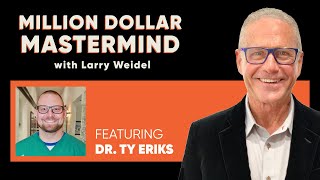
Dr. Kai Erics runs a dental practice and a craft brewery in South Florida. He bought the dental practice in 2016, opened the brewery taproom in 2018 after a two-year build-out, and grew it to 250 Publix locations and 450 bars statewide. He and his wife bought out the original partner in 2022.
Questions this video answers
About 5,500 square feet.
2016.
August–September 2018 (after ~two-year build-out).
About 250 Publix locations.
About 450 bars and restaurants.
Foreign.
Welcome to this edition of the Million Dollar Mastermind podcast. This is where we pick the brains of high achievers from all walks of life and get their hard earned real world insights on winning. I'm your host, Larry Wydell.
We're talking with Dr. Kai Erics.
Yes, sir, Mr. Wydell, great to see you.
Yes, sir. No ties, known for many things. I've known him mainly as my dentist.
Yeah, it's been a couple of years. I mean, we're probably looking at five years or something here, Larry.
Yeah, at least. And from that, the conversations have, you know, he's been into my art studio. I think he came to the grand opening or something like that back and.
Yep. Went to the West Palm Beach.
Yeah. And so anyway, over the years, you know, we've, we've talked and it finally dawned on me. I found out that he had a Drury and then I found out the whole other side of his life.
Yeah, I'll show you guys here. Yeah, we'll kind of go around here where you can see everything. Oh, and then there's Ashley. Hi, Ashley.
Now watch the square footage there.
About 5,500 square feet.
5,500. That's substantial. And the thing is that to tell people the story, what I thought was, would be fun for us to get into is, you know, a lot of people have multiple interests, but you just got to have to, you know, guys listening. You're going to have to put up with a little background noise because we're in a brewery.
Yeah, indeed.
There's going to be conversation.
I was trying to tell people to keep a little bit quiet because we're not quite opening yet, but it's getting there.
Yeah. So there's going to be conversation. But will hang with us. You'll be glad you did. But the thing is, with Ty, what was exciting for me to hear about is that what I thought he could share is the vantage point of not only having two double interests, equally strong interests like that, but excelling, you know, knocking it out of the park in both arenas. So the thing is, there is a myth, you know, most people want to do something great with their life. They never do. And that's what I wrote my book about. You know, if they do it once, they. They don't keep repeating. But then there's people like Ty that go out there and are able to be successful over and over again because of their thinking, their approach to life, and they just do the right things. They set things up for success. And even if you fall in your face eventually you don't fall in your face as much. You learn from it and you start to get successful. And then you find yourself moving up to the top of the whatever world you're in. And so being able to knock it out of the park in a profession, which is a big thing because it's highly competitive. And I'll let you talk about that.
Sure.
But you did it even at school. You started to get recognized with awards in school, with football in school.
Yeah.
Inducted into the Dental Honor Society even while you're in college. And then get out there and get your other passion that you kind of started even while you're in school. So we got a lot of stories to talk about, but then to turn that into this incredible business and the popularity is just growing.
Yes, it is.
And so you say you've knocked it out of the park in two areas. One of the biggest, fastest growing craft beer operations. That might not be the right way to say it, but he'll correct me. It's in South Florida, you know, all the way up into Disney World and lots of outlets. And anyway, the message today, folks, is that you can do it big in more than one profession and at one interest. And if you do, you can keep them going. You can grow both.
You can.
And. Because it's always fun to do things. Well.
Yeah, no, it is. And it's also fun to keep yourself interested in multiple avenues that fill your life. You know, it's really important.
Let's do this, Ty. And then also, I know your wife is incredibly successful herself in real estate. And you know, we've talked about getting her on the program as well. And so she probably a little better.
Spoken than I am, too, so more fun to listen to.
Unfortunately, it's taking us this long just to get tied and then we'll go to work.
I know she's much more, much more regimented in her schedule, too, so it might be a lot easier to get her as well. So.
Anyway, Ty, tell us. I know about your experience up in Boston in college and that we're going to get to that. But before you got there, Todd, before you got there, in your formative years of absorbing and thinking about the future and sports and coaches and teachers and, you know, you're absorbing things. You know, you're getting your principles down, you're getting your role models, you know, what you like, you don't like. When did you start getting ideas about your future? And how far back do you think that went?
First of all, I think it starts really early. I mean, I was very blessed to have great parents that, you know, taught me to do things the right way. Work hard, earn everything you get. Now nothing is ever handed to you. It started there and then I had some challenges with school when I was younger. I got diagnosed with ADHD when I was younger, like a lot of kids and learned how to work through it without taking medicines and not saying that that's the norm. It just won't work for me. Use my energy to do other things and stay focused and control the energy so that things got done in a controlled and detailed manner. So that took a long time.
Talk about that thing. Because most people are parents, have kids and you, you don't really realize the impact of how you treat them, how you say, but it goes better if you got a plan. You got kind of a general idea about what I'm going to be telling them. And I definitely am going to be telling them these things and. But how did they communicate that to you, that you got to work hard, you got to earn everything?
Well, I start from the beginning. You know, I never got handouts. My first car, you know, my dad helped me set up a car washing business when I was in high school. Like, things like that, that obviously didn't pay for everything, but at least I had to work towards it. I think that really set the precedence for just making sure that you were working hard and going in the direction that you want to go in to accomplish the goals that you want to accomplish. So that really started it. Honestly, without that foundation, it would have been a lot tougher to do this. But with that and I obviously school became very important because I realized that without that, you couldn't fulfill the other dreams that you have for your life. So I spent a lot of my time, or most of my time on school and sports. I played college football as well. I played University of Washington. I played five years, Red children one year and letter for four years, played defensive line and fullback for the time that was there. And even then I'd spent a ton of time out off the field in school. I majored in neurobiology in college and there was maybe 25 people accepted into that major a year. So I was trying to set myself up because I knew I wanted to go into healthcare. Wasn't quite sure at that point in time what avenue of healthcare I wanted to go in, but I knew I wanted to go into health care. And the reason why I knew that is because my family is a ton of health care providers in my family, nurses to medical surgeons and My dad was a periodontist, so obviously all his friends and my uncle's friends, my mom's friends were all in the healthcare world. And so I knew I wanted.
How did the thing come up about you find you got adhd?
Adhd, yeah.
And how do you get to the conclusion as a kid, or maybe your parents had you. I'm going to work hard, I'm going to have a lot of activities, and I'm going to work my way through.
It rather than take the drugs, probably definitely more. My mother, my mom was on the psychiatric side of being a nurse practitioner, so she had dealt with a lot of this stuff on with her patients. And so she knew, and we tried things initially and just didn't work for my personality and that kind of thing. So she went the other route and, you know, obviously stayed in sports a lot, got the energy out. But she put me in a summer program, which really, you know, in my mind, I think, major change in my life and the trajectory of my life. Did a summer program at a school called Morningside Academy in Seattle. And they specialize with kids with ADD and adhd. And what they do is they make school competitive, which it is anyway. But, you know, a lot of kids don't realize that that point in time and life's competitive, school is competitive. And how you succeed in that obviously directly affects how you do in life. Right. And your opportunities that arise. So everything from, you know, reading comprehension to, you know, time tables to anything, you know, they make it a competition with your classmates. And that really changed my. My mental outlook on school to every single day be competitive and look around the room and say, hey, I'm gonna be the. I'm gonna be the best in this room every single day that I arrive and didn't really click, I don't think until maybe seventh or eighth grade kind of thing. So it was a struggle for me in school for a long time until that point in time, and then it just clicked. And you know what? I put the time in, probably had to put three times the amount of work as most kids had to put in, but. And that was. That's the way it always has been in my life, even through dental school. So. But I'm fine with that. At the end of the day, isn't.
It amazing how you can take, you know, like, with me, I never wanted to be in business because growing up, in fact, my mother used to harass me. It's like, Larry, you got to stop criticizing everybody you meet, you know, behind their back. Everybody that shows up and whatever job they have is like. I couldn't imagine doing that, you know, can you imagine having. She said, I'm sick of it, you know, she said, yes. Sooner or later, you gotta find something you like. You're gonna have to do something.
Right.
I never could visualize Ty, you know, but I played sports all year long and somehow nobody ever told me and I was not smart enough to figure out that business is sports, business is competition.
Yeah.
And it's amazing. It's amazing how your attitude can flip, like you said overnight when you say, oh, I can beat these people. You know, it's like, this is something for me to have fun with, you know, And I get beat. And somewhere along the line, all of us, when you're on the entrepreneurial thing, you've got to get to the point where you realize I can put the energy in and I can get the results back. This is going to be worth it.
Oh, yeah, for sure.
It's all tied in there together. But it is amazing. I don't know that I've ever heard of a educational program where they did that, but thank goodness they did for you. Yeah.
Again, my mom. My mom found. I don't know how she found, so happened to be in Seattle, where I'm born and raised. So my mom was the one that found that school, and I don't do her avenues of working in Seattle and the greater Seattle area. She found she found that program. So. And she thought, obviously, you know, we're. We're looking at avenues to make this whole thing click and start going in the right direction. And it did. So, yeah. Very thankful for that.
Yeah. It's amazing. In fact, if you're having. Having problems with your kids or even employees or people in a team that you're supervising, if you could get some competition going, find a way to get the competitive angle involved, you're probably going to see things start to work out to your advantage. Now, how did you go from Seattle and then, you know, University of Washington, you wind up in Boston, all the way across the country. How did. How did that go?
So after playing college sports again, I knew I wanted to go into healthcare. I graduated with a neurobiology degree. I just wasn't sure what avenue I wanted to go. So I thought dentistry wasn't quite sure. So I took a year off of school. I ended up assisting my father for about a year and a half and realized that that's the profession I wanted to go into. So I, one of my dad's old dental assistants again, went to not again. But she went to dental school in Boston three years before this time, right. And so I asked her about her experience and of course my dad shared his experience being going to dental school at University of Washington and obviously hers was much better. So, so I applied there and I'd never lived out of Seattle at that point in time, so I wanted to try something different, completely different. So I applied. And the story is kind of long, I'll try to make it short, but I was also with my wife at that point in time. We were not, we're not married at that point in time, but she was applying for law school. So we were trying to apply for schools in the same cities and it just kind of wasn't working out. So yeah, I get into a school, I mean, mind you, we all have, we Both had basically 4.0 in, in college. So we thought that it would be a cakewalk, you know, to get into.
The school wherever you want.
Yeah, yeah, wherever. It's all whatever, it's easy. So I ended up getting to Boston University and she got into Boston University, but she also got into Duke with a full ride scholarship to law school. I did not get into North Carolina, I got into University of Pacific and she did not get into Stanford. So we were kind of like looking at the, these schools like, okay, well it looks like we're going to have a long distance relationship and do the best we can, you know, at that point, 24 years old or whatever, and I would say probably three days before we had to give our final deposits to go to school, Boston University gave her a three quarter scholarship for law school. And so it all kind of happened the way it was supposed to happen. But that's how Boston became a big part of our lives for four years.
Boston's a big craft beer town. How did you get going on the beer side of it?
Well, that's exactly where it started. So it actually didn't start out out in the, the city of Boston. One of my dental school classmates from Brazil actually started making beer with his father who was a chemistry professor, still is a chemistry professor in South Brazil. And everybody that got, you know, A's in his class got a chance to make a beer with the professor at the end of the semester and learn how it all worked and, and all that. So he, semester after semester after semester got to learn how to make beer. So of course, us being four students in Boston and not able to go out and you know, restaurants and bars, that kind of thing, he goes, hey, now I know how to make beer. Let's give it a go. And I'm like, all right, we'll try it. So we did. And, you know, the first couple batches were palatable. They weren't great, you know, but you get better and better as you do with, you know, as long as you put your effort towards it and all that and figure out what went wrong, how to make it better and all that. And we ended up doing it for all four years we were there and started with making small batches for ourselves, and then we made batches for, you know, tackle parties and things like that, where it became actually something that we got to do for a little bit of money. So it was. It was good. It was fun. So that's how it started.
Now, how did you start? So you moved to South Florida to start your business. Let's just do a little bragging. How well has your dental practice done?
Great. It's done very, very well. I bought it in 2016, and from that time, I have grown substantially in Boynton beach and also expanded to Fort Lauderdale off of Los Angeles. So we got a couple practices now, and the one on Los Olas I did with Dr. Pike, who was my periodontist in Boynton. I've been working with him for probably since 2013. Even before I bought my dental practice, I was working with him Fort Lauderdale. He comes up and does a surgery day of surgery every week, my Boynton office. And then this opportunity arose down here, and we decided to do the expansion together down here in Los Alas. So it's been very good to us. I really can't complain about that. But, you know, again, with morals of growing up just doing the right thing by everybody. It grows on itself. You know, it grows on its own people. People send people, and that's how the whole business has always grown for me.
Your business, your brewery is down. Down that way, too, right?
Yeah, I also live down here, too.
Yeah. Oh, I didn't know you lived there. Okay.
Yeah, I live between Fort Lauderdale and Pompano Beach. Kind of Lauderdale by the sea area.
Yeah. Okay. All right.
For those of you who are sick and tired of fooling around and are dead serious about wanting to move up fast, I've got something especially for you. I've combined the best insights from over 40 years in business and making $70 million in income and compressed them into a free webinar.
That's right.
It's a free resource if you want to find out exactly what the concepts are that I use in coaching million dollar earners Registering now@widelonwinning.com you'll discover the five part framework used by so many to reach their financial, personal and professional goals. You can find that link in this episode's show Notes.
Well now, first of all, let's talk about how substantial the beer business is already. Oh, we'll talk about how you can got into it and all, but let people know we're talking about something serious.
So we started like any other startup business. We did not buy a business. We started from scratch. We built the building out. We. The. This building that you kind of got the panorama of was empty white box when we came in here. So there's a lot of buildup that had to happen. My business partner at the time and I did it together. All the most of the build out that we were legally able to do, we did on nights and weekends and all that because again, trying to make it work financially and all that.
Really?
Yeah, we did a lot of it on our own.
So now you're on your feet a lot. Yeah, you know, I've been in the office with a lot of running back and forth to office to office, patient to patient. You're on your feet and at the end of the day you go back down to Lauderdale and now you're a construction worker.
Yeah, you wear a lot of hats trying to do all this stuff.
You have a lot of energy, you.
Gotta, well, you gotta do a lot of stuff on your own. I mean you gotta, if you a lot of banks and that kind of thing, they don't want to do star that stuff because it's too much risk. So do what you got to do to make it work. This is a dream that we had. And yes, it took a lot of nights and weekends and birthdays and whatever to build this place out and started. So.
So what you're doing, you're cleaning your carpentry, you're painting.
Yep, everything. Yeah, everything.
Where did you learn how to do all that?
My grandfather mostly. I grew up doing a lot of carpentry with my grandfather, my mom's dad. We built everything building our rooms and stuff like that. We built little and boats together and things like that. I learned how to manipulate and work with different materials. Can't say that we're bad.
It's amazing how those skills can come back.
Yeah, yeah, yeah.
Be useful down the road, isn't it? Like everything you learn how to do, you'll wind up using.
You know, I don't think we ever mastered any one of them. I don't think we ever Mastered any one of them. But we sort of learned a lot. Yeah, but we. My birthday was putting up this brick wall behind us. That little faux brick wall was done on my birthday.
Wow.
Yeah. So, I mean, listen, my family was here helping. A family was in on this. And certainly I was going to say this earlier too. A lot of this I couldn't do without massive amounts of familial support. I know from my wife to my mom, my stepdad, my dad is unfortunately not with us anymore. But tremendous amount of support that helps us get to and achieve the goals that obviously we wanted to achieve. So there's a lot of that too.
Now let's get into the actual nuts and bolts of getting started in your profession. The way professionals, they have an option that a lot of business you don't have. Therefore you can buy a practice, you can work there for a while maybe and you can take over a practice. Does that guarantee automatic success when you buy a practice?
No, it doesn't. I can tell you I had a failed experience. So when I first moved to Fort Lauderdale, I was.
Hey, Ty, don't feel bad, people love this.
Yeah, yeah.
No, no, no.
I had a failed experience.
Everybody has failed experiences. They'll like you a lot better when they find out you had a failed.
Yeah, no, no, for sure. As soon as I moved to. I moved to Fort Lauderdale from Fort Myers. When I first moved to Fort, I was in Fort Myers where I did my residency. I worked there for about a year and a half before moving over to Fort Lauderdale. I moved to Fort Lauderdale because I had an opportunity to be an associate in a well known practice here in Fort Lauderdale. I'm not going to name names because it's not important, but I worked there for three years and the goal was, when I started was to build the practice to a level where it could sustain both of us as practitioners and owners. And we did that in year three and we sold it from underneath me to corporation. So I. Long story short, it just. It wouldn't work out for us to. To come to an accord and become partners and do all that. So I decided to leave and buy my own practice. And that's when I bought Boy Beach.
Let's talk about that. When you're depending on the business you're in, you're having to interact more frequently. And when you're in that kind of situation in an office where you see people.
Yeah.
All every day and you hear them yak of the room. If. No offense to anyone, but if things don't click, I Mean, if you're not a match, you're not a click together. Orient.
Oh, they'll. People will see it right away, for sure.
You can't hide it. And it can't.
No.
Yeah.
No, no, you cannot.
I don't know if it's chemical, I don't know if it's the electric signal that we have, but if there's not a match, you got to.
I mean, you really. Right. 100. And then, you know. But they get that again. I've been. There's gotta be. There's definitely some luck involved, too. Like, when I bought the Boyden practice, all the staff, everybody was just amazing. Like, I. I haven't had to do anything in terms of staff up there. A lot of them are staff from 35 years ago.
Yeah.
That have accepted me as the dentist and as. No, it's really. It's a family. It's the business family. And which is how. Obviously, how I have it at the brewery, too. We're here for each other. It's not just a business, it's not just a job. We run it as a family. And that seems to be what's successful for us. And what people, patients and patrons, what they see when they come in as a whole different field than a normal medical dental clinic, which is, I think, what speaks for itself.
Using your own words, I'm curious why you said I had a failed experience.
Well, it was a learning experience. How about that? Yeah, it was a learning experience.
How long did it go on? And then what was your takeaway from that?
So again, about year three is when that happened. And then I stuck around with the corporation for about six or seven months because, again, at the end of the day, I didn't want to leave the patients in the practice high and dry. I just didn't think that was the right thing to do. So I stuck around for a little bit, did what they asked me to do and all that, but at the same time, I was looking for the.
You started looking?
Yeah, the practice that I wanted to have. And again, not easy to find. Trying to find a practice that wasn't completely insurance driven, didn't have corporate fingers in it and that kind of thing. So really, practice that I could run as, again, a family. And every one of my patients has my cell phone number. Anybody can reach me on the weekend. I mean, the kind of practice I always wanted to have is a very accessible practice that people felt comfortable calling. Some. Some people, especially new patients, they don't feel comfortable calling until I say, hey, no, that's what it's for. Call me anytime you have a problem.
Well, the point is that one. You were smart in how you went about it. And I like to point that out because sometimes we don't think about it is like when you find a situation is not going well.
Yeah.
Don't be in a hurry to make a move because you'd work your whole life. You get your education, you get the degrees, you get the credibility. And then you go out there, you get the experience and you had a bunch of clients. You had a customer who had a good name. And the problem there, you realize this has got to change. I can't do forever. But not enough to blow it all up. It's like, no, take your time. When you move, make sure you've got something solid to move to.
Correct.
Don't give up everything in a temper tantrum or correct.
I thought about it, but I didn't.
I visualize you on a Friday afternoon with your hands around his throat, about ready to take. And he said, no, no, I'm not going to do this.
But anyway, you know what? Doing things the right way always works out for the better in the long run. So.
Yeah, but the thing is that the one of the things. If you're going to run a business, you can't let emotion drive you. And you're going to have to put up with some irritations you're going to have to put. Because nobody's even.
Yes, yes, big time, it's even.
The people that are perfect are not perfect all the time. So.
Oh, no, for sure not. I'm not perfect every. All the time. Nobody.
So yeah. So the deal is that you took your time to find. So. And you made an intelligent move. You made a logical move. You made. And that's the way you need to. We all need to move through life. We need to do our due diligence. We need to be smart enough to realize, look down the road, say, is this situation going to work for me or not? If it's. You reach a conclusion. It's not. You can shift up here. And that's what you did. And then it turned out the way you want it. But it's not an accident. You said I'm very fortunate. Well, you're very fortunate because you went about it the way you went about it.
I agree with that for sure.
Yeah. Yeah.
I mean, it's definitely a way to go about things. Even though something's disappointing or whatever, you gotta evaluate. And your brain, you're right. You got to make moves in your Brain and again start looking for practices or whatever, you know, keep going. And again, the right thing to do is to stay there for the patients that I had and that the time tell them, hey listen, this is what I'm doing, this is where we're going to be. And the good majority of them actually came up to Boynton, so which was good. So yeah, I can't really complain.
Pretty amazing. And the thing is that we go through these and I kind of point repoint these things lessons out because we got to re. There's so many things for us to keep up with Ty and we have to make decisions. Boom, boom, boom. It's good to be reminded of this stuff. Like okay, I remember that. I'll keep that in my. And so how long was it before you got started in brewery? How long did it take before you actually had a product?
So we got this building, we leased it Again, we didn't have the money at the time to buy the building. Whatever. We leased it in 2016. There was a lot of stuff with the city. We had to rezone the building. So it was more difficult with alcohol establishments too. We were one of. I think we're the second or third in Fort Lauderdale to open. So like the city didn't have a lot of knowledge and how to set up a brewery, how to make it stay, all that kind of stuff. So everything took a lot of time. So we didn't actually open until August, September of 2018. So we had this building for two years, building it out, doing everything we had product and we went to like, we donated product to events and beer competitions and that kind of thing. But we were not able to sell a pint of beer until we opened. So it was a long, expensive two years to get open.
Two years, wow.
But we got there and again, have a goal, have a focus and figure out how to make it work. That's what we did.
Oh, it was going to take you two years?
No, guys, I had no idea. No, I thought maybe six months at the max. We actually had when we planned and released the building, we actually had about six month deferral on the lease to build out and get ready to go and that kind of thing. And it took a little longer than that. So.
Well now so you get a product, you laid the groundwork out for sales, I guess before you actually could sell. How do you go about that? How do you know to do that? Did you come down here, know how to. When did you have the first idea? I'm going to do this as a Business.
Yeah. So it was pretty much when I graduated from dental school. I really enjoyed it. I mean, obviously at that point, one time it was a hobby.
Yeah.
And I knew, like, hey, this would be a fun thing to do on the side. Right. All right, let's kind of look at it. And, you know, I moved back to Seattle for a little bit and worked with my dad when he was still alive. And it kind of. I started doing a little more research and that kind of thing and ended up meeting my business partner at the time, and he and I were looking at either doing the brewery in Washington state, which is where we started doing a lot of our initial research and all that. But I didn't want to do dentistry in Washington state. So I was going to be the one that moved to Florida is the place where I did my residency, wanted to hire me out of dental school and I wanted to make the move. My dad had passed away, so it was like a good time for my wife and I to. To cut ties with Washington and move on.
Yeah.
So I was going to travel back to Washington and help him grow the business that way.
But.
But as soon as I moved down here and saw the need for the craft beer market down here versus in Washington state become very apparent that it should be down here.
Yeah. Versus there, like in Denver and Colorado, there's like a million craft beer. I know there were in up in Boston and you come down to Lauderdale and it's basically territory, right?
Yeah, the desert. There's like. There's one at that point in time when I first moved of one brewery, Fort Lauderdale proper, and it was right down by the airport, so it was a natural thing, to be honest. And so I had my business partner fly out here and set up a couple meetings with breweries around the area. So one down in Miami, one up in Palm beach, and then we went to the one by the airport and I just let him talk, ask his question. I tried to stay out of it because obviously I'd give him a biased opinion, so. And at the end of the whole thing, he's like, yep, this is the place where we need to do it. So he packed up shop in Vancouver, Washington, moved his whole family over to South Florida, and we opened this place together. And we didn't actually buy him out until my wife and I bought him out in 2022.
Really?
And so now it's my wife and I. But yeah.
You started selling in 2018?
Yes, just here in the tap room. Minor distribution. Not a ton.
Yeah.
And the brewery, over time it just kind of showed us what kind of animal it wanted to be. And right now it's become a huge distribution forward. Cans are big. I mean we just got picked up by Publix in 250 locations about.
Congratulations.
5, 4 months ago. Thank you. So the canning aspect of it's becoming a big deal. So that's what we're kind of now switching gears a little bit to be able to support that and feed the business the way it needs to be fed.
So what are some of the other places you're in?
Oh, gosh. We're at 450 bars and restaurants as well, from Key west to Port St. Lucie.
Wow.
So we have a ton of places we're serving kegs to and some take cans too. It's not just kegs, but yeah. So we're in quite a few. And it's taken again a great sales force and we have a phenomenal sales team here and a great distribution company that assist us in line as well.
So I'm gonna have to come down. I'm getting curious about this operation with. I mean, you must have semis or trucks in and out of there all the time. It must be a mad house.
It's a madhouse. It's a mad house.
I mean it looks relatively calm here right now.
It's relatively calm. But it's brewery. It's a little bit on the noisy side. So I apologize for that again guys. But yeah, I know it's busy. It's very busy. But hey, wouldn't want any other way.
How do you go and deal? I mean, is that really a Blessing to have 250 public stores that all of a sudden you've got to can be here for.
Yeah, it could be the opposite problem. Yeah. You know, it could be sitting there looking at each other. Yeah, yeah, yeah.
I will grant that it's a happy problem, but it's.
Yes, it's a busy problem. Yeah, there's no doubt about it.
How long do you take you to adapt to that? What's involved in something like that?
We had to buy canning line. So before that we were. Well, we bought the canning line before Publix. We had a satellite company that used to come and help us. Canning equipment is expensive if you buy it on your own. But when it became more apparent that this was what the need was and what people were asking for, we made that investment and bought that. So we at least twice a week are canning large runs of cans. And we had to set up a bigger walking cooler to be able to store the product and all that stuff. So it's been a logistical. I wouldn't say nightmare. It hasn't been a nightmare, but it's been busy. It's been busy.
How did your. What is your method? Because what you've had to do, Ty, I to point out to you, you have been faced with one monster situation after another. Like just getting the legal side, getting the regulation, getting the permits, this, and then get all of these inspections and.
Yeah, get your equipment.
You got these big vats and who knows where to get all this crap that's like barrels and cans and candy. How do you go about like all of a sudden now you got to do this. How do you go about something you've never done before? It's a complicated thing. It's. You can't like, figure it out, go down and do the hardware store and get some stuff and tinker.
Ask the question, what is your approach.
Of you got a new phase, a new thing. We got to figure this out. Everybody say, ty, what do we do now? How do you look at those and evaluate that and start to unravel that, heal those onions?
Well, again, we. We do everything as a team. It's not just me. A lot of the back end, research, cost analysis, all that, that was all done prior. We meet here at the brewery, we do weekly meetings and sit down, we talk about next moves that need to be done, what the needs are, how do we get there, how do we become more efficient? And we do that as dental practice student, we constantly are rebuilding ourselves to become better and more efficient in how we run the business. So I can't say it's definitely not just me. It's a group effort and there is again, some luck and I guess some vision. But again, I'm surrounded by a bunch of great people and, and this, all of this would not be possible without being surrounded by the right people. So. And that's a testament to, in the brewery, my business partner that I had when we started the business, how we grew it and built it, and also the guy that I bought my dental practice from.
What's the key to getting a good team around you and keeping them to get the right kind of team around. What have you learned about that?
You have to obviously have to interview and you have to make sure that when you begin relationship, you think you have the right tools together to be able to be successful. But also treating people the right way, being a good employer, paying people the right way, not taking advantage of people. Yeah, I think all that is unfortunately Pretty rare. And obviously people really appreciate it and it becomes a family over time. You build that trust. And it goes both ways, right? I mean, I would do anything for my employees and likewise they do anything for us, my wife and I. So it goes both ways.
How have you found the best way to get those people is to grow them yourself, get them in, start them on small project, move them up to bring people in from the outside that already have that training?
We've done it both ways. We've definitely done it from the bottom up, but usually it goes. We don't start from scratch. We do get through our connections in whatever industry, whether it be the brewery or the dental world or whatever. We use our connections to get recommendations, people that are looking to change or whatever that have the tools that we're looking for. So try not to do it from a kind of throw. Throw an ad out there and see what comes in because usually it doesn't work best.
How would you explain to people how you compartmentalize and how you keep both of them running at Fever Pit? If I was guessing, I would say you've got numerical markers that kind of govern both businesses are key indicators you're doing the right things or you're.
Yeah.
And right activities, right results. But how would you say, how do you compartmentalize and keep them both going at back?
Well, I have the brewery. My wife is not practicing attorney anymore, so she's now the general manager here. So she is completely running this side of the family business. And I do the. I come on Fridays again. There's things that are needed, analysis have been ran, that kind of thing. And we do our weekly meetings, but generally day to day. My wife's running the show here so that I can focus on the dental practice and make sure that my focus is 100% there when I'm there. So again, it's a team effort like.
And so what are some principles? Do you. Or do you find that there's sayings, there's principles, there's concepts that you learned or you heard in your formative years from coaching, from just growing up and having your first areas of responsibility that where you role models and things like that, phrases, ideas that became internalized and a part of how you do and operate, even without thinking, but just kind of.
Right.
Anything like that that you comes to your mind?
Yeah, I mean, I think for me sports specifically football was probably outside of my parents, obviously, like I spoke about before, but made me kind of search within my soul multiple times and come out of it, become better and then get chopped down and then have to work at it again. That kind of mentality, I think, is probably the thing that has made me innately not care about things that are hard. Push through it and know that there's going to be another side, whatever that other side is going to be, just push through it. Because without doing it, nothing's ever going to happen anyway, right? So I've always been a person for better, for worse, as my wife would tell you, that never quits and just continually pushes through things.
Talk about, explain what you mean by that. Like, not put off by when things. I run into something and it's hard and that doesn't dip me or just like, it's hard.
I've always been. Again, I think, again, I'm going to say it's through sports. And I've always had, like, even when I was younger, my goal was to be a starter on my team and eventually get a college football scholarship and then hopefully eventually play in the NFL. All that stuff, all that is the goal. Right. And there's a lot of obstacles we got to get through to accomplish those goals. And working through those is extremely difficult sometimes, especially when you're trying to do well in school and in college, neurobiology major, you know, all those kids had really nothing else going on besides studying and doing that. And I'm traveling around playing games and studying on airplanes and everybody else is taking a nap and that kind of thing. That's hard on a young brain now. But being able to work through that has made me, I think, probably more resilient than. Than most and. And able to kind of brush off problems and just continually keep the goal at mind. Now, everybody falls and fails and. But it's how you pick yourself up and move forward that I think makes the difference in situations like this or in business. And like any. Any situation, how you pick yourself up.
How do you get to where you recharge? Because we can't go like on coffee around the clock forever. Have you ever had the thing where you just worked yourself to the bone?
Yeah, my wife will be the first to tell you, so hopefully you'll get her on this podcast. When I crash, I crash, I crash. So I've always been a good sleeper, though, too. So I always try to get at least eight hours of sleep at night. Sometimes it doesn't happen, like when you're building out the building or whatever. But my kids go down, I go down. I don't sit up and watch TV till midnight or anything like that. I go to bed at 9:30, 10 o', clock, get up at 6 and go at it again. So I know how important sleep is and for me specifically, I know for some people it's not, but for me, I know myself and to be the best I possibly can be, I have to get the rest to be able to do it. So I do take care of myself that way and make sure that I try not to let anything get in the way unless it's absolutely necessary of that. Things happen. Kids need to study for tests or whatever and they need help, whatever. There's, there's circumstances. But as a general, general rule I try to get enough rest to where I can be as successful as possible the next day.
When you were coming up, were mentors, role models more important or getting things out of books or tapes, things like that?
I think I always saw my parents just work their tail off and I think that that really made a large impact impression on me. They got divorced when I was really young, so I saw each side of them just work their tails off to make sure that we had the life that we make sure we were set up as best as possible to become successful ourselves. So I think that probably made the biggest impression on me, to be honest with you. Yeah. Without that kind of influence, would I have not gotten to the point where I am in terms of my mentality now? I don't know, but it certainly helped quite a bit.
At what point or did you have you ever, in your life got to the point where you said you could see how you were and you could see how you wanted your life to be and then you could see other people and say, no, I'm not going to do that.
That summer program I did, was it telling you that was the major change in my life was becoming competitive and basically looking around the room and saying, hey, I'm going to be the best in this room in any way, shape or form it needs to happen, I'm gonna do it. That was it. I mean honestly, that was a major turning point in my life.
Did that happen right away?
Yeah.
It's funny how things can change when you change your mind and that it's.
And it was a direct mind change. It was just a different way to look at school and, and really sports. Honestly at that point in time, you know, I participated in sports but I wasn't overly competitive and, and just kind of going through the motions and all that. And yeah, it's amazing how three months of time can make such a big impact on your long term life and how you run your life. Yeah. Actually, never really thought about that. I'm glad we're talking about this because that I actually. My oldest son, he's the one that came up and gave me a hug not too long ago. He was very much like me with school. He is very add. And my wife and I thought about taking him for a summer to do that same program. And I think we're going to. We're definitely going to do it. It's not funny whether it's this summer or next summer. He's also a very competitive athlete, so there's a lot of travel stuff, so we got to work through that as well.
So maybe you could buy that school and open up a branch in Lauderdale.
I don't need any more problems.
I'm curious how your mind approaches the success in terms of you're looking at this thing like 250 stores with Publix.
Yeah. A lot faster than I thought it was going to happen, but always approached, and it might not sound true, but I've always approached businesses, like I said, as a family. And success to me is being able to have everybody have success in this business, not just my wife and I. Right. So we're always here. If something big ever happens. We're, we're, we get it together. We're not, I guess, the typical owners on that way. Whatever goals and stuff, we get to, you know, we never sell the business, for example, for any substantial amount of money. I mean, that's not something that we're going to take ourselves. I mean, we're not the only people that made this happen. So it's a group effort, it's a family effort. And that's kind of. They never end. I'd say my employees, but really it's my family, they know it. And that really is a driving factor. People believe not only in the product, but you know, who my wife and I are and the kind of environment that we demand, really. I mean, we definitely have had employees that don't fit the mold and they don't last long. And that's okay. It's just that we're looking the right fit. So it's lucky in the dental world that it hasn't happened at all. And we're lucky also that it hasn't happened a lot here at the brew.
So, you know, just from a competition standpoint, since we brought it up, how many. Because you went from somebody who knew how to make craft beer for yourself, basically made it in a bathtub pretty much.
Yeah.
Where now you're supplying 450 individual outlets all over the state and 250 public stores now. So you become somebody in this business. How big is that? How many are there Alexes that are. That aside, breweries that are up to the size that you are right now, what does it look like?
There's quite a few.
Because in a lot of you, the biggest in the state, Biggest in the region. Biggest.
Oh, no, no, there's a lot of them, but a lot of them are owned by a lot of people too. I mean I couldn't really tell you about. About individually owned breweries, to be honest. Off top of my head. I really don't know of any.
Yeah.
That are at our size or there's very few.
That's what I wanted to bring out. That's pretty substantial. I mean, congratulations.
Yeah. But there's plenty of craft breweries that are large that are owned by multiple people. I mean it's a group effort versus.
Well, congratulations.
You one family.
Yeah. You've really. And again, you did that as a second business, so congratulations. I always let my guests appreciate you taking the time. I know you're busy.
Oh, absolutely.
What you got tomorrow? What you said you got a fishing tournament or something.
Fishing tournament. So, yeah, for the last really since we opened, we have partnered with a charity organization called the John Michael Baker Foundation. And John Michael Baker was a kid who unfortunately lost his life about, I would say seven or eight years ago. His parents started a foundation in his honor and we have always made a beer for them for not only the tournament, but we also distributed to out to our network and we share profits with them as well. So it is their John Michael Baker fishing tournament tomorrow, which I'm participating in with a couple friends of mine. So we're leaving my house at 4:30 in the morning.
So. Wow.
We're gonna be up fishing by you, Larry. We're up in Jupiter.
Oh, are you telling.
A little bit.
Okay.
Yeah.
All right, I'll keep an eye out for you.
Binoculars, right?
Yeah, some got a telescope. But I always let the guests have the final word. Ty. And so for those that have been sturdy enough and interested enough to stay with us the whole time, what kind of last word would you have for them as we break this off and let you get on back to the business?
I've always looked at life and I not to be grim or anything, but my dad unfortunately passed away and he was 65 and so I don't look at life as given. Life is what you make it and things that I want to do or have the desire to do that another time. There's no better time than now to try to figure out how to make those a part of your life. So really, that's how these things have happened. For me. It hasn't always been the right time and again to get my wife on here. I'm sure she'll share those growing things with me. But we do it, and at the end of the day, it's most of the time it works out so the way we want it to work out. And it takes, obviously a lot of effort and time and all that, but there's no better time than the present to do the things that you want to do in your life. It takes a little bit of effort, a little bit of grind to get it done. But I think that's the number one thing, is just do it.
It's easier to put in the effort and grind if it's something you want to do.
Correct.
And the sooner you do it, the sooner you can start to get the payoff from it. And like you say, and so many times, sometimes it'll take longer and everything, but sometimes it surprise you once it gets going like you had, let's seem. So it takes like in the beginning, it takes forever. Forever. Like you had two. Thought it was going to be six months, took two years, but then now it's like skyrocketing.
Yeah. Now it's becoming its own thing. There's no doubt about it. A lot of satisfaction that comes with that. And then being able to surround myself with people that I truly love. It's great. It's awesome.
And so you get going on something that you got inside you to do, the quicker you can get to the point where Ty is and his family are in their business. Thanks so much, Ty.
I appreciate it. Mr. W. I appreciate you as always.
Yes, sir. We'll see that. Take care. Have a great weekend.
Take care. You too.
Bye. Bye. Bye.
Appreciate it.
Thank you for listening to this episode.
Of the million Dollar Mastermind podcast.
Commit to your personal and professional evolution with our free training video. It's designed not just as an educational session, but as a transformative journey for.
Those bold enough to aim for the stars.
This isn't just any webinar. It's a roadmap to achieving the extraordinary. It's tailored for those who dare to dream big. And yes, it is completely free. Join us in a network of ambitious professionals ready to take their careers to a new heights. Secure your spot now@whitelonwinning.com and let's unlock your potential together. Thanks for being part of this community.
More from Larry









Rick Jordan on Self-Engineered Proximity, Cyber Security Moats, and Truth-Based Leadership

Fire Fast or Fail Slow: Kevin Brittingham Reveals the One Rule That Built a $100M Empire
