Missed Olympics, TV Career, and Now Entrepreneur
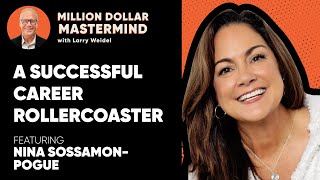
Nina Sasamon Pogue missed the 1984 Olympic gymnastics team, then a knee injury ended her athletic career. She became an Emmy-winning TV anchor, helped take a SaaS company public, and now runs workshops on reinvention after setbacks.
Welcome to this edition of the million Dollar Mastermind podcast. This is where we pick the brains of high achievers from all walks of life and get their hard earned real world insights on winning. I'm your host, Larry Wydell. Hello everybody. We're talking to need Nina Sasamon Pogue from Charleston, South Carolina. Hey Nina, how are you?
I'm doing great, Larry. Thanks for having me on.
You know, we're going to extend this to like a five hour podcast because you've just done so many dadgum things in your life.
As long as I can have a glass of wine while we talk, I can go five hours.
Congratulations on a life of achievement. I was thinking back, I was watching a little bit of the Arnold Schwarzenegger thing on, I don't know, Netflix or whatever it is. And he was talking about one thing I remember his father said, and be useful, that big Austrian thing, you know, I was telling him as he was leaving home and everything. But you have really made yourself useful in life and you got a drive in you that has sent you from athletics, television, business, speaking, writing and non profits, things like that, philanthropy. And so did start with athletics. Is that where it started?
Yeah. You know, I was born in Navy brat. I traveled, lived all over the place, moved with my family, youngest of four kids and I found was hyper from the get go. So my mom had to channel that energy like so many young athletes began. And so put me in dance, which lasted a moment before they put me in gymnastics because I, I had more energy than dance could hold. And so I have, since then I have had some discipline and some focus that has come through that sport. I think that has really launched me into a lot of fun new adventures. And I like to think of life as this adventure I'm on and think about what big next thing I could do.
It does give you a certain advantage being dependent, you know, military dependent. I was the oldest of three in a Air Force, Air Force dad. And so we moved early in his career. He made somebody mad at the Pentagon who was in charge of moving. And so whoever that person was, they made sure we moved at least once a year. And so where all did you go in your travels?
So I wasn't as bad as once a year as Air Force can do at times. I was Navy so it was every three years. And I was actually born in Key west back in the 60s when, when there was a base in the keys in the 60s. I was born there and then I moved all up and down the east coast. So I've always been stateside. My dad was always stateside. He was actually a mechanic that worked on helicopters and then became chief of the boat and then went to officer candidate school. So not the regular route that some people take. And then we moved to Georgia, New Jersey, Florida, and then back to Florida and up to Maryland and then back down to Florida at one point. So Jacksonville NAS was kind of my childhood. A lot of the years there in Jersey was a little bit of my childhood too. But yeah, so that was my. The Navy piece. And you do you learn how to make friends quickly. You learn how to jump into new situations. But I also moved away from home when I was 13 and moved into an Olympic training center. So my moving in that part of the Navy, unlike my brothers and sisters where they kept doing that, by 13 I had moved and was in one spot all through high school.
Really? Yeah, that is. And where, where was, when did you get. How long did it take you to be in gymnastics? To the point where it was obvious you had real potential and it was decision to make about are we going to move her to where she can really get top level coaching?
Yeah, I was 13 when I moved away from home. I think the last two years in Florida. So 11, 12, 13, 11, 12. Those years I had won like the Florida State Championships. I'd come in the top for a couple of years and it was obvious that I had some real potential. And I think my coach saw that in me. I was one of those fearless athletes that would try the harder skills and would go for anything. I didn't always win because I didn't always land them, but I had the level of the skill level to certainly move up. And So I think 10, 11, 12 probably is when they saw that in me and my coaches, you know, created that opportunity for me.
And so what was that? What was that like? What did that do for you as far as formative experiences? Obviously, in making you more independent, outgoing, probably. But what did you notice and what was the first thing you noticed? That this is going to be different now?
I think looking back, I see it more so than I did at the time. At the time, I was excited about the opportunity and I was just a kid and wanted to make that team. I can look back now and see it made me fiercely independent. You jump in and take care of yourself, there's nobody that's going to step in and take care of you. You learn incredibly incredible time management and discipline if you're going to make it. And you have to take that on yourself too. So it certainly changed me to be able to step into that situation. I moved from Florida. My parents were in Jacksonville, Florida at the time. And I moved to Silver Spring. Maryland is where the training center was at the time. One of the many before they had Colorado Springs, before everybody, or went down to Texas with Bella back in the day. So I had that opportunity to step in and just become a whole new person, I think, and really step up my game. I lived with my coach's family at first. His name was Greg Weiss, who was an Olympian himself. His son and daughter both went on to be Olympians who are younger than me. So it's been. And I jumped in with a. Was surrounding myself with champions and people who thought and worked and had that level of discipline to work at that level. And it certainly became part of me.
Yeah, being around that level of athlete is transformative. I remember being down in Portilla, Chile, in September around the. Where they have a lot of the Southern Hemisphere. So they. It's winter down there in September, and a lot of the ski national ski teams are down there before the World cup season begins. And I remember we were talking to a guy who. He had gone and spent a year just traveling with the French or one of the national teams, and he was one of the guys who carries the skis, puts the, you know, the poles up, you know, to put the course up and everything. But he spent a year around them, and they said when he came back, he had become such an extreme skier just by being around these people that they made him head of the ski school.
Yeah, there's something about surrounding yourself with excellence. It's hard not to let it rub off on you a little bit. When everybody else is committed and getting up early and going hard and excited about what they're doing. It definitely becomes part of you arc to life.
You know, you grow, grow, grow. And then, you know, we're not here forever. But there's the same thing with careers and especially in an athletic career. And I'm seeing my. I've got a therapist, actually, Rolfer, which most people don't know what that is. But anyway, she's got. All three of her kids are like hockey talented hockey lunatics. And the boys have been in Switzerland and Toronto. And, you know, she lives in Aspen, but, you know, they train in Denver if they're not Pennsylvania or somewhere in Canada. But now it's kind of getting with the older ones, it's like, we're probably not going to be pro level now. Where do we go? You reach the point where it starts to gradually become obvious, that laser focus on making the team, winning, you know, winning the competition and all, just not going to be able to make that happen. Was that a hard thing for you and when did that start to dawn on you?
Well, it dawned on me very quickly. It didn't dawn on me over time. So I was on the US team, traveled to Japan, Hungary, Germany, Australia, you know, in the USA sweats, Mary Lou Retton was my era, so my maiden name is Rofi. So we were. I actually roomed with Mary Lou some. That was because it was Rofi and Retton and we both began with R. Not because we were like number one and two or anything. But the first year, the first year Mary Lou won the USA Championships, I won Miss Congeniality. So I was in the mix, but I wasn't winning one or two right there when I was on the team. But I loved representing the US and being part of that 20, 25 athletes that were out competing in on our red, white and blue sweats and being part of that world in the 80s now I went to that year leading up to 80, I'd been to Hungary in the year before and done really well in an international competition. So leading up to 84, I was, you know, set to do real well. I had grown some. My skill level was not exactly as high as it should have been, but I was still in the hunt. And I bombed a qualifying meet. And back then they didn't do like they do now, where they kind of choose. You either made the score, you didn't. And I bombed a qualifying meet and didn't make the team in 84, just. I wouldn't make it to the trials. One of the qualifying for the Olympic trials, I bombed. And I thought that my life was over. I thought I'd wasted my whole life. I thought everything was ruined. The ripe old age of 16. I had never been to a football game or a high school anything. I had just lived for this sport. And I thought, this is the end of my life, you know, because it's so big when you're a kid. And then I, you know, I picked myself up and I did get a college scholarship. I competed for LSU. Great D1 school at the time, still a powerhouse in gymnastics. And I had some great success there. And then I blew up my knee. And so here I lost my whole sport. Then it wasn't just first, it was not making the team, losing that identity of possibly being an Olympian, you know, after being on the COVID of magazines as an Olympic hopeful, you Just, it's crushing. And then to lose my sport altogether. I kind of didn't know who I was without gymnastics, and so I struggled along those lines too. So very obviously that was kind of the end of my career. It was a career ending injury, so it didn't sneak up on me. That was it. I was a freshman in college, one of the top recruits, and my career was over. And so I had to figure out a path forward. And I'll tell you, I married an LSU baseball player. We had these little super jock kids, and I could see in them at that same point, you know, when I could, were they going to make it or weren't they? My son played, you know, college ball, but then had Tommy John surgery. And that look on his face when the reality hits that you're not going to go pro. My daughter was a gymnast, got too tall, became a dancer, like a bun head ballerina, danced in New York. But came a point in her career where she had to go in another direction, too. And thankfully in my life, I had raised my kids to this phrase, we all go pro in something else in life, we all go pro in something else at some point. So that was always a backup plan. There was always, we're always going to go pro at something else. And they, my daughter works in AI in New York and my son's in his fourth year of med school. They've decided what else they're going to be great at and use that same discipline, discipline to jump into that. So it didn't sneak up on me. It was taken from me very quickly. And then I made sure with my own kids that I always had that exit strategy, part of the plan.
One thing we can point out here that I think would be helpful to people that are, we're all in this together, everybody's growing, and it doesn't matter how long or how successful you've been, you have to reinvent yourself constantly. And you got to stay flexible. You cannot allow yourself to get rigid. A lot of times we allow ourselves. We make ourselves rigid. When we find a winning groove and we're for a period of time to win a contest or whatever, we go in lockdown and you get real rigid. But that's going to be for a period of time. Don't get carried away. These are seasons. And flexibility serves you well because life changes so much and so unpredictably. You know, like you said, you've been in broadcasting for over 20 years and we were talking about getting the microphones and everything working to start this up. We're talking about the millions of things that could go wrong. It's always unpredictable. You got to be flexible. You got to be flexible.
You got to be ready for anything. Yeah.
And the thing is, you know, that's. It's not just in business, but, like, not just athletics. It's entertainment. You see all the people who started out, they were going to be a dancer, and then they turned into a singer, or they were going to be a singer and a musician, and then they turned into a dancer, or then you saw the people, like, wanted to be in. You can admire. You know, it's kind of like I wrote a blog post 5, 10 years ago about what's the same thing between Regis Philbin and Kim Kardashian? What's the same thing between. They both wanted to be in show business and had absolutely no talent whatsoever. And so Kardashian was a hairdresser for Paris Hilton. And so she said, well, I can go to parties, wear nice clothes to parties, and stay in shape. And she just made that an obsession and made herself a thing from staying in shape, wearing nice clothes, going to parties, schmoozing. And then Feldman did it from the announcing, and they worked. They found a way in that they were flexible. And so the thing is, don't focus on what you don't have because you're just gonna, you know, the. You're gonna get washed out into the ocean on that. But it's just like, see where you can divert and what. Let's say that phrase again, where we're all gonna go pro in something, right? Is that what you said?
Yeah, we all go pro, and for athletes, we all go pro in something else at some point. There are very few athletes that can continue athleting way into their 50s and 60s and 70s, you know, but even.
In business, you see people that started, you know, one of the big communication tools in business right now, internal communication tools and corporations, is slack. I don't know if you're familiar with slack.
I know slack well. Yeah, I know slack well, then, you.
Know, slack started off as a video game, and these guys were going to do video games, and then they, you know, they were needed to communicate with each other. They were at different locations. So they started this thing, and then slack, the communication thing, turned into the big product. And so be flexible and keep your eyes open, but keep running. So what you did, how quick did you shift to, like, I got to get a scholarship. I've got to do here? You know, Was it a hard thing for you to make these early adjustments because you're setting the pattern for your life as you went through these things. And so did you have people you know, did your friends stay with you, a lot of support around you, or did you have to figure it out? You're all of a sudden, no one's talking to you and all the option, you almost taking your phone calls. What's.
Yeah. So early on as an athlete. So when I. When I didn't make the US Team, I was just a teenager. I had my parents around and coaches around, and they helped redirect me to college. But when I blew out my knee in college, it was a different ballgame. I was on my own. And I was not in a good place, not in a good headspace. I was. I would get up and take my Percocet with a shot of Jaeger and go to pt. I was not making good choices. And so. And to keep my scholarship at the time, I had to work in for the athletics department in some way. And they had me working in the laundry room. My coach was not. My coach was none too happy that her top athlete had blown out her knee. So I ended up working in the laundry room. And not, like, washing cute little leotards. I was working underneath the pmac, like basketball, football, washing jock straps. I joke sometimes, but my claim to fame almost became that I washed Shaquille o' Neal's jock strap. I mean, that could have been it. I could have just stopped it. The overlap is there. I don't think he actually went that year, was there, but a couple of years later, anyway. So I was in a. I was very much alone. And the other athletes, my roommates and friends, they're all going to practice, and all the people around me were athletes, and they're all going to practice. And I would crutch over and do the laundry room. And at that time, the laundry room was underneath the Pete Maravich assembly center here, there at lsu. And I would switch out the laundry, and then I'd lean up against the wall outside to catch sunshine and kind of watch the other athletes walking by. And, you know, no one stops and talk. It's kind of like you don't want to be part of that world. One, I didn't look very inviting. I was not a happy camper. And two, I was. I was an example of what could happen. So you're really alone in it. And I had one guy who was an athletic advisor back in the day, before they had mental health coaches and all the things they have now who Stopped a few times and said, how you doing? And I, I'm sure, said something snarky like, great, can't you tell? You know, because that was me. But he would stop every once in a while, and then he finally sat down after a while, and he would talk to me. And he's the first person who got me thinking about what else could life look like? I had never thought about it. I had been an AT gymnast and an athlete my entire life. I had never thought about what life was going to be like on the other side of that. And he was the one who said, well, what do you like to do? What are you good at? What? What else? You know, you got a whole life ahead of you. What could that look like? And he steered me towards this instead of the laundry room, the sports information department, and then journalism. And that's how I ended up on that journalism path, because I had that one person who took the time to have that conversation with me. So sometimes one person can make a huge difference. And that's where I found journalism. I fell in love with. I was started out as a sports reporter, and then I got into political reporting and general assignments and then became a news anchor. And I had success in television for many, many years. And that was that journey, though it wasn't an easy one. But those early days of overcoming and now being able to look back and realizing I, something in me was able to look ahead and say, oh, what could this next chapter look like? And just that thought carried forward with me because I'm always planning my next chapter.
That is the point that we need to make here is like getting it in your head what that next chapter can look like. And if you get, you know, find people that have that experience that will share with you and ask those kinds of questions. Now you can also get off your fat butt and go on YouTube, you know, say, I don't have a mentor. Nobody. This is not back in the 80s now, folks. This is get off. You know, this is what I used to tell all my management to get off your butt and get, you know, take advantage of what's out there, which is mountains of stuff now. And we've always had books and tapes and courses and this, that and the other. But now you got YouTube, and there's just so much wisdom packed into things. Unfortunately. The great thing about the attention deficit era that we're in is that you have come up with these great things, shorts for YouTube, you know, these reels, you know, and I mean, there's amazing things on instagram of all. All places, you know, which is usually entertainment and all, but I mean, really insightful stuff if you look for it. And so get out there and you can ask questions that way, Ask questions through social media, if you can, and make contacts wherever you. You can go. But the information is really out there now. But you got to get out there and swim. But the thing you want to do is have a clear picture. Like you said, the reason you were floundering was they gave you a different picture. You're the clean. You know, you're the laundry woman now, and you get a degree and you do the laundry, and nothing but. It's amazing how a clear picture of what the future can be, or at least an idea of what your future can look like, can really light you up and kind of change. It's kind of like the circuit board goes off in your head, isn't it?
Yeah. Once you see it, you can't unsee it. And sometimes there's a couple of speakers that talk about this. When people interview for a job and they put themselves in that role of the next job up, you know, once they don't get that job, they move on, because now they can actually see in their head what that job looks like, and they're not happy there anymore. So.
Right.
So once you can see what a world could look like on the other side of it, then you can start moving in that direction. But if you don't ever open your mind to what could be there. I do a cool thing in some of my workshops. I do what I call your lifetime timeline. And I have people take a piece of paper and turn it sideways, you know, horizontal, and draw a line from across the middle of it and put dots. 10, 20, 30, 40, 50, 60, 70, all the way out to 100. So, right. Say I live to be 100.
One line. One line. 10, 20, 30,40.
Yeah, okay. And I always said, so that's if you live to be 100. So I can. Whatever I'm going through right now, put a dot on there and go, this is where I am right now.
Yeah.
All the space ahead is blank. But here's a cool thing. Little math geek out for a second here. When I blew out my knee and I was 19, gymnastics was what I had known in life. So at that point in my life, everything that I'd known up to that point was 75% was gymnastics. I mean, I'd been in the gym since I was, you know, four or five years old. So my. Of course, it felt like my whole Life was ending. It's all I knew. 75% of my life had been in a gym. Now when I turned 50 and my kids left for college, I can look back and go, oh, that piece, that line on my timeline, it's only 28% of my life. It doesn't feel like everything anymore. And if I live to be 100, which I need to drink less wine and take better care of myself, but if I live to be 100, then, and it's only 15% of my life, like you can look at your life that way. If you look at that timeline and put parts of your life above the line and put what you have done, accomplishments above the line is how I put it. And then down below the line, put some things that you've overcome, I call it your reverse resume. All the stuff that you've overcome below. But you can sort of look at your life that way. And then you and I both can, whatever year we are, we can put a dot on that line. And the magic of that visual is all the blank space ahead, right. And you could be there.
It helps you also to apply that to your career. Whatever you're doing, you know, if you're, or your business, you know, if you start a business, a lot of times, you know, you're not think you're just trying to get where we make some money, you know, see if we can prove we can do it and then we could buy. Then you move up to some levels. But it's like what comes after that? The more you can settle into a success groove, the quicker that you can get that long term picture out there is like. And ask yourself questions. Even if you say there's no question now, would I ever be to the point where I'd want to sell this thing or would ever be a point where we'd want to expand into another industry along with this, you know, and, or other products or would. Is there a time where we would reach a point that we go into another country? Possibly. You know, is there a point that, where I would turn this over, I'm running it now, turn it over to a CEO and I would step back and you know, do other things. But the more you have this timeline in your mind, the better you can frame a lot of your decision making. Talk about your workshop. What's your workshop?
So the workshop is launching in October and I'm super excited about it. So I'm not sure when this will air, but it'll be out there probably in October. Okay, great. Well, it's called the now what Workshop. So it is a workshop around this just happened. Like you get fired, you failed, you lose a loved one, some big traumatic event, you screw up and you just think your life is over. It's the now what Workshop. It is my workshop around resilience. It's a lot of my resilience research and the stuff that's in both of my books and it is a real simple way to just step in and go, let me get on the other side of this thing. And I just walk people through that like yeah, yeah. It's called the now what Workshop And I'm really excited to put it out into the world. And it's similar to what I've been doing from Stages as a keynote speaker. I've done a lot of mentoring and it's very much from my first book and talks about the commonalities and both entrepreneurs, businesses, individuals, athletes who go through tough times and then how, whether it's, you know, whether it's Lego reimagining themselves through the years from the 40s till now with AI and, or it's some other, you know, SaaS company software as a service company like I used to work with, how did they, how did they evolve through, you know, constant connectivity and advances in technology. And some of what you talked about, what's secession planning look like? What is it? What does five years from now look like? How does that look? So all those pieces and it doesn't.
Have to be, you know, the thing is that you're not going to be know specifically what it's going to look like and you don't need to waste a lot of time like what's your five year plan? What's your ten year plan? What are you talking about? We're just trying to get through tomorrow. You know, that's what an entrepreneur thinks. But in general terms you can plant the idea 5 years is going to be here, 10 years is going to be here. And so let yourself be aware of that. And then you say what are my choices about how that would be in five years? You know, well, it's either going to be up, down or the same, probably not the same. So it's either going to be up, down, I'm going to be more run ragged or I'm going to be, I'm going to be less run ragged, I'm going to be more productive, less productive. Where do I want to be? What picture would I like? You at least get the, what we talked about the picture, right?
So do you want to be sitting in an office. Do you want to have people reporting to you? Do you want a small team? Do you want a big team? Do you want to be in a city? Do you want to be out in the country like five years from now? If you're going to work towards something, you have a small team. I worked at a big software as a service company, So I did 12 years in tech on the executive team and took the company through an ipo. Head of marketing, comms on a plane all the time, jumping back and forth to New York. Goldman Sachs was lead left in a suit every day. I knew during that that wasn't going to be my whole life. That was going to be a chapter of my life. Now I wanted a small space with a small team. I want a window where I can look out. I want to be able to go for a walk on the beach in the morning. I wanted that to be my five years from now. And so that's what I've worked towards. Other people, whatever your vision is, if you want a big team, if you want a big city, that's what you're working towards. So that's what that vision is. You don't have to know all the answers and how you're going to get there. And it's probably not going to be if you have a perfect plan, it's probably not going to happen that way because nothing ever goes as planned. So just have an idea, right?
And the thing is, let's just kind of frame the thing for people listening. It's like if you work hard, you're going to beat half the people. So you're going to be successful compared to most people and your business will be successful compared to most businesses if you work, just work hard. Now, if you follow a pattern, a success pattern, in other words, kind of generally pattern what the most successful people do in your arena or your area, you're probably going to beat 90% of the people because you're not going to be chasing down as many dead ends as you would if you didn't have a general method to your madness. And so if you work hard and you have a little, a management philosophy kind of put together from seeing successful people, you're going to be successful. Now what comes from that is options. And I just wanted to say the options come, you're going to have lots of things to say no to and a few things to say yes to, because you can't say yes to everything. And so the more you plug in this thing that we're talking about of having a general idea of what you want you can get excited about down the road for yourself. You're more likely to make those choices of the yeses, you know, that would get you there. And it's easier to say no to the ones that sound good, because good is the enemy of the best. But you're not going to know what the best is unless you have some concept and you've let yourself at least generally take a look at what would be ideal. Because you're going to be successful. You may not feel like it now, but you're going to turn out to be successful if you work hard and you put a method to your madness. And you're going to create some great options in your life. So you might as well be able to put yourself in a position now to make the best choices for yourself, because that'll keep you running at full speed. That's the main thing of that, is to keep yourself running at full speed, which you have done in your career.
Yeah, and success looks different for all of us. Your vision of success, Larry, and my vision of success are different. And mine has changed through the years. There were years where I was in the grind and like I said, in a suit and jumping on planes and go, go, go. And that was what success I wanted. That's what it felt like. But that was a chapter of my life where I wanted to be able to put my kids through any college they wanted to go to, and I wanted to be able to buy a home that fit all five of us and all the things. So I was living that piece of success. Success now feels different. What I feel, what I want success to look like feels different. What you want success to look like is different from mine. So that's part of what you're talking about. And one thing you said is so spot on is keep reading, keep pulling in, people. Don't go it alone. Somebody has gone through this journey before. We're not reinventing the wheel, folks. Yes, there's more technology and more social media and YouTube and stuff. But, you know, I sometimes I'll just go back to Marcus Aurelius. Like, they kind of had it figured out, stoicism way back then. Like, it's not brand new. So listen to people around you. Find someone who has taken this journey and then learn from them. Keep reading, keep learning, keep tapping in. Those who have big success, don't go it alone. And you said that earlier and I just wanted to, you know, expand.
There's a thing called brainyquote.com and if you go on There and look up the Socrates and Aristotle and, you know, all of these guys from 2000, 3000 years ago. You find out making good and bad choices comes down to pretty much similar principles. And, you know, like the generals, you know, like even Julius Caesar and things like that, they were successful because they made good choices and they had clear thinking. And so that's another source insight. If you don't have people, you know personally right now that can give you that stuff, go look and see how these people in the past looked at some of these issues. Because great ideas don't get old and great ideas don't care who use them. And so what been successful, somebody else can be, can work for you. And that's what you're doing in your workshop, is you're passing on these ideas that you've picked up, you found you've accumulated. That's what this podcast is all about, by the way, Nina, is I'm making a stand against the interviewing professors that have never been out of their cubicle and they think they can interview somebody and really know how they think and how they respond and how they act and how they win. And they have no idea. You know, it's like they fed the gorilla at the zoo for 30 years and they think they know how the gorilla thinks, but they have no clue how the gorilla thinks.
Yeah, and so much of this is, like I said, it's repeated, repeated. So Marcus Aurelius, like, would say something, and then hundreds of years later, Ralph Waldo Emerson says the same thing. You know, what lies behind us and what lies before us are tiny matters to compare to what lies within us. And then. And then years later, Dr. Seuss says the same thing, just in a different phrases. So I'm saying the same thing and you're saying the same thing. We're doing our own mashups of what we have learned because we've just been around longer. Some of us have been, and because we continue to learn and grow and study and pass that along. And that's part of our work to do. But we're not reinventing anything new. There's so much great information out there. And granted, I mean, now with AI and a lot of new sources, we can tap into a lot more of it, but it's still just a ton of information from many hundreds of years where we can find people who've said very similar things through the years.
For those of you who are sick and tired of fooling around and are dead serious about wanting to move up fast, I've got something especially for you, I've combined the best insights from over 40 years in business and making $70 million in income and compressed them into a free webinar. That's right, it's a free resource. If you want to find out exactly what the concepts are that I use in coaching million dollar earners, Register now@wydellonwinning.com you'll discover the five part framework used by so many to reach their financial, personal and professional goals. You can find that link in this episode's show notes. Well, congratulations on the success of your two books. And it came because you had a wealth of personal experience, successful experience on those subjects and you had a body of material to put together and package and pass on. And it resonated with people. You know, it was things that people go through. And one was, the first one was this is not the end strategies to get you through the worst chapters of your life. Which by the way, congratulations on not allowing them to talk you into shortening your title.
It had so many different titles and I wanted to put that typewriter on the front of it too that says the end. And they didn't like that either. I just said, this is how I'm doing. And I'm doing at this point in my life, you know this, you just get to a certain age and say, I'm doing this. By the way, I'm pretty sure I know what I want here. Yeah, but it is, it's a little long, it's a little lengthy.
No, but I mean, you've got people, obviously it was the right one because of the success. And then the other one is the. What is it? But I want both. Or something like that.
Yeah, but I want both. So there. This is not the end and. But I want both. If you just take out the subtitles, they're not too long.
Now if you go, did you have help writing it? Did you write it yourself? Did you. Are you a glutton for punishment or.
I did write it myself, but I went through a book workshop I had before I had written my book. The longest thing I had written was like a five part series for television news, you know, investigative journalism. So I'd done a five part investigative journalist piece is the longest thing I'd ever written. So I worked with a group called Difference Press back then. I think it's changed names since now. But they helped me organize my thoughts and figure out how to put this out there to write a book that makes a difference. That was what I was looking to do. And so that's why I chose them, and so I could have never organized my thoughts and made it as good as it is. I'm real proud of that book and would not be as good as it is without them. It's hard to write a short book, and I say that because my second book is not my favorite because it's too long and I didn't spend enough time on really narrowing it down. Hard to write a short book.
Yeah, I was going to write a book, you know, during the not pandemic. It's a long story. But anyway, I was kind of at a health issue where I was immobilized and stuck on the couch. And so eventually it evolved into, okay, I'm going to write a book. And so I put together this. What I thought was a book, and I sent it to a bunch of my friends, and they all said, hey, this looks good. Why don't you get a real author and turn it into a book?
And I said, wait, that's what I did.
I thought I did. So I had to go get a ghost writer to help me. I was intimidated when it came to writing the real book.
It's a hard process. It's a difficult process.
Yeah, I don't think I could put myself through that. But. But you had guidance. And the thing is that. Don't be afraid to get guidance because there are professionals out there in pretty much everything you want to do. But what's great is the way that I analyze your track record is first, you know, that's like stage four of your. You didn't go write books, you know, right out of college. You did your athletic career. You were at the top there, you know, touring with the Olympic team. And you were right. Right on the doorstep of qualifying for the Olympics. And so you went through the same program, the same practice, the same drills, the same schedule, the same intensity. And then you went over to. You had the college experience, and then you went through the ringer of the. All of these are preparation for you to write the great book.
Right?
Then you popped up and you had another career now, and you went into TV and became this TV anchor, celebrity reporter, and top for four years in the Charleston area and won an Emmy for top in the Southeast. So what I see with you, here's the way I interpret that. When you were in athletics, you had your goal, you know, total focus on making the team, the competition. And then once you got out through the college things, pretty soon the thing is, like, anchor, you know, I'm sure if you're in a TV studio you get in there, it's like, I want to get at that anchor desk. I want to get that camera on me. And so you pulled it off this time. I mean, that's the great thing about what we do, is we work, but we're just talking, you know, it's like, you know, I've told people all my life, like, I'm really busting a gut right now. You know, I'm like a football player running 100 yard sprints. I'm just really putting out. You know, if you're speaking on stage or something like that, most of the time you're laughing, you're having a good time. That's what's so great about being in the communication business, you know, leadership training and even sales management. But when you get got into that business, how quick did you did it get in your mind that I could get on that anchor desk?
Well, you know, I first started off and I loved being a journalist. I thought sports was neat and then like, really fun to do. But then it was, they win, they lose, here's the score. And I needed more. So then I did some politics, I did some general assignment, and I wanted to be the next Christiane Amanpour and go around the world and speak five languages. And then that was. I was not in the cards for me. And I got offered my first anchor job. I ran teleprompter and did all the crappy jobs in a newsroom and weekends and mornings and. But by the time I'd been in the newsroom for about five years, I was standing there with my hand held higher and willing to do anything, and an anchor position came open. And so I was 27 when I became a news anchor. I was very young and small market, you know, Charleston, South Carolina, big fish, little pond. But very loved by this community and by that community and, and gave me an opportunity to do a lot. So I loved that space for a long time. It was pretty quick for me. A lot of people work many years than that before they get the anchor job. But I got that anchor gig and it's like what I told my kids, go decide to be great at something else. So I did that, decided to be great at it. I wanted the big job. I got disciplined, I got down to it and I got the job. And then I won Emmy for best newscaster in the Southeast. Had some big success. And then, you know, at some point I went through some difficult times in my 30s and said, what's outside of television? What could the rest of the world look like? And that's when I jumped to a friend's startup. And when I jumped into his startup had about 250 people in it. So from TV to tech, I knew nothing about cloud based software. I knew nothing about the space that I was jumping into. But I just could imagine my life there and I knew I could learn fast. I jumped in with both feet and I became a vice president of that company. And we took it from 250 people, usually you don't, to 1200 people and went public.
You know, let me derail you for a minute. Usually you don't. Well, first of all, anything you do, you're going to run into problems. You know, I mean, if you're movie star, top anchor on television, you know, you could rattle off all their names. They all have, you know, Barbara Walters. I mean, you know, she's had nightmares and this, that, the other. What kind of nightmares did you run into? To the extent that you said, no, I'm going to switch, I'm going to get into business. I'm going to go into something I know nothing about rather than climb the ladder and get into the Washington D.C. affiliate and get into New York City and, you know, be the star and be up there with Al Roker in the morning. And what caused you to say, this is over?
I had had some opportunities early in my career to go to bigger markets, but I had chosen to stay in Charleston. One, I was divorced and we had decided to live near each other. So the option to go to a big market was sort of off the table because we decided we would stay in the same town to raise our kids. So that first took it off the table. But then I really went through a very difficult time. As I mentioned, at 37, I was involved in an accident that took me from being reporting the headlines to being the headlines. And I'm not going to go into it here. It can be very triggery and we haven't really talked about that. But I went through a very difficult time where I was off the air for a while, recovering, and everybody around me sort of saw me as this person who was involved in this thing. And I didn't even want to go back on the air because I thought everyone would always look at me differently. And I can remember, I mean, Larry, to be honest, I can remember standing like the day I had to go back on TV after being off for a little bit, standing there and grabbing my husband's razor and thinking, if I just slice up my face, I won't be pretty and they won't want me back. And then I thought, or I could just be done with this whole thing. Like, haven't I done enough at this point? At the ripe old age of 37. How scary is that now? But I really went through a very dark time and I had to. I had a good therapist, I had good people around me. Put down the razor, called my therapist, went back on the air, was fine. But I did a, I did a year back.
I'll give you credit. When you go down, you go real down.
I went way down. Yeah, I had high highs and low lows, let me tell you so. And my book I taught about my low lows. I think it's.
People need to know. People need to know. Just because you feel like that you go through that doesn't mean you stay there. One thing I found about, you know, I wound up coaching million dollar earners in my career and one thing I found is never fall for it when they're moaning and bitching and whining and groaning and complaining and everything and their life is over. And this. Don't believe it. Because the next day, that next afternoon, they'll have figured something out. They'll have you by the throat, you know, and you're over there feeling sorry for them. We need to get them help. No, they've got a, they have that resilience thing that bounce. There's something in them to where they might go down. You know, this is my thing about people think that billionaires don't now billionaires bitch constantly. But it's brief, you know what I'm saying? They notice things and they get pissed about it and then they do something about it, you know?
Well, I always say it's okay to not be okay. It's just not okay to stay that way.
Thank you.
Yeah, it, so, yeah, it's okay to not be okay. We all have times when life just is crappy. But it's not okay to stay that way. And it's up to you to get yourself out of it. So I did, I got myself out of it and I spent a year back on the air. And then I decided, you know, something I want to do. I don't want to get you public.
How did you get yourself back in the air? Just, just grid it out and do it.
Yeah, that's best part. A big part of what my first book is. So I want. I surrounded myself with some of the right people. I started looking at, hey, I've got three young kids and a new husband at the time who, who stuck with Me and I have three young kids. I had good people around me and I got a really good therapist. And hey, if people are listening, I believe therapy is like dating. Like, if you don't like your therapist, don't go back. First, second date. Took me a few to find one that could really. Because I needed action. I didn't need to be thinking about a happy place. I needed stuff to do. So I had some good people around me for that. And then I also started envisioning what life was going to be like that five years, 10 years down the road. And I had, was able to do that piece of it. And I had to really work on the language in my head, the things I was saying in my head. The words in your head come out of your mouth and become your story. So I had to.
What was most helpful, that was helpful for you on that? What was the most helpful in that piece of it? Everything you were doing or your experience or your, you know, people around you or what. What was the most helpful to you and getting yourself. We all have to be. That's one of my principles is we all have to be our own best self coaches. Because once you get in your groove and you start to make things happen, things are going to happen fast. You have so many decisions to make. You can't run to mama and ask her and explain everything to her or daddy, you know, you gotta like, you know, you gotta say, nope, we don't go over here. No, that's not profitable. And you know, and we do it all day long. I've had five of those things happen to me today, you know, where I, you know, had to, had to give myself a talking to, you know, it's like, no, we don't do that, you know. And so how did you, you get yourself mentally, what was the biggest help for you to get mentally organized on that?
Well, therapy, obviously. But part of what we did in that was controlling the narrative in my head. The things in my head that were going on and what, how I was thinking was a big part. Your thoughts become your reality and they also become your future. They become the world you live in. So if you say every day, this sucks, it's terrible, it's ruined. That's the world you live in. If you say every day, this is tough, I'm getting through it. I got to, you know, apparently path for the future, that's the world you're living in. So that being able to control the narrative in my head and having been a journalist, the concept of a narrative was really Strong with me. So what was I putting out into the universe? What was my future going to look like? And starting to. Not just what was I doing in the future, but who did I want to be? Not what did I want to do, but who do I want to be? And I had to. That's where the values piece come in. And I know you've probably worked with this. If you worked with, you know, million dollar earners, then, you know, it's what are your values? And who was I going to be in the future? Not just what I. Who was like, what was I going to do? And so that language, so the biggest thing for anybody listening and if you're in a tough spot, that language in your head, you're creating your reality, you're creating the narrative. If it was a book, all the pages ahead or blank, you're deciding the words that go into that page, those pages, by the things that come out of your mouth. Because people will repeat back to you what you say, yeah, what criteria did.
You use at age 37, without a lot of business experience, except from reporting and things like that? What criteria did you use to guide you to find? Because obviously you found a real good spot to, you know, to go in and to learn. You hate to go put yourself through and learn this get. And then that's fine. This is a dud industry or a dud company, you know, so obviously you made some good choices there. What, what instincts were you following? What, how did you find the place you landed up at?
Okay, this is good advice for anybody. So I found, I looked in lots of areas. I looked at what I was good at and stuff. But I reached out to three people who I looked at as mentors and said, what am I good at? Because I didn't know. One was in a marketing space. And I met with him and he had a big international marketing firm. And I asked him to have coffee with me and he sat there across me. He goes, you don't know marketing. I wouldn't hire you. You could go like be the front person for a carpet salesman or something, or like dog and pony show for somebody. I was like, okay, what? I don't want to do that. And then I met with another woman who was big and the women in business, and she ran the women in business. And I sat down with her and said, what am I good at? And she saw me very differently and told me what she thought I was good at. And then I also met with a friend who had this startup and he, Google had just bought YouTube little bit of luck there. And he was looking for someone who understood video. And so I met with him and I said, where would you use me? What do you. What skills do you need? So I sat down and looked at those three. And then I did the thing that I always tell people to do. I followed the money. Where was the money going to be in the future? And it was healthcare and technology, and the money was given to be in healthcare and technology. And if I was going to make a big move and step away from my very. I could have stayed on TV forever. They were happy with me here. If I was going to step away from a lucrative career that I'd spent 20 years building, I wanted to step into something that was bigger and more successful. So I. For me, that was what success looked like. I wanted more money, more opportunity for my family. So I said, where was the money? And I definitely, healthcare and technology was where the money was. One of the jobs I looked at was also coaching attorneys to do, you know, media coaching for attorneys at some of the big law firms. That wasn't as long of a path that I could see. And then I had the best thing happen to me. So I was going through that conversation. I really liked the guy that was starting the startup. I believed in his values. I believed in him as a person. I believed in the software he was building. Even though I didn't really understand what software did or what software as a service was, I didn't really understand at all, but I believed in him as a person. And I went to a gala. This is a fun story. So I went to this gala, and I was all decked out as the news anchor. And I'm up in the front auctioning off some gicles. I was emcee, so I'm auctioning off some gicles and doing the things that you do when you're a news anchor in a small town, you do the big heart gate, the heart balls, and the big galas, and this is for the American Cancer Society. And a buddy of mine came up to me who hadn't seen in a while, and he said, hey, I hear you're talking. This guy's name was Sean. I hear you're talking to Sean about working for him. And I said, yeah, like, how did you know that? And he goes, well, I just wanted to tell you, I. And this guy's super successful. He said I would work for him for free for the options. And I was like, oh, thanks. You know, I nod my head. I didn't know what the hell an Option was Larry. I didn't know I was a news anchor. And he said I would work with him for the options. I was like, yeah, oh, yes, absolutely. And then I had to go home and look up what an option was. And so then that gave me the opportunity to look and really look at what wealth could look like from that perspective. And so that's how I made that choice. I was like, wow, like some really thoughtful processes and a few bits of luck and people that came into my life to be able to figure out, to go down that path. But truly look at what you're good at. Talk to the people around you, ask them what you're good at, and then keep your eyes open for opportunity.
That's funny what you said about options. I just listened to something from Charles Barkley yesterday and he was telling a story. He said when he was signing with Nike, Michael Jordan called him and he said, don't take the money. He said, you got a contract from basketball. You don't need money. He said, take a little bit of money and as many options as they'll give you. Barkley was like, options? I never heard of options.
Right. Well. And someone said to me, like, don't go for the paycheck, go for the long term wealth. And I had to really wrap my head around it. I hadn't thought about it, but then I will tell you. So when it came time for this company to go public, I became vice president of not just media, but marketing, communications, all of it, and ran that roadshow with the leadership team. Because I had skin in the game. They knew I would wake up in the middle of the night as worried as they were because I had a lot of options and skin in the game.
Skin, right.
Lots of skin in the game. So when those long, ridiculous hours and splitting sleep to even stay up enough hours to make this happen, and the IPO road show and the whole thing, I mean, it was a lot, it.
Turns out, for, you know, just kind of a side thing. It's amazing how educational those IPO road shows are. Are they?
Yeah.
Was that an eye opener for you? The questions you get asked and things like that?
What was really interesting is it's such a quiet place process. You have to have a quiet period. So for those of us who'd never been through it to find someone to ask questions about, what is this going to look like? What do we do? Like, no one knew. Now there's more out online and stuff, I think, than there was. But you're in literally what's called A quiet period. You're not allowed to talk about it. So it's hard to find someone to help guide you through that. And now I've done that with other companies now that I've been out of this space for a little bit. I've worked as a consultant and help some other people put their ip, their roadshow decks together. But they do. They ask you, and they're really quick, and you're in and out, and the CEO does that talking. I did not. I just was help. I was a support staff, but I would travel and go. But prepping him and getting him ready and treating it like it was journalism, like it doesn't matter what they ask you. Here are your 5 answers. Whatever they ask you, pivot, just like journalism prep. Whatever they ask you, this is what you're going to talk about. You're going to talk about the green pasture. We only have this much percentage, but look at what we could like. Creating the story and the narrative was so important. But yeah, they ask you very difficult things. The first time we walked into a Goldman meeting, these young people in these ridiculously gorgeous suits, they were all beautiful people, too. They were all in, like, their 20s and early 30s. This whole room full of people asking questions, and they were so smart, and they asked the most difficult questions. We walked out of that first one, looked at each other and went, oh, my gosh, how many of these do we have? I mean, it was.
It was difficult. Yeah. Now, as you got in, what did you do right when you hit the company? Now you're in. And now your ignorance is front and center, and I got to get competent in something and make myself useful and you get some respect and, you know, to get some confidence and get your toe hole on the mountain. What did you do right, to make progress in a short period of time there?
I always been comfortable. Maybe it comes from being a journalist and being an athlete who is coachable. I'm very comfortable not being the smartest one in the room. I don't expect to be. I don't want to be. I want to learn from everybody around me. So I asked a lot of questions and I went in using my journalism skills because that's what I had to work with. So when the tech guys, you know, the chief technology officer is talking, I would go, wait, explain that to me, like in layman's terms, just like I would in an interview. Like, I don't understand how that fits together or why we care about it. I would use words that I knew and I would ask what we would say were dumb questions and he would explain it over and over. But then when it came time for to explain it to the sales team or solutions engineers or somebody else, I had that language and I just became sort of the, the communications person. Like I could be the tech whisperer because I was not afraid to ask the questions. I think that was the. Not being the smartest one in the room and not afraid to ask questions was really, really good. The things that I did right, what I did wrong is I stayed in that role too long. I never really stepped into my power and spoke up in some meetings where I actually saw where things could improve, like two or three years down the road. If I could do it over, I would have stepped into my power a little more and spoken up when I saw things going south because I thought people were smarter than me. And I was like, oh wait, I actually did understand that. And I should have said that I did understand it well, so it was a mix or that was it.
Or you could have asked a question that would point it out, you know.
Right. And I would.
And so the thing is, sometimes we get intimidated to ask questions that need to be asked and there's just nobody else in the room to ask the question but us. And if we ask it, a lot of good things unfold.
Well, I had the advantage of being an Emmy award winning news Anchorage. So I wasn't intimidated by a whole lot. I'd already had big, big success, so I didn't need to prove myself. I felt like, now don't get me wrong, I was very intimidated and had a lot of imposter syndrome and studied really hard. I read Crossing the Chasm and Inside the tornado, like those two books probably 10 times over. And I understand, talk about those.
Talk about those.
Oh, there's some old school books on technology and how technology is accepted and early adopters and the bell curve and how you get your products for people to see them in a new light and how you take advantage of early adopters and find those people who will believe in you and let you make mistakes. And then how once you hit a certain point, so many people pile in, competition comes in and then there's this gorilla. You want to become the gorilla on the other side of the bell curve and one person becomes a gorilla and everybody else's company dies. That's kind of how it works. So. But those books, I found books that became my bible and that was part of my journey too. I had to learn. So I had, I did have a lot of Imposter syndrome. I don't want you to think that I was very confident.
Give us a few journalism skills that would be useful to us.
Oh, goodness, there's a. There's a lot. Be more.
Or give us a book to read to get some.
Well, here's what I think. If there's one phrase that I always say, and I always said this to my children, I have to remind my. Myself of this too. Be more interested than interesting. Always step in and be more interested than interesting. And I have a hard time with that because I have stories and I get really excited like you and I can talk and I just interrupted you. And then I felt bad because I did it because I'm like, I should shut up. But yes.
Wait a minute, wait a minute. When did you interrupt me? I've been spending the whole time interrupting you. If you interrupted me, good for you.
I did just a minute ago because I wanted to. To get that part in, so I felt bad.
Good for you.
Yeah. I think that the big thing about journalism is it is ask good questions and always be interested, be curious. I think the thing that I was old school journalism too, when I got out of school, it was fair, balanced and accurate, you know, so if one side was talking a lot, I wanted to know what the other side said. It was very different. It's a different.
That's gone now.
Yeah, it's gone. That's one of. I'm so glad I'm not in that business anymore. Let me tell you. I am very good. I watch all the time. Wait, and get this. You'll love this, Larry. I married the weatherman.
Yeah. Oh, you did.
Very scandalous. Second marriage. Anyway, we will watch the news together and both be so glad we're not in that business anymore. He's an attorney now. Yeah.
Oh, is he?
Yeah.
Well, good for him. And so you reach the point in this thing. So I'm going to write a book. You know, the one you did was that, you know, basically you don't have to give up, you know, it doesn't have to be the end of the line. And what particularly was on your mind at that point to where you said, I just need to say this, you know, I'd gotten. You had bounced back. You had bounced back at this point, you know.
Oh, yeah, I had bounced back and done TV and I'd taken on a new career in technology and had huge success and was a leader in that community. And in that, in that. In the stuff.
Second family, three kids.
Yeah.
Yeah.
On top of my game. And financially, I went from debt to wealth really quick after the ipo. Everything. House paid for, car paid for, things like Just a Different World. And my father got Alzheimer's and so I spent a lot of time with him and I had so many questions, and I hadn't asked them for most of my life. We didn't have. We weren't particularly close. We became closer as adults. He's using Navy when I grew up, and then I moved away from home. So we became closer as adults. And then. And when he was having Alzheimer's and not there to tell me things, I thought, shoot, this could hit me next. What do I need to put out into the world? What do I need to tell my kids if I'm not around? And so that start, that started the wheels turning. And then I looked at my life and I realized where I was having the most, where I felt like I was adding the most value, was certain moments in my job. And I think I read it in a book somewhere. They said, go back and take your last 30 to 60 day calendars, because we all have digital calendars now. And they said, print them out and then get some colors and circle of things that you liked with one color. Circle of things you didn't enjoy another color. Circle things with you felt like you were making a difference in one color. And I went back and did that exercise and I looked at my calendars and the pieces where I had that, where I thought I was adding value and I enjoyed were mostly when people had scheduled a sync on my calendar. Like, maybe they didn't even work for me or one of my departments. And they were like, hey, I hear you're great at getting people through tough times. And I'm having panic attacks because my wife's pregnant. I've had panic attacks on the bridge or I lost a spouse and I. And I'm struggling and. Or times when a neighbor knocked on my door once and said they stood there and he had two beers in his hands and tears running down his face. He's like, nina, I just got fired and I'm afraid to go home and tell my wife. I don't know what to do. And I was like, come on in. We walked through the house and sat on the end of the dock and we worked it out. I'm like, that's what I actually like that. And I'm saying and doing things that are helping, but I don't know exactly what it is that I'm saying and doing that's right. So what if I. So what If I stepped away and did the homework, did the research like a journalist and found out, what are the commonalities? What did I do Right. Looking back at my life? And what do other people who get through tough times do to not just survive? And you'll get this, Larry. Like, not just survive it, but thrive on the other side. Like, have big, even bigger success. How do they make sure they're stronger? So that's what I did. I did research, and I stepped away and quit my corporate job. Very scary to step away from that paycheck, let me tell you. But once again, did that and wrote the book and started this journey.
And so you walked away from business to write the book?
Yeah, I wrote it while I was still there. I wrote it very early in the morning, like 4 and 5 in the morning. I would set my alarm and get up and write. But I wrote that first book while I was still working, but then really felt passionate about the work I was doing. And then stepped away.
Yeah, yeah. And so how did your work with nonprofits just naturally evolve? Because it seems like once you open the door that you're willing to do that, the invitations will keep coming, and at some point, you just got to say no.
Sounds like you're speaking from experience there. Yeah. Once you start down that path, it was always part of my journey as a journalist, as a news anchor, with being a very public figure. I was approached very early to be a part, to donate my time to help out with a cause, as the face of the cause. And then as I became older and really had an understanding of how boards worked and the difference I could make, then I chose things that were near and dear to my heart. I was on the board at this South Carolina Aquarium for a while. It was something that I. I was passionate about being living near the ocean. And they do a lot on the environmental causes. It's not just a bunch of fish, some people say. But then I was also doing work with areas in which I felt like there was a need. So I did the Palmetto project, which is filling the gaps and wherever other nonprofits are missing, like, the overlap. And so I found places where I felt passionate about them and said yes, but you're correct. For a while, I said yes to too many, and I had too many things on my calendar, and I felt like I wasn't making a difference in any way because I just was barely there.
And it's hard to back out of that. It's like getting rid of us. It's like getting rid of a splinter it's easy to go in and hard to get out.
Right. And so what I had done is when. Same thing when my father had Alzheimer's. And then after he passed, I started with doing the Alzheimer's walks and the cycling across the state for Alzheimer's and different things. But then when he passed and I looked at this disease and I become more knowledgeable about it and the understanding that me in my late 50s, I'm likely next, I very openly got in touch with all of my boards and said, I will be backing off of these. I'm putting all my eggs in this basket and I'm going to be. This is where I'm going to put my. My energy so I can actually make a difference.
Yeah. Let's face it, there's just no end to the causes. And they're all, or most of them, incredibly, you can make a great case for it. Like down in Palm beach county, it's a big thing, the turtles.
Yeah.
And they. This incredible thing. They get up at 5 in the morning and go down and protect the places where the turtles bury the eggs, you know, and it's the only place where they do it and whatever. And the loggerheads and. But I mean, it's just such a big but if you get into it, all of a sudden you're up at five in the morning going down to the beach, walking up and down, or you're working with the people, people that are doing that. But it's just no into it, you know?
Right.
And you do have to pick the ones you did make a great point about, you know. Well, they're all great points.
I hope I made one in there somewhere. I don't know. We've been on for a long time. I'm. Something's got to be decent.
Either me or you. One of us.
One of us said something brilliant, I'm sure.
Let's just hope there's one in there. But the thing about not just survive, but thrive, you know, what that is, really needs to be behind the thinking, because survive is to be average. That's making a living. And really, if you get yourself to just survive, you're really selling. The problem with that is you're selling yourself short because in almost every person out there, there's some place they can, like you say, go pro or thrive. We're all created with certain skills, but we need to be proactive, really, in all areas of our life. Like if you got a doctor, like you mentioned it, with a therapist, you know, if you got a therapist, it's not clicking. It's not up to the therapist to tell you, go find another therapist. Up to you to say, this is not working for me. I got to move on. If you go through a doctor and you know it's just not clicking, you know, it's just like somehow they're not listening or you're in a hospital, if you're in a hospital or you have a relative in a hospital and they come in and they don't pay any attention, get that family member out of there into another hospital. You know, be proactive in life to go for the best. Don't hold back and be timid about going when you got something inside your gut that telling you tells you there's something better, this can be better. This needs to be better. Speak up, go. Be proactive in life. And really the people that are high achievers are people that respond to that inner instinct or drive. And that's what I see inside of you. You know, you're not going to just sit there and let yourself be pushed around and get second hand and do Shaquille's laundry the rest of his life.
Yeah. I think there's. You have to advocate for yourself. And then you mentioned hospitals. It made me think of patient advocate. So my mom was in the hospital, she had a fall, she's 90, and I had to fight for her. Like they, like, if you said your goodbyes, I was like, no, we have not said our goodbyes.
Right.
This is a picture of us having wine at the Biltmore six months ago. She's not ready for goodbye yet. So let's. But you have to advocate for your people in a hospital. You have to advocate for yourself. You have to go, hey, this isn't right. This isn't enough. I want more. And part of that, you know, advocating for yourself goes back to knowing what you want or being willing to accept that wherever you are right now isn't enough. Now, I do think for some people, they do get to a point where like, this is it. I'm doing what I want to be doing. I'm living this life. This is enough for me. So you have to decide what your enough is. You know, some people want a very simple life. They need the stability and the simplicity. That's their definition of success. Fantastic. Mine, I'm wired a little weird. Like I always got to level up and find some new adventure and every X number of years I want to jump into something new. That's just who I am. I think life is an adventure that way.
And now you Appear to be really excited about your workshop.
I am, I am. So I'm a keynote speaker. So I've gotten that piece of my business going and I really enjoy a bit quite corporate speaking. I like doing like executive off sites where you get like 50 or so people. That's my favorite. But big audience, big stage, also a lot of fun. I got that piece down and then people would come up to me afterwards and go, can I work with you one on one? And I don't have it in me to do that. Plus the space that I'm in, I'm not sure. I feel like they need probably a therapist or other things. I don't feel like I'm qualified. But I started this now what workshop? Because it's just me being me and I can just get you through to the other side of whatever you're dealing with. And I know I can do that. And it's been really a fun thing to put together. And I again, I found people smarter than me who have done workshops before to talk to me about what technology to use, how long these things should be, where to put worksheets, how often to put it out there. And people who are really good at that have helped me put this thing together. So I am, I'm very excited about putting it out into the world. And it's going to be at a low price point. Everybody can jump in and I just want to be able to help people in and how do they find more meaningful way?
How do they find it?
It's now what workshop.com and it's use. People always go, now what? Like I just got divorced, now what? I just got fired. Now what? You know, whatever your now what is.
So it's nowwhatworkshop.com nowwhatworkshop.com now what is. You know, we're going to wrap this up. But I am curious, when you speak to keynotes, what do you focus on versus say the individual, smaller group, 50 or you know, the workshop, 50 or 60 people off site. What do you find yourself as your main point, the difference in how you approach those things?
Well, I speak on resilience. That's what my research is all around. Resilience, the ability to adapt in a positive way to whatever happens in your life. So the adapt piece, when I'm speaking at a big, on a big stage to a big group, I really focus on the change piece. Like why our brains don't like change, how hard change is yet the world is changing around us. Your industry is changing. Like we all got to deal with change. So it's. That piece of. It is what I focus on for a big group in a smaller group. And I'll make the whole room really uncomfortable with change and then get them excited about them thinking about it. For a big group, for a smaller group, I can really get to know their specific, specific challenges. So I like that smaller space where I can say, okay, I know this group, this company. I'll do a lot of stuff in the tech space and some financial tech space, so I can really understand what their specific challenges are and speak to those challenges and let them see them, the challenges and the changes in their industry in a new way. And I like working with that size because I can ask questions and get feedback. I can pose a question and actually give it a minute for them to think. When you're on a big stage and doing a big keynote with a big audience, it's a little more performative. It's edutainment. You know, I've got videos that play and stuff that happens and. And it's a little more edutainment when I'm in a smaller keynote for an offsite or a workshop or a company hires me to bring in something to do with change management. That's really an opportunity for me to get to know that company a little better. I spend a little more time in that space, you know, to really understand them and a few individuals in there who I can tap into. It's just a different vibe. And I can see their responses and I can see their faces and I can see that it's working. When you have a big stage, sometimes the lights are bright and you can't really tell if people are laughing at your jokes. I think I'm hilarious, but, you know, not always do they. I can't tell if they're laughing at my jokes. So it's just a different vibe. I enjoy both of them.
You know, the thing about the value of what you're doing, especially in the big group, is that, you know, I've heard it's like this thing we're on. We're on a spinning planet. You know, we're in a. You know, you go through all the things, you know, we're the little dot. We're only going to live. So period. A period of time. Like, what are you so rigid about? You know.
Yeah, I actually use. Speaking of spinning, I use. The analogy I use in my big keynotes is, do you remember the old. You'll remember this because you. You and I were this era. Do you remember the old merry go rounds, the metal ones. And the playground when you're a kid and you would. It gets spinning, you jump on it, kind of like burn the back of your legs because it would be so hot. Yeah. And you'd hold on, like, for dear life. And some kid would, like, stomp on your fingers. Everybody would sling off. The one bully would be left. Everybody would sling off. And then you land in actual dirt back then, too. So you sling off this metal thing in dirt. And then it would slow down. Right. And then what did you do?
Yeah.
What happened when. Then it would slow down. What would you do?
Slow down.
The whole. The whole thing slows down. All the kids wait. And then what do we do?
Get back going again.
We jump back on and win again.
Yeah. Get back going again.
That's what success is like. That's what being a high achiever is like. You just get thrown off. You keep jumping on. We're just gluttons for punishment. But if you get a room full of.
Yeah.
The technology changes or we have this global connectivity and we never get to stop. Really? So that idea, we just keep jumping back on no matter how many times we get thrown off this thing.
Well, I'm going to assume you still have one last word to pass on to our listeners. And I always give my guests the last word. And thank you so much. It's been really enjoyable. You've been very generous with your time and I've enjoyed stopping on you and interrupting your conversations.
Not at all. Not at all, Larry. Fairly. It's a pleasure, a pleasure to get to know you and to be here. Thank you for having me. My final thought is in that the concept around it's okay to not be okay, but it's not okay to stay this way. If you are listening and you are in a tough chapter, if you're in a tough space right now or something horrible's happened and you're trying to get through it, if you're just in a tough chapter of your life, it is just a chapter of your life. It is not your whole story. Don't let it be.
What a great final thought. Thanks so much. I look forward to getting you on again down the road and hearing about the workshops.
Excellent. Thanks.
And the new things that come after that. So thanks so much.
Thank you. I interrupted you there. Again, thank you so much, Larry, for having me. It has absolutely been a pleasure.
All right, goodbye. Thank you for listening to this episode of the Million Dollar Mastermind podcast. Commit to your personal and professional evolution with our free training video. It's designed not just as an educational session, but as a transformative journey for those bold enough to aim for the stars. This isn't just any webinar. It's a roadmap to achieving the extraordinary. It's tailored for those who dare to dream big. And yes, it is completely free. Join us in a network of ambitious professionals ready to take their careers to new heights. Secure your spot now@whitelonwinning.com and blitz unlock your potential together. Thanks for being part of this community.
More from Larry









Rick Jordan on Self-Engineered Proximity, Cyber Security Moats, and Truth-Based Leadership

Fire Fast or Fail Slow: Kevin Brittingham Reveals the One Rule That Built a $100M Empire
