Part 1 - Leica, Legacy, And Life Lessons: Thorsten Overgaard's Philosophy On Photography
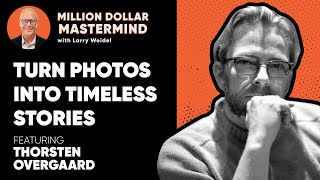
Part 1 of a YouTube interview (Million Dollar Mastermind) between host Larry Weidel and photographer/educator Thorsten Overgaard. Thorsten describes his multi‑year practice of running ~20–25 annual workshops (for ~14–15 years), producing books/videos, and maintaining a long-standing, self‑owned website (started around 1995). A major theme is owning and preserving creative work — practical backup workflows, copyright control, and designing an archive future heirs can use — mixed with personal reflections about legacy, inheritance, and the value of preserving photographs over decades.
Questions this video answers
"I think I do 20, 25." (20–25 workshops/year).
"...probably done for like 14, 15 years." (about 14–15 years).
He refers to starting the site in the mid‑1990s, citing "1995" as the year it took off.
Welcome to this edition of the Million Dollar Mastermind podcast. This is where we pick the brains of high achievers from all walks of life and get their hard earned real world insights on winning. I'm your host, Larry Wydell.
Hello everyone. We're talking with world traveling photographer and the man who does many workshops, does many. Every version of education you could possibly do uses every version of social media, I believe, to communicate and really inspire people to greatness and their own photographic journey. Welcome to Thorsten Overgard. Hello, Thorsten.
Hello, Larry. Good to see you again.
You too. And Thorsten is one of my favorite people in the whole world and never stops moving in many ways. He never stops moving forward in geographically, but also in professional and career development. And so it's always, you know, when you do that, you learn things and Thorsten is always on the attack and comes up with a lot of interesting stuff which is very educational. And he's, he's a photographer, an educator. He's just about anything to do with in the world of communication and creation and. So what you been up to lately, Thorsten?
I've been. Well, I use everything at the same time. So I'm finishing videos and books and then I'm writing, starting new books. I just came back from some travel and taking some photographs in uk. Came back a few days ago and then I go to Singapore on Thursday and then Sydney and Melbourne and Perg after that and then back here.
Yeah. So how many workshops do you do in a year?
I think I do 20, 25. I kind of almost, almost every year say I want to do less and be home more and write stuff and get stuff done and then I end up adding stuff. Then like somebody's like, oh, you should come to Texas. I'm like, oh, let me see Texas. What's the weather in Texas? Okay, let's put Texas in March. And yeah, so it kind of keeps going like that. And I just added, so it's just added Texas and I added the Cincinnati and then I added I'm going to Tokyo and Kyoto and then Taiwan and Kobe is just so close. It's just a little hop. So I added those also. So there's like always a balance of if you say when I travel, it's limited for how much I can get done. I can just catch up on the daily schedule and editing my photos and email and stuff, but not so much creating new stuff. And I actually like, I mean, you could say it's almost like my ideal since I was a teenager was to just sit on an island with a typewriter and an ashtray. Well, astray wasn't part of it when it was a tea day sometime. But was it sitting there in the Seattle? Yeah. Sit there in the Sierra and ride.
Like an old Hemi maker. Yeah, yeah.
So that somehow is the ideal. But I mean it's not that I love to travel, but I love to be places and see places and meet people. That's what I like about it. Yeah. If I could just teleport there, it would be much better. So talk to Elon Musk. Musk. If he can do something about that, get some teleportation going.
He's probably working on it.
Yeah, we all need some teleportation right now.
I think I like Thorsten. I've always liked Thorsten so much because he's interested in so many things. He's got, I would say as a short attention span, which is not accurate. He's got a very good attention span, but he likes to move on to new projects. He got a lot of ideas bubbling in his head and he likes to try them. And usually something great will come from it. And you've created an astounding amount of content information, books, courses, reviews on your website. It's almost. It's become an indispensable site for photographers, but also especially for the Leica photographer. And as you and I know, the rest of the world may or may not know, Leica is the ultimate camera and super expensive. But if you, you really are into photography, a lot of times you find yourself wanting to shoot Leica cameras and lenses. And so your go to source for information on that is Thorsten Overguard. And so Thorsten, how, how many people do you find get into these in a year, would you say? How many years have you been doing the workshops?
Well, the workshops are probably done for like 14, 15 years, I think. And so it would be. It's around 200 people. It's not an amazing great amount if you look at it. But of course, I mean 200 people that you meet in person, you spend three days with and we stay in contact after also. So that is quite. Yeah, quite some people, you know, I mean compared to website and Internet and downloads and stuff, it's like that's entirely different numbers, but it's also a different way of interacting.
But you have built your business organically from the ground up, one day at a time, one workshop at the time, one article at the time. But early on you got to where you got organized right from the beginning to where you had a Place where you could keep, keep this information and made it, make it available to other people. I think that's paid off for you.
Yeah, I mean that is the important, you could say, I mean people who have followed things and read my thing know that, that what goes throughout is that you have to be aware that. Well one thing is like you're your own boss. That's almost, that's what I think people should think with, but they don't necessarily do. And then you should own your own things. And that means you have to be the one ensuring that the things are available now and in the future and you own the rights to it. You don't give away the rights or leave it to somebody else. So what was our little question? Why did I start talking about that?
Well, we were talking about the fact that early on in your career one smart thing you did was start compounding making your information available in a spot. And I think in the beginning you probably did it just to make pictures available for your family for years and on your travels and everything. But as the reviews and the books and the training things, the ebooks came out, you had place courses. You had a place where you could put them and make them available, but you controlled it.
Yeah, that's true. I mean that is a means for. You would say almost any artist you have to have a website. You say ones of first of all like you say your name is your trademark. Like that's. You have to make sure you own your own name. And I think you also should use it. I mean it is tempting, I mean if I should start or as an artist, in some ways I'm writing a book about being an artist and stuff. But anyways, but I would be tempted to just use a made up name, made up identity and never show my face. So you don't have to deal with. You can just live your own life and then you can step into this role, whatever that is past now. But at least you can say whatever trademark or web domain you use that should be your own and you should control it. And the content you should own and control and the music. For me it's just been natural because I always like, well from the beginning, from being a kid, I always wanted, I always was like a storyteller writing and photographing and doing comics and stuff like that. And then I just kind of, you could say it happened to be focused around photography. So most of the things I do is around photography like writing and the products and everything. And then I have this thing I like to preserve and that is basically how the website started. Back when there was no visitors, you could say that was new. 1995, if anybody can believe that, was a year 1994. I was not really in the Internet, but 1995, that's when it took off and became popular. Before that was only scientists. And I just started putting pictures and stories on there, like for. Basically for my family and my employees. They could see what I was up to. And when I got into. I was into falling apart, I got into, like. I somehow just liked to preserve information about specific cameras and lenses and film and scanners and so on. And that became the website. And then as time went by, people started using as a resource, and then they had more questions to say, can you do a workshop? Could you write a book about this? Can you do an exhibition? Can you do this and that? But preserving is still very much key. And when we originally planned this podcast, way before elections and hurricanes and everything else, right, of stuff happening in the world, I actually was thinking that it could be interesting to talk about preservation, because that was something I was into there and I'm still into it. So in different ways, and you say one thing is that you may not appreciate so much what you're doing today. And you could say, if you go out and photograph, let's say you get a new camera tomorrow, you finally get this camera that you order from Leica and you thought it didn't make such kind of vibes, so you go take a walk with it and you take some photographs and it's like, oh, that's nice, and so on, and. And you might not appreciate it as much as you will if you look at it in 10 or 20 years. Because, I mean, I think we both live in places where the sun shines every day, so there's nothing new about it. And there's palm trees and so on. For people in other parts of the world, that's very exotic and different, and they dream to be there. And you can also say the world is going to look different in 10 or 20 years. And suddenly you could say, just the fact that, for example, I was in Kyoto or I was in Berlin, it's suddenly like, that's an experience, that's a moment. And when you look at that again, it has much more value later than they had then. And part of preserving is that you have a workflow that those four photos you take today goes into an archive and they're preserved. You can find them again, and people after can find them again. So that's the whole system I mean that's what I've written and talked about in the Lifeform survival kit. And the Capture One survival kit is like how to get work done easy but organized and high quality and it remains backed up and everything. And if you say in my own case that means like I put texts in the archive every day and they keyword, they're final in different sizes for different use. And I even have a set of backup I put into. I have a fancy yellow Gucci bag for this where I put in hard drives and it goes in a bank box. And just here before the hurricane I had to check is everything there put in the bank box. And now I even have like some not very expensive bags. It's like 30, $40 for a whole kit for all the hard drives. But this that you have some radioactive stuff going on or electromagnetic stuff, then it's protected against that. Also.
For those of you who are sick and tired of fooling around and are dead serious about wanting to move up fast, I've got something especially for you. I've combined the best insights from over 40 years in business and making $70 million in income and compressed them into a free webinar. That's right, it's a free resource. If you want to find out exactly what the concepts are that I use in coaching million dollar earners, Register now@widelonwinning.com you'll discover the five part framework used by so many many to reach their financial, personal and professional goals. You can find that link in this episode's show Notes.
Now is this if you're going through airport check in or whatever, I mean when do you have to check against that?
Oh that's just like you could say if there was I think if you put a hard drive nearby an espresso machine or a microwave, you might actually have rays that would interrupt really the thing. But you say we have terrorism like of electromagnetic pulse that's going to wipe out all digit meters. That's like all your cassette tapes, your tape backups, your hard drives. It doesn't matter if it's solid state or what it is, it's going to be wiped and then you can put it in and what's called it a Ferro Pharaoh something back. You can also buy a whole cave. You can sit and work in a cave like that, but there's no reason for that. So no signals can go through that. And that's also the bags that you buy if you want to put. If you don't want anybody to know where you are, you Put your iPhone in that one. And then there's no signal at all. So it's just like a lot of things I studied all the time. Okay, how do you do this? How do you protect this? For example? I mean, I don't have the backup drives in my house because when there's a hurricane that's coming, you can get flooded, the tree can tilt over. Anything can happen. So you shouldn't have your backup here. So where do you put it? I put mine in the bank, and they're organized so you can find the stuff again, which is. I mean, backup is a little bit ridiculous because backup is something that, you know, don't need. It's like insurance that most likely you don't need it, but if you do, it has to be there, right? So that's the system that you set up. So you do not. You don't want to spend a lot of time and money on it, on something that hopefully you never needed. But you also. If you don't do it, then. And something happens, then you really. Then you really fucked. And then you think, oh, I should have done that.
Right. I want to tell you this before I forget it. Do you know that about related to owning your own, not giving away your copyright or your ownership of your intellectual property? It's like, I don't know if you know the story of Dolly Parton, and she was an incredible songwriter, and early in her career, she wrote a song and went to number one with her singing it, I Will Always Love youe. And then it was number one. It was great. Then all of a sudden, Elvis came along and he called her up and said, she does the Elvis accent, which is really good, but which he tells the story. But he wanted to record it. I love the song. Love you. Love to record it. And she said, I'm thrilled. Go, go, go. And so they set it up. And then the dark angel comes in, his manager, Colonel Parker, and he calls her and says, now, Dolly, we've got to have half of the songwriting royalties for any song that Elvis sings, he records. You're gonna have to give up half of that. Those royalties. And she said, sorry, not gonna happen. And so she said, it broke my heart. Elvis was gonna sing my song. But 20 years later, Kevin Costner selected that song. He was the producer for the movie the Bodyguard, for Hugh, Whitney Houston, and Dolly Parton made so much money. She was laughing. She said, I made so much money on the royalties from that one song and that one movie. I could have bought Graceland.
It's so I mean it's like, yeah, people. Yeah. You say people are very happy to just work for other people and get paid and they don't see the long term effect of it. And I mean, that's not all of my biggest things right now. So here's. Yeah, so let's just finish the thing about archiving because I was actually making like, I even did like a write up a few months ago of how is the stuff organized? And it's kind of like, this is for my kids. This is how stuff works. This is where the mailing list is. This is how much it cost to maintain a mailing list. This is how daddy makes his money.
Yeah.
And so on. And this is where the pickers are. And should this company ever ask to use my pick this, the answer is no, unless they pay a really lot of money and so on. So the rules for that. And then you think, okay, so your kids are busy and maybe they're not into tech or whatever the story is. I mean, you can't expect that somebody's going to attack what you leave behind with the same enthusiasm as you do. So. And then one of the new ideas I got is like, no, I can just buy a SanDisk Solid State Disk 4 Terabyte that cost $250 on Amazon and I buy one for Easter kit and then I put all the final pictures on that one. That's about one terabyte. It's 130,000 pictures. Everything else is negative. It's like 150 terabytes or something of stuff. And you can say any books or whatever I wrote or manuscripts should be there also. And that's kind of like the essence of it. But anyways, that's a very interesting thing to have. And it's also, well, as you could say, one of the things I had with is also is life. Continuum is, should we say. My mother passed a few years ago and she left a big house and then there was a beach house we owned together or used to own together and so on and some cars and a lot of paintings that nobody knew was if they were worth anything. And it's like that was her game. The big house was 28 rooms. There's a big house. The biggest house in the city.
It was the biggest house.
Yeah, she was making curtains. She was just so. She, she was a very strong woman, but single mother and she's just like, she just worked a lot and she was good at it. And it's, it's not like. But she made more than a CEO at that time, whatever. So she bought this house and renovated it and everything else. A nice garden and so on. And when he was passing away, well, she was ill on her way to Denmark, and I didn't know she was passing away. I was talking about the will with her and I said, well, my brother, he really likes the house, so we should set up the will. So he gets the house and I'll take the bead's house. And nobody uses them. We're just gonna sell it. And then he can. Everything in the house, he can just keep it. Because he was anyways living there nearby. He was taking care of it. And he said, it's kind of like, why would we divide it or try to just give it to him? And basically I also suggested give it to the grandchildren because we are like adults, we don't need to inherit money. And says no. And she's like, absolutely not to the grandkids. And also she said, I don't care about it. I said, listen, of course you do. So let's set it up so it works. And then she happened to die four months later. Wow. And yeah, it was great. We got to do the last Christmas, we got the kids flown over from the US and everything. So we had a great time. And I also talked with her. This is going to go into a book at some point, but I'll tell you anyway. So I talked to her about what do you think happens when you die? And she says, I don't know. Say, well, I mean, you don't believe in God and all this, so let's just rule that out. And I said, well, it could also all. It could be that it's just black, that there's nothing. I said, but there's also some people, they believe you're going to live again. So if that's the case, then it doesn't cost anything. You can just start thinking about, what if I'm going to live again? What would I do in relation to marriage and men? I said, no, that's fine. I don't have anything about that. Well, that's fine, Mommy. And you would say, you did well with houses and money and so on. But you could think like, where do I want. If I going to live again, where should I live? Should I stay in Denmark? Or should I go to Florida and be with the kids and their sunshine? Said, no, I want to stay in Denmark. That's fine. And I said, well, that's like, you don't have to tell anybody. You can tell and it doesn't cost anything. Like you can just start just imagining how is your future going to be. And if it doesn't happen like that, if it's just all black, then whatever, then it didn't cost anything. So anyway, so. So she passed. And then what I learned from that was that that even she. She left, you could say great wealth. And she had made this house and garden, is it beautiful and everything. And there's a lot of exotic furniture and masks from all over the world she's collected and so on. Then suddenly there was actually a lot of work maintaining this property. And my brother, he got tired of it and he's like, no, I want to sell this house. I can't. This is not fun. And we had to kind of maintain it until you can sell it and so on. And that made me realize it's like, that was her game. That was her game. It's not our game. That's like we. If we had the opportunity to buy a house like that and decorate it and do the garden, it's like, no, we wouldn't do that. I mean, I would never go in the garden anyways. And the painting is like, what is worth what? You have to call somebody who can look and say, oh, this is worth something, this is worth nothing. And then you have to dispose of them or sell them or something. So that's one interesting way of life. Continue. Where I decided, no, like, I should leave stuff so it's easy to deal with. I can't expect somebody else to continue. And it was funny. I had a funny story that's also going to go into a book because I took a picture of it. So we were traveling. I think we were gone in Japan and Paris for two months. And we come back and on the front yard of our house here in Florida, somebody parked a big old Mercedes from 74. So it's like. So we're like, in your yard? Yeah. What the hell is going on? With a big to sale sign on. And we're like, what the fuck is this? Like, get this thing out of here. And then goes and said, no, we're going to remove in the week and somebody's going to buy it and nothing happens. And then we think, oh, maybe it's meant to be. Maybe we're going to buy this car. Because I always wanted. I like old Mercedes, like, and it's actually nice, it needs to be washed and maybe a few other things. So we find out that the story of it is that the neighbor heard that had a company and he was doing really well back in the 70s. So he bought this Mercedes, 1974, I think it was, and he got red interior in it, which is the only one that has it and is so well maintained. Then he died and the wife takes over the cars. He put it in. It's like a farm. So you put it out in the house there and all the birds shit on it and stuff like that, but it's still fairly protected. And then he dies. And then they leave it there for some years, and then 10 years ago they take it here and put it in the garage and now they took it out of the glass because they want to sell the house and then they should do something about the car. So then I'm like. So we had a guy come and look at it, a Mercedes guy. He said, no, there's too much rust. It's like underneath it's beautiful and everything, but there's rust. And we don't know till we start taking it apart. And it's going to take six, nine months to fix it up. And then you have, I like new car and I like it. I'm not going to. That's. I don't want to do that project. So then I sit there and I look at this car. I sit down on the front, I smoke a cigarette, I look at this car. I think, that's life, continuum. So you have this guy, he b buy this amazing car and everybody's like, wow, that's a beautiful car. And then he dies and nobody fucking dares selling this car and just cash in the money and buy another car that they like. They keep this car and keep this car and keep this car till they just rod up and it's useless. And I mean, in the end it basically had to pay $500 for somebody to pick it up, or at least they can find somebody who wants to pay 3,000 for it.
Yeah.
And that's ridiculous. And that's just how it goes. That is like. So anyway, so that's. We go back to archiving. That's part of what I think about when I write articles and when I do photographs, one of the thing is, I think, how can this article, how can this book be valid in 50 or even 200 years? So one thing, I stopped writing about iPhone because nobody's going to know what an iPhone is in 200 years. Yeah. So we have to find a name. So it's actually not about the time we live in or new technology of what we think is new technology, but it's the idea of whatever it is and then it has to be preserved in a form so those that it might be a value for can actually find it and use it. And as you go through pictures, that's very interesting. There's so many great pictures. I'm sorry, there's many great pictures I took, right. That you're always, like, concerned what I'm going to do now. And there's new camera coming and now I'm going to Singapore. What should I photograph in Singapore and should it be color or black and white and how many megapixels? But stuff I did 10, 15, 20 years ago is almost sometimes like, maybe I should just sit down and go through the archive, you know?
Thank you for listening to part one of this episode of the Million Dollar Mastermind podcast.
Commit to your personal and professional evolution with our free training video.
It's designed not just as an educational session, but as a transformative journey for those bold enough to aim for the stars. This isn't just any webinar. It's a roadmap to achieving the extraordinary. It's tailored for those who dare to dream big.
And yes, it is completely free.
Join us in a network of ambitious professionals ready to take their careers to a new heights. Secure your spot now@whitelonwinning.com and let's unlock your potential together.
Thanks for being part of this community.
More from Larry









Rick Jordan on Self-Engineered Proximity, Cyber Security Moats, and Truth-Based Leadership

Fire Fast or Fail Slow: Kevin Brittingham Reveals the One Rule That Built a $100M Empire
