Part 1 - The Brutal Reality Of Building A Business Mid-Career
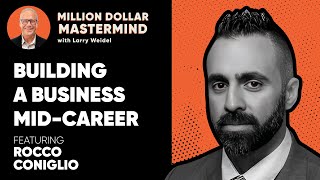
Rocco Coniglio launched Psych360 in 2015 while working full-time and caring for his father with dementia. He and his wife took no salary for three years, grew the company to 75 employees serving 600 facilities, then sold it and stayed to help double growth post-exit. He discusses the trade-offs of building versus buying cash-flow-positive businesses in healthcare.
Questions this video answers
2015.
About 600 facilities.
Approximately 140,000 patient encounters per year.
Roughly three years.
Moved in 2013 after a dementia diagnosis.
Welcome to this edition of the million Dollar Mastermind podcast. This is where we pick the brains of high achievers from all walks of life and get their hard earned real world insights on winning. I'm your host, Larry Wydell.
Hello everybody. We are going to have fun this afternoon talking with Rocco Coniglio. Hello, Rocco.
How you doing, Larry?
Now many of y' all may know him as Coniglio since you have the American pronunciation, but we've agreed Conlio is the proper Italian G, silent pronunciation. And Rocco was asking me about the podcast and I told why I do the podcast. I was telling him it's because I get a chance to meet fun people like him and talk about winning with new people and kind of broaden my own perspective as well as my friends and the people I know broaden our perspective on winning by pulling it in proven insight from people that have gone out there and attacked life with energy and faced all the things that we all run into and one overcome. And like Rocco was sharing, he's right, now he's dealing with a bad pack. We all. It's always something, isn't it? And I won't tell you what I ran into this week, but it's always something. And it's usually completely unpredictable. The predictable ones somehow we're able to avoid. But in spite of that, you gotta win. Clock is ticking and nobody wants to hear about your problems because they cut all of their own to deal with. And so Rocco, talk about, I'm excited to hear what you would think in looking about your resume and your achievements. What do you think is your biggest achievement that you're most proud of pulling off in business? And that really means a lot to you?
It's a good question. I would say when we started our company, Psych360 back in 2015, just the time of life of when my wife and I started that company, I think it's really, I think it's easier to start a company from scratch when you're younger and you don't have, you don't have as much to lose. And, and we actually, we started our company more like mid career. So I was, I don't know, I don't know what I was when I was back in 2015, mid-30s. And at that time we had two girls, two young girls. A year after we started the company, we had our third girl. I had a W2 job that I was working, had just moved my dad in 2013 from Pittsburgh to Ohio because he had gotten diagnosed with dementia. And so I was his Primary caregiver. So I had to take care of him as well. And so like you're talking about starting the company, maintaining your performance at your full time job so that you could have an income. Because when you start a company, typically you're not going to be able to pay yourself or pay yourself very much for a pretty long time. And for us it was like, I don't think we took a salary for three years. So it was an extremely challenging set of circumstances because I was trying to be a good dad, trying to be a good husband, making sure that we were, you know, I was performing at my day job and then also starting and growing a company which takes a ton of effort, especially in the first few years, checking in on my dad, grocery shopping for him, making sure he was taking his medications. So I would say like the first few years was, was pretty brutal just from the standpoint of like it was non stop, it was full go all the time. And then it got to a point and in 2017, when there were routinely times where I remember would come home on like a Thursday, would be behind on work for psych360. And so I would work throughout the night to catch up on everything without any sleep and then go back to work Friday without sleeping. And look, I'm not suggesting that's like a badge of honor or anything or I'm not suggesting that's like the right thing to do. I mean sleep deprivation is not good for your health. But I wanted it pretty bad. So it was just a matter of like, that was what was necessary to get to where we wanted to go.
And so from that, what would you say, starting with that beginning, what do you think is out your past, things that you were able to do? What is your mountaintop that you're most proud of so far?
I think that actually accomplishing the vision that Nicole and I had for the company, which was when we started, it was just her and I in scaling the company to the size of 75 employees, scaling it to, we were serving the nursing home industry. So like we had 600 different assisted living and skilled nursing facilities that we serviced in multiple states. We were taking care of thousands of patients. We had 140,000 patient encounters a year. I never would have thought that we would have got it to that scale when we first started. But I think being able to help so many people, being able to employ a lot of people, being able to develop a lot of people, that was extremely rewarding. And I think that it taught us a lot of lessons and created and established a lot of great relationships. And we felt like we did a lot of good throughout the course of that time and getting to professionalizing the organization to this, to the degree that we actually had a buyer come in and say like, we, we want to buy the company. We think what you guys are doing is great. That, that was, that was awesome.
And so you mentioned relationships. I just heard a snippet, that interview with Peyton manning, Super Bowls MVPs, this, that and the other. Every award you'd win in football. And he said the biggest thing he looks back on is the relationships. The thing that means the most to him is relationships. And I think when we start businesses, we don't really think about that's going to happen. Would you agree?
I think that if I look back at my career like when I was working for other companies, I worked in the healthcare industry for over 20 years. I worked for some large corporations, I worked for some smaller corporations. The best executive team and culture I worked with was a company called Spectranetics. They're part of Philips Healthcare now. They got bought when I was, I was there by Philips, but had a really great culture. It started from the top. They taught everybody about relationships and they did that through really having a strong focus on the mission of the company and a strong focus on values. And that started from the CEO down. And so I think just being exposed to that, I kind of knew going in that we wanted to create a similar type of a culture and organization. And so I think I came into it eyes wide open, knowing that like we were going to have a lot of relationships that we were going to establish and there were going to be a lot of people along the way that we wanted to see develop and frankly develop them to the point that they would move into better things, whether that was with our company or outside of our company. So I would say that when you see things like that happen, that you take pride in those things because you were a part of it.
Yeah, yeah.
For those of you who are sick and tired of fooling around and are dead serious about wanting to move up fast, I've got something especially for you. I've combined the best insights from over 40 years in business and making $70 million in income and compressed them into a free webinar.
That's right.
It's a free resource. If you want to find out exactly what the concepts are that I use in coaching million dollar earners, Register now@widelawnwinning.com you'll discover the five part framework used by so many to reach their financial, personal and professional goals. You can find that link in this episode's show notes.
And exactly. You reminded me my nephew is working with Google in their tech world. The quantum computer. That's right. He's. He maintains a quantum computer, but he was talking about when he. The hiring process. They had five or six steps, but they, pretty early on they started talking about, I forget what he called it, the Google way or something like that. But they were more interested in your attitude about how you went about yourself. You went around, about being around other people as much as anything else. And I think that's what you're referring to. Would that be correct?
Yeah, I mean, I think your attitude is really important. Your attitude can either make or break whatever you're focused on. So there's a lot of smart people out there, and intelligence isn't the whole thing that's necessary in order to be successful. You really have to have a strong mentality, and I think attitude is a big part of that.
So, okay, now you sold a company, you sold this company. We'll get circle back on some of these things. But I'm curious right now. I know you're in a lot of pain with your back and everything, but it's hard to be a happy guy when back pain is a great leveler. But the thing is, what gets you most excited about living or what aspect of the job? Is it what you're able to do now with your kids after, you know, after getting over this hurdle? You know, you just, you've climbed a massive mountain and you more than fulfilled the vision you and your wife started out with. And now what did that yield for you? What have you learned? What are you excited about? What are you looking forward to?
Really looking forward to doing it again? I'm not at a point in my career where I think it makes sense to think about slowing down. I got a family to support. I have three, three girls that you got to set an example for. And I think that making sure that you're continuing to lead your family is important and leading through example. And when we look at, at least when I look at like the future, I'm looking at things like, okay, so what's next? Is it running another company? Is it in healthcare? Is it in another industry? I mean, all those types of things are things that I evaluate. But just trying to figure out what the next challenge is, at least on the business side, is kind of the process that I've been going through now. And we've been looking at various companies to Go through an acquisition process on. And so that's kind of exciting. And those are the things that we're looking at now is identifying companies in the lower middle market, primarily in healthcare, where we can add value. And so there's some exciting opportunities on the horizon that we're engaged in.
Maybe you can offer some insight for people that are in that situation where they've had some success, they've got some resources, they've got a network of friends and ex business associates where they could kind of put their band together. You know, it's kind of like being in music. You've got your band, you can put the band together, we can put on a show. And it's just a matter of trying to find the right material like they do out in Hollywood. They'll read scripts for years and they'll finally find the project and then they go around the clock pulling it off and they pull all of their friends in and put something big together. As you're out there now, you've got resources, you've got skill sets, you've got experience and contacts that you didn't have before. How do you go about evaluating opportunities? What have you learned about that in terms of streamlining that and getting to the bottom line on what could be a fit, what could be worth it, what could be exciting where you could add value? And I'm sure when you add value like you, I think I saw in your, your resume there that after you did your eight figure exit, you stayed on as chief operating officer and president and you grew. The, you know, the company doubled again. And so what are you looking for or what would you advise people to look for in terms of where you can make a difference and what could be exciting to do that would engage you? What kind of potential are you looking for?
Given that I have a healthcare background, given that I've been in sales and business development for a long time in my career, given that I've been able to start a company, scale it to a PE exit, those are all things that would add value for the right circumstances. I think there are opportunities where one of those things could be valuable to a company, but the opportunities that get me excited are opportunities where I could, I could add value in all of those areas. So when I'm evaluating those types of opportunities, I'm looking for opportunities that I can make a larger impact by adding value in all the different areas that I feel I have strengths in. So a lot of it is just having a lot of conversations. I mean, it's a lot of Work, but it's getting on calls, going to meetings, going to conferences, flying around the country and figuring out what's going to be the best fit meeting people in person. I mean, Zoom is great, and doing this type of thing is great, but a lot of times it goes a long way to meet people in person. Go have dinner, go have lunch, grab coffee, whatever. It's really a long process. It's not something that you just make a rash decision or you just, like, pull the trigger on something quickly. But there's a lot of opportunities out there. You just have to find them. And then you have to have multiple conversations and see what feels best and. And what your gut tells you, and. And that's how I've been going about it.
It's prospecting, isn't it?
Yeah, a lot of it is, yeah, absolutely. Yeah.
And it's kind of like people will say. They'll always come in and say, you know, what was the magic when you. You hit your stride? What was the button you pushed that caused everything to really start to work for you? You said, I always tell them, if there were 88 keys on a piano, I was banging all of the keys, trying to find every, you know, going to conferences, call phone calls, Zoom meeting people there, going to business lunches, calling my friends up, looking on social media, whatever I could think of. You know, that when I was in business, people would come up and say, what do you think about the idea about this by getting new recruits, or. And I say, yes, that's a great idea. And then the next one you think of, do that, too, because we know. You never know where the. It's like digging for gold. They're down in Brazil and they're up in Alaska digging for gold.
You can't leave any stone unturned. I mean, it's a lot. It's a lot to go and find those right opportunities, and you certainly can't sit back and wait for it to come to you. So I would say it's really important to be active in a lot of different ways.
Yeah. Because it's like this. The opportunities are out there, but they don't know how to find you, and you don't know how to find them. The only way to do it is. Is just go look it. And it doesn't matter that you have all this experience and you could be. You could take them and make them a hundred times bigger, this or the other. They don't know where you are. They don't know that, you know, you have a tremendous. For you to Be able to capitalize on the advantages you have. You gotta do some prospecting. It reminds me of, I had my dentist on here, Dr. Ty Ericks. And he was talking about how he found his practice and he was over in Tampa and he looked all over the state, all over the southeast. He came up underneath another dentist. And then it came time for him to go his own way. But he thought, I'm going to take over a practice, I don't want to build one from scratch. And he just, he had to do the same type thing. Do you think the idea of starting one from scratch right now, does that appeal to you? Or is it more appealing to buy.
A business that's already cash flow positive?
Yes. Yeah, that's a lot of thesis in place.
That's a good question. So I think there are pluses and minuses to both. I mean, the way I look at it is if you start a business, especially if you start one for a second or a third or whatever time you're able, I think you're in a better spot than the first time you did it because you can start it the right way. There's not a lot of like, oh, I made this mistake, or I, I gotta fix this, or I gotta take. Take two steps back. And, and so having a blank slate. There's something to be said about having a blank slate because you've been through it already. And so you are going to be much more efficient with limited resources than you were the first time you did it, right? So you can probably get to where you want to go faster and with less money and less pain than you did the first time. So that's the big plus on starting something from scratch. Now if you go and get, you go and look at acquisitions and you say, okay, well, I'm going to go buy a business, or I'm going to go and buy a business that's cash flow positive and it's been around for a while, or whatever your criteria is for buying a business. You can buy a nice business, but now you have a whole set of other challenges, right? You've got people that you don't know in that business. You have to build credibility and trust with those people. You may have to, you may have to upgrade some of those people to get to where you want to go with that business. The business may be unsophisticated. It may have been. I mean, I've seen plenty of businesses that have been around for decades. They don't have, they don't have good systems in place. They've been running on antiquated operations for a long time primarily.
Are you referring to human resources accounting?
All of it really. No, truly all of it. I mean there's plenty of businesses out there that are successful but they're not sophisticated or they haven't, they haven't really sophisticated their operations. There's businesses I've seen that are highly successful and they have no sales. Right. They have no sales team and they don't hunt for new opportunities. And so there's all kinds of opportunities out there with existing businesses. But now your challenge is, is that you have to work through a lot of change management and you have to invest some of those dollars back into the business in order to get it to like that next level. So that's a whole other set of problems that you have to tackle versus when you start a new business from scratch. So both have problems. It's just what problem do you feel more comfortable that dealing with?
Would you agree with this, this tight statement that it has to do with are they set up for future success or not? Are the areas that need to be addressed? They've kind of had success, they've maximized their success and they're where they are and they're probably not looking to sell if they're blowing and going. Not as many of them.
There's businesses at all different stages. There's businesses that different, they have different life cycles. So like for instance, there are low middle market businesses that you can find that have been highly successful for decades but you know, they're founder owned and maybe the founder's taking home a couple million dollars a year. Right. Like there's no reason if they're, if that's a lifestyle business for them and they, they've got a great life and they've worked really hard to get to that point and they don't really want to put the energy in to taking it to the next level. There's absolutely nothing wrong with that. Right. But, but they may not be set up to take that next step. So you're. The question you have to ask yourself is can I take it there? Do I have the resources to be able to take it there? And are the problems that I see with the business today based upon where I want to go with it? Are they problems that I can solve versus There are plenty of companies out there that I would call more of a platform.
Yeah.
That it's already set up and ready to grow and get to that next level. And at that point you can run a lot faster with those businesses. But they'll cost you more, too.
Yeah. One thing I would think about in a situation like that, Rocco, is if I go in there is if I'm looking for a recruit, someone to bring on board or something. You want to find out enough facts to see if you kind of like them, if you could be in business with them, if it would be fun to be around them, if you could do things, to be involved in that business at that location with these people doing what needs to be done. Do I hold? Am I getting inside? Are my inside saying, this would be fun? I like the challenge, but at some point, that, like, button has got light bulb has got to go on, doesn't it?
Yeah, you're right. Certainly, if you get into a situation that you're evaluating a business and there's not a match with the people, that's pretty much it.
Yeah.
I mean, there's no reason to take additional steps. Yeah, that's hard to overcome.
We had a big recruiting operation, and people would frequently, you know, they'd come in and they. They'd have somebody they were trying to recruit, and they'd bring them in and introduce them to me. And after they leave, they come back in and say, what'd you think of him?
You know?
You know, what'd you think of him? And I said, I don't know. What did he think of me? You know, if we don't like each other, it doesn't matter what we thought of each other.
Thank you for listening to part one of this episode of the Million Dollar Mastermind podcast. Commit to your personal and professional evolution.
With our free training video.
It's designed not just as an edge or educational session, but as a transformative journey for those bold enough to aim for the stars. This isn't just any webinar. It's a roadmap to achieving the extraordinary. It's tailored for those who dare to dream big.
And, yes, it is completely free.
Join us in a network of ambitious professionals ready to take their careers to a new heights.
Secure your spot now@whitelawnwinning.com and let's unlock your potential together. Thanks for being part of this community.
More from Larry









Rick Jordan on Self-Engineered Proximity, Cyber Security Moats, and Truth-Based Leadership

Fire Fast or Fail Slow: Kevin Brittingham Reveals the One Rule That Built a $100M Empire
