Part 1 - Why This Luxury Watch Brand Switched From B2B To B2C
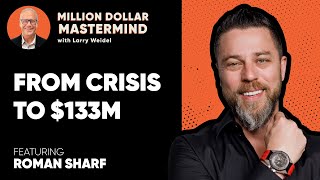
A podcast interview (Million Dollar Mastermind) with Roman Sharp, founder of Luxury Bazaar. Sharp explains why he shifted his luxury-watch/jewelry business from B2B/wholesale back to B2C, how COVID accelerated that transition, and the operational and financial impacts (large receivables, staffing choices, media-led direct-to-consumer strategy). He also discusses product mix, market resilience (mechanical watches vs. smartwatches), and his entrepreneurial origin story.
Questions this video answers
$133 million (best year).
About $100 million (to hit the $100 million mark).
About $28 million in receivables.
Approximately 25% jewelry and about 5% watches.
About 22 years ago.
Welcome to this edition of the million dollar Mastermind podcast. This is where we pick the brains of high achievers from all walks of life and get their hard earned real world insights on winning. I'm your host, Larry Wydell.
Hello, everyone. We're talking with Roman Sharp. And Roman, congratulations on the growth of your luxury brand business.
Thank you, Larry. Good to see you again.
Yeah, and we were just talking about the growth since you were on. It's pretty phenomenal. You know, I got to give you a compliment for getting in the online luxury brand business as early as you did. Because, for example, I'm hearing now that like online auction sales, you know, Christie and Sotheby's, all of those, that 80 or 90% of those sales come over the Internet or come online or they're works of art they're spending millions of dollars for or bought from jpegs, you know, looking at jpegs on the screen and early on it wasn't like that. It was like you'd buy the cheaper stuff, but the nicest stuff, you had to go in the store and touch it and feel it and everything. And you got really took that opportunity to get in front of everything and turned into incredible momentum. Great timing. So congratulations on that. And so tell everybody it's luxury bazaar is your business and do a lot of luxury goods, especially watches. So let's talk about the growth where you've gone over the last three or four years.
So we had shifted gears in three, four years. One of the things that grew my business about six, seven years ago, for me to hit the $100 million mark, I sort of swerve my business back into the B2B side I. E. Lots of wholesale, as we call it. And wholesale in my industry doesn't necessarily mean that I'm selling a hundred Rolexes at a time. It simply means I'm doing B2B. So I'm selling goods to another dealer, smaller dealer, that's then in turn reselling. It often involves giving people terms and things of that nature. That's the one thing that took our business over a hundred million dollars. And right before COVID hit, I took a look at the business and I said, okay, great, we're doing wonderful numbers. The margins, okay, I can live with the margins. But as the nature of a wholesale business, we ended up with a lot of accounts receivables in China, accounts payables, and a few things that were we call bad debt expense, I. E. People go bad in the industry. In the industry. And I realized that I'm also building something that, yes, the rep it brought me the revenue brought me the profits, but didn't really build a product. So I sat down with the team, I made a decision to say, you know what, we're going to go back to our roots where we started 22 years ago and go back to B2C. Now, this was supposed to be a slow transition, not something that would happen overnight because yet you still have clients that owe you millions and so on and so forth. And you have to kind of ease out of that space and ease back into the other space, which is the B2C side of things. But then Covid happened, and it just kind of made us basically flip the switch almost instantly. Because the first few months during COVID everybody got scared and especially on the B2B side, and there was really no business. So turn our attention more back to me to direct to consumer. And this is where we basically said, well, I said, like I spoke with my cmo, I said, look, I don't want to do the traditional e commerce marketing that everybody does, I. E. You pay per click, paying Google, doing Google Facebook ads. Yes, those things work. But the return on investment or often what you spend on that is outrageous and doesn't leave you with much profit and it doesn't make you grow organically in the online space. So I basically said, let's do brand name recognition. People know the name luxury bazaar because we were one of the first online to start selling watches and jewelry. But they don't know our faces, they don't know what we're all about. And today's day and age you have. When I started, it was me and a handful of guys selling watches online. Today it's me and a handful of millions of guys. So the worst part of that is one cannot differentiate between $100 million company or a guy selling something out of his basement, which is. There's nothing wrong with that. That's how I started. Right, right. They have differentiation with that. So we went heavy duty into media production. I have an entire media team that I employ. I have three videographers, three photographers, three social media people, graphic designers. So I have it all in house. And basically I put a camera on my desk and I started talking, showing my face and telling people, hey, you guys already know who we are. Let me show you a little bit deeper. And it was that brand name recognition that propelled our B C business almost instantly. With the help of the hype of COVID The market was helping along really nicely while it was happening, and it allowed us to almost instantly switch from B2B to B2C while keeping the same numbers. And the best year with that best year, we did 133 million in sales. My expectation was to go down 20 to 25% initially. And we did not.
Yeah. And the thing was B2B businesses, people, stores were closed. So your watches were sitting in closed stores and you weren't getting your invoices paid because people were just sitting on the inventory in their stores. And I come out of the construction business many years ago. And that backup can happen when the economy goes bad, which it always does for one reason or another. If the banks start to tighten up and people can't get mortgages, that means the house they were going to sell to get money to put into the house you built for them. The people they're selling to can't get financing. So there's a back. It kind of stacks back up and somebody's holding the car. And you found yourself all of a sudden all the trailers were backed up and nobody was giving you any money. And that has to be. It's surprising how fast that can happen.
Isn't happened almost overnight. And the scariest part is at the time that happened when the wheel stop, as we say. During COVID I had upwards of 28 million in receivable.
How much?
28 million people owed me that dipped.
Into your petty cash.
So for me, it was scary before COVID hit because that number keeps climbing. Because as you're doing business with somebody, you're taking more and more credit. They're paying you.
Right.
And essentially you get to a point where you become a bank, but money costs you. You lend it out at Y. You're no longer a watch dealer, you're just a commodity trader. And you're basically charging interest on the. On your goods, but that's what it comes out to be now. While at the same time I'm taking all credit from others and balancing out the two. And hopefully one is less than the other at the end of the day. But I didn't want to. I didn't want to be in that wheel. And I'm sort of thankful that it happened the way it happened for us to transition back to B2C. Because today my receivables are my ongoing current sales. Now I do still have a few wholesale accounts and maybe a couple of million of receivables, but that's something I can sleep with.
Yeah. And the thing is, when the economy goes screwy or things happen out there politically and we're all scratching our heads, saying, well, what does this mean? What does this mean? It's really traumatic if you're the owner of a business and you're saying, what does this mean to my cash flow, to my receivables, all this money, all of these basically all these loans I've got out there, what does this mean for me as a banker? How long am I going to have to live through this thing? And what was the scariest? How tight did it get for you?
So for the first three. Was it three to four months? When Covid started, the wheel sort of stopped and it was. Business went from up here to all the way down. It gets scary, but. And I knew that essentially I have a choice. I could have not allowed total equity of my company go down drastically, which it did, by letting go of a bunch of people, by tightening up a little bit, and by saying, hey, business is down, everybody out. We'll figure it out when business comes back up. However, for me, it's never been about the money. It's always been about the people. The people that have been with me for years, 10 years, 15 years. And I wasn't going to be the guy to say, you know what? I'm going to let all these people go. When things get better, I'll bring them back home, let them go on unemployment and see what happens. What? Instead, I kept everybody on. I cut my own take home, literally in half. And I said, you know what? These guys have helped me make money for years, so I'm not going to abandon them because if they were to go to unemployment, they would lose their health benefits, dental benefits, my whole to do. So I said, you know what? I'm going to let it ride. I know this is temporary. Something is going to happen. Because usually when you have a sort of a shakeup in the world, you usually then tend to have something like money coming into the market. And I knew that there was going to be. With all these business closures and everything else that's going on, I knew the government was going to step in and do what? Print money, as they usually do. And they did. And they printed, oh my God, did they print money? And that caused that ridiculous spike in the market. Car market, watch market, jewelry market, collectibles market, you name it, prices we're going to do. I mean, we got to a point where stuff I was selling for $5 a year later was selling for $20.4x. Right? That just using it as an example. Same thing happened with cars. Our car was 100 grand all of a sudden was trading for 200 grand, right. Supplying because people had all this money, they wanted to spend it. Everybody of course thought this was never end. And as we know it did.
Yeah. And so how much are you in is it watches and how much have you diversified into other luxury brands?
So we're about 25% jewelry and about 5% watches.
And so what's funny to me, when I've got, I'm wearing, you know, I have my collection of watches and I don't have a Richard Mille, but I have a collection of watches and was great. And then somehow the Apple watch came out and I finally got talked into trying that. And you fall into that pattern. I'm thinking, what is this going to do for the luxury watch business? And it appears like one thought would have been, well, this is beginning of the end in terms of luxury watches. But it's kind of been the opposite.
Hasn't did nothing. It absolutely no effect on it. If you look at, if you go back to 1969 when Seiko came out with their first quartz watch, that actually was a big real scare in the switch watch world, right? Because now all of a sudden you had a watch that was uber accurate. There was no mechanical watch that can match the accuracy of a quartz watch. But it was also around the time where watches were more of a tool rather than a luxury. Where today is completely the opposite. You can't flex in your Apple watch, right? While I see also a lot of people utilizing the Apple watch for some of the things it does for your health and staying connected all the time. But at the same token, I usually see those people wear two watches, right? You have all these things now, the loops and all that other stuff that people wear on the other wrist today. Nothing is going to ever replace flex, right. And that's a phenomenon that came about relatively in a short time, right? Because again, 50s, 60s, 70s, Rolex was a tool wash day. Rolex is a flex first and foremost. The mentality has changed. And you also have your true die card collectors that understand the quality, the craftsmanship of the horology behind a company that's 200 years old has been doing it continuously. They understand the rarity of things and they also appreciate history. It's the same look. A Toyota Prius will get you to the same destination as your Mercedes S500. And as the joke goes, I pulled up to me at a light driving a Toyota Prius. I was driving a Mercedes S Class. He rolled out his window, said, I get 68 miles in this thing. What do you get yours? And I told him I get laid. So that's the concept that we're talking about, right. So an Apple watch will show you the time, but a Rolex will get you laid, as they say.
So, yeah, your fascination with watches, of all the things you could have gone into and sold, how did it start? I mean, in other words, you made a great choice, Roman. Obviously it's paid by now. You would know it if it wasn't going to be a great choice. But whenever, you know, any product line gets challenged and there's developments and it's nice to be at a product line where you have the history and you can market that. There's collectibles in there as well as it's kind of like the art world. There's new art coming out all the time, but then you have the masters that people want to collect. People specialize in different things, are attracted to different things. What got you going and fascinated with watches right from the beginning? And the only way I, the reason I say this is I'm, I really like to encourage people to think about the choices they make when they're starting things like, where is this going to lead me? And you can, you can do everything right, you can pay the price, you can stand up to all the challenges, put in the hours, but if you choose the wrong horse to ride, it's, you're only going to have so much results. And you chose the watch line, the luxury brands to go in there. What was your thinking?
I'll tell you like this, and often people think about it in a perspective that you just asked, but really it's not that perspective that one needs to look at. It's really, you have a lot of young men that come and I've gone to colleges and I've spoken to a lot of young men in regards to entrepreneurship and et cetera, and I've asked them all the same question. It's not about the what it's about the sort of the wing of business you want to take, right. Because there are a lot of different approaches. The place that I'm in, I'm in the buy and sell space, I procure goods and I resell them. Right. So theoretically I'm a reseller of goods, right. Is that I do not manufacture. Obviously there are facets to my business, pre owned, vintage, luxury, brand new closeouts. There's all kinds of facets to our industry. But the bottom line, it comes down to the fact that I'm buying and I am selling. Right? That's the type of business I'm in, you have all kinds of service businesses out there from, you know, you have all kinds of tech businesses out there today. Today you have AI. There's so many different businesses that you can go into. The question you should ask yourself is not whether or not I am made for, or I should go into buying and selling watches, but am I somebody that is good enough to go into buying and selling to begin with? The product itself almost becomes irrelevant because it comes down to product knowledge, market knowledge and ability to market, ability to put it in, ability to be in the right market, and ability to stay competitive and pricing it. It doesn't matter what you're selling. But the way I got into watches is. Well, first of all, I'm an engineer by trade. I went to school for computer science and electrical engineering. So these tiny little movements inside these watches have always fascinated me. But what I think what fascinated me more is the fact that I grew up very poor. I came here at the age of 13 as a refugee from the former Soviet Union. My dad had four hours in this pocket, so. And I started working from day one. I've been working since I was 13 years old, and I'm almost 50, so that was not a strange thing to make. But having grown up poor, what does a poor boy strive for? You look around, you see a nice car drive by. There's a reason I drive an S Class Mercedes, because when I was a kid, I saw one and I said, one day I'll drive that car. And then you strive for what are some of the. Some nicer clothing, nicer restaurants and things. More of a luxury lifestyle. And part of that has always been watches, which is why when I post the military, post college, post me getting my first job making $50,000 a year, the very first thing I spent my money on was a Rolex I bought from a Buddy and Atlantic, 34,000 bucks. So, watches. But how I actually fell into the watches. I didn't make that decision. It came to me by accident. It was an opportunity to present it to me by somebody else who was in the industry who simply said, hey, you know, computers, why don't we give you some stuff, try to sell this stuff online. And the rest, they say, is history. It could have been an art dealer, it could have been a jewelry dealer. It could have been a slew of things. But the bottom line is I made a decision to go into the type of business where I am buying and selling goods.
And what were the pieces of the picture that was presented to you by this friend or whatever, that what clicked in your mind that this could work.
To be 100% honest, the first thing I said is, yes, I can certainly do things online and I have the knowledge and I have the know how. While most people had no clue at the time because it was the Internet was so new. The first thing that I actually said out loud to my wife, I said, who the hell's going to buy $10,000 watches on eBay? And it was my wife, it's good to have a good partner that said, you know what, I think we should try this because I think it will work. So sometimes it helps to have a good life partner too on your side to tell you, hey, not be a bad idea. The issue, of course, was at the time I was also working for a major bank. I was commuting to New York City two hours each way. So four hours of my day was my commute. And I had a pretty demanding job. And my wife was six months pregnant with my son. It was a tough first three years, but it was all worth it at the end.
Yeah. And what you saw was how did you have special knowledge and confidence that you could sell things online?
I didn't have the special knowledge. I had the confidence in terms of. I had confidence in myself as a sales. As a salesperson, number one. And number two, I have confidence in myself that whatever it is I touch, I can learn. Meaning that I can do this on the fly, I can learn on a fly, I can pick up a watch and I can learn everything I need to know about it on the fly. And mind you, very not a whole lot of information on the Internet at that time. Mostly books, catalogs and things of that nature. Right. Later you can go online, you can pretty much find out everything I know about watching. But back then it was the confidence of knowing that I'll figure it out and know and having the confidence knowing that I can sell.
Now, how did you get that You, I guess you'd done selling growing up as part of probably many, many things.
Yeah, I did a lot of telemarketing, which was over the phone sales, and I was really good at it. I'd sold everything from New York Newsday to Crapmatic adjustable beds, if you remember those. So I was very confident on the phone and mind you, while you on the Internet, it's no different. Except now we added the thing called email. So you would communicate via email, but often you would communicate on the phone with people. And that to me was second nature.
Thank you for listening to Part one of this episode of the Million Dollar Mastermind podcast. Commit to your personal and professional evolution with our free training video. It's designed not just as an educational session, but as a transformative journey for those bold enough to aim for the stars. This isn't just any webinar. It's a roadmap to achieving the extraordinary. It's tailored for those who dare to dream big. And yes, it is completely free. Join us in a network of ambitious professionals ready to take their careers to a new heights. Secure your spot now@whitelonwinning.com and lifts unlock your potential together. Thanks for being part of this community.
More from Larry









Rick Jordan on Self-Engineered Proximity, Cyber Security Moats, and Truth-Based Leadership

Fire Fast or Fail Slow: Kevin Brittingham Reveals the One Rule That Built a $100M Empire
