Part 3 - From A Salesman At Yellow Pages To A Digital Marketing Business
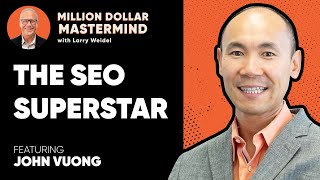
John spent 15 years selling Yellow Pages ads before launching an SEO agency seven years ago. He scaled fast but struggled with bad-fit clients until he hired values-aligned staff, moved to annual contracts, and added a link-building division. The agency now focuses on retention and long-term client relationships over quick wins.
Questions this video answers
About seven years ago.
Ten years.
Five years.
One-year contracts (recurring monthly retainer model).
About two years ago.
Welcome to this edition of the Million Dollar Mastermind podcast. This is where we pick the brains of high achievers from all walks of life and get their hard earned real world insights on winning. I'm your host, Larry Wydell.
A lot of us want our own business, but you got to position yourself first. And it's good to tuck yourself under people that are already successful in that area or that general area to where you can learn everything they know about it. And then you can be developing without the spotlight and the pressure on you can be developing the skill sets, experience relationships you need and get yourself strong enough to have a successful launch when you get ready to go out on your own. And so, John, tell me about how you got into the SEO world.
So started seven years ago, but prior to that, 10 years of advertising sales and again, a lot of sales learning, coaching, mentoring, and going to conferences and reading. However, I actually work at Yellow Pages for five years and that really pivoted me to make a transition to more digital as opposed to traditional advertising sales. And that was a big pivotal moment while working at Yellow Pages to really define where I wanted to go with my life, my career and my business.
What attracted you to sales?
I think for me it was just a part of what I enjoy doing. I'm very much a extrovert. I love people, I love talking to people and helping others. And as opposed to, I worked in finance, I did a lot of accounting, bookkeeping, and that's why I studied business finance. For me, I hated working in the office in that environment and I had to figure out what I enjoyed more. And that's where the face to face meeting customers and really offering up a product or service that really compelled and people actually enjoyed consuming attracted me.
Yeah. And so sales is also the way that you make money. Most people back. I'm not sure exactly today how it works, but when I started, 85% of the people that made above average income, they were in sales. And so that got my attention right away. The other 15% were all of the highly educated doctors and people like that, lawyers. But for the average person coming up who wanted to make their money above average income, they had to get in sales. The trouble is in corporate sales, they give you a territory. If you're good, you make the, you build the territory up. And they say, wait a minute, the president of the company will say, wait a minute, that guy's making more money than me. We don't need him, let's get rid of him and hire two or three cheap kids out of college and let them, you know, we still save money and then it's hard to have stability if you're just a corporate salesperson. So we designed our company where we could go into sales management, we could build sales teams, in essence, go into business for ourselves in sales and then have somebody else do the common support for all of us. And so you've got a similar thing where you're in sales but now you have a sales management team that you're building with this service. So when did you say the time is right for me to launch?
It was a pivotal point in my life. I think timing is everything in terms of the journey of life. And at that time, after working at yellow pages for five years, I was frustrated with just every client telling me that they were not getting good roi. User behavior has shifted. They were no longer consuming traditional media with their product and server and ad spend and they were consuming on Google or digital formats. So for me I had to make a decision. I either continue with the shipping sinking ship, go to another corporate company and do sales again or start something brand new. And at that time it was also life events like I got married, got home, all these other things. So for me it was more timing and support from my wife to allow me to take on the new challenge.
And ROI's return on investment, which I'm sure I'm explaining that unnecessarily but just want to make sure people don't get stalled out by ad spend is what you're spending on ads and all. And people would be, in other words, they would be spending money for ad placements in yellow pages and you sold a lot and they weren't getting a lot of business from that and you got complaints and you couldn't control. It was basically more or less a dead system, a dead horse or dying horse. And you could not go in single handedly and change the industry. There was no green pages, you could go to purple pages, it was yellow pages, that was it.
So the medium itself was deteriorating. Right. Like users, user ship was pivoting, mover people's behavior was changing. It's very similar to what's going on today. Going to a bricks and mortar store is not the same as someone shopping online. So there's been a transformational shift of users behavior and I had to either continue doing that or make a decision to pivot.
Yeah. And of course that takes a certain amount of, well, experience happens on that, you know, helps on that. And the hours that you had in the industry and the effort you'd made you had to take a risk. But it wasn't that much of a risk because you were talking to people all day long. You could see how nothing's guaranteed in life. But I mean, certain things are obvious. And as much this was obvious to you, it was you're betting your future on an irrefutable trend in the industry and how business was going to be done, how people were going to find people. And so you made the move to position yourself in front of that. Even though you didn't have any real experience, any knowledge of it, you felt like it could be learned. Am I saying that right?
Yes, exactly. And I feel just like talking to thousands of business owners while at Yellow Pages, they educated me enough to understand that as long as there's an opportunity or there's a need in the marketplace and people are willing to spend money for the product or service, and you fill that gap and need, you have a business. And that's why I did. I filled a gap in need where people are willing to pay for expertise and I just have to deliver on the promise.
Yeah. As you've gone into that, what is your growth chart look like?
Yeah. So first couple years I was sales and I was growing at a pretty fast rate, couple hundred percent. The challenge was I was getting wrong clients. And it was not the ideal type of clients because they were very much not the professional services type clients that I deal with today. They were at early stage business that were not real businesses. They didn't know how to run a business, and I had to figure it out for them. And that's not who I wanted to work with because I was early stage. I didn't know who I wanted to target either. I learned, I made a lot of mistakes.
And the thing is, that's not unusual because a lot of times that's the only way to learn. There's nobody. Nobody. Rarely do we have somebody who's exactly the same state or gone through exactly the situation that we're going through. And a lot of these things you have to figure out by doing. But also, you said you had new wife, new house, new obligations, and you needed money. And early on, the people who will do business with you are not as critical. The fact that they don't really know how to run a business is the fact that they didn't really check you out. You had a good idea. I'll go with John. Whereas maybe if that gives you traction when you're starting out, beggars can't be choosy. A lot of times you have to get what you can get. But the main thing is get some traction, stay alive, keep move forward however you can. In fact that's what they say about employees. You know, like we all need if we're going to have great companies, people that are like 8, 9, 10 out of 10 on the skill scale. However, when you're starting out a lot of times all you can get is somebody who's a five or a six and then help them grow into a more qualified type person. And then the check on that if you get somebody who's not that talented, the one thing they must have is a total belief in what you're doing because that will allow them to take you very seriously and to be have the mindset to improve and to be conscientious. Even though they might not be the greatest, they're at least conscientious to the extent they know how to work and how to do it. And when you tell them things, they'll listen and they'll improve. When we're beginning, you're kind of stuck to get through, get something going. And so you did that. But that's why I go back to this thing of, I call it the ABI principle. Always be improving. Things can always be better. And as you're doing something you're also evaluating what could make this better. One thing is a better clientele, another thing is a better system. Another thing, better tools, better support, better website, better apps to support the different pieces of the service you're offering them. And that's what you were doing. And I don't really think there's any shortcuts to that. So where did your business start to become a mature type thing? What are things did you notice about that?
Once I started hiring good employees, managers, people that actually had same very similar core values as me, it's more and then implementing more systems in place because the challenge at the beginning was again doing everything yourself, understanding who you want to attract as clients, getting some revenue and traction and then starting to build upon that. Right. Take it to the next level. So for me it was more hiring the right people who do you and that's delegating.
How did you hire the right people and what did you look for and what did you tell them?
Operations person. Someone that molded to me and understood my value proposition which was be as similar as me in terms of my values. Someone that was family oriented, hard working, understanding. Like just keep learning, constant learning. Yes. You're going to make mistakes, it's okay. Keep evolving.
Yeah. And how did you find those kind of people. Did you have to sort through a.
Lot of early days? It was both trial and error. I made a lot of hiring mistakes. Eventually I got to a point where I was able to pick and choose some good key employees that I used to work with because I work with them. Right. I knew their experience, skill set and mindset. And what really helped me was surrounding myself with good people that I can trust, I can bounce off information and ideas with and they'll give me an honest answer because again, sometimes I throw a lot of tangents. They organize me, they keep me focused, they get me in line and they'll tell me the truth. And that's what I need most.
Often as a business, when you start a month, what are you focused on doing focusing the team on in a month?
Again, there's TPI metrics. For me it's the two folds, right. Revenue growth as well as retention growth as opposed to there's a lot of side projects on the going ongoing. But two most important metrics is revenue. How much is coming in, how much growth potential and less churn. How do we retain as many and add more value by offering up more or providing more services and getting the.
Idea of a better quality firm is they're going to be successful, they're going to follow through in the things you give them and they're going to become somebody that will need monthly services, ongoing time so you can build a steady revenue rather than one time revenue from these people. Is that a good way of saying it?
Yeah. So I started my company right at the beginning on one year contracts. And that's why I learned at yellow pages recurring business model, maintenance model, offering up services so that people see value on a monthly retainer. And that's how I built my business so that it's sustainable for many, many years as opposed to a one time website update or of charge where you're always constantly getting new customers all the time.
Yeah. And what is the main thing that you could tell people about getting to this point in their business? As we wrap up this episode, what is the main thing you could tell people about going through? Because it's not, we're not getting in the horror stories and everything here. But it's not. There's things where you have to. You second guess yourself and you go through the tough times and there's highs and lows in business because there's highs and lows in the economy. And how would you describe to people the kind of outlook they would have to have that you've learned you have to have had to have as you went through that because when you're on the start you're going through, you don't know what you're going to face. Now you're looking back and what was the outlook you had that you think brought you through and, and how could you describe that to someone who's getting.
Ready to go through it, have a long term perspective.
Right.
Really have goals in mind and vision. And for me it was more about having small little achievable targets on a monthly, quarterly, semiannually and annually target, 5 year plan, 10 year plan and have it with the team on a regular basis and make sure there's clarity and everyone's on the same page, everyone is contributing, adding value and offering up their contribution on a regular basis. Because without that, without the team, if you're doing it solo, it's very difficult for you to grow and scale at whatever speed or rate you want to.
How do you have them make those contributions?
Monthly get togethers, team building events, just community build right within your team, internal process.
Now how do they go? How do you get the feedback from your people? And what's a example of really great feedback, you got that right off the top of your head was difference maker.
For us we usually do weekly training and also monthly calls as well. Q and A where anyone can ask anything. So during those discussions for us it was more about adding more value by adding a whole division to our team link building team. We've never really added that and we did it two years ago, I believe. And that really helped us solidify our client base by adding way better results. Not only that, but retention has been great. And then we also are able to add more to the product offering.
So when you have regular training, what is that training on sales training or.
No, because we're in the SEO space, there's a lot of different training, keyword research, content optimization, there's always updates going on. Yeah. So for me to stay on off of the communities of SEO, I'm a part of a lot of different communities and I absorb it, then I pass it on to the team so that the team can all get on the same level playing field.
Because Google is always changing their algorithms because they don't want any of you guys to figure them out.
Right, Exactly. So that's the reason I'm in a space that is always needed. You have to look at a marketplace where yes, it's challenging and it's not for everyone. But I chose this as a profession. I chose this as a business. And I'm excited to help business owners so they don't have to worry about it. They hire an expert or an agency to take care of all that for them, even though they can do it themselves. They can hire people in house, they can hire freelancers. But again, it's choice. Business owners have a choice to either figure it out, Excel, propel on this digital landscape, or work with someone that actually enjoys what they're doing.
Yeah, because you can have strategies that were fantastic six months ago and they're not going to work at all now.
Well, because we work with hundreds of clients, we do a lot of AB testing as opposed to you try to do it, you lose three or six months and that could be life or death for a lot of business owners.
Yeah, absolutely. Thanks so much, John. Appreciate you sharing. And I know it's going to mean a lot to people that are going through this process themselves. Thanks so much.
Thanks a lot, Larry.
Thank you for listening to the final part of this episode of the Million Dollar Mastermind podcast. Great ideas.
Don't care who use them.
If you're motivated to move up in a big way. Right now, I've created a free training video to remove the mystery on how to set yourself up for big success. This is the information that has changed so many of our lives and it can have the same impact on you. And the video is completely free. You'll find it@widelawnwinning.com join us over there. And thanks for being part of our community.
More from Larry









Rick Jordan on Self-Engineered Proximity, Cyber Security Moats, and Truth-Based Leadership

Fire Fast or Fail Slow: Kevin Brittingham Reveals the One Rule That Built a $100M Empire
