Part 3 - What No One Tells You About Being An Overnight Success
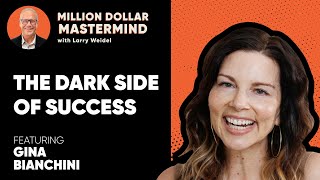
Gina Bianchini built Ning, then founded Mighty Networks with a different strategy: SaaS instead of ads, mobile-first design. She talks about the real cost of being known, what she learned from Ning's monetization, and why she'd rather be embarrassed than afraid.
Questions this video answers
Palo Alto, California.
2019.
Nearly 100 million people around the world and 300,000 active Ning networks monthly.
An IBM intranet had about 500,000 people and was charged $36 per month.
She referenced 8,000 (noting over 10,000 had created the masterclass).
Welcome to this edition of the million Dollar Mastermind podcast. This is where we pick the brains of high achievers from all walks of life and get their hard earned real world insights on winning. I'm your host, Larry Wydell. How about sharing what it's like from that initial thing you became? This is a booming, growing thing and all the media is looking for the sizzling people out there, sizzling companies. So it says you might be offended by this. They said that you became the it girl of the social media companies. You're on the COVID of Fast Growth, let's say, yeah, fast company. And a staple on the speaking circuit where I'm sure you got the glowing introductions and everybody is, you know, you're a hero. And what did that do for you? What would you tell people? Because if people, you know, I like to prepare people for success. People are all the time preparing for failure. But the deal is if you research your idea, you get in, you have the energy, you hit it right, you just might screw up and be a big success. People have done that, you know, and that can happen to you. And so what is it like to where you get this rush of success? We're so used to being getting rushed with negativity, then all of a sudden you go into a thing where you're rushed with positive feedback and you're everybody's role model.
And I mean, let's be clear, what you really do as you raise your profile is you put a target on your back and people want to tear you down. And so I think the most important thing is, and by the way, there's plenty of people who are nice. It's just, it's. I don't know, I think it's somewhat irrelevant. I think, at least for me, having a profile, I would say helps get, especially today, it helps you attract attention to your ideas, your purpose, your mission, what it is you're building and how you're building it. It's incredibly empty if you don't have a bigger purpose for what it is that you are trying to bring attention to. I would say, and the other thing I was, it's fine. I would say it was never my end goal and it still isn't my end goal. What is much more interesting to me is creating software that hasn't been created yet and building it out in such a way that it can have a profoundly important impact on people's lives, both the people who are creating these networks and those people who are joining and participating in these networks. And so I just think about that kind of attention, media attention. Again, like in a world that is rapidly changing in terms of the kinds of what it means to have attention. It's a byproduct that if it can be used towards my mission, I will do it. And otherwise it.
Well, like we referred to early on.
Like, great, fine, but it's not what's important to me.
Well, you had, you had the chance to start over and regroup and I'm sure you had some real clear ideas of what was going to be important to you and what was a smarter way or better way or more efficient way of building the company this time around. What were some of those thoughts? That priorities that you had, that non negotiables things are important to you, things you're gonna do, make sure that your team was going to do things you were not going to allow. What are first things that just jump into your mind on that line?
Look, I had a fantastic experience at Ning. I learned more than I could have ever learned in any other professional setting. I truly believe that. So for me, it wasn't like Mighty was about regrouping, it was about continuing the mission. And it was about continuing the mission in ways that would allow us to take advantage of the latest technology to do the things that had not been done before. And we're just getting to a point where they are possible now. So that was my experience. What I would say is it was never about the cultural pieces. It was never about like, I need to be a different kind of person or a different kind of leader. Certainly growing up and maturing is always awesome. Like, that's fun. There were two specific strategic things that were important to me in starting mighty networks. Number one is that we were a SaaS company, not an advertising driven company. Ning thought it was an advertising model when it was a SaaS company. And we just didn't know it at the time. The second thing is, what does that mean?
What did you just say to me?
Yeah, so what that means is that at Ning, when we were growing and we reached nearly 100 million people around the world, 300,000 active Ning networks on a monthly basis, we had a way, we didn't have a revenue model other than you could buy $36 worth of, you could turn different things off, but we had dollar that you could spend with us. Well, IBM had a intranet for its company and its partners on ning that had 500,000 people in it. 500,000 people in an IBM intranet. And we charged them a grand total of $36 a month. That's what I mean.
This is a lot of work. Yeah.
Yes, exactly. But at the time and the place, and certainly within Silicon Valley, it was a belief that only you had to be free and run ads. That was the model. We did not know that. It was actually that model of being a platform for creating a social network. Actually, that was something people should pay for and there should be transaction fees and all of the things that we do at Mighty Networks today. That's okay. That happens.
Yeah.
And then the second one was being mobile first. So that basically means making sure that we're structured and we're still a very flexible platform at Mighty Networks, but that we are flexible. And you can have your own iOS app, you can have your own Android app and your own web app. At Ning, we only had the web app.
I see. Let me shift gears and find out. Where are you talking from today? What part of the country?
I'm in Palo Alto, California, So I'm about 25 minutes north of where I grew up in Cupertino.
Wow, you're just really adventuresome. I tell you.
I've left at various points, but I am very happy in Palo Alto.
Okay. And tell us about yourself. Are you a family person? I know you're a family person in.
The community, but certainly, yeah. Oh, I'm married and I live in Palo Alto.
Kids?
No.
Okay. And so your. Is your husband in business with you? I mean, have you learned?
No, he is not. We very happily have separate careers.
Yeah. And what can you say to people about that? That's good about that? What have you learned about? What's the wisdom in that?
I don't know that there is any. I think the amazing thing is being like, I've done entrepreneurship as a single person and as a married person. I prefer the married person, but it's just because I feel like I'm married to the right person. It would be a disaster if you're married to the wrong person and the wrong person is defined by not supportive, not very patient with the hours or the intensity or the distraction, and doesn't believe in the overall mission, which is, you know, in my case, and probably most entrepreneurs case, really important to them.
So you did have a lot of wisdom on that. But those are things, you know, it's very good because people are going in and out of relationships through their lives and everything. It's good to kind of regroup and have reset your mind about. Okay, how am I going to look at this thing? What am I going to be looking for what do am I going to. Without getting overly detailed, you know, to get the priorities straight now, what is it like to be on a big time. A board of director for a big time company like Tegna? Is that right? You're $3 billion company or something like that? And so what is that?
It's fun.
What is that?
I love it.
What is that like? What does that do for you? Is that a plus or a dragon?
Oh, it's absolutely a plus. Imagine you have an opportunity to see how other businesses run and to do so in a way that is great in terms of my learning, but also that I can contribute something. So I think it's one of the most fun things I do outside of Mighty Networks.
And you have 8,000. It shows here that you've had 8,000 people taking your masterclass to over 10,000 now. Over 10,000 created your masterclass on community design, which is a proven framework for growing a community. Talk about that. How long have you had that and how long did it take to catch on fire and everything?
Yeah, so I started it in 2019. 2019, I think. And it took off kind of right away. It also was the foundation and the basis for what we've now gone on to do with people magic and people magic profit.
Gene, I appreciate all of the insight and I'm excited about where your company is headed. I do think, for a lot of reasons, and I could go on, that this is the direction. It's like an extension of podcasting and blogging and all of that stuff. So a much better extension, by the way. And so I see the thing. The only thing is I'm jealous that I don't have one. And so I'll probably be harassing you with for information.
That's perfectly fine. Perfectly fine.
I'm having to fight jealousy all the way through the call. But I really think you're on the money and I congratulate you for coming up with this and providing the service because I know you're. The thing is you try to make an impact in life and provoke people to greatness. That's the idea of giving back. But if you can do that through your occupation and pull people together, get great people talking about great ideas, great things can happen. But then what you have, you created community away where that can happen naturally and actually exponentially, which is what is really intriguing to me about what you're doing.
So that is certainly the goal.
Yeah. So I wanted to. I can't endorse what you're doing any higher than that, but I would say that I like to give my guests the final word. And so we will have. Some people have listened all the way through this and I like to give them a special reward for listening through. And so you have anything on your mind that you'd like to leave people with who want to do something great in their business, in their career and some kind of parting comment.
Yeah. One of the things that I've seen teaching community design and people magic profit to so many people over the years and also just having a front row seat to the most successful multimillion dollar businesses on Mighty is just how quickly people get in their own way. They are too quick to comparison, too quick to fear, too quick to, oh, everybody's succeeding and I'm failing. Too quick to confusion. Oh, I don't actually know what I'm doing. And what I have observed in terms of the people who have been the most successful, they embrace the unknown with joy and curiosity. Not a sense of perfection or not trying to find reasons that it won't work, but enjoying the moment and the act of discovery and the act of. The act of risk taking. Because most of the things are not actually.
Where do you put your mind? You know, that comes up. I'm very familiar with what you're saying, but where do you put your mind to allow yourself to do that? While you're going through that frustration, you got to throw your mind somewhere at a different perspective.
I would rather. What I realized we just did something for the first time a few weeks ago, called it. We did our first summit online summit. And leading into it, I was like, oh, well, what if we should we still do it? Like, is it the right thing to do? Whatever. And I realized I was like, I'd rather be embarrassed than afraid. I'd rather be embarrassed than afraid. And for a lot of people, they'd rather be afraid than embarrassed. And because being embarrassed is like, that is absolutely the only risk of being doing something new, you might be embarrassed. And so the places that I like to put my brain are curiosity and learning. Meaning, what can I learn from this moment? What can I take away from this experience? And I found when I can reframe that and be curious, the fear is channeled into something really productive.
Yeah. And another way of looking at it like that is like say to yourself, I'm at a point, I'm at a point. I am at a point because it's like. And that's a point where I can either move forward and learn something or back away. Like you said, I'm afraid of whatever. But when you're at that point, you work yourself through what you know and you're at the point of what you don't know. And so if you keep on charging, you're probably going to learn some things you didn't know and probably use that information the rest of your life. So great insight, appreciate that, wish you the best and look forward to talking again and seeing what new adventures you're going to get in with the mighty mega mighty networks.
Thank you.
Thank you for listening to the final part of this episode of the Million Dollar Mastermind podcast Podcast. Great ideas, don't care who use them. If you're motivated to move up in a big way Right now, I've created a free training video to remove the mystery on how to set yourself up for big success. This is the information that has changed so many of our lives and it can have the same impact on you. And the video is completely free. You'll find it at wide daily on winning.com join us over there and thanks for being part of our community.
More from Larry









Rick Jordan on Self-Engineered Proximity, Cyber Security Moats, and Truth-Based Leadership

Fire Fast or Fail Slow: Kevin Brittingham Reveals the One Rule That Built a $100M Empire
