The Advantage of Explaining Things Clearly
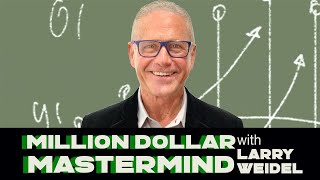
Dr. Roger Schwelter went from struggling student to medical educator by finding motivation, then founded medcram in 2012. He credits meeting his future wife with sparking his academic turnaround and built the site into a large-scale platform teaching medicine and science.
Questions this video answers
2012
Over 100 million video views and about 1 million subscribers (host's statement).
Approximately a 3.3 GPA (Roger's statement).
University of California, Riverside (UCR)
Double-major in chemistry and biology.
Welcome to this episode of the Million Dollar Mastermind.
I'm Larry Weddell.
And before we get started, if you want to know exactly how to win again and again, go to Wydell on winning.com webinar now to watch something I've put together for you. Now let's get going into this episode.
Of Million Dollar Mastermind. I'm here this afternoon with Dr. Roger Schwelter. Hey, doc, you go by doctor, you go by Roger. How do you go.
You can call me anything you want. It's fine with me.
Yeah, let's call you Roger.
Sounds good.
Not to belittle what incredible amount of work it takes to become a doctor, but, you know, you've got a phenomenal story, phenomenal story. And I'm just look over here and read some of the. Not only in medicine, you know, I don't know how you evaluate a medical practice, but you're impressively started this business called medcram.com and since 2012, it's a medical education video program started in 2012, over 100 million video views right at 1 million subscribers. Incredible. And you've done the bulk of those videos from what I understand. So congratulations on that. That's a monumental achievement, Roger.
Thank you so much.
And from doing that and other things, you know, reaching the point where you could launch, have a successful launch, there's a lot of things in your background where you've learned how to navigate life obviously successfully that beyond the medical technical details, just the navigation of life is a key that usually is not addressed. You know, we, you know, we put kids through school and they get edgy, they learn history and reading, writing. I don't know what they learn anymore. But, you know, used to, you know, you try and cover the basics, but it's how you use that information and how you deal with problems and setbacks and how you make decisions and how you deal with setbacks and turn things around in life to your advantage and really how you find your niche out there where you can position yourself in an area that you really will be excited about. And well, it'll be worth it for you to pay the price to continue to get good at it, you know, or maybe excel and do something unique. All of these are skill sets that are not addressed. And we, we find the best place to find those answers is people like yourself is who have worked their way through it. And it's really fun to talk to a doctor. I'll tell you, you know, looking from the outside at a doctor, you feel okay. They went through this long education program. And now they become a different kind of human being, and they don't have the kind of problems, and they're on another level I can't really relate to. A doctor has all the answers. A doctor doesn't have real problems, financial problems, personal problems. A doctor's just got it made, really. That's why I think most kids start out on the doctor path. I want to have it made when I get that degree. So let's peel back that onion and let people know that doctors have got to win, too. Just because you have a big degree doesn't mean that you have a golden street laid out in front of you. So talk to us about your story and how you wound up starting this platform. And where did this all come from? Where do you think it started?
Well, that's a great question, Larry. And I try to put it together. What we do on medcram is we try to explain things carefully, clearly, actually. And so I'm trying to, in my mind, trying to put the whole story together. I think you've got to go. You've got to go back to the beginning of just me growing up. If you knew who I was in elementary school, if you knew who I was in junior high, I would be the least likely person that you would have thought would have been a doctor or anything successful. I mean, I used to get C's and D's in junior high, elementary school. I'd have numerous meetings with parent teacher conferences because I just. Just wouldn't get my homework done or I wouldn't concentrate. I wanted to do something else. You know, if you just left me alone with Legos, I think I'd have been just happy. I didn't really see the need to go to school or to. You know, I sometimes play sick because I didn't want to go to school. It was just kind of a boring thing for me. And I constantly turn in my homework late. I mean, I remember distinctly in junior high we would get progress notes, and the progress notes. This is back in the 80s, if you remember this, you put these carbon copies into a typewriter, and you'd be able to type on the carbon copy inside the. In the. Inside the envelope. And you'd have to open up the envelope to see what it said. Right. Basically.
Right.
Basically those things. So I knew that if I were to get home, this is. And I was a latchkey kid, too, at the time, right. This is back in the 80s, you know, Gen Xer. So if I was home early enough, I could get to the mailbox first to get progress. Because I knew my dad. And listen, I was brought up in a great home. My father was a schoolteacher. My mom was a nurse.
Okay.
My dad, who.
They weren't able to explain to you the advantage of doing well at school.
Oh, yeah, definitely. I mean, that's a whole nother story. My father was a schoolteacher until he was about 40 years of age, and then he decided to go to dental school with four kids. And that's a story right there going out of it. And this was in Canada, where it was pretty much a straight shot. He had a pension already set up and everything. To leave that, to pull us all out of school, to move 3,000 miles away from Toronto and land us in a place in Southern California called Loma Linda.
Wow.
Which is. Which is a medical institution. He went to dental school there. I grew up in the shadow of that medical center. And so a lot of the same thing that you're going to hear over and over again today is sometimes life is a result of not just what you want to make it, but also the environment that you surround yourself with. And that'll become more and more clear. Okay, so here's this kid, this me. And I'm getting Ds in US history. I'm getting barely put in Cs in math. Those aren't the grades that you go into medical school with. So obviously something happened. And it was pretty clear to me that for some reason, I remember this in eighth grade, thinking, okay, it's ninth grade. Next year it's going to matter. Things are going to start mattering. Things are going to be recorded. This is the rest of my life. And I think I just. I was a late bloomer. I started to come into this late. Then I started to apply myself and realized that this was serious business. I mean, I could be something or I could be nothing. And so I started to apply myself and try, but it's still. I wasn't a straight A student by any means. I think I graduated from high school with a 3.3 GPA. That's decent. It's not exceptional. It's not going to put you apart from the rest of the crowd. I barely slipped into college, had a great time in high school taking classes. I remember the valedictorian of my high school, I graduated from Redlands High School, which is a beautiful town in Southern California, had a very old high school, very. A lot of tradition, and about a thousand kids in my high school class. And the valedictorian, Marty, witham I'll never forget her. She was the top student in that class. And I was in a couple of good classes because I started to apply myself, but I wasn't getting straight A's. And one of the nemesis of my classes was French class. I just could not do well in French, even though I was from Canada. I was born in Canada, couldn't speak French. And so Marty asked me, and I was in science class and I was just nailing science. Why? Because I liked it. She asked me, sick, Roger, how can you do so well in these classes? You're a smart guy and you do well in these science classes. But she was also in French and she knew that when Madame Gregory, the teacher, would ask a question in French and she would always say, roger, and I would have to finish the question. And it was like, you know, I was like, we. That was it. That was the answer. I was horrible at French. And so she knew that. She's like, how come you're so good at these classes but you're not good at those classes? And I remember my answer to this day. My answer was, because I don't like those classes. Yeah, and what a dumb answer that is, right? So nobody goes. I mean, I can tell. I can look back on that now and say, we don't go to school because. And take classes and do well in them because we like them. We go to school and go to class and do these things because these things are important for us to learn later on. And that was just me not mature. So anyway, where I'm telling you this is, I think really the key here is coming up, first day of college, and I barely got into college. I went to the University of California, Riverside, which it's a UC school. It's a pretty good system. And I knew that I was going to major in the hardest subject that I knew that was just what I was going to do. I was going to take the bull by the horns and I was going to go somewhere. I had no idea that I even wanted to be a doctor at that point.
What made you make that decision?
Okay, so again, you started off by.
Saying the advantage of explaining things clearly, and that's your mantra on your website. And so obviously you saw something clearly about the future, about taking on a challenge like that. You had to see something that caused you to put yourself through that kind of challenge.
Hey, listen, there's a lot of information online, but there aren't a lot of people who have actually done something. In my case, I've actually built a successful Business has accrued over $5 billion.
In assets under management and has done.
Well even during trying times. Now, if you want to know exactly how I've done this, go to Whiteellumwinning.com webinar Now, I've compressed a decade of learning into five short weeks. Just for those of you who want to give yourself an incredible advantage and are tired of waiting and watching others move up.
I knew that I wanted to be something. I knew that I wanted to do something big, but I didn't know how to do it. So it probably was a bad decision, but it actually turned out to be a good decision. So I picked chemistry. I'll tell you why. And again, here's me. Here's me again. This is back in eighth grade, I had a schoolteacher by the name of Mr. Chuck Mendoza. And he was our general science teacher in eighth grade, okay? So one Sunday he says, we're going to go on a field trip. And the field trip was going to ucr. That was the college that I ended up going into. And this is the reason why I ended up going there is because we went so. So back up here. Imagine high school, junior high. You show up every day, you go to this class, you got to read the book, you got to do this. Learning was very abstract. It was very. It was very rote. It was nothing exciting about it. And I didn't like it. And so you know why? So much more interesting to work with my Legos. So Chuck Mendoza takes us to UCR Open House. It's a Sunday. We go down there. And, man, I was just. My eyes opened because you had the chemistry department outside their building with all of their experiments that they were doing and their graduate students showing the things that they were doing. Then you had went over to botany, and they had all these plants, and entomology had all these insects and the things that they were studying. And like, wow, this. This school is amazing. Of course, I had no idea that all universities and colleges do this. I just saw that UCR did this, and I thought, this is a great place. I love to be here. At that moment in my life, I knew that I wanted to go to UCR just because of Open House. Isn't that just incredible?
Yeah.
So I went into a program called the High School University Program, and I barely got into that, too. And this is a program where I was able to do a university class while I was in high school. And it got. And I. Because I got into that program, that was full acceptance into the UC program. So I literally Got accepted to UCR while I was still in high school. And I'll tell you that just college was the. If I, if I could go back to any time in my life, the best time I ever had in my entire life was those four years of university. Because it was just like, whatever you want to learn, you can go learn it. And it's practical and it's like you can delve into things. You can. And here's the thing that changed it for me, and this is where I'm getting to. Here's the climax. Okay? Yes, it was at UCR that I got involved with teaching and I was able to hone my skills. It was at UCR that I taught for a Kaplan, which is a test prep center, teaching the mcat. So that's really where I honed in my teaching skills. But this is the one thing that, that really did it for me, and, and I can't say it enough is that's where I met my wife. And that's, that's where we, that's where we pick this up. So, first day of chemistry class is this beautiful blonde girl sitting in the front. And I was pathologically shy. I mean, I had never dated at this point. I was very sheltered. I lived even when I was in college. I commuted from home, I stayed at home. And it took me a whole quarter just to even learn her name. Betty. She was actually in my lab section and could have gotten her name very easily now, looking back, but just very shy. Anyway, make a long story short, she was completely the opposite of me. She was born with a stethoscope around her neck. She knew she wanted to be a doctor from the day one. She was a 4.8 GPA student. She graduated from Corona High School as the valedictorian. To her. She had never gotten an A minus in her life. She took PE during the summer so that when she got an A, it wouldn't bring down her gpa. I mean, she was just incredible. And I was just absolutely enamored with her. And I started to realize that the only way I had a chance with this woman would be if I got better grades. We were both. So she was going for a specific program in medicine. She wanted to do medicine. She was in that program. A friend of mine who is a guy friend from high school was also gunning for that program. So we all got together and we started studying. And Larry, for the next year I started to study. And this is what happened to me. In my mind, I put academics from the back burner it. All of a sudden I deluded myself into thinking that if I could only do well in my classes, I could somehow impress this girl and she would go out with me. And so when I started to do that, this is the mind blowing thing, is when I started to do that, I started to realize what I actually had the capability of once I realized what it was that I could do when I got home from college, when I got home from school that day, every day, I poured myself into not only studying the material is to anticipating what the questions were going to be on the test. And I realized I could do this. And the first quarter I had two A's and two B's. Then I actually got introduced to my wife and we started talking and we started studying together with my friend from high school. We were basically like a threesome that we would study in the library, we would quiz each other, and this became a game. And so from a male point of view, it was like this. Here's the game, here's the rules of the game. Let's play the game. And I poured myself over my academics and my books like I had never done before. Like I never knew I could do before. And I'll tell you, it was scary. It was scary. I was getting out of a class of 4 or 500. I was getting the top grade in biochemistry, I was getting the top grade in chemistry. I started to realize what I could do. I actually double majored in chemistry and biology. And I never ever looked back after that. And I realized that my struggles in academics, my struggles in doing what I wanted to do before, first of all, I realized that I had no idea what the requirements were to do. Well, I never realized that until I poured myself into it. Go ahead, let me interrupt you.
Right. First of all, now I figured out at this late stage of my life why I did so poorly in chemistry at Georgia tech. Knees and Fs.
Yeah, I never met Easy.
I never met the beautiful blond. And I'm going to. I'm going to blame God for that, you know, but, you know, I could have had a totally different career path.
Well, you know, it's funny you mentioned that.
Had the. Had the motivation, you know, but one thing you say what came out of that was you had you did something to yourself. That's a very useful tool. And that is you gave yourself a reason. You know, because the thing is, Roger, like you said, you found out you wanted to do great things. You didn't know how to do it. You wanted to do better at school. You didn't know how to do it. And so it was a way of tricking yourself into applying yourself and focusing. But you know, that's something you're going to have to do the rest of your life. We all have to, we all have to manage ourselves. And the things, you know, it's easy to look at school and say there's certain things that, you know, you're just not going to enjoy doing and, but you got to learn them. You got to put yourself through it. That's life, you know, to do the things you want to do, you got, there's always a bunch of things that are not fun, but you have to wade through them or get, you know, get to the point where you can hire somebody else to wade through them. And a lot of it is to get up the ladder. You're constantly having to trick yourself, talk yourself into it. I'll do this so I can get this. That self management thing that kind of happened to you. But you can be proactive in looking for things that will give you bigger motivation. And just like you with the grades, finding ways to get the grades done. And like, what's this worth to me? Why should I, that's really how we go through life. Why should I put myself through it? When I was in construction, the guy worked me. I graduated building construction, Georgia Tech, went to building houses in the north side of town. And I mean, he worked. I was the Mr. Outside, I was the construction superintendent. He worked me like a dog. You know, it's like intensive 12 hour days. And I said, you know, I don't mind working like a dog as long as I'm being paid for it. But just don't work me like a dog and then give me 10% of that, you know, you know what it's worth. And I, you know, I was always looking for the situation where I knew you had to work like a dog in life. I just wanted to get in a position to where it would be worth it and, you know, you could get that fulfillment and everything. And that's what you were working your, your way around too.
If you enjoyed what you've heard and are dead serious about finding out for yourself exactly how this works in the real world. I've taken the most valuable business lessons I've learned over 40 years and put them into something for you to watch. Go to widelawinning. Com Webinar now in order to move up as fast as possible. I'm Larry Widell and I run the Million Dollar Mastermind. Go, go.
More from Larry









Rick Jordan on Self-Engineered Proximity, Cyber Security Moats, and Truth-Based Leadership

Fire Fast or Fail Slow: Kevin Brittingham Reveals the One Rule That Built a $100M Empire
