The Hidden Cost of Perfectionism: Why Waiting for the Finish Line Kills Your Business
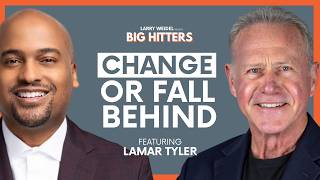
In this episode of the Big Hitters podcast, host Larry Weidel interviews entrepreneur Lamar Tyler, founder of Tyler New Media and Traffic, Sales & Profits. The conversation explores how perfectionism and over‑planning stall growth, the importance of moving quickly, and the concept of "friction points" that force entrepreneurs to either push forward or shrink. Lamar shares his origin story—from a corporate IT role to creating a marriage‑focused website, producing documentary films, and building a multimillion‑dollar Black‑owned business ecosystem. He details practical ways he leverages AI for copywriting, internal operations, data analysis of webinars, and personal health, emphasizing experimentation and asking peers how they use AI. The dialogue also covers scaling tactics such as advertising, customer‑relationship management, community building, and designing execution‑focused conferences. Throughout, both hosts stress the need for speed, resilience, and a mindset that treats setbacks as opportunities, urging listeners to start now rather than wait for a perfect finish line.
Chapters
the most important thing is to get started and get moving. Too many times, you know, we sit on ideas, we sit on things that we should implement, and then we see either other people take those same ideas and get to the finish line with them, or we don't have the level of success that we should because we just move too slow.
Welcome to Big Hitters. I'm Larry Weidel, and this show is for people who are done playing small. Each week we break down what it actually takes to win at a high level, the decisions, the discipline, the adjustments that separate those who almost do it from those who do it. No theory, no fluff, just straight talk from someone who spent 50 years building winners. If you're serious about momentum, you're in the right place. Let's get into it. Hello everybody, we're talking with Lamar Tyler. Hello Lamar.
Hey, thank you for having me on.
Yeah, Lamar has really reached elite status a long time ago. He's created two multimillion-dollar companies, Tyler New Media and his namesake New Media Company produced a lot of movies, and we'll find out about, about those things. And now they produce the movies. He's, he's got an audience for them. I hear that they, they attract big crowds. And so also he used— he's created another company, Traffic, Sales and Profits, to help mobilize people for greatness. And helped thousands of entrepreneurs across the country move up to the 6, 7, and 8-figure income levels and making it one of the most successful Black-owned business ecosystems in America. So got a lot to explore, a lot of, a lot of things to talk about. You know, the Bible says, Lamar, out of the abundance of the heart, the mouth speaketh. And the way I look at it, out of the abundance of the accomplishments, a leader speaks because you have to— there's a lot of obstacles you got to overcome along the way. And we don't talk— you know, we talk about a lot in our community, the Big Hitter community, transformations you have to go through. I have to go through. We all have to go through. If, you know, if our companies are going to get better, bigger and better, we've got to get bigger and better and be able to handle things, get more mature and more even-keeled and more balanced and not fly off the handle. And depending on the situation, that can still happen, but you gotta minimize that to maximize your productivity. You know, they like to know the person that's running the company has got a level head and got a plan and is not easily knocked off track. So Lamar, let's have some fun talking about winning. I know you talk about winning a lot.
Yes. You know, and, and thank you, first of all, thank you for having me back on, Larry. I appreciate that. But I think even what you just said, there was so many pieces in what you said about having a level head, right? You know, as you grow and as the company grows and as you, you know, went through business, went through life, you have to really develop into a different person at each different level. And, and what I always tell my clients is, You know, I call 'em friction points. As you grow, there are friction points that naturally cause people to either say, I'm going to, you know, do what's required of me to bust through that friction point to the next level, or I'm going to start to shrink and play small. And I feel like too many times, like, people shrink and play small when more is on the other side. It's just gonna take some work to get to that more.
Yeah. And, uh, you know, it makes all the difference. That's the thing, the idea of a coach community, uh, to have someone talking to you at the right moment, saying the right things. You know, how many times have we seen great leaders, uh, come back and they say, you know, they were at a turning point, a pivot point, uh, you know, and, uh, they— fortunate, by the grace of God, somebody was there who knew the right thing to say to them that got them through. And a lot of times they go on for decades of growth and compounding, but if they hadn't have gotten it through that thing, uh, you know, who knows what would have happened, you know, because, uh, uh, you know, there's There's no guarantee of success. You got to fight for it. And you've certainly learned that. Let's talk about what's— what are you— what are you burning on fire about right now? Before we get into everything else, what do you— what are you jacked up about?
What I'm jacked up about is opportunity. And some people that sound— that'll sound, you know, weird or different, but Every day when I go on social media, what I'm seeing are people saying how businesses are closing. Now is not the time. You know, another one closed, another one failed. But what I'm not seeing people talk about is the opportunity coming around the corner. What I'm not seeing people talk about, Larry, is the opportunity for if you, when there are tougher season in the, in the economy, when in the environment, when you even in your industry, if you can hold on just the people that make it to when the sunlight and the sun comes out again will have more success because there'll be less competition. You would've, you know, kind of, uh, held on. Hopefully you would've held on to as many or as much of your team and foundation as you can. And sometimes we gotta make it through the tough times to get to the great times, not even good, but great. So I think it's a lot of opportunity when we look at what's coming with AI, right? Um, and I always say this is probably one of the best times ever to be a small business owner. Because of what you have between artificial intelligence, because of now you have access to a global workforce, just a lot of opportunity. So I think a lot of times we focus on the things that aren't going right, but, you know, we need somebody to readjust and recalibrate to say, hey, at the same time, wherever there's, uh, change and shift, right? There's opportunity there as well.
Yeah. And the thing is that, you know, I, it's unavoidable in every industry. There's gonna be ups and downs. There's gonna be good times, bad times. It's, you try and minimize it, you try and, you know, I always, I looked at it like Lamar's, like it seems like people look back and they say, "You know, in this era, this decade, things were great. This decade was great. People, you know, I remember back in that decade when people really wanted to work and now people don't want to work." I said, "I've never been in a decade where people wanted to work." And also like, "Man, I just wish for the good times of the '80s, you know, in the '80s when the stock market was going up." I said, "I don't remember it being that great in the '80s. You know, it wasn't that great for me. I was going through living hell in the '80s, you know?" And you know, this idea We got millennials that don't want to work. I've never had a time where people wanted to work. You know what I mean? Right. I came in the business hearing the thing that 50% of, you know, the way to get ahead in life is 50% of the people. If you just work hard, you beat 50% of the people. And, you know, right off, you know, I don't know if I came in the era where everybody was working hard and still 50% of them were lazy. I don't know. But, you know, it's, it is, it's almost like people are just getting in the job market in— how long you been in business?
18 years now.
Yeah, well, you'll find out that people will come in and, uh, you know, 20 years from now you'll hear people come in and saying, you know, I just realized boom boom boom boom boom. You say, come on, child, you know, we— that's the way it's always been. But that is like a first-time discovery from them. But like, like millennials don't want to work. It's like, come on, uh, people never really want to work, you know, like young people, you know, like, it's like, it's almost like saying Well, you know, kindergartners don't want to go to school, you know, that time of the morning. It's like, when, when have kindergartners wanted to go to school? You know, they, they never wanted to go to school. So it's like, you have the new generation come up, they have to learn all the stuff we had to learn. And it's like a big light bulb. Like, it's really funny to get them on there. It's like, they're gonna become the expert now, because they've discovered something that, oh, yes, 90% of the rest of the world knows, but they don't know everybody else knows. And so It's that concept I learned in construction. The cycles are more pronounced, I think, in home building, that good times, bad times, that, you know, the mentality was if you just hang on to your subcontractors and your few key skilled labor people, like maybe your trim carpenters or your wallpaper people, keep them busy during the tough times. Then when you came out the other time, you'd be ahead. You know, you'd have accelerate away from everybody else because they were going to have to try and rebuild their workforce and their Exactly. Their team. So if you can just keep enough work going to keep your, your guys busy, then, you know, eventually you're going to come out the tunnel at the other end. But that's, it's pretty much true in every, every business. You got to keep going in the tough times. But by doing that, you earn the right to really kind of catch a wave of acceleration when the growth breaks through. Have you found that? Yeah.
I mean, and that's totally true. And that's, that's exactly what I've been saying for a lot of people is like, if you can just hold on when things do shift, if they need to shift in your industry, you're already in the position to win. You're already where everybody else is, like you said, now, okay, let me get the team together. Let me get, you know, the pieces together. Let me try to figure out what the market needs. You already in a position where you already know what the market needs, you already serve them well, and you've been building trust a lot of times in that in-between time too. 'Cause a lot of, especially in, you know, today's economy with the internet and social media and things like this, there are people that are always looking at us even before they're ready to buy. So even in those times, if people may not have the money right then, they're still, you know, they still want and aspire to have those things. And when the money comes, they already know who to go with. And, and you know, to what you said, always tell people, if you haven't had a bad year, you just haven't been in business long enough, right? Because like, like every industry has its ups and downs. And on the flip side, for people that are thriving right now, what I like to, uh, kind of remind them of is that, hey, you're thriving in the time where a lot of businesses, a lot of industries are contracting. So, you know, like you're doing something right, but while you're doing something right, I think that shows the importance of keeping your foot on the gas at all times too, right? Because you never know when things shift, you never know when things change. So we want to take as much, as much opportunity as possible, you know, growing as much as possible, building as large of a customer base we can as possible when things are on our side.
How are you using the, uh, um, I'm, I'm gonna do this all backwards the way I really usually do. I use— I like to get the foundational type thing, see how you start to move up through the ladder and how your thinking develops. But I know a lot of people, they're wondering about AI, they're worried about AI. And the thing is that, well, first of all, it's like anything, you got to use it a little bit and get your feet wet. And most people won't. But anything you learn now, you don't have to learn tomorrow. And so, you know, do simple things. Use it like a browser if nothing else, and start to get a little comfortable with it. And how did you, how are you using, what's some obvious things you're using AI for right now?
Sure. You know, one of the things I recommend everyone do is ask the people around you how they use it. Because one of the things I know is that I'm not using it enough. I don't care how much, I don't care if I set it all day, every day, I'm not using it enough. So, how we started using it was, you know, uh, uh, copywriting emails, newsletters, website copy, things like that. And then we started realizing, hey, we can use this not just for external but internal uses too. So when we did, uh, you know, HR or employee performance reviews, and we would get to the part where we have to summarize what a person did over the last, you know, 3 to 6 months. And instead of, you know, I know in bullets what they did, we started using it and formulating in tight, you know, sentence structures exactly what they did in ways that we could articulate to them, you know, through a great format. Um, but since then, you know, we've gone on to use it now as a thought partner, to use it for, uh, marketing briefs and such, to use it, uh, 'cause like I said, I'm, I'm in it all the time. Uh, now we use a lot of, uh, GPTs and actually AI agents to build it so that they're doing actually some of the work. So a lot of things where clients used to come to us and ask us a million things about questions about, We'll just create a knowledge base, create an AI agent, which is basically, you know, like a specialized AI tool that they can use on that specific topic and then give the clients access to those tools.
Yeah.
So if you wanna know how to do these things where before they might have had to, you know, watch a course and then come, you know, catch me on one, a weekly call or something to ask me. Now I can say, hey, go do this. And that'll get them 80% of the way there. Then they come see me in the last 20%. And probably one of the, one of the, uh, best things, Larry, even with that, I think a, a big missed opportunity is now we're using AI a lot to analyze data. So an example of that is we do a few different webinars per week where we do kind of educational content and we get people, you know, to sign up and then we may sell something where they may buy it at the end and we gotta go through a process. And for the last, you know, I've probably been doing webinars since 2012, 2011, for the last decade plus, a lot of those changes were gut reactions. You know, like I, I could see through the data that somebody didn't, you know, not people bought and I'm trying to figure out like, why didn't they buy? What is it? I'm testing things and trying things. But now what I do is actually dump all of the data so I can take my Zoom recording, uh, registration list. I can take my transcript from me talking. I can take the chat transcript for what the people are saying. I can upload a PDF of my PowerPoint deck. Um, and then I can let it know who bought and it'll actually analyze the whole thing week by week and say, well, in this week where you didn't convert as many people in, um, you know, you, you waited too long to make the actual offer. In all the other ones, you gave the offer right then. In that one, you gave the offer 8 minutes later than you normally would, and people were in the chat asking for the link, but you didn't give them the link. And then it can make recommendations to clean up. So now we're using, try to analyze a lot more data. And then out, your last thing I'll give you is outside of just the business, I encourage people to use it in personal life. About last quarter, I lost about 15 pounds using AI.
Really?
Yes. If what I did—
Really?
What I— somebody's listening is like, hold up, forget all the business stuff. Tell me more about this 15 pounds.
Yeah. Everybody's gonna be asking that.
So, so what I did is I told it, hey, you know, um, like these are my goals, this is what I wanna get to. you know, weight-wise, this is like, you know, I wanna build some muscle, I wanna lose some weight. This is the weight I'm at, this is the weight I wanna get to. And then it actually helped me build out a meal plan. It helped me build out an exercise routine. Uh, then for the meal plan, it was like, hey, would you like a shopping list? I said yes. So it gave me a shopping list so I knew exactly what to go to the store and get. And, and my favorite part, you know, besides, you know, I was working out at home, so I told like, hey, these are, this is the equipment I have at home. So it built out every day a structured workout plan based on that. But my favorite part about it, and I don't know if you're like me, Larry, or you ever been, but when I get in the groove of working out, eating right, what always throws me off is when I'm on the road. Absolutely.
Absolutely.
When I'm, you know, I'm, I'm doing conferences, I'm speaking, and I'm on that road for a while. But what I was able to do using, uh, ChatGPT, when I would go to a restaurant, I could take a picture of the menu upload to ChatGPT and it already knew what my plan was and it would recommend to me exactly what to order and it would give me the actual words to tell the server.
Really?
And the first time I tried it.
Yeah.
Yeah. The first time I tried it, I said, this is not gonna work. And I walked up, 'cause I never order like that. I'm, I'm, I'm the guy that like, whatever's on the menu, like I might take an onion off or something, but that's it. Like I just ordered how it comes. And I said, this feels weird. And I walked up to the front and I said, okay, can I have this? Can I have that? You know, take the sauce off. You know, don't, don't cook that in oil, cook it in this instead. And you know, take off the, the french fries and can I get 2 orders of asparagus? And the lady looked at me and said, yes. And then from that day I was sold. But literally that cured my biggest issue on the road, which is when I'm just eating in restaurants. you know, at least 2, 2 meals a day. And it helped me kind of stay on my regimen and stick to what I need to stick to.
That's fantastic. You know what? I've already found out that you completely undersell yourself because you started off by saying, I'm not using it as much as I should. You, you, you, you sound like somebody who's using it more than anybody I know.
But, you know, but that's why I said, like, that's we need to all be like asking them, like, how are you using? Because there's so many, it's so many uses of it we haven't even considered. And that's why I love talking to people and having these conversations.
Yeah, because, you know, nobody knows it all. Nobody can think of all the applications and everything. But once you want somebody, you know, it's the same thing I've always— I use all the time, you know, ideas, great ideas don't care who use them. And so if somebody else has figured out a great way of using it, as soon as you find out about it, you know, you can use it too. And all of a sudden becomes yours, you know, becomes something part of your routine. And that's really how you build winning routines. And how did you— from where, by the way, where are you talking from today?
I'm in Atlanta. Yeah, I'm in the Atlanta area. I'm originally from Maryland, Washington, D.C. area, but we've been living in Atlanta for about 15 years.
Okay. Well, I'm a Georgia Tech graduate, so I'm very familiar with Atlanta and lived in Buckhead for 13 years or so before I moved out. And so where, where in Atlanta?
Yeah, we're up in Roswell, right in line with Roswell and Alpharetta.
Yeah, I built probably about a— I built many of my 100 houses that I built right out of Georgia Tech up in that area. And so, in fact, that's where I was in the last day where I got the word that we were— I was going to be parting company because we couldn't, we couldn't, you know, one of those slumps where nobody could get loans and, you know, you kind of grind to a halt, you know. But I remember 7:00 getting the news 2 days before Christmas, 7:00 a.m. up there in Roswell, Georgia. That was the abrupt end of my construction career. I said, I'm going shopping for a new industry right now. Now let's talk about you as you came into, you know, the thing that you were talking about earlier. You know, you're talking to people like things are coming now. You got to, you know, you got to adjust. You can't get beat down. You know, really, somebody needs You know, you need somebody to tell you the truth. You know, it's just like, you know, the hard, honest truth. And somebody— there's a trick to doing it, but it's like, you don't have to adjust, but you're going to get beat by somebody who will. And so somebody, you know, there's a— there's an army of people out there. They're going to take this head on and face it rather than wring their hands and complain about it and say, you know, like, the future is here. You know, it's like the morning is here. And it's kind of like when you have kids, And, you know, the morning comes around and they're screaming and hollering. They want to get fed. It's like they don't care. They don't care if you're not ready to get up. You're getting your butt up or they're going to drive you insane, you know? So it's let's go time. And that's kind of the way it is in life. You know, the numbers, you know, you can go pull the sheets over your head and hide, but you can't get away. Your life is going to be miserable until you deal with the reality of it. And that's what we do. I know you do in your world. I do in my community. It's like if someone doesn't come in And they don't have— if they don't have something inside of a heart, you know, burning desire to do something great and they're not, you know, if you got a burning desire to do something great, you're not doing it. You got to come see me because I can help you with, you know, find the solution for that. I've been doing it for, for forever. Otherwise, you can just stay home, be miserable. And yes, that doesn't bother me, but it's sure going to bother you. And that's the way it is with dealing with all of these realities of life. Now, as you got started, you know, you're, you're a man of accomplishment at 18 years and the stuff that you've accomplished. How did you get going? You know, the, you know, a lot of, a lot of the, the, the Blacks are African-Americans are going to be using excuses a lot. Everybody uses excuses. You know, I could be an Indian American. I could be a, you know, immigrant. Everybody, you know, I was single parent home, you know, I came from and You know, I got the world against me and I come— I'm, I'm out here in the middle of the boonies. Nobody out here ever does anything. You know, there's no opportunity. There's always reasons. But you know what? You had, you know, you stood up and you made things happen. And right now you built a thing where you have created one of the most successful Black-owned business ecosystems in America, which means not only for yourself, but you went out there and provided an answer for so many people. That's why I'm so big on the thing that we need more million-dollar earners. We need more high achievers. We need more champions because of the good you could do and the inspiration that you can offer out there in the marketplace. We're always going to have plenty of people out there talking nonsense and dragging people down and giving them reasons to make excuses. But we need more champions like you out there saying, no, you don't have to settle for that. You don't have to be beat down your entire life. You know, you know, you stand up and make something happen. So congratulations on that. And tell us where— Is that how, how soon early in your life did you get the idea that's a, you know, I could be a mover and shaker out there in the world?
I always felt and knew I could be one. I just didn't know how to do it through entrepreneurship. Right. Through my, you know, parents, through my grandparents. Grandfather was an amazing man. World War II veteran, pillar of the community, pillar of the church, you know, So, so seeing it in front of me, I had great role models. But then the other thing is, like I said, I, I knew I could be great. I knew I wanted to be an entrepreneur probably by the time I got to middle school, but I didn't know exactly what entrepreneur looked— entrepreneurship looked like. I didn't have entrepreneurs in my family. I didn't have business owners around me. So it took just a while to figure out what that was. Uh, in the meantime, I started a career. I worked corporate. My background was in, uh, information technology. Ran and managed the, uh, IT department at one of the TV stations in Washington, DC. Fox 5 in DC. Yeah, Fox 5 and WDC in DC. But while I was doing it, I kept trying to figure out on the side, like, what does it look like to be an entrepreneur? And I kept trying different things that would, you know, uh, that would try, it wouldn't necessarily be successful, wouldn't work. But, you know, probably one of the first things I realized is that if you don't have somebody that can show you and you do things on your own, it'll take you exponentially longer to get to results. And again, not saying that you can't get to results, but it's probably taking much longer than it should have. So as we kind of grew and, and, you know, uh, tried to figure out exactly what it was, my wife and I said, let's create a website where we'll talk about, uh, marriage and family, right? So we created a website, pretty much immediately took off. And, uh, for the first 7 years of that brand and what we did, uh, it took 7 years to gross our first million. And that's not like a million per year. It's just like from the first dollar to the millionth dollar. Took 7 years. What I always say is that 4 of those years were wasted. The first 4, first 4, we were trying to reinvent the wheel. It were things that people already knew how to do, people that, things that, uh, people already knew about and just were out in the wilderness.
What were those kind of things? Do you just right off the bat, you remember?
Uh, you know, a, a, a great example, uh, in the very beginning with the, with the website, we had companies and, you know, brands that would come to us and say, hey, you know, we want to pay you to get in front of your audience. And it might have took like a year or two before we realized that, hey, if they paying us to get in front of our audience, we should be selling things to our audience as well. Because obviously the audience has value.
Yeah.
And they see enough value in it to want to pay me, but I'm not offering things, you know, to the audience on my own. So that was an example. Another example, we started doing documentary films and when we did documentaries, we would create a documentary, we would, uh, run our own, rent out our own theater, we would do screenings. We did, uh, 5 documentaries in 5 years, right? The first 5 we did like one every year. And as we did 'em, you know, in year 2, we would, you know, do a doc one year, the next year we come back. And then we started doing tours around the country and we'd be in some city and somebody would walk up to me in the street and say, hey, I recognize you. I saw your first movie. Oh, I loved it. It was so great. I was at the screening. 'Cause they weren't on TV, so you had to come to the screenings. I was at the screening in, you know, Baltimore, Maryland or Atlanta, Georgia when you showed it. And I'd be like, great. And the next thing they would say is, Well, when's the next movie coming out? And I would say, well, the next movie came out 2 months ago. They said, when you come do a screening? I say, well, we just did a screening. And what I realized is that we weren't actually harnessing our customer data. We weren't actually, um, you know, going back to that customer list of people's most likely to buy from you is the people that already spent money with you. We weren't going back to that customer list and using the people that already spent money with us. Instead, we were wasting time and energy trying to go out and find new people every single time. So, you know, not having a customer relationship management software, um, not advertising was a big one because we thought we got a lot of organic traffic. So we said, why advertise? Then one day I thought about it and I said, well, Nike, little company outta Oregon, you know, at one point they had 97% market share in men's basketball shoes. Did they advertise? Yes. Uh, McDonald's, right? I see McDonald's all over the world as I travel. Do they advertise? Yes. Amazon, Amazon advertises so much, Larry, they created their own fictitious holiday called Prime Day, right? Like that's how much they, they, they looking for things to advertise. So I, one day I said, if all of the biggest companies in the world advertise and everyone knows them, nobody knows me. So what makes me think that I don't have to advertise? So then literally the day we flipped the switch and started advertising, that was another boost, right? We broke through another level. So just so many lessons that we learned the hard way That when we finally started getting in, attending conferences, getting with coaches and consultants, getting around people who already knew what we wanted to know, then it really catapulted us off to the next level. You know, and that's when the awards start coming in. You know, the growth started coming in, uh, 4 years on the Inc. 5000 list of the country's fastest growing privately held companies. Like all of that happened when we got connected with communities and people that knew more than we did so that we could go where we wanted to go but get there faster.
What gave you the idea you could make a documentary to begin with?
Yeah, you know what it was? My wife, to be honest, right? I had a, a guy I'd met. He wasn't even a friend at the point. Now he is, but a guy I'd met that did a documentary. And this was 2009. In 2009, if you remember, that was right around the transition from SD to HD video. So I met a guy that did a film and he was upgrading to HD cameras. So he sold me his old SD camera.
Right?
And I might have bought it for, you know, $500, $600. Uh, and I bought it to create, start doing, trying to do videos and content for my, uh, website around marriage and family. But one day I just got this idea to say, how can we do something big? And I said, let's do a movie. And I asked my wife and I said, hey, you know, I said, we're gonna do a movie. We don't, we just were working. Like we didn't have startup money or venture capital. So I, I was like, you know, how are we gonna pay for this thing? We can't afford a crew to do it. And then I said, I might could partner with somebody. But then I said, you know, if it takes off and it works, you know, I don't want the money to get funny on the back end. Like, what are we gonna do? Won't really have like strong relationship yet. So she just looked at me and said, I think you can do it. So every day for 2 weeks when I got off of work, I went and interviewed a different couple and I would, you know, go ahead. I had that SD camera. I had, uh, a cheap set of, uh, lighting that I got and some terrible microphones. And I went out for 2 weeks every day, and I probably learned more in that 2 weeks about filmmaking probably than most people learn at least their first 2 years of going to college around film, 'cause I did everything wrong. And as I did it, I, I made mistakes with the audio and was like, oh, that's terrible, I gotta go back. Never made that mistake again.
Yeah.
You know, one time I didn't take my lights in 'cause I said, you know what, it's bright enough in here. Yeah. I don't need lights. I did need lights. So like, you know, I learned about lighting on that trip.
Yeah.
So literally just going all the way through it. And when we, uh, We debuted the first movie in Upper Northwest Washington, DC, 160-seat theater. And it shocked me 'cause it sold out. And I didn't, you know, know how I would do it. I, I didn't think we would sell out. It sold out. Then somebody called and said, hey, I saw y'all did this in DC. Would you come to Baltimore? I can get the, get the theater for you. We said yes. Then somebody said, can you come to St. Louis? They was, can you come to Kentucky? And then, you know, that was the beginning of it. And, and like I said, we just, It makes sense. I did all the work. Like literally I shot everything. I edited with a laptop we bought from Best Buy and some, uh, $70 Vegas editing software. That first, now I will tell you that first one was terrible.
Yeah.
I, I could, every now and then somebody tells me I got that movie. I tell 'em throw it away and burn it. Right.
Yeah.
Cause I don't wanna see it.
But that IT background came in handy. That IT background came in handy in terms of figuring stuff out, I would imagine.
Yeah, it did. Right. And just being able to problem solve and, you know, get through things. And we learned a lot about how to market and sell through that process.
And let me guess, you probably did not have an equipment roadie either. You probably had to schlep all that stuff in there yourself.
Me, the one time I didn't take the lights, I didn't take the lights because I was interviewing one of the experts, was a professor at Howard University in D.C. At the law school. And when I pulled in the parking lot, the law school was all the way at the top of a hill. And I didn't have a wagon, I didn't have a caddy. So literally it was like me carrying the things. So I was like, I gotta walk a quarter of a mile up a very steep hill. And I looked in my trunk and I looked up and I looked in my trunk and said, I don't think I need lights. And again, later on I learned I did need lights. And there's no shortcuts, uh, in, in projects, right? No shortcuts in life. So yeah, my hard lesson.
Yeah. And but when you do that yourself, it gives you a foundation that nobody can take away from you. But also, you know, when you're hiring people, if they're working or not, you know what I'm saying?
Yeah. You know, I tell now we got a, we got a video team, about 6 people. And that's what I'm always telling my lead is like, hey, like that person take way too long to do this because I say it would take me less time. And this is all a person does every day. So I expect them that I pay them to be much more of an expert than I am. So yeah, it does definitely give you a lens of what the work looks like.
Yeah, that's why I developed in construction. You get a thing for like how long things should take, how big things should take, you know, basically in a thousand different areas. Does it sound like it's right or not? Does it look like it's right or not? And you get those instincts and you can use those the rest of your life. I found those instincts pay off down the road and you learn to trust, you know, it allows you to learn to trust your own instincts so you can— allows you to make decisions quicker, you know, and like, no, you know, we had something the other day happen over my art studio and we came up— I came up with this new idea for a sculpture and they took it, took it outside to paint it. And I— the guy came in, I said, Does it work? You know, there's gonna be a new idea. This is gonna, you know, I thought it was gonna be magic because we had a whole series going. And he said, yeah, it looks good. But I don't think it's, you know, I don't think it's got the wow factor. We always go for a wow factor. He said, I don't know if it's got the wow. And then my other assistant went out there and they were humming and hawing over it. So finally I walked out there, looked at it. I looked at him, I said, you two are full of crap. You know, I didn't say crap, but I admit it just came out of my mouth. I said, You guys are out of your minds. I said, that's a winner right there, because instincts told me winner. And as soon as I said it, they said, you're right. You know, it's just, you know, you can spot magic, you can spot, you can spot fraud, you can spot things when you go through it from the ground up yourself, you kind of learn, and then you can move faster. You know, you can call shots quicker and not be second-guessing yourself. And so you parlay the success Now, when you started, this sounds like it was, you know, like we're looking for things for, you know, you went through a transformation. Let's talk about transformations you went through. You went through a transformation from being in IT and are working inside a company, and you had something that drove you out of there. And this is what I tell people, like, if you don't have something inside you You know, it's like I can't tell you how many yelling sessions I've had with my experts and all about define your target market. What is your perfect client? You know, and the thing is, you and I will know is winners come from all walks of life. And the thing about, you know, the corporate people will try and put a picture together of what the perfect one looks like, you know, but they like in basketball, you know, they're going to have 6'10" certain weight, this, that, the other. And then they're going to get a bunch of spastic, you know, put a team of spastic together. But then you have like in the NBA, you have a Muggsy Bogues come in who's like 5'2" or something. He becomes MVP of the league or something. It's like, you know, how do you explain that? You know, the thing is, you know, the Rudy type people, you know, it's like what people have, what winners always say is they Most time winners got discarded or dismissed along the way because they were evaluated from the outside from people who had criteria that they just didn't look like a winner. You know, they just didn't win old enough or whatever. And, you know, the thing is, what they all say is they didn't know how big my heart was. And so the way— what I say to people is, if you don't have something in your heart that's beating, that's telling you there's— you got bigger things to do than what you're doing right now, you got, you know, you got a destiny inside of you, you got to take that serious. Was put there for a purpose and you got to let that, you got to find a way to get that out because there's a whole lot of impact you could make for good in the world once you get that out. But if you don't have that, I can't help you. You know, I can't help you if you have it. I can't help if you, if, I mean, if you, if you have it, I can help you. If you don't have it, that's, that's up to you. You know, you just find a job and do the best you can. But you got, that's the whole thing of finding your passion. It's like what, gets you up in the morning? What do you think about when you look in the mirror in the morning? You know, are you on track for greatness? You know, you're on track for satisfaction? Are you on track for fulfillment? Or are you on track for unfulfillment and dissatisfaction? And you got to do that. Now, something was beating inside of you when you were inside working the ITT. What were the thoughts going through your head and where, you know, that website looked like it was an opportunity for you?
Yeah, probably what it was, and this is a cautionary tale to anyone with team and employees, At the TV station, you know, they were, they came into the, the station group came to the internet heavy, but they came late. So they had a lot of ideas about what they wanted to do 'cause they were trying to play catch up. And every station, and it was like 20+ stations in the station group, every station had about 4 or 5 niche market websites. So I came up with an idea, pitched it to the GM myself for one of the niche websites for the DC area, right? He said, yes, we created it. We were making money, uh, in that website out of probably like 80-something total websites, like number 4 in the whole station group. And it didn't cost the company any money at all. So I had a, a winning track record, not just in my job, but in the like online space. And I went on to pitch other ideas, other concepts, you know, but as I pitched those things, like you said, uh, in corporate, they had a viewpoint for what everything looks like, including work. and they would say, well, we don't have the bandwidth to do that. And I would say, well, I saw somebody online doing this that just does it from home. So if we're a whole company and we got a fleet of trucks, camera people, news people, producers, you know, it's like 150 people working in the building, we can definitely do the same thing that a solo person in their pajamas can do. But it just was a limited, uh, kind of mindset that they had around a lot of things. So after being told no so many times, I came home one day and told my wife, that's the last million dollar idea I'll give them. We gonna go out and create our own million dollar business. And at the time it sounded good. I didn't know if we could actually do it or not, but we eventually got to doing that and more. And, and, and Lily, I, I think, you know, one time I was telling somebody and I said, you know, it's too bad they didn't just give me some of the, you know, like just try out some of the ideas I had. Cause I know they would've worked. Of course some would've worked and it would've been so, so great. But then somebody told me, if they had said yes to your ideas, you wouldn't be where you are today.
Absolutely.
So I think that's the thing too, of like, hey, you know, we got to be gracious and appreciative for all of the steps that life has given us because they all lead us to where we are right now in this moment.
God was in control. Lamar, God was in control. He had bigger plans than you for you rather than making that company great, working it inside them, you know. And the other thing is, you're— what you chose to make your website about. Where did that family— you know, the thing is, you know, I'm proud of you for making that stand for family values and offering encouragement to people out there. I think about the families out there, they, they have such a, you know, a burden, you know, in today's— they got to do the job, they got to take care of the kids, they've got to deal with, you know, much less— forget politics, forget all of that stuff, just living, uh, feeding the kids, taking them to school, uh, providing for them. Gee whiz. And I feel, I feel for them. But thanks to you for that, you know, give them some support out there. What was in your mind of why you chose that, you and your wife?
At the time, I think you hear so much negativity around relationships nowadays, right? And that's at the time, you know, me and my wife, when we started West, we'd only actually been married 2 years. But everything I felt like in the press, in the news around relationships was just negative. And we said, hey, you know, we want to highlight and support couples like us that love each other, right? I, I don't think it's like, you know, we always say that marriage needs a PR job in today's day and age, right? Because even, even a lot of times now when you look and say, well, you know, uh, you know, my, my parents, my grandparents are married for 50, 60, 70 years, then it's an excuse for that. Well, well, you know, they couldn't leave. No, they needed each other financially, right? So we said we gotta show couples that are loving each other. So we created a platform. And then as we did that, there were couples coming left and right to say, hey, you know, we've been married 30, 40 plus years. I love my wife, I love my husband. So these exist. And then the interesting thing is we end up having a lot of singles that started coming to the site. And the singles either said, hey, my parents have been married for that long, so I know it exists even though I never see it portrayed in the media and such. And then, um, A lot of them said, hey, I want to be married one day, so I want to prepare myself for marriage. And I want to know, we, we kind of honored ourselves having, uh, transparent conversations about the ups and downs of marriage and what relationships look like. So they said, hey, I want to know all the things that go on, because I know it's not going to all be perfect, but if I can prepare myself as much as possible, so when I get married, I'll already be aware and already be working towards that. And that's what we did. And, you know, it took off, uh, grew quickly. And then how we transitioned is that as we grew it, people saw us go from a husband and wife with a blog in the corner of their bedroom to, okay, now they got an office, now they have an editor, you know, 'cause at first it was just me and my wife writing the articles. Now they have an editor, now they have like 40+ freelance writers, now they got a graphics per— so they saw literally the, the business being built right in front of 'em. So people started coming to us and saying, hey, can you teach me how to do what you're doing online with my business? So, You know, we started Traffic Sales and Profit in 2015. We had a team.
So that's how that came. That's how that came out.
Yeah. People just coming and asking like, hey, can you teach me? Can you teach me? Can you teach me? And we, you know, we started that. We kind of switched gears.
We kind of came from you, you listening to what people care. I mean, you know, the thing is that was you listening and paying attention because a lot of times the ideas come. I know we, you know, when you're busy, you get a head of steam. You got, you know, you know what you got to, you know what you know, you know what you got to do. And then people are saying things to you. There's a whole lot of value and say, wait a minute, let me open up my ears and see, this is a person of substance. They're saying this for a purpose. Let me listen to this and not just, you know, run on down the highway and again, and be the person who misses out on a million-dollar idea like you were inside that company. But the thing is, you evolve from the website and the blog and took that idea to do your documentaries. Like you said, you interviewed 20 families. It was like an evolution, like of a next step. And I think that's the thing that we can challenge people to do, Lamar, is to look for the next step and take the next step, because who knows where that next step is going to take you? Can people— now we're running out of time for the public part of this thing, but where can people find those? Can they still find those documentaries?
Yeah, some of them online, but probably the best things like the books and we have books and resources, right? Everything you can find me everywhere. I'm just Lamar Tyler, L-A-M-A-R-T-Y-L-E-R. And then the books and everything on Amazon. We got workbooks on Amazon around— if you search me on Amazon, you'll find the, the books, the workbooks, the movies and the books and everything around Traffic, Sales and Profit as well.
And so from that, people, they came to you and you said, okay, we're going to put this into a systematized this. And how did you come up with the Traffic, Sales and Profit?
Yeah, like I said, you know, we were out and people just month after month, year after year, kept saying, teach me how to do. 'Cause by that time, like I said, we have 40+ writers. You know, we were like in an office with team and we were very good at selling online. 'Cause with the movies, we went from that 160 people the first time to, you know, by the time, you know, 2012, 2013, we were releasing movies and we would release a movie and have our own 10 to 12 city tour. So we'd be touring around the country. We knew how to advertise. We'd advertise on, uh, local, um, marketing lists, on local radio, uh, on TV. We'd be doing press hits, uh, CNN, HLN, Good Morning America, Today Show. So we had a lot of activity and people say like, how in the world are y'all getting this press? How you getting publicity? How are you making money? We would go to the screenings and, um, and a lot of like in Washington, DC, we couldn't screen in movie theaters. We were too big. So we had to go to a playhouse in neighboring, uh, Prince George's County, Maryland. but, you know, we were doing on average anywhere from 300 to 500 people per theater, selling them out now and doing multiple shows, multiple runs. And so again, it just was very visible. So, uh, we said, okay, well, we'll kind of teach you guys. We started with an online course in 2015, had our first conference in 2016, and the conference just took off. And the same thing we said, uh, and this I had been to conferences and I said, how can I just reverse engineer it and take out everything I don't like about conferences? I didn't like a lot of panels because I felt like when you're on the panel, you're fighting for like a soundbite. Or a lot of times the smartest person on the panel is not the person that talks the most. So the person I want to hear from is being overtalked by somebody that probably knows the least on the whole panel. So we said no panels. I don't like 30-minute speaking blocks. So we said, you know, all the blocks gotta be, you know, an hour, like as close to an hour as we can get so somebody can go deep dive into the information. We did like a ton of Q&A 'cause people always have questions. So we basically just like reverse engineered and made the perfect conference I would want to attend as a small business owner that wants to learn and wants to pick up things that wants to implement. And then probably one of the most important things is, you know, we still tell our audiences today, like we made it about execution, not just note-taking. And I tell 'em all the time, I don't, I don't care how many notes you take. I don't care. You know, a lot of times someone goes somewhere and their measure of how well it was, how good it is, is how many notes of, how many pages of notes they have. But we tell 'em, hey, like I could care less about who has the most notes. All I care about is who implements the most activities and puts the most things into play that they actually learn while you're here. And that created its own culture and we grew from there.
Man, you're really on the money on so many of the points that, you know, pressure points that you hit that need to be hit to affect change, you know, in personal development. So I can tell just hearing you that this is a program that works. And to wrap this part up, I always give our guests a chance to have a final word. What would you say to those who've been listening so far? And between me and you, I got to get you back on here because we're just getting started. Okay. Yeah, we're just getting started. And, uh, uh, and by the way, having a lot of fun in the process.
You know, to anybody listening, I would say the most important thing is to get started and get moving. Uh, too many times, you know, we sit on ideas, we sit on things that we should implement, and then we see either other people take those same ideas and get to the finish line with them, or we don't have the level of success that we should because we just move too slow. So, you know, one of my favorite quotes is that money loves speed. Um, and I, I just realized like, hey, you know, even a lot of time with perfectionists, they can't get going 'cause they're trying to see what the finish line looks like. But as you heard today in my story, I never, I don't even know what the finish line looks like now. But what I do know is that I'm gonna take the next step. And when I take the next step, the next step, the next step, the next 3 steps reveal themselves as to what the opportunities are and which way we should go. And we just been following that path consistently. And it hasn't let us down.
Fantastic. We got to run over to our locker room segment we're going to have for our community. But, you know, you have just— folks, you're listening to this and you should be attracted to the energy level and the fun that you can see comes from winning and accomplishment and stepping out to make things happen. When you have— when you have a burning desire to do something great, if you follow that and get that out It's amazing things can happen, but also it's amazing how much fun and rewarding and exciting your life can be and fun and exciting people you could meet and, you know, the way you could spend your life. And there's, you know, no better example of this than Lamar Tyler. So thanks so much, Lamar. And those of y'all who got that heart inside you beating to do something great and you want, you know, you know, you need answers, you don't know where those answers are. I know exactly how to get you plugged into a situation where those answers can start coming regularly, fast and furious. And that's over at BigHitterCommunity.com. So come see us at Big Hitter Community and let's look forward to the next time. That's it for this episode. If this resonated with you, do me a favor. Share it with someone who's ready to level up. Winners find winners, and the right conversation at the right time can change everything. Want to go deeper? Join us inside the Big Hitter community at joinbighitters.com. That's where the real work happens. And if you haven't already, subscribe so you don't miss the next one. Remember that you're either growing or dying, and there's no standing still. Keep winning, and I'll see you next week.
More from Larry









Rick Jordan on Self-Engineered Proximity, Cyber Security Moats, and Truth-Based Leadership

Fire Fast or Fail Slow: Kevin Brittingham Reveals the One Rule That Built a $100M Empire
