The Hidden Truth About Fundraising: Why Your Term Sheet Isn't a Done Deal
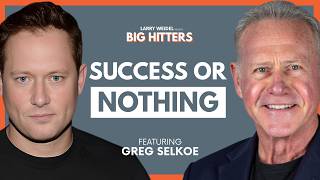
Greg Selkoe built Karmaloop and FaZe Clan from a basement to $1 billion in revenue. He describes a 9-out-of-10 investor rejection rate, term sheets that fall apart, and why founders need a backup plan. XSET now sells audience access to brands like Nike and Samsung across YouTube, Twitch, and TikTok.
Chapters
If someone invests in me, I will do everything I can to succeed before you have to carry me out in a wooden box. I will not give up. I will not quit.
Welcome to Big Hitters. I'm Larry Weidel, and this show is for people who are done playing small. Each week we break down what it actually takes to win at a high level, the decisions, the discipline, the adjustments that separate those who almost do it from those who do it. No theory, no fluff, just straight talk from someone who spent 50 years building winners. If you're serious about momentum, you're in the right place. Let's get into it. Hello, everybody. We are talking to Greg Selkoe. Hello, Greg. Hello.
Good to be here.
Up in Boston today. And so maybe, maybe all the time. Is that your permanent— you got— you said the place there and in Palm Beach. Yeah.
And then, you know, I spent a lot of time in L.A. We've got an office in L.A. I used to live in L.A., so.
Talk to me about— you've got, you know, it's when I get someone like you on, it's always like, where in the world do you start? You've done so much stuff. You've been a busy guy, Greg. And the busiest thing, the biggest things that have names on them seem to be Carmeloop and Xcent. And so before. Give an idea of what, you know, my team tells me there are two culture-shifting brands.
Yeah, actually, Faze Clan is pretty big too, which is the other one.
I was going to ask you about that. So Faze Clan, F-A-Z-E Clan, C-L-A-N. And so, and, you know, I don't often get a chance to talk to someone who is changing culture.
You and me both. Yeah.
So congratulations on that. And let's talk about what in the world is it that you do that's got you into all of these things? Did it have a certain, you know, organic— you didn't do everything all at once. I mean, you had to start somewhere. You had to have an idea in your head that got you going, and it had to be a pretty good idea, too.
I grew up in Boston. I went to Rollins down in Florida, then I went to Harvard for grad school, but I was getting a degree in public policy. So my first thought was I wasn't going to be an entrepreneur. I was going to be an urban planner, which is what my mom does. But authentically and throughout my life, I've always been interested in, like, subcultures, pop culture, graffiti art. Punk rock, I just— reggae, just fascinated with, you know, different cultural movements. And I don't— you know, it wasn't something that it was like academic. It just was like I watched a ton of MTV when I was a kid. My parents couldn't understand why I was interested in this stuff. And so when, you know, I was in a little before grad school, I had another job. I started Karmaloop and I started my parents' basement, grew that business to over $1 billion in revenue under my tenure. And but, you know, basically it was just from a passion for like hip-hop clothing and streetwear and DJ culture and graffiti art, like I said. And it started off, you know, relatively small. And I guess I was at the right place at the right time, which was that, you know, the internet was just starting, e-commerce was just starting. And, you know, it didn't really— if you didn't live in a big city, you couldn't get a lot of the stuff I was selling. So that was our competitive edge. There was our brands were very well known cuz you saw the, saw them being worn by celebrities, musicians, actors, stuff like that. But unless you lived in Boston, New York, LA, Miami, San Francisco, you really couldn't get them. So it was a supply and demand issue. So it really, it, it really, you know, grew rel relatively quickly. After Karmaloop, I did a couple other businesses. I went through Y Combinator out in Silicon Valley, which is an incubator program. And then I sort of, started seeing what was happening in video games, right? So at the time, I would say sort of music and streetwear brands, which had their own sort of culture around them, drove youth culture and it was evolving. Gaming started to really drive youth culture. But a lot of what I do, uh, now and what I did then is very similar. It's like content, community, commerce, trying to like, you know, authentically capture stuff that's interesting to people from 12 to 34. In this case, gaming is very, very popular, but it's really the intersection of gaming with music, fashion, art, entertainment. So I wound up at a brand called FaZe Clan. It was not a brand I started, but I really helped make it into a business. That, that brand is, you know, still around. It's one of the most— Carmel Lips also still around. It's a massive brand. It reached hundreds of millions of people in its heyday. I actually exited it in 2020. Which was the right time to exit. And then I launched XSET in 2020, and XSET is another extension of kind of the stuff I was doing at Carmelo and when I was doing a FaZe Clan. And that is really, you know, kind of seeing what's happening in culture, reflecting that back to the culture, and then trying to provide entertainment or products or things that I think are cool and that, that, you know, people who are I've way aged out of my demo, but— and I don't pretend to know it all. I definitely, you know, lean on a lot of younger folks who— even when I was at Carmelip and I was in my 20s, I was still leaning on people in their early 20s. There's always that next generation of people who are impacting culture, and I always want to stay relevant. But, you know, I've done kind of the same thing in different formats over the last 25 years.
Well, you're still kind of in the groove there because you're wearing the sweatshirt hoodie.
Yeah, this is one of our own.
I figured, looks pretty cool. And so the thing is that, Greg, I'm sure you found this in your travels, your experience out there, that, you know, you see, you know, I don't know if you're like me, but I find people all the time that are much smarter, better, more energized than me, but then they never do a God-blessed thing. And you talk to them endless hours and it comes into like they just don't see it. You know what I'm saying? They just don't see the opportunity that's right in front of them. Because you can only, you know, actually you can only do what you see. And I kind of think that's a, that God gives us each revelations about where we're supposed to go. It's like, you know, shines a spotlight over here, spotlight over there. And so I've never heard anyone say coming up the ladder that I was attracted to culture-defining movements. You know, the idea that I would be look, you know, even know that was a thing. You know, I'm just hearing that this morning.
Yeah, there's not, there's not a lot of people like me. I'm kind of, I mean, the company that we're doing now, XSET, there's really only one of us, right? And the way we're approaching things is there are people that are similar, but we're really kind of, I think, a new— and I think two things I took away from your comment. One is people not doing stuff, and two is doing something that's pretty rare. I think one of the things that I believe as an entrepreneur is, you know, I am definitely not the smartest or most equipped or, you know, best business guy. Definitely. You know, I don't have a degree in business. I do. I got into Harvard, which is pretty impressive, but it was a focus on something totally different than entrepreneurship. But I think I've always been, you know, innately someone who one can see where things are going, just like, what the fuck? This is so obvious to me. What's, what's, what's going on? Where a lot of people just don't see it. And then I think the second thing is I have a tremendous ability to take pain and, you know, not give up. Right. And that's such an important piece. And I don't wait, you know, I don't wait for things to be perfect. I don't wait to figure everything out, for better or worse. And it's gotten me into trouble sometimes, for sure. For better or worse, I go for it.
Where do you think that comes from?
You know, I don't know. I really don't know. You know, my parents are cautious, very different than me. I don't really have, you know, a ton of— I was actually at a family reunion this weekend and I found out I have a— my son is named after one relative who fought in the American Revolution. I just found out I have another one who fought in the American Revolution. So I don't know, that maybe back there's some like, you know, rebellious go-for-it genes in my my background, but I don't know where it comes from because my parents, my mom is, you know, works, she's a public employee. My dad's a scientist. He's a very successful scientist. But risk is not something that's been around me a lot. And I just, I'm just born that way that I've always been willing to take a little bit of risk and be a little bit crazy to my detriment.
Well, you know, the thing about pain is there seems to be a unique assortment of pain associated with everything we do in life where you're accomplishing something. In your arena, where have you noticed of having to deal with pain and say, realizing, okay, this is something I'm deciding to do, but this hurts?
Yeah. I mean, look, I'm pretty good at raising money and, and even me, it's just like, you know, it's like excruciating getting myself to get on the call, make that ask. It takes a lot of humility and, you know, ability to, you know, project that you really believe you're asking people to invest in you because you believe ultimately you're going to make them money. And I've made a lot of people money and I've also lost some people money. And that's just part of the game with when you're an entrepreneur, you can't, can't bet $1,000. I'd like to think I've been around for 25 years. I've had some successful brands. I'm a better bet than most, but, you know, I can't guarantee outcomes, right? No one can. But I think, you know, I think the pain that you got to take as an entrepreneur is one is 90% of people are not going to agree with you. They're going to say, you know, this thing's stupid. It's not going to work. I'm not interested. What about this? Mostly people don't actually get up and do it themselves. I think the second thing is, you know, you're going to have chronic shortages of money until you get the business where, you know, unless you're lucky and you have a business that just starts making money day one, that's you know, a very, very small percentage. Most of them you have to go through learning and failure and, you know, and so you got to, you know, persevere. And, you know, when you're raising money, you know, you get the door slammed in your face 9 out of 10 times. Right. And, you know, sometimes people are not nice about it at all. They can be real jerks where you get people say, I'll do it. And then, you know, when it's time to write the check, it takes you months to try and get them to the table and then they decide not to do it at the end. Leave you hanging. So you just have to be expecting things to go wrong. I mean, entrepreneurship, there's a lot of pain. And even when you start getting successful, then you have a setback. And like I said, you just got to have a lot of self-reliance and a lot of belief. And even your closest family members are going to get annoyed with you and wonder if you should give up or not always as supportive as you want. It's just human nature that everyone's nervous, right? Can you do this? You take you're taking on more investors, you're taking on debt, or you're taking on— it's a lot. So you got to be— you got to be— it's a lonely business. You got to be ready to stick it out.
And the thing is, like, I think people need to— we probably need to say that again, Craig. So, you know, for the naive among us about when it comes to raising money, the fact that you said 9 out of 10 are going to say no and then Then even the ones who say yes, then it's a matter of a long, drawn-out process to get them to the table.
And a lot of the ones who say yes ultimately say no later on.
And I've also found out the bigger the amount, the more likely it's to blow up. Once you find— because there's more people they got on— the bigger the amount that, you know, if it's a small amount, they'll just decide to do it. Go ahead. You know, yes or no. But to get into big amounts, most people Most people have lost money that have a lot of money.
Well, we're raising a Series B, we're raising $30 million, we have a term sheet, but it's not a fait accompli by any stretch of the imagination. And there's things we have to do to prove our value still. And, you know, it took us 9 months to get here to a, like, a tentative, okay, we're interested. You know what I mean? It's a lot of work. It's a lot of work and it could fall apart at any time. Always need to have a plan B.
At what stage of your life, you know, how did you get stuck with raising the money? I guess because it's your idea, you're running things, you know. Have you been stuck with raising the money all along?
I raised $40 million for FaZe Clan. I probably raised $160 million for, for Karmaloop. You know, I've raised $25 million for XSET. You know, it's, you know, it's, it's been me. It's been me. No one else is going to give you money if you're not out there selling the vision to them because, you know, unless you have a very unique partner or something like that. But I would say ultimately people are investing in you. So, you know, if they don't feel good about you and, you know, the fact is like, you know, I can tell you that if someone invests in me, I will do everything I can to succeed before, you know, you have to carry me out in a wooden box. You know, I will not, I will not give up. I will not quit. Doesn't, doesn't mean I still can't get beat. But, but, you know, I think people can sense that in me when I talk to them, like, and I lead with my— I put my money where my mouth is, my own money. A lot of my own money's in here. I've signed for things personally and gotten really badly hurt and paid back loans and, you know, a lot of, a lot of stuff. But, you know, I kind of feel like if I were on the other side and I was investing, I want to be investing in an entrepreneur that's all in.
That's the least to ask if you're going to put money with somebody. And I've got a lot of directions I'd like to go here, but I forgot to tell you when we get started that, you know, we'll wrap this up in a few minutes and then the public part of this podcast, and then we'll— I'll ask you to hang around. So I like to do a little locker room thing for my Big Hitter community, and I have a next level group that are the dead serious people. And so I like to have to give them a chance to get a behind-the-scenes exposure. To, to serious people. So let me ask you this. Raising money, uh, what in the world are you going to do? I'll go ahead and get this out. What in the world are you gonna do? What would the $30 million allow you to do? By the way, if you're still listening right now, you're different. You don't just consume content, you're actively looking for an edge. And that's who I built the Big Hitter Community for. Not people chasing motivation, people chasing momentum, not theory. Proximity. Proximity to operators who are actually in the arena making real decisions and winning at a high level. Inside Big Hitter, you get conversations we don't have in the podcast, direct access to people who build what you're trying to build in a room that holds you to a higher standard every single week. This isn't a hype group. It's not networking for the sake of networking. It's where serious people go to sharpen their thinking and compress their timeline. If you're done just listening and you're ready to be in the room where it actually happens, head to joinbighitters.com or click the link in the show notes. The right room changes everything. I'll see you inside.
Yeah, so let me kind of tell you what I do, because I don't know if it's been clear so far. We're a media company. We create content. We could be creating content about anything. It just so happens gaming, which a lot of people, a lot of people 12 to 34 are interested in, is sort of the, the organizing theme. But the fact is it's really the personalities in gaming, not the game itself. We don't cover a lot of like the gameplay. It's the people who are streamers and content creators. Streamers means they go live on a platform called Twitch and they game and thousands of kids watch them game. And they communicate with their fans. It's no different than, you know, other generations' reality TV or what's happening now with a lot of sports media is not focused on the basketball courts. Like, what are they wearing in the tunnel? Who are they dating? What celebrities are involved? You know, it's, it's, it's a culture, right? Like I said, we always do. And so what we do is we basically have a bunch of content creators and some pro athletes, some musicians that create content, put it on YouTube, put it, do, do live on Twitch, put it on TikTok, put it on social media channels, and then we sell, advertise and access to that audience of, of 12 to 34-year-olds, which is the most valuable consumer, consumer group on the planet. And we've done deals with people like Samsung, Spotify, Gatorade, Nike, McDonald's, Amazon, Google, NBCUniversal, JBL, DoorDash, Cheesecake Factory. I can go on and on. So we work with these blue chip brands who basically need our audience like they need oxygen. They need to reach this generation. They can't reach 'em through traditional media. They gotta reach 'em through people like Exa. And so that's, that's basically our, our business model and kind of our model for the consumers, providing them entertainment.
You talked about you got a place in Palm Beach, you got an office in L.A. What's the scale? How many people are involved in this right now?
Well, I think the interesting thing is the scale of the, of the actual business itself. It doesn't take that many people. I mean, we have like maybe 25, 30 people in the business and then we've got another probably same amount of people or more that are creators, that are the people making the content. You know, when we get a brand deal or other things, sometimes we have to hire production studios or other people. But the core group is pretty small. I mean, we only need to scale this business to $50, $100 million from where we are now, which is soon. We don't need to add more than maybe another 10 people, right? You know, so, and we kind of needed the same amount of people when we were doing $6 million, right? It starts to— you start to get to a point where you got to have the core. You got to have your core people. You have to have your CEO, got to have your CRO, but you don't need to hire them again. When you get bigger, you only need 2 or 3 of them. So that's really the beauty of when you scale something, right? And the thing is that a lot of what we are now implementing in the company is much more like traditional advertising. So initially we had to do a lot of the advertising content creation campaigns. We had to do it ourselves. So we went to McDonald's, said, hey, you want to reach this audience? We're going to help you make this content and we're going to put it— we're going to propagate it to our audience. About the Chicken Big Mac, for instance. That was a deal we did. We're doing that. But now we're adding in the ability to just sell ad units the same way TV did it for many years or cable did it for many years. YouTube is the new— is the new TV, basically. That's the, the, the, the, you know, you know, basically utility. It's not, it's not anything else than it's the pipe. It provides the access. And we can, we can sell advertising now on our YouTube, which is a big step forward for us. And that allows us to not only do these what we call bespoke campaigns where we create something individually for the brand, we can also say, by the way, take $5 million and just run your most recent McDonald's ad across our platform as well.
You know, the thing is, in terms of running, that is a light bulb moment for a lot of people to realize how big you can get with a small core of people. But most, yeah, I, I heard when I started my expansion project in 1980 up to North Carolina, from North Atlanta up to North Carolina, the founder told me, said, you know, you can run— most revolutions are run with a handful of people at the core. And that's because, you know, you think about it, there's so many moving parts and there's so many details. You can't keep 50 people informed of all the minutiae, you know, but you can keep, you know, the people that you're talking to all the time that are around you, and all those little details add up and are important, but you can't remember them all. But when you're asking somebody their intake, you know, I've got 2 or 3 people that when it comes to decision-making, you know, and going forward, you know, you have a handful of people that you— that know the lay of the land and all. And so, uh, it's amazing what you can do, but it's not necessarily new. I want to point that out to people. Like, people were surprised that Heinz Ketchup out of Pittsburgh, you know, Probably 4 decades or 5 decades ago, they had like 3 secretaries and 4 other people up in an office building, office up there and some office building. But they had 35 factories they had subcontracted out around the country that with their formula and, you know, they, they subcontracted it all out.
That's the best way to do it. I mean, if I'm looking back at my, my first business, it grew to a point where we had an office in New York, an office in Boston, an office in Copenhagen, presence in LA. I had probably 850 employees, you know, at that company. I mean, we're doing $180 million a year. There was— it was a high-touch business, but still, I could have run that business on half that amount of people. You know, that was my first business. You know, hindsight's always 20/20. But, you know, I realize how much, you know, a lot of times what happens with my employees is like, oh, we need to do this or do that. We got to hire someone to do that. I'm like, wait a second. We don't always have to hire someone. In fact, sometimes you hire someone and get less efficient and you actually do less. So it's a balance. You don't want to work your employees to the point where they collapse. And certainly the type of people that I like to attract to my businesses are people who are willing to put in the extra hours and really, I incentivize them by giving them ownership in the company. So there's upside. But we are not a 9 to 5 company. We're a company 6:00 AM to midnight if we have to be.
If you have to be, you know, the deal is if you're going to be— run a company, you got to be, you know, be willing to do what Bezos just did and cut 14,000, 15,000 people, period. You know, periodically, you know, you grow and then, you know, and you come back. It's like pruning, you know, everything in life. If you're going to grow, there is a stage to set the stage for future growth that you have to go through and prune. You know, I remember my, my my grandfather down in South Georgia where they had all these, plant all these pine trees, young saplings. And then periodically they would go through and thin it out. You know, they'd see which ones took off and then they'd just chop down, you know, every third tree or something like that. So, you know, they could, you know, give room for the roots to grow and everything. But you can clutter up your God-blessed office, especially when you're small. Adding in 1 or 2 people, it seems like, you know, they need to bring something to the table. They need to brighten your day. And otherwise, you know, the clutter aspect of it can, you know, an extra just little chitchat in the office can bog it out.
Yeah, well, my mentor was a guy named Frank Esty, and he was one of the founders of Marshall's Department Store, was one of the biggest retail successes in history. And he used to always tell me, he's like, you know, hiring, you know, the state of the company is like a rubber band. You know, when you, when, when you have too many people, the rubber band's loose. You don't want to hire again until that rubber band's about to snap, you know? So you got to, you got to do everything you can to use what you have because the rubber band stretches a lot further than you think, you know?
And it's kind of like being when you and I were probably— you probably played high school sports, but, you know, and, you know, when the coaches got you out there running wind sprints or something like that and, you know, You're about to, you know, you're puking, you're about to pass out. And then he says, okay, another, you know, another 10, another 10 50-yard sprints.
Yeah. I mean, when we used to do double practices for tryouts for hockey and, you know, I'd say a good 40% of us were puking and they didn't care. They'd be like, get back on the ice. I don't think you can do that anymore. I coach my son's hockey team and we definitely don't make him puke, but You know, there's some value to that. You know, you've always got more in you. You know, you got to, you got to as a person learn, you know, maybe not puke, but you got to get to the— you got to learn, okay, when the chips are down, can I really— can I rise to the occasion and can I get— I mean, there's— it just depends if you like this stuff. If, like, there's nothing wrong with, you know, saying, look, I don't— I want to spend time, much more time doing other things. I got 5 hobbies. I want to work a 9 to 5. That's what most people want to do. I just happen to be built in a way, and sounds like you are too, where I just want to challenge myself every day. And, you know, problem solving to me, while it's not always fun when it's happening, it's part of my, you know, that's one of my hobbies is, is figuring shit out, right? And how do I, how do I keep making the business grow? And, you know, I complain about it mentally in my head. I try not to complain it a lot, complain about it a lot to my staff or whatever, because you don't want to— you got to be a leader. But Ultimately, you know, I think if you hook me up to a lie detector test, most of the time I'm having fun.
I like to periodically call BS on the thing of having fun and goofing up, because let me tell you, golf is a big pain in the ass too. And, you know, going on vacation to the beach, you know, in the hot sun, laying on a blanket, trying to get comfortable, reading a book or whatever you do, you know, that's not always a walk, you know, walk in the park either, you know, or let's go to the fair with— let's make the big reveal here. Disneyland. Taking the kids to Disneyland is not necessarily, you know, my life's dream.
Well, one, we're programmed to believe certain things are fun and certain things aren't. And a lot of people are, you know, programmed around this idea of work-life balance. And I think the work-life balance really just depends on the person. There are people who's like, look, I need my work to be much less than my other things. And there are people like me that if I had the same work-life balance as someone else, I'd go insane. Like, I need the challenges, I need the feedback. You know, even when I have free time, I'm watching documentaries. I'm— I'll go to, like, you know, exhibits, and I'm always trying to learn stuff. Just, just how I'm built, you know? And that's fine. It doesn't mean I'm better than someone else, but like, the worst— the worst thing you can do for me for more than one day is have me just sit by a lake or something, do nothing. I'll go nuts.
But people don't realize that, you know, and they think that, you know, they look at— somehow they look at work as torture and they don't— you know, there's a certain amount of— everybody's kind of like a farmer in the sense that there's times when you're planting seeds and then there are times when things are growing. You kind of got to keep your eye on it. And then there's times when, okay, it's time to make— hey, the harvest time is, you know, we got to get it in the barn. We got the rain coming. We got to go around the clock. And I don't need to hear your crap, you know. You know what I'm saying? It's like you got a stomachache, take something for it. We got it. You know, we got a boogie right now, you know, and the same thing in the, you know, when, when companies are merging, you know, I've been through a lot of those and, you know, where you got to keep things under wraps, otherwise you're going to go to jail for trying to manipulate the stock market. And you've got, you know, you got all these meetings and you got to be secretive. And, you know, there's no such thing as sleep for about a month or something like that. And then then, you know, you, you can't be a part of great things unless you're willing to be flexible.
Those are the moments I think that you look back on, you say those were great moments. They may not be fun when you're in them, but those are the moments that define, define you. But, you know, the other thing is, and I'm— I generally— people don't last in my companies if they're not willing to. And that's, that's fine. And, you know, the other thing my mentor said is 50% of hires don't work out on the senior, senior level, no matter how good you think they are, whatever. And that's fine, too. And I think You know, you know, so I mean, look, you and I could probably tell war stories all day because we have the same outlook on, on things. But, you know, I think if you're going to be an entrepreneur, these are the type of things you need to be thinking about.
Go through— you can't, you can't have kids unless somebody is going to go through childbirth. And it's— and that, that 12 to 36 hour period of time is not necessarily going to be one you want to go through. But you got it if you want the baby, you know, you got to do that. So the deal is, When you started, you know, I really need to hear what was going through your mind because it had to be a lot of formative things happened when you were in the, your basement with your parents. You got this idea and you're doing something crazy. You know, you don't have any track record right now and nobody in your family understands your interest in this. And you're going absolutely ape and you get it up to— what did you say?
You know, I know at our peak we were doing about $180 million a year. We did $1 billion total over the time I— from the time I started to the time I left.
And how— what period of time was that?
So that was 2000 to like 2014. So 14 years. Wow. And so when you look back, you got to remember the first couple of years we did like zero. But yeah, you know, and You know, it took me about from 2000 to 2008 before we were breakeven.
Now, how many— when did you start having some people with you when it was, you know, it was more than just you? You know, did you have a co-founder or something?
I founded it with a partner, my first business. He only lasted a few months. He couldn't handle the, you know, I was the one raising money. I was the one who was providing the warehouse, which was my parents' basement. I was the one packing the boxes. He didn't want to do that kind of stuff, you know. So, you know, but then I started, you know, I had a small team almost within a year and a half or so.
I cannot resist to mention the Jeff Bezos story that he tells about himself. When he got started, he— it was him and another guy, his assistant. I don't think they had many other people and he was doing it in a garage. They were filling orders out of a garage. And he said one day, he said, I had a light bulb, you know, it's like, Oh my God, why don't we do this? And he told his buddy, said, I just got an incredible idea. He said, why don't we buy knee pads? So, you know, we're down on the concrete all day long on our knees, you know, boxing this crap up. Why don't we get knee pads? And his assistant said, I got another idea, Jeff. Why don't we buy a damn table? Yeah, but, you know, that's not, you know, He tells that on himself. But the thing is, you go through those stages and a lot of these answers that come to you are, you know, you're forced.
Yeah. I mean, I learned everything on the job. I mean, one of the reasons why I had Frank Esty as a mentor is I sought out someone. Someone introduced me. The guy's retired. He's like, he's like, I got nothing to do. He was 80 years old, by the way. He would walk a mile to the office. He'd come in, didn't charge us. He gave us full time, a full day. Once a week. Sometimes he'd come in 2 or 3 times. And he taught me so much about how to be a retailer. I didn't know anything about it. Without him, I would have failed for sure.
How did you find him?
So we had like a consultant who said, oh, you got to meet this guy. And, you know, he would meet with people. He's like, I'll give him an hour. And whatever impression I made, he, you know, he wound up investing money and he wound up giving, you know, his time for several years until he passed away, basically.
How did you— what was the first thing you did? Now, you try, you know, you had some good input. You're working hard. You're building, slowly building a team, but you basically got close to zero sales. What was the first thing that caught on for you?
I think we figured out if we gave like a gift with purchase, we— so what we did is we went to different record labels. At the time, people were still— their CDs were still what, that was before, before streaming music. And they all wanted to give out these CD samples. They wanted— they would pay these guys, street teams, money to hand these things out on the street or at events or whatever. So we said, well, we're sending out these boxes to these kids. You put our— you put our, our information on your website about, you know, we're doing a collaboration and we'll put it— well, send us the CDs and we'll put one in every box. Right. And we just start getting more and more exposure on these. And all of a sudden our sales start going up and it also helped incentivize sales. It was a win-win.
Uh-huh. Fantastic. And where did that idea come from?
You know, I don't remember, honestly. And if it could have been my idea, could have been my idea. I don't remember.
And probably, probably because you're trying every idea that came down the pipe. You know, that's— people, people say, you know, they'll ask you the question like, what was the one thing you did when you caught on fire and this, that, the other? And what I— my answer to that is like, If I'm sitting at a piano, there's 88 keys. I'm banging on every one of those 88 keys as hard and as fast as I can. And if there was one key that made the difference, I don't know which one it was.
Yeah, yeah. Now I try to know, but, you know, frankly, you know, a lot of things worked in the early days of the internet because we were— we didn't have any competition. We were relatively lower. I would say with this current company, I still haven't done the one thing that I think is going to this company is going to, I think, can be a billion-dollar business. Certainly there's 3.5 billion people in the world who like the stuff we're doing. It's a third of the world basically, or game. You know, we're still trying to, you know, we're, we're successful. But I know there's at some point we've built this brand for 5 years and we're probably pretty close. There's going to be a moment where we really— because, you know, I've had that with all my businesses really. And so, you know, but I still haven't figured it out. I'm trying things new every day.
Now, did you discover— I mean, you've been watching the whole time. Were you aware all along how those audiences were building for streaming, people playing games? Were you aware of that all along?
Yeah. I mean, I was early, early, early to that. And I think part of the thing is, you know, one of my skill sets, a lot of things I'm not good at, but— and I've made some major mistakes. I had a restructuring in one of my businesses. You know, I'm good at kind of seeing trends. And I was doing this, this other website that went up merging with FaZe Clan, which again is also a legendary brand. I mean, Karmaloop, FaZe Clan, Hex Head, you know, these brands have meant a lot to millions, tens of millions of kids over the last 20 years. But, you know, I was looking for things that were different than the average person that I was doing. I had started a website where you would different celebrities curating products and hey, this is a product I think is cool. I had musicians, I had athletes, and I had DJs. And I was like, I need to find someone else because everyone's going after them. And I started reading and hearing about these people who are gamers, and everyone at the time was focused on the e-sport athlete, right? The gamer who played to be the best, right? That's where all the money is going. I mean, it was a goal. It was like AI for a minute. Everyone's putting hundreds of millions of dollars.
It failed.
I'm like, the cool thing over here is you're getting these people who are not the best at the game, but they're creating content and they're personalities. They're like Johnny Carson, but they're playing a game when they interview people instead of, instead of having them sit on a couch and drink a whiskey or something. That's what it was. The same thing that worked in other generations. It was just a different way of doing it. And I saw it like, guys, this is where the excitement is. But it took a long time to get people to, even in the company that at Faceline, which, you know, at one point was, you know, a massively impactful brand in the, in the, in 2020, '21, 2019, known by every kid in America probably. Even there, I was having a hard time getting them to focus on, you know, that one, that, that job came about because they, I merged my company in to Faceline. I kind of fell in love with the concept and I love the brand. but they were basically insolvent. I came in, I restructured, I brought in my team. The entire business team was my team except for one guy who, and the guy who's head of esports. And the, even then, one of the reasons why I left, unfortunately they bought me out at a very high valuation, so it was a good exit for me. But the reason I left is they still were focused on this other stuff, this esports stuff, which to me was like, yeah, we can have a little, let's dabble in it, but we don't need 16 teams. We're burning huge amounts of money and we're starving this area that's making all the money, which is the content, which is the personality, which is the entertainment stuff. And I think they've figured that out now. But that's one of the reasons why I left is I wanted to focus on, you know, I wanted to focus on where I thought the future was.
If it— if people wanted to go to the YouTube and tap into that genre, that market, because I'm sure it's huge. What would they type in? What would they search for?
So I think the, you know, the easiest thing would just be put our brand name in XSET. You can search that, you'll get tons of videos. Our big star is a guy named Clix. We co-own his YouTube platform with him. He's got about 24 million. We've got about 24 million views a month on just his YouTube channels alone. His, his name is Clix. If you've got kids who are 12 to 30, ask them if they know XSET, ask them if they— they'll certainly know XSET. Clix, who's our big star, you know, he's someone who can't walk— you know, he walks down the street, it's like the Beatles walking down the street. He's a massive, massive star.
How does people— do you see this ever working other than gamers? How would it— how would the next evolution is like— let me just— let me just say this about you. You know, you live in— you got places in Palm Beach. You've got a fascinating life. You know, you you know, you travel, you meet interesting people. What if there was a camera crew following your ass around?
Yeah, I mean, a lot of people have suggested it, and honestly, you know, it would be some interesting stuff because, you know, we've had— since we've had— we've had some real, you know, real challenges when we were short on money and how we were going to, like, borrow, you know, asking people that don't know anything about our business but kind of know me personally. I'm like, please, this is what I'm doing. You got to trust me. And then certainly FaZe Clan, if we had cameras from that, with that turnaround we went through with dealing with it, it was, it was like, it was, it was insane. I mean, these guys, the guys who were the talent were like off the wall. Police were calling us, you know, parties crazy. It was just very, it was very— would have made for very exciting entertainment. You know, I've thought about it. People ask me that all the time. I just think I'm, you know, I don't want any distractions. I just want to focus on the business. I think if we get to the next stage, maybe that's something I'll do. And I also have to decide whether I want to be, you know, well known again. When I was doing Karmaloop, I was relatively famous because it was a youth culture thing. I was doing social media, I was in videos. It was early days. I would've been a lot bigger. And I also interacted with folks. I was also in the press a lot. And at the time, the press mattered more than social media, Complex Magazine. So it wasn't, I was, I would get recognized not infrequently, a few times a week. Some would say, hey, you the guy from Karmaloop? I maybe take a picture, and it's a lot to deal with. I didn't have kids at the time, so I know that we could do stuff that's really interesting. I just need to decide whether I really want to go back in a place where I'm in the public eye, but I'm open to it. And I think ultimately I'm doing a podcast right now myself on the days of Carmelou and all, and I got a lot of different famous people from that time to come on my podcast. So we'll see, maybe that will get popular. Ultimately, I would love to share more of what it really is like to build a business and also kind of my experience with folks, because I think the stuff that they teach you is wrong most of the time.
Right. I think it would require heavy editing. But I mean, if people could like be in your meeting when you got your core group and you're like, okay, we got to figure this out, you know, why is this not working? What's happening over there? And then you have— and then you're on your way over, you're in the car driving somewhere else, you know, heavy editing where they take out all the private stuff. But I think, I just think that would be very, very educational. You know, my wife doesn't want me to do it either, but we'll see.
I think it'd be good. I think if we did it from a business angle, not like just, you know, bullshit, I would be interested in potentially doing that at some time, at some point.
How would people, so they can go to you and find you, just type in XS But so basically on all of the social media platforms, TikTok, YouTube, it's just Xcent, right?
So, you know, our IG is at our Instagram is @Xcent, right? Everything, we've got the name Xcent. For me personally, all of my social accounts are my last name, Selko, S-E-L-K-O-E. I was fortunate to get that, you know, because I was on early. So I just have my last name. That's it. So I'm easy to find. I'm on LinkedIn. I don't use it much, but I'm definitely there. I check my LinkedIn once every few weeks. But yeah, I mean, you know, just ask your kids. They'll tell you how to find us. They know who we are.
Well, folks, if you've enjoyed this, hit the like button. Leave us a review and tell us what you think about our highly opinionated takes on several aspects of industry. And who knows, maybe we'll get Greg back on and we'll get a chance to do this again. 'cause it's sure been a whole heck of a lot of fun. Greg, do you have any parting words you'd like to— I like to give my guests a chance to give a final word to the people who have listened with us, got a reward for staying with us the whole time. And then we'll take a break and then go over to our locker room talk. But what do you, would you like people to take away from this morning?
Don't quit.
Don't quit.
Keep it, keep it simple.
Fantastic. Thanks so much, Greg. This has been great.
Thank you.
Appreciate it. That's it for this episode. If this resonated with you, do me a favor, share it with someone who's ready to level up. Winners find winners, and the right conversation at the right time can change everything. Want to go deeper? Join us inside the Big Hitter community at joinbighitter.com. Bighitters.com. That's where the real work happens. And if you haven't already, subscribe so you don't miss the next one. Remember that you're either growing or dying, and there's no standing still. Keep winning, and I'll see you next week.
More from Larry









Rick Jordan on Self-Engineered Proximity, Cyber Security Moats, and Truth-Based Leadership

Fire Fast or Fail Slow: Kevin Brittingham Reveals the One Rule That Built a $100M Empire
