The 'King of Scaling Businesses' Reveals His Secrets To Explosive Growth
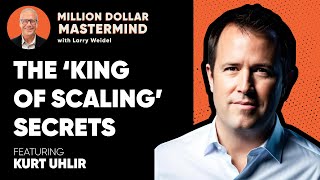
A podcast-style interview (Million Dollar Mastermind) where host Larry Weidel speaks with Kurt Euler (self-described “king of scaling”) about his career building/scaling technology-focused companies, systems and intentionality for productivity, leadership and hiring, personal branding (long-form articles, speaking), and a concrete case: EZ Home Search, a confidential national home-search portal that prioritizes user privacy and reached cash-flow break-even in ~4 months. The conversation mixes tactical advice (document assumptions, use CRM/customer success under marketing, focus on output over hours) with personal anecdotes about running businesses, family life, and speaking engagements.
Welcome to this edition of the million Dollar Mastermind podcast. This is where we pick the brains of high achievers from all walks of life and get their hard earned real world insights on winning. I'm your host, Larry Wydell. I'm talking with Kurt Mueller. Hello, Kurt.
Hey, thanks for having me, Larry.
Glad to have you back on. It looks like you might be away from your mountain retreat this time.
I am at our house in Roswell, Georgia, just north of Atlanta.
I don't know if I mentioned it last time but you know, when I came out of Georgia Tech, I built houses on the north side of Atlanta and my swan song was up in Alpharetta in Roswell, Georgia. I used to drive up every morning out of Buckhead and that was just starting right now. Now you're in the middle of Atlanta, it seems like.
I'm sure there's very few green spaces now except for the parks that Roswell is known for.
Yeah, well, you know, that's the big thing about living in Atlanta that I'm sure you had to go through. The thing is like I want to be in Atlanta, but where in Atlanta? And you wound up in the places I probably would be and that is Roswell where you can be fairly close, close in but then have a place that you can get away from on the weekends up in mountain Blairsville or.
Where does it's in Blairsville, the mountain property. Yeah. It's nice. I can get into the city when I need to and I have meetings. I've built a career and a life where you can help companies be successful. No matter where I am, but especially I of course like when you would have been here. I have a huge network in town so I have a lot of company meetings I do have to go into Atlanta for but prefer to do things remote if possible.
You could be productive that way, you know, and depending on what it is you do. But I remember when the first cell phone flip phone came out in early 90s, I never went back to the office. I paid $2,200 for the first one and I never went back to the office unless there was a meeting. And productivity I think jumped. But now let's talk, let's kind of help everybody who didn't get a chance to listen to the previous episodes. I'm going to dump this on you because it's such a complicated story. Your business. How would you describe for people what you've been able to do in business and to get to a position of influence like you are right now to where you can be effective, you can be in, in touch with a lot of people and. But you can still move mountains and make a difference and keep yourself wildly entertained on the business side but not overwhelmed and still have the life because those young kids are growing up and I'm sure they're becoming more and more demanding.
In a good way. In a good way though. But that's also why I like the flexibility of what I've been able to create in the companies I work with. Yeah, I didn't realize early, like probably the first 10 or 15 years of my career what I was doing. I was highly successful. But it was only after I had joined with a gentleman named Reggie Bradford as his right hand man as part of his executive team for a SaaS based company in Atlanta that we ended up selling to Oracle 16 months later. And I went and started this another SAS based company venture back and there's a long story we could get in there. But I came back to him for some a couple years later and I was like, this is difficult. We, we raised a bunch of money, we got to break even. But it's just, it's really hard on my family. And he's like, I would have told you not to have done this. And I was like, I don't understand. Like we get along really well. And he goes, I hired you because you're the king of scaling. You touch things and add one to two zeros to the net revenue for companies in just a couple years. That doesn't mean you're good from going from zero to a million dollars in sales. And as we kind of talked through that and made some decisions about what, where I should be looking for my career after that, he was right. I'm really good at. And no matter what industry, it's usually heavy technology focused seeing things in systems. I tend to step in as a head of marketing ahead of strategy, sometimes in the product side but usually all around owning marketing. And I see how all these interrelated piece things are interrelated to me. But most people don't see it. They think the press release that goes out that sets the bad expectation that sales sells on that product doesn't deliver on that churns a customer later. Most people don't see how those things all relate together or they should. And I'm like that's one system. Let's go in, let's make sure everything's communicating really well and whether it's healthcare or real estate and that's, I've done that repeatedly now at dozens of Companies I'll always join that either burning ship that's on fire, that needs to turn around, investors needed money back, or like, right now, I'm with a company called EZ Home Search. EZ is in zebra Home Search. They're the only confidential home search national home search platform out there. And it's a huge opportunity going up against Zillow, realtor.com and homes.com and Preston, the CEO, he'd been going and he had enough of a foundation. He brought me in a new CTO in, and we've gone, like, to cash flow break even in four months.
What does confidential make me?
So most people don't realize. I mean, it's different when you. If you're. When you're working with, like your local real estate agent, but usually people aren't searching for a home like on your agent's website. They're going to one of these big portals. What they don't realize is what happens on those portals. Well, we'll do it in terms of not real estate. Nobody that's listening would say, I have a $2 million IRA, and they would never go fill out a contact form that says, I'm going to move my $2 million IRA from Fidelity to something else in the next six months, go sell my information to people that want that. But that's what happens with most of those big national portals or even big brokerages of some of which I've worked at. They go, how can we make the most money? By giving your name budget information to somebody that's going to help close a deal, or they'll just kind of sell it. Sell it. Sometimes, you know, some of the public companies that do that, it's a thousand dollars about on average for every one of those leads they hand off. And so Preston had a view for something very different that said, look, this is private, confidential financial information. You should be talking with the vetted partner that you know who they are and that you've agreed to give them your information and you're in control of that. So if you want to do that, here's an avenue now with this portal so that it's not selling your contact information to the highest bidder, but you're providing it only to somebody that you know has been vetted if you want to.
For those of you listening, Easy Home Search is who he's talking about. And I think there will be a lot of people that are interested to know that there is a confidential home search option out there.
Yeah, to me, it's the same thing as so much where like we've, a lot of us have been trained to look for that in our financial advisors and do we work with, you know, percentage based or fee based and what does that look like? But in real estate that's just like it doesn't come to most people's mind. But because of so many privacy breaches from some big national portals or AT&T last year that gave away pretty much everybody's data. People are going, who has my data and why is my phone ringing so much?
Right, yeah. And we all have a, we all have too many stories of having a conversation at lunch with somebody about some subject we don't usually talk about and get back and find Google is popping up ads about it. Want a vacation in Costa Rica? Have I got some options for you. Now, as you were coming up, you reminded me a fortunate thing I had coming out of Georgia Tech and going into home building and that is like we're talking about that. I. My last houses I built were up there where you live in now in Roswell. That I didn't know what I was getting, but I was, when I was put in charge of home building, I was Mr. Outside. I was working for a guy and owned the company and he was Mr. Inside. And he always wanted make me a partner. But at a young age, at a young age, somehow my, I had no financial knowledge or no way of knowing this, but my instincts, you know, divine instincts kicked in and said, do not be a minority shareholder in a closed corporation. You do not want to be in business with this guy where he has all the authority. And so I would say, no, no, no, I'll just be, you know, an employee. But I was Mr. Outside, he was Mr. Inside. But it forced me to get like super organized on assigning things, keeping up with things. You know, on a average day we would be, I would have 11, you know, we build 25 houses or so a year, upscale houses. And you know, you'd have 11 under construction at any one time. They're all at different stages of construction. They all need materials. They all have a group of, we used to say subcontractors. Back in that era you'd have one guy with an IQ maybe over a hundred, everybody else was below 50 and you know, on his crew. And you'd have to check on them constantly and you couldn't leave them. It's like toddler, it's like having toddlers with tools building your houses. You couldn't leave them alone alone long and they would get into all kind of mischief if you didn't keep an eye on them. But so I was constantly running around in my Suburban, but I had to at least be organized. And so it forced me to come up with all these systems and flowcharts and where I had it in my mind, where I had my finger on the pulse of what was happening and that became, that was useless to me. It was saying that, you know, your strength was not building companies up to a million, you know, zero to a million, but scaling it. After that I was useless. When I went into financial services and in sales side of financial services, I had to learn that skill because it was just me, you know, I wasn't running crews. So that was a tough three and a half years. But once our company decided, hey, we're going to go and now take this nationwide recruit train, open offices, it was like, okay, now we're back in my game, we're in my ballpark. And I had an advantage and I could see things that I didn't know I had and kind of almost an unfair advantage over the other people in the company because they never had that experience. And it sounds like you picked up an experience, you were in some position along the way where you picked up that ability to see things more globally and seeing how the big pictures, you know, and the small pieces work together and how to make them function more effectively. Where did that come from?
I mean, I was kind of forced into it in that like I formed my first of two LLC when I was 14 because I had between 15 and 20 part time employees and two full time employees in a lawn care business. And I end up being other home services.
You turned it into an LLC at 14?
Well, yes, I probably should have at 13 in like the November is right before Christmas of that year. When I was 13, my dad said the government's going to come after you for paying people. You're getting enough revenue and cashing enough checks, you're going to have to pay taxes next year. You need to go figure that out. So that was a good, that was a good plan. But at the end of that season I just, I just went out and sold like crazy. So I ended up then having to hire people for the next season. But I think for me, so I had a little bit of it then and I've always been able to operate well. But, but even in the things that I'm running myself, I think I see systems in my own personal, in my own life. And so I think even for solo, solo entrepreneurs that are listening to you, you know, our sole Contributors at companies, like, if they're the individual salesperson. Well, for me, I would separate out like you calling your. You calling and doing Legion is one set of systems. And it's kind of like plates that you'd be, you know, you see the person on stage spinning and it's like you can let your outbound cult lead gen slow down but not stop because you may need to turn your focus as that individual then to cultivating the existing relationships or following up with clients. Well, those aren't your only plates because then you also have a family or you have groceries. And so in terms of like systems, even as just a single person, like my wife and I, we use Trello, a project management tool, because we have different cards for going to the grocery store versus going to Costco or Home Depot because those are different to do lists. And whether she goes, really goes. And so we're separating out as just an individual all of the things that could be a system. So that if for nothing else, what I'm keenly aware of, it's actually a little bit easier for me when I'm managing a team because to your point, if things go awry, you're going to see things smoking in the factory, so to speak, and you're going to be able to kind of see there's a problem. You don't see that when you're an individual contributor in your personal life. But it's things are still going awry. You just may not have something that's going to come back and tell you. Which is why I like financial planners. Financial planners tell me, am I on my plan or not? Well, that same thing needs to be done. I need to have a system in place that tells me, am I spending enough intentional time with my kids for how I would like to be raising them, for them to grow up to be the adults that I would like to be. If not, they're going to be 15, 18 out of the house and I'm going to be like, what happened the last 15 years?
Yeah, exactly. Well, you mentioned the word intentionally, which intent. That's a big subject for me lately. It's just kind of come to the surface at some point. I'm going to do a little video for YouTube on it. But the thing is, when, especially in your own life, in our own lives, when we're on our job or whatever, when you do things, if you don't have a system for what you're doing, it's going to be done randomly, it's going to be done hit or miss. And you're but quit. Have you, have you noticed whenever you. It's just like we're going to get up. And if you have a varied schedule like both of you, you know, you and I have the freedom and we live in different places and we, you know, we don't have a boss, we don't have an office we go into. And so you know, if we want to do so, you know, we want to work out in the morning, we want to go do something else in the morning. Run this here and we have a meeting or a conference call early. I don't like to do that but I'll make an exception. So we'll have various get up things in the get up. But if you've got a free day on a relaxed day where you don't have the alarm going off or whatever, who knows what'll happen. But you know, it's amazing because you don't have any intent for that day. But if you have to get on a flight at 6:10 at the and be at Hartsville Atlanta to catch a flight out, you're going to have and you got a car coming to pick you up or whatever at 3:34 in the morning, you're going to have much more intent about how not only you get up in the morning, where things are, what you do the night before, who you're going to be, you know, and you get more done when you have intent and it's.
Yeah, I completely agree. I mean for me I try to have even my off days planned but also I have because I try to systematize things. Your point about being flexible? You know, some days, you know, I wake up and I'm just not feeling it like I was. And if I know I have some very knowledge, heavy knowledge work that needs to be done and my wife's going to be taking the kids to the botanical garden. I might decide to not work for the next three to four hours because it's not going to be productive and I'll go spend time with the kids. But for me, even when like I don't know, my wife and I put a TBD for to be determined before things in our calendar that we were thinking about doing but we haven't decided 100%. So like it's Labor Day weekend coming up as we're recording this, we're going up to the mountain property tomorrow. I know I've been just feeling I need to get out. I need to do stuff that's not just in the gym. And I've got probably About a third of an acre along one of my driveways, that tall 50 foot trees that need to be cleared. So it will give me so much joy and it'll just recharge my soul to go out and just clear cut those trees with the chainsaw. So I have a TBD for six hours to go out and clear that third of an acre. Now it's a TBD because it's a Labor Day weekend. We might choose to do something else, but my wife also gets to see my intention is I need to recharge. Here's what I'm planning on doing unless we want to do something else. And so I try to plan things into there, but it's still the direction of knowing, hey, even though I may not know exactly what I want to do this weekend, I'm planning it out. And I think that's what's important for people is look, depending on where they're at in their career, look, you may not know exactly what your job is going to be in 10 years or 15 or 20 years, but you at least directionally know. Like I'm in Roswell, Georgia, always directly know if I'm going to go climb Kennesaw Mountain, which is roughly to my west here, and so I can look there and go. I think that's where I want to go. And my path need meander to get me that direction. And that's, that's the intentionality that I think even that level too many people just go through both their personal life and their work life and they don't sit down and go, what would I like to happen out of my career? Or they go after and go, I only want to do jobs that I'm passionate about. I'm like, screw that. You need to make sure you pay your bills. Like if you find you can get passionate about anything, at the end of the day, like I'll work in any industry because it's not that I'm passionate about real estate, which I do love right now. What I'm passionate about is people. And you always work with people.
Yeah, well, you know this thing about intentionality. If the more you get yourself organized that with that around that concept for yourself, the better you can be with in a leadership position because you, you kind of organize yourself to look at things that way. But I'll give you a simple example which we all do. We have someone that we, there's something we need out of them. You know, we finally get them on the phone and they're going to go check and they're going to this and they're going to whatever and then when they get that, we'll be back in touch. Okay, great. And you ordinarily you're just going to let them get away, but I learned a long time ago no. Once you got their ass on the phone, no. When are we going to get back? Well, I don't know the schedule. I don't know how long this will take. This. I don't know what your schedule is. I don't know my schedule. I don't know. I don't know.
I don't know.
I said I don't know. I may walk outside and have a heart attack. I may have an aneurysm before I get to the front door. I don't know either. But let's. How about if we do this, I learned this has saved me so much in my life. How about if we set a tentative time, tentative schedule, a tentative appointment. You know what I found out 99% of the time? The tentative time, it winds up being the time.
Right.
And we don't get an interruption. However, I would have never gotten the second appointment, full appointment, done that quick, if I had nailed him down the first time. It's so easy at the end of a meeting, the end of a conversation to just let it go and assume we're gonna come back. But that intent, you know, if you could, you can hold on to your intent, not let the rope slip out of your hand while you've got it. Even simple like that, you can make smudging your life so much easier because you just saved yourself 10 phone calls chasing that, that guy down.
Right.
For the follow up appointment.
Yeah, especially when both people want the same thing. I mean, on Wednesday I spent probably 45 minutes to maybe even closer to an hour with. I'm on the board for a nonprofit here in Atlanta with a of CEOs and other c suite members and the founder, and he's now another board member, called me because I've been helping redo a bunch of the positioning and marketing for, for the organization and before we roll out this new website and a bunch of email campaigns. And he called me with like, where are we? And some changes to your point. James called me at this point to like catch up. Like we have emailed up back and forth and he's like, well, I had a couple of changes to make and I said, do you have half an hour right now? I'll make the changes while we're on the phone and we can keep iterating. And he was like, yeah, because he wasn't expecting me to have time. But to your point, I knew that he and I would spend more than 30 minutes an hour going back and forth on email and trying to figure this out and text message, I'm like, if we just get it done now, not only does it save us time, but it's done. Like you can send out this mass email to all the members and potential members like tomorrow. And he is like, well, let's do it.
Yeah, yeah. And that's the idea of being a now person. You know, as much as you can get it done right now, the more you can get things done. It's like when I look back, if I'm happy about a day, it's usually what I got done, I don't know. And it's because I offloaded these things that were important to me to get done and now they're done. You know, it's just a relief.
Well, that's what I tried doing with my team so much is I always hire people that are good at the core job I need them to do. But. But in any fast growing company, there's always so many more things on the to do list, jobs to be done than any everybody could do, right? So I'm always making sure to tell them the, here's the intent of the outcomes I want the company to hit. And so because of that then it allows other people to say when they have these down times to go, maybe I'm still, they're waiting on something for their core job, but they see these other jobs be done and they know that that will be helpful because the intent is the company to go this direction. In addition to the, I mean the core company, easy home search I work with, I'm also working on my personal brand because I'm doing a lot of speaking through National Speakers Association. So I have this incredible writer that I've worked with at multiple companies. She and I were catching up earlier this week and I made a comment that I was like, she's worked with me for full public companies. She's working with me at a company right now. And I just mentioned and I was like, I'm still trying to get to do merging these two massive articles I have on my website that are hugely popular, but they should be one article. And she just goes, why, if I have some free time, can I do that? And I'm like, I don't pay you for my personal job, like for my personal stuff. And she's like, no, no, I'm good at it. You've put it off for over a year because it's a low priority for you. She's like, I want to help and do it. And I'm like, as long as you don't ever feel like it's a requirement because, like, I'll hire you for anything, any work I can do. And she's like, it'll be done. And I was like, but that mentality, that intention. She wants to serve. And she's like, well, if Kurt gets four more speaking opportunities, he's going to bring me on to help critique some of that stuff. So I'll pay it forward where I can. That's the intent. By sharing the outcomes you want from your business with people you work for, rather than just the specific micro task you want them to do, it changes you from being a micromanager to being a leader.
For those of you who are sick and tired of fooling around and are dead serious about wanting to move up fast, I've got something especially for you. I've combined the best insights from over 40 years in business and making $70 million in income and compressed them into a free webinar. That's right, it's a free resource. If you want to find out exactly what the concepts are that I use in coaching million dollar earners, register now at Widella. You'll discover the five part framework used by so many to reach their financial, personal and professional goals. You can find that link in this episode's show Notes. I think we hit on this last time, but how long have you had it as a priority? And it, you know, where did it come on the radar screen for you that I'm going to build my own personal brand and that's a priority that's important for me. How did that happen and how long you've been working on it?
I've probably only really been working on it for maybe a year and a half or so. But I've dabbled with my personal brand for a good while. I mean, I first got paid for my first keynote speak probably 17 years ago. And I've done, you know, outside of part of my corporate jobs at all. I mean, like when I was at Exp Realty, I did more than 100 speaking events for the company, national, international events and whatnot. I probably did 200 paid speaking gigs. And so a lot of that personal branding just does come from that. I was offered a couple of book deals. I didn't like the restrictions that come with working at the big publishing house. And so that really spurred me to Say, well, if I don't want it to be restricted, how else do I get my message out? And so that's what encouraged me much more to start thinking about a personal brand, which is really just how to get the message out there as your own website or YouTube channel.
Yeah. And what's your best way of getting your. Have you found so far building your personal brand other than doing podcasts and things?
Long form writing tends to actually be the best thing for me for a couple reasons. One is the way that I write Google seems to love it, which is awesome for just driving traffic to you. But it also helps crystallize my thoughts that much more. So it makes my next speech better, my next podcast better. When I finally say like I wrote a guide on hypergrowth building hyper growth companies and that does really well. Like if you search for hypergrowth and Google or growing companies fast, like it's going to come up. But that just crystallizing that has helped me go through and nail so many examples from companies.
How many words is a long form?
For me it's usually long form starts at about 7,000 and I may. It's not rare for me to have an article that's 10,000 words long.
Good keep. If you push it up a little bit, you can have 100 page book.
I have thought about that. I have a Kindle book right now that actually is a long form article I wrote on enterprise SEO for a CFO at a public company. It was my kind of our internal getting him to understand why I was asking for a six to seven million dollars budget. And I was like, well I'll just put it up as an article on my website. And somebody went why don't you put that as a PDF?
And then I was like, well if.
I have a PDF, I might as well put it up on Kindle. So it's about Kindle. That's quite well.
Yeah. You could just write 30 or 40 Kindle Publishing books and let them do all the work.
Yeah.
But now if people want to find now they can search Google search. But if they want to want to dig into some of these that you've done and would not have, you know the title or the subject at hand. Should they go to your website?
They should go to my website@kurt euler.com and any one of my articles that are categorized, it'll take them there. There's a player at the top. If you don't want to read 8,000 words, you can just hit play and listen to it like a podcast that's pretty cool. But there'll be links to YouTube or anything else on there as well.
Yeah. Now talk about how you got into from, you know, the lawn care business, how much schooling. You know, a lot of times you get your real education by doing things like having the lawn care business and having to start your corporation and pay taxes and things like that. But now did you go, you know, and school can be superfluous, you know, in other words, Zuckerberg dropped out after a year at Harvard, same with Gates. And you know, they got a contract for software, the Altair computer and they dropped out of Harvard, moved to Albuquerque and so and by the way went to work for my cousin who invented the first personal computer. That's another story for another day. But the thing is, a lot of people, once they start getting the business experience, don't feel like they need the education. And so what was your thinking as you were coming up through high school? And you know, it seems like your dad was pretty well informed, pretty well involved and aware of what was happening. What was the conversation and the thinking about for you in those formative years?
I was never pushed on formal education. I have a master's in financial engineering. I came out being able to code black Durman and Toy and take $1 trillion in mortgages and carve them up into mortgage backed securities and different tranches and sell those out. But looking back at it, you know, my master's was valuable but to a large degree now I don't even look at degrees for people on resumes that if I'm interviewing them, especially if they're 28 on what I care much more is about their experience. I would always take at this point if you, if two marketers were coming to me for a still an earlier to intermediate marketing level role and one person had been had only high school education, but they'd been doing email campaigns and social media ads for the last five to seven years, you know, growing through that. And the other one came out of Kennesaw State, Georgia State or somewhere with a four year degree and maybe two years at an agency. I would always choose the non college person. In that case I want the doer that's been in there doing things right now. Now clearly I want, I want my medical doctor, whether they're an ND or an MD to have gone to school. You know, I'd like my accountant to have a cpa, but I don't care about that they actually have a degree. I care they have a CPA which unfortunately does have that degree requirement. But for most things I care much more for and I think most people are looking much more at what's on the ground training nowadays, especially in terms of marketing. I mean, I've got a group of a couple dozen other CMOs at mid market companies that I'm amazed at what we're teaching each other about how to use AI right now in any part of marketing you could imagine. And we're all running individual experiments. I mean, There's a Fortune 100 company that I was able to solve a major SEO issue that they've struggled with for three years. I solved it at Easy Home Search and now they're able to implement it over there. And it's like, you can't learn any of those things with a formal education. It has to be real world testing of things and go, I figured this out. Yeah, here, you know, and it was only because I knew, like, they don't mention the problems you have on any of your public analyst calls. It's because I'm intimately in relationships with some of these people. And they were just like, we're struggling with this, we can't figure it out. I was like, I think I just figured it out. Do you want to help me test it?
Yeah. Yeah. Now, coming out of school, did you have a different, you know, getting the master's degree and, you know, you're in that environment coming out of that, did you have a different attitude? About what? The experience you wanted, the kind of company you wanted to get, the kind of situation you wanted to get? What were you looking for?
I knew exactly what I wanted and it is not what I got.
Yeah, okay.
I wanted to come out and go work in one of the investment banks and being that intermediary between the highly quantitative people that only cared about equations and the software engineers that were actually creating all the risk models and do the interface between them. And I kept coming in silver medalists from so many of the brands we would all know. And instead I got a call from a routine search firm and I turned them down the first time. And I ended up at this little company called NavTech. We spoke about them a little bit in the first time. Literally they were looking for somebody that they didn't think existed and had been looking for for a little while, and it was me. It was somebody that did have a quantitative and very technical degree, but that had an entrepreneurial spirit at the heart that wanted to work for a company. Because most people that come out that want to be entrepreneurial, that have started companies when they're 14, 15 and stuff. They're wanting to go to try, at least try. Most are going to fail, but do what Zuckerberg and them did. And I didn't want that. I wanted it to go like my place. I was like, I'll make much better dollars working at a company. I just had no idea what I was going to get. And this company I ended up being at was at the core of like literally like 11 industries just blowing up like from almost nothing to big or transformative. Like we were the core behind navigation systems and real time traffic in the automotive industry internationally. Well, that was in 2000. Car navigation systems had only been in our cars for a couple of years and most of them were horrible at that time. And then it became so big and then Garmin Devices and all. And so it's like I was in the industry that powered all of that and had so not what I was looking for. Right. I look back and I go, if I had gone into Bain Capital, if I had gone into Boston Consulting Group and you know, been on a partner track, I would not have been able to learn nearly as much as being at this company, NavTech, working for solid Con as I did.
Yeah, you know, you've got a lot of contacts and a lot of successful people. What do you see among. We won't spend any time talking about the people who are not successful and what they do because that's an unlimited field. But let's talk about things that off the top of your head as an outside observer that energize you, things that you see, traits, tendencies, attitudes from these other high level people in business in different areas that you admire, catch your attention and energize you. It's like, you know, the Bible says, whatsoever things are lovely, if there be any virtue, be any praise, think on these things. And so much of the time we're flooded with nincompoops what the nincompoops do. And we're arguing with stupid people. But the thing is there are people, if you're fortunate enough, there are people in your life that do things right and that can't inspire you and you can learn from and pick up ideas. So, you know, I wanted to put that in front of you.
Yeah. The people that are successful, for me it really matters. Are they successful in their personal life, that the personal life that they would actually want, not what they say will make them happy today, but like if you can nail them down or, or fast forward to them to where they're going to be in 10 or 15 years. And when they look back and go, wow, the previous 10 or 15 years I've been happy with where my personal life has gone, where it's at now, and that they're happy on a, with a work perspective as well. I say that because like one of the best corporate finance directors that I've ever worked with. And I think now he's finally been promoted. It was at a public company I was at man. We tried promoting that man, I don't know how many times. And so finally he said, I want to be really clear, if you promote me, I will quit. And he was really good. I mean he was a director, so he had a VP and a CFO above him. And so he still, I had those crunch breaks happen. He had a couple of little kids and he had a wife that he loved and he knew that at the company we were at it was going to mean a lot more hours and consistently if he went up. And so he looked forward and said, I want my wife to know me. I want to spend time with her when my kids to know me and I'm making more than enough money to stay in my financial plan. And he was so adamant, he said, I will quit if you all promote me. Because we finally just said we're promoting you. We've gone through this a couple of times and he said, I'm out. That's what success actually looks like to me. That's a life that he looks back now and you know, it's 20 years later and he goes, I'm really glad I've made those decisions with that. The people that I kind of outside of the people that you asked, who energizes me sometimes? The people that energize me are not the people that may fully be successful at work and, or even person wise. The people that energize or who I choose to work with the most are on this big spectrum to me and they're the tail ends of it. The only people that I really like would enjoy working with. And so there's, on this core spectrum, there's these people that all they ever want to do is to make as much money or be as popular as they can in their industry. I love those people because I know when we're working together and a problem comes up or an opportunity comes up, I know exactly how they're going to make decisions. Now it may be throwing me into the bus, but you know where they're going to be at. On the far end are people with a strong moral compass. They're devout Christians, they're Muslims, they're Jews. That may not have a claimed, you know, spiritual bent either but they have a defined moral compass. And I love those people energize me because it's the same as the other side. I know they have self identified how they're going to make decisions because what taxes me is there's a huge opportunity or a big problem which is usually the only two things I want to work on and people don't. You don't know how everybody's going to decide, well I need to know are you going to charge into war with me or not or are you going to run for the hills? And if we're instead when there's this massive opportunity, if we're all on the corporate C level team having to figure out well what's your motivation? Well that's taxing because if it's a problem we're going deeper in the hole and if it's a huge opportunity it's more likely we're going to have risk for somebody else coming in because we're not charging, charging towards the horizon. And so that's the people that energize me. Self identify where you're at morally one way or the other. That can be money. That's fine. Just tell me who you are.
Right? Yeah. You know the thing is that you do want to have people around you that because problems are going to come up and you want to know the kind of people like you've got to learn a new skill or you got to go do this or the other. That's great. I've never been there. I've never, I don't know how to do that. You know, that'd be fun to learn that you know, you where their first response is almost like you could tell so much about a person how they're going to react towards you is if you see them somewhere in a crowd and they turn around the first expression on their face when they see you tells you all you need to know about if they're going to work with you or they're going to, you know, if you're going to have any kind of relationship.
Yeah, well I mean that comes from. Also I'll let you think about the expression on their face. Like when you're in a leadership role things don't always go well. And so I try only hiring people that at least want to understand a healthy conflict because we're going to have conflict even when things are going well. You're still going to have hired people in directions of the company that need to change. And so you're going to have to let people go. And not every person's good for every role. Well, I find too many people, like, if they run into that person they've had to let go at a grocery store, they're going to change aisles because they're not going to want to see me. And I'm like, if, if I've had to let you go, it should not have been a shock to me. Now there are cases where I have been part of a reduction in force where it was not my decision. And, you know, the CFO comes in and says, we are cutting 26 people on your team tomorrow. You need to pick those people and you'll be notifying them at 3pm okay, that can be a shock. But then afterwards, I, you know, I try to help those people find roles and when I can't.
Right. Yeah.
I still follow up with some of those people. But. But if it's a performance thing, it's hard of like, you think it's. It is that people that have that define who they want to be morally and what they think that means. It's like it should never be a shock for a performance issue, good or bad.
Right.
I've had stellar people that I just praise them because they're incredible workers. And they're like, I have. And they tell me they've never heard that type of feedback before. And then as I get to know them more and more, I'm like, you've been a superhero at every company you've ever worked. And I'm like, the only thing I can imagine, our bosses were like, they didn't want to tell people how good they were because they either might have to pay them more, the person might leave and I'm like.
Or might take their job. Yeah.
But that's okay. I want somebody to feel okay seeing me outside of work or 10 years later and go, I'm glad to see you, Larry.
Yeah. Now, I'm going to probably get pushback if I don't get a couple of comments about, from the king of scaling about when you come into a situation. You talked about it earlier in general terms, but when you come in and if you're going to come into any of our businesses and what size business are we talking about now?
It is rare for me to join a company that's not already at $10 million a year in revenue. I will join some smaller. A part of the smaller one right now. But the opportunity is so massive. We're literally talking $1 billion a year.
In revenue and how many moving parts would they have? The company that you're, you know, the minimum company, how many minimum moving parts would they have? As you said, you know, you go in and you can see the pieces there. What are the big pieces that you usually see?
They're always going to have a lot of big parts, but it may not be necessarily a lot of people or at least not full time. It's amazing how easy it is to get to a $5 million, $10 million a year reoccurring technology company now with just a handful, you know, five to ten full time employees. Because you can work with contractors and we can work with VAs overseas and whatnot. For me, the bigger pieces I'm always going to end up separating into is marketing. Marketing is a big umbrella. We can talk about the pure sales, the closing of deals, but to me marketing is this bigger. Is this bigger piece which actually encompasses sales and product. Because marketing is to me anything from somebody has never heard of your brand or what you offer to all the way until they've been a happy customer for like 10 years. Which means everything from setting expectations to the closing of the deal to the product that they're using, the product they were trained on and that they continue to repay for. And so I'm going to start to look at those individual segments and then there's the back office pieces which frankly often needs a lot of help. But I try not to get involved in a lot of that too much. I mean There are fractional CFOs and controllers and accountants that help so much more with that. But the bigger pieces I'm going to come in are going to be probably the bigger moving pieces of marketing, sales and product with a heavy focus on the pure marketing lead gen all the way through closing.
Yeah, the sales force, the delivery.
The delivery. Very often I find so many companies while sales has to, in many companies they feel like they have to own customer success. Forbes Event has quoted me in three or four articles this last year talking about. I often advise companies to move customer success under marketing because sales often doesn't want them. That great sales leader often wants the next deal and they don't care so much about renewing or upselling. And that customer success team, the person that takes you through your pipe drive or Salesforce CRM and teaches your people how to use it and does their support tickets and trains them to use more of it so that they now bring on more users and they get more value. Well that's A function sales usually doesn't want. They need it for revenue. But we can deal with the revenue piece of it. But that's the most valuable place to get insights to what your customers and potential customers are actually doing, not just with your product. If you want to grow a company, I need to know so much and be able to repeat so much about what your life is in your job as a decision maker that I can repeat back to you everything you're doing, not just a little piece that I saw. And you go, that's right. How did you know me that well?
Yeah. And how do you find that out? You talk about the CRM, the client relationship system and all that, the feedback. How do you go into a company and get the information that allows you to start moving pieces around or making suggestions?
If it's an industry like in real estate, where I'm at right now, and I know both on the consumer side and the business side, we work with local agents and realtors. I'll usually come in with my documented assumptions and then use that as the. To test what you actually think and the product teams think. And then we'll build off of that. If it's an industry I haven't been in before, which I think the best high performers can step into any industry and do, this is I will come in and I will sit down with everybody in the company, from individual contributors to the CEO and get them to tell us everything about the problems that customers having, what our product actually does, what parts of the product or service the customers actually use or see value in. I then will call 15 to 20 people who have said no to the company or who have canceled the product, because that's who I care most about. Because what I'm looking for from all those conversations is to document to some degree, I am just trying to get what is reality like for our customers. But what you have to do to get that is, and to bring the rest of the company with is identify all the hidden assumptions. The CEO wants to believe that their product is the best, but is it? So you've got to bring them reality about what customers actually believe and what does that actually solve. And we built this product that does 13 different things. But does anybody, including the product team, know that customers only use two of those 13 things? That's an important thing. Maybe you do need to build all 13 to sell it, but you need to know what they're actually using. And so I'm going to come in and help document all of that as quickly as possible. And then we're going to build a strategy to actually do that one on.
One, or you do that in group setting, or both, usually one on one.
For the conversations, as much as I can upfront. And then as we start rolling out what I believe I've heard, I'll do groups for those, especially with the C Suite. The C suite needs to react together, I find to be like. Because, I mean, when you put out something that's completely contrary to what the chief product officer thinks and that they've been spending dollars on, they're going to stand up. And it doesn't mean that I'm right, but what happens in that interaction is going to be hugely beneficial for everybody to hear.
Now, see if you agree with what I'm going to be saying here, because I'm going to be talking to people, listening now. And if you're thinking about your situation, what you should hear from this is reality. Really, the only thing that will prompt change is reality. Arguments do not make people change their, you know, their religion, their political preferences, or their, you know, you know, you scream at each other just louder and louder. But it's. You get face to face with reality. That's when change happens. And when I hear you going in and people like, how can I do this? What should I be doing? Because, you know, even if you're going to bring in, you know, a person like Kurt to help you, you can kind of lay the groundwork by getting the. What's missing is the facts and, you know, the real facts, and there's a disconnect. Would you say that it's true that there's a disconnect in the facts that people and the assumptions and your job, your first thing is like, let's get the picture clear picture on the table and see what that tells us reality really is in this company.
Absolutely. And I mean, and even it's so much more so, especially when the founders came from the industry, that the company is a company solving a problem for, because they've often built things for themselves and they think they know. And the one thing is, I don't care what role somebody is that's listening, whether they work for themselves, they're the CEO or they're the front office manager, they are wrong about two to three major things in their job right now, and they don't know it. I mean, at the most basic level, my job and everybody's job at a leadership level is to understand what we think we're right about today that we're actually wrong about. It could be a Core belief about what our product does or what the problem is our customer has. Or it could be that thinking that how we're doing this one process is the best way to do it and therefore we stop looking for ways to improve that. But I'm wrong about something today that in a year I'll figure it out. If I walk in the door every day today and I go, I'm wrong about a few things, you're wrong about a few things. Our job is interacting together is to help each other and ourselves identify not in 12 months what we're wrong about, but what we're wrong about today or within the next two months, as opposed to waiting 12 months. That's how companies go faster is when you can get to reality and go, holy shit, we thought we've been trying to sell this way and it's not connecting. And we just keep trying to put more salespeople on it and tell them they got to make more cold calls and do more follow ups. And the reality is there's these three other things. And if we do these three other things, deals are easy.
Yeah. You know, when Jamie Dimon came out of Harvard, his father worked for, had worked his entire career with Sandy Weil. And Sandy was with American Express back then. And they threw him, they, they didn't make him president, they threw him out, gave him a big buyout. He made more million dollar earners while he was a vice president. American Express during the 90s than anybody in history up to that time. And so for a year, Jamie and Sandy looked at opportunities. And they started in 90 with, yeah, in the 80s, he did it in the 80s he worked with Amex. But in the 90s they started and they got this little commercial credit finance company out of Baltimore, Maryland. They started with that and then they started acquiring and he put a super team together. But you know, like people out of financial, the financial world, the best people they had known. And what they would do is once a month they would get together and they would get, and they started adding companies to it and Smith Barney got in there and different ones, but so over 10 years they would have a monthly planning meeting and once a month they would come and they would have 24 hours summit meeting and everybody would lay the facts on the table for those companies and they would say, you know, what needed to be done and everybody would show how they're delivering. And at the end of 10 years he had the number one company in the world, which was Citigroup at that time. And this is before Apple took Over and this, that and the other. It was before they put an accountant in charge. I forget his name right now, but he greatly led the stock price for $50 down to $0.50. But after Sandy Weil was forced to retire because of age. But anyway, during that march up there, we were the marketing engine for Citigroup. And so they would come to our annual convention. I remember getting ready to walk on stage, about 50, 60,000 people, and Jamie Dimon's right next to me. And so I said, well, I'll take the chance, you know, I'll find out something from Jamie. And so I said, jamie, when you have those planning meetings once a month, what do you guys. What do you guys talk about? He looked at me like I was the biggest idiot in the world. And he said, the facts. We look at the facts. And that's, you know, the idea was the facts tell them what decisions they needed to make that month. And if you just look at the facts, the facts will speak to you. And that's kind of, would you say that's a part of the story that you go into is you try and get the facts on there. And rather than wait for God to give you an inspiration from heaven about how to reorganize things, the facts are.
At least the concrete perception. So it's like.
Yeah, yeah.
Well, I say that in terms of I think there is there in any role, especially as you move up the ladder and more knowledge work. There's time that I need to be spent, I call it, you know, looking out the window time. I need to not be looking at my computer. I need to not have anything that, you know, music playing. I need to just stare at a wall and think maybe, you know, I might have my whiteboard over here and I might be working on there, but I need to work through a problem. But that's rare. Usually that's much more me organizing thoughts that have come through there. So they're either facts or, or as I mentioned, it's the perceptions. From talking to customers and understanding what's going on, it's hugely valuable to know, hey, this problem really exists with our customer and we solve it better than anybody else and they'll pay us for it. But if that's only 1% of the job for our customers, well, we need to know that because we need to know what else is going on in their lives. Because, I mean, if I've got a problem, that's. If I'm got a solution to solve, 15% or 50% of your problem, you'll Take my call. But if it's a, like at any day that I call you and be like, hey, I have something that's better. But if I've got a solution that solves, like this little thing for your office or your bar or your technology company, that's a perception of the customer that I need to know. And it's. Is that a fact? It could be a fact. It's at least something that's documented to go, this is what it's at. And so, and to be able to work through it. So either way, things have to be written down. We all have to agree on it. That's the biggest thing I find is too often when I step into a company, especially if they've been pretty successful and they've kind of started to hit that slump, they're at 25, 30 million dollars a year, and they got to hit a really good run getting up there. And then kind of cooled off when I go in and start to talk to people, Everybody in the C suite has a very different view of who the customer is, what the customer's job is, what the problem, what the product actually does, what, what parts of the product the customer actually use. And when I put that down on paper and I, I anonymize it in most cases, and I'm like, I, I went and asked and like, come to like eight big categories. And here's what y' all told me, here's what I believe on there. I'm the only person I usually will document stuff from. And people are like, no, that's like, like, because people out themselves, they'll be like, I'm number four. That's the one that's right. You made those other things up. And I'm like, see, this is the problem is that, like, we don't have when you grow or when things are on fire. People are just trying to get by day to day. And they're not documenting what is either what every. We're not finding agreement on things. We're just saying I'm right. And when I believe I'm right, I'm usually wrong.
Yeah. You know, the thing is to, to remember when you're growing. You know, if you're running a company and the company's growing, it's either going to be growing more together or it's going to be. Start to be growing apart. And you can usually keep. I used to tell our team, there's nothing that can stop us. As long as we stay together. We're on the same wavelength. We're still Committed. We don't let any kind of personal things come in and you know, we feel good about each other. We still motivated. Nothing can stop us. But as soon as that starts to fade, we, our growth is going to go down.
Yeah. And it's the humbleness of heart. It's both the humbleness of heart to admit to know that you might be wrong, but also to seek to understand and make sure. Like when I say a term and you say a term, do we mean the same thing? So we talked about I'm really good at modern marketing. That's what I why I help companies scale. Well, I was running marketing for a public company and the CEO had done exceptional marketing up until about 10 to 12 years before I got into the role of working for him. And he CEO of the public company. Well, he generally believed he was right and the smartest person in the room always on marketing. Well that was a problem because we could have had some great discussions on SEO because some of the concepts are still very similar and because he had a foundation from 12 and 15 years ago, we could have brought him along to what's discussing today. But he just believed that how he did things 15 years ago were how they should be done today. Fast forward to a CEO I'm working with today. Brilliant marketer, brilliant sales gut, feel for about how to respond and messaging. Spot on. But almost always defaults to Kurt, I trust your opinion. Sometimes to the faults of not even asking me to explain it. You know, I'm like, let's walk this through because like there are certain things I'm 100% certain on because it's my wheelhouse. There's another thing that says there's a couple of options here. Let's make sure we agree on the risk profile we want to choose because I'm going to put some money. And so I love that humbleness of heart of the second CEO. I gave the example too because still just as knowledgeable in the background but is always willing to say I might be wrong. Let's talk about it.
Yeah, when you go, you've done keynotes, you'll be doing more keynotes because you know your brand's expanding. You're going to continue to do well. You're not going to all of a sudden wake up tomorrow and start to get dumber and lazier. You're going to stay on track and good things are going to happen. So you'll be in front of people and you have been in front of groups and it's a wide variety. You know, you can't speak to a certain one subject or another. How do you go in there? How do you try and connect with them? What do you try and leave them with? What are the main things you try and leave your groups with when you're doing a keynote?
And whether it's a keynote or I do a fair number of virtual corporate talks right now for both divisions and sometimes full companies. In all cases, I don't know. There are people that do really well having their their keynote that if you listen to 20 of their keynotes, it's almost the same talk just 20 times over. And I don't fault that. It fits very well with their book and their niche. I much rather take the time up front to understand what are they trying to accomplish with their conference with their team and their division. And you came to me because I talk about creating high performing teams and companies, usually through servant leadership, but I don't even have to use those terms. Tell me what problems you're going through or that you think, if it's an industry conference, what problems are you trying to solve for your people in this conference and what do you want the takeaways to be from the whole conference for them? And then I'll come back to them and go, I think I should adapt my talk to be in these areas with them. And then can I have two or three invite intros to two or three people that are the perfect Persona that's coming, that I can actually talk with them and interview them so that I can adapt my talks with them and I'll do that same thing. Also I do keynotes, but on more and more. A lot of my talks have been guided Fireside chats. It's amazing. I didn't know until I got into it how many Fireside chats are actually entirely scripted beforehand. At least the questions. But I love the thing where it says, look, I could get up there and pontificate, but I'm happy to have a third of the time set aside for questions. But let's go through 2/3 of the time for questions that your people might submit ahead of time, even that you curate and that we can guide through a conversation to make it more entertaining for them.
Yeah, I love that because I never thought to do it. Now I like the idea of although some people, it worked for them, they're good, they do the same talk. It's just like the Pope blessing, the talking, speaking to the masses at the Vatican and you know, God bless them and they'll connect with people. They've got their jokes and their routines down and it works, you know, you can't argue with success. However, I've always thought when I went in, first of all, I bore too quickly to do that. And I mainly, when I speak, I mainly going to try and keep myself entertained with the idea. If I can keep myself entertained, I could probably keep everybody else interested because you can't keep them interested. It doesn't matter, you know, because they're, they're not going to remember anything you said. So what I found to perk things up is I would always talk to the people who invited me. You know, the leaders of the groups are like, what's going on? What's been the successes? What's been the problem areas? What's, what's the areas of improvement? What things do you think would be some good themes that would help get things moving or whatever. But I never thought to call and ask them to go down a layer to speak to people below them who could give me some additional insight. That, that seems like a very, very insightful approach.
It gives a lot more information to me, but it allows me to tailor my talk that much more to something that, that people are going to remember is going to be meaningful. It's like nowadays there's, you know, corporations have so much money to bring in speakers and trainers and it's like. So I spoke to a large division of a public company and their SVP had reached out to me originally to want me to talk about servant leadership. And we had a discussion about renumeration and like it was all okay. And she was like, so are we good to go? And I was like, I'm not sure. And so, and then there was some hesitancy and I was like, like the dollars are all okay, but like I haven't heard enough of like concrete problems. Like, I'm not a motivational speaker. You've given me a couple things that I want to ask more questions on. So she and I did talk through some of that more, but it was, I took, took 20 minutes with three of her direct reports to confirm what I was sensing, what might be some problems. And then I came back to her and said, here's what I'm hearing, here's what I think I should talk about. And so like healthy conflict was some of those and people feeling like that they could actually try things and fail and not worry about getting fired. And so we literally made like almost the entire talk about how not the individual contributors, but how people that are managing people need to speak up on their own failures and Facilitate talking about things that they're wrong about and how the individual contributors should start to expect this change to happen. Because everybody wants to get to this outcome. I got like a dozen emails afterwards, one from the woman who brought me in initially, but from people on her team. They're like, this was perhaps career changing. And I'm like, it was only career changing because she was open to allowing me to talk to some people on her team and us tailor something that was going to be meaningful and not just dollars. Like I don't need dollars from her talk. I need, I want it to be impactful. I'm not going to do it. Do a gig.
You have contradicted yourself. You do give motivational speeches. That is, that was a motivational speech. It wasn't a rah.
I mean motivation works for like 30 minutes and then you got to get back to work.
It wasn't a rah rah speech, but it was, you changed your career. That's the kind of motivation you want. Now, I will say this. I suspect that for a lot of people maybe you're not making the impact you could in your speeches because most people really love speakers that have had tough times because it seems like the more popular your talk is going to be is the more things you tell them that you've had to overcome. Because most people think whoever's speaking, they've had the easy life, everything comes to them easy. And the more they can find out that you've got stuck in the mud along the way and had to fallen in the ditch many times, like I did when my 8 years old and my mother gave me this new gorgeous yellow sweatshirt and I chose that afternoon to see if I could ride in my bicycle across a 6 inch plank across a mud ditch and went right in Nice. And so the more they, you know, people find out that you've gotten yourself into some situations either of your own making or just life, it seems that they can relate to you. But it seems like how would you let people know that it hasn't been an easy ride for the young?
Kurt, that's often comes out as one of the reasons that I like talking with people because I don't know what's. What are my failure stories to bring up until I know them A little bit years ago, gosh, it's probably been like 9 years ago I spoke at the leadership conference for the performance products industry, the swag industry, what people put brands on. And so I know nothing about, or I knew nothing about that industry before my talk. And so I Got referred into it. I'm like, I needed to talk to the people that were running those companies to know what would be meaningful because half of my stories, 90% of my failure stories or things that I might bring up would not be relevant to that. I needed to understand them. So it's a little bit of a crutch. I mean, it's a lot easier to know what antidotes to bring up and stories from the past or from people and companies that I've coached. When you get to know what's actually going on in people's lives. I mean, I. Same thing. I. I spoke at R Calf. That's the basically independent ranch beef and lamb ranchers of America.
Okay.
I'm a carnivore, so I've got that. But other than that, I know nothing about the life of a rancher, you know, and so I needed to talk with people ahead of time so that I could bring a good story to them.
Yeah. So what did you wind up with in that case?
I came to them much more with. They had a great message and they kept struggling with marketing and how to get it out. And so we kind of. We went through with more of a messaging about how they may want to think as an organization and members about competing with a Made in America movement.
Yeah, but have you ever had problems in that area, learning that yourself?
Not so much there. I mean, some of the same that the issues where they'd been trying to take the same approach for marketing and positioning, that just wasn't working. I've had those problems before and was able to give some of those examples, but they're from different industries. And so it's good to be able to say, like, hey, I've tried doing the same thing for 10 years in a row, and it wasn't a good path. Right. You don't want to take another two, three years to get there. Let's agree it's not a good path. Here's some other options, right?
Yeah. Let's let people know lifestyle. Because I think a lot of times you just don't think about it and you don't know it's a possibility, but they don't know that the possibility exists for some of the lifestyle things that you and I enjoy, which for me, I go three months between for a long time, raising the family, running the business up in North Carolina, you know, I was stuck in a spot. But then you move to different stages in your life, and now I'm able to go from Palm Beach. I don't like to Go to resorts. I like to live at resorts and I like to be there all the time. And so the thing is, with remote work, you can be working and be in great environments. And that's why three months in Palm beach, three months in Aspen, summer, winter, Aspen and the off seasons in Palm Beach. Now, you and most people don't think it's like a wild, crazy dream. And no, there's a lot of people that have different homes. You know, they got a place in Maine and they've got, you know, they might be in the, have a residence in New York City because they like the, the culture there or something, or they're in the Hamptons. But you can have, if you think about your life now, about where you'd like it to be five or ten years from now, maybe you can, you know, because when I first came, Kirk, when I first came to Aspen, I got invited to speak at a convention and a friend said, you know, he had moved out here from Atlanta and he said, why don't you move out here? And I said, have you lost your mind? How would I do that? Well, five years later I had a place here because it dawned on me. I learned I didn't have to live here permanently. I could be here part time. You know, at the time, I wasn't even thinking about that. And so your lifestyle, do you mind sharing some of your lifestyle and how you came to make that happen for yourself? Because you've been able to have the quality and the quantity in terms of business productivity without sacrificing the quality of family life.
For me, I think both for myself, but also with people that I'm hiring, I'm trying to be as high performance as I can be personally, because I enjoy from that. But I'm also wanting my teams to be as high performant and which means, like, I don't need them to waste time. Like there are times to bring people together in office. There are jobs and companies where they have to be in the office. That's not most things nowadays. And not only that, there's a lot of people that are really, really capable at their jobs and are some of the top performers, but you could not pay them enough money to ever come into an office because of a family dynamic. They may have a special needs child, they may have a spouse going through cancer or something else. They may be in elder care. They may get thrust into that, you know, even though you have them in the office initially right now. Well, if your company is requiring somebody to come in the office all the time, none of those people could ever work for you. It also means that people are always having to trade off and I would have to trade off. That says, well, if I want to go pick up my son after school or camp one day, well, I have to take off of work. Well, instead I can just adjust one of my breaks that I have that says I've got a 30 minute break, that I'm going to go pick him up. And so I built a productivity career myself, focused on output. And that's what people come to expect when they work with me. But that's what I expect when I hire people as well. There are certain roles that I might need somebody in front of a camera or a phone or a computer, customer support. I need you at certain hours to make sure people are responding in shifts. But if there's not a lot of things like that, we care about output much more than anything. When you make that shift, not only can I now go decide I'm going to start picking up my. I have a five year old, I'm trying to teach them how to jump rope. It's the hardest thing I've ever done in my life by far is teaching a five year old how to jump rope. Well, I can take just 10 minutes every afternoon in the middle of a work day and go teach him how to jump rope so that doesn't mentally tire him out in some marathon sessions. And it's actually more productive for me when I come back to work for the next couple hours because I've had a mental break. Well, that's the same thing I expect where I have somebody that works for me that got thrust into elder care and he's like, I'm gonna not be so productive for the next 30 days while I figure this out. So not only have I built my career around that, that's what I expect out of the teams and I tell people that's why I'm hiring them. I expect you to work more than you probably have ever worked before. I expect you to find great joy in that too. But I care about the output, not the hours.
Yeah, absolutely fantastic. And I've kept you too long. But I appreciate your time. We always have so much fun talking together.
Well, we got tens of thousands of listens last time so I think this conversation is going to go well too. I think it will.
And I want to give you the last word, any last one comment you would have for the people that have stayed with us so much.
I mean I kind of seen from some of your things is just like kind of trying to figure out how to just win over time and be that serial winner. And I think that's the mentality people need to have because, like, we always overestimate what we can do in the short term, but we drastically underestimate what we can do in the long term. So you may not win this week or this year, but just keep at it and keep trying.
Yeah. Yeah, that's great, great advice. And Bill Gates gives that advice quite frequently as well. So thank you very much. Look forward to the next time.
Thanks for having me, Larry.
Thank you for listening to this episode of the Million Dollar Mastermind podcast. Commit to your personal and proportionate professional evolution with our free training video. It's designed not just as an educational session, but as a transformative journey for those bold enough to aim for the stars. This isn't just any webinar. It's a roadmap to achieving the extraordinary. It's tailored for those who dare to dream big. And yes, it is completely free. Join us in a network of ambassadors, ambitious professionals ready to take their careers to a new heights. Secure your spot now@whitelonwinning.com and let's unlock your potential together. Thanks for being part of this community.
More from Larry









Rick Jordan on Self-Engineered Proximity, Cyber Security Moats, and Truth-Based Leadership

Fire Fast or Fail Slow: Kevin Brittingham Reveals the One Rule That Built a $100M Empire
