Why 95% Stop Learning and How Neal Bawa Built a $660M Empire by Never Stopping
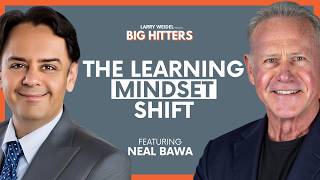
Neal Bawa went from Silicon Valley tech to a $660 million real-estate empire by treating learning as fun and obsessing over data. He built a consulting firm with 70% gross margins, then pivoted to real estate using tax depreciation and a free data platform that attracted 20,000 investors. Now he works 25 hours a week managing his portfolio through four executive assistants.
Chapters
Learning works better if you like doing it. Your mindset needs to be learning is enjoyable, learning is fun. And I can tell you that there's this belief that people have, oh, I just don't like learning. Well, nobody likes learning. I don't like it either. My point is, I have over time structured myself and given myself a lot of positive news about when I learn, this good thing happens. When I learn, this good thing happens. When I learn, this door opens. When you're constantly in your mind rehearsing what the end result of learning is, over time, the synapses in your brain rewire. So learning becomes not just acceptable, but enjoyable.
Welcome to Big Hitters. I'm Larry Weidel, and this show is for people who are done playing small. Each week we break down what it actually takes to win at a high level, the decisions, the discipline, the adjustments that separate those who almost do it from those who do it. No theory, no fluff, just straight talk from someone who spent 50 years building winners. If you're serious about momentum, you're in the right place. Let's get into it. Hello everybody, let's have some fun today talking with Neil Bawa. Hello Neil.
Well, hello Larry, thanks for having me on the show.
And by the way, congratulations on— I don't know when I've ever talked to anybody who has such a— done so well in so many different things in the commercial real estate, in the build-to-rent market, the teaching. You know, you've got your university, you've got your bestselling book, you've got a lot going on. You built a $660 million, according to figures we've got, is probably a lot more than that by now, commercial real estate portfolio. So congratulations, man. That's a lot of, a lot of work to cram into one lifetime. So obviously you've got, you've got a lot of drive and I've got a lot of ideas. And fortunately, you know, you know, I don't know about you, Neal, but I'm very grateful we're at a time and place in history to where we can actually do things like this, because you can imagine how it would torment you to have these ideas and not be able to do anything with it. But congratulations. And how did you know? Like I was talking to you off camera, is we like to know what, you know, what in the world is the thought process a person like yourself, you know, what can we learn from how you sort through options, what, what you see as priorities and things like that. So how did you— would you have ever imagined that you would wind up with this kind of high-level success in so many different areas?
Not at all. I mean, I, you know, I'm a technologist, data sci— computer science is my degree. Data science is my major. And I ran a tech company in Silicon Valley from 1999 to 2014. I wasn't thinking about real estate. I wasn't thinking about building large apartment complexes or buying or building $100 million buildings. I was happy with my company. It wasn't a startup. It was a company. And we went from 1999, we had 10 employees. And then when we sold the company to private equity in 2013, we had about 400. So it was a company that we grew. Over time as a tech company. And my focus was simply on growing my company. I was the junior partner of the company. And as we were doing it, I learned a bunch of things that I was able to apply to real estate. But there were also some interesting things that happened along the way. But what's most important, the learning that you just talked about, Larry Weidel, the learning was simply this, you know, I'm a technologist and, you know, I look at everything from the perspective of data and measurement. So I have a saying. I've only ever come up with one saying in my life, but I think it's a good one. And the saying is, Larry, the saying is that the Bible got it wrong by one letter. One letter. Larry, it is not the meek that shall inherit the earth. It's the geek. It's the geek, right? Richest man in the world, geek. Second richest man in the world, geek. Third richest, geek, right? You see a pattern here, right? The geeks are taking over the world because we measure everything. We constantly measure everything, right? My fundamental focus is this. You cannot manage what you cannot measure. Anything that you think you're not measuring, if you think you're managing it, that's a delusion. You cannot manage what you cannot measure, right? And the second feeling, the second mantra that I have is Data beats gut feel by a million miles. Data beats gut feel by a million miles. Not by this much, not by a mile, not by 100 miles, but by a million miles. And these two concepts and ideas, I've luckily been able to apply it first to technology, sold a very successful company, and then I've been able to apply that to real estate and actually has been more powerful in real estate than it was in technology. Surprising.
Well, why that's so powerful is that we all in business are operating under a gravitational principle that too many people don't recognize or respect, and that is grow or die. You know, there is no such thing as maintaining and without going stale, going and going pretty soon start to unravel. And so without the data, you won't know where the bottlenecks are, you know, where, you know, the systems are getting overloaded and what basically you don't know what needs to be fixed. Next. And so because you're always fixing things, what were you concentrating on? Well, take us in. Okay, let's, let's do this. How did you get the job as the junior partner at a technology firm that only had 10 employees? How did you even qualify for that?
I happened to be in, in 1997, and I was in India and I was teaching Cisco engineers how to build large networks. And one day I get a call from Silicon Valley saying that we were training 300 people here, but our lead trainer and the secondary trainer both went sick. They got the same infection from each other, and we need somebody here for a week. And I said, well, it takes a year to get a visa from India to the US. And they said, no, we know somebody. And I'm like, you'd have to know somebody really higher up. They said, no, that's fine. Why don't you in the next hour get into your car and drive to the embassy to the US Embassy. It was about an hour from my house. And I said, I mean, this is going to be a waste of my time, but I did it anyway. I get there and there's a person standing outside the closed embassy and he's waiting for me. He says, did you bring your password? Grabs it, goes inside, comes back in 2 minutes and says, here's your passport, here's your ticket. And I was on my way to the US to teach 300 Cisco engineers how to configure their routers. And even though my whole gig was supposed to be for a week, after which I was supposed to go back in India, By the time the class finished, I had 6 or 7 offers from the people that were in the room that were taking the training from me. And, uh, and, and I accepted the offer from the company that, you know, the 10-person company wasn't the most amount of money, but you know, it's not about the money. It's about the people. The person that offered me that job said, I have this great vision and I am missing this one cog. And I think that you're that one cog. And he described the cog to me in great detail, Larry, great detail. And I said, I am this cog. So he plugged me in and we were able to grow the business from 10 people to 400 people. We worked together harmoniously, him as senior partner, me as junior partner for 14 years.
Wow. Now let me ask you this. How— I, I can see I have to dig back a little step further. How do you get to the point where you're so well known on the other side of the world in this particular area? How did you rise to that level of prominence in India to where you would be on the radar for that kind of phone call?
By luck, I mean, I came out of— one of the challenges with India is, you know, we produce such a huge number of computer science graduates that when you could get out, not everyone can go into programming, right? You'd think that, you know, I'd go into programming and the jobs weren't there when I came outta college. So I'm like, okay, let's look at other areas in the computer science field. And there was this job opening at a very large company, 27,000 people, for a network engineer. And at college, I was in charge of keeping the network up for the whole college, for the, for the teachers and the students. So that, that was a voluntary job. So I basically said, you know, what's the harm? I'll go in for an interview. And, and that's one of the things you have to have a mindset where you're like, you know, I may not be perfect at this, but you don't really know what the other guy sees in you, right? So even though I was a software programmer, I walked into this interview and they said, so do you have any experience in network engineering? I said, no, but I kept my college's network up and it was about, you know, 600 nodes. It was a big network, blah, blah, blah. And they're like, but you didn't get paid to do that. I said, no, but why would I need to get paid to learn? I was a student. They were paying me to learn. I got to play with, you know, half a million dollars worth of equipment that nobody would have let me touch if I hadn't volunteered. And the guy said, you know, I like your attitude. We'll teach you the rest. You're starting tomorrow.
Wow. And obviously you took to that like a duck to water in terms of taking advantage of the opportunity.
I did. And there's one thing that my mom always says, you know, I come from a family of teachers. So my wife's a teacher, sister-in-law's a teacher, father-in-law, mother-in-law are teachers, and my mom's a teacher. My mother always says that the best way to learn something, Neil, is to teach it. And I have used that advice throughout my life in everything that I've ever done. That the best way to learn is to teach. So what I did was when I started this job, obviously I had to learn a bunch of new things. I didn't really know network engineering, so I learned it in the first year. And then I decided I'm just gonna start teaching it to other people. So I went to a local network engineering institute and I said, I'd really like to start teaching and whatever rate you're paying your trainers, I will work for you for 6 months for 10% of that rate, right? 10%. So you're essentially getting me for free, but I don't wanna work for free, so I'll take 10%. And they said, okay. And I started teaching there. And within 3 months, I had learned so much that they basically said, can you please come and teach full-time? We'll just pay you on a regular basis. And I said, no, I love my engineering job, but I can teach for you in the evening. And that allowed me to build 2 different skill sets, one as a network engineer and the other one as a trainer for network engineering. And it was this secondary skill set, this secondary skill set that took me to the United States.
Now tell me this, how did you learn so much teaching other people in 6 months? You said, I just learned so incredibly much. How did that— explain that process.
I think the first thing that you have to understand is learning works better if you like doing it. Your mindset needs to be learning is enjoyable, learning is fun. And I can tell you that there's this belief that people have, oh, I just don't like learning. Well, nobody likes learning. I don't like it either. My point is, I have over time structured myself and given myself a lot of positive news about when I learn, this good thing happens. When I learn, this good thing happens. When I learn, this door opens. When you're constantly in your mind rehearsing what the end result of learning is, over time, the synapses in your brain rewire. So learning becomes not just acceptable but enjoyable, right? So I've basically throughout my life basically told myself a million times, learning is awesome. Learning is how I thrive. Learning is how I get better. And that allows me to be a sponge and allows me to basically pick up huge amounts of information. But think about it, I have a $660 million real estate portfolio and I'm a tech guy. I'm not a real estate guy. I've never been a broker. I don't have a broker's license. I basically fell into real estate to save on taxes 'cause I, you know, I live in Taxifornia, big fat tax salary. I fell backwards into real estate to save taxes for myself. So if I didn't have the learning capability and didn't have this desire to learn, I wouldn't have been able to go from one successful career where I made millions of dollars to another one where I've made a lot more than that.
To me, the way you look at learning is you're getting, uh, uh, answers. You know, you're getting keys to the kingdom. You know, you're getting at things to basically insights you can use the rest of your life. You're really elevating yourself, separating yourself from everybody else. And like you said, as long as it's something you're interested in and, you know, information that you're going to want to have. And, you know, as you've progressed from that, sir, so that you elevated yourself from teaching, you picked up the teaching skills and what did you find that you had never taught before? You come from family teachers. What did you immediately realize you liked about teaching where you would continue to put yourself in that process and spend some time on it?
I think what I loved the most was the challenge. When you're a teacher, many, many times you're teaching a class where you don't know the answers to half the questions that students are asking. So early on, you may give them a vague answer, or you might just say, I don't know the answer to that. And then you basically have to go and research, usually in the next hour or, you know, at the next break, to go and find out the answer to that question. And what I find is that The retention that you have when you answer questions from people is 100 times the retention that you have by just reading something. You read a bunch of things, 99% of what you read, you're going to forget. I'm going to forget. But if somebody asks you a key question and you are embarrassed and you don't know the answer, and then you go find out the answer, and then you answer that person, and then you make them happy, you're never going to forget it. The retention level for teaching is incredible.
Yeah, absolutely fascinating. And I couldn't agree more. You know, in a teacher-learning situation, the teacher is the one who does the learning. And so, you know, I've said that all my life. So you now are in a different situation. You're over there and now you're going to get a new job inside of a company in another country. You're going to be doing something you hadn't been doing, you know, all full time. And you're not teaching, but you're now working. You got to produce. You know, you're a junior partner. You got to grow this thing. So tell me about, you know, when you walk in the door there, you know, it's like I always think of being in a new situation. It's like getting off the plane in Las Vegas and you're walking into a casino and all the ding, ding, ding, ding, ding, ding, all the information and sensory things are coming at you fast and furious. You've got to sort through it. How did you— you hit the ground You get in there with the, the company. How did you make sense out of the thing and get to where you could start being productive?
Well, you know, when you're hired as a trainer, your job is to teach. And for the first, uh, year, that's what I did. You know, I, I taught, um, classes.
Oh, you still, you still taught with the new, you still taught with the new company?
With the new company.
Yeah.
Right. They, so they hired me as a trainer and then I, I, I pitched an idea to them. I said, look, it's, it's 1998. Everybody wants consultants. How about this? I want to go out and hire people that I interview myself at $30 to $50 an hour, and then I'll train them, and then I'll place them. And they said, what does that mean? I said, look, people like Cisco, they're very hungry. They need hundreds of these guys. So we're just making money right now, maybe making $2,000 a week on these people. I want to make $20,000 a week on these people. I want to make a lot more money. So here's what I want to do. I want to hire people at $30 to $40 an hour. I want to teach them network engineering. And then I want to place them at, you know, major companies like Cisco Systems and Microsoft and these companies. And I want to charge $150 an hour or $200 an hour. They said, that's a huge number. These people, you're only paying them $30, $40 an hour. You want to charge $150? What if they don't know the answers? And I said, that's me. What I'm going to do is I'm going to have a phone and a remote connection ready to go all day long. And when they get stuck, they just have to call me and I will remote into their system and fix the problem and show it to them on the screen while I'm fixing it. And they said, can it be done? Can it be scaled? I said, yes, I think it can be done. Give me— just let me hire 5 people, $30 an hour. That's $150 an hour. It's going to take me about a month or 2 to train them, and then I'll put them out there and I'll basically support them. Basically, I'll be their, their, their, their second employee that is not visible. And that second employee is worth more than $150 an hour. So it was so successful, Larry, that in a year from making that proposal, I had 200 consultants out there and I was paying them $30 to $50 an hour and billing $150 to $200 an hour and also billing $400 an hour for myself.
Wow.
And we created a completely new consulting business, which, by the way, and I'll, I'll, I'll stop here, but it fell apart in 2001 after 9/11 happened. But for 2 or 3 years, we were making an absolutely shocking margin, like 70% gross margin. Yeah.
Unbelievable. So now where did you get to, how did you get to the point where you said it's time to exit?
So, you know, the exit actually happened in multiple ways. So first, when 9/11 happened, you know, so before 9/11, you know, when the tech market crashed, you know, 2000 dot-com crash, all of a sudden we lost 80, 90% of our students. And so we were considering shutting the business down because instead of 10 people in a class, which is very profitable, we now have 2 people in a class, which is very unprofitable. You still have to run the class for 2 people, but you're not making any money. You're losing money. So the idea that I had was there was this little company called Google, which only had 50 employees back then, and they had come up with this concept of pay-per-click advertising. And so, you know, and we were in Silicon Valley, so we'd heard about this company called Google. They were a tiny little company then. And we were like, hey, how about— this is a proposal I made to my CEO, and to his credit, he accepted immediately. I said, let— allow me to give away free airfare free hotel, and free food to every customer that is flying in for my class. And he said, so how much does that cost? I said, well, for a $3,000 class, I'm giving away $1,000 of free stuff. And he said, why does that make sense? I said, because right now every class has 2 people. Now I can have 8 seats of people coming from outside, and I'm earning about $1,800 on them instead of $3,000. But that $1,800 is net margin because I was holding the class anyway. So now all of a sudden I had about $15,000 of additional net revenue come in from each class. We called it a bootcamp and we ran it 12 hours a day, 7 days a week. And once again, within a year we had 2,000 bootcamp students a year. And, and then the margins went way, way up.
Now, are you teach— now how is this going? Are you doing all of the teaching there or did you have a staff of teacher?
Till I, I hired a bunch of trainers. I only actually taught for 18 months after that because I was so heavy in, in the consulting. I became the trainer. The training manager, then the training director, then the training, the VP of training. And then, uh, 2 years into my time at the company, I became chief operating officer. So I, I had staff.
Well, and the thing is that by offloading, you for— you create a situation where the people underneath you are gonna be getting better all the time because they're gonna be teaching.
You, you have to build a management structure under you. All right. I like flat management structures, but there's still gotta be a structure under you. If you are billing for your time, you're not going to maximize your ability, your skills, your potential. So one of the things that I love to do, and there's a lot of people that come onto your podcast and basically say, I work 60 hours a week or 70 hours a week. Larry, I work 20 to 25 hours a week. That's it. That's a standard week for me. But I have 4 full-time executive assistants, 4. And I keep them so busy that each one of them averages 55 hours a week. My, I, I get paid for my mind, not for my labor. So I keep 4 executive assistants extraordinarily busy, but I work 25 hours a week and most of the time I'm just thinking about what work to give my executive assistants next. That's, that's a lot of work for me cuz I spend 10 hours a week thinking about what's next for them.
Right now each of them are, are they in charge of your different arenas? Because I know you have the commercial, you have the, the build to rent, you have the, university. And so are each of those in charge of a different area? Is that how you—
They typically are. Yeah. So I mean, obviously it makes sense to specialize people in different sorts of areas, but they do all kinds of things. They don't just— these executive assistants, Larry, they don't just do work stuff. So for example, I'll give you an example of what happened today. So I got a pinched nerve because I do a lot of very heavy Pilates, very, very strong, very heavy springs. So one of my nerves in my spine got pinched, and so I had to get an MRI. So one of my assistants is roaming around the Bay Area looking for MRI dates for me. Another one is buying tickets for my vacation to Vietnam and India and using points. I have tens of millions of points, so she buys these tickets using points so that way I get business class tickets for free. And then I have a third one that is selling one of my properties in Chicago. So obviously they're doing their day job, which is to work on the company and work on the projects. But I also give them dozens and dozens of things to do with my life because I'm a life hacker. So I'm always constantly looking at ways of improving my life. And I also have my staff work on those things for me.
And, uh, let's talk about as you went out, you know, you do this exit, what was the first thing you did? You know, we've got a portfolio of, of things here. How did these unfold? You know, how did you, what, what, what was first and what led after that? And, How did that, that fall into place? By the way, if you're still listening right now, you're different. You don't just consume content, you're actively looking for an edge. And that's who I built the Big Hitter community for— not people chasing motivation, people chasing momentum. Not theory, proximity. Proximity to operators who are actually in the arena making real decisions and winning at a high level. Inside Big Hitter, you get conversations we don't have on the podcast, direct access to people who build what you're trying to build in a room that holds you to a higher standard every single week. This isn't a hype group. It's not networking for the sake of networking. It's where serious people go to sharpen their thinking and compress their timeline. If you're done just listening and you're ready to be in the room where it actually happens, head to joinbighitters.com or click the link in the show notes. The right room changes everything. I'll see you inside.
Sure. As I said, I got into real estate backwards, right? Most people start in real estate, they usually start with a fix and flip, or they start with a single rental home. My first experience in real estate was not in real estate. In 2003, we were making a huge amount of money and had a massive tax bill. So we decided we're going to build our own campus. We're not going to be You know, we don't want to be a tenant with somebody else's office building. So in 2003, my first job in real estate was not a single-family home. It was a 30,000-square-foot build-from-scratch campus. I had to build it from scratch for our own use, for my company's use. Training rooms, conference rooms, you know, cubicles, sales areas, marketing areas, operations, IT infrastructure, data center. All of those things I had to build from scratch, and it made me understand two things. One is there's incredible value that you create when you build something from, you know, just dirt to a beautiful building. You create a lot of value. And the second part, which has never gone away from me, is that real estate is the United States' biggest legal tax scam. Biggest legal tax scam because depreciation is incredible. I was paying, you know, my salary was $350,000 plus, you know, bonuses and shares. So I was paying, and I live in Taxifornia, right? So I mean, can you imagine what 13.3% to California, 37% federal, I'm paying 51% in taxes. And then all of a sudden I build my first building and then next year I didn't pay anything in taxes. Yeah. Right? And that shocked me. I was like, how is this legal? What this depreciation thing, it's gotta be, it's gotta be illegal. And then I had to sit down and learn depreciation. I went to my CPA, I paid him and he explained to me what depreciation. And I'm like, oh, this is completely legal. Wow. All of a sudden I'm not paying taxes anymore. And I'm like, let's build a shit ton more campuses. So I built 6 more, 6 more.
Now, what were you teaching in this? Is this the multifamily university or, or what?
No, this was tech.
What was this?
It was just tech and healthcare. It was tech and healthcare technology. So it was a healthcare healthcare technology and core technology. I wasn't doing multifamily then, right? I'm just telling you how I got into real estate. So, I get into real estate, I realized that depreciation's a huge benefit. All of a sudden, I have all this extra money. And so, I'm like, "Okay, now I have all this cash because I'm not paying much in taxes anymore. Let me get further into real estate." My timing was incredible, Larry. Like, I made this decision 2008 when everything was near 80% off. Okay, right. And I was like, okay, I want to get into real estate, but I want to do it with data because I, you know, people are— this guy's telling me so-and-so city is good. This guy's telling me so-and-so city is good. I don't think these people know what they're talking about because they're not data-driven. So I said, I want to be known as the real estate data guy. And so in 2009, I started my journey as a real estate data guy. And for 4 years, I did it for free, just publishing data for people, not having anything to sell, no product, no service, no investors, nothing. I was just publishing data Wikipedia style, and people in meetups and people in conferences were benefiting. And when in 2013 I sold my company and had a huge tax bill, I was like, okay, now I'm going to buy multifamily.
Yeah. And so how did you make the entry in and how did you, you know, you were in commercial now and you are in the build-to-rent. And so talk about those interests, those priorities there. Sure.
So first thing is, you know, when you want to make the transition from being full-time technologist, you know, CEO of a company, a partner, and you want to get into real estate, you've got to have a product to sell. You have to have a service to sell, right? So to me, I was like, okay, you first, I need a service. And second, I need an angle or a method, right? There's 1,000 or 100,000 guys in real estate trying to sell people on some pitch. How do I differentiate myself? So differentiation is very important in life because that's, that's how you basically say buy my service. When I did the bootcamps, I said food is free, air is free, hotel is free, right? And you're still paying the same amount, right? That differentiated me and allowed me to get 10 times as many students. With multifamily, I said, if you follow me, you will get access to multifamily data that costs $50,000 to $100,000 a year in subscription. And so what I did was I became obsessed with the idea of aggregating real estate data and ranking cities in the United States. So like, if I was to ask you, Larry Weidel, right, I would say, where do you live? And you're like, I live in Ohio. Okay, well, Ohio has 4 main cities, right? You got Cincinnati, Cleveland, you know, Columbus, and Dayton, right? Tell me which of those cities are the best for real estate. Rank all 4 of them, right? You wouldn't be able to do that easily. You might have a guess. Right? But I can tell you the exact ranking is Columbus is the best, Cincinnati is second, Cleveland is third, and Dayton is fourth. Now, how can I tell that? That's because I invented a system and I call it Location Magic. It's completely free. Nobody has ever been charged a single dime for Location Magic, right? Because I believe in giving information and knowledge away. That's what my mom used to say, that knowledge is meant to be given away. And so I've always only given knowledge away. Multifamily University does not have a subscription. It is free and free forever for everyone that uses it. So what we did was I said, I'm going to first find a way to gather real estate knowledge about every city in America. Then I'm going to figure out how to rank cities, and then I'm going to figure out how to give it away. And I'm going to build a brand and I'm going to build a group of people that are interested in data-driven real estate investing. And by the time I did that for 4 years, I had built a database of 20,000 investors. So because of that, every project that I've done since 2013, which was my first project where I had investors, has been sold out.
Unbelievable. So the, uh, uh, what do you see as your business though? I mean, you're talking about, you love the research, you're giving it away, uh, you do the training. What is the business that you wound up, you moved into?
We buy multifamily properties that are older and we rehab them and we build new multifamily properties, including townhomes. When you say build-to-rent, that essentially means, you know, townhomes instead of apartments. So build-to-rent is townhomes or single-family homes for rent, whereas of course apartments, everyone knows what apartments are. So I build apartments, I build townhomes, but I also buy apartments. Currently have 1,300 investors and I've taken $330 million of their money to do this.
And to do this, is this— is it the, you know, there's an explosion of— I'm in West Palm and, you know, this is like little New York or, you know, is becoming a like the new Hudson Yard because Stephen Ross moved to Palm Beach and he's decided West Palm is going to be the hottest place in the country. And he's been behind the boom of, you know, these luxury high-rises everywhere. But every, you know, everything seems to be— the bulk of them seem to be for rent, not buying. And that seems to be a popular thing around the country where Larry Weidel, uh, people are renting, not buying. What's your take on that?
So people want to buy. Nobody wants to rent. Everybody wants to buy. So, but, but what's happened is over time, the American middle class has been decimated over the last 10 or 15 years. I'll give you some numbers since COVID right? In the last 5 years since COVID or maybe 5 and a half years, the increase in incomes have been about 20%. but the increase in home prices have been 120%. So if you have a 20% increase in incomes, which is not bad for 5 years, so good, but at the same time your home prices go up 120% and show no signs of coming down, you end up with an entire American middle class that are now forever renters. Now, these are not poor people. These are pre— people who in a previous generation would, would have been homeowners. They have middle-class incomes, often over $100,000. In all previous American generations, these people were homeowners by the age of 35. Today, their chances of ever becoming homeowners are maybe 2 to 3%.
Yeah, that's sad.
It's incredibly sad. Like, it is a catastrophic crisis for this country that neither party looks to address. Neither party— they talk about it, but I don't see, like, you know, like, for example, the Republicans are doing something about immigration. The Democrats did something about healthcare. Neither party actually does anything useful about housing as a crisis. They just talk about it, and hopefully that gets them votes. But no one has actually done anything specific or, you know, that would fix the housing crisis. We are 5.7 million homes short in this country, and that gap just seems to widen every year. Right. You know, based on just the fact that home prices go up faster than inflation.
So what is your thing that you are trying to drive the most right now that you get the most satisfaction from growing? That you're involved in?
Initially it was apartments. So first, you know, this has been an evolution for me and a lot of it has been very depressing. So first I was like, I'm going to buy really old apartments that were from the '70s and the '80s, and I'll rehab them and make them better, and I'll put new renters in. And by doing this, I'll improve the country's, you know, rental stock. And I did. And I failed because what I ended up doing was actually making all of those apartments more expensive. When I, when I bought them, the rents were $800. By the time I sold them, I'd made a shit ton of money for my investors, but now the rents were $1,200. So essentially, actually, I'd made that apartment less affordable. And I hadn't in any way increased the stock of the country. The country has a certain number of apartments, you know, 20 million, 30 million is a number that's often mentioned. I hadn't increased that number by one. So I said, okay, well, this isn't, this isn't how I'm going to help my, my adopted country. I'm going to increase the country's stock. So then I started building apartments and I built apartments, thousands of units of apartments, and ended up with the same exact problem. By the time I built the apartments, the apartments were so expensive that only Class A people could live in them. People who are renters by choice were the only people that could live in them. So yes, technically I did help the country by increasing the stock of apartments by thousands. But I, I still wasn't helping the middle class because the middle class couldn't afford to live in my brand new properties. So that was— so then I evolved into my third stage. In my third stage, I said, are there any, any places in the United States— I'm, I'm a data scientist, right? Are there any cities in the US out of 1,016 cities and 293 metros, are there any where I can build not apartments, but townhomes, and I can build them for the middle class. And I defined the middle class as $60,000 to $85,000 in income, right?
Okay.
Where two people can even work at Starbucks and they can hit $60K, right? Right. And I, and unfortunately the, the, the answer is both good and bad, Larry. In over 97% of the continental United States, that is a dream. I cannot build townhomes. Wow. Luckily, there's still 3% remaining. And so I now focus my attention on that 3% where I can build townhomes, not apartments, townhomes with a garage and a backyard for renters. And those renters are in that $60,000 to $85,000 band. So there's only certain markets where this works because construction costs are low, property taxes are low, insurance is low. And so data science has allowed me to sort through 1,000 cities and focus on half a dozen.
Well, you know, the— this problem plays out all over the country. I alternate between Palm Beach, Florida, and Aspen. And a good friend of mine in Aspen had this big lake property and about 20 minutes south of town. So he took that and he said, I'm going to build affordable housing. So he, he did a whole huge development. By the time, by the time he got it done, the houses— this is going to be for employee housing and for, you know, for the good of humanity like you're talking about. By the time he got it done, the average price on these affordable units were like $1.5 million. And the only people who could afford it, you know, were from out-of-towners who vacationed or whatever.
I knew I had to find a way around it. So now you gave me an example, Larry. Can I give you an example?
Yeah.
Okay.
Please, please.
One of those markets, that 3% of the United States that where my magical dream is achieved, one of those markets is Idaho Falls in Idaho. It's in Southeast Idaho. It's the second largest city in Idaho. And in Idaho Falls, I have built townhomes where the average rent of those townhomes, these are brand new 3-bedroom, 2.5-bath townhomes. Each has 1-car garage and a small backyard. And a play area and a dog park. The average rents right now are $23,000 a year. So if you're earning $69 grand a year, you can easily afford to live there. And I'm very proud of that. I'm prouder of that than all these other huge, massive $100 million projects that I've built. Because for the first time, you know, I was able to serve middle America. For the first time, I was able to serve You know, American teachers and firefighters and police officers, and they didn't have a rent burden when they rented a beautiful brand new property with granite countertops and 9-foot ceilings. You know, they had a little backyard for the dog to poop and they had a garage to store their, their, you know, their boat or their car. And that has given me immense joy, immense satisfaction. It's less profitable than the mega apartments. But I mean, I'm at the point in my life where joy is a big, big deal.
The thing is that I'd like to point out that even in your life, you know, from your parents, this, the other ideas, words and ideas are really important to have, have to get yourself programmed for success. We need more high achievers. We need more people who can solve these problems because No one or two of us recognize you're talking about is going to solve it. We need, we need some people to come out of the woodwork who can come up with these solutions. But, you know, the ideas of building on these ideas that have been passed down from the past where people have worked with through these things. You put out a book, Lessons from Thought Leaders. What was behind that book?
Firstly, everyone wants to tell their story, and I wanted to, you know, have a chance to tell my story. But I wanted to find people that were like me. There, you know, there's a lot of people, everyone likes to say that they're data-driven. And to be honest, I've found most people are not data-driven, but they like to think of themselves as being data-driven. I wanted to gather more people that were like me together, like-minded individuals, because sometimes when you want to do something big, you want to climb Everest, you do it as a team. And that's why I wrote that book, and it's been very successful for me.
Yeah. And so you find yourself now with your success doing a lot of speaking. And so says here you're, you're speaking at over 50 events a year. That's, that's a, that's a load right there. You don't need to work more than 20 hours a week if you do that kind of speaking.
Luckily, more than half of them are virtual now, which means that I can basically be in my t-shirt and speak. But I do fly around the country. I, you know, the Best Ever Conference, which is the largest conference in commercial real estate. I'm opening the conference on the February 18th next year. So I like doing that because I don't go to conferences necessarily to speak, Larry. I go there to learn. So, you know, I mean, and I usually don't want to connect with the people that are sitting down there. I want to connect with the people that are on stage. They are my peers. And I learn so much from the people that are on stage.
Yeah, and it's easy to do that if you're speaking.
Very easy to do that. Very easy because they have speaker events, right? So they, you know, there's speaker lunches, and speaker dinners, and you have a chance to connect with all of those people.
Green rooms, things like that. So talk about now the, you know, your, your experience in overcoming— what would you say the hardest thing that you've looked at in life that, that, you know, challenge for you in terms of overcoming that obstacles everybody, you know, the way to get everybody to love you is when they find out that you had to overcome some tough things in life. And so if you're this very smart, high energetic, problem-solving dynamo, a lot of times people think things are easy for you. In my experience, I find out that people like that really have dealt with even more problems than the average person would even. But they do it with such high speed and energy. They just kind of— nothing stops them. But what kind of things have you run into from the economy, from health, from finance, from flawed concepts, from people letting you down? What would you say, you know, really stung you and set you back?
I think the biggest thing has been— you see me today, I'm 50-plus years old, 53 years old. and I'm more of a finished product today. But I came to this country when I was already 27 years old. Now, you don't hear much of an accent. Obviously, there's an accent and people can recognize it, but it doesn't stop you from understanding what I'm saying. But that wasn't me. I had the typical Indian accent. So think heavy South Indian accent, right? When I'm coming here and I've got to get my ideas across in this country, and first I've got to get enough retention for people. I'm standing in a classroom and there's 10 Americans in front of me. And I have this big accent. So the first thing that I had to really overcome is to learn to speak like Americans. And this is not unique. I mean, we have so many British actors that like all the entire cast of Game of Thrones were British. But when you listen, these people have accent coaches. And so I went and found an accent coach. And Silicon Valley has lots of them, just so you know. Like we have the most number of accent coaches of any place here. So I paid somebody $2,000. And he said, Neil, you have excellent grammar. You know, I came out of a top school in India, so obviously English was taught to me since kindergarten. So it wasn't my language, it wasn't my sentence structure that was the issue. It was speaking like Americans, being like Americans. You know, the little nuances of how Americans speak as opposed to, let's say, Australians or British even. Sometimes I have trouble understanding Aussies, but they're speaking in English. Right. But, but, but they speak the Australian way and we speak the American way. And I had to basically learn to do that. What are the styles and methodologies? Because what I learned is if you have great ideas, the ideas are not important. You have to be able to transmit them. So I've been on this journey of transmission. The other thing that I did was once I learned how to speak more with an American accent and make it easy for people to understand me, I then had to learn how do I How do I go from being an introvert guy that wants to sit in a cubicle and write code to being a person that stands in front of, you know, I often speak in front of 3,000 people. How do you do that without being terrified? Because I was terrified, right? And the way around that was I had this idea that if I was basically to open a meetup group, then maybe the first time 4 people will show up and I have to speak in front of 4 people, which is easy to do because you can look them all in the eye. And then maybe the next time you get 10 people and then you get 20. And that's exactly what happened. I opened a meetup group inside my technology company where I had classrooms already. I had projectors, I had, you know, screens. So it was already set up and I opened a meetup group and over 2 or 3 years, the meetup group grew to a standing-only room and, you know, 100 people would show up. But it started with 2 people. So I was able to overcome this extreme fear of standing in front of people and speaking and being challenged by them and people just saying flat out to your face, no, you're You're an idiot. You don't know what you're talking about. And that happened to me lots and lots of times, right? So a lot of it, in my case, my challenges have not been around knowledge. Luckily, you know, came with a bunch of knowledge as part of my degree. It's been about first getting Americans to understand me and then getting Americans to fully believe and buy into what I was saying. And that's a process for people like me that are bookworms.
Yeah, it's interesting that you would bring that up because again, people would not expect that was ever an issue for you.
Oh, no, it was a huge issue. I mean, you should see me from 25 years ago.
Well, I appreciate— I've got, you know, a couple of few more things I want to get into, but we're going to save that for our second session here with— for the community. But let's wrap this up. What would you like? We've covered so many fun things today, and I think you've opened up a lot of people's eyes to possibilities. Out there, what would you say that you would like people to take away from this session today? And they're on their journey. They're trying to make good things happen, great things. They want— they want to move up to where they don't have to worry about the price of their house. They're frustrated. They're frustrated about not being able to afford the kind of house, the kind of life, and they're willing to do whatever it takes to move up.
There's only one thing that you need to do. I think you'll never need to worry about a price of a house, a price of anything in your life if you understand one fundamental flaw that more than 95% of people make. As we get older, we acquire a resistance to learning. As we get older, we learn less. And even the things that we learn, we tend to learn only in areas that we are comfortable with. You might say, I'm spending 2 or 3 hours learning. Yes, but how many radically new things are you learning? You're learning within your comfort zone. And so I want to tell people, that's why Multifamily University is free. You go there to Multifamily University, you'll see astonishing courses and you'll notice everything is free. It's like, how does this guy ever make money? Well, I make money from the 1% of my, my, uh, you know, audience that wants to give me money to buy my projects or build my project. The remaining 99%, I have no business model for you, right? You just go and learn. So go to Multifamily University and learn, but go to different places and learn. The biggest message that I have for you is learning is not about continuing to learn in one area every day. You need to have a bunch of different buckets to learn from. And if you do that, you'll never need to worry about the price of a house.
Yeah, I think we all get frustrated. I know I do. I've gone through different periods of my life. I said, I don't want to learn one I don't want to learn some new thing the rest of my life. I want to have at least, you know, I want to have some time to use what I already know. But then that lasted for like a half hour, you know. Good.
Because I mean, the big death is when your body dies. The little death is when you stop learning.
Well said. And we'll end it on that. Thanks so much, Neil. This has been fantastic. And if you have gotten some ideas from this and you want to follow up with Neal, where should they go?
Luckily, I'm the only Neal Bawa on the web. So as long as you get my spelling right, the first 1,000 links are about me. And if you, you want to go to where our learning university is, it's Multifamily University. And again, it's completely free. There's no subscription.
Absolutely enjoyable spending this time together. Thanks so much, Neal.
Thanks so much for having me on the show.
That's it for this episode. If this resonated with you, do me a favor, share it with someone who's ready to level up. Winners find winners, and the right conversation at the right time can change everything. Want to go deeper? Join us inside the Big Hitter community at joinbighitters.com. That's where the real work happens. And if you haven't already, subscribe so you don't miss the next one. Remember that you're either growing or dying, and there's no standing still. Keep winning, and I'll see you next week.
More from Larry









Rick Jordan on Self-Engineered Proximity, Cyber Security Moats, and Truth-Based Leadership

Fire Fast or Fail Slow: Kevin Brittingham Reveals the One Rule That Built a $100M Empire
