A framework for business owners covering leadership, management, and operations. The speaker pushes systemization: script your delivery, use position agreements to hire right, and track financials in real time instead of waiting for lagging reports.
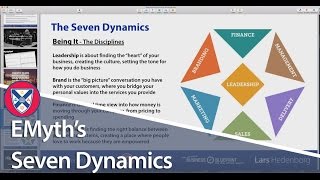
So the E myth 7 dynamics. So there's a being in it, so being it. And so these are disciplines and then there's doing it and those are activities. So the being it is the leadership. So that's finding the heart of your business, creating the culture, setting the tone for how you do business. Then there's brand is the big picture conversation you have with your customers where you bridge your personal values and the service you provide. There's finances, the real time view into how money is moving through your company from pricing to spending. The big one for me there is, and E myth doesn't talk about it a lot, is increasing your net worth. It's one thing that just nobody talks about, Nobody talks about it. And it's one thing that we have to have more conversations about because you just don't want to be 20 years from now doing it, doing it, doing it. And your net worth is a couple hundred grand or five hundred grand or even a million. I mean, you want to be 4, 5, 6 million deep 15, 20 years from now. So you can unplug and enjoy a pretty good exit strategy and scale down and not have to sell homes. The management is finding the right balance between people and systems, creating a place where people love to work because they are empowered. And then on the doing it activity side is the delivery, sales and marketing. So delivery is how you treat your clients, giving them an experience that they got more value than they paid. Sales is the dialogue you have with potential clients, having an honest conversation where you, you show off your services and how they are different. Marketing is everything your business does to attract new clients and that all of your quote unquote channels complement each other to maximize results. So this doing it, the activities, the sales and marketing is what we're going to focus on at the October intensive. I may bring in some delivery as well. A lot of us haven't really developed systems for delivering our services to buyers and sellers, especially on the buyer side. That's something that we are really, really focusing on now is how do we build out an extraordinary experience consistently. That's not dependent. It's dependent on our agents providing the service, but the way they provide it is scripted, quote, unquote. All right, so let's get into it. Here we go through some of the categories. The reason I mentioned the disciplines is because this set system strategy worksheet is organized along those lines. So there's leadership in terms of how will my employees discover their purpose in being here? How will my employees know what I want the business to be when it's fully developed, how will my company maximize time resources? How will we track progress toward my vision? How do I organize systemization of my business? How my employees learn to think systematically? What form or template will we use to develop every system? How? How do I inspire interest in my business and its plan on the inside? On the inside and the outside of it? How do I develop leadership in myself and others? How will we communicate the spirit of my business? And then there's branding. How will my company identify its target markets? How will my company understand how its customers think and make decisions? How will my company develop positioning strategy? How do we use marketing strategies to drive the company's growth? How do we spot opportunities for growth? How do we brand our services and our business finance? How will we monitor the vital signs of our business? The business tracker does a lot of that. How we move my company toward achieving our financial goals? How will my company manage the cash flow of the business? How will my company track financial results? For those of you that haven't implemented the business tracker and don't have a bookkeeper, I don't care what size you are, where you are in the principal agent, team leader, or corporate model, that is a big. A big miss. You've got to track financials. I already have financials from March back for all four of my businesses, five of my businesses, and it's what, the eighth? The eighth. So it's got to be that quick of a turn. You can't, you can't be looking at March financial financials in July when you decide to have like quarterly financials done or at the end of the year. How my company worked toward financial strength, including my own knowledge and skill in this area. How do we collect money? That's not so much maximize cash, manage levels that's not that critical. Then it goes into management. Select right people. There's some really good stuff. Attract, retain, create and revise position agreements, all of those things. So this is a real good one to go through. That's going to position you to be able to have a list of things to implement.