[CASE STUDY] How Fred Holmes built a Successful Team using Proven Systems
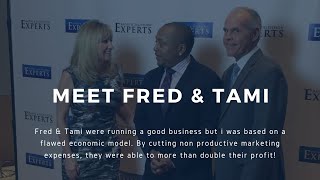
Fred and Tammy Holmes grew their Dayton real estate team from startup to 400 annual units by implementing EOS meetings, scorecards, and lead-source tracking. They cut Zillow spending by $21,000 a month and restructured personnel to move from low profit to consistent strong months.
All right, so let's get started. We're going to do a case study with Fred Holmes. He is, I guess, the coo, chief, operator, master of everything, Fred and Tammy Holmes up in Dayton, Ohio. And Fred, why don't you just give us a little bit of a background, Tell us about you and Tammy, your business, a little bit about you guys personally.
Absolutely. So Tammy and I have been a thing for about 41 years now, so. But most of that has not been in real estate. Started building a real estate team back in 2012, so not a long time at that. Tammy is the agent. She does a great job with people. And so we've got her in the right seat, client facing everything. And I'm just basically behind the scenes, I'm pretty invisible and just working on marketing, operations, processes. All of those kind of things fall on my plate. They stop right here.
And so 2012, and as we're recording, this is 2019. So what? Just to put a hook out there for the people that are watching and listening, what will you guys do in terms of units. Units this year?
So looks like we're going to close somewhere around 400 units this year.
Awesome.
We're probably. When we were at just the two of us working together, we might have been doing 60. So that was just seven years ago or so.
Awesome. So, Fred, when we started working together, what were you really after? What did you want to achieve? When we first started working together, yes.
We were looking for more clarity, I think was the thing we were still searching for. So we've been process oriented from the very start. And so quite a bit of the business was humming along pretty well that way. So during some of our growth period, we learned some lessons on that. That was all doing well, but we were flying, but just flying by the seat of our pants when it came to a little bit of the details and particularly in finances. So we just weren't seeing enough. We just weren't getting enough granularity there. I think we just weren't getting. We just kind of knew we were getting paid. We knew that was okay, but we didn't know where money was going. We knew there was a couple million a year in GCI coming in and not nearly enough of that being kept. Yeah, Definitely needed some help finding that.
Yeah.
So tell me a little bit more about that. So you. I think how long has it been since we've been working together? Not quite two years.
That's right. It'll be two years in December of 2019.
Yeah. So. And y' all had an awesome business. Right. So it was, you know, really establishing your market, doing good transactions, but maybe was there any. So did you really think there was a problem or was just kind of like you just felt a little insecure about the tracking or what was the problem when we started working together, Yeah.
I think as time went on, certain things just, we just got loose with certain things. When you got that much money flowing through the business, sometimes you just don't have to watch every penny. There just seems to be plenty to go around. You start making decisions, you quickly spend more money on marketing, or you hire people that maybe weren't necessary, or you pay people too much that are on your payroll. And the next thing we know, it wasn't as easy as it was before. There was a time where money was just stacking up and it just didn't seem that way. So I think we just became a little complacent with the money and just weren't watching it and we didn't have anything built in that was watching that. So we realized things were getting out of hand for sure.
Yeah.
And so what to get back on track financially, what did it mean for you and Tammy, business wise and personally?
Yeah. So we're at the place. So we're in our early 60s, or at least I am, and I won't tell what Tammy is, but we are at that age where you just can't, you don't have a long time to fix these things. We don't have another 20, 30 years in our careers. So we need this to be giving us the kind of security and financial stability and freedom that someone maybe doesn't care about if they're just building a profit optional business in their 30s. So we needed to get serious about it. Definitely. It wasn't just a thing where we wanted to make a living. We needed to put some money back. We needed to set things up.
Yeah, that's awesome. So let's, let's dig into the kind of. The stuff that we worked on together since we've been working together. You know what, what Three tools, systems, or even strategies or ways of looking at the business have made the biggest impact on your real estate business.
So we've gotten some good help with the EOS tools. So the traction book and all that is giving us a great cadence with our meetings. So our LTN meetings are functioning well now. It's also giving us, along with that, a nice continuity to our. Anything that we're talking about, anything that we're working on or projects, there's continuity with that Pick it up every week. There is accountability for everybody that owns those projects. And it's helped us to just continue living in this 90 day world where these things are, are just getting ticked off bit by bit. And there's been some big projects we've taken on since we've been with you. So. And that's. It has taken that kind of focus. So I think the EOS tools has helped us to get some of those things done that otherwise might have dragged on. Some of those details that came with some of these projects were ones that I might not have followed closely if it wasn't for what's already been built into a tool like that.
All right, so that's. And I'll ask you more questions about that. So that's number one is, is some of the traction tools. What's the second system or strategy that we've been working on?
Scorecards are great. So that's been helping us a great deal. And just getting, for me at least, I don't want to go through a bunch of different platforms and a lot of different places to just get a quick snapshot of where we are right now. Are we ahead or behind? Are we getting where we need to be making progress? So it's helped us a great deal with that helped us to. That's been another place where we've been able to contain costs or learn about costs even just to be able to drill down, to know, for instance, that we not only know how much a Zillow lead would cost us, but we knew how much a Zillow lead paid us, how much did we bring in from that? And ultimately was there even any profit involved in a Zillow transaction? And that's just one example. But we needed to know the cost of closing, not just the cost of acquiring that client, but how much did it cost to close that client when all the, all the leads were considered. So those scorecards have helped us a great deal with that. And now with very little effort, we were able to keep an eye on that across the board with a number of expenses that are significant ones.
Anything else that we've been working on.
I would say CTE is another tool that you've helped us with. So you've made yourself very available when. So that wasn't something that I dug in on. That was something that Lauren and Haley were working on. And along the way they needed some assistance with some of those things. There wasn't anything I could provide, provide help with, but it was great to be able to tap into some of the knowledge there that with you and others there that have helped us really get that under control. So CTE has been great just for just being able to pull that up at any moment. Very.
So let's talk about a little bit about the cadence. So traction and Gina Wickman kind of lays out it's nothing earth shattering, although it's a very elegant business operating system. And it's really just a series of annual meeting, quarterly internal leadership and then team meeting or state of company and then just kind of a weekly cadence. 90 day world like you mentioned, picking projects which are called rocks that you actually commit to and you actually have accountability around, around completing. Talk a little bit, because I think this is going to be helpful. Talk a little bit about like what life was like before, having that cadence in place to like what life is like now in terms of being the owner of the business. How does it feel? What's the feeling of owning a business that has a cadence versus maybe what it was like before?
Yeah. And so we're a small office here, so communication isn't so much a problem, but it could happen haphazardly. So someone's having something, they come up with an idea, okay, let's just run into Fred's office and talk about this. And so there was a lot of urgent meetings, not always talking about the important things. So this has helped us to really put things in perspective. We know what our important things are and those are the things we're giving regular attention to. So with each of our meetings, we're looking at our rocks. Each of us own a rock or more, one or two. And then we're just talking each meeting about what kind of progress we're making along those milestones to getting that accomplished. So along with that comes a few to do's and a few things that need to be done each and every week. And we're watching those as well. We're each taking responsibility for that. All that's kept in a place where we can see it, we can revisit it during the week. We can make sure we're moving ahead on whatever it is that we need to be moving ahead on that particular week.
Yeah. So I want to make sure, you made a comment there that I want to make sure that everybody knows what you were talking about. So you're talking about the. That Eisenhower grid where there's like one access is urgent and then one access is important and generally business owners. So it sounded like before getting this operating system in place it was all urgent, maybe not important, like whatever was coming on your desk, whatever deal was blowing up, whatever agent was, whatever you were sort of dealing with what's in front of you versus now you're able to work on the not urgent, but really important. So you're able to work on a system that might help you a year from now. So that's really powerful. How has that maybe impacted you and Tammy personally? Has it sort of, you know, sometimes the stress level with entrepreneurs or business owners is always up here, and then you're kind of like flip the lid sometimes. Has that kind of translated into your personal relationship being a husband and wife partnership?
Yeah, we're seeing progress. Yeah, still a work in progress. We're not where we want to be yet, but we're definitely seeing progress in that area. So. And so Tammy's getting to the place now and the profits getting to the place now where Tammy's backing back, taking on different roles in the company. And that's been a good thing. So, yeah, I think we're, I think we're making good progress in those areas for sure. But it, it just doesn't feel like, like something could fly apart at any moment. We kind of know what's happening and we know what's going to happen next, and it's up to us to decide what's going to happen next, not just we see what the door is going to fly open and someone's going to come in with a big issue.
Yeah, that's really, it's really powerful. So let's dig into a little bit of you mentioned scorecard and knowing not just the cost per lead, but the cost per set, the cost per met, the cost, you know, the whole pipeline, a whole lead pipeline, and also the cost per closing. Let's go through the process because I think it will be helpful to someone that is listening or watching this of like identifying something in your business that might be a. Let's use Zillow, for example, because it's a good example and it's the actual example. And it could be anything in your business. It could be radio, it could be realtor.com, it could be, you know, billboards, whatever. Let's talk about the process that we went through to give you the confidence to make a decision and just talk through the whole thing on that lead source. I think it'll be really valuable for people because this, this is not, this is 100% the norm with everybody I talk to. It's like I'm spending 20, 30, $40,000 a month with Zillow, you know, And I'm doing all these closings, and I'm like, have you actually evaluated, like, the bottom line of it? Like, no, it's good for top line. I'm like, okay, you know, so let's. So what was that process like for you? How did you. Because it took us a while to come around on it.
Yeah, I did. And we were just even stuck with Zillow. We were in a contract, so that was a bit concerning. And it really drained us last year for sure. But we were able to make a change, and we made a change simply because of digging in on some of this stuff. So it was a matter sometimes we knew that the cost per lead was rising. I think that's probably the experience of everybody. So they had that whole bidding process, and things were just escalating. So we knew that cost per lead was rising, but we also knew that there was a pretty good price point with those leads. We were closing them. We had GCI coming in from that. All that seemed to be a good thing. We couldn't see a problem with all that. So it wasn't until we looked at each of that. Each stage of that where we saw everything escalating. The cost for setting an appointment. What was that? Hundreds of dollars. And then the cost of getting one of those signs, getting one of those clothes. So when we finally figured out how many of those actually closed and divided that by our budget, we were losing 100 bucks per closing. We were losing money on every single one. So it became a little easier to think about that when we realized we needed to do that. We felt a great responsibility to our agents and keeping them fed. They were making money whether we were or not. But the smart move was to find out if we could make an adjustment there, continue keeping the agents fed, bringing in revenue, but bringing in profit as well. So when we looked at that, we knew someone had big head to change with that. We began to examine a few different things, though, and this might be helpful for anyone else doing it. We looked at where those leads were coming from. So we were paying for certain Zips, but what we found was even though we didn't look at what Zips were closing, we looked at what Zips were, where the people were inquiring, and we found that they weren't coming from our paid zips. They were coming from Zips, where we happen to have very attractive listings. So they were coming from our listings, not from the 20,000amonth. We were given Zillow on those zip codes. So that helped us as well. That without those, we might be doing pretty decent even without those. And so as a result of that, we had that. Had enough courage to make that adjustment, and we just went cold turkey on Zillow. We dropped them from 21,000amonth to zero overnight.
Yeah. So 21,000 to zero. And talk about the communication. One thing I really admire about. Among many things I admire about you and Tammy is you all have a really great relationship with. With your team. Like, your team knows that you're there to build a business that in part, helps serve them and helps them enrich their lives. Talk about the process of telling the team that, hey, by the way, I'm gonna get rid of this real cozy lead source. How'd that come about? How'd you handle it? How'd you get them through that?
Well, I can't say that we broke the news to them in any strategic way, but. But we. And we didn't tell them right away. So what we did was we just continued to set Zillow leads with. From our database from those that we already had. We also did a couple of things on. On our Zillow profile itself, and we kept getting some. We kept getting leads from Zillow. So it was a. It was a slow process, and a little while into it, they hadn't seen any change in their business. And it was a kind of a. By the way, we don't pay for Zillow leads anymore.
That's awesome. I like that even better than what I thought you did. So tell me, what was I going to ask? So the business from 2018 to the way you're trending in 2019, what's the impact of getting rid of. How many deals did you do in 2018 from Zillow?
I think it was about 50, 55.
Any. So what is the business? Is there a void in the business this year? What's the business looking like with the Zillow leads gone?
Yeah, no, we haven't. We haven't lost it. I thought we might go backwards, and I was fine with that. If we made another quarter million dollars, we took that 20,000 and put it on the bottom line. We were okay with going backwards. Instead, we're just. We're just ahead of 2018 year to date.
Yeah.
So you didn't lose the 50 transactions, but you lost the $21,000 a month of expense.
Yep, that's what happened.
Yeah.
And so there is such a lesson in that. I mean, the fear that these companies sort of instill in you through just the aggressive, like Zillow is the most aggressive. Like when you. I forget what zip code it is, but it's 252. It's a zip code where, you know, you're getting a call from Zillow, you know, and they're just there to sell you another zip code, another awesome opportunity. So that's just. It's really cool that you guys were able to pull that off. Let's go into just tracking. And you mentioned cte and y' all are. I pushed you to three days ahead of a big trip that you're taking. That's another thing I really admire about you and Tammy is that this is your. Is this your second long trip that you've gone on?
Yeah, this would be the second time we've gone around the world.
Yeah. So they're getting ready to go around the world for. Is it 30 days?
That'd be just a little short of that this time.
Okay. Because Tammy wanted to go shorter, you wanted to go longer.
She wanted three weeks, I wanted four. We're going about three and a half.
Okay. So having like the cadence, the scorecards, CTE and tracking in place and setting the business up in. In a way where now it seems like, I mean, this is a second annual. Why not do it every year? Every year you guys are going to take, presumably a 30 day off the grid type of trip. What does. Having these systems and tracking in place and having the team run it, what kind of confidence does that give you? What kind of. You probably can breathe a little differently when you're traveling now than when it wasn't as tight as it is. Talk about that a little bit.
Yeah, we do have a lot of confidence. And this time we're going to Africa. We're going to places where there's not always electricity. But forget about Internet and cell service. Right. So we're going off the grid. So we got a lot of confidence in the team to just carry on. Yeah. I think even with emergencies, they're gonna know what to do. So we've got some experienced people on the team, very bright people on the team, committed, and they just know how things operate around here. They know how we think, but they know the processes and the processes will. Whether we're here or not, so they can just continue with those. So we have a lot of confidence that way. Yeah, this is something that we can count on doing. I mean, someone said to me the other day, well, it's like a. It's like a trip of a lifetime. And I said, I hope not. Right. I mean, I'm planning more of these. I'm not planning on doing one of these. So. Yeah, we feel like that that's something that can just be a regular thing. We can do it anytime we want to, for that matter.
Yeah.
And it's. I had a conversation with a guy doing 400 units and we both know him. 400 units, 10% profit. And he does 25% of the 400 units himself personally. And so there's no profits, it's just an illusion, his business. And I know there are all the other streams of income in a real estate team if you run it the right way. So talk a little bit about. I don't know if Andy told me this. Andy's one of our business coaches. If he told me like the profit in a month this year versus what last year was like overall. I mean, what's the profit level this year compared to last year?
Yeah, so last year with those Zillows just draining the budget and we had some other pretty good things that were. We had some personnel that were overpaid. We probably had people here that we didn't need, so made some changes in personnel, changes in marketing. But overall last year there was very little profit. We took out a paycheck every other week, but aside from that, there wasn't much left. So it was very, very tight. So this year, I mean, even like in February, middle of the winter. Right. You might think, well, the business not going to be doing so well. I think in February we made somewhere around $80,000 profit just in the month of February. So we've been having those kinds of months regularly ever since. So we really got on track very quickly. So we dropped Zillow in December and it just quickly just changed the profit picture altogether thereafter with a couple of those other changes that we made at the same time.
Yeah.
And you guys are in a warm climate, so February's are normally good for you guys there in Dayton, Ohio.
Yeah, it was icy and cold. So yeah, despite all that, I mean, we always have a. We always have a little downturn in the first quarter. So that was, that was very pleasing just to have, have some decent business, but to make some money at the same time as it is a great thing. So, you know, we're, we're not quite as focused on this. It may sound sexy to be talking about a thousand units and all this kind of stuff and leading this and leading that, but when it comes right down to it, at least at my age, it sounds a little sexier to be talking about 30% profit margins that Sounds a lot better and feels a.
Lot better at any. At any age. That is not an age thing. I think it's ridiculous. When I talk to guys, they're just like, no, I'm just throwing it all back in the business. I'm like, you are not throwing it back in the business. It's. You got no profit. Like, it's not. Let me ask you, because I know we talked for a while before we started working together formally, what kind of objections or thoughts were you having around? You know, I almost didn't join Real Estate B School because. Any objections that you had?
Objections that I had. I'm not sure that I had objections. I guess the biggest thing I wanted, I mean, we talked earlier about the things that we needed with clarity and some reporting and things such as that, but we definitely needed access. So we didn't want this to be just kind of a. Just something where we wouldn't get enough time. And, you know, 30 minutes or so here or there doesn't always cut it. You know, you got some things that are. That are urgent or things that are important in between times that need to be talked about. So that's. That's something that. That you reassured me about and that's something that's been great. So I think some of the best help we've gotten has just been with a VOX from time to time. So your accessibility has been very good. And Andy has come along at a great time as well. So a very talented fellow and has done a great job for us and helped us a great deal in a number of areas, like the EOS tools, the attraction tools.
Yeah.
Awesome. What's been your favorite part of Real Estate B School?
Well, I really enjoy the people that are there. I mean, not only you and your staff, but the others that are a part of it. You've attracted really a nice group of people. So whether it's at one of the intensives and the day that we have afterward with boardroom members, that's always been nice. I like the calls. So we've got some sharp people in there. And any mastermind is only worth the kind of people that you have amongst you. And so you've attracted not only nice people, but sharp people. So we had a nice time hanging out in Key west recently where we not only saw again, that reconfirmed that these are nice people, but we have some great time just talking about business too. There's some very good conversations around that time as well.
Yeah.
Awesome. Who would you recommend Real Estate B School to and why.
You Know, I get, I get to hang out with some really agents that are considered top agents. And they, they all tell me the same thing, that profits not where it should be, that they don't have the kind of insight into their business finances that they should have. So, like a lot of them are. I mean, if they're, if they're producing on a pretty high level, they probably got some fair processes that may be decent. But it seems to be the profit where is missing. They knew they figured out how to grow, but they haven't figured out how to make money. And I think that's missing in some very big businesses. Some people that are considered successful, it's just success on a different, with a different definition. I just think that anybody that thinks they need to make more money, that thinks 10% is good enough, these are the kind of people that need to be considering what real estate B school can do for them. I think there's definitely some way to squeeze a lot more money out of these businesses that are. I mean, if we're bringing in 3 million GCI, why can't we keep a million of that? I just don't understand that now that I've gotten a little more clarity into my own business. Those are the kind of things that are very possible for people.
Yeah.
Amen. I love that. Yeah. So, I mean, I'm not going to add on that. I know you've got a busy day. If you're at the point in your business where exactly, like Fred said, maybe you're pulling in good gci, you don't know where it's going on the back end. Your net worth isn't going in the right direction. You don't know your finances, you're not tracking in your business and you're just hoping there's money left at the end of the month or at the end of the year. Just go to realestatebschool.com the only thing I have to sell you is a conversation about your business, where it is, where you want it to go and what's holding you back. So go to realestatebschool.com to book a business growth strategy session. Fred, thank you as always. Like I said, I have a lot of love and respect for you and Tammy. Have an awesome time on your trip. Don't worry about the business. I'm sure it'll be just fine. And we'll talk to you soon. Thank you.
Thanks.









