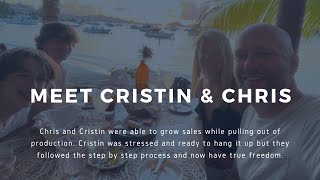
Kristin and Chris Holloway scaled their South Jersey real estate business from solo agents to a team by implementing lead routing systems and a profit-first economic model. They tripled growth, improved profits, and finally got their work-life balance back. They discuss what changed their leadership and why coaching mattered.
All right, welcome back. Lars Hedinborg here, founder of Real Estate B School. I have Chris and Kristen Holloway today. They've been members of our world for how long has it been? A couple, three years or so? We've been working together a little over three. Yep, over three years. So we bring members on. They're, you know, killing it in our system and they've had some results just to share with, with the community here at large to hopefully help you along your business growth journey. Guys, just give us like the background, you know, just introduce yourself maybe a couple minutes, you know, how long you've been in real estate, the market you serve and the size of your team and the business you do currently.
Yep. So we are Kristin Holloway, Kris Holloway, the Holloway Real Estate Group in South Jersey. So outside of Philadelphia in New Jersey, Southern New Jersey, I think we did about 150 units last year. We've got five agents, including myself and then Chris as director of operations and admin staff. So that's sort of our market and who we are.
Awesome. When we first got together, what were you looking to kind of solve in the business? What frustration did you guys have that, that you thought we could, we could help with?
I'll go. Well, one of the obvious ones, obviously is increase our income. But I think the biggest thing I'm speaking for Kristin, mainly here is just time. Just constantly working all the time, you know, as an agent. And then when we decided to kind of build the team and do it the right way. So it wasn't just like Kristen constantly, constantly working all the time. We were just kind of looking for structure and guidance on, you know, how to do that. I mean, we, you know, read books and things like that, but really just looking for real direction on how, you know, how to run a real estate team.
Yeah. And yeah, it's a crazy thing like, you know, conventional success in our industry, it really does suck in a lot of ways. Like everyone just keeps teaching, just do more, do more. It's going to be great. You know, just do more. And you get to a point especially, you know, you guys are married and business partners, I guess, totally off script. And I didn't send you guys this question. How has, you know, sort of this systems approach and, you know, identifying that, you know, typically in a partnership that's a marriage, there is one sort of I'll go out and kill everything and then there's one that is going to cut it up when, when, when, when they bring it home. How have, how was, was there any kind of thing in the marriage or was work bleeding into everything back when we, we started working together?
Yeah, so I. Yes, I, I was in real estate before Chris. So I, I mean, work led into everything. It was sort of like, you know, that' I was on the phone, I wasn't around. And then he got in and then he was okay with me being on the phone and he kind of understood it. But then we grew once Chris came because, I mean, we both offer very different talents. I'm in sales and he's in operations. He's the systems guy. Once he came, we grew really quick. We tripled our business. And then that's when we called you because it was sort of like we were doing well, but we just didn't know my time was. I was maxed out for sure.
So.
So what? So like, practically speaking, was it like a full seven days? Evenings, like whenever anybody wanted you, they could get you.
You got it. Yep. Holidays, kids, birthdays. When I, whatever, whenever I was called, I answered.
And so what? So what did it mean, you know, getting you guys to sort of set this thing up a little bit more like a business where the, the owner is not available 24 7. What has it meant for you guys personally to get this, this thing, you know, on a better, on a better track.
Really just have like a more of a normal life. I mean, we can, like, we can have dinner now like with our family. And like Kristen's phone doesn't ring and she doesn't say, do you mind, do you mind if I get this? Like, oh, I've been waiting for this call. Like, you know what I mean? It's like, so just as normal, like when we're done working, we can just spend time with her family.
You know, I never not answered the phone. I would leave a restaurant and he'd be okay with it because it's like, well, I mean, this could mean X amount of dollars. I've got to get, I've got to take this lead.
Literally.
Go get up from the table and go into the foyer of the waiting area of a restaurant to take a call. We're not even a call. It might be a lead. Like, this might be the next big commission. Like, this is a lead. I should get this. Say, okay, go ahead.
The 2 to 3% shot that it might turn into a commission check.
Yeah, yeah, exactly.
I have been there, man. I have snuck out of bed at 9 o' clock at night to get a freaking Internet registration when I was, when I was in the thick of it. So I know exactly. And I laugh a little bit because one thing that we do, we mastermind in our highest level with the real estate B school. We just had a conversation with somebody's spouse about that. Like if you're watching this case study, your spouse always minds. Like even if they're being gracious and they say no, it's okay, they do mind. They do not want you to sell another house. They want you to eat your food like a normal person. So let's go back. When you look at kind of the journey in real estate B school and you know there's lots of coaching out there, you guys were doing awesome before we met. When you look at the work that we've done together, what would you say? Let's just describe the three tools or systems or strategies and then we can go a little bit deeper in each. What would you say the three tools, systems or strategies would you say have had the biggest impact on your business and ultimately your personal life?
Why don't you start with. Because that's probably the biggest one for me personally is the time and I'll kind of talk about how we did it.
Yeah. In terms of systems, it would be the lead routing system. So we can talk more about what that looks like. But I remember the first conversation we had with you. You're so you all goes to your cell and I'm like, well, yeah, where else would it go? So clearly that's not normal. But I didn't know that. And I had worked that way for seven years, so that was just normal to me. And we were, you know, that year we'd sold 150 houses or, you know, 130 houses. So it just, that's just what I was doing.
And it was like, I mean, it sounds crazy now when you look back, but it was like, it's almost like Kristen, she's a team leader, but she was also like literally an ISA for agents on our team. She was taking every single call and it was a lot of leads and it was during dinners and all that time and it was just. And we had no idea. What else do you do? I don't know what other way to do it. Her numbers on everything.
Yeah. And it also helped me let go of the control because I felt like nobody could convert it like I could. So I didn't want to give that up.
Alright, so that's number one. I'll definitely ask some questions on that. What's the second sort of bucket of things we worked on.
Basically, like really the economic model. Like when I first started, when I Came on, she kind of started building a team, if you will. And it was just kind of like there wasn't a whole lot of structure. It was kind of like people like agents would say, like, yeah, can I. I think I should get a higher split now. I think on this one, it should be this or that. Like, we had no real structure or really didn't know how that should work, just what the splits should be and how, you know, how we should run. Treat the team as a business, not just like agents, you know. Yeah, they own this one. You'll get this commission or that commission. Like, we weren't really running it like a business.
Yeah. All right. And what's the third area that we worked on?
It's agent accountability. Really. We didn't really have anything in place. You know, we just thought, you know, you hire buyer's agents and they sell houses and everything's great. But we had really no accountability and no way to track the accountability. And I guess we just would cross our fingers and hope they ended up being good agents.
And in line with that, elevating us as leaders. So that, like, I felt, you know, when we first. When I wanted to hire a coach, I was like, well, I feel like I need to elevate myself beyond the agents so that I can offer them something more than just leads. So that was, you know, accountability and coaching our agents was a huge thing.
Awesome. I'll put that down as number four. Cause that's a really good one. All right, so let's. I think you guys said it all with respect to lead routing. And you know what's funny is that conventionally, like, it is the lead agent that is taking all the leads 24 7, you know, so it. I think it's more of a mindset shift. But you tell me, you know, what was. Kristen, what was the big. What was the thing that had you let go of that and trust that we can put a system in place to. And nobody can do it as good as you. So that's sort of the. You've. You've seen that probably over the last couple years, but that's okay because you have a life. What would you say was the thing that switched in you to put that system in place?
It was a mindset thing. And it wasn't easy. It wasn't instant for me. I mean, you told me. Everybody told me this is the way it should be. And I still was sort of like, leery, but I just kind of trusted and let it happen, and it worked.
So.
And just the amount of freedom. I mean, the two agents, the two key agents I had in place at the time, I think I was also very. We had two good people who were taking those calls. And once, you know, my mindset shifted and I realized that as long as I was training those people and, you know, teaching them what I knew they would be okay. And they were. And then that afforded me time with my kids, which is like, I mean, the last three years have been, compared to the previous seven have been amazing.
So. Yeah, and I want to get into that in a little bit as well.
If I can just add one more thing that as far as, you know, you had mentioned how conventionally most agents do just get all the leads and then. And we actually are able to use that, like in recruiting, we meet with potential agents. I say that all the time. I say, like, you know, traditional teams, you know, the team leader or the lead agent kind of gets everything and, and doles out leads however they see fit. Like, they'll keep the good ones, they'll give out the ones they don't want. And I talk about that when I'm meeting with agents and I say, Kristen's phone doesn't even ring. The buyer's agent's phones, they get every lead. So we don't pick who gets what. Her phone doesn't even ring when an OB comes in.
Yeah, that's awesome. So let's talk about economic model. And it is, you know, what we see is that a top producing agent gets to the point where there's so much pain that they just bring people into their world. They've created a name for themselves, they're doing deals and agents will approach them and that's how a team starts. There's no sort of premeditated, like this has to look this way. How was it for you guys? You mentioned that you had some agents that were just like asking for different splits on everything. What was the process of drawing a line in the sand around economic model and value based commission splits? What did it look like as you guys rolled it out?
Yeah. And you said it wasn't just a split thing, but it was just kind of also a mindset thing. We just thought like, you know, if an agent's working a lead, like they're not going to be okay with a certain split, whatever. And then, you know, you guys taught us like to show our value. Like, no, here's why the split is what it is and here's what we're providing. And we had these great tools and systems in place now that agents Saw that it was a huge value to them. And then really just how to, like, you know, where our money should be. Like, when I talk about economic model, like, you know, I didn't know how much you should be spending on leads, and I don't know how much it should cost to run a team. Like, I just thought, you know, it was just kind of aimless. You know, everything just kind of fell where it fell. And now I kind of know, like, you know, we're spending too much here or we're right on track where we should be on a certain lead source or a certain kind of area of our business. So that's just been helpful. And then the other thing is just a big thing I learned is just how kind of managing money on the. Once commission comes in, it used to be commission checks come in, and in some seasons, part of the year, some more money than others. And then when it's time to pay the taxes at the end of the year, it's like, oh, man, what do we do now? We have, like, a huge tax bill, and we didn't save our money appropriately, but now we have, like, you know, we. We put that system in place that we got as far as, like, with our profit. Profit first. Yeah. And we just. We have six months worth of savings. You know, we can not sell any houses for the next six months, and we'd be fine.
It's the craziest thing. And to plug Mike Michalowicz, you know, his mission is to eradicate entrepreneurial poverty. You know, so y' all are obviously entrepreneurs because, you know, selling 30 homes a year as a solo agent wasn't good enough. You had to build this business. And we're driven to do all these crazy things. Just a way to move money around where you actually have something to show for it. And very few people actually take the time to put that system into place. So. Yeah, that's. That's. That's really awesome. Talk about agent accountability. It's probably the toughest part of growing a business is holding others accountable. When you say that, what systems or tools have helped you? And then how have you had to change in the way you lead and manage?
What was it like before? I'm gonna let her start.
That says it all.
Yeah, There was no. There were no systems. Barely any accountability. Like, I would be like, wow, I know. I gave her three leads and she didn't. I don't see anything coming under contract, so that. That's an issue.
It may have ended up on a spreadsheet, maybe.
Yeah. But no, I mean, now it's completely tracked and there's meeting, I mean, there's weekly meetings, quarterly meetings, goal setting. I mean, Chris runs all of that. I have to tell you. So I'm a little bit like, I feel like. And I'm part of the one who has to be held accountable. But it's changed the way that we do things. We have systems for everything.
Yeah, that's.
Go ahead. I'm sorry.
I was gonna say it's funny that like from the lead, like, you hand a lead to an agent and then you're like, man, I know I handed them some leads last quarter and then they didn't sell anything. So that like the eight steps in between, like, we just sort of forget. Cause we're charging onto other stuff and we don't have the patience to slow down and put a system in place. What were you gonna say, Chris?
I was gonna say that now, like, not only do we know like how many leads they got, we know, like, you know, if they answer, how fast they answer the phone, how you know, did they send them the email, text message date, you know, how many appointments did they set, how many did they meet, how many did they sign? Like, we have all that in place now and we can make, you know, we make decisions based on, on that information now, you know, like, you know, we know how many leads an agent got the previous week, previous month. Like, and do we need to get more leads or do we need to get more agents? Like, now we have all that information and how well agents are converting where they might need help.
And in meeting with them quarterly or annually, it's sort of like, okay, well you made $100,000 last year, you want to make 150? Let's look at this. So all you need to do is sell this many more. I can back into that. So for me, it's sort of from a high level. I'm like, alright, well this is easy. I can just show you how many more calls you need to make, how many more appointments you need to set, and how many more houses you need to sell. So break it down, that way it's easier.
And also having the data per agent, you know, where, hey, if you just get a little better on the phone, if you get a little better in person, if, you know, if you get a little better in terms of setting urgency with buyers, like, you don't need any more leads, you know, and if you double down on your new business development efforts and you're a little bit more intentional, we can get you to 150, you know, and that's really, really good. I love that. Anything else around accountability? Well, it kind of brings us to our fourth point that you mentioned. You know, a lot of this is a conversation of like, you know, really what is the value of joining the Holloway Group, the Holloway Real estate group, whatever you guys call yourselves, and being a little insecure three years ago and now it's like you could rattle off a dozen things that you guys do that are really valuable. But talk a little bit about how y' all have elevated as leaders in the business and you know, what leadership, management and accountability means to you now that you didn't know what it meant back then.
Yeah, I think it goes back to systems and regular meetings. I mean, we, you know, we work in the 90 day world as you know, we work with our coach through real estate B school that way. And so we use that same mod when we meet with our agents. And so we go back and we do an annual goal setting and then we work on 90 day timeframes and we go through goals. And so I think that that's been for me when I do my quarterly meetings with the agents, that's been helpful and they love that. I mean, I just feel like it's compartmentalized and it's easy to do, it's easy to digest and we're doing it ourselves. So it's like there's a nice flow to it as well.
Yeah, it's a really good point that, you know, you're. What's the expression? Like you're, you're eating the food you make or I don't know, I forget the expression. But there's an expression like you're willing to. You're doing what you're telling them to do. So it's different if you were like, you know, hey, you know, let's do this together. Because Kristen, you're just as challenged in some ways around systems as your agents are. So you're kind of like, hey, like, Chris is our common enemy. I might be married to him. He is the enemy. Let's call a truce and let's just fall in line to what we know is good. So that's really interesting.
But we've taken even like the profit first model. All of our team has read the book. We have various tools and things that we've learned from real estate B school that we'll pass on to our team. We read that as a team last year, I think, and two of our buyers, agents are also running it. And like Rave and talk about it.
And that is awesome.
Changing. And I felt like if they could see me do it, then they felt like, you know, they could do it.
And.
Yeah.
So that's really cool. I hadn't heard of anyone doing that at the team level. That's awesome. My favorite quote from the book is. What was it? Profit. Profit is not an event. It's a habit. You know, so building wealth is like. It is just a habit, you know, of consistently spending less than you make and just setting aside the difference, which is the whole system. That's really awesome. One thing I want to talk about. Oh, go ahead.
Using the. Just at our example or anything out of the meetings, like, as far as, like, us as leaders, like, I just, like, I kind of. And we model everything. Like, that was an example. But how we run our meetings, Like, I learned it from, like, how you guys ran your meetings with us. And I'm like, so there's kind of like, okay, this is how you run a NL10 meeting, or this is how you run an accountability meeting. Like, it doesn't have to be complicated. I'm just like, it works when you meet with us, so I'm not gonna change it. I'll just do it. I'll do the exact same thing.
Yeah. Yeah. You know, it's funny, I think, because I didn't have a whole bunch of experience like you guys. I had never run a business before, even in my corporate life. Like, it wasn't like I was managing a team of five people. And I. You know, and just to learn that, like, management and leadership is just a series of really valuable interactions with your team. And the value you provide is that you're. You're going to help them achieve more than they would on their own. And it's not. It's just not that complicated, you know, and to draw a line in the sand around what's acceptable and not acceptable. One thing I want to talk about, which, you know, in the real estate industry, the only measure of success is if you're selling more homes. More homes, More homes, More homes especially. Well, it's going to sound bad for Keller Williams, I feel like, especially in Keller Williams is like, I don't know, there's just this culture of, like, if you're not selling more homes, you're just not. You're not cool or something.
That's the real estate world. Yeah.
And it is rampant, you know, and maybe it's because of the people that are top producers. Like, we're driven and competitive. But tell me when I Asked you the question, how have you measured growth over the last three years, what would you say? If you can't say transactions, what would you say the growth you've experienced has been?
Well, that was another mindset shift for me, because I was that way. I think most agents are, where it's like, we became successful. I wanted to stay that way, and I didn't want anyone to get ahead of us, you know, so we were number one in our office. And I'm like, well, we can't not be number one, even if that means taking less profit. You know, not that I thought of it that way, but it was sort of like, we need to sell 200 houses. So I think my mindset shifted there maybe two years ago was like, okay, well, if we. Even if we stay the same, as long as we're making more money and I have more time. So the time and the money. I mean, the time and the profitability, like, those. Having those two things grow. And even though we're not selling physically selling more homes, I think we're happier. We're just as profitable, if not more.
Oh, yeah, without a doubt. Definitely more profitable. And, like, I don't know, we used to think, like, the total volume, that was the biggest thing. Like, who sells the most real estate, like, that's the most successful. And you've talked about it before. There's ages where, yeah, you see that number. But, like, that person or that team, they're not making. They're not actually. The team was not making any money at all. And they have no free time whatsoever. You know, they're working eight hours a week. And, like, they might have the most volume, but that means nothing. That's so not important.
It's amazing how little that does mean. I mean, I've met people, $200 million teams who, like, if they're going through this, they might. They could go out of business because they have zero savings. Zero. I mean, it's scary.
You know, I had a conversation with a guy in California, and he saw he's on some of the bigger stages, and he has a $200 million, you know, team where he pays out 90%. And I'm like, dude, that's not a team, like, gonna lose. And he has to hustle, and he's not making more profit than his own production. So if he didn't sell, like, it is this. Like, he just didn't think of it ahead of time. He didn't, like, break this thing down to an economic model. You know, if my value is split, you have lost the game. Like, I can give you. I can Give most agents 200% of their commissions and they're still going to suck. You know, they're still not going to have any money. So that's just definitely not it. When we first got started together, was there anything sort of questions in your mind or objections that you kind of, you know, you were thinking through? Like you didn't know if it was going to work or you didn't want to join because of this or that?
There wasn't for me. I mean, I had heard of real estate b school and, you know, someone we know was involved and you already had come highly regarded. So I kind of knew, like, not if but when, you know, I was kind of like, you know, when we get to a certain point, we're going to have to, you know, we're going to need coaching and we're going to need some real guidance. So, I mean, for me, it's just kind of like, when are we signing up? I don't know. I don't know about. With you.
I didn't know I was excited in the beginning, but then I was like, wait a minute, Am I ready? Do I really want to do all of this? Hold on. And, you know, I have, like, somebody watching me over here. So it's not like I can just, you know, I have to. I'm either all in or I'm not. So.
Yeah. What's been your favorite part of real estate beach school?
For me, it's definitely the people. I mean, the people are great. Everybody, not just people, the coaches in real estate b school, but just the community. It's the best people in the world. It's one of my favorite people I've met through b school. Everybody's just so willing to share their successes and their failures. It's an amazing group of people. That's just. I mean, that's my favorite part.
Kristen, anything to add?
No, I think we talked about it before. I think that is my favorite part too. I love the intensives too. And I think my team has, you know, has learned to love those as well. Just the growth every time we do that, you know, twice a year. So also.
Oh, sorry. Also like the toolbox. Like the fact that I just have a place I can go and that's just how my brain thinks. Like, I love, like if I need. If I'm working on something, a system or something like that, Just having that, like, place to go and just like any. Anything I need is right there. I can watch a quick video. I Can down. I can swipe something. I can like, literally download whatever. Like, you know, make a copy of whatever it is I need and then just edit it to kind of fit our market and put up my name on it, and I can implement a new system. Yeah.
Kristin's smiling because she's lost her login. Three years ago.
You asked me to get those.
I saw her.
She's like, there's a toolbox.
No, it's funny. I mean, y' all are married and your business partners. The program is for, like, a Kristen and whoever your Kris is in your world. Like, every. Lars needs at the time. Like, Tia was my first hire, and now Mimi is our operator. So without one, the other is screwed. You know, the operator will sit in an office with no sales. You know, so y' all are really. You do a good job of being in business together and then doing life together. And I just appreciate you guys. Who would you recommend real estate B school to and why?
Yeah, we have several agents that we work with now where. I mean, an agent, a couple of agents in mind that have, you know, decent sized teams. They're where I was three years ago, four years ago, where I'm just. They're. They're doing everything. I mean, they're even doing buyers. They're answering the phone. They're. You know, they're selling 20, $30 million of real estate a year by themselves, you know, with an assistant or with maybe a buyer's agent. That's. I can think of, like, three people off the top of my head that fit that. There's tons of agents that work that way.
Yeah. Really? Just agents who, like, you know, they get to a point where they're busy and they. They start a team. Right. And I put that in quotes because it's like they have a buyer's agent, but they're just, like, constantly working, like Kristen said, like, where. Where she was four years ago. And they just need help. They don't really know what to do.
Yeah, I was having a conversation with one of those agents. I forget what market she was in. I think it might have been Detroit, but, like, luxury in Detroit. And she did, like, 35 million, and she's, like, answering the phone at 2am and, like, working eight days a week and just loving every bit of it. And I was trying to. Of course, this was, like, a sales call, so I'm trying to figure out the angle here. And, like, did your husband mind? She's like, no, I bought him a Tesla. You know, like, okay, well, I'm like, well, I'll call you in a year. Like, you know, at some point it may suck, like working 100 hours a week. And you know, and maybe because of the quarantine now she was decompressed a little bit, who knows? But anyway, yeah, so it just goes back to conventional success and it's really hard. Like there isn't that we may serve a smaller part of the real estate population, but it's that, you know, so if you're listening to this and you've, you've achieved like conventional success and you've realized that it really is challenging, you know, there aren't systems in place to give you relief from the evenings and the weekends. It's not sustainable. Even if you can grin and bear it, it's just not sustainable. And it's not freaking worth it. Like no marriage is worth straining, no physical body is worth hurting. No, you know, your emotions, your well being emotionally is not worth sacrificing for real estate. And we just, it's this series of getting caught up, caught up, caught up. You get to get so caught up in it where it just becomes normal and it's like. It's not normal. It is normal to eat a meal without responding to a lead, you know, but it becomes the normal. And it's, it's so weird. And it is. I do believe it's specific to real estate. So anyway, I love you guys. If you're listening and this conversation sort of rings true for you, just go to Real Estate bschool.com I only have a conversation about your business to offer you. So free coaching session, 45 minutes to figure out where you are today, where you want to go, what is holding you back, if it's you or if it's a weakness you have, or if your strengths are getting in your way. So go to realestatebschool.com and thanks again, guys. Appreciate it.
Thank you.









