Dave Hooke Went From Doing 80+ Transactions To Doubling His Income!
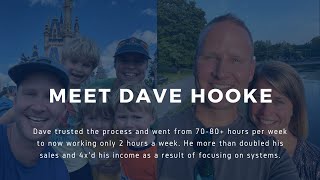
Dave Hooke went from 92 solo transactions in 80-hour weeks to running a six-agent team doing 200+ deals while working 40 hours and earning $250,000 more per year. He switched from tracking sales metrics to building systems: DialogTech for calls, Top Producer CRM, standardized checklists, and a business tracker. The shift meant measuring operations and finance instead of just deals closed.
Hey there everyone. Lars Hedenborg Founder Real Estate B School I am super pumped today. I've got Dave Hook out of Central PA with us and he's just going to chat about his journey over the last few years in real estate, in business and with real Estate B School. Dave, why don't you kick us off, Just give us a quick intro personally and professionally. Tell us about yourself.
Yeah, well, I've been in real estate at the kind of brokerage level for about 16 years and was a solo kind of independent agent juggling all the balls, you know, doing 15 different jobs, had a small investment company, was the kind of operating partner of a traditional brokerage model since 2003. And you know, I got a real estate right out of college, so that's kind of all I knew. Third generation real estate agent and kind of grew with the business, didn't have a whole lot of focus, kind of failed forward, was successful from most standards, always profitable company and all that kind of stuff. And it was probably when I was about 30, 31 years old, kind of newly married, that I had reached 70, 80 hours a week, which was not good for the marriage. And we were thinking about having kids. And that was at the point I actually decided after my third trip down to Haiti, I decided actually to quit real estate. Decided to get out of it. I just couldn't, I couldn't maintain that. I couldn't see myself maintaining it for another 20 or 30 years. It's kind of a long term thing.
Yeah.
And so when we met, what did you want to achieve when we first started working together?
Honestly, when I started talking with you, I had run a Google search and I was like kind of deep. I'm a man of faith, you know, that I was kind of deep in search mode of like, is this life that I've known, my future? And you know, I ran like a Google search. I was in prayer. I was actually thinking about getting out of real estate and starting like a ministry or homeless shelter or something. And some, some wise people came alongside me and convinced me that don't jump ship so quickly. The same HR problems and budgetary issues and burnout and stuff exist in all of those types of careers as well and organizations, nonprofits. And so I think what I wanted to accomplish is I was looking for a way out. I was looking to see if this was even if it was possible to have a life in the business of real estate, because I hadn't seen it. I had seen agents in our brokerage and myself at times moderately successful with Decent take home pays, but sometimes struggling and having a life. And I had seen agents and myself be successful enough to provide for our families and build a retirement. But the, the issue with that is I hadn't seen it done while having a life as well. It was either or. What I had seen was kind of failure on the monetary and finance side, but being able to have some nights and weekends or just pushing eight day work weeks and 70 hours and being in that top 1% but then you're sacrificing your family life. And so when I was looking to talk to you, I'd run a Google search and kind of found this, this weird, like, you know, you can have both have a life and super skeptical, like who is this guy? And I think I called you or something. I was like, well I'm gonna, I'm gonna call this guy and you know, he seems to be preaching that it is possible. Let's, let's check him out. So I was just kind of in search mode.
Yeah, what, what specific problems? Go, go back to that time and you say 70 to 80 hours a week, but what specific problems were you having both personally and professionally?
Yeah, so you know, specifically I was helping to oversee a brokerage and I was a solo agent with an assistant and kind of a modified buyer's agent, but no real process around that. And you know, I was doing 50 to 60, 70, 80 transactions myself and then helping to oversee this brokerage with 30 people and kind of another team in there and then an investment company with kind of portfolio of properties. And the problems that I was seeing was that I was always super intentional with my time blocking and I wouldn't take appointments on the weekends. And I was always super proud about that. But the reality of it was is that I would get home and be home at 7 o' clock on the weeknights and not take appointments till 9 o'. Clock. But 3, 4 offers would come in a property management issue and then multiple questions from agents in my office with transaction issues. And I would excuse myself from the dinner table and I'd have my phone right there on the table. My wife would be eating dinner. I'd be like, oh, I gotta take this, just a minute. And I'd go back into the bedroom and I'd shut two doors. So I'd get him into my walk in closet and I'd be like, you know, or like I'd see a text come through and be like, oh, I gotta go to the bathroom and I'd like go, go in like literally. So Like, Like, I would put these little fronts on so that I could, like, secretly reply to stuff without, like, the people around me knowing that I was working. It was like this weird. Like, I was always making excuses as though I didn't work 80 hours a week, but I really was. And then same thing with. On weekends. I get three or four offers in and be Sunday, and I'd have expectations of some family time. And then I'd be checking my email. I was like, the movie was gonna start as we're watching it, and I'd have two offers and something blowing up and be like, oh, I'll be right back. And then a half hour later, and I wasn't present. And so it was just a constant churn of that. And nothing about that was urgent. My marriage wasn't blowing up. I wasn't like, unhealthy, like, as far as physically, but it was just this slow, like, dissolution of my life over a course of years. And so, you know, what point do you. Do you realize, like, I could have done that for 20 years. I totally could have pulled that off and nothing urgent would have blown up. But slowly, I think my marriage would have, you know, burnt down and my own health would have, and I wouldn't have been doing anything really all that well. And I just think it could have stolen my life. So, yeah, that's what I was going through.
Yeah.
Let's get into a little bit of the specific tools and systems that you were able to kind of implement and had the biggest impact on your business. What are two or three tools and systems that you. That you really grabbed onto that made the biggest impact?
Yeah, so great question. So when we first started talking and having kind of a coaching relationship, I didn't have any systems in place. I mean, I was doing all my business by relationship, which was great. I didn't have a website. So the first couple tools that were introduced into my business, I'm recommended by you by B School, was a tool called Dialog Tech. And it's a phone routing system that really allows me to get my head around where I'm spending money out in the world and being able to track how many inbound calls from customers are coming from different sources and being able to actually record those calls and listen to them and see how we were showing up and how my team members were showing up and being able to track how I was spending my money. So that was a. That was a real change to my business. A huge improvement. Another, you know, system that was in place was just top producer Kind of a primitive CRM, but worked very well for all of our contact management and mailings. And then also, you know, just having a checklist or a recipe, so to speak, of what we do when we put a listing on and what we do when we close a file out. And being able, instead of like working off emotion and having my hand in kind of everything and saying, did you do this? Did you get the file to the lender, to my assistant, did you follow up with that? And all the time that that takes out of my day, being able to say, here's the recipe, and then being able to go in and monitor whether that was being done without having to ask and knowing that all the clients were being treated the exact same way because we built a checklist and took the time to do that. And then the other one, I would say, is the business tracker that you helped to build and provide to us, which really is where all of the inbound calls and inbound Internet prospects and the referred business and all of our sales were kind of dumped into a spreadsheet, a master spreadsheet, and allowed us to kind of monitor our business at a really deep level and see where we were spending money and losing money. And really, after those three pieces were put into place, Lars, I think my shift went from having my hand in everything and asking questions on like, emotion, like coming to the office and like, oh man, sales are down. You know, it must be the market or it must be we're not doing this right. And it was always a must be and kind of an aggravation to, oh, let's look at the data and see what happened and then let's make a change in our business. And that was just a huge shift after it took me about six or nine months to put those in place. And just an incredible shift from emotion based decision making to data based decision making.
Awesome. I want you to talk a little bit about because I think a lot of folks, when they contemplate, you know, the shift from production to business ownership, really, that's what real estate B school, that's why we exist. It's someone who conventional success in real estate sucks.
Yeah.
Like, there's no way you can sell 30 homes, let alone 50 to 60 homes with an assistant and still still have a life worth living. So talk about what that maybe mindset wise, but also bring in the systems. The shift from, you know, you doing all the deals, hands and everything, to now I'm going to ask you to talk about the results, but the life you lead now, your Business life, you manage multiple businesses in a 40 hour work week out of production. So talk about that shift. What was that shift like for you? Production to business ownership.
Yeah. You know what's interesting about that and what I've learned and reflecting over the last four years of the relationship with B school is Lars, When I, when I started the brokerage when I was 23, I think, and I was in sales too, at the same time, I think I did what a lot of us do. I focus often on the stuff that doesn't matter as much and lost sight a lot of times of the things that really do. And what I mean by that is I now view my business a little bit more like the best analogy I can give is maybe like an iceberg. And if you know anything about an iceberg, you know, like 10% of the mass is visible to everybody and 90% of it is underwater. And I so often focused on number of transactions, like what am I doing in volume? And it was, it was all focused on sales, sales, sales. And I think that's natural because when we're an independent agent and when I was an independent agent, that's the goal that I set well, I wanted to do 25 transactions this year, 50 transactions this year, because that's what will make me this money for my family. And I was a salesperson. And that's what got me from, from 0 transactions to 60 was being good at sales. So reading the books, doing what I had to do to be good at sales. And all my focus was on sales. And what I realized is that that's fine for a season, but when you want to become a true business owner, which I was trying to become and I was hitting a ceiling, you have to shift your focus off of only sales. Not that sales aren't important, but when all my focus was on that 10% of the iceberg, I was trying to grow that as much as I could. Forgot the fact that there's actually three components to every business. And I would even argue four. You know, Gina Wickman in the book Traction says sales, operations and finance are part of any business, any organization, nonprofit, church, real estate team, a brokerage. And when all my attention is focused on sales because that's what makes my ego feel big. And that's what the guy down the street or the team down the street is doing. 300 sides and I'm doing 250. And so I, I need to do 301 next year just to do 301. I don't even really know why My business becomes lopsided, right? And I focus all my attention on that. And that equals a business that will suck the life out of you, your family, your team, and everybody who comes in contacts with that business. And what I realized is that I need to shift what got me from A to B, from 0 to 60 transactions isn't what's going to get me from 60 to 100 transactions and allow me to have a life and allow me to have a business that actually serves me and my family and serves my team and enriches their lives and even, maybe even has the possibility to give back to my community. And so the shift was a focus not totally off sales and the shiny attractive stuff that made me feel good, but a significant shift to the stuff underwater, the finance part of my business and the operations part of my business. And the fourth component to my business is me. And what I did was I stopped measuring the success of my business by transaction count only. And I started putting measurables around how many date nights I was going to have with my spouse this year and tracking that and asking somebody to hold me accountable to that and having some traction or some measurables around how much my business was growing in terms of finance. Did I have 6 months capital reserves in my business or did I have a bunch of debt and gearing in towards looking at the stuff under the hood that nobody else can see? How many systems and processes did I have in my business so that when my sales grew, I wouldn't have my hand in everything and the business could operate without me having to do everything. And so just that shift of the stuff underwater in the iceberg that nobody can see, it's not sexy, it's not attractive, it doesn't look like success to the outside world, but that's really the stuff I needed to get good at to go from 60, 100, 200 and more transactions and have a life and a business that kind of gave back to us?
Yeah.
Let's break down the progression. So I want to talk about the results that you achieved. So personally, Jenny, she was pregnant with your first when we met.
Yeah, she was pregnant with our first when we first started to talk.
And now you have how many kids?
Three kids. We just had our third, Oliver, about.
Eight weeks ago and we met just over three years ago. Is that right?
Yeah, that's about right. Three, three and a half years ago. Yeah. Well, it would have been. Yeah, no, four years ago. We met four years ago. Yeah.
So talk about the results. So how many transactions did you do the Year we met and how many, what was the time, money, stress situation looking like? And then what is it like now where you spend your time? You know, you have three kids versus zero kids in the beginning.
Yep.
And so I mean just talk about that, the results that you were able to achieve, what did it mean to you personally and professionally?
Well, you might hear one of my kids come running past because they just got home. So that was a good segue. So if you do forgive me. But yeah, I mean the transition is that first of all, I couldn't be home right now doing this Talk with you 4 years ago when my 2 year old might run past the door like that wouldn't have been an option. So it's been a huge shift, results wise and family life wise. Three or four years ago, four years ago we met, I was doing 90, I did 92 transactions that year and I was working seven days a week. No question about it. I did not have much of a life outside of the business. And I was consistently, like I said, those little granule examples of excusing myself from the table and from my life to take care of urgencies and everything on fire. And that was my life. And then now where I am today as we stand is, you know, my team will do 200 and maybe 225 transactions for about 45 or 50 million in, you know, sales, probably 1.5 in gross commission income. So, you know, a different amount of business. And I haven't been on a client appointment in almost two years myself to actually take the business. So I have a great group of people who are probably better at that than I was at this point. And the business is running right now. There's people I can pull up a calendar and see where all the listing appointments and buyer appointments are and where the agents are and where the business is sourced from. And so I could run the business for the most part from outside my office if I wanted to. I choose to show up every day and lead and consult, help my agents. And at this point I'm in a position where I can really help to develop and grow the agents and empower them as leaders, which I'm super excited to be able to do. I take home from the business about 250,000 more dollars than I did before. I also just super fortunate and blessed to have a business partner that I've exited. The brokerage that I was a part of before at this point does multiple times more business than it did. And my team's within that brokerage and my business Partner is awesome and he runs that. So I've exited that position. And then I have some investment companies and some managers who handle those businesses. So I am doing a 40 hour workweek. You know, I don't go on client appointments and I'm in a position where I can take, you know, a week off vacation and have people in place to really oversee the businesses that are in place. And none of that was in place four years ago before we met.
Yeah.
And I think that's the myth. And I think I'm like the least hypiest guy. I think, anyway, I think it's hard for folks to believe that you can go from where you went from to where you are today, working probably honestly half the hours, making probably twice the amount of money and you're giving this amazing opportunity to your team. Real quick, how many people on your team? Because people hear 225, they think of brokerage type numbers. How many agents will do the 225 transactions?
Six agents on the 225 and we'll be hiring some more in the next couple months.
Yeah.
So 35 to 40 sides on average, probably more for the listing side, listing agent. And so you're blessing them by not stepping in and cherry picking deals like most team leaders have to do to make money?
Yeah. I'll tell you, Lars, the model that you helped me create, the economic model and the systems based, highly leveraged, specialized model, it does three things and I'm pretty clear on this. And the agents on my team are pretty clear and they understand this. Well, it does three things. The average agent on my team, the average agent in the industry will take home between 30, $40,000 a year. The average agent on my team in their first year of real estate always takes home 50 to 60,000, sometimes as much as 70 or 80. So 50%, sometimes 100% more than the average in the industry. And we have opportunities on our team. Second and third and fourth year agents are making six figures. So the average take home pay opportunity is much greater. The way that we're running the real estate model, I believe the client experience is stronger. I respect solo agents and there are a lot of great solo independent agents in our office that I support and respect because they have their hand in a lot of things and they do it well. But there's also a lot of part time agents and a lot of agents that aren't fully engaged or don't have a lot of training that are doing four, five, six transactions on average. And we're able to allow our Buyer's agents and listing agents to do 30, 40, 50, 60, 70 transactions with a lot of leverage points so that they have a life. And I just believe that when you're dealing with a practitioner as a consumer that's doing that type of business, they've diagnosed more problems. And so it's, you know, they have a little bit more experience in kind of what's going on in finance these days and what's going on with appraisal issues and things like that. So I think the client experience is solid. And then I think from the business owner standpoint, obviously, you know, my life's improved. So I really think there's three things about this model. The client experience, the agent experience, and my experience. That has been a huge shift from the previous way that I did real estate.
Yeah.
That's awesome. Tell me, when we were first sort of getting started together, what. What objections did you have? Like, I almost didn't join because.
Yeah, I mean, you know, I. As I said, I was just kind of searching, and, you know, I was like, I was always super conservative, and I'm like, I'm not gonna give more money to some person I've never met, and this guy's claiming, like, you know, I'm gonna step out of production and all this kind of stuff. And it just super skeptical. And so, you know, what was interesting about you is that. Is that you were like, you talked to me for a long time on the phone to just kind of evaluate my business, and, you know, you did, like, you know, you're good at kind of moving to the close. You were like, yeah, I think it makes sense for us to probably move forward. Your business looks like a good fit. And I was still like, I don't know if it makes sense for us to move forward. And you were like, well, it's just something that you can decide to do, and I'm confident it'll change your business or not. And then you said, I think, but before you move forward, I'd like to talk to your wife. I was like, what? And you were like, yeah, I think it's important that your spouse is on the same page. I was like, okay. And that's when it got real for me. And I got Jenny on the phone with you, and she's like, who's this guy that wants to talk to me? And, you know, it meant a lot. And I think I just got to a point where I said to Jenny, I was like, you know, what do we have to lose? I mean, I'm, like, burnt out And I don't want this life anymore. Let's just throw some money at this dude and see if he can actually perform and do what you know, if he's going to provide what he says and if not, we might have lost a couple bucks and learned a lesson and we'll move on. And I can't tell you how important that decision was because if I hadn't taken it, I'm confident I either be out of the business or I'd still be getting the life sucked out of me and working eight days a week like I did before.
Yeah.
And you share with me. I think it was you were with real estate B school for a year and it was that second year renewal. And I think you voxed me and tell me what you told me. I basically did what and did what?
Well, I think, correct me if I'm wrong, we might be thinking of two different things. But I think I messaged you and I may have said I'm gonna invest this amount of money in the next year and you know, you better show up to prove, you know, this investment because that first year, you know, I'd implemented systems and I remember calling and being like, am I growing too slow? And you know, I was so focused on systems because that's what you told me to do. And the next year I was like, well, I'm going to re up my subscription to B school and you know, I'm going to invest this money and I expect you to give me a return on it or something to that effect.
Yeah.
And I think you just both took a leap of faith and you prayed over the check.
Oh yeah. Oh yeah, yeah. I like prayed over the money and I'm like, you know, I'm going to trust that this guy that has been coaching me for a year is going to perform on this money that we're extending to him. And we let it go. And. And it did. It did.
And I like to say, you know, it's a three year program with a one year commitment. That's kind of what I, what I tell folks. Yeah, it's like the first year it's gonna mindset shifting systems, building things you're not used to. And your walk in this program is what I would want for everybody.
Yeah.
It's the realization that growth in your business is not just units. Units will have you not wanting to live. And we prove that in our industry. Yeah, we've literally proved that the top of our industry, we had an instance where who knows what happened but someone would rather not live or get out of the business. So we offer that avenue where there is a different path where you can add value. What's your favorite part about the community? About the real estate B school community?
Authenticity, vulnerability. I've been in a lot of coaching programs and there's a lot of rah rah stuff. And you know, it feels like a cheerleading session, which is necessary in some parts of your business because it's a tough business. But this is a nuts and bolts program. It's very practical, it is very focused on how to be a business owner and, and it's very authentic. People are not sitting there preaching how big their business is off the rooftops because there's a realization that the health of a business is not a function of how big the business is. And that's just truth. I mean, I've been in the brokerage world. There are many, many, many brokerages that I've consulted with that have 3, 4, 500 agents and aren't profitable and culture is toxic. And there's many real estate companies that have three or four agents that are super profitable, super healthy, give back to their community and operate like a healthy business. And the difference is, is that there isn't much of a correlation to the health of a business. And top line sales. There just isn't as much of a correlation as people think. And there's three or there's three components to a business and real estate B school understands that and understands how to put a focus on all three components. And sales is equally important to the other three. And my favorite part about B school is just that there's a shift to business ownership and it's not a cheerleading session and it's not a pump you up and do more sales. It's just an authentic, truthful, safe place to focus on your business.
Yeah.
Dave, tell us, who would you recommend real estate B school to and why?
I would recommend real estate B school to an independent solo agent who's doing 30 or more transactions and starting to hit a ceiling and wants to know how to hire their first assistant and start building a business that's more than just themselves and sales. I would recommend it because that's going to be the start of leverage. And that's a great place to start in B school because you're not going to have to go backwards from there. And I wish I would have hired B school at that point in my career. I would also recommend B school to the agent who has, you know, an assistant and a couple kind of buyer's agents, but no systems in place and they kind of have their hand in everything and they're working six, seven days a week. I would also recommend it to the team who's kind of a group or team, who formed a group or team and didn't maybe know exactly why. It just felt like the right thing to do. And it kind of feels like they don't have a strong focus and a lot of systems in place. And some of the lead agents and rainmakers still are just fully in production and maybe they're not as profitable as they should be and they want to understand how to be super profitable and maybe get out of production. Anyone who's looking to leverage their business and build a real thing that's going to give back and serve them, I would recommend it to all three of those people.
Awesome. Appreciate it, brother. You know, if you are at the point in your business, like Dave said, where, you know, the equation's not making sense. We talk about time, money, stress, and it's not making sense. Maybe the money's good, but you are eight days a week, 25 hours a day, sneaking away. I did the same thing when I was early in the business. I'd sneak out of bed to respond to a lead at freaking 8:59 because I had a rule. Like before 9pm if that is you, you need to take action. Give us a little bit information about your business. We'll jump on the phone and just have a chat about where you are now, where you want to go and what's holding you back. Take action. There's a link here on the page or you can go to realestatebschool.com and as I always say to everyone that's in this business, I have a lot of love and respect for what we do. It's not an easy industry. So we'll see you on that call. Thanks a.









