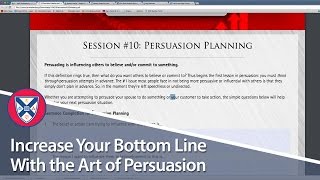
A real-estate leader walks through a persuasion-planning worksheet designed to get agents to adopt new practices like activity tracking. The worksheet covers target beliefs, framing, rewards, and consequences, with examples of how to pitch accountability systems and listing-side changes to your team.
I promise you, this is so far from anything that you've ever been to. And now. So let's do persuasion mastery. This I will say all the high performance topics are extremely valuable. Persuasion, like I am learning more and more my personal life just as much as my professional life that you. Your ability to persuade people to take action or to change is the game, right? It's one of the core leadership abilities that you need to develop if you're going to lead your team at a high level. Let's look at the persuasion planning worksheet and these are softer skills, right? So this isn't telling you how to generate more buyer leads. It's not telling you how to generate more listing leads. Those are certainly important topics. But this is helping you get people to come along your version of the ride, right? To get them to do what you think they should do, which, you know, if you're a good leader, is definitely in their best interest and all that stuff. You're not using this for evil. But let's go through this, all right? Persuading is influencing others to believe and or commit to something. If this definition rings true, then what do you want others to believe or commit to? Thus begins the first lesson in persuasion. You must think through persuasion attempts in advance. And I got to do the same thing with my listing agent that I'm having a tough time seeing the world, our new world order, the way it's going to be set out. So the number one issue most people face in not being more persuasive or influential with others is that they simply don't plan in advance. So in the moment, they're left speechless, undirected.
Right?
So when you're dealing with your agents on an issue you know that's come up, you don't want to be speechless or don't have a directed sort of approach to addressing them. Whether you're attempting to persuade your spouse to do something or your customer to take action, or your buyer agents to be all over the KDNA tracker or my listing agent to embrace changes on the listing side. The simple questions below will help you plan your next persuasion situation. So if you have this printed out and you have a specific persuasion situation in mind, do this exercise right now. So the belief or action I'm trying to influence with this person is, you know, to embrace accountability and activity tracking, to not see it as duplicative. The reason you want to influence them, to believe, commit to this is right. So they can achieve their financial goals and I can achieve my team goals.
Right?
The ways I can bring this suggestion up to them or frame it positively so they see it that it benefits us. Both are so in team meeting, right. Put together buyer specialists, business building tools sheet and present to team. Focus on positives and your commitment to eliminating as much duplication as possible as possible.
Right. All right.
The future benefits this person will personally experience for adopting my suggestion are it's proven 2 to 3x times more money.
Right.
If you believe, if you believe the KDNA study, I want it to go through kdna. I'll go through KDNA here in a second.
Right.
That's why they should do it. And high performers eat up accountability.
Right.
As long as it's not duplicative and you're addressing that with them. Okay.
All right.
So.
All right.
The intrinsic rewards, extrinsic rewards. Intrinsic are personal rewards for doing something. Things we do because we align, they align with things we find personally meaningful, like our passions, desire, values. Extrinsics are more external, like money, status, fame. So you'll write the rewards here. So you want to know why this is going to be good for them. So write just intrinsic and extras and list those out on something like that. It's intrinsic. The thing about accountability that I find helps people is that they know when to turn off work.
Right.
If you don't have a goal for how many meaningful conversations or how many personal notes or social posts or soi connects, you're not gonna know when to turn it off.
Right.
So that could be an intrinsic reward. Peace of mind, ability to turn off work. Extrinsic is definitely money. Top producer achieving at a high level in their real estate business. The daily tangible impacts this person would feel sense if they do what I'm suggesting. Think about their daily life.
Right.
They could have order in their life. They can segment their day. They can be calm about their work. They can know that they can just honor their time blocks and sort of be in those time blocks. The benefits that would happen for others if this person were to do what I suggest. Yeah. So there are other people that benefit. So them benefiting the good of the team, them hitting their goals, benefits the team. And your ability to hit your numbers and spend money the way you've budgeted and all that good stuff and them hitting their numbers activities wise and production wise. They'll have the ability to impact their family by providing a life that, you know, their prior work life didn't give them.
Right.
So there's some upside to how much income that they can earn. The consequences this person would experience for not doing what you suggest. This is an easy picture to paint. If you don't hold yourself accountable on the activity level, there is no telling what you're going to produce or what's going to happen. One last question. So it's easy to paint that, you know, the bad picture and just give them a deadline and the reason they want to hit that deadline. Right? It's easy. This, this time of year, you don't want to give them much time to adopt a tool or whatever. Same thing for my situation. You know, money is sitting there on the table. Two of our four listing agents have already gotten gone out and taken 7% commissions regularly. And my one agent's just not, not doing it and he just needs a couple tools and we've sort of been having this dialogue, so we've been working through this. All right, so that's persuasion. I find that this framework is really helpful. It's a bit of. Once you sort of know the framework, I don't know that you do a worksheet on it every time. But I know that most of us don't slow down enough to focus on a deliberate plan of attack when it comes to persuading someone. So definitely dive into this and print these out, maybe double sided, have them ready to go. As you run into these situations, personal or professional.