How I Motivated Myself to Achieve True Success
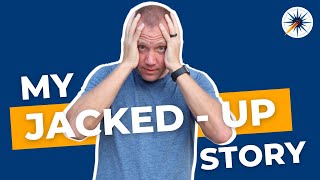
This is a YouTube video titled "How I Motivated Myself to Achieve True Success" published in June 2020. It features a podcast-style monologue primarily by Lars Hedenborg, founder of Real Estate B School, sharing his personal journey from a challenging family background and various career paths to building a successful real estate business. The content includes reflections on his upbringing, career transitions, and philosophy on business freedom and impact. The video also includes a host introducing and concluding the episode, but the main speaker is Lars Hedenborg.
Welcome back to the Business Freedom Podcast. Lars Hedinborg Founder of Real Estate B School this is going to be an awesome episode. I really had to dig deep into the archives. I want to let you guys into my mind in terms of how I think about my success in business and where that success and more importantly where the motivation comes from. And my hope is that you can be inspired by my story and how I went from, you know, I was basically had a corporate job 9 to 5. It was a cool job. It wasn't going to lead me to financial freedom and time freedom and even just fulfillment and satisfaction to, you know, a life that I honestly never thought was imaginable. You know, at this point I've got every weekend is a three day weekend, six to eight week vacations, know six to eight weeks of vacation a year. I've just got the ability to impact my team members, my community and it's just an awesome, awesome life that I live now. And it wasn't easy and it didn't come without struggle. It didn't come out come with long hours in the early days. And I want to let you in on that. I did a session where I really got personal about where I came from, how I'm wired, why I'm wired a certain way and my thoughts on the industry and how it's broken and why I built real estate B school and so I really hope you enjoy it. This is a members only talk that I did and my only ask for you is that you share this if you enjoy it and you so post it on social media and then also leave us a five star review. That is my ask and I'm going to do more of these kind of letting you into our world. We talk to members as a way to teach other members, our successful members to teach other members and you'll be hearing more of those over the coming weeks and months. So much love and respect and stay tuned. This is going to be a good one.
I figured out that's the wrong video to play before I'm sitting back there crying. For those of you that know me, know that I'm an emotional guy. So my parents moved to the States in their early 20s to start a business. They're both hairstylists and it was just their dream, right? The American dream coming over. My mom literally took a boat from Sweden. My dad flew, somehow he got to fly. I don't know what the deal was there but like the American dream and they just, I don't think they have much money, no reason to go out and sort of do this, but just decided they were going to start a business. And I was talking to my mom about it last week and you know, what was it like in those early days? You know, was the business successful? Were they struggling? They were having a blast. You know, working six, sometimes seven days per week. Same thing we do, right? You got to work in the business. They were cutting hair, they were doing color, sweeping the floors, whatever it took to keep the business running. And then in the evenings, they would do everything that we need to do to keep our business running when we're not with clients. They would do doing the books, stocking the shelves, fixing up the salon, whatever it took. And it was a grind for them, just like it is for every one of us. I remember one time when I was four years old, I can still vision it. They were just fighting, like, just screaming at each other at the top of their lungs. And I remember I was here, I was four, like the big brave four year old. I pushed a barstool in between them. I climbed up and I put my hands over their mouths and like, I just want them to stop fighting. And I don't know if it was the business, I don't know if it was, you know, at that point it was me and my sister. My sister was a couple years older than me, but it was the pressure of all of that where it just wasn't working. And in the divorce, my mom, she got custody of my sister and I and. And every other weekend we got to go see my dad, which was just awesome. And I remember on those Friday nights, so he would come pick us up on Friday nights and he would, he'd drive up and he had a way of honking his horn. Me and my sister were sitting by window looking down, and he would go, beep, beep, beep, beep, beep, beep, beep, beep. I could still hear the horn. And when he would show up, we were just so excited because I got to go back to the house. My mom took us out of the house and I got to go back there. And my best friend in the world, Joe Rhoda, lived right across the street. So literally right across the street was my best friend in the world. And I remember this one day in the third grade, I was playing at Joe's house, right behind Bush's, in front of his. In front of his house and Mrs. Roda. And this was like the Italian family. Four brothers all lived in the same house. Mom and dad. Mom stayed home, cooked and cleaned. Grandma lived upstairs and every time I walk into the house. Anyone here Italian? So what do you say when you walk, when you eat? How do you say eat in Italian? Yeah, Grandma would say manja. She just spoke no English. But the only word she ever said to me was manga. Manga. And it could be any day, any time of the day. They always had food ready for me. It was always in the oven on 250 degrees. And so they just pulling food out and nobody else is eating, but I'm eating. And it was just, I like to eat. So it was a good deal. But there was this one day where I was playing behind a bush right outside their house. And Mrs. Roda, she was sneaking in her cigarettes. She would smoke like real close to the window. And she blowed the smoke out the window. I'm just. I think she thought she was hiding it from Mr. Roda, not very successfully. But she said to me, she said, lars, where's your father this weekend? And I told her he's been drinking again. And she was silent. She said nothing. And I thought everyone knew. See, my dad was an alcoholic and he drank from like before I was born until I was 15 years old. So just an uncontrolled alcoholic. And just the chaos of being in that environment, you know, when my dad, more often than not my dad actually, even though it was only every other weekend, more often than not he actually didn't pick us up. He was either, you know, drunk and couldn't pull it off, or sometimes he would show up and we sort of knew he was drunk, which was a whole weird thing. My mom would even let us go with him. But I would always get into the house first on those weekends when I went to visit my dad. And I would, I would get in ahead of my sister and my father and I'd go up to his bedroom. He had this silver cup. It was a metallic and silver looking cup. And it was always by his bedside. And I would go up and I would smell it to know if he'd been drinking or not. And I actually did that until he had that house until my mid-20s. So I knew he was sober from the age 15 all the way into my mid-20s. Every time I went over his house, I would smell that cup. So just the craziness and the chaos that goes along with an alcoholic upbringing. There was something in me that I just knew I didn't want that, right? I knew I didn't want like a broken family. I knew I didn't want to be like my dad. His business was suffering, obviously with alcoholism and just, you know, he didn't have my mom to help him in the business and he was really struggling. So I knew I didn't. I can't say that I sat down and I wrote this, you know, 50 year plan. And at age 43, I was going to a real estate company. I was going to be on stage. And it definitely wasn't that sort of dialed in. There's something in me that I just put my head down and I got to work and I decided that I wasn't going to be like my dad. I did pretty good in high school, mostly through effort, though. I wasn't naturally sort of good at subjects, I guess math a little bit. But I was captain of the high school football team. So I had a really good high school experience. In college. I went to really hard engineering school and I did well there. I worked hard. I remember by the end of college I was just ready to be done studying. I just put every. Put my head in the books as a way to just kind of, you know, maybe not think about what was going on in my real life. And I was ready to get into the workforce, right? My first job, you're all excited. You think you're gonna take over the world. And I got a job as an energy conservation engineer. And my boss was Don, and he was mid-50s, kind of gray, curly hair, pocket protector, like legit everyday pocket protector. And one of our first projects was at an elementary school and. And here I am. I did really well in college. I thought, I got this great job. I'm counting light bulbs, I'm counting fluorescent light bulbs in a school that seemed like it was a billion light bulbs. And I was thinking to myself, surely I didn't study my ass off to count fluorescent light bulbs. And a deeper moment in that first job was like, there has to be more to life than just working a job. I'm looking at don in his mid-50s. I'm probably 21, 22, wondering what's the math in that? 33 years, I'm like, in 33 years, I get to be Don, you know, with a pocket protector and like crazy hair and just. And a good enough guy. But I knew that that deal wasn't for me. Just the kind of, just boring life of an engineer. So I lived in New Jersey at the time, and I like the certain parts of my job, I like the financial aspects of my job. And I ended up getting a job on Wall street as a financial analyst. And it's like the grunt level job of Wall Street. How many people, how many hours in a week? Real question, 168 hours. And I remember this one week, I spent 138 hours in that office out of 168. And it was sort of a badge of honor when you worked in that world. Like, who could work the most hours? Not so much for me at that time. It was just required. I was on a. An actual live acquisition of another company. And I was like the grunt guy that was getting presentations and models together. And for all of you that love or hate the business tracker, it came from those years at Bear Stearns. But I left my engineering job. I was making 36 grand. I doubled my salary over at Wall street, so I was making twice as much money. I was working my ass off. But it was actually, it was a lot of fun. My second year in, we get our bonuses. So Wall Street's just a big bonus environment. I'm holding a check for $48,000. And I'm young and this is like a lot of years ago, so this seemed like a billion dollars to me. And so I'm holding a check for $48,000. This guy Fred, who's a VP only two levels above me, got a seven figure bonus. And he was like the rock star. Like, everyone worshiped this guy. Everyone to be like him. The first time it's ever happened at that level that someone as a VP got a seven figure bonus. I'm holding my seven figure. It felt like a seven figure bonus. On that day before that check cleared, I quit. Here's the thing about fred. He was 150 pounds overweight. He lived in the office. His desk was a complete disaster. He had no relationships at all in his life. He gave everything to make money. So there was just no freedom there. So looking back, I probably should have had that check clear. It did clear. But I left. I quit that job just because I just knew that wasn't me. But I loved it. I loved the work. I ended up getting a job with Curtis Wright as an analyst doing similar work. They were acquiring companies. So the acquisitions was there, the corporate development work, the strategy work was part of it. And I ended up getting recruited to Charlotte by. We had three divisions. One division was here in Charlotte. And George, mid-60s, actually, getting close to retire. He had been working with his division on acquisitions. And he ended up recruiting me to Charlotte. So he's 32 years with the company at this point. And so he's finally made it to a point where he's running a major division of a public company. He just bought a house in Hilton Head, like his dream retirement home. Finds out he has cancer. Six months later, he's dead. His whole career, he gave his whole career to a company just at the point where it's getting fun and he's got some money in the bank. He gets cancer and he dies. So that really messed with my head. So here I am. Engineering wasn't my deal. I didn't want to be like my dad. Engineering was my deal. Wall street wasn't the thing. And I thought I had the dream job. And here I see this guy George just die, you know, and never really get to live a life of freedom. Around that same time I was making money, I started investing in real estate here in Charlotte. And I worked with a broker, Thomas was his name. And I bought like nine or ten properties using Thomas. And we just got to know each other. And in early 2000, I guess I got licensed in mid 2006, early 2007, I actually ended up joining his firm. And looking back, I left a cozy 7, 7 figure, 6 figure job to get into real estate sales. Everyone thought I was crazy, as everyone thinks you all are crazy for being in real estate, I'm sure. And in the office, he only had 10 agents that worked with him. And in that nine months, I was with his firm for nine months. I outsold every one of his agents. This 6.7 million worth of real estate. It wasn't because I brought an amazing skill set in sales, because I'd never done sales before. I figured out how to generate leads and how to convert them. That's all I really figured out. But I also saw Thomas the broker. He was doing deals. So he was working evenings, he was working weekends. I'm like, that doesn't matter. Like, I thought he owned the thing. Like, I thought he, you know. And then I saw all the agents in the office. They only did deals when he gave them his scraps. So they were always sort of complaining that they didn't get enough leads from Thomas the broker. And I. In that nine months, I paid him $76,000 to generate every deal on my own. And I was like, well, surely this isn't going to work. Ended up going to ReMax and sort of just a better environment where I could build a team and all that. Around that same time, my son anders was born November 2007. So our market here shifted in the middle of 2007 is when only. Cause I look back and I said, I mean, our inventory was kind of going flat. And then the inventory just Shot up in the middle of 2007. I'm like, wow, I wish I saw that chart. Like, before I left my cozy job. I'm holding Anders. This is probably sometimes 2008 before the collapse. And I remember holding Anders and thinking to myself, you know, I'm not going to let you down. And like, I was going to figure out a way to make it work. Not in anything I had seen. I didn't want to make it work like the agents that I had just witnessed at that other brokerage, right, where they were only doing deals if they were fed something. Like I was going to make this thing into a legitimate business. And I, I just. What I saw in real estate was that it is a fucked up industry and it's broken. But I could use all of that brokenness to my favor and I could use the rules of the industry against it. And so the fact that we have these commissions that for the most part they're not fixed, but for the most part we just get them. Even if we show up, if you just get your license, you get X percent. And so I was like, that's interesting because there's a lot of margin in there. There's a lot of work that could be done in there. So there's a lot of counting light bulbs in there that I could pay someone way lower dollar amount to count the light bulbs for me. And so I went about building this team. And so Tia was my first hire and I gave her all the light bulb counting. She was just doing all the work I didn't want to do. And she's still with me today. I hired a buyer agent, Chris, who's still with me today as well in 2009. And as I look back, so I look at like my dad and, you know, just my dad and my mom starting a business and his alcoholism and just that business. He had that business for 33 years. So probably 20 years after my mom left my dad. And it never served him. I remember there I was, I would help him with his taxes and he would claim like eight or nine thousand dollars in a year. So he just held onto this business because he thought it was a bit, but it didn't serve anything. And he was just captive to this business. And he worked six days a week and just miserable. So I had that. I had Don, the engineer in the county, light bulbs. I'm like, that's not freedom. I went from that to Wall Street. I'm like, this is pretty good money. But, you know, 138 hours in a week like, who wants to do that? I look at Curtiss Wright and just giving everything to a company where there really is no, there's no promise, right? Everyone's vying for that George spot in corporate America and the cutthroat and the politicking. I'm like, that shit is not for me. And then I went over to Thomas and just a traditional brokerage, like, there's no way I'm going to depend on somebody for leads or deals. But there's also no way I'm going to have to do deals to make money like Thomas did. And so when I look back on all of that, it brings me to the point where I built this company and this business as a model for everyone else. And it's not perfect by any means. I mean, we struggle and we have challenges and anytime there's people involved, it just makes it exciting, right? But every one of those experiences brings me to the point where for me, it is clear, a business serves, is meant to serve you. And there are four freedoms. Time, freedom, money freedom, the freedom to love and the freedom to impact. And if your business isn't doing that for you, then you're in the right place. That's what this two days is about, is to help you build a business that really gives you the life you want. Not in some kind of like hyped marketing kind of way, but truly like, you get to decide you are the master of your future and you get to decide in this two days what you want your future to look like. And my passion is about and for real estate, B school, it is impacting lives. That is, it's two words and it's simple. It's to take this completely broken industry and to transform agents into business owners so that you could have a bigger impact in the world. That's it. And that's what this is about. And that's what these two days are about.
Thanks for listening to the Business Freedom Podcast. If you're getting value from the podcast, would you please leave us a five star review and share it with others who might benefit from the content I'm sharing. And if you're ready to scale your real estate business sustainably and profitably, there are a couple options for you. If you're doing under 500,000 in annual GCI, our business foundations program is for you. Head over to get getbusinessfoundations.com that's getbusinessfoundations.com and learn how you can make the shift from overwhelmed real estate agent to true business owner. If you're doing more than 500,000 in annual Team GCI. There's our graduate program designed for top producers and team leaders who want to grow their team and scale their business. If that's you, go to realestatebschool.com and apply for a a free Business Growth Strategy session. No matter where you are in your business growth journey, we have the tool, system, strategies, training and coaching to get you where you want to be. Remember, only you can create your future. So take action now.









