How John Mikesh Built a $2.5M Real Estate Team Without Being Involved in the Daily Operations!
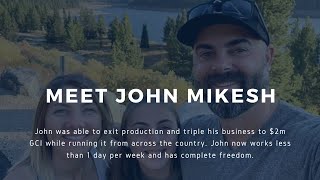
John Mikesh grew his Lake Norman real estate team from $1M to $2.5M in GCI while stepping out of daily operations entirely. He credits the shift to mindset work, a yard-sign lead strategy, and restructured compensation that protected profit margins. His team now sells 200-250 homes yearly without him involved in production.
Questions this video answers
Lake Norman market, about 20 miles north of Charlotte, North Carolina.
About $2.5 million GCI, selling roughly 200–250 homes per year.
Just over $1M (2013), about $1.3M (2014), and $2.73M in 2015 (first full year after changes).
Halfway through 2015 (stepped out of production).
What's up everyone? Another case study. Just a time where we can dig into someone that I have been blessed to know and to be part of their business journey. It's John Mikish out of almost the same market as Charlotte, North Carolina, a little north of the city. John, why don't you start off, just give us a couple minute overview of, you know, what the business looks like today, how you got into real estate, like the quick hook to kind of get people to listen or watch the rest of this.
Hey everybody. Yeah, my name is John Mikish and we have a company called Roos Real Estate and we work the Lake Norman market, which is just about 20 miles north of the city of Charlotte. For some people, that would be the same market as Charlotte, but we really chosen to identify with that market as our one and only market and really stay in that niche up there. So right now we have a successful real estate company. It's an independent, it's called Bruce Real Estate. And I'm completely out of that business and have management and leadership in place to take care of all the day to day. And it does about 2.5 million a year in top line GCI selling about 200 to 250 homes a year. And just is a really sweet business model right now. What I love about the business is it's a great model for me, but it's also a model that's working really well for the individuals within that business. So we have agents that are just achieving remarkable levels of success within that model.
Awesome. And when we first met, we were just chatting before we hit record, but when we first met, what did you want to achieve? When we first started working together, you.
Know, when we first started working together at the time you had this like assessment that you would go through. And I went through this assessment and I was pissed off, man. Cause like I had by all intensive purposes on the outside looking in. I had a good business. Like people were like, they knew I was growing a big team. Like people in my market, you know, knew we were doing, doing good things. But I was just stressed, man. I was like so frustrated with the way that my business was working and like how much of my soul it took from me every single day. So you had this assessment and I think it was like 70 some questions and it was basically like, hey, does your business look like this? And it was like this was ideal on every question. And I think out of those 70 some questions, I answered no on like 65 of them. And I was so pissed off when I Took that assessment. And I remember walking into my. To see my wife and she was in our bathroom, like, getting ready for bed or something at the time. And I said, hey, I just did this freaking assessment with Lars and basically told me that my business was a pile of crap and I probably need to coach with him, but I just. I'm not ready to do that right now. And it was just like, I knew it was going to be painful because I knew in answering those questions that I was going to have to make some dramatic changes in my business at that time to really get it to where I wanted it to be. And ultimately, where I wanted it to be was a place where I felt like I was in control of my business and not my business in control of me.
Yeah. So let's dig into a little bit of that. So what did that mean for you at the time? Like, what were the problems? How are the business problems creeping into the, you know, the times where you should be more present at home? Like, what was going on around that time?
Yeah, so I was in my business heavily. I was in production. I was doing. I was the biggest producer on my team at the time and really wanted to get out and sort of bought into the dream or this idea of getting out of production, but couldn't really understand, like, how that was going to play out. And that was part of it. I thought about business constantly because I was in this mentality at the time where if I wasn't constantly thinking about and tweaking with and looking for that next thing in my business at any given point, that my business was going to fall apart. So that brought within it a ton of stress into my household. You know, just always being turned on and never having any downtime to really focus on my family or my faith or. You know, I think we all just underestimate that. We need some downtime and we go, go, go, go all the time, and we don't really. We're not even aware of, like, what that's doing to us and the person that it's making us become. And if I think back to the me of gosh, that was like 2014ish. Like, I was just an angry, stressed individual, like, like, no margin to serve or like, to be, to be a good person, like, just. Just getting by. And I didn't want that for myself. And I just couldn't, couldn't for the life of me see that, like, I even wanted to remain in this business if that's what it was going to be like.
Yeah, so. So the money was probably good, but too much time and too much stress.
Yeah, I mean, the money was good. You know, I was making, you know, well into the multiple six figures at that time. Which, you know, if I would have asked my 2010 self that in 2010, I would have been like, I'd arrived. Right. I had achieved the dream. But my 2014 self was completely miserable and stressed out. Like, probably as stressed, if not more stressed than before I had the money. Like, obviously, it's stressful to not have money, and we can all probably, if we're being honest with ourselves, take us back to a place. Whether that was when you were in college or in high school or even entering into this career, we can remember what that felt like. But I think it almost felt worse in 2014 when I was at multiple six figures because I had all this responsibility and I still had all the financial stress because I realized at that point that I couldn't pass the bus test. You know, if I got hit by a bus tomorrow, like, everything that I had built and achieved up to that point was gone just like that. And my family would be as screwed as they were before it all happened.
Yeah. And so what was an average work week in terms of. In terms of hours back in 2014, 2014?
It would be, you know, get up, go to the office, slay it all day long, put out fires, and, like, deal with people problems constantly. Always operating in this, like, chaos mentality and almost feeling validated in my chaos, if that makes sense. Like, the chaos meant that, like, I was doing something and I was important and, like, I needed to be the one to put out all these fires constantly. And just always being in a reactive mode to these people. Problems and contract situations that would arise and, you know, whenever that wasn't happening and things were good for the moment, so to speak, it was like, okay, well, now who do I need to call and who's calling me? And, like, my phone constantly ringing and just always being, like, reactive to my cell phone. So mostly kind of a nightmare.
Yeah, mostly seven days a week back in 2014.
Absolutely. Seven days a week.
Yeah.
I mean, we would try to carve out, like, you know, a couple hours to do church and lunch, but even then, it was like, it wasn't a big enough break to actually be present in that moment. So, like, as I'm sitting there not on my phone, checking that box off for the week, I'm still thinking about my phone and I'm still thinking about, like, well, who am I going to call when I Get that thing back in my hands and what am I going to check on?
And so what, so what did it mean? You know, you mentioned that you were at the point where, you know, your 2010 self would have, would have said, yeah man, the money, I can endure any time or stress for the money. But when you actually get it, it's like, this sucks, this is not worth having. What, what did it mean? I mean, how important was it that you get it figured out? At that time?
I think it was critical, you know, where I am now. Looking back, it was all totally worth it because for the rest of my life I'll be able to provide for, you know, my family and people around me in a way that I wouldn't have before. But I don't think my 2014 self thought it was worth it. Like, if I would have known what it was going to be like in 2010, what it was in 2014, without knowing what it's like now, I probably wouldn't have gone through it. I would have just went into some other job and just, you know, said, you know, I'll just, I'll just be status quo.
Yeah.
And that's kind of a scary thing to think about, like the impact that we wouldn't have had if we wouldn't have done it. But you know, in 2000, in 2014, it was just, it was difficult, man. Like, I don't know that my marriage would have made it if I didn't make a change. I don't know that. Like. Yeah, I just don't think it, I don't know if I would have made it. Like I needed to get out of that toxic environment for myself. And it's one of the reasons why, you know, my wife and I have so much love for you, man, is because like, I don't think there was. You know, they say that the teacher arrives when the student's ready. Like this student was friggin ready. Like when I took that initial assessment, I wasn't ready, but like a few months went by and I just constantly kept thinking about that assessment. And I mean like, man, those questions in there really hit home because I was doing the thing. Like I was selling the houses and like I was hitting the numbers. And like I said from the outside looking in, everybody would have been like, oh man, this is great. And I was going to all these conferences at the time and like training with people at the time where we're kind of like being like, oh man, you're crushing it. And I'm like, dude, I'm not crushing it. I'm being crushed right now. Like I'm literally being crushed. And my wife is saying things like I wish we never even started this business. And you know, she was involved in it way too much and it was just messy and it was either give up or get through it. And you know, luckily we started working together and you know, I'll never forget you said to me one time on one of our very first calls and I was kind of like challenging you on like, oh, this isn't going to work in my business. This isn't going to. You know, our business is different because we always hear that, right? We're in the same friggin market and I'm trying to tell you like it's not going to work in my business. And you were like, you were like, Dude, 80% of what we're going to accomplish is mental and 20% is mechanics. And I really didn't understand that at the time and I felt like how could it be that way? But that's exactly the way it was. Looking back, like it was a mental decision of I can do this and I can decide how it's going to be and we can build that business.
Yeah. And it is, I think, I mean our industry exists on having a lot of us do a little. So to think you can put the systems and the processes and the leadership and management together to make everyone on your team super productive, admin included, and have everyone sort of rowing in the same direction and enjoying it, to think you can put that together in a way where now is it fair to say that you're working a whole lot less in your business now? What's a work week look like for you now?
It's kind of crazy to even think about it, man. Like I'm super fortunate and blessed to have great people in my business and you know, Andrew's running my team on all the day to day and I'm there to support him 100%, whatever he needs, but he doesn't need a whole lot because the systems and structure that we set up are manageable. So I would say that my main role now is to be supportive in an executive meeting that happens once a week. Whether I do that virtually with a zoom call or I'm there presently in town and I'm actually in that role in that meeting, not leading the meeting but being a participant. And if I see an area that I need to address or help, I'm there to help do that. And then just being around for quarterly and annual meetings and you know, I'm watching and ready to dive in if the business needs me. But right now, the business does better without me meddling in it. Because if I, as the original, you know, sales manager, if you will start diving in and meddling with things, it creates confusion for the people and they're like, well, is it better for me to go to this person or that person? And I found that, you know, over the last year, the more that I've pulled out, the better the businesses run. And it's hard because it's like your baby, you built it. And there's so many times where you just want to jump in and be all hands on deck, but we can't wish for something and then achieve it and then go back and do the opposite. So like, I built the business that I wanted and I have that business now and I have to let that business, you know, do its own thing, so to speak. Yeah, it didn't get that way overnight. I mean, it was, you know, just like, getting out of production doesn't happen overnight, nor should it. Like, you shouldn't wake up one day and say, I'm out of production, I want to be out of production. What you should do is you should decide what that plan is going to be and put a plan in place that's sustainable. And for me, getting out of production was one thing, getting out of my business was another. And it took a couple years. It was like, okay, well, like, I'm just going to run the meetings now and I'm going to have other people do the day to day from the standpoint of like getting me ready to run the meeting. And then it was like, okay, well, I did the meetings for a year. Now I'm going to transition to that next level of leadership where somebody else is doing the meetings and I'm gonna participate. And then it was just like, okay, well now they're ready, now they're ready to do it.
It really is. I mean, to go from producer to manager to leader to owner. I mean, you the full transition in a four year period. Let's dig into a little bit more like the tangible. Like what are like three, let's say three focus areas or tools or systems that we put into place together that made it possible to make those steps. What are the three things you can think of?
Yeah, so there was like this amazing like thing that I bought and spent all this money on and that thing was awesome and it fixed all my problems and I just took that pill every day and I didn't have to do anything else?
Yeah, perfect.
It wasn't like that at all. No, man. You know, it's been a while since we were at that place, right, where we were, like, really, like, working on some things. But some of the things that I remember most about working with you that I think had a huge impact on me moving forward was I remember we had this one conversation one time where you were, like, kind of trying to figure out, like, what you could do to help me. Like, I was on the call and, you know, we all kind of get on a call like that, and we're sort of like, ready to tell our coach what we want them to hear. Like, oh, I got this working and that working, and yeah, everything's good, man. And you were sort of like, calling bullshit on that and, like, trying to probe deeper. And you were like, well, tell me about your sign calls. And I was like, okay. And you were like, how many sign calls did you get last month? And I was like, I don't know. And you were like, well, what's your sign strategy? I was like, I put it in the yard and it just, like, quickly, like, turned into this. You don't have any strategy here and you're exposed. And we started to talk about, like, well, what would a real sign strategy look like? Because, like, if we're in real estate, like, everybody has a sign strategy. Everybody should have a sign strategy, but we don't. So why is that? And that was a very impactful call for me because I realized that I was trying to put all these different masks on my business. Like, everything's working, everything's good. What do you have for me? And you were like, well, let's go down to the basics here. And it was a very timely thing because we were in a recession, there was tons of opportunity there. So we essentially laid out a sign strategy. And I put that sign strategy in place in early 2015. And that sign strategy has been in place to this day. To this day. Like, other than maybe we, like, at one point changed one provider of, like, how we collected the 24 hour info sign. Other than that, like, nothing has changed to this day. And I think that's a point that who's ever listened needs to understand is like, you're gonna build a business that's reliable and sustainable when you stop messing with everything over and over again. Like, get down to the basics, put a reliable foundation, put a process in place for that, and then leave it alone and move on to the next thing. But what we tend to do is we tend to like, oh, let's mess with this. And then, oh, let's mess with this again. And then we're constantly messing with the same things and never advancing our business forward and implementing things that are gonna help us have that business we want because it always requires us to go back in and fix and mess with stuff. So we put something really simple in place. And that was so, like, sign strategy was number one or one of the things, not number one. Number one would probably be more the idea of, like, running my business like a business and really getting serious about the numbers. So prior to us working together, I understood numbers mainly from the context of bigger was better. And like, oh, how many houses did you sell? How many houses did you sell? And, like, let's sell more houses. And when we started working together, it was like, well, maybe we want to sell more houses, maybe not. But, like, understanding ROI and profitability and, like, putting pillars in place and how one thing affects the other. You know, getting my compensation structure right was a very important component of me ultimately getting out of production and ultimately out of leadership. Because if those things weren't right, imagine if our compensation structure isn't right. Well, we're never getting out of production, right, because there's not enough money left over to do that. We have to set the compensation structure up so that we can get out of production. And the irony of it is, is that we don't want to do that because we think, oh, we're being too greedy or we're taking too much money off the top and not leaving enough for our people. Well, here's what I experienced when I got the compensation structure right, I was able to get out of production. And when I got out of production, I was able to redistribute all of my production to my people. And to this day, I've never had agents making more money than they are in the current structure that we set up. Then when I was giving them more and they were making less, because the business couldn't grow, because the business wasn't making money. It didn't have profits to scale and grow. And because the business couldn't grow, the opportunity suffered. So it's really interesting, and I think, you know, on paper, like, it sometimes doesn't make sense to our logical brains, but it's the culmination of all the other things that happen as a result of running a profitable business. And I would say, like, profits are protecting my people. If I didn't have profits, like, I would jump back in because I would have to. And that would be the greatest harm that could come to them. But, you know, they get unparalleled opportunity in these. In these team structures that we set up when the business is profitable. So, like, that was a huge takeaway for me. And then, you know, I think the third thing, like, if I could summarize our time together and what I gained from you, it was like, what I thought I knew about you, I didn't know. And it was like, oh, Lars, you know, puts up big numbers and, like, he's going to help me put up big numbers. And that was probably like, the attraction factor in the beginning. But what I most appreciate you now is that you're like, this actual balanced human being. And the whole reason to do all this was so that we could love on our people, we could serve our people at a much higher calling. And I feel like that's the thing that I didn't expect that I got coming out of it. And looking back is like, I'm a better person now because I fixed this business junk and we got that taken care of. Now I'm a better person that can show up and actually serve and care and leave an impact that's far greater than anything I could have ever done. Selling houses.
Yeah. There's so much in there. And my eyeballs start to sweat a little bit hearing you say that, because it really is like, you can't create.
A marketing piece around that, right? Like, oh, join my program and you'll be a better person. But truly, that's what happens when we get this business stuff figured out.
I don't think a lot of people actually are telling the truth about their business.
No different than I was on that call with you before we dug into sign strategy. I'm like, dude, I'm good. I'm crushing. I'm doing all the things you said. I'm a high D, so I'm task driven, so I'm task, task, task. I did what you said. What do you got for me? What's that next shiny thing? And you were like, okay, I hear what you're saying, but let's go back and let's investigate. And you took the time and cared enough about me and my business to do that, to not just take me at face value, but to dig in and say, okay, let me inspect what I expect and let me see what's going on in your sign strategy. And it was like, it was hollow.
Yeah. And I've had, like, shocking calls with big teams, you know, where it's like, yeah, let's just open up your Call tracker and like, dude, 30% of your yard sign calls were answered. Like, even looking at it. Yeah, you know, we don't.
We don't look at that exactly.
You know, you said something in there. You know, a lot of. When you make that transition from, like, you're building a team because you think you need people help and you don't have the solid systems, and it just is. It's messier than it was when it was just you doing production. And you make that transition, you know, you. You have to know where you're going. Like, you have to begin with the end of mind, because if you don't, you know, there are guys that are, like, just setting it up on the wrong economic model, and they have no shot at getting out of production. Like, we know somebody that does post big numbers. He's on all the big stages everywhere, and I know he's losing money for his personal production and massive business with a ton of overhead. And he just. He didn't begin with the end in mind. And so I just think that there's more honesty about, like, and you know me, I'm almost like. To a fault where, like, I'm almost not Christian about it, because I'm like, well, I need to talk to your wife. I need to take a blood, you know, sample. I need, like, how much do you weigh? Do you kick your dog in the morning? Then I can take business advice from you, you know, and in your business, I need to know your financials before I listen to you. Like, take telling me about a lead source, you know, and so there's a dark side to it, too, is you can get too, you know, a little judgmental of people. But I just want to make sure that anyone. What's that?
You start to see it. You start to see the pattern. And like, all of a sudden, like, you're. You're like, okay, so you sell 2,000 homes a year, man, great for you. But, like, what's the end result? What's coming out of the bottom of that funnel for you? Are you having a good marriage? You have a good family life? Are you happy? Are you happy? And what's your profitability? Because I would rather sell 250 homes a year and make X amount of dollars than sell 2,000 homes and make the same X amount of dollars. That's a higher. That's more exposed to me. You got more people in overhead and all this other stuff. So I think, like you said, understanding what's important to you, and we figured that out for me, kind of Somewhere along the way, in the middle of working together, because, you know, the me that started with you was like, how do we fix this thing so we can scale it and have a thousand of these? And quickly I found out after just my second one that this is not what I really want. Like, I don't really want to be, you know, three hours away from my family, three nights a week building a second location out. I don't really want to have a thousand of these because the money that would come as a result of that isn't what I need to achieve the lifestyle that I'm looking for, and it's not worth the sacrifice.
Yeah, that's awesome.
I'm probably good if I never have a jet, because in order to get a jet, I know that there's going to be a sacrifice and a time component in order to reach that level of success that, quite frankly, I just don't need.
Yeah. And the impact. I mean, the impact you can have in your family and in your community, with your church, you know, it trumps any dollar, additional dollar that you can create, because it's always gonna come at the expense of something that is more eternal than the dollar, you know?
Sure.
So tell me when we first got started, you had that. By the way, we don't give that same assessment anymore because most people, like, F you. I'm not, you know, you just pissed me off. Beyond. Luckily, you got over it in a few months. We have a more streamlined funnel now. But what were the objections when. When we first started together? Like, what was in your mind? Like, any hesitation, you know, around things.
That I felt challenged on that.
We like objections, you know, like, this won't work for me. Like, what did you think? You know, what objections do you think others might have about working with real estate?
B School. I think some of the challenges are people start to identify with their business whether it's messy or not. Like, they built what's there. And when somebody is faced with pretty much wiping the slate clean and starting over, it can affect their ego in such a way where they're like, no, I'm not gonna do that. I'm gonna do this part, but that part. And sometimes the challenge that. That we have is that we need to wipe it all clean. Because nothing that you've set up is a foundation that we can build on in order to get you to where your ultimate goal is. So either we got to change the goal, we got to change the business. And I think people get challenged by, you know, changing commission splits, changing people structure where, like, hey, maybe before you used to be able to work buyers and sellers, but now you're only working sellers or you're only working buyers. You know, putting accountability in place is a big. A big challenge for people. I remember a time where, like, I didn't want. I didn't want accountability because I was like, well, I don't want, you know, I'm just going to do it like this, and they're going to do that. And I didn't want the structure because I thought that the structure would limit my freedom. And my whole thing was like, I'm building this business to have more freedom. And all this structure that you're talking about feels anything, like, unlike freedom to me. But it was that very structure that gave me the freedom that I have today. And without it, like, there would be no business, and there would be no ability for me to have the life that I have now or create the life that I'm creating for people that work for me.
Yeah, that's awesome.
Now that now I'm looking at the structure, I'm like, all of the safety, all of the profitability is all in the structure. Like, if you don't have a structure, like, you have no chance of winning at this. It's like playing the lottery.
Yeah, that's a quotable right there. If you don't have the structure, you have no chance of winning a business. And it's not, you know, if you want to. If I want to get from 220 pounds to 190 pounds, you know, I need accountability and structure. It's just the way that is. If you want to be healthy in your business and have a real business, there's really no way around it. Just align yourself with somebody that's done it ahead of you. You know, that's the only thing you can do.
What was your favorite part? That's actually really important, Lars, that you said that. That made me think, like, if there's a fourth thing that I got out of working together, I think that you've got a special group of people there. And there's a lot of alignment, and probably more so than in a lot of organizations that I've been involved in. Like, the alignment is something very tangible, and so much so that I think about businesses that I have now, and, like, that's a primary factor for me is, like, we have to be alignment. Matter of fact, I'm standing right here, and one of the books sitting in front of me is the Energy Bus. And it's a super simple book, but it's required reading at any one of the companies that I have. Because if there's no alignment, like I don't care about the accountability, I don't care about the systems and processes. There has to be an alignment of what it is that we're going after and working towards. And I felt that very strongly in our time together and going to your masterminds and events. Like really strong, good people that were all like open and vulnerable and authentic and honest. Like, hey, my business isn't perfect and I'm not perfect, but I'm working towards this idea of what I want my business to look like.
Yeah, that's awesome. Um, real quick, I forget what, what was the level of your GCI when we first started? And so you, you ended up. I know, I think you had a double increase. But what was the, the level you. We started and what are you.
What were you. Yeah, we start. We started at. We were just over a million. So we had our first like over a million year in 2013 going into 14. And then 2014 we were like 1.3. And then from. In 2015. So the first full year that GCI went up to 2.73. Yeah. Awesome. So it was like, it was like a true doubling.
Yeah. And you got out of production in that time period too.
Yeah, so halfway through 2015, I stepped out of production with very close watch over my listing partner at the time. And then. Yeah. Just never, never went back in.
Yeah. And that. And that Andrew was the listing partner that is now sort of running day to day for you.
Andrew started out for me as an ISA and now he runs the company.
Yeah. And I think, you know, folks that haven't like they are tempted by this journey to build a business or a team and they haven't managed people before, but it's like it's not as complicated. A few right. Hires that stay with you, you know, handful of people that stay with you for, you know, three, five years and you've got a legit multi million dollar business that doesn't revolve around you.
Exactly.
Let me ask.
Whenever we're thinking about the business, like I always want to even to this day, challenge myself. Well, if I think it's these 10 steps, how can I make it five? Because if it's simpler for me to start, it's got more likelihood of being implemented. And then I can always scale it back up to 10. 10 steps or 10 pieces if I need to. But like, let's make it super simple to start. I think oftentimes we we don't start because we make it too complicated before we even take that first action.
Yeah, that's awesome. Who would you recommend real estate B school to and why?
I think. I think real estate B school is a very strong fit. And I certainly, you know, I'm a proponent of it and would share it with anybody that was talking to me. It's ideally for the person who's already got a business going. Like, I don't think it's for the guy that got the real estate license yesterday. I think that they need to have some awareness and have some things going on. And I think it's for the person who's just frustrated, who's like, at a point where they thought it was going to be something and they got there and it's not that something, and they're frustrated, maybe even a little bit scared and maybe pissed off. And like, man, I thought this was going to be better. I thought this was going to feel different. I thought this was going to provide different for my family than it is. And somebody who's stressed, somebody. Somebody who maybe even thinks, like, this isn't worth it, because I can relate to that person, and it so is worth it. You just got to realize that your thinking got you to where you are and it's not. And if you're being honest with yourself, it's not the place you want to be. And allowing somebody to come in and change that thinking and remembering, hey, it is 80% mental. What is the 80% mental that I don't know. And letting that person challenge you and work with you and taking confidence in the fact that there's a lot of people that are in your program or who have gone through your program, like me, where this is working in a huge way for them. Take confidence in that. Forget all the thinking that got you to where you are. Just take confidence in, like you're there to help them and you're going to serve them into that business that they're probably searching for that they can't find on their own. And whether you're, you know, one year in and selling 30 homes a year or you're 10 years in and selling 300 homes a year, I think it's anybody who's feeling any of those. Those dissatisfaction parts of their business.
Yeah. And I could not have said it any better. And, you know, if that's you, where, you know, you. You've kind of checked the box on conventional success. But like John said, it is just not. It's a life not worth living. And if you take yourself out of the business. You don't. It doesn't run without you. That's just. That's not what we want for you. You know, there's more to life than just slinging houses and. And putting out fires all day. So if that's you, or maybe the money's good, but your time sucks and you're stressed out all the time and you're. You're not fun to be around, just go to realestatebschool.com. it's a business growth strategy session. We'll literally just jump on the phone. We'll talk about what you want for your business, where you are now and what's holding you back. It's a real simple process. And you'll leave that call with an actionable plan, a clear plan on how to take action. And, John, I mean, this has been awesome. I have so much respect for you as a business owner, as a man of God, as a father, as a husband, and Jennifer and the life that you're building and the fact that I just gave myself goosebumps thinking about the way you're just. You're just doing it the way you're doing it. You're making. You're literally making your own way of living life. That is not. It's like one out of a hundred thousand people are living the life you're living. Totally off of any conventional, you know, plan for anything. You know, putting faith in the middle and just knowing that if you and Jennifer stay close and stay close to God and you'll serve your family, you'll.
Serve your community and your team.
So I just have a lot of love and respect for you, so I appreciate it, man.
We're super grateful and, you know, echo those same emotions back at you and just love you guys and the tribe that you're building over there at real estate B school.
Awesome. Appreciate you, brother. Thank you.
All right, take care.
All right.









